
COMMON MISTAKES IN SCIENTIFIC WRITING 2 0 Anna
- Slides: 31
COMMON MISTAKES IN SCIENTIFIC WRITING 2. 0 Anna Bogomolova JINR, VBLHEP
SCIENTIFIC WRITING Papers / Articles / Abstracts / Posters / Reviews • • Seminar / Lecture Slides • Letters / Emails (requests, recommendations, complaints, invitations) Same grammar applies to all
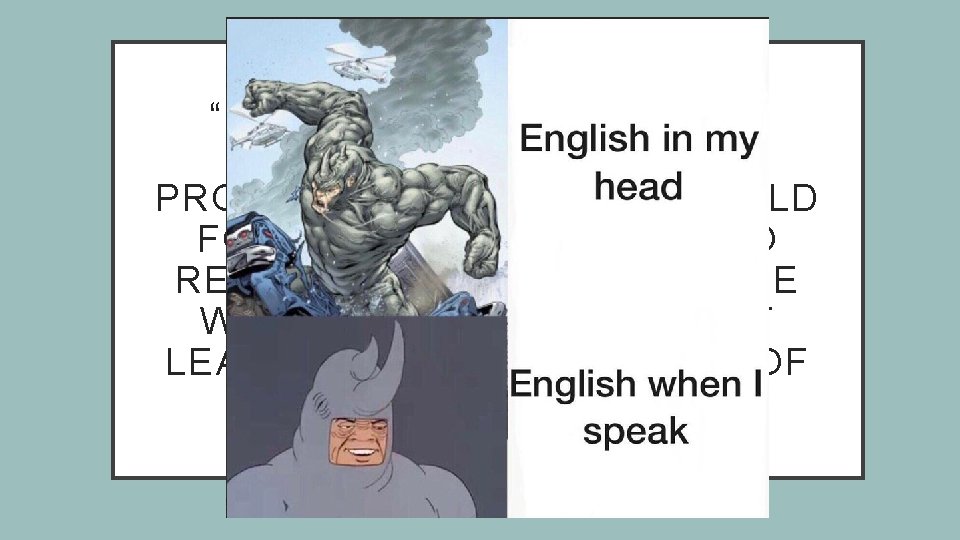
“YOU ARE SCIENTISTS AND SCHOLARS, YOU ARE PROFESSIONALS – YOU SHOULD FOR SURE GET IT RIGHT! TO REMAIN COMPETETIVE AT THE WORLD MARKET, ONE MUST LEARN TO OBEY THE RULES OF THE GAME”
DISTORTED LANGUAGE OBSTRUCTS THE ROAD TO SUCCESS EVEN FOR EMINENT SCHOLARS HAVING WELL-KNOWN RESULTS. LANGUAGE MAY MUTILATE OR EVEN NULLIFY THE SIGNIFICANCE OF RESULTS (“ATTRACTOR INVOLVES THE SET”)
DO NOT EXPECT THE REFEREE TO TOLERATE UNREADABLE ENGLISH, EVEN THOUGH YOUR RESULT MAY BE OUTSTANDING. OFTEN THE ENGLISH (AND, CONSEQUENTLY, THE RESULT) BECOMES JUST MEANINGLESS! No one is obliged to endure bad English
FROM PERSUASIVE PAPERS TO RESUMES, GRAMMATICAL ERRORS IMMEDIATELY TAKE AWAY THE INTENDED STRENGTH NECESSARY TO ACQUIRE AN ALLY ON AN ISSUE OR AN INVITATION FOR A JOB INTERVIEW. IN BOTH SITUATIONS, GRAMMATICAL INCONSISTENCIES MAKE INFLUENTIAL WORDS LESS POIGNANT.
WHY GRAMMAR MATTERS? People associate grammar with errors and correctness. But knowing about grammar also helps us understand what makes sentences and paragraphs clear and interesting and precise. Grammar can be part of literature discussions, when we and our students closely read the sentences in poetry and stories. And knowing about grammar means finding out that all languages and all dialects follow grammatical patterns. (Brock Haussamen, "Guideline on Some Questions and Answers About Grammar", 2002)
MY CURRENT LIST OF COMMON MISTAKES • Russian word order • Misuse of tenses • Improper plurals • Misuse of prepositions or their omission • Noun+verb agreement • Verb tenses shifts • Improper use of resembling words (affect / effect, its / it’s, advice / advise, etc. ) • Grammar inaccuracy (which / that, numerals, abbreviations, etc. ) • Punctuation mistakes
WH Y GRA MM AR M ATTERS? "Grammar is the study of how sentences mean. And that is why it helps. If we want to understand the meaning conveyed by sentences, and to develop our ability to express and respond to this meaning, then the more we know about grammar, the better we will be able to carry out these tasks. . . "Grammar is the structural foundation of our ability to express ourselves. The more we are aware of how it works, the more we can monitor the meaning and effectiveness of the way we and others use language. It can help foster precision, detect ambiguity, and exploit the richness of expression available in English. And it can help everyone—not only teachers of English, but teachers of anything, for all teaching is ultimately a matter of getting to grips with meaning. " (David Crystal, Making Sense of Grammar. Longman, 2004)
WHY GRAMMAR MATTERS? People do make judgments about you based on your grammar. Most of us do; it’s involuntary. It’s hard to take someone seriously when they leave you a note saying, “Your ugly. ” My ugly what? The idiot didn’t even know the difference between your and you’re. — Cara Lynn Shultz, Author of ‘Spellcaster’ Anything great is error-free. Period
PREPOSITIONS • Collocational (with verbs, nouns, adjectives) • Of place • Of time
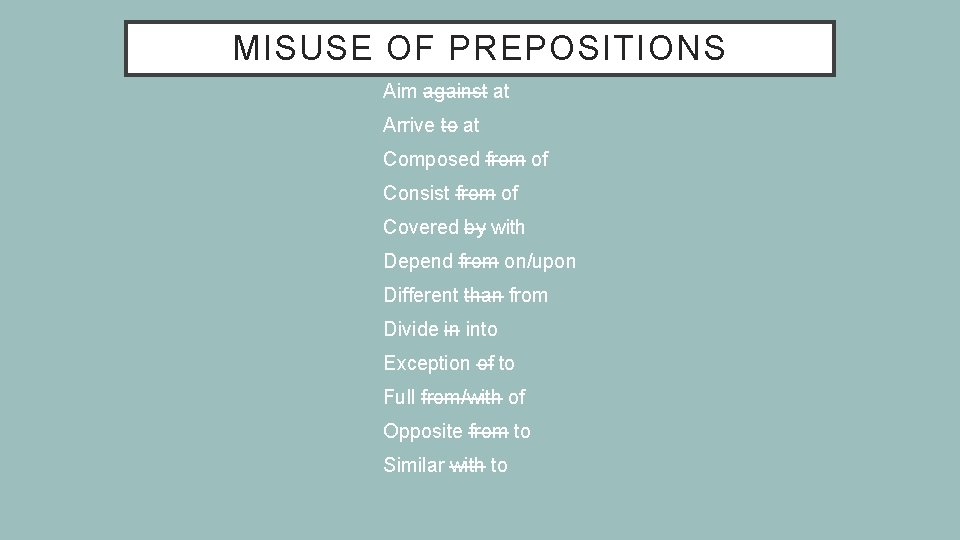
MISUSE OF PREPOSITIONS Aim against at Arrive to at Composed from of Consist from of Covered by with Depend from on/upon Different than from Divide in into Exception of to Full from/with of Opposite from to Similar with to
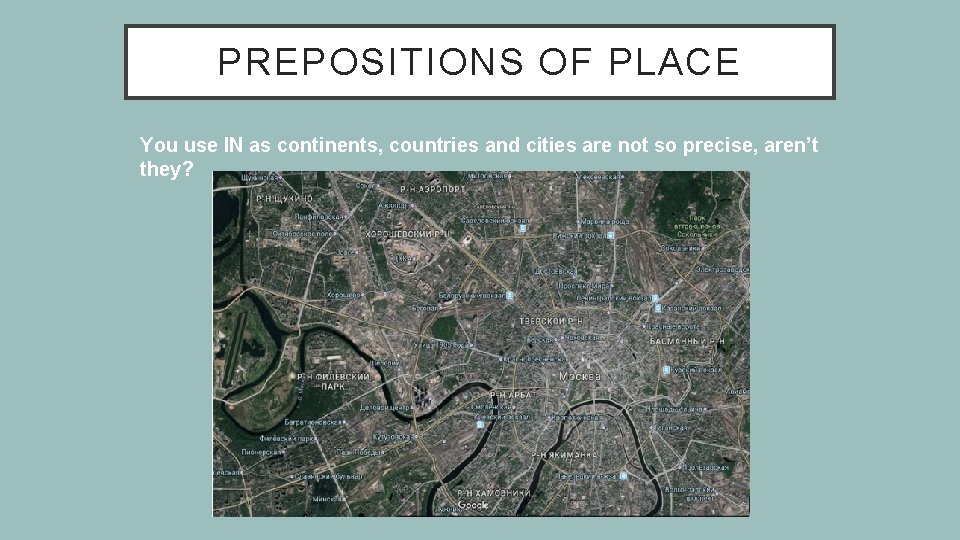
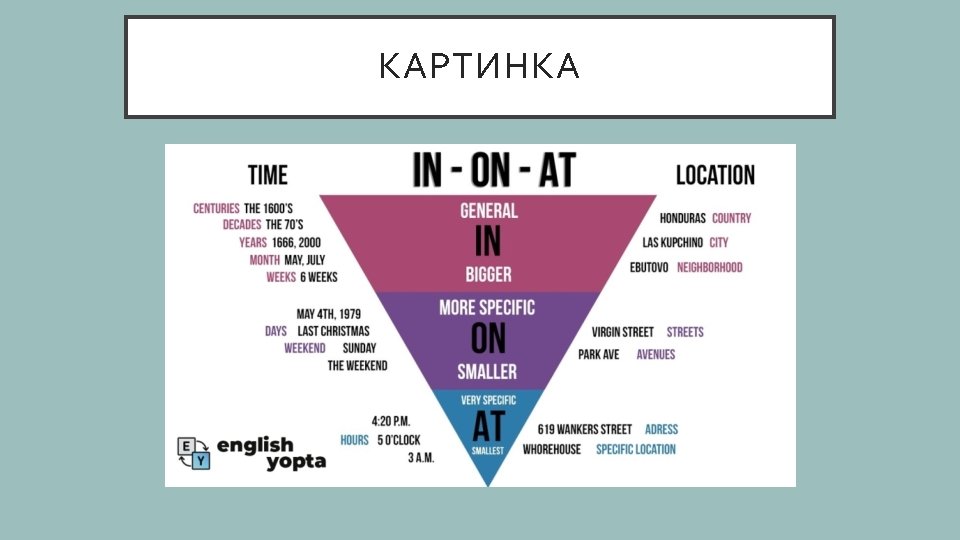
PREPOSITIONS OF PLACE You use IN as continents, countries and cities are not so precise, aren’t they?
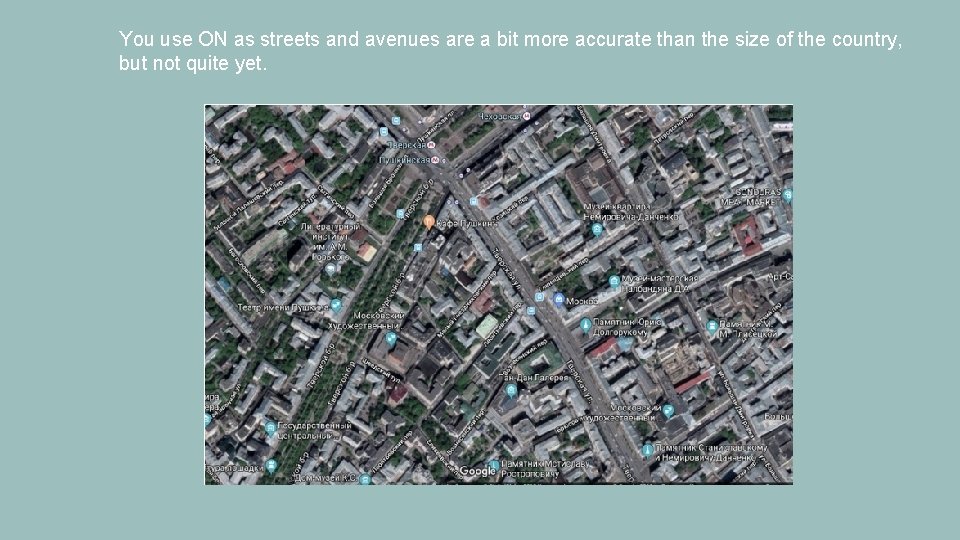
You use ON as streets and avenues are a bit more accurate than the size of the country, but not quite yet.
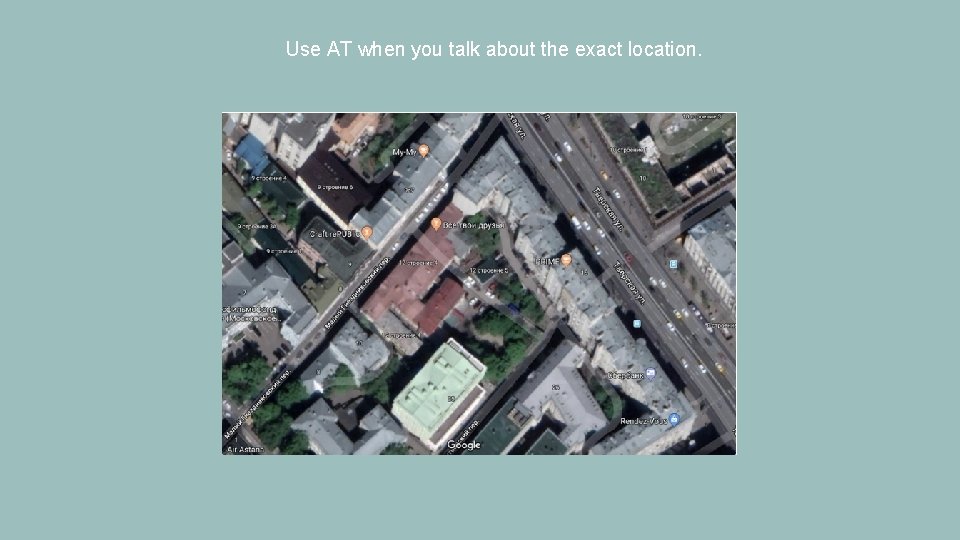
Use AT when you talk about the exact location.
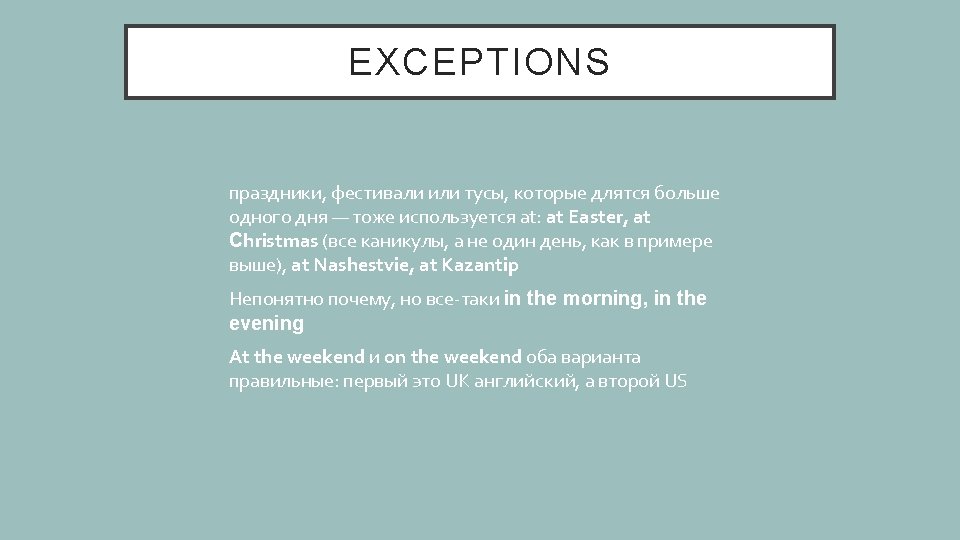
SAME RULES APPLY TO PREPOSITIONS OF TIME In the 19 th century, in 1991, in May (так себе подробно) on 15 th of September, on Monday, on Christmas Eve (не прям уж совсем, но немножко уже да) at 12 o'clock, at midnight, at the last minute (точно)
PLEASE, STOP You should not use prepositions IN, ON, AT with LAST, NEXT, EVERY and THIS • I was depressed last May (in last May) • I’m planning to rob a bank next Monday (on next Monday) • I eat donuts every Christmas (at every Christmas) • I will take a walk naked this evening (in this evening)
OMISSION OF PREPOSITIONS • Ask for sth (ask sth) – She came and ask for my advice. • Listen to sb (listen sb) – They were not listening to my report. • Say to sb (say sb) – The accountant said to me, ‘Come tomorrow. ’ • Search for sth (search sth) – They are searching for dark matter. • Wait for sb/sth (wait sb/sth) – I’ll wait for you at the canteen.
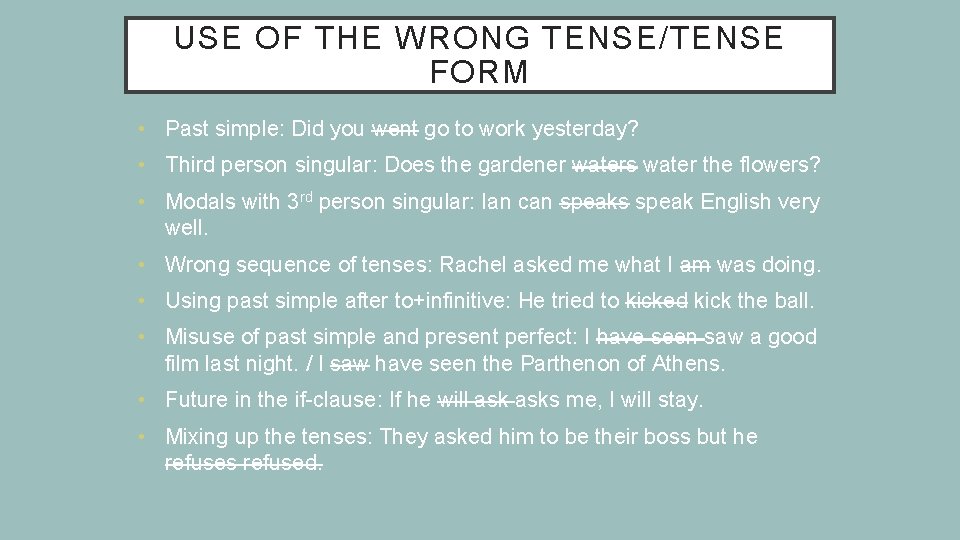
USE OF THE WRONG TENSE/TENSE FORM • Past simple: Did you went go to work yesterday? • Third person singular: Does the gardener waters water the flowers? • Modals with 3 rd person singular: Ian can speaks speak English very well. • Wrong sequence of tenses: Rachel asked me what I am was doing. • Using past simple after to+infinitive: He tried to kicked kick the ball. • Misuse of past simple and present perfect: I have seen saw a good film last night. / I saw have seen the Parthenon of Athens. • Future in the if-clause: If he will asks me, I will stay. • Mixing up the tenses: They asked him to be their boss but he refuses refused.
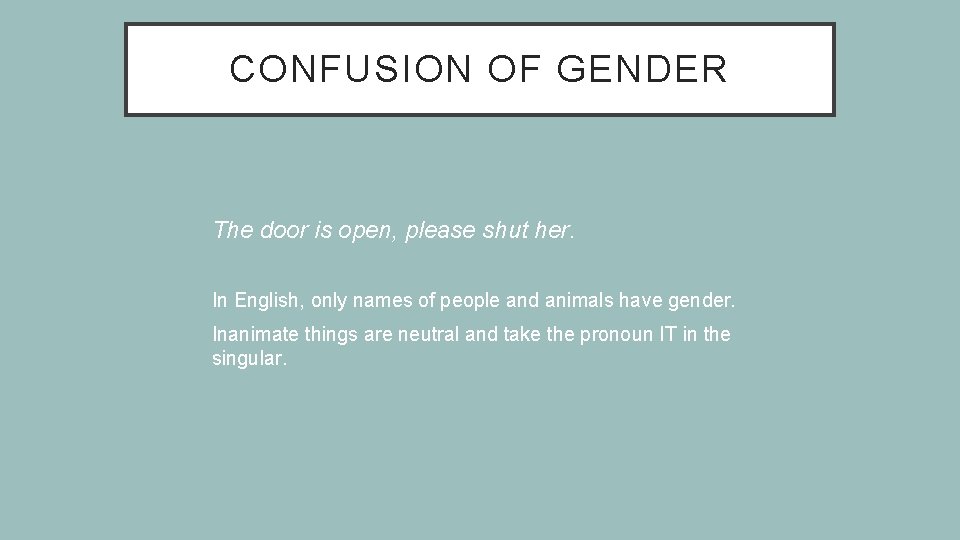
CONFUSION OF GENDER The door is open, please shut her. In English, only names of people and animals have gender. Inanimate things are neutral and take the pronoun IT in the singular.
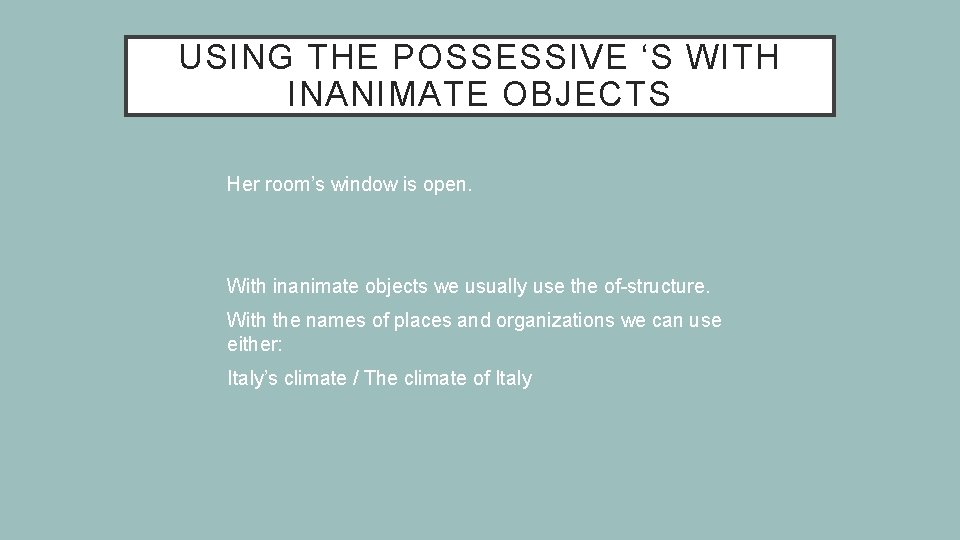
USING THE POSSESSIVE ‘S WITH INANIMATE OBJECTS Her room’s window is open. With inanimate objects we usually use the of-structure. With the names of places and organizations we can use either: Italy’s climate / The climate of Italy
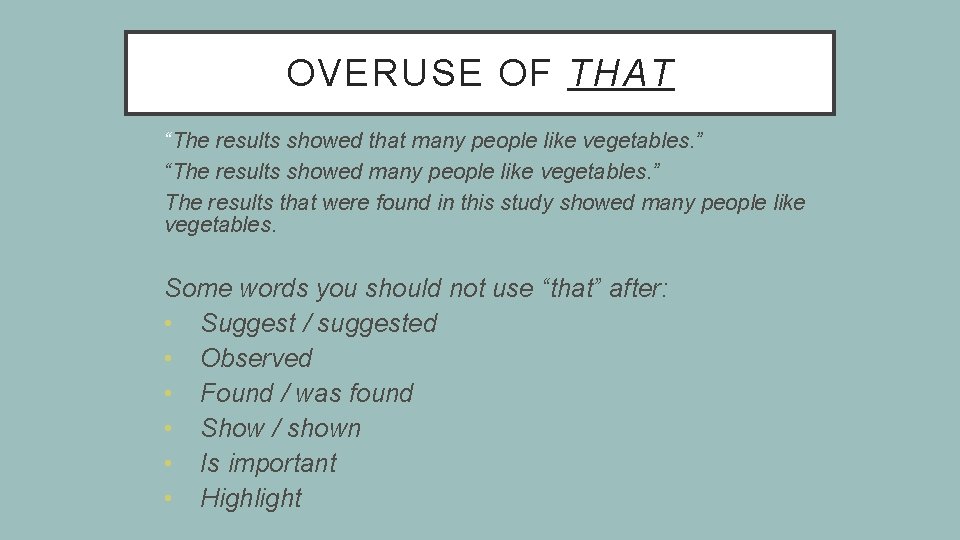
OVERUSE OF THAT “The results showed that many people like vegetables. ” “The results showed many people like vegetables. ” The results that were found in this study showed many people like vegetables. Some words you should not use “that” after: • Suggest / suggested • Observed • Found / was found • Show / shown • Is important • Highlight
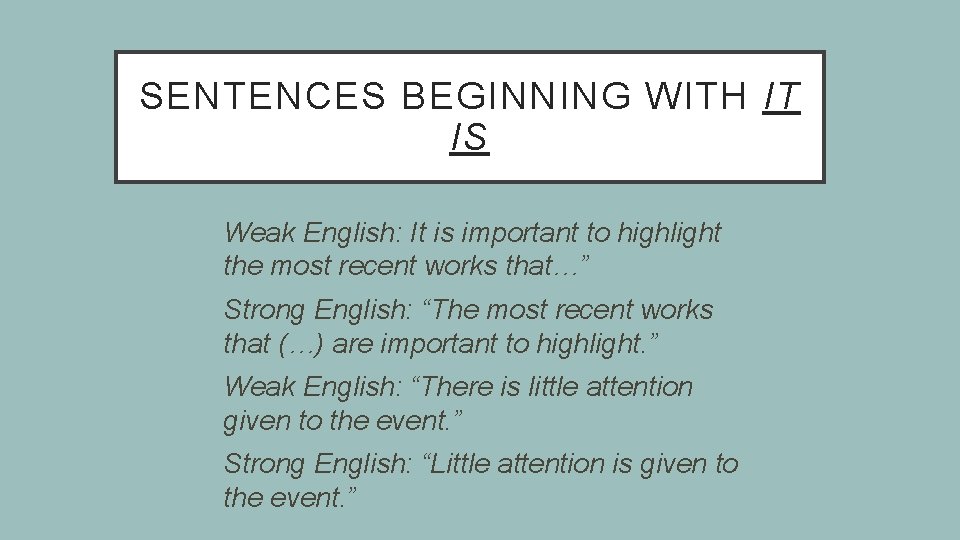
SENTENCES BEGINNING WITH IT IS Weak English: It is important to highlight the most recent works that…” Strong English: “The most recent works that (…) are important to highlight. ” Weak English: “There is little attention given to the event. ” Strong English: “Little attention is given to the event. ”
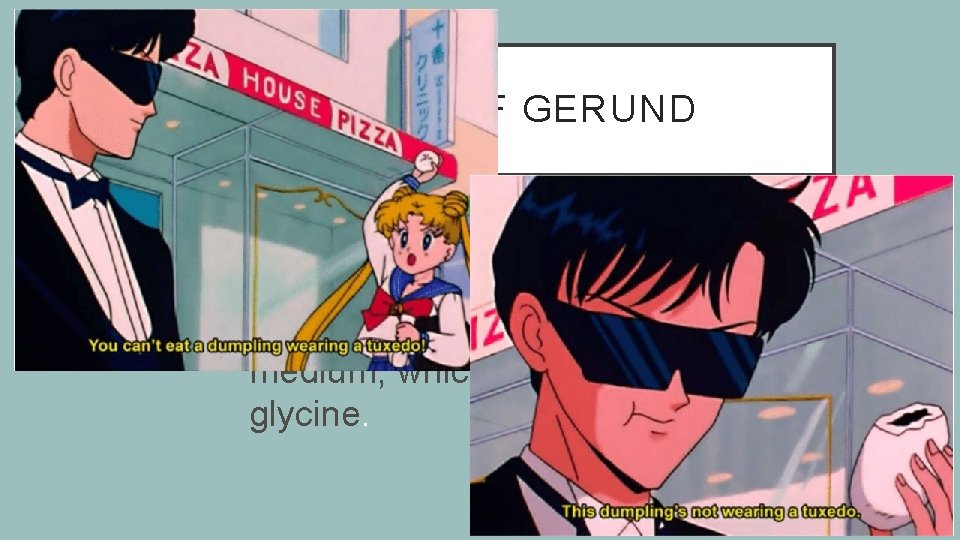
THE USE OF GERUND The cells were grown in ABC medium containing glycine. The cells were grown in ABC medium, which contained glycine.
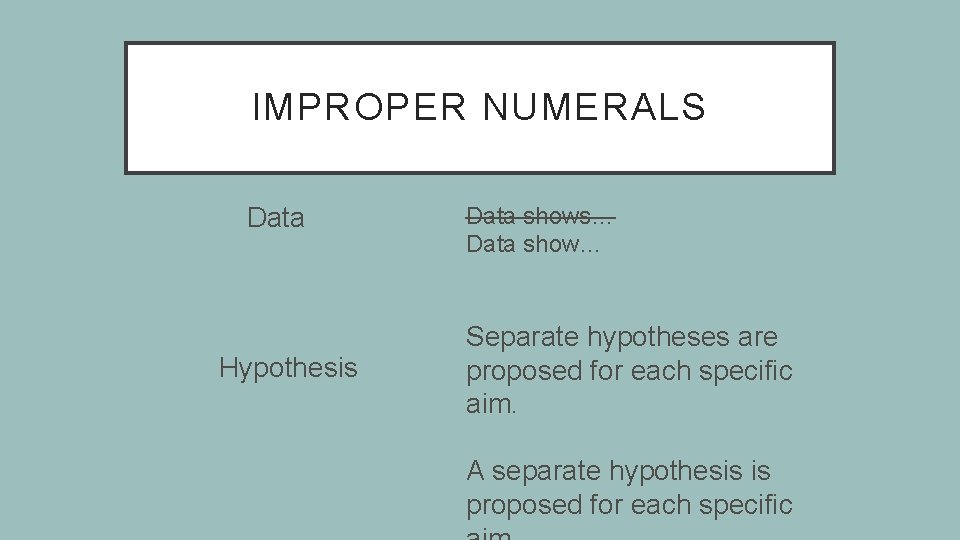
IMPROPER NUMERALS Data Hypothesis Data shows… Data show… Separate hypotheses are proposed for each specific aim. A separate hypothesis is proposed for each specific
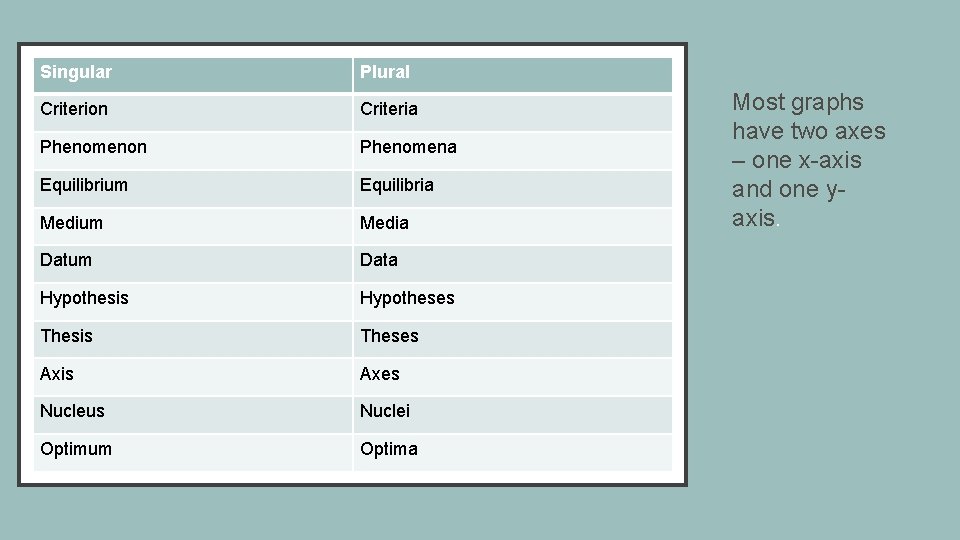
Singular Plural Criterion Criteria Phenomenon Phenomena Equilibrium Equilibria Medium Media Datum Data Hypothesis Hypotheses Thesis Theses Axis Axes Nucleus Nuclei Optimum Optima Most graphs have two axes – one x-axis and one yaxis.
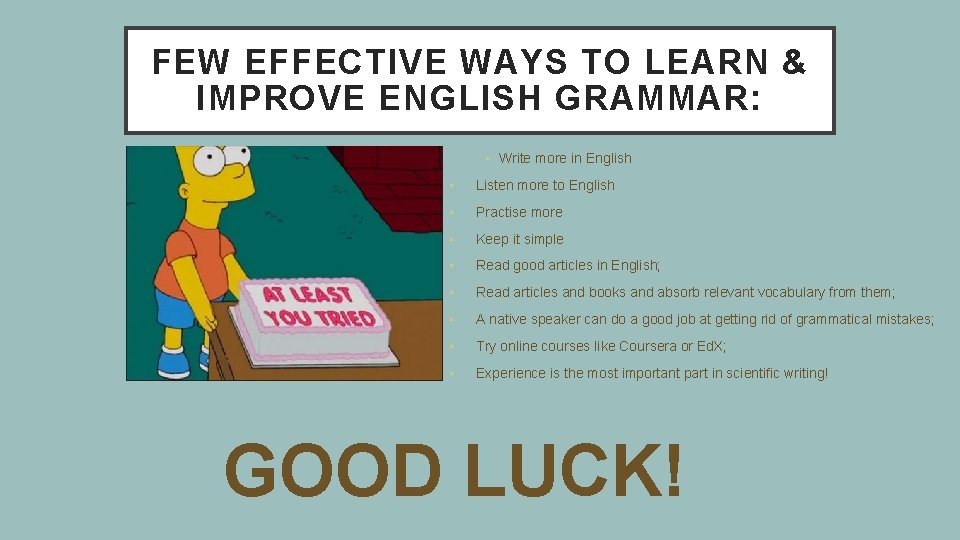
FEW EFFECTIVE WAYS TO LEARN & IMPROVE ENGLISH GRAMMAR: • Write more in English • Listen more to English • Practise more • Keep it simple • Read good articles in English; • Read articles and books and absorb relevant vocabulary from them; • A native speaker can do a good job at getting rid of grammatical mistakes; • Try online courses like Coursera or Ed. X; • Experience is the most important part in scientific writing! GOOD LUCK!
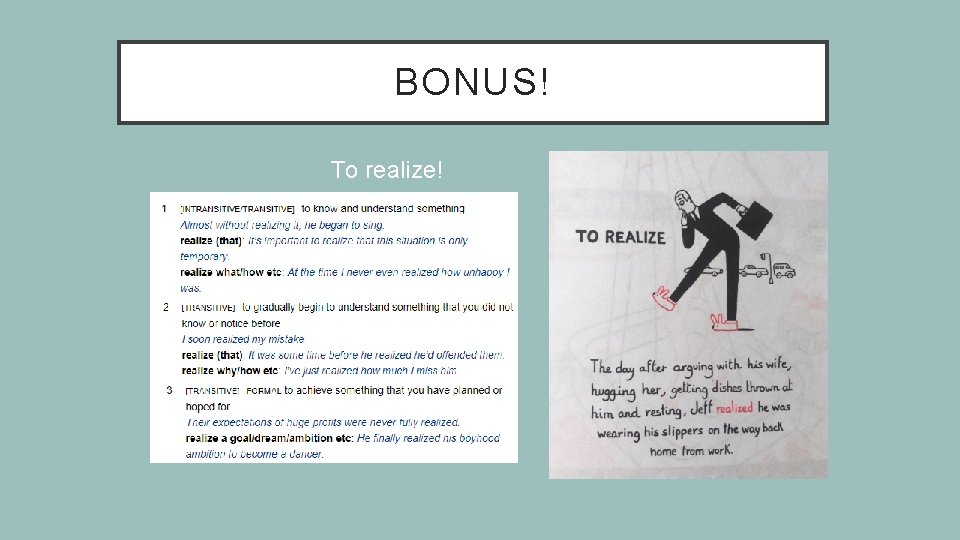
BONUS! To realize!