
Common Mental Illnesses What is a Mental Health

- Slides: 20
Common Mental Illnesses
What is a Mental Health condition? § Patterns of behavior or thinking that cause a person significant emotional pain and prevent normal functioning.
Mental Health Conditions. Can Affect One or More of Three Important Areas: (1) Social or family relations (2) Performance of tasks (including school) (3) Leisure time activities
Causes of Conditions Emotional issues can be learned, inherited, or both. § Caused by brain damage from drugs, injuries, and diseases. § Caused by an unbalanced body chemistry and may worsen with stress. §
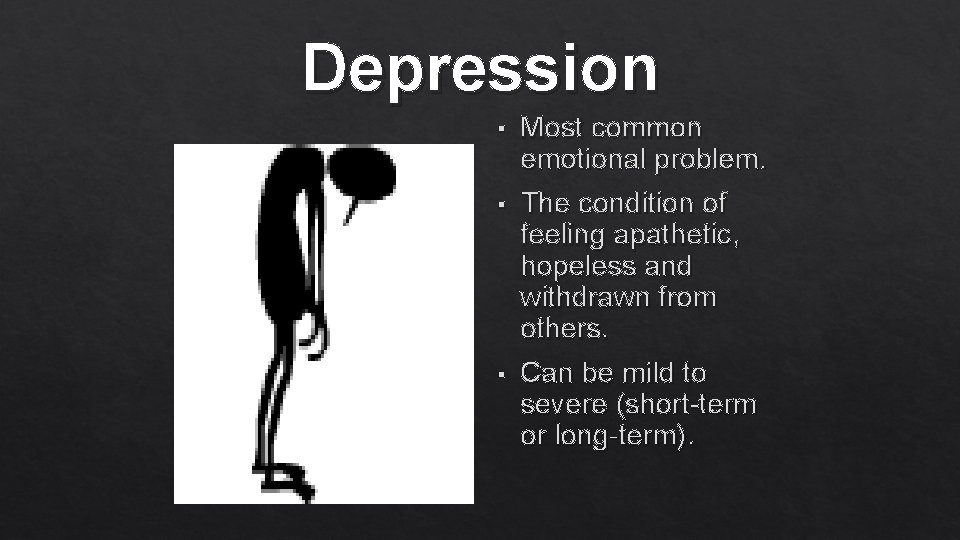
Depression § § § Most common emotional problem. The condition of feeling apathetic, hopeless and withdrawn from others. Can be mild to severe (short-term or long-term).
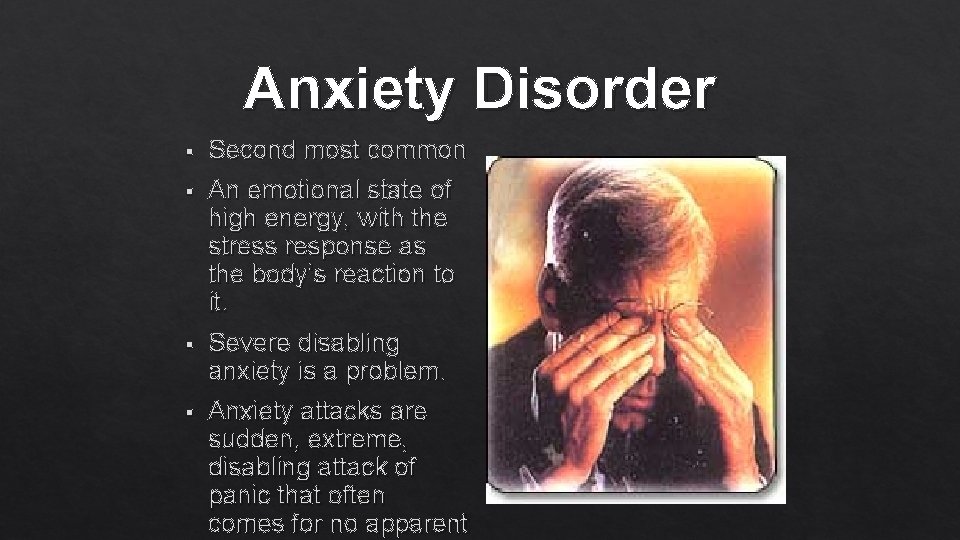
Anxiety Disorder § Second most common § An emotional state of high energy, with the stress response as the body’s reaction to it. § Severe disabling anxiety is a problem. § Anxiety attacks are sudden, extreme, disabling attack of panic that often comes for no apparent
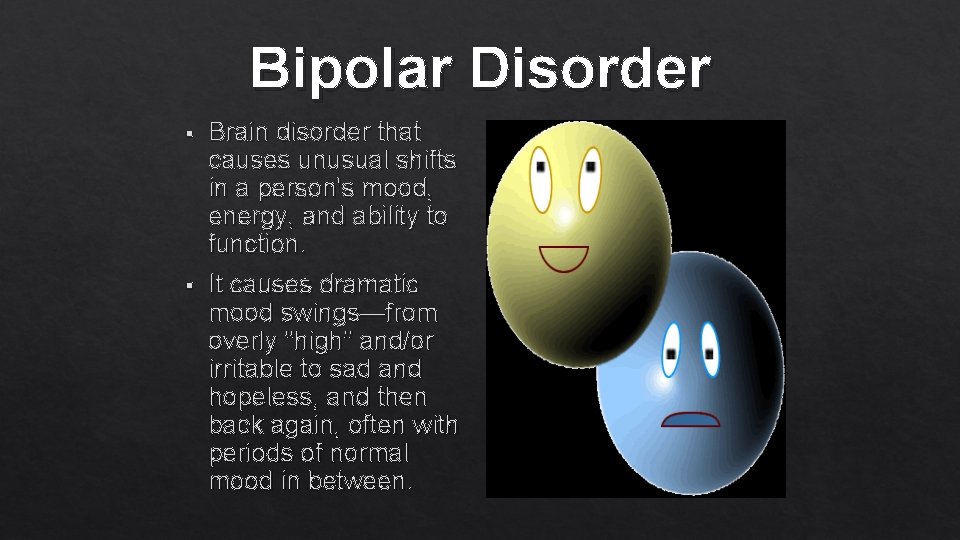
Bipolar Disorder § Brain disorder that causes unusual shifts in a person's mood, energy, and ability to function. § It causes dramatic mood swings—from overly "high" and/or irritable to sad and hopeless, and then back again, often with periods of normal mood in between.
Multiple Personality § Two or more of personality states. § Each personality can take control of the person's behavior at a given time. § Often a result of severe abuse; extremely rare.
Schizophrenia § Serious mental illness that tends to run in families. § The condition of gradually losing the ability to distinguish fantasy from reality, and reduced ability to function.
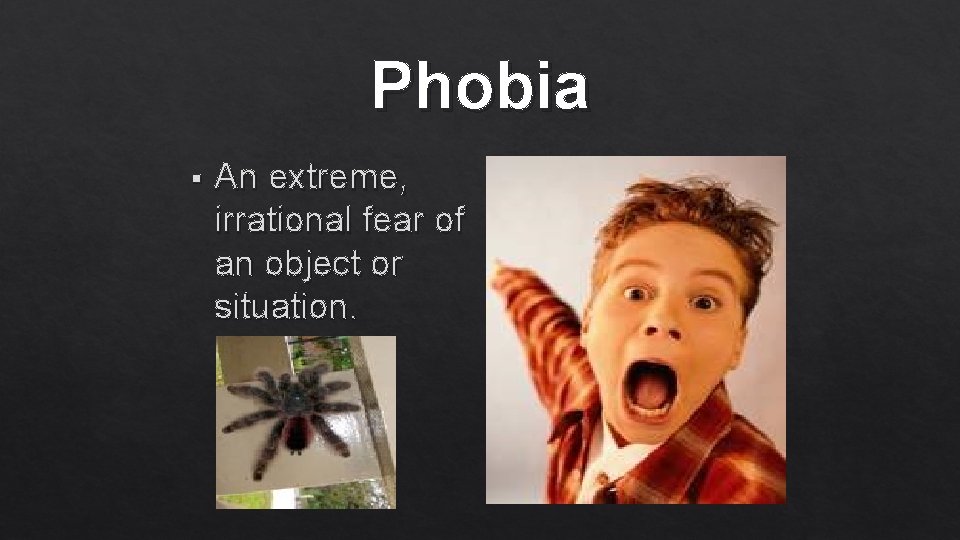
Phobia § An extreme, irrational fear of an object or situation.
SUICIDE AWARENESS
Young People’s Suicide – the reality
Statistics § On an average day in the U. S. , 20 young people end their own lives. § On the same day, 1, 000 attempt to do so, but fail. § 1 Suicide for every 25 suicide attempts § Depression is the leading cause of suicide § Suicide is the 2 nd leading cause of death amongst teenagers. § 1 – Accidents/3 - Homicide
Males vs Females § There are 4 times more suicides among males. § But, females attempt suicide 3 times as often as males and are more likely to have suicidal thoughts. § Why do you think this is?
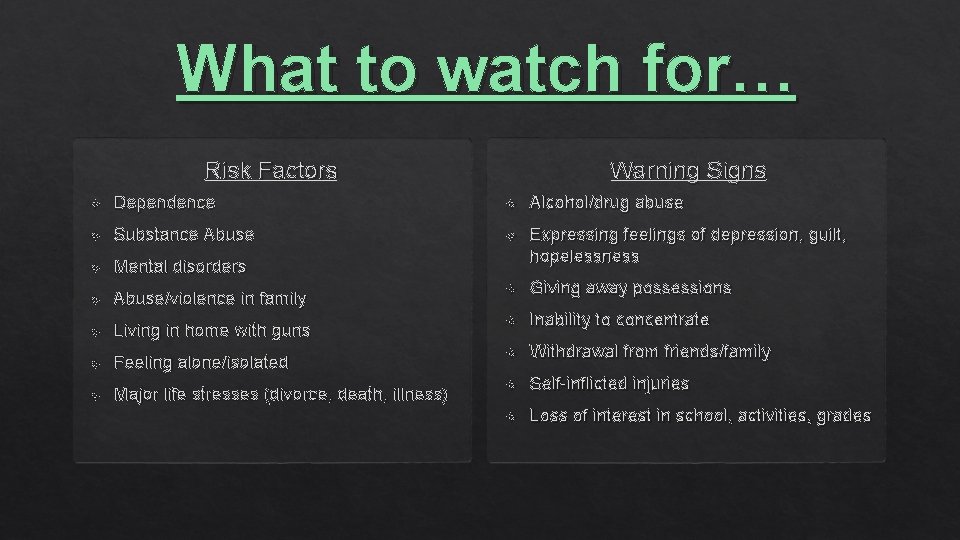
What to watch for… Warning Signs Risk Factors Dependence Alcohol/drug abuse Substance Abuse Mental disorders Expressing feelings of depression, guilt, hopelessness Abuse/violence in family Giving away possessions Living in home with guns Inability to concentrate Feeling alone/isolated Withdrawal from friends/family Major life stresses (divorce, death, illness) Self-inflicted injuries Loss of interest in school, activities, grades
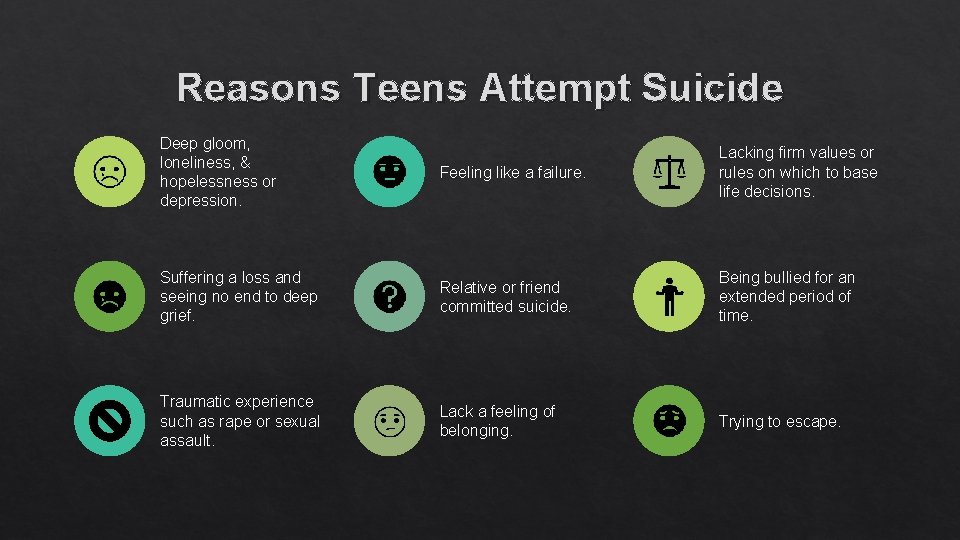
Reasons Teens Attempt Suicide Deep gloom, loneliness, & hopelessness or depression. Feeling like a failure. Lacking firm values or rules on which to base life decisions. Suffering a loss and seeing no end to deep grief. Relative or friend committed suicide. Being bullied for an extended period of time. Traumatic experience such as rape or sexual assault. Lack a feeling of belonging. Trying to escape.
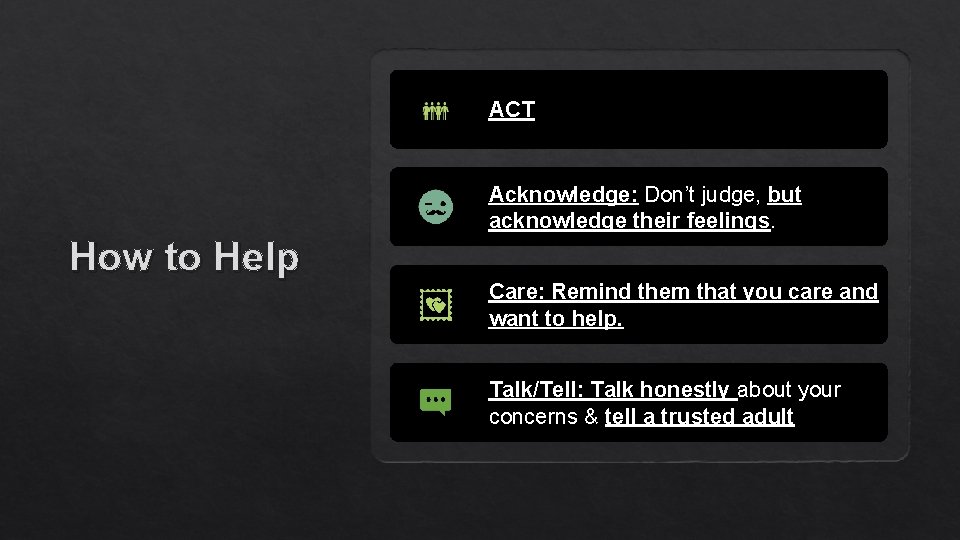
ACT Acknowledge: Don’t judge, but acknowledge their feelings. How to Help Care: Remind them that you care and want to help. Talk/Tell: Talk honestly about your concerns & tell a trusted adult
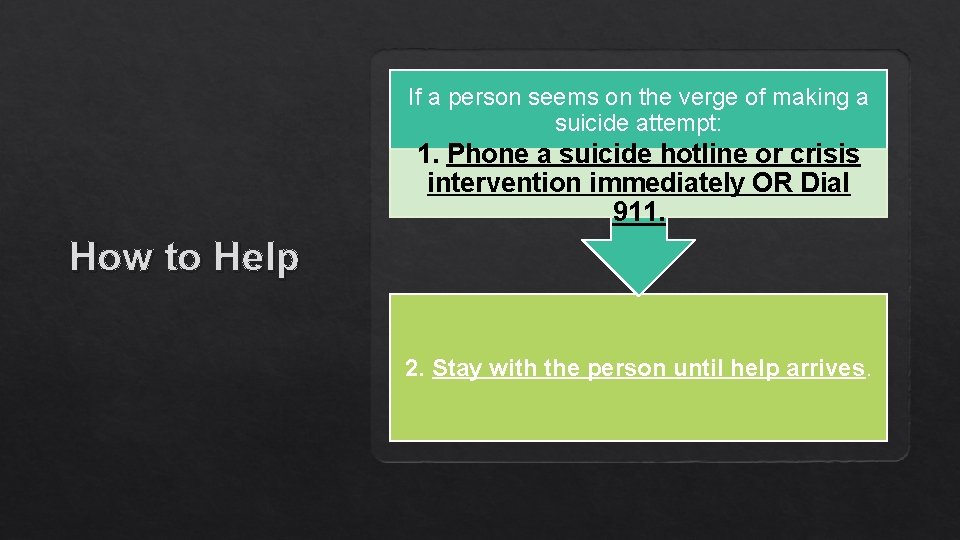
If a person seems on the verge of making a suicide attempt: 1. Phone a suicide hotline or crisis intervention immediately OR Dial 911. How to Help 2. Stay with the person until help arrives.
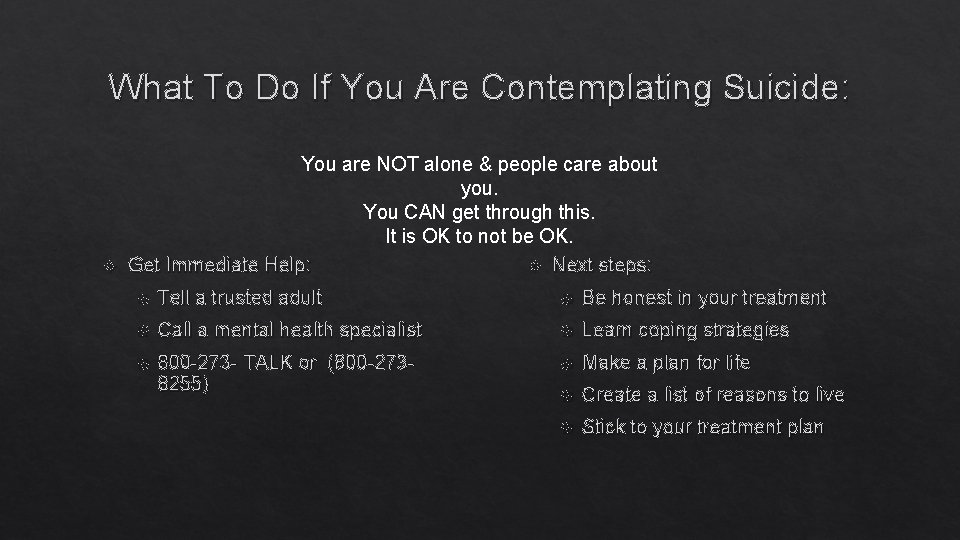
What To Do If You Are Contemplating Suicide: You are NOT alone & people care about you. You CAN get through this. It is OK to not be OK. Get Immediate Help: Next steps: Tell a trusted adult Be honest in your treatment Call a mental health specialist Learn coping strategies 800 -273 - TALK or (800 -2738255) Make a plan for life Create a list of reasons to live Stick to your treatment plan