
Common Logical Fallacies Beware of weak arguments Argument
Common Logical Fallacies Beware of weak arguments!

Argument An “argument” is not a fight.

Argument = making a point about a subject and supporting it with evidence.
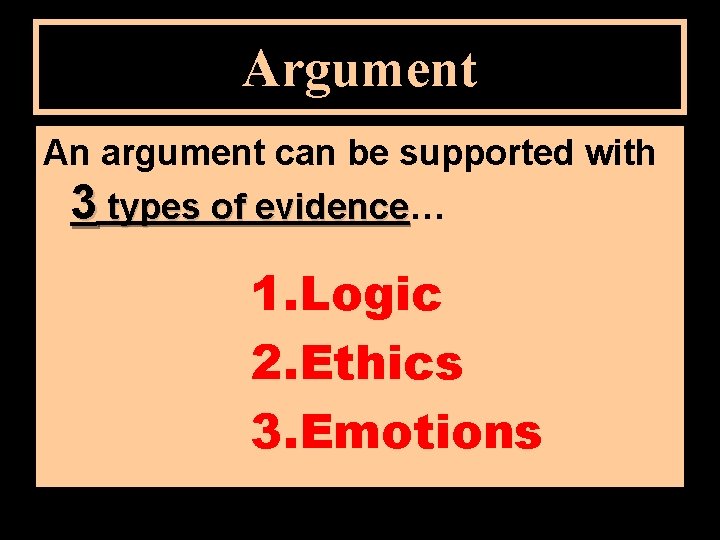
Argument An argument can be supported with 3 types of evidence… evidence 1. Logic 2. Ethics 3. Emotions
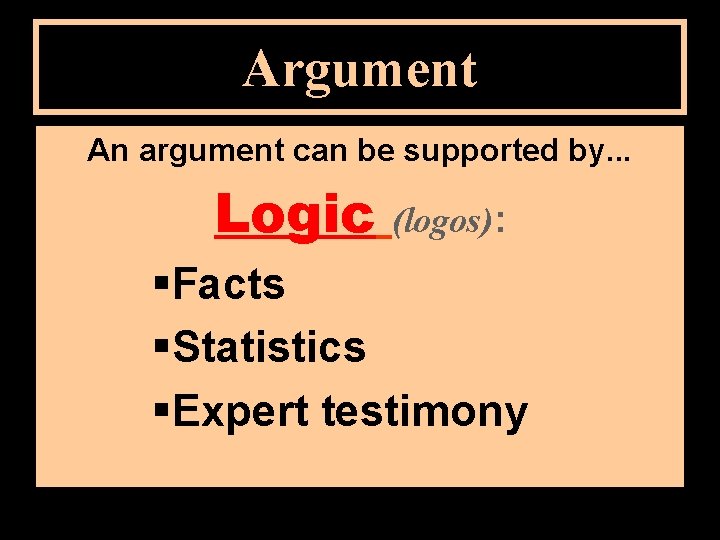
Argument An argument can be supported by. . . Logic (logos): §Facts §Statistics §Expert testimony
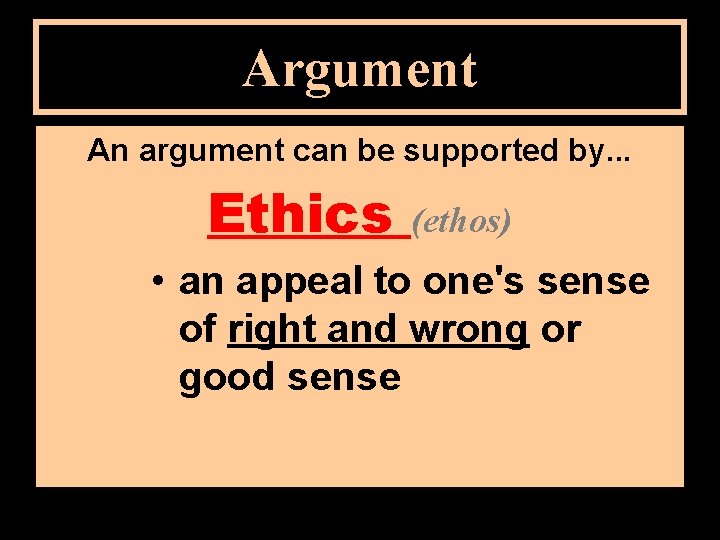
Argument An argument can be supported by. . . Ethics (ethos) • an appeal to one's sense of right and wrong or good sense
Argument An argument can be supported by. . . Emotions (pathos) • an appeal to one’s patriotism, fears, or sympathies.
Weak Arguments • Weak arguments rely on illogical statements called fallacies. – The following slides contain examples of logical fallacies. . .
The Fallacies
Logical Fallacies NON-SEQUITUR “Non-SECK-quit-er” aka: “It does not follow”
1. Non-sequitur ("it does not follow") “Non-SECK-quit-er” • An idea or conclusion that does not follow logically based upon the evidence.
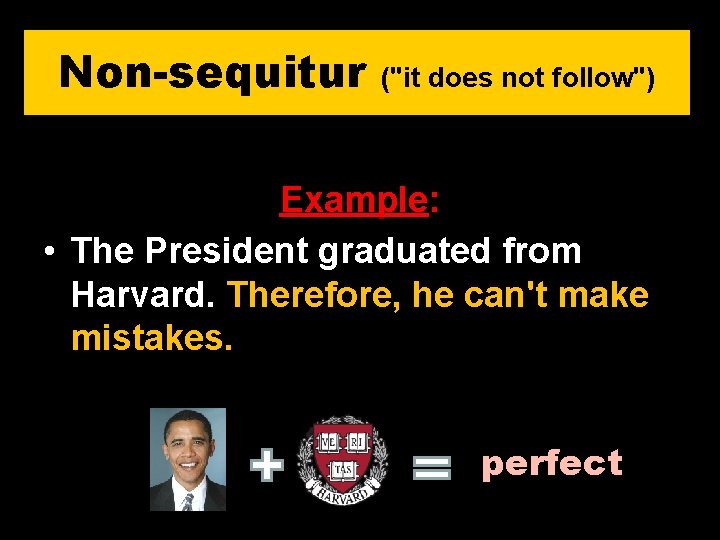
Non-sequitur ("it does not follow") Example: • The President graduated from Harvard. Therefore, he can't make mistakes. perfect
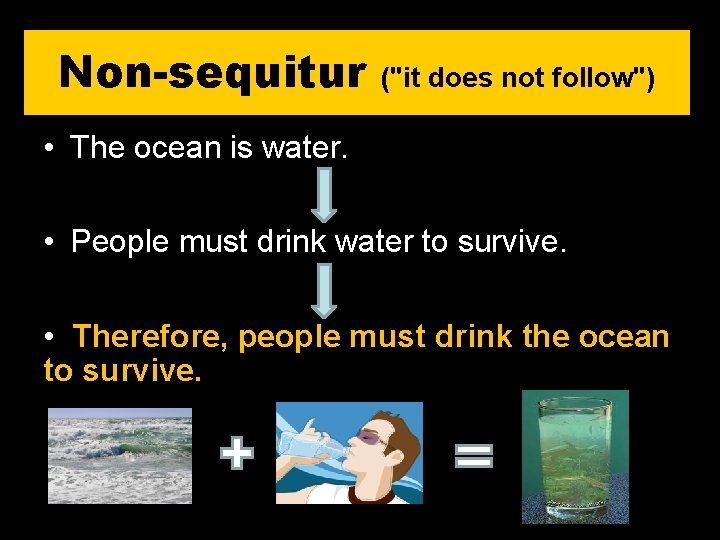
Non-sequitur ("it does not follow") • The ocean is water. • People must drink water to survive. • Therefore, people must drink the ocean to survive.
Logical Fallacies 2. BEGGING THE QUESTION

Begging the Question • Basing an argument on an assumption that has not been proven or that is impossible to prove. Examples follow on the next few slides:
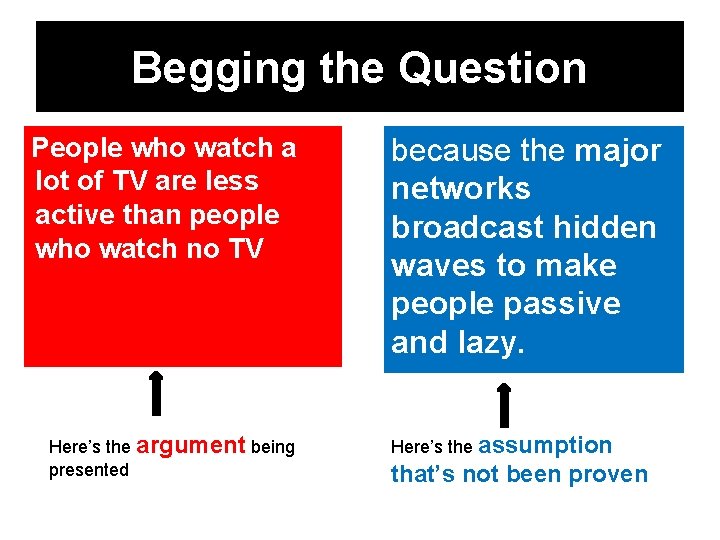
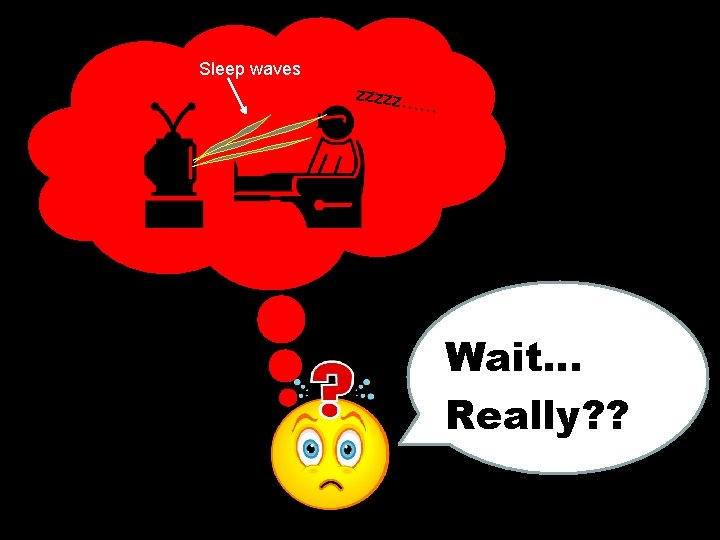
Begging the Question People who watch a lot of TV are less active than people who watch no TV Here’s the argument being presented because the major networks broadcast hidden waves to make people passive and lazy. Here’s the assumption that’s not been proven
Sleep waves zzzzz… … Wait… Really? ?
Begging the Question The TV argument from the previous slide begs the question: Ø“How do you know the TV stations are broadcasting waves to make people sleepy? ” zzzzz… …
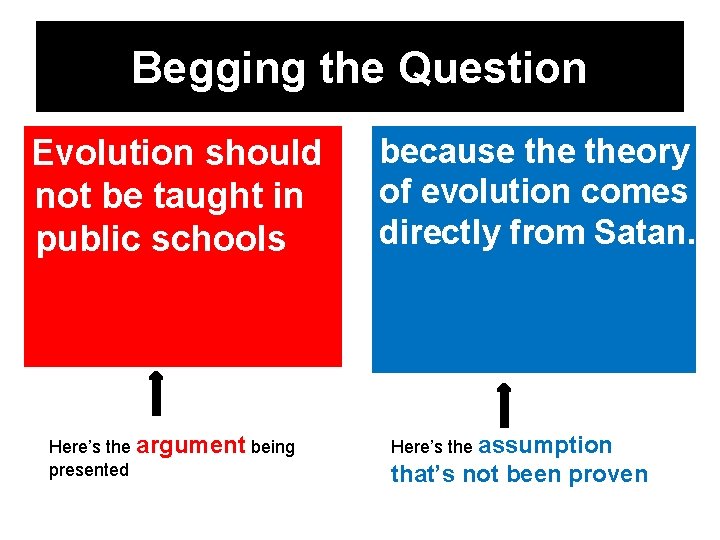
Begging the Question Evolution should not be taught in public schools Here’s the argument being presented because theory of evolution comes directly from Satan. Here’s the assumption that’s not been proven
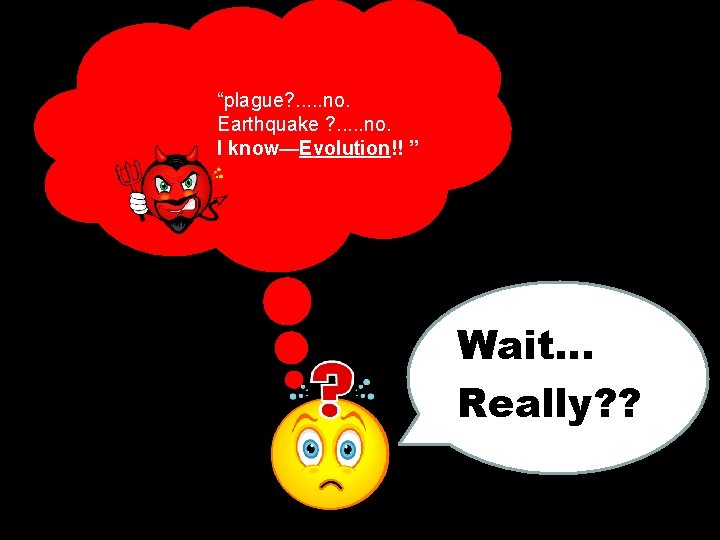
“plague? . . . no. Earthquake ? . . . no. I know—Evolution!! ” Wait… Really? ?
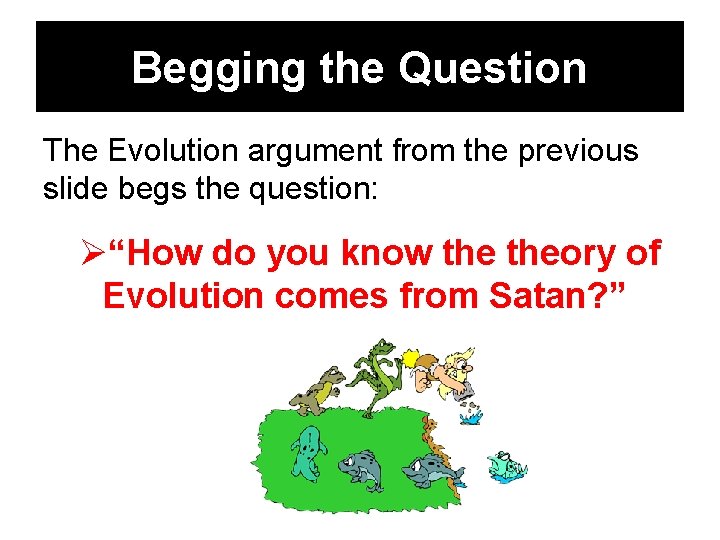
Begging the Question The Evolution argument from the previous slide begs the question: Ø“How do you know theory of Evolution comes from Satan? ”
Logical Fallacies Circular Reasoning
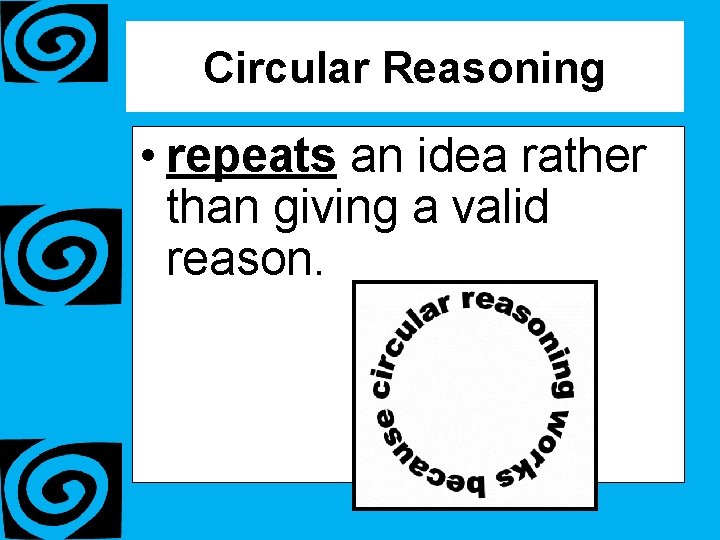
Circular Reasoning • repeats an idea rather than giving a valid reason.
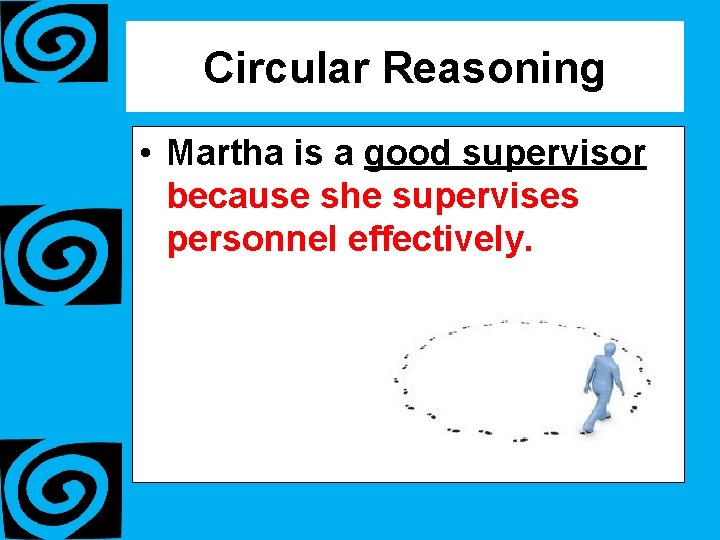
Circular Reasoning • Martha is a good supervisor because she supervises personnel effectively.
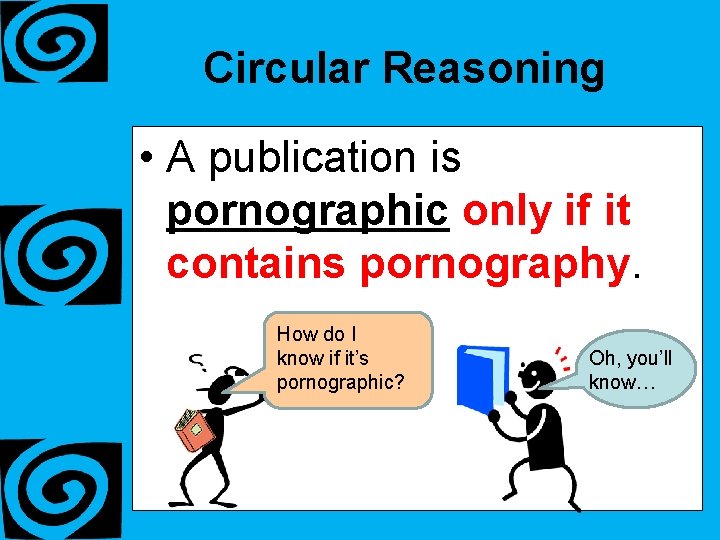
Circular Reasoning • A publication is pornographic only if it contains pornography. How do I know if it’s pornographic? Oh, you’ll know…
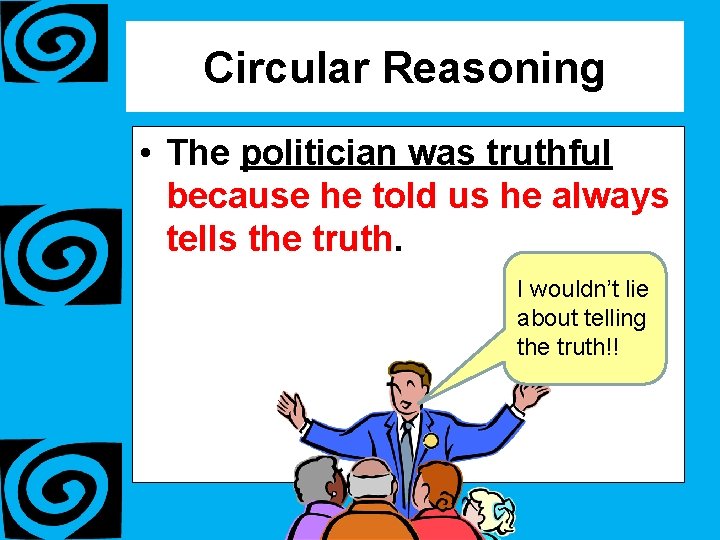
Circular Reasoning • The politician was truthful because he told us he always tells the truth. I wouldn’t lie about telling the truth!!
Logical Fallacies 4. Straw-Man Argument
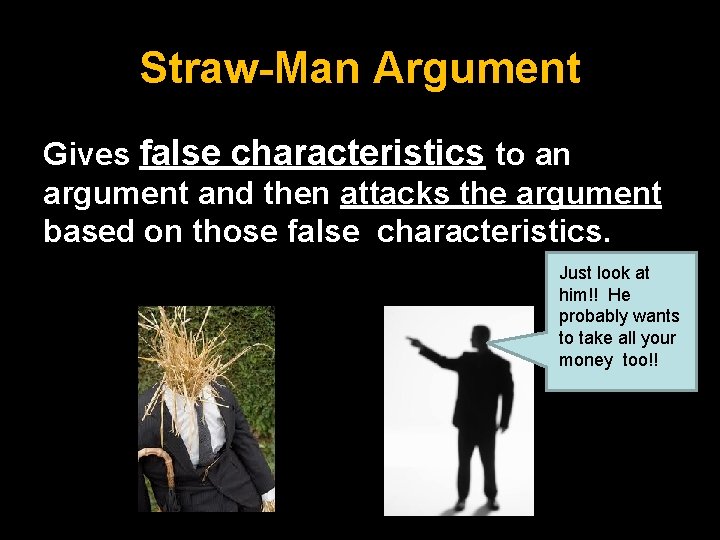
Straw-Man Argument Gives false characteristics to an argument and then attacks the argument based on those false characteristics. Just look at him!! He probably wants to take all your money too!!
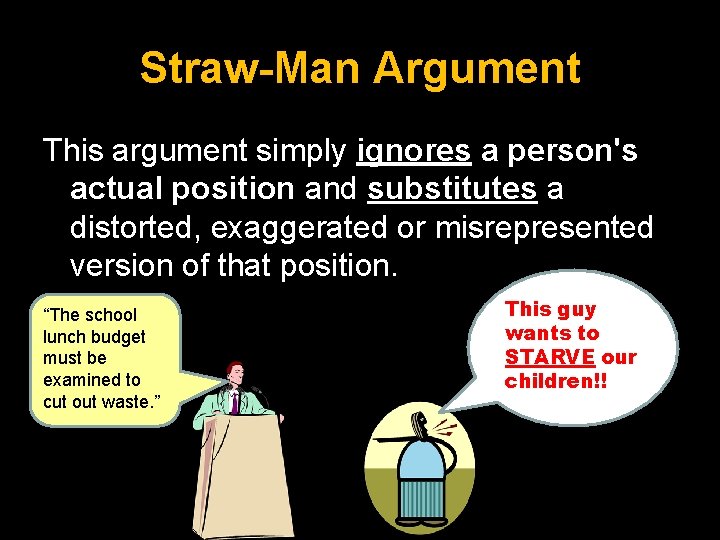
Straw-Man Argument This argument simply ignores a person's actual position and substitutes a distorted, exaggerated or misrepresented version of that position. “The school lunch budget must be examined to cut out waste. ” This guy wants to STARVE our children!!
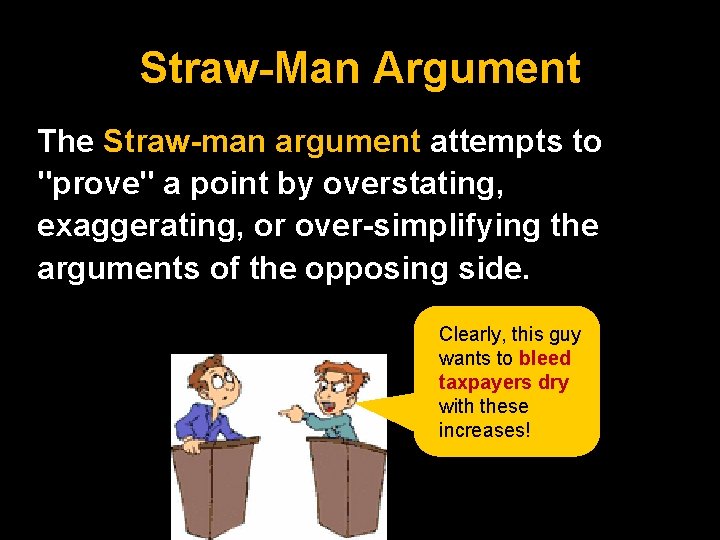
Straw-Man Argument The Straw-man argument attempts to "prove" a point by overstating, exaggerating, or over-simplifying the arguments of the opposing side. Clearly, this guy wants to bleed taxpayers dry with these increases!
Logical Fallacies 5. Ad Hominem aka “To the man”
Ad Hominem (to the man) • This argument focuses attention on people rather than on arguments or evidence. – It attacks the person rather than the issue.
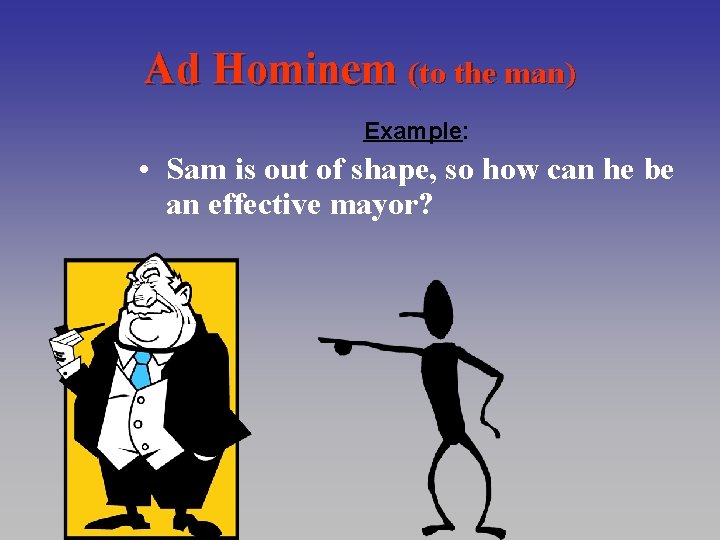
Ad Hominem (to the man) Example: • Sam is out of shape, so how can he be an effective mayor?
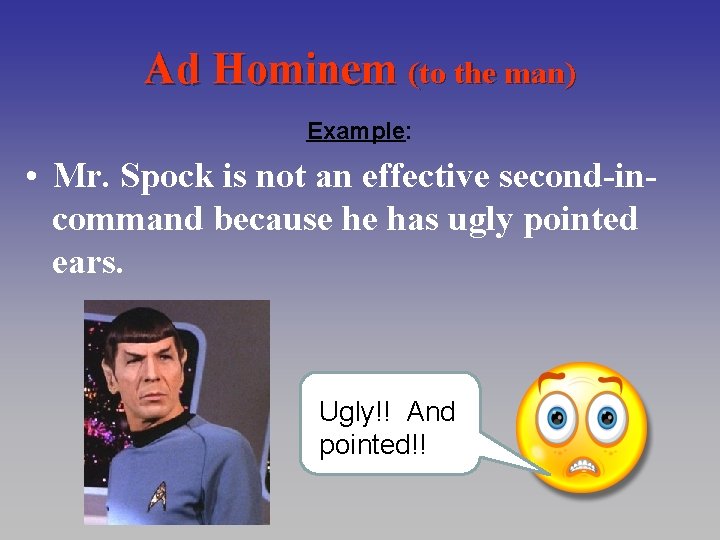
Ad Hominem (to the man) Example: • Mr. Spock is not an effective second-incommand because he has ugly pointed ears. Ugly!! And pointed!!
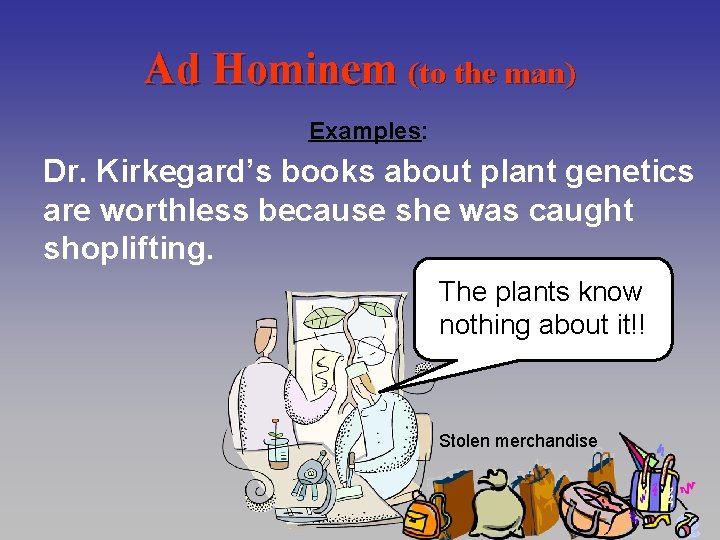
Ad Hominem (to the man) Examples: Dr. Kirkegard’s books about plant genetics are worthless because she was caught shoplifting. The plants know nothing about it!! Stolen merchandise
Logical Fallacies 6. Overgeneralization
Overgeneralization • An overgeneralization draws a conclusion about an entire group, topic, or place based on insufficient evidence. –Stereotypes are one kind of overgeneralization.
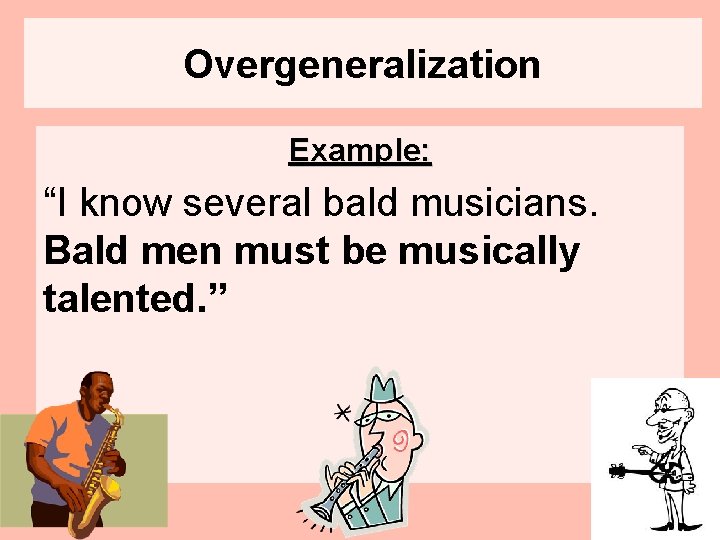
Overgeneralization Example: “I know several bald musicians. Bald men must be musically talented. ”
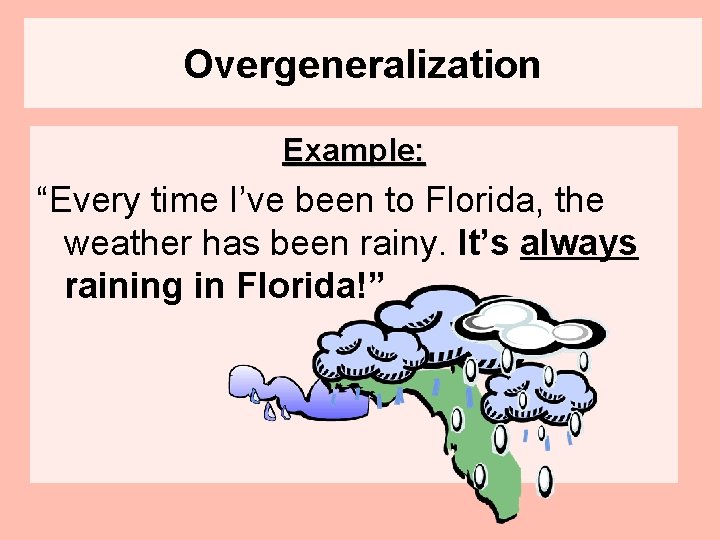
Overgeneralization Example: “Every time I’ve been to Florida, the weather has been rainy. It’s always raining in Florida!”
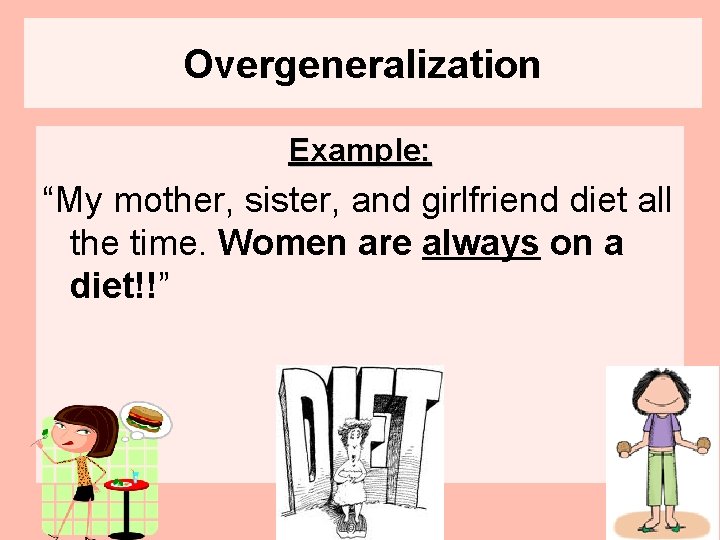
Overgeneralization Example: “My mother, sister, and girlfriend diet all the time. Women are always on a diet!!”
Logical Fallacies 7. POST HOC REASONING aka: “Black cat syndrome”
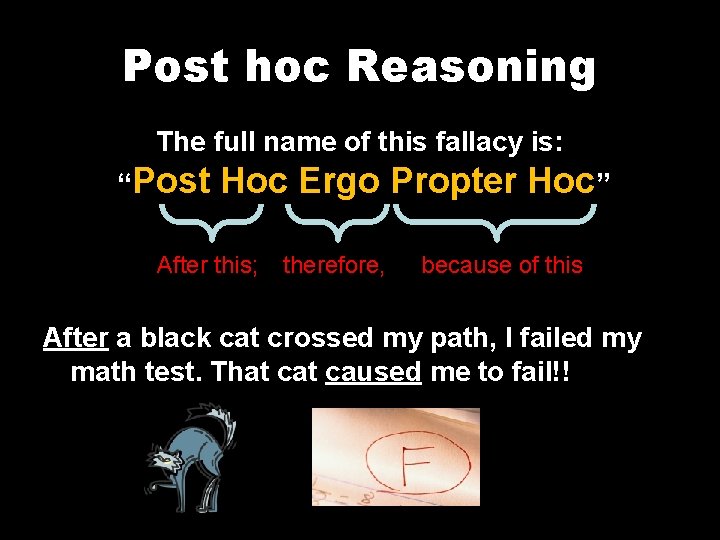
Post hoc Reasoning The full name of this fallacy is: “Post Hoc Ergo Propter Hoc” After this; therefore, because of this After a black cat crossed my path, I failed my math test. That caused me to fail!!
Post hoc Reasoning This fallacy is also known as: • False or Doubful Cause • Questionable Cause • Mistaking Coincidence for Cause
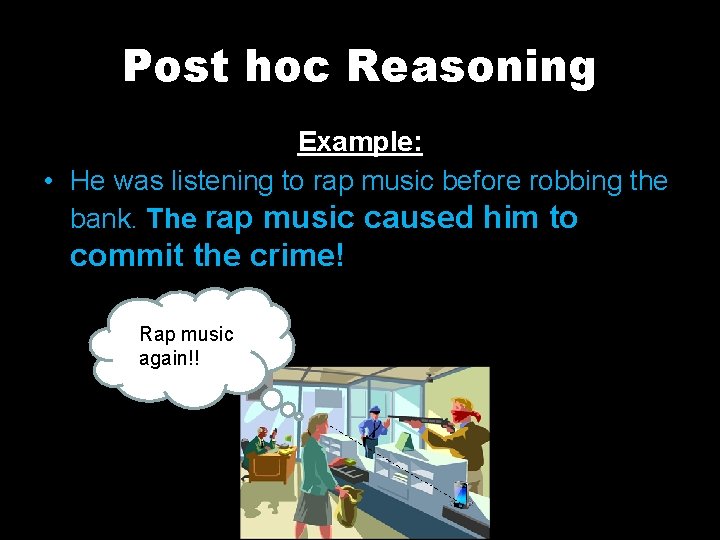
Post hoc Reasoning Example: • He was listening to rap music before robbing the bank. The rap music caused him to commit the crime! Rap music again!!
Logical Fallacies 8. FALSE DICHOTOMY aka: “Either-or fallacy”
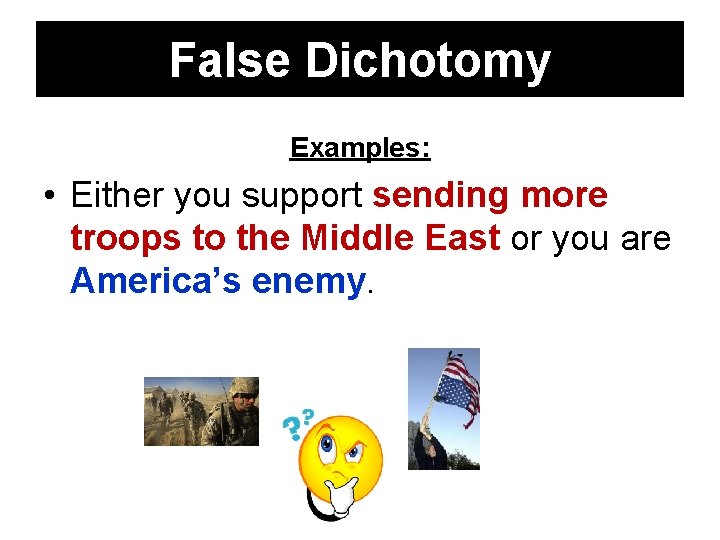
False Dichotomy Examples: • Either you support sending more troops to the Middle East or you are America’s enemy.
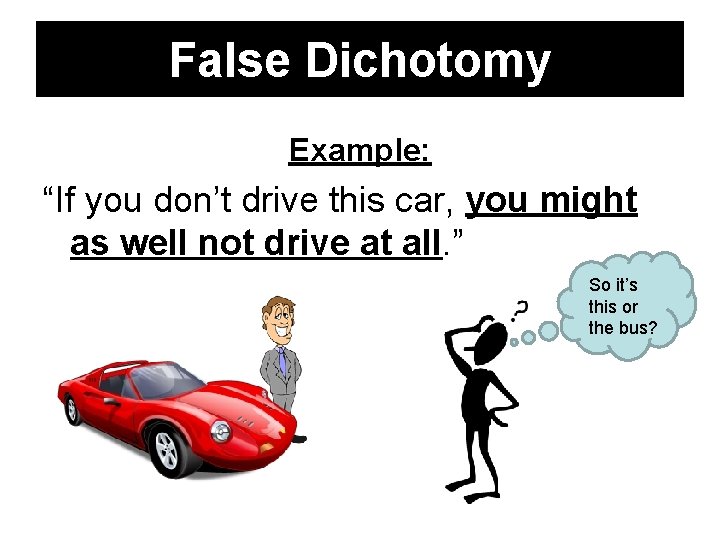
False Dichotomy Example: “If you don’t drive this car, you might as well not drive at all. ” So it’s this or the bus?
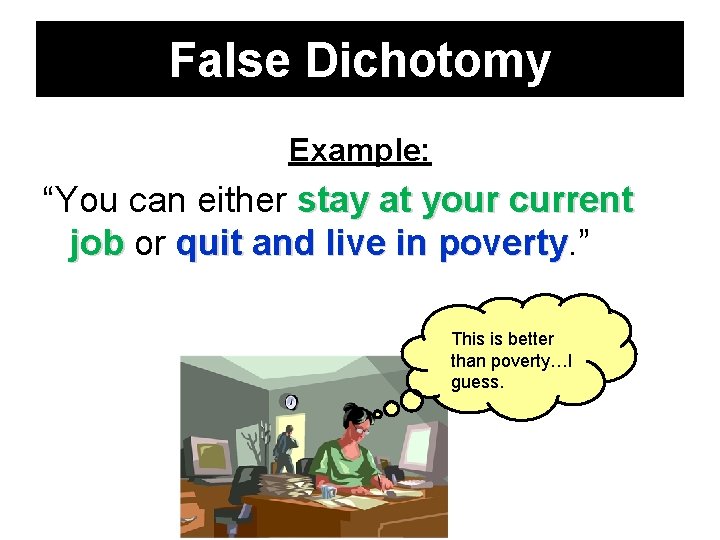
False Dichotomy Example: “You can either stay at your current job or quit and live in poverty. ” poverty This is better than poverty…I guess.
False Dichotomy • Presents the false assumption that there are only two possibilities. – Sometimes called the “False Dilemma” or the “Either/Or” fallacy. • Most situations provide more than two possible outcomes.
Logical Fallacies 9. RED HERRING
Red Herring • . . . named after a strong-smelling fish, the scent of which throws hounds off the scent of a trail. • The Red Herring occurs when one changes the subject to draw attention away from the main issue. • The focus is shifted to a side issue or something irrelevant.
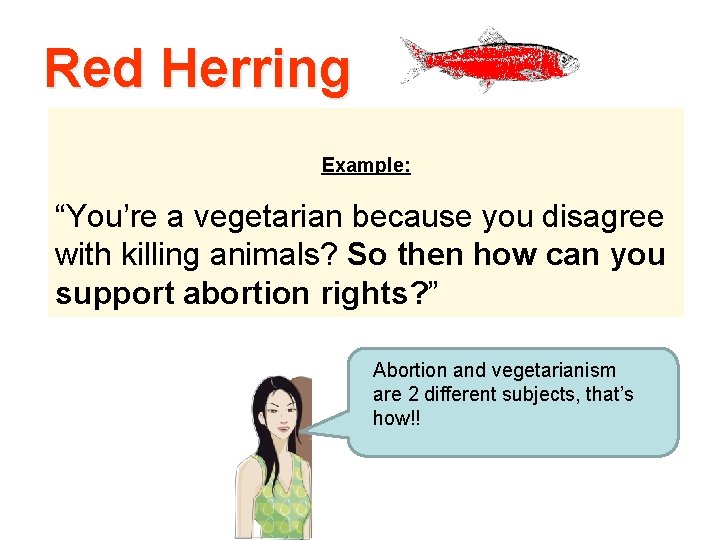
Red Herring Example: “You’re a vegetarian because you disagree with killing animals? So then how can you support abortion rights? ” Abortion and vegetarianism are 2 different subjects, that’s how!!
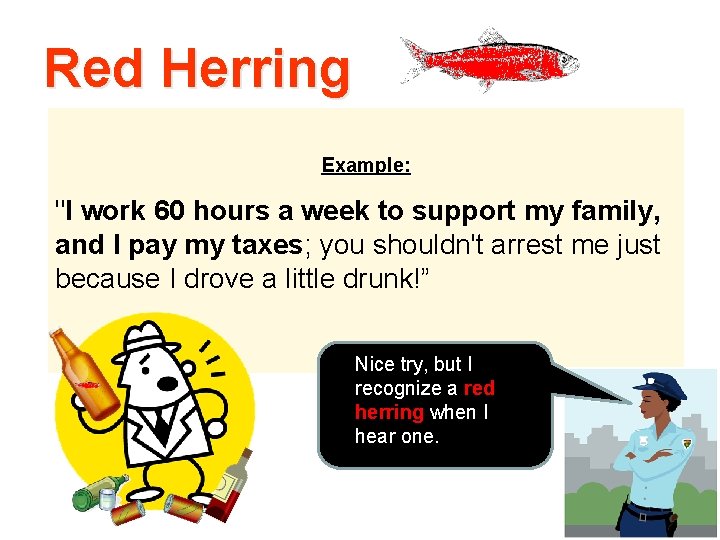
Red Herring Example: "I work 60 hours a week to support my family, and I pay my taxes; you shouldn't arrest me just because I drove a little drunk!” Nice try, but I recognize a red herring when I hear one.
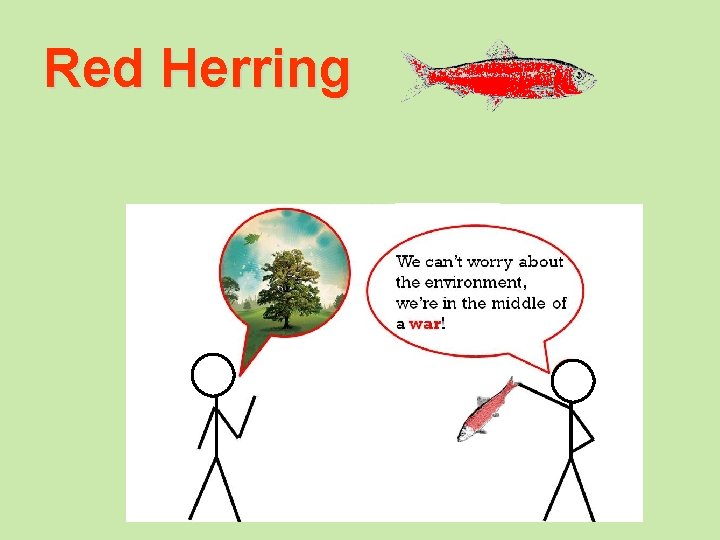
Red Herring
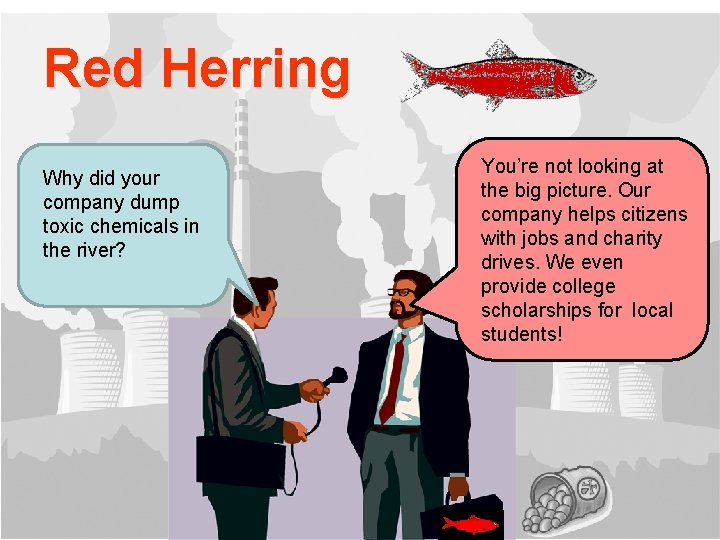
Red Herring Why did your company dump toxic chemicals in the river? You’re not looking at the big picture. Our company helps citizens with jobs and charity drives. We even provide college scholarships for local students!
Logical Fallacies 10. APPEAL TO THE CROWD
Appeal to the Crowd “argumentum ad populum” or “Bandwagon” • relying on the emotional passion of the crowd in making an argument; playing on a group's fears or prejudices.
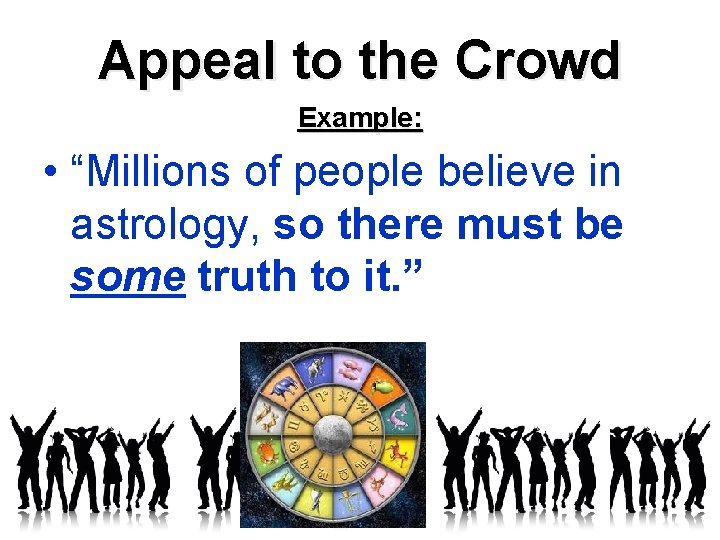
Appeal to the Crowd Example: • “Millions of people believe in astrology, so there must be some truth to it. ”
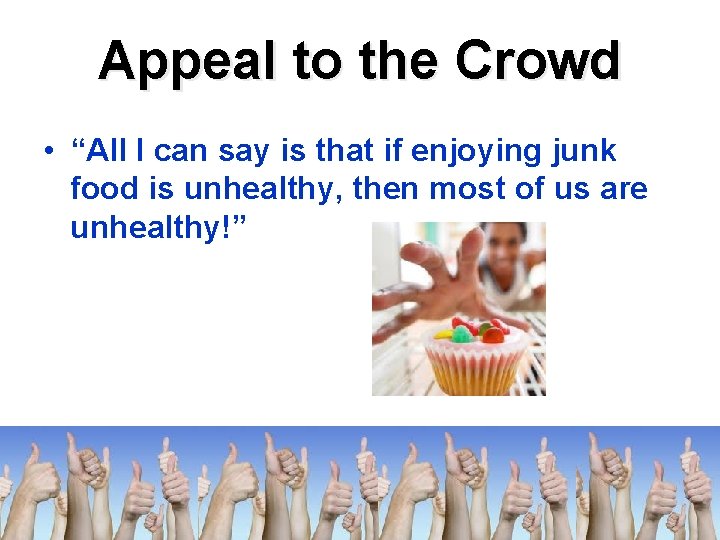
Appeal to the Crowd • “All I can say is that if enjoying junk food is unhealthy, then most of us are unhealthy!”
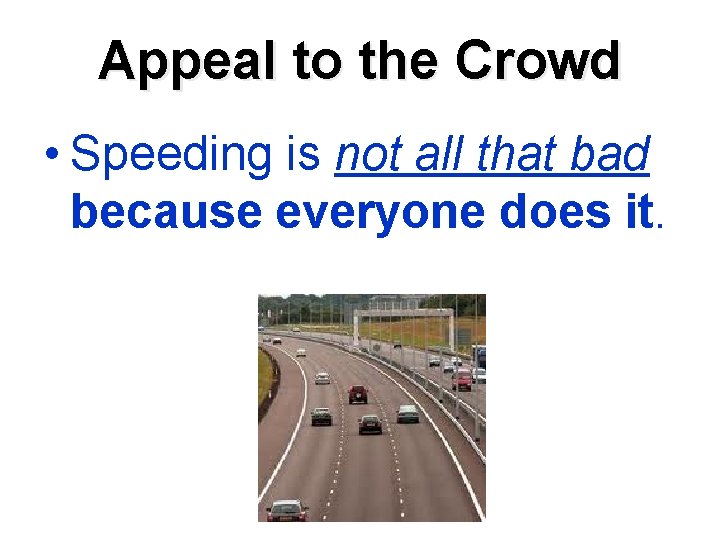
Appeal to the Crowd • Speeding is not all that bad because everyone does it.
Appeal to the Crowd • “Of course you want our payment plan; everybody takes advantage of that!”
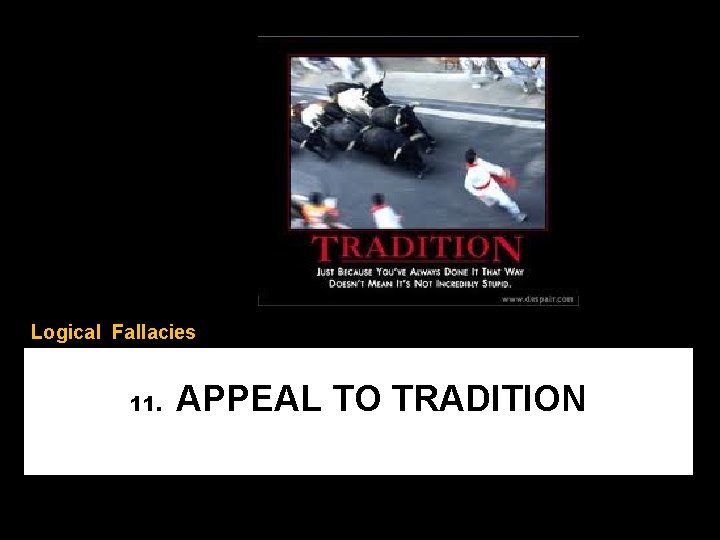
Logical Fallacies 11. APPEAL TO TRADITION
Appeal To Tradition: This argument says something is good or correct because it is a tradition. In other words… “We should continue to do things as they have been done in the past. ”
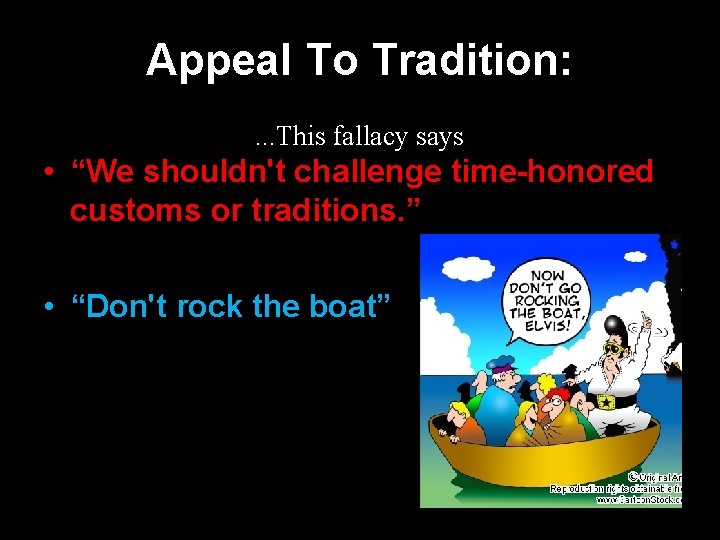
Appeal To Tradition: . . . This fallacy says • “We shouldn't challenge time-honored customs or traditions. ” • “Don't rock the boat”
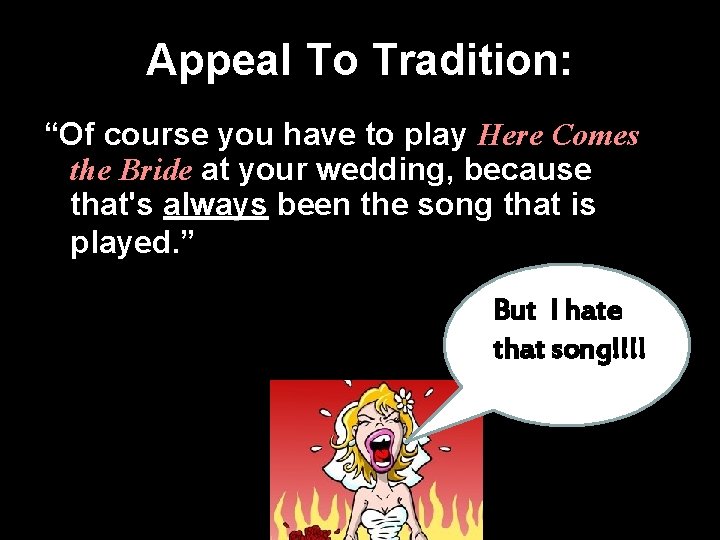
Appeal To Tradition: “Of course you have to play Here Comes the Bride at your wedding, because that's always been the song that is played. ” But I hate that song!!!!
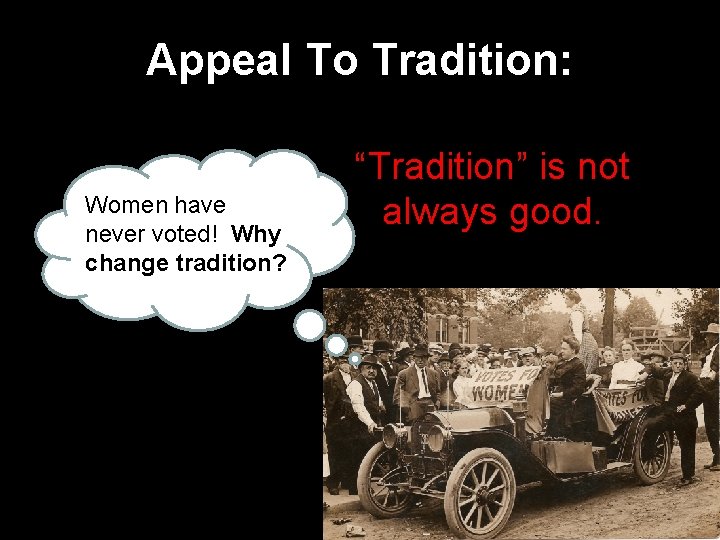
Appeal To Tradition: Women have never voted! Why change tradition? “Tradition” is not always good.
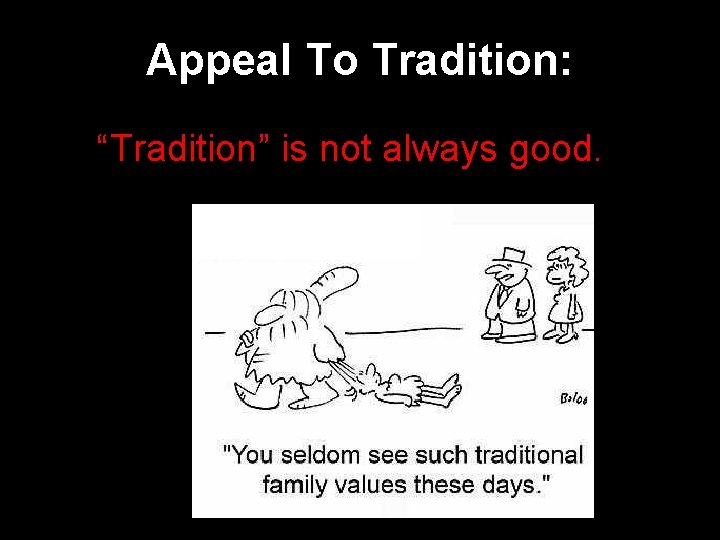
Appeal To Tradition: “Tradition” is not always good.
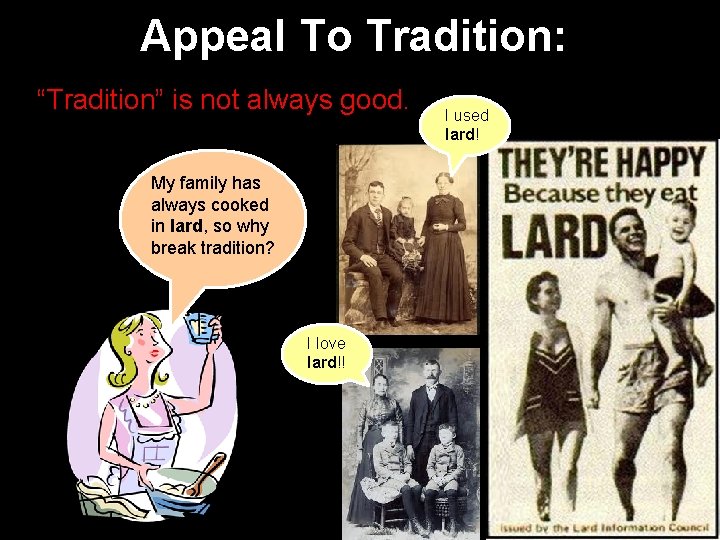
Appeal To Tradition: “Tradition” is not always good. My family has always cooked in lard, so why break tradition? I love lard!! I used lard!
Many more logical fallacies exist. . . Be on the lookout for them in all of your reading and research! End of Presentation.
- Slides: 69