
Common insect orders Insects are the most speciesrich
- Slides: 47
Common insect orders
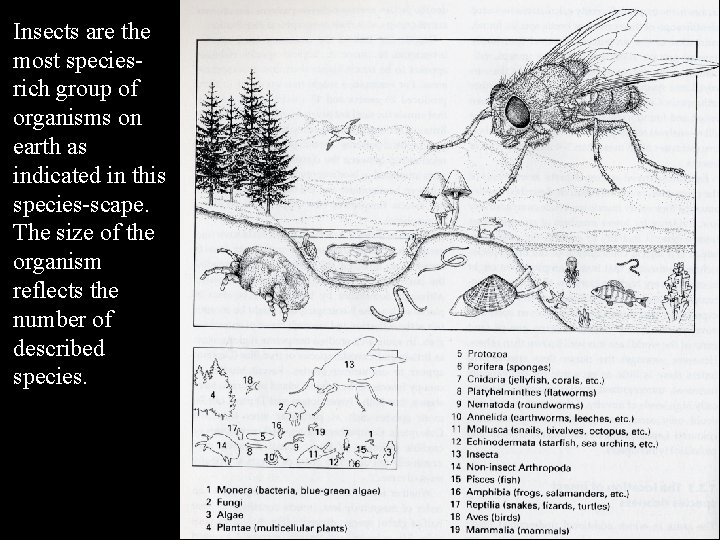
Insects are the most speciesrich group of organisms on earth as indicated in this species-scape. The size of the organism reflects the number of described species.
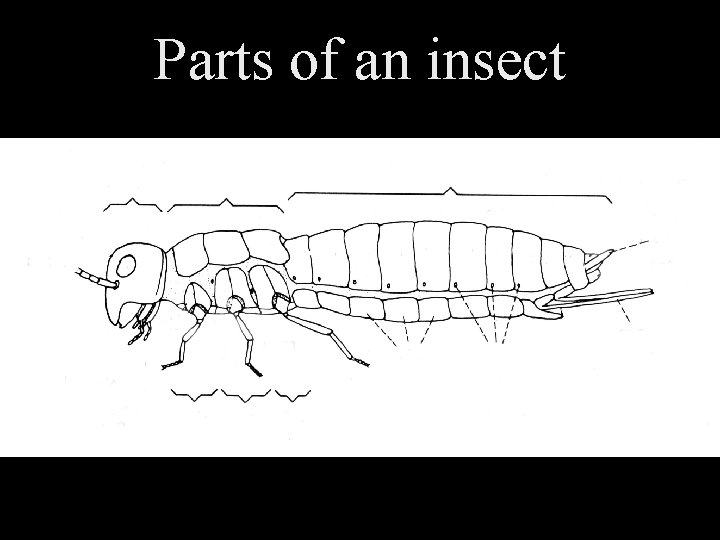
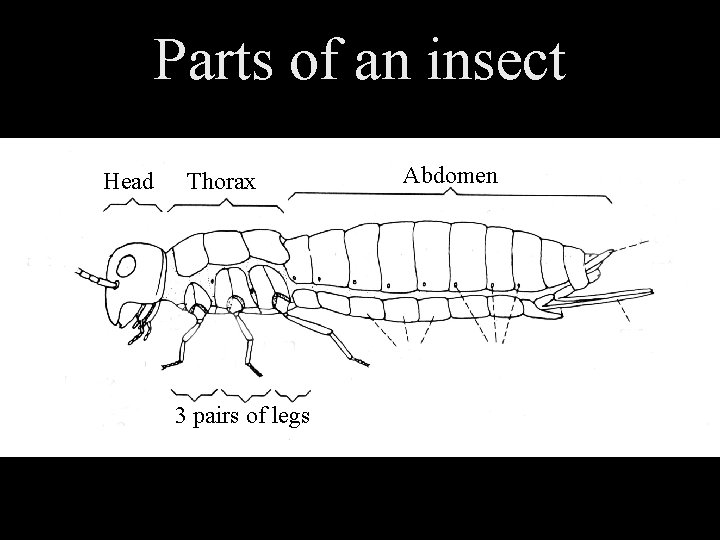
Parts of an insect
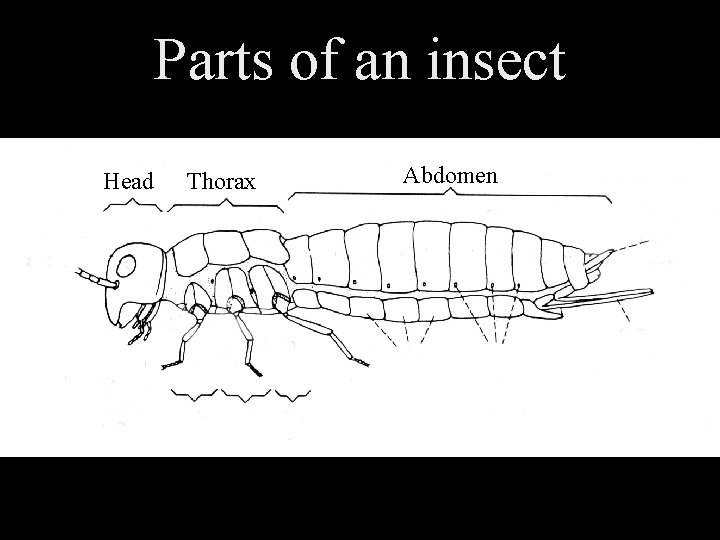
Parts of an insect Head Thorax Abdomen
Parts of an insect Head Thorax 3 pairs of legs Abdomen
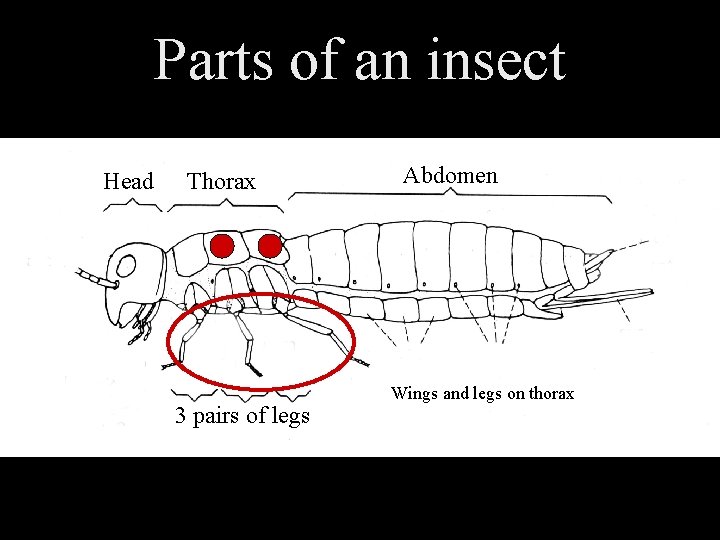
Parts of an insect Head Thorax 3 pairs of legs Abdomen Wings and legs on thorax
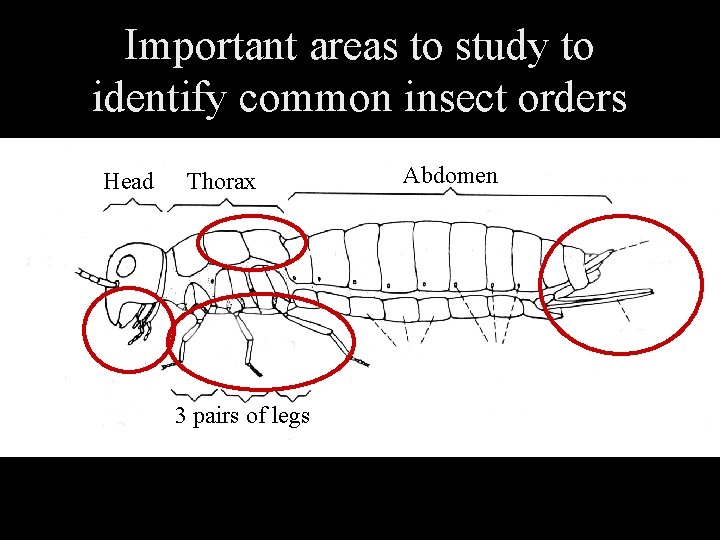
Important areas to study to identify common insect orders Head Thorax 3 pairs of legs Abdomen
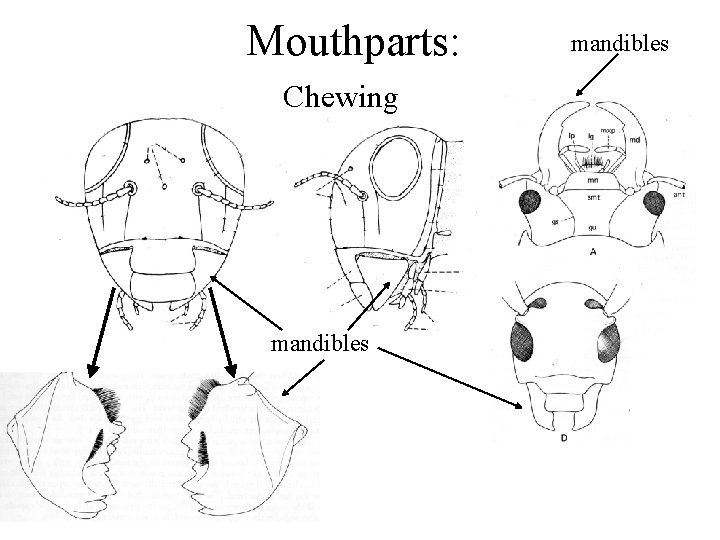
Mouthparts: Chewing mandibles
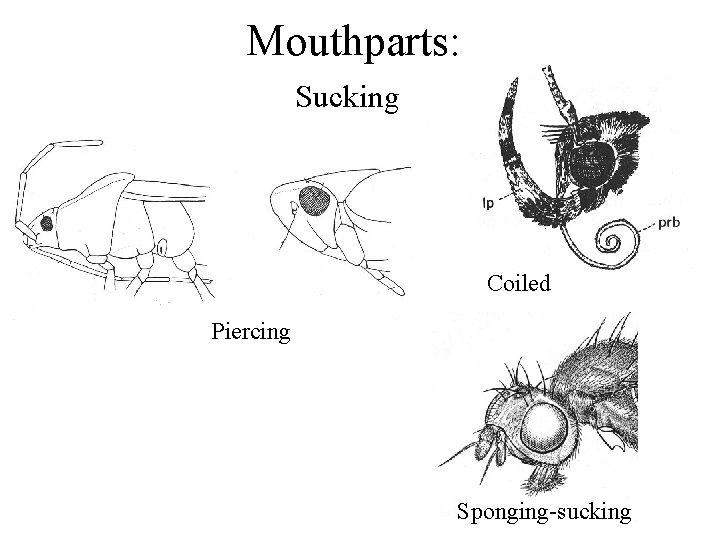
Mouthparts: Sucking Coiled Piercing Sponging-sucking
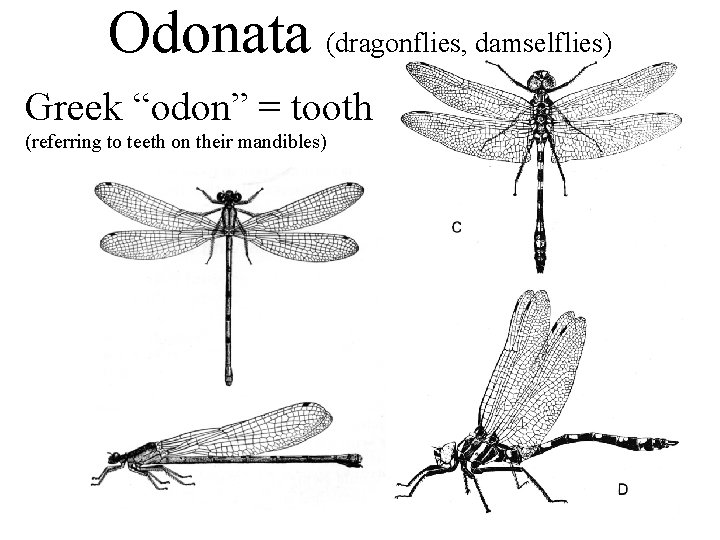
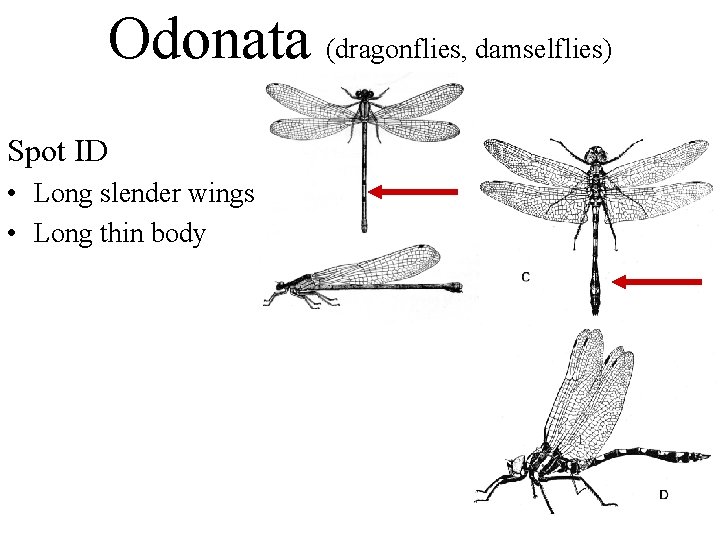
Odonata (dragonflies, damselflies) Greek “odon” = tooth (referring to teeth on their mandibles)
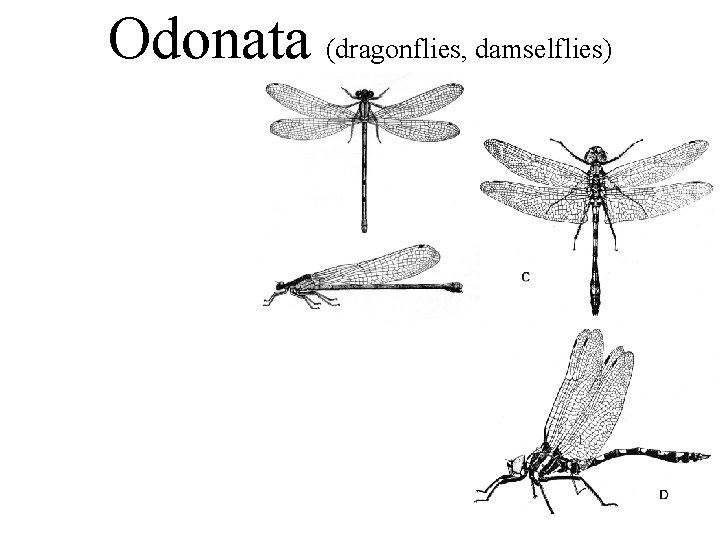
Odonata (dragonflies, damselflies)
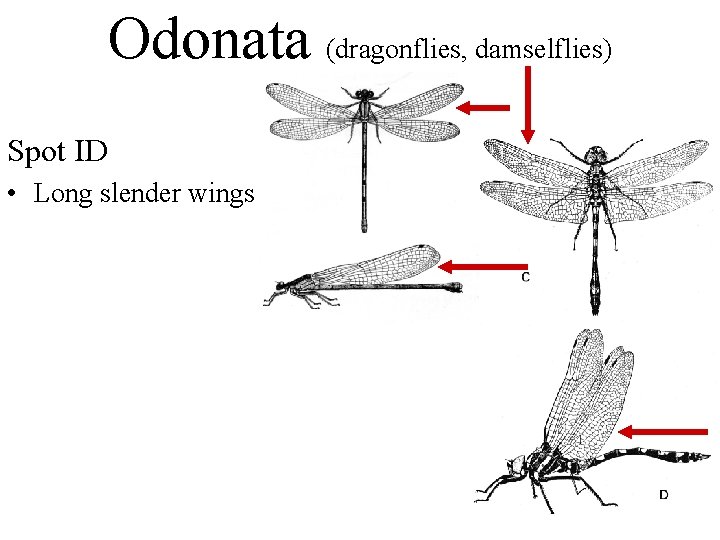
Odonata (dragonflies, damselflies) Spot ID • Long slender wings
Odonata (dragonflies, damselflies) Spot ID • Long slender wings • Long thin body
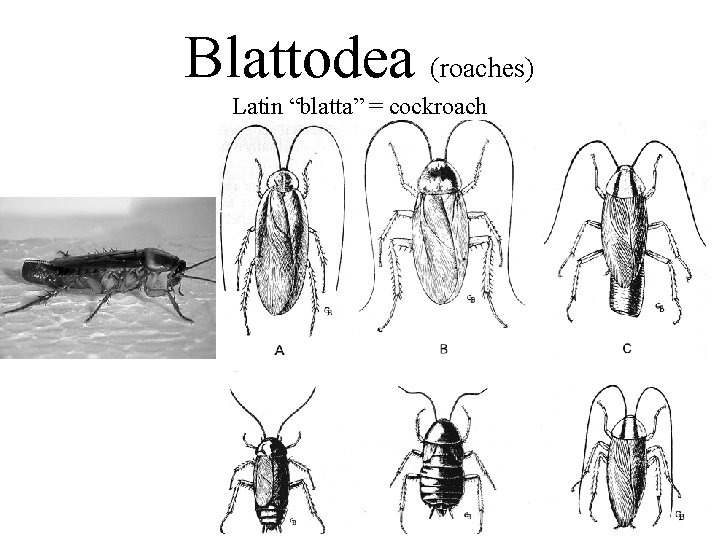
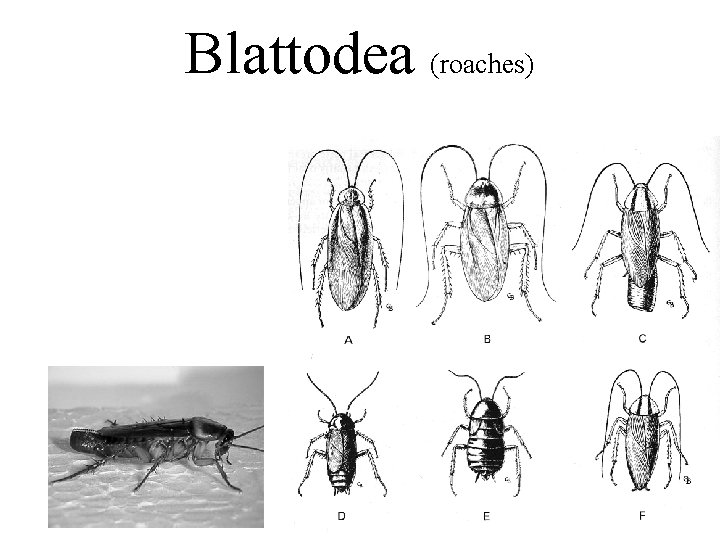
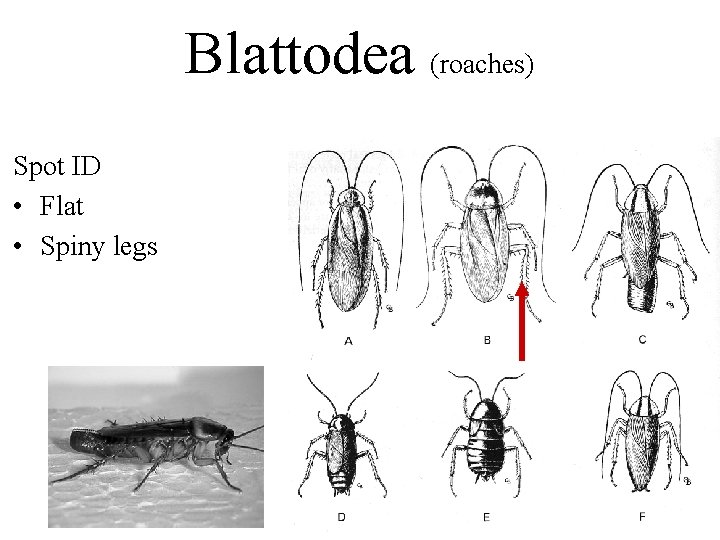
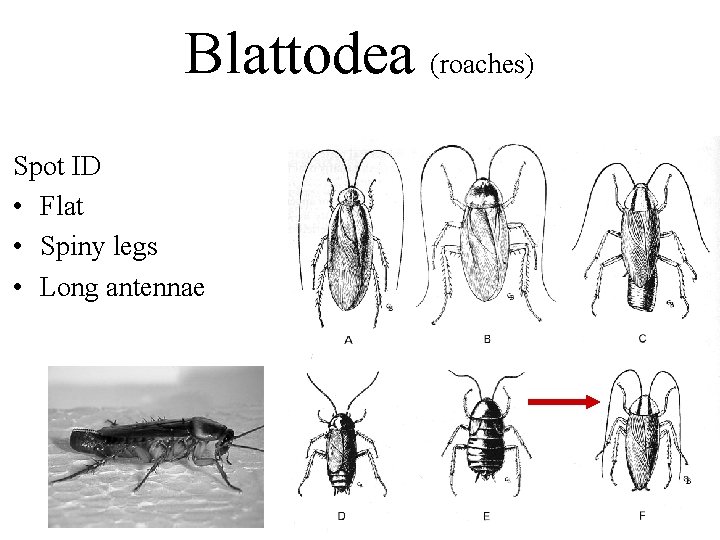
Blattodea (roaches) Latin “blatta” = cockroach
Blattodea (roaches)
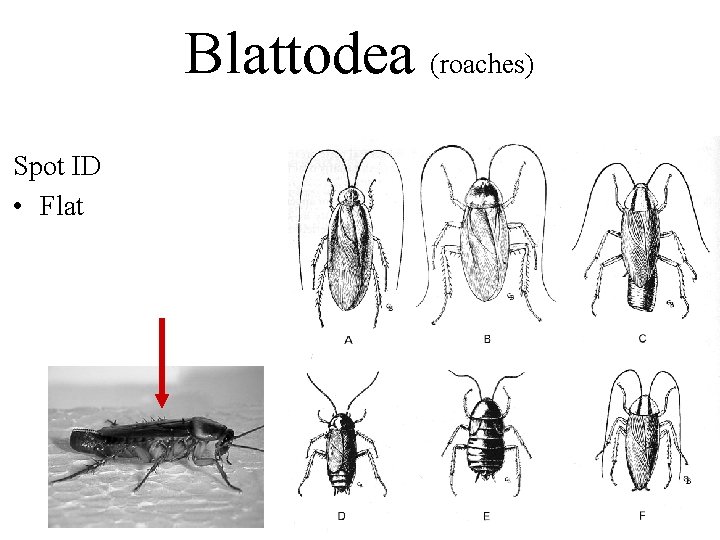
Blattodea (roaches) Spot ID • Flat
Blattodea (roaches) Spot ID • Flat • Spiny legs
Blattodea (roaches) Spot ID • Flat • Spiny legs • Long antennae
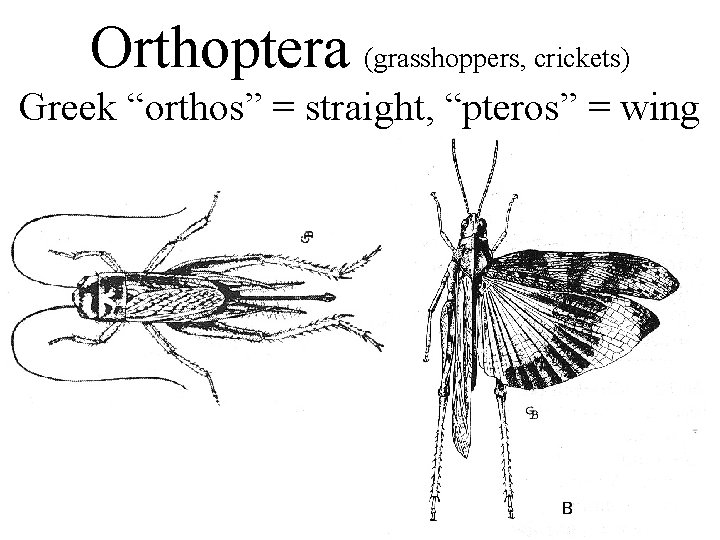
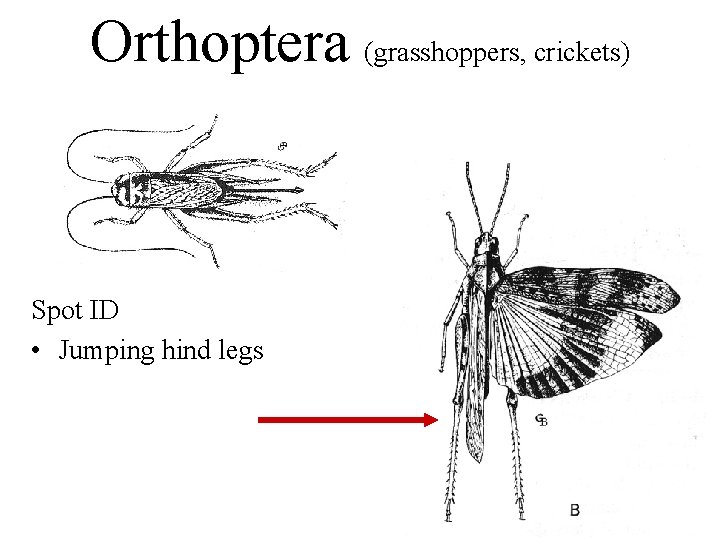
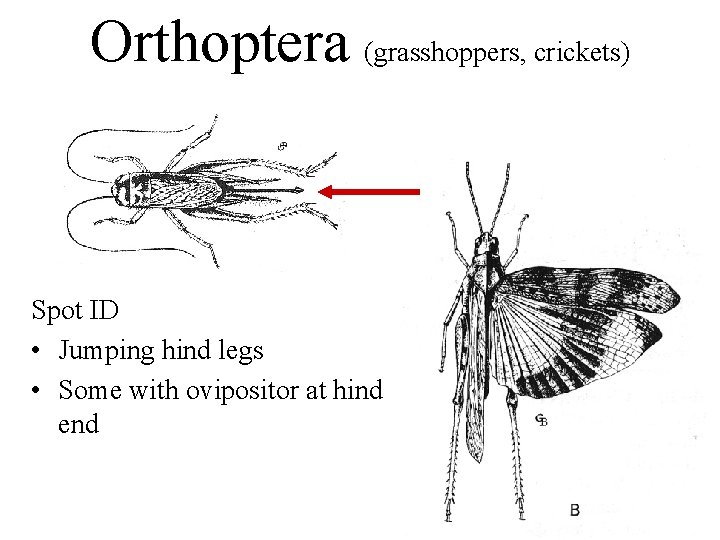
Orthoptera (grasshoppers, crickets) Greek “orthos” = straight, “pteros” = wing
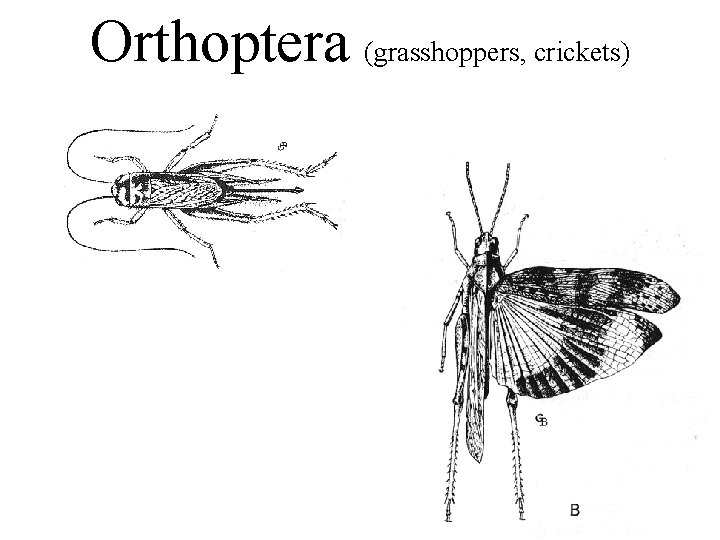
Orthoptera (grasshoppers, crickets)
Orthoptera (grasshoppers, crickets) Spot ID • Jumping hind legs
Orthoptera (grasshoppers, crickets) Spot ID • Jumping hind legs • Some with ovipositor at hind end
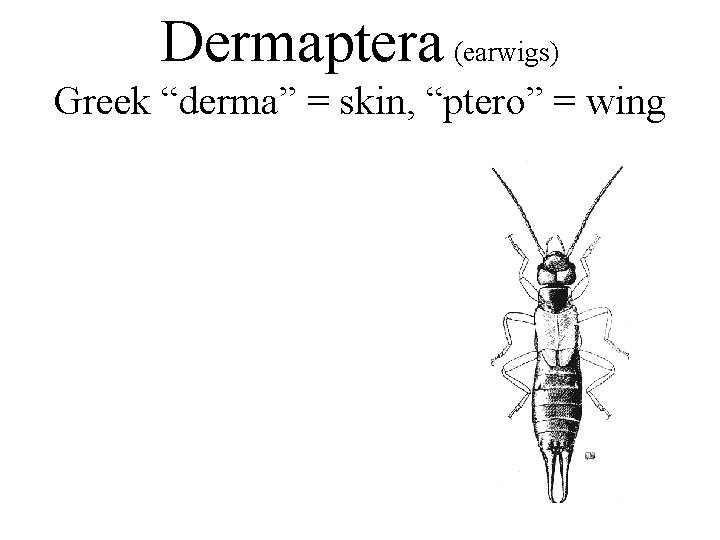
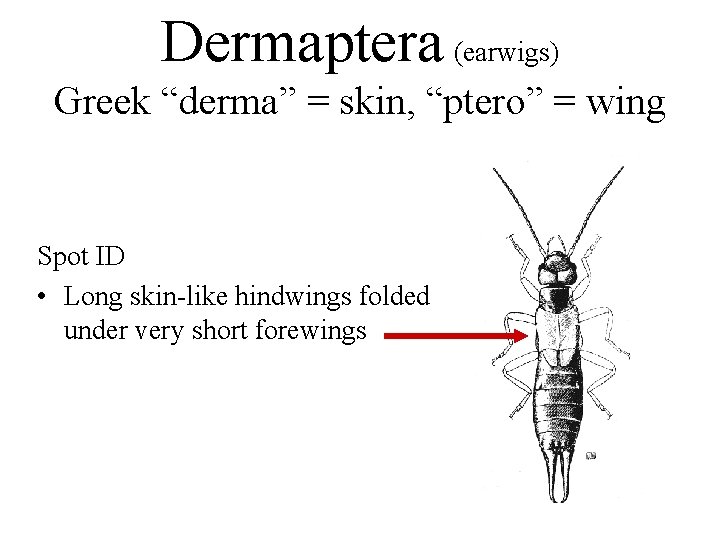
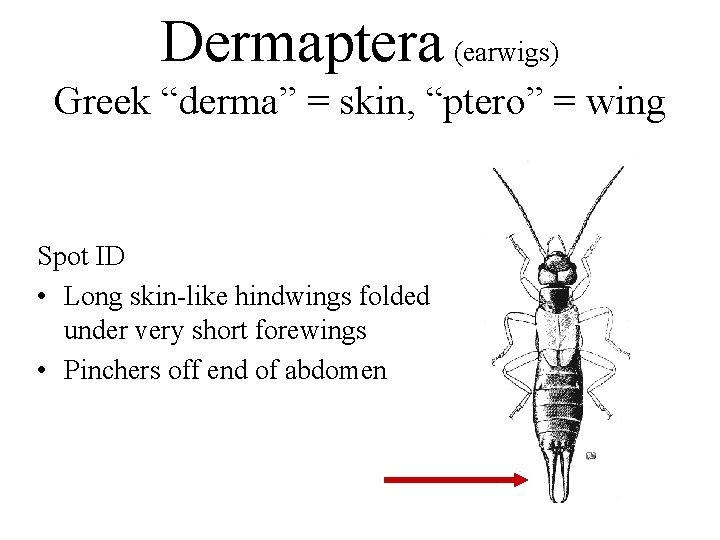
Dermaptera (earwigs) Greek “derma” = skin, “ptero” = wing
Dermaptera (earwigs) Greek “derma” = skin, “ptero” = wing Spot ID • Long skin-like hindwings folded under very short forewings
Dermaptera (earwigs) Greek “derma” = skin, “ptero” = wing Spot ID • Long skin-like hindwings folded under very short forewings • Pinchers off end of abdomen
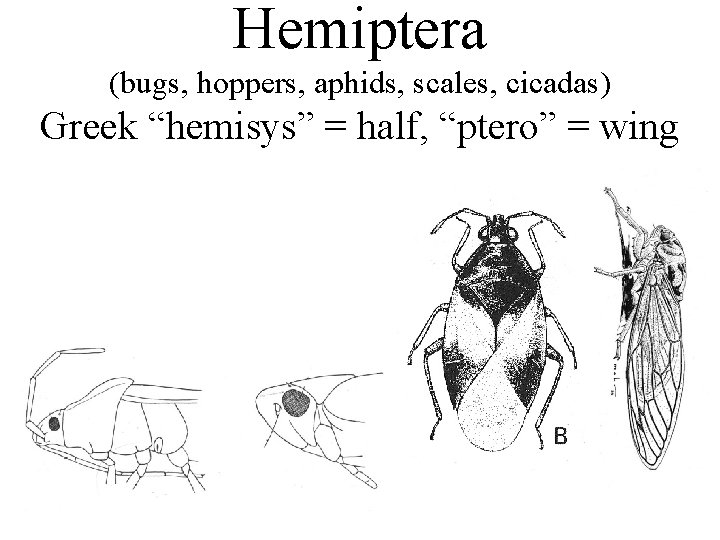
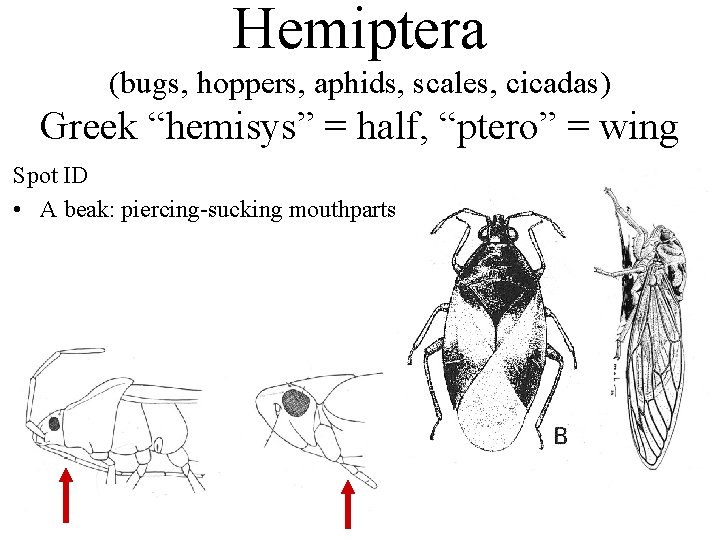
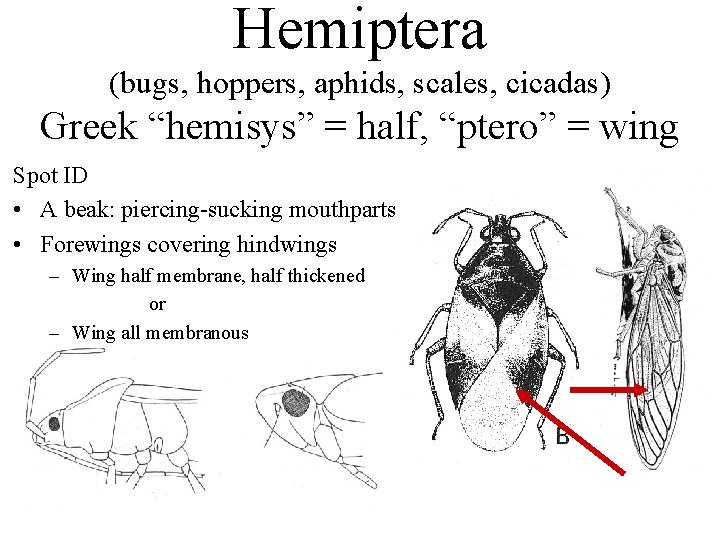
Hemiptera (bugs, hoppers, aphids, scales, cicadas) Greek “hemisys” = half, “ptero” = wing
Hemiptera (bugs, hoppers, aphids, scales, cicadas) Greek “hemisys” = half, “ptero” = wing Spot ID • A beak: piercing-sucking mouthparts
Hemiptera (bugs, hoppers, aphids, scales, cicadas) Greek “hemisys” = half, “ptero” = wing Spot ID • A beak: piercing-sucking mouthparts • Forewings covering hindwings – Wing half membrane, half thickened or – Wing all membranous
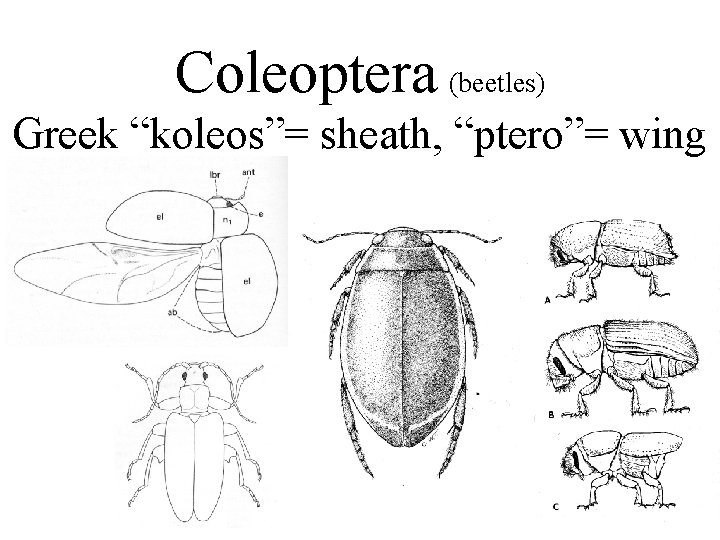
Coleoptera (beetles) Greek “koleos”= sheath, “ptero”= wing
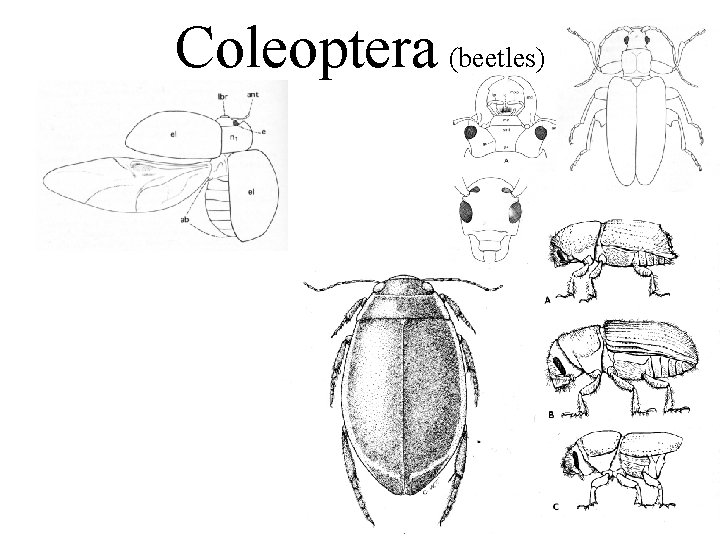
Coleoptera (beetles)
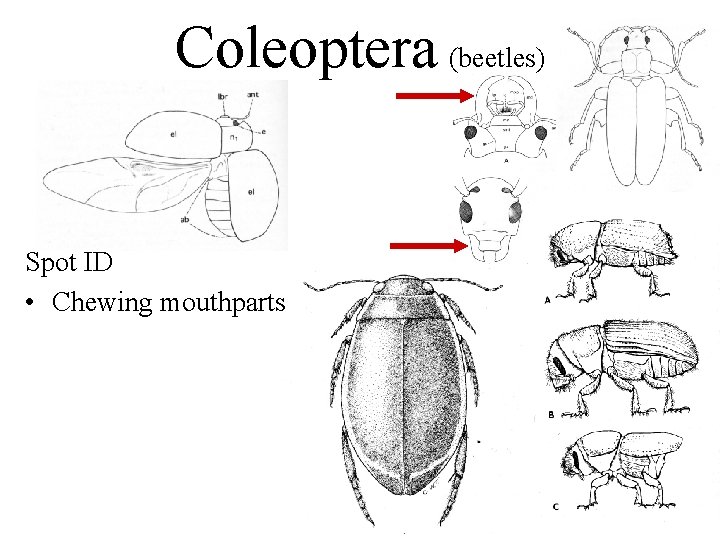
Coleoptera (beetles) Spot ID • Chewing mouthparts
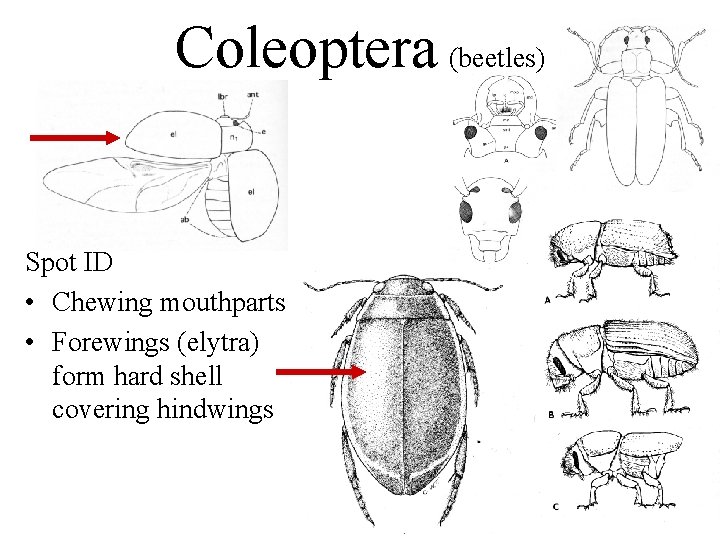
Coleoptera (beetles) Spot ID • Chewing mouthparts • Forewings (elytra) form hard shell covering hindwings
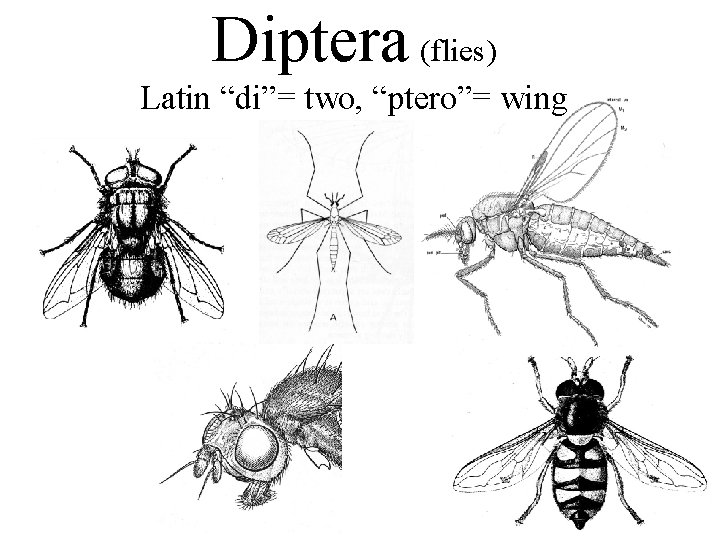
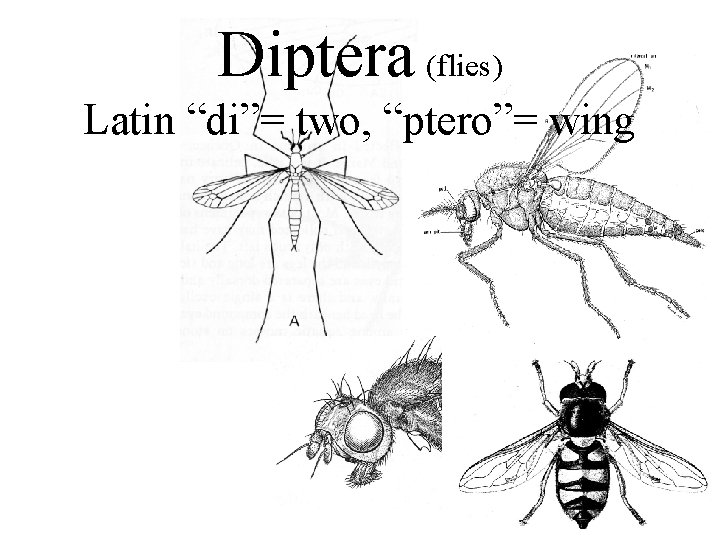
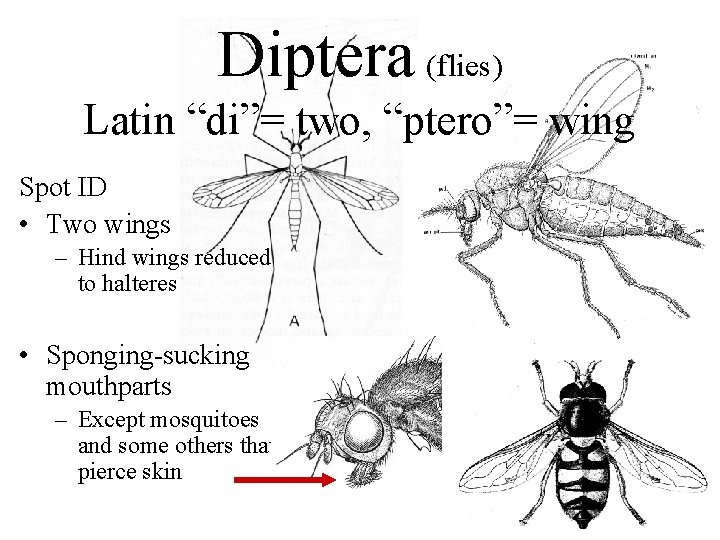
Diptera (flies) Latin “di”= two, “ptero”= wing
Diptera (flies) Latin “di”= two, “ptero”= wing
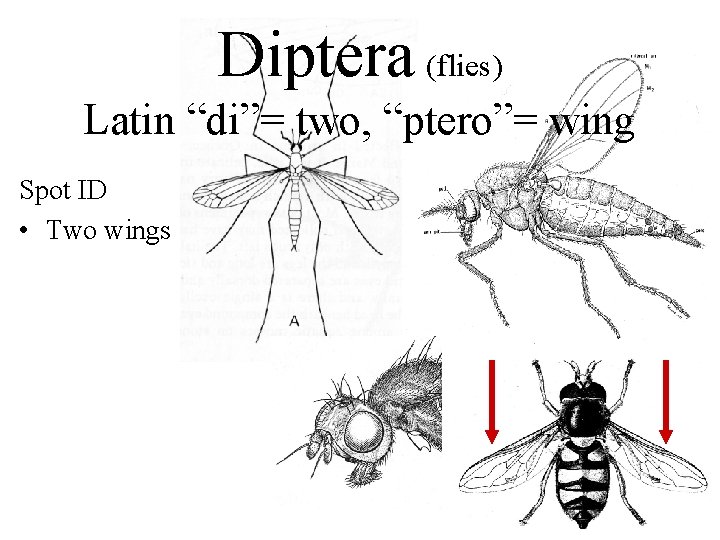
Diptera (flies) Latin “di”= two, “ptero”= wing Spot ID • Two wings
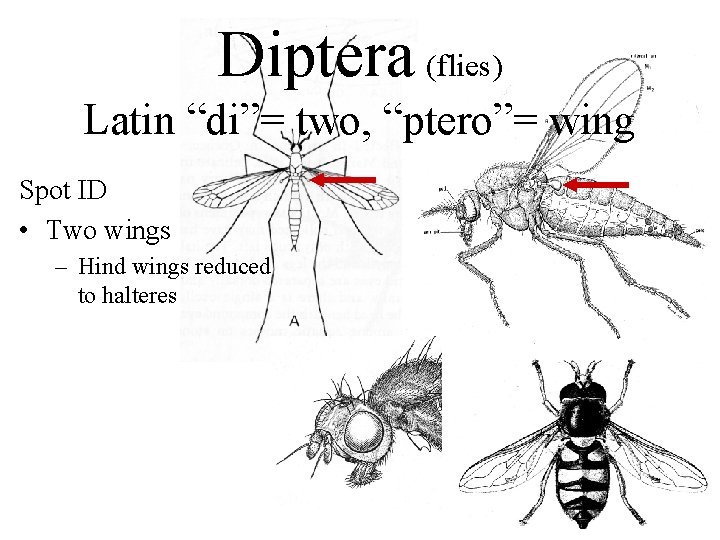
Diptera (flies) Latin “di”= two, “ptero”= wing Spot ID • Two wings – Hind wings reduced to halteres
Diptera (flies) Latin “di”= two, “ptero”= wing Spot ID • Two wings – Hind wings reduced to halteres • Sponging-sucking mouthparts – Except mosquitoes and some others that pierce skin
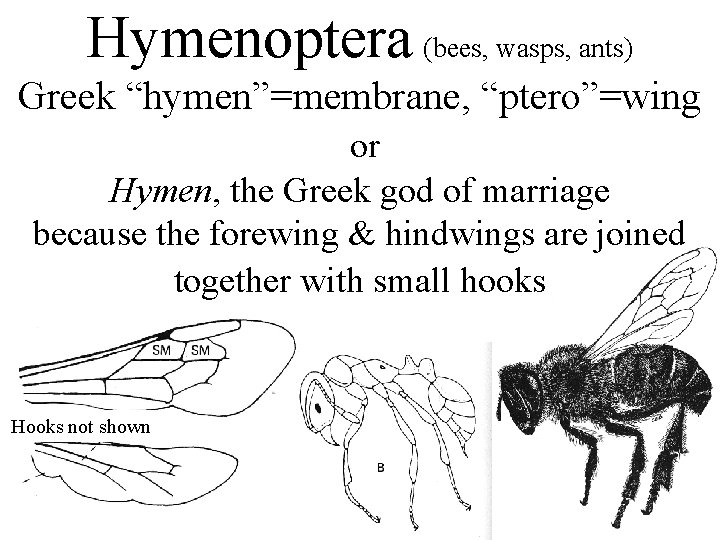
Hymenoptera (bees, wasps, ants) Greek “hymen”=membrane, “ptero”=wing or Hymen, the Greek god of marriage because the forewing & hindwings are joined together with small hooks Hooks not shown
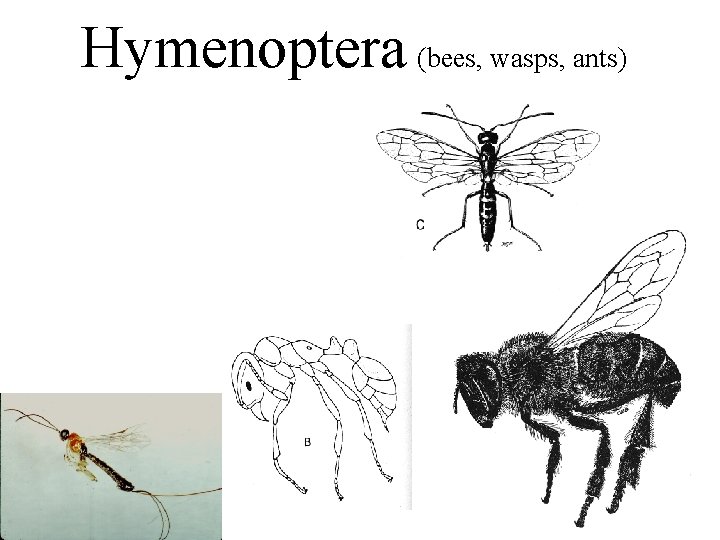
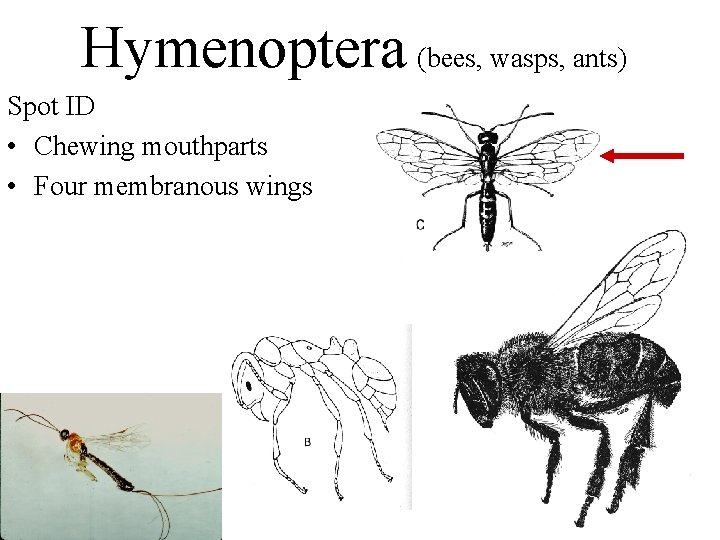
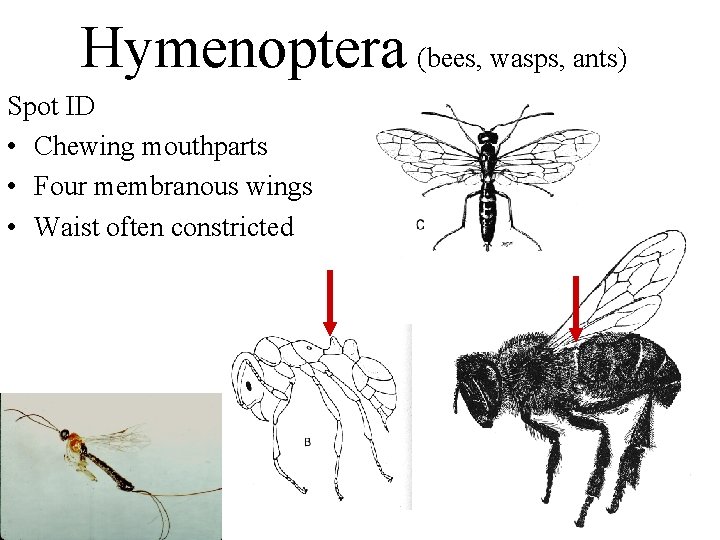
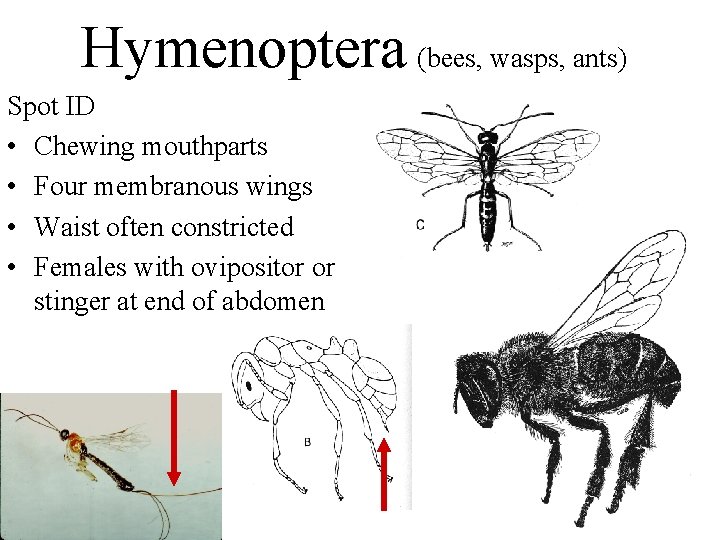
Hymenoptera (bees, wasps, ants)
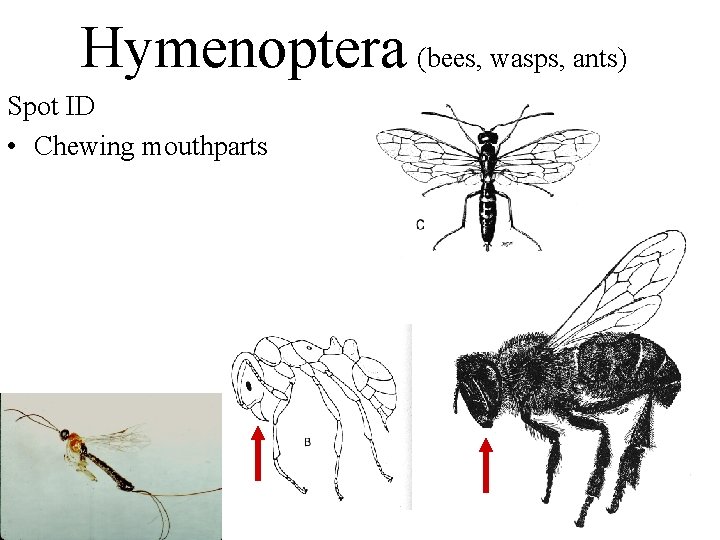
Hymenoptera (bees, wasps, ants) Spot ID • Chewing mouthparts
Hymenoptera (bees, wasps, ants) Spot ID • Chewing mouthparts • Four membranous wings
Hymenoptera (bees, wasps, ants) Spot ID • Chewing mouthparts • Four membranous wings • Waist often constricted
Hymenoptera (bees, wasps, ants) Spot ID • Chewing mouthparts • Four membranous wings • Waist often constricted • Females with ovipositor or stinger at end of abdomen
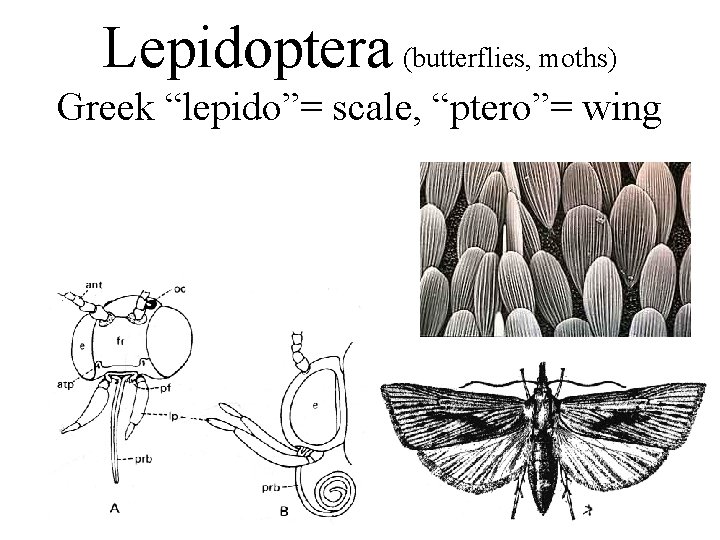
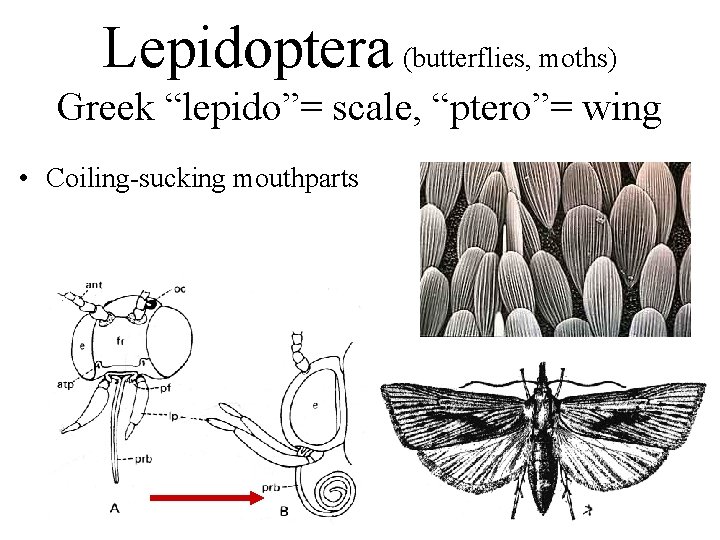
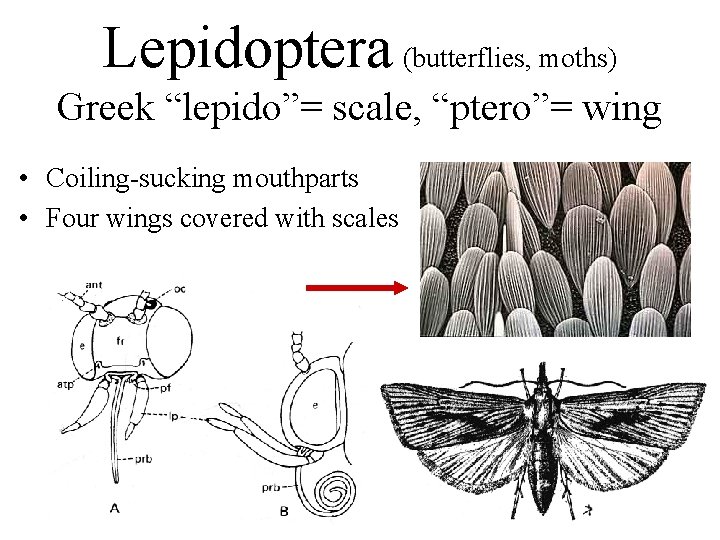
Lepidoptera (butterflies, moths) Greek “lepido”= scale, “ptero”= wing
Lepidoptera (butterflies, moths) Greek “lepido”= scale, “ptero”= wing • Coiling-sucking mouthparts
Lepidoptera (butterflies, moths) Greek “lepido”= scale, “ptero”= wing • Coiling-sucking mouthparts • Four wings covered with scales
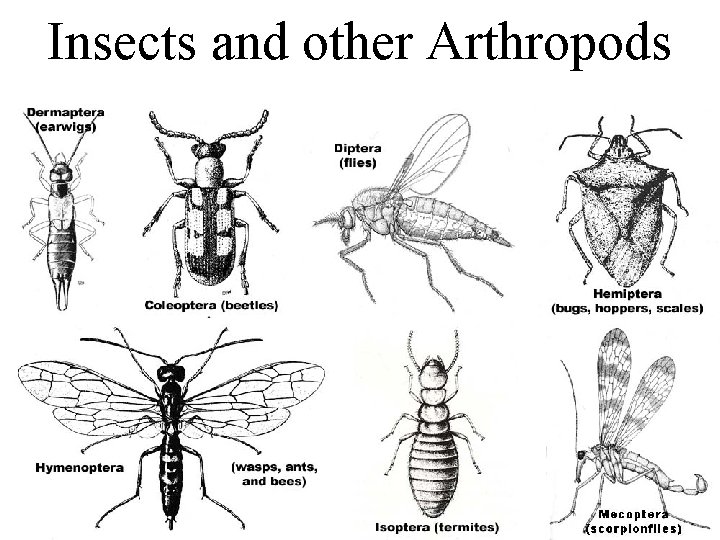
Insects and other Arthropods