
Common Injuries The Knee Patellar Fractures MOI Rapid


- Slides: 28
Common Injuries { The Knee
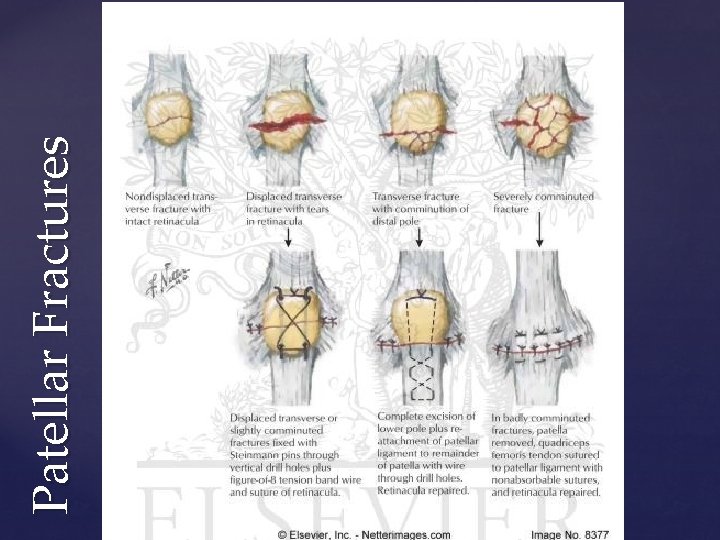
Patellar Fractures
MOI: Rapid forced knee flexion (landing from a jump) Blunt trauma (Tonya Harding) Risk of complete fracture increases in presence of stress fx Patellar Fracture
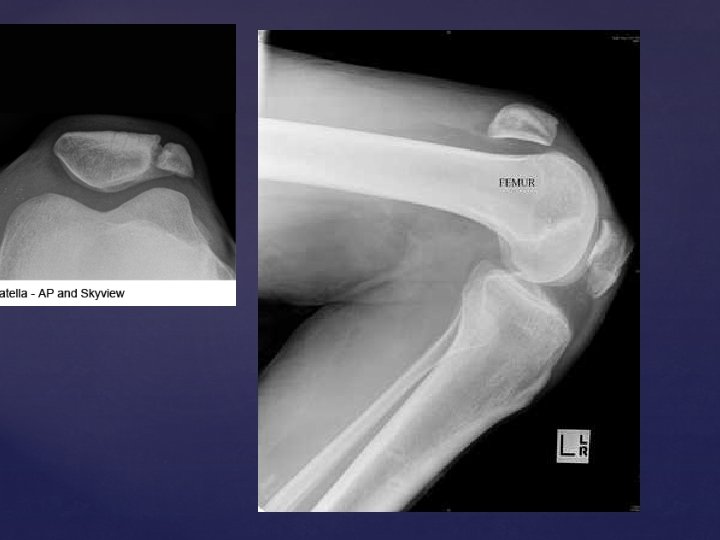
Possible obvious deformity (split patella) Rapid swelling Bruising Patellar Fracture Inspection
AROM Extension: Severe P & decreased ROM PROM Flexion: Severe P & decreased ROM RROM: Cannot be performed secondary to P Patellar Fracture ROM
At Risk population: Athletes w/ patellar tendon autograph for ACL replacement Patellar Fractures
Straight-leg knee immobilizer for approx 2. 5 to 3 mo Post immobilizer: regain mobility and strength lost due to immobilizer Sx may be necessary depending on type of fracture. If Sx is performed, physical therapy will be required after immobilization Approx 5 mo recovery time Patellar Fracture Treatment
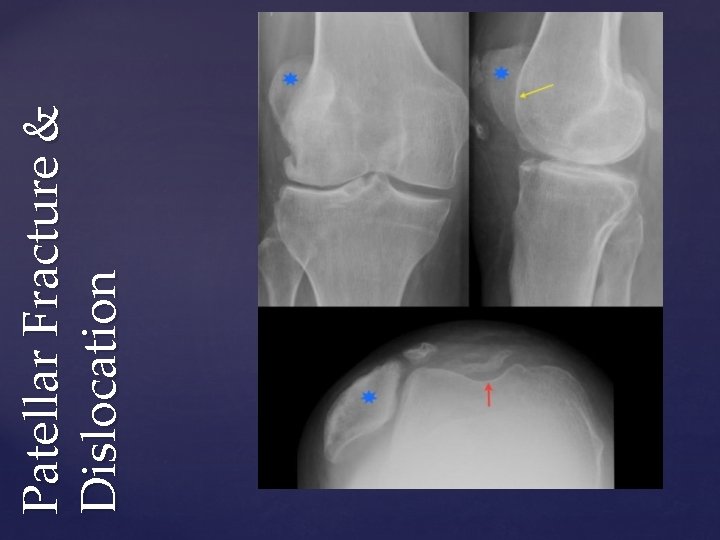
Patellar Fracture & Dislocation
Bazaar ER (Graphic) Part 1 https: //www. youtube. com/watch? v=b. THOx. HQ_m HY Part 2 http: //www. youtube. com/watch? v=FY 4_CZRc__4 Patellar Fracture
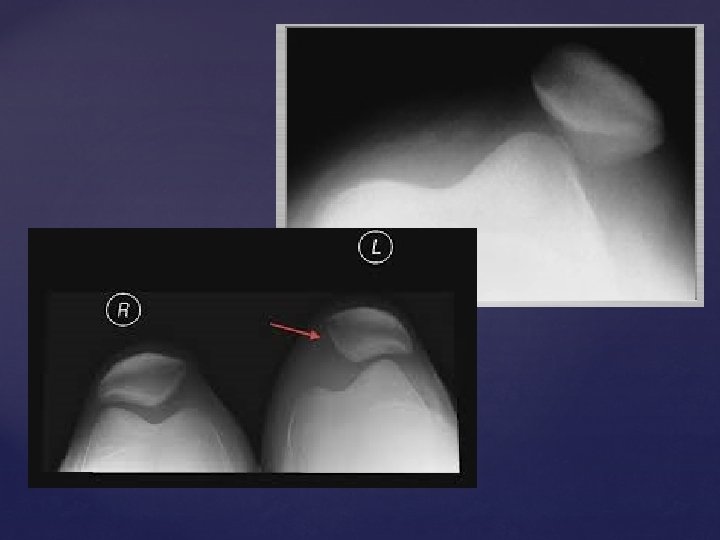
MOI: Valgus blow to knee Rapid change of direction with fixed foot Predisposing condition: Patella alta (high sitting patella) Previously dislocation Patellar Dislocation
Obvious deformity Positioned medially with flexed knee If examined post-reduction: massive swelling will be present Patellar Dislocation Inspection
AROM/PROM/RROM: Not performed due to obvious deformity and extreme pain Patellar Dislocation ROM
Performed by a Medical Professional: Rapid passive knee extension is performed to reduce patella. The faster the patella is reduced, the lesser the damage to soft tissue Knee should then be immobilized in a straight-leg immobilizer and x-rays performed. If instability follows, MRI may be recommended. Anticipated recovery time: 1 to 2 mo Patellar Dislocation Treatment
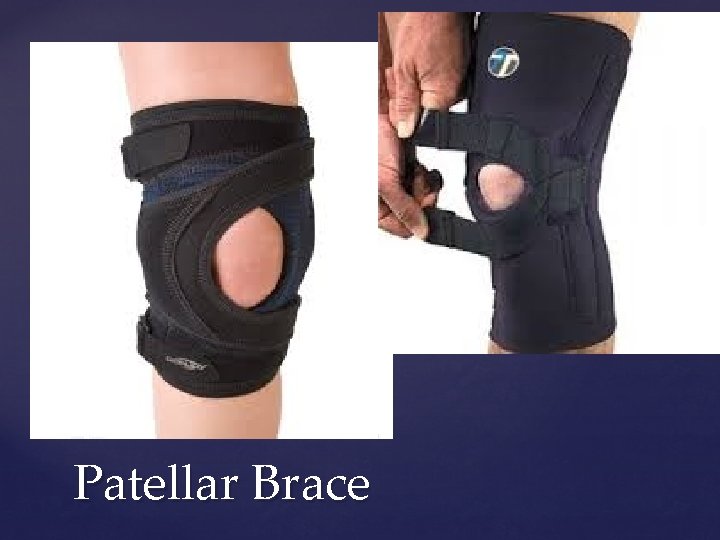
Patellar Brace
Animation http: //www. youtube. com/watch? v=vp. En. UQ 3 Nd u. Q Bazzar ER https: //www. youtube. com/watch? v=6 -JNFi. Xk. Xfc Patellar Dislocation
http: //www. youtube. com/watch? v=vg. CEn. Jb. FG f. M Patellar Reconstruction Sx
Onset: Acute Pain Characteristics: pt c/o P “inside joint”, “pressure”, “giving out” when walking (ACL/PCL only) LCL only: P in Fig 4 position Ligamentous Injury
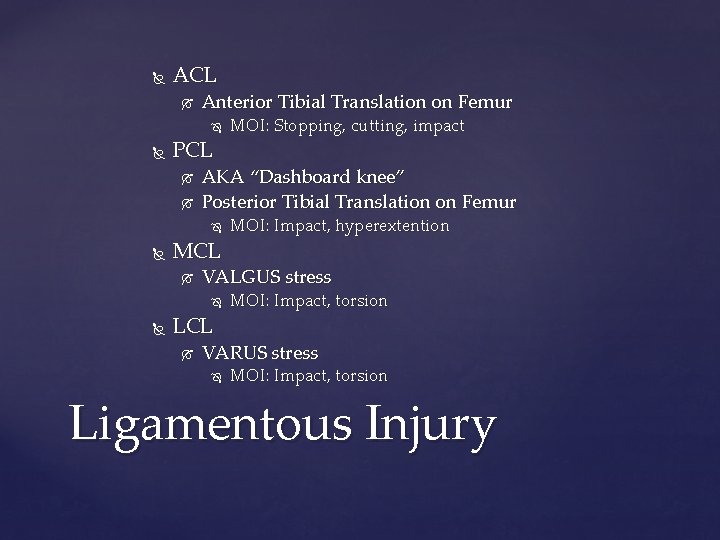
ACL Anterior Tibial Translation on Femur PCL AKA “Dashboard knee” Posterior Tibial Translation on Femur MCL LCL MOI: Impact, hyperextention VALGUS stress MOI: Stopping, cutting, impact MOI: Impact, torsion VARUS stress MOI: Impact, torsion Ligamentous Injury
Non-contact ACL https: //www. youtube. com/watch? v=c. Lwd. K 2 zv. K t. U Contact …. Contact vs. Non-contact
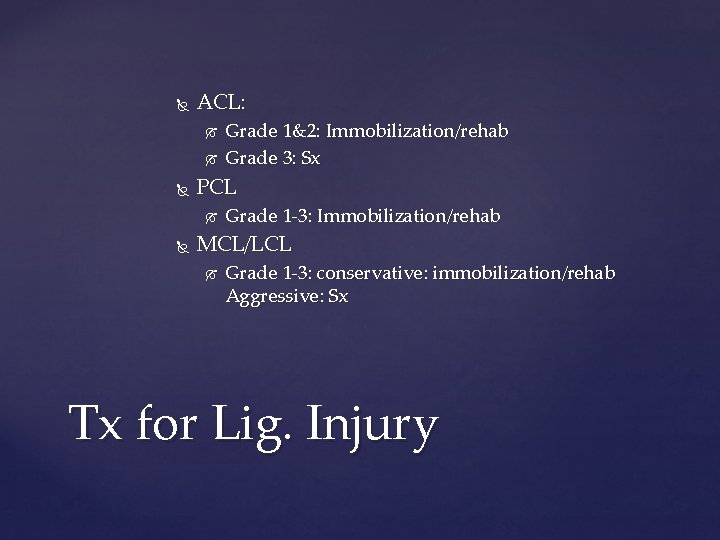
ACL: PCL Grade 1&2: Immobilization/rehab Grade 3: Sx Grade 1 -3: Immobilization/rehab MCL/LCL Grade 1 -3: conservative: immobilization/rehab Aggressive: Sx Tx for Lig. Injury
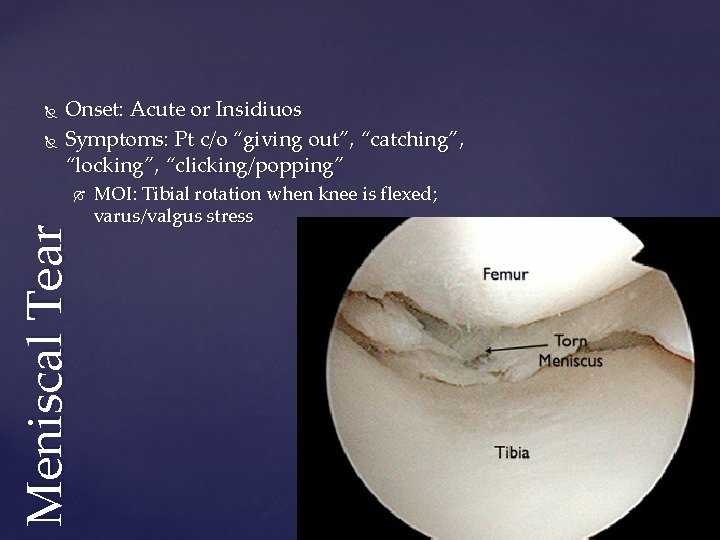
Onset: Acute or Insidiuos Symptoms: Pt c/o “giving out”, “catching”, “locking”, “clicking/popping” Meniscal Tear MOI: Tibial rotation when knee is flexed; varus/valgus stress
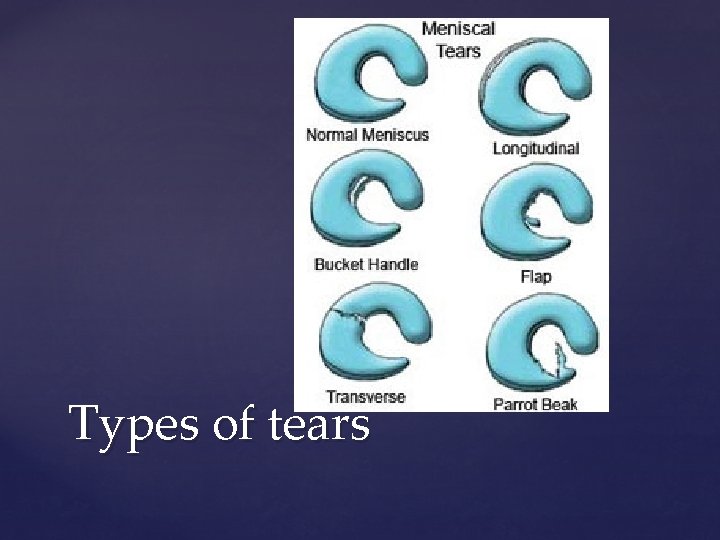
Types of tears
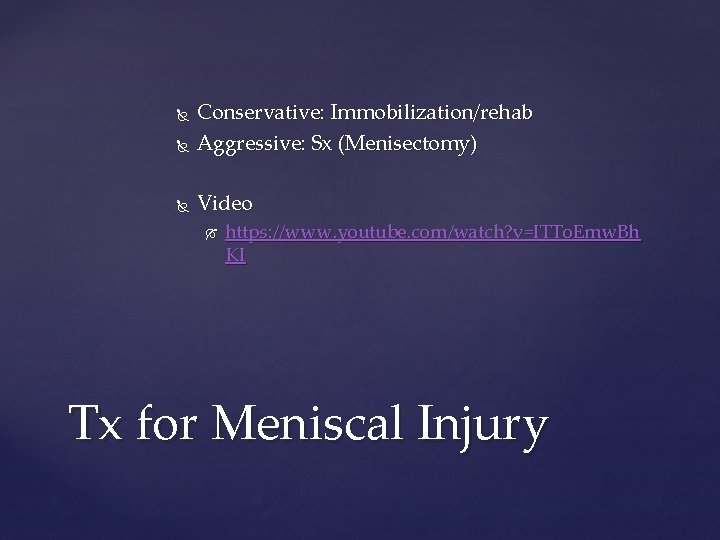
Conservative: Immobilization/rehab Aggressive: Sx (Menisectomy) Video https: //www. youtube. com/watch? v=ITTo. Emw. Bh KI Tx for Meniscal Injury
Traumatic, Acute Exertional, Chronic Exertional Pain Characteristics: Severe Other complaints: Muscle tightness, swelling, weakness, tingling, numbing (particularly between phalanges 1 and 2) MOI: Direct Impact, prolonged activity Compartment Syndrome
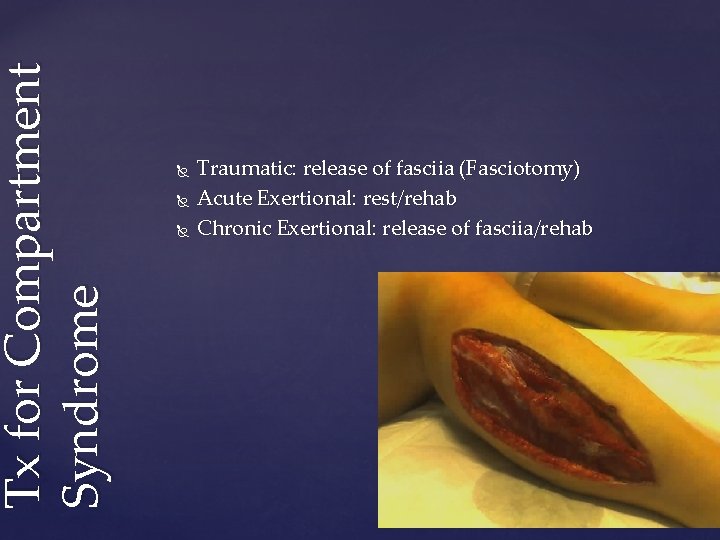
Tx for Compartment Syndrome Traumatic: release of fasciia (Fasciotomy) Acute Exertional: rest/rehab Chronic Exertional: release of fasciia/rehab