
COMMON FEATURES OF INDIGENOUS WORLD VIEWS Worldview The


- Slides: 12
COMMON FEATURES OF INDIGENOUS WORLD VIEWS World-view • The overall perspective from which one sees and interprets the world. • A collection of beliefs about life, the universe, and humanity’s place in it held by an individual or a group.
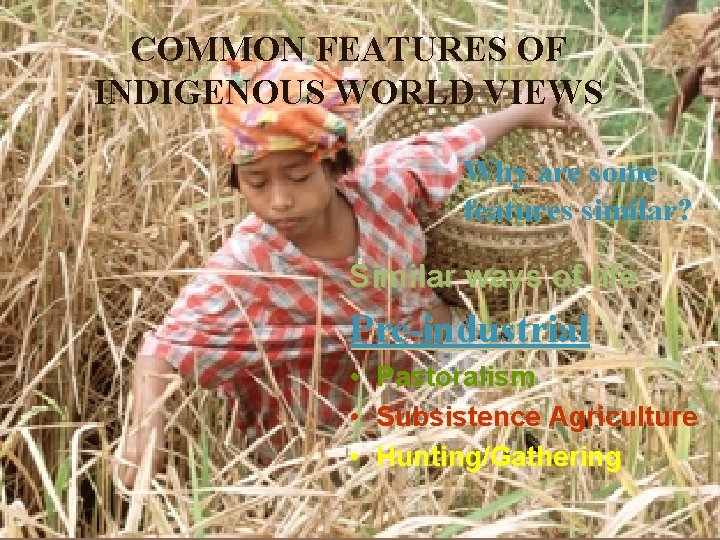
COMMON FEATURES OF INDIGENOUS WORLD VIEWS Why are some features similar? Similar ways of life: Pre-industrial • Pastoralism • Subsistence Agriculture • Hunting/Gathering
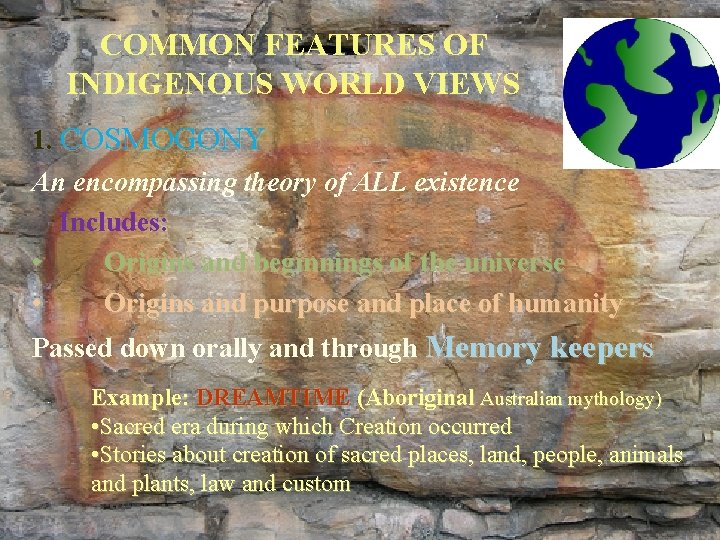
COMMON FEATURES OF INDIGENOUS WORLD VIEWS 1. COSMOGONY An encompassing theory of ALL existence Includes: • Origins and beginnings of the universe • Origins and purpose and place of humanity Passed down orally and through Memory keepers Example: DREAMTIME (Aboriginal Australian mythology) • Sacred era during which Creation occurred • Stories about creation of sacred places, land, people, animals and plants, law and custom
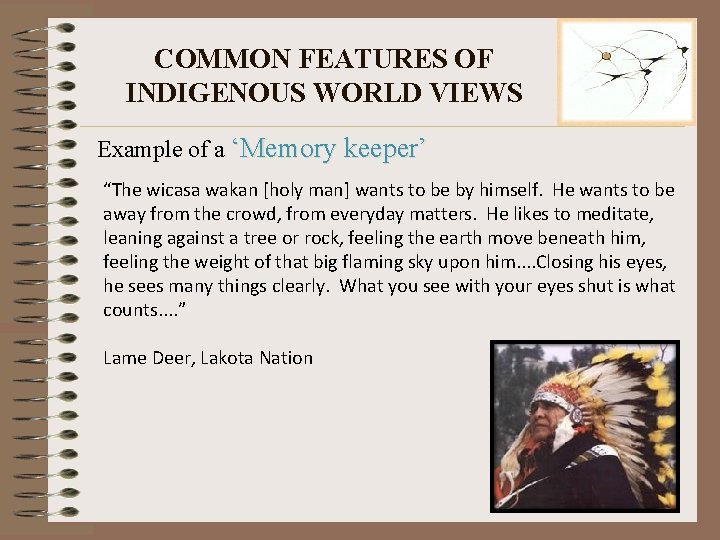
COMMON FEATURES OF INDIGENOUS WORLD VIEWS Example of a ‘Memory keeper’ “The wicasa wakan [holy man] wants to be by himself. He wants to be away from the crowd, from everyday matters. He likes to meditate, leaning against a tree or rock, feeling the earth move beneath him, feeling the weight of that big flaming sky upon him. . Closing his eyes, he sees many things clearly. What you see with your eyes shut is what counts. . ” Lame Deer, Lakota Nation
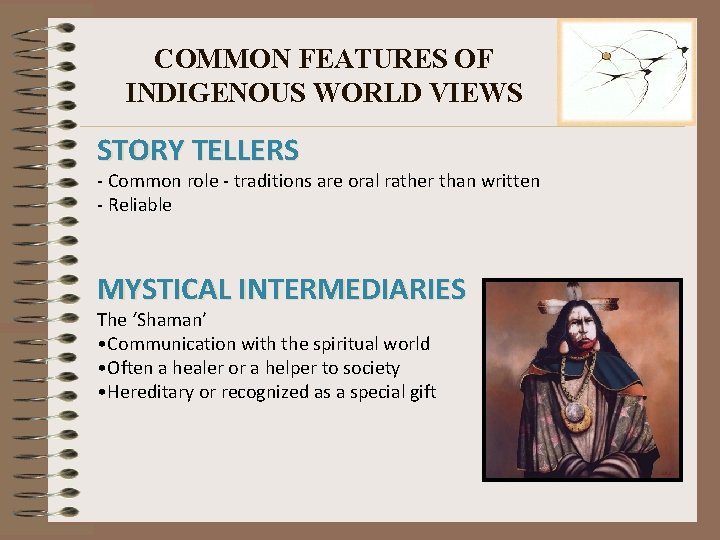
COMMON FEATURES OF INDIGENOUS WORLD VIEWS STORY TELLERS - Common role - traditions are oral rather than written - Reliable MYSTICAL INTERMEDIARIES The ‘Shaman’ • Communication with the spiritual world • Often a healer or a helper to society • Hereditary or recognized as a special gift
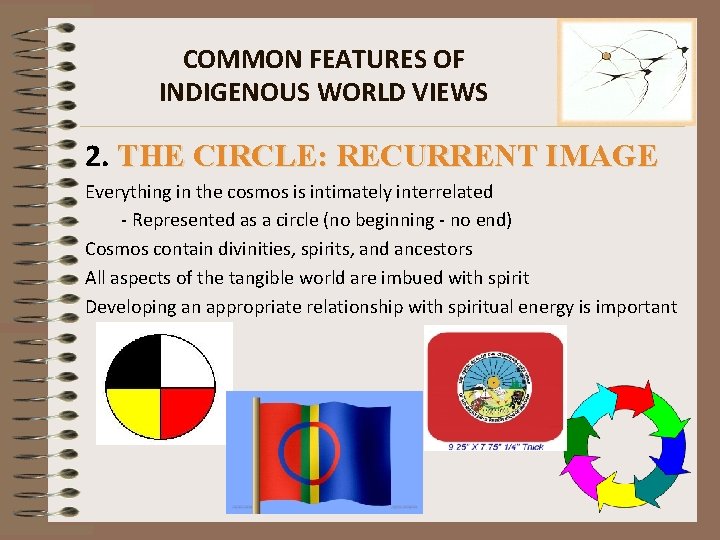
COMMON FEATURES OF INDIGENOUS WORLD VIEWS 2. THE CIRCLE: RECURRENT IMAGE Everything in the cosmos is intimately interrelated - Represented as a circle (no beginning - no end) Cosmos contain divinities, spirits, and ancestors All aspects of the tangible world are imbued with spirit Developing an appropriate relationship with spiritual energy is important
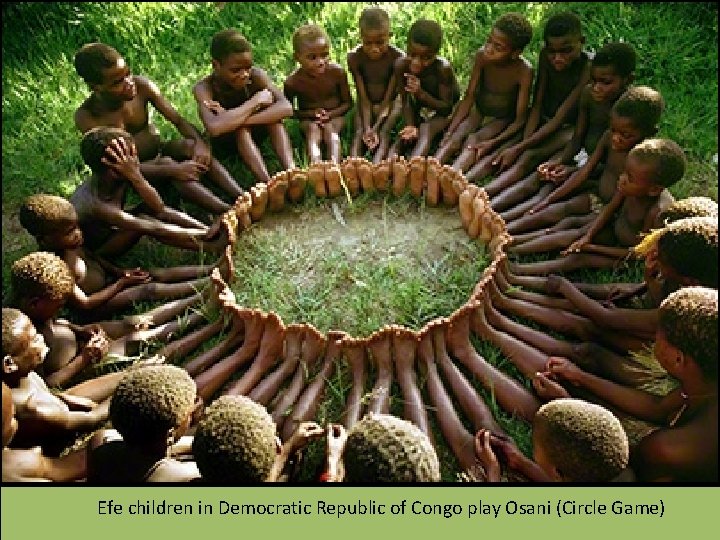
Efe children in Democratic Republic of Congo play Osani (Circle Game)
COMMON FEATURES OF INDIGENOUS WORLD VIEWS 3. RELATIONSHIP WITH THE ENVIRONMENT Deeply connected to the physical environment All that exists is alive - RESPECT Example: ‘Great Spirit’ takes many forms: • Mountains • Lakes • Sky • Wind • Storms
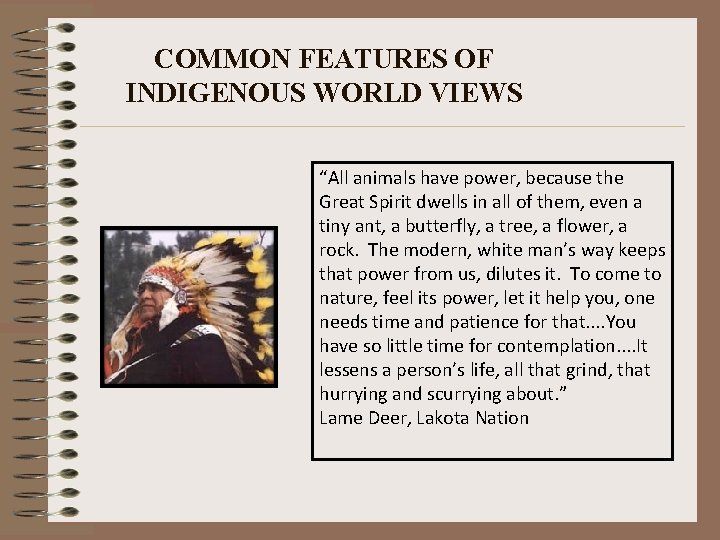
COMMON FEATURES OF INDIGENOUS WORLD VIEWS “All animals have power, because the Great Spirit dwells in all of them, even a tiny ant, a butterfly, a tree, a flower, a rock. The modern, white man’s way keeps that power from us, dilutes it. To come to nature, feel its power, let it help you, one needs time and patience for that. . You have so little time for contemplation. . It lessens a person’s life, all that grind, that hurrying and scurrying about. ” Lame Deer, Lakota Nation
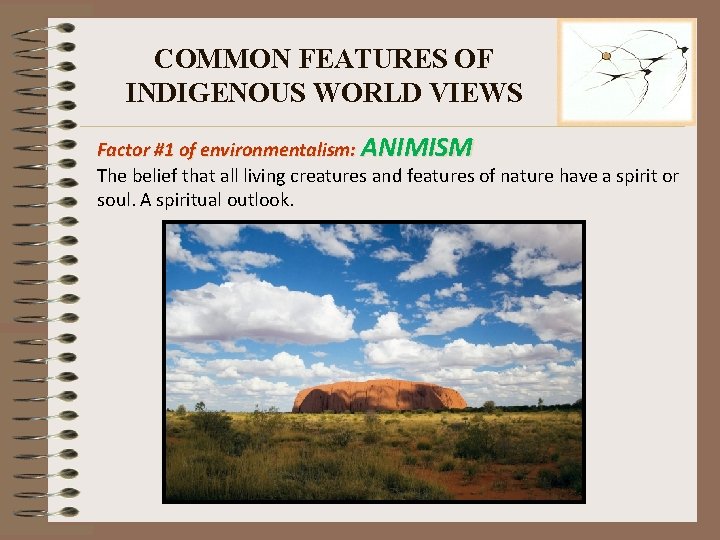
COMMON FEATURES OF INDIGENOUS WORLD VIEWS Factor #1 of environmentalism: ANIMISM The belief that all living creatures and features of nature have a spirit or soul. A spiritual outlook.
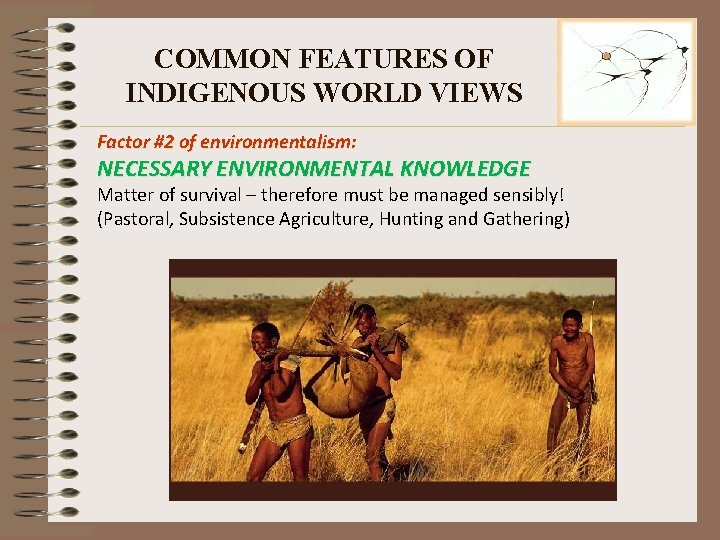
COMMON FEATURES OF INDIGENOUS WORLD VIEWS Factor #2 of environmentalism: NECESSARY ENVIRONMENTAL KNOWLEDGE Matter of survival – therefore must be managed sensibly! (Pastoral, Subsistence Agriculture, Hunting and Gathering)
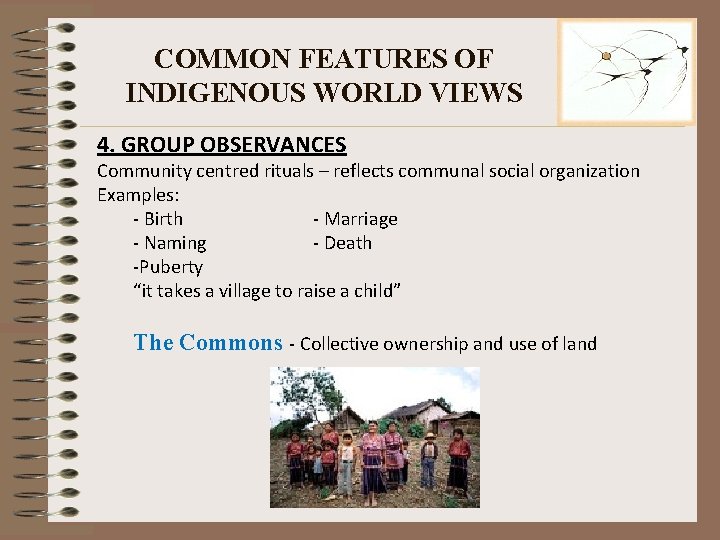
COMMON FEATURES OF INDIGENOUS WORLD VIEWS 4. GROUP OBSERVANCES Community centred rituals – reflects communal social organization Examples: - Birth - Marriage - Naming - Death -Puberty “it takes a village to raise a child” The Commons - Collective ownership and use of land