
Common Factors that are the same for two
- Slides: 15
Common Factors that are the same for two or more numbers are called common factors. 1
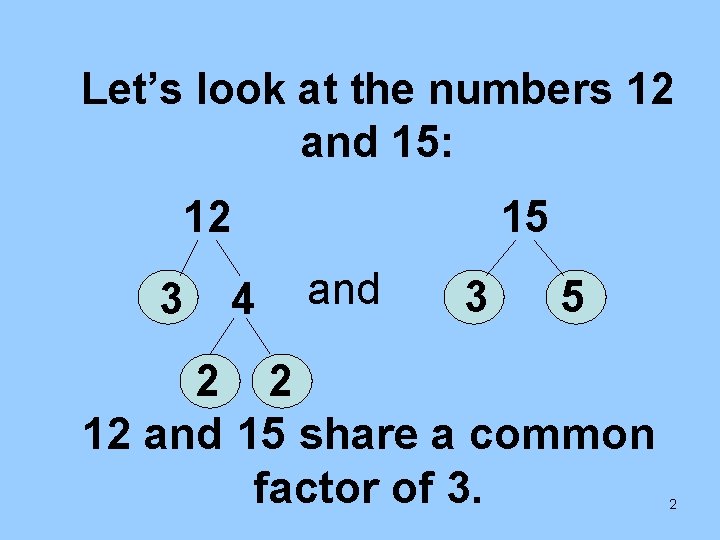
Let’s look at the numbers 12 and 15: 12 3 4 15 and 3 5 2 2 12 and 15 share a common factor of 3. 2
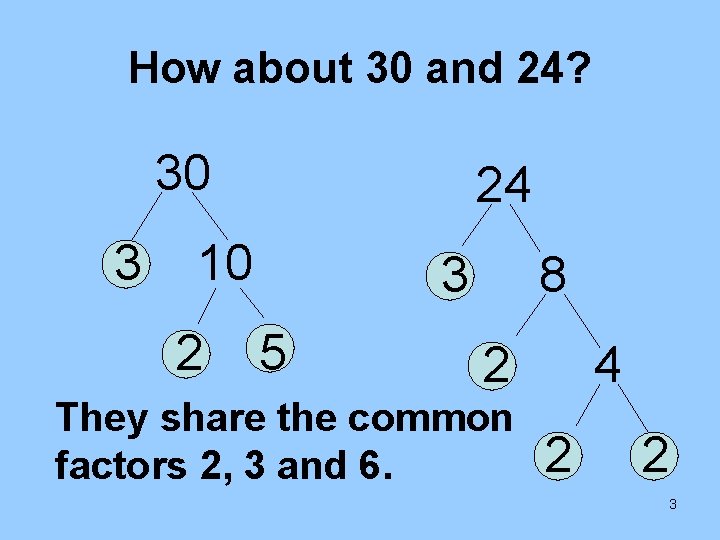
How about 30 and 24? 30 3 24 10 2 3 5 8 2 They share the common factors 2, 3 and 6. 4 2 2 3
GCF Greatest Common Factor 4
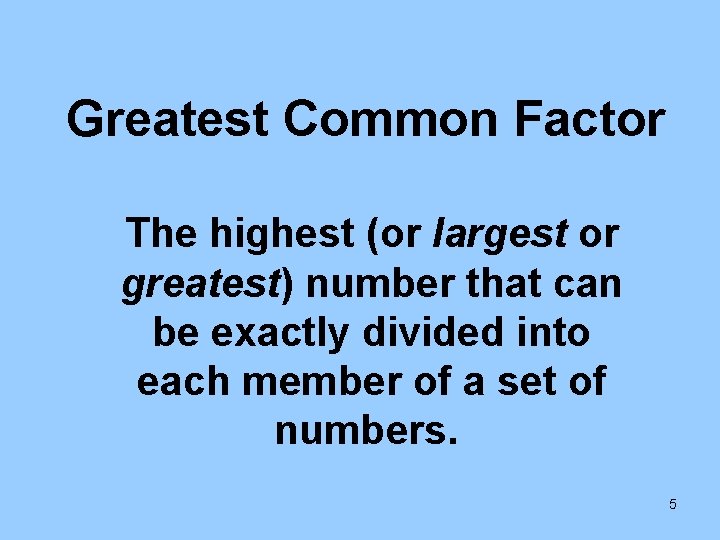
Greatest Common Factor The highest (or largest or greatest) number that can be exactly divided into each member of a set of numbers. 5
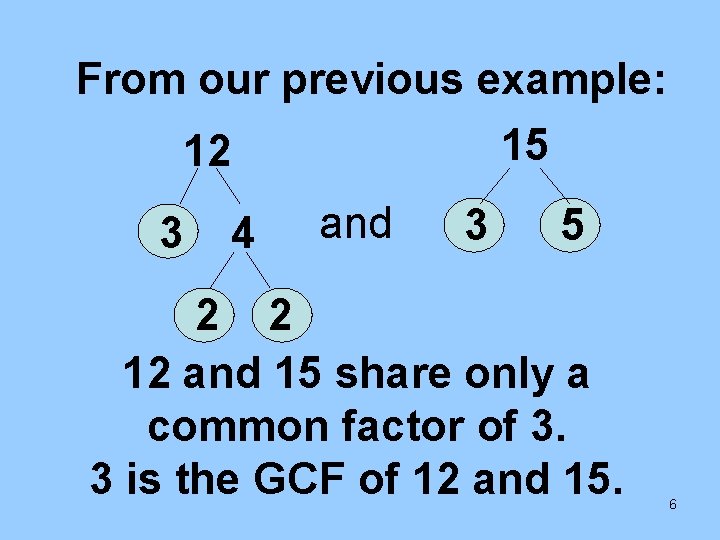
From our previous example: 15 12 3 4 and 3 5 2 2 12 and 15 share only a common factor of 3. 3 is the GCF of 12 and 15. 6
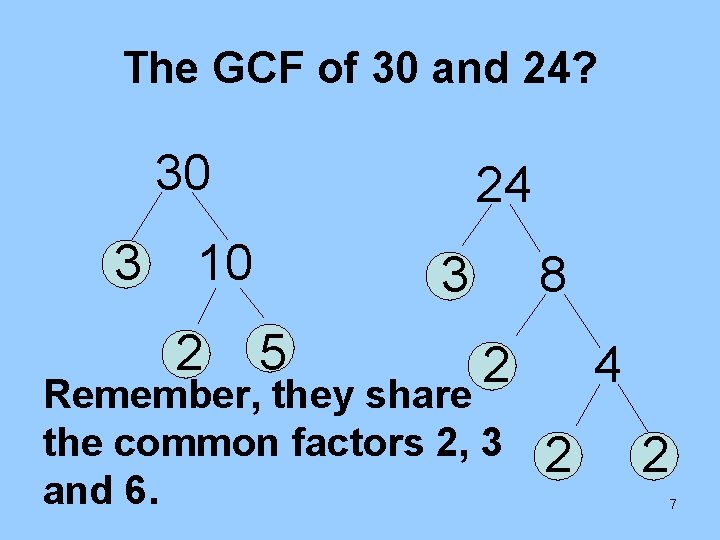
The GCF of 30 and 24? 30 3 24 10 2 3 5 8 2 Remember, they share the common factors 2, 3 and 6. 4 2 2 7
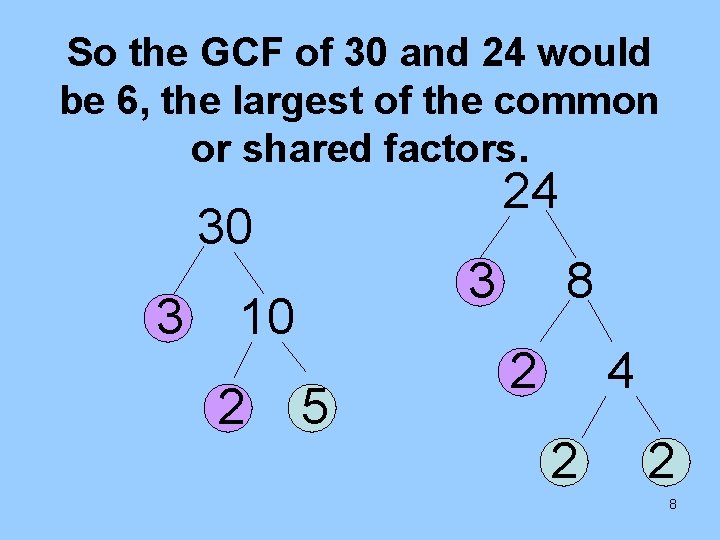
So the GCF of 30 and 24 would be 6, the largest of the common or shared factors. 24 30 3 3 10 2 5 8 2 4 2 2 8
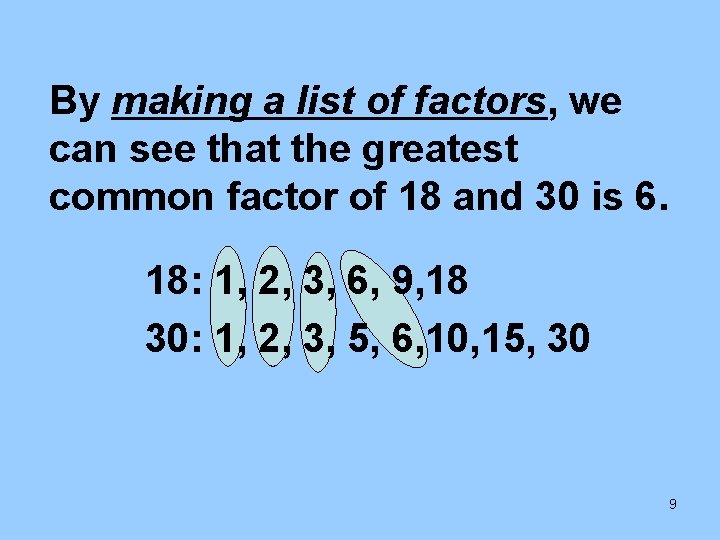
By making a list of factors, we can see that the greatest common factor of 18 and 30 is 6. 18: 1, 2, 3, 6, 9, 18 30: 1, 2, 3, 5, 6, 10, 15, 30 9
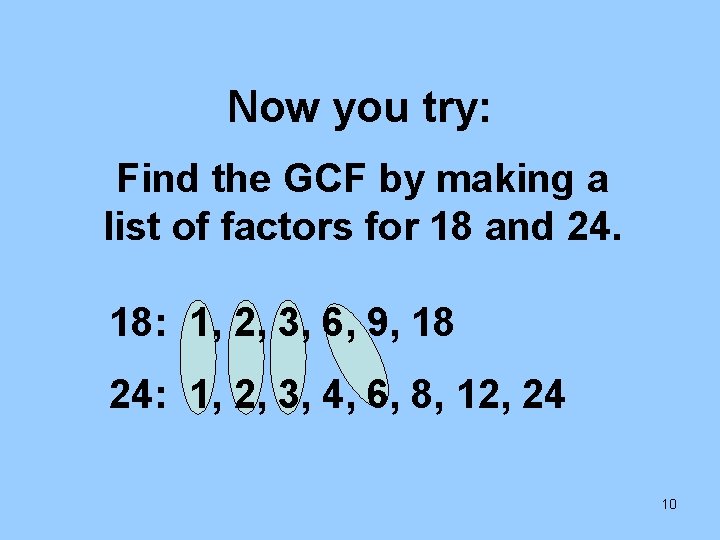
Now you try: Find the GCF by making a list of factors for 18 and 24. 18: 1, 2, 3, 6, 9, 18 24: 1, 2, 3, 4, 6, 8, 12, 24 10
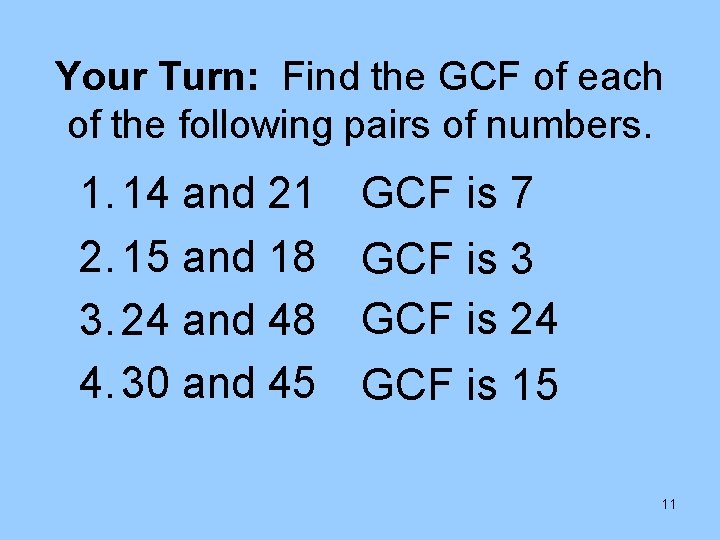
Your Turn: Find the GCF of each of the following pairs of numbers. 1. 14 and 21 2. 15 and 18 3. 24 and 48 4. 30 and 45 GCF is 7 GCF is 3 GCF is 24 GCF is 15 11
What if there are no factors in common? Example: 9 and 8 If the numbers do not have any factors in common, the GCF will be 1. 12
Which method works best for you: Making a list of factors OR Prime Factorization Pros vs. Cons 13
What is the GCF of any two prime numbers? Explain. 1 will be the GCF of any two prime numbers because it is the only common factor. 14
The GCF of 18 and some number is 6. What are three possible values for the number? Possible responses are 6, 12, 24. What was the best method to solve this problem? 15