
Common Equine Skin Diseases What is a Disease






- Slides: 41
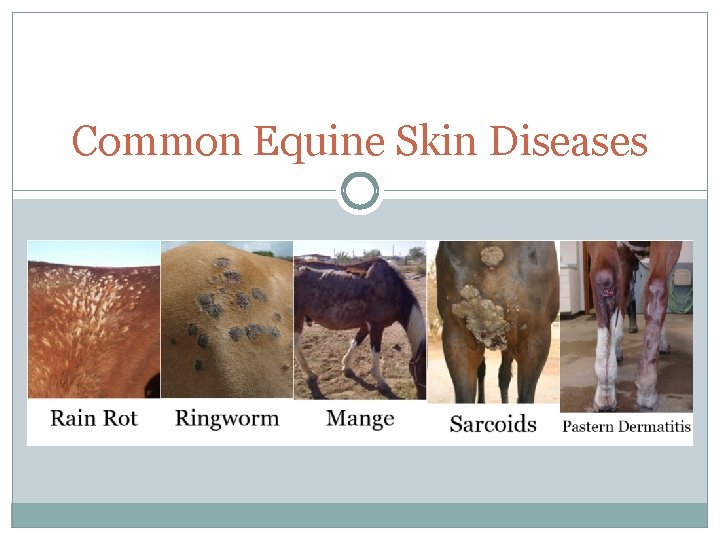
Common Equine Skin Diseases
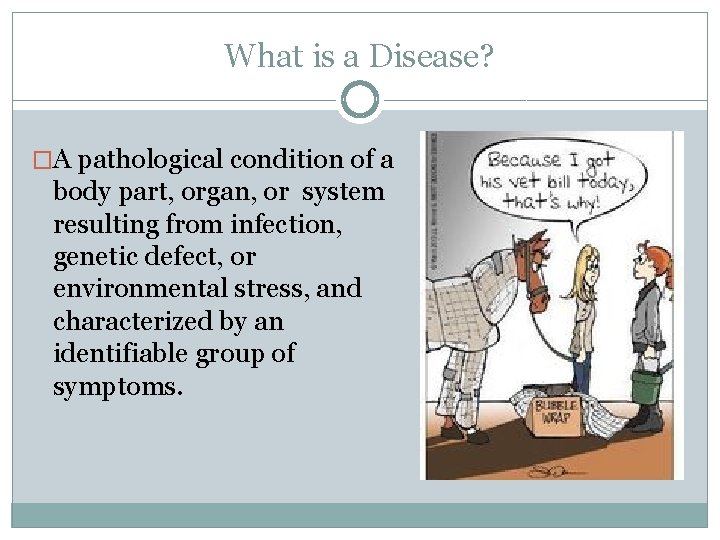
What is a Disease? �A pathological condition of a body part, organ, or system resulting from infection, genetic defect, or environmental stress, and characterized by an identifiable group of symptoms.
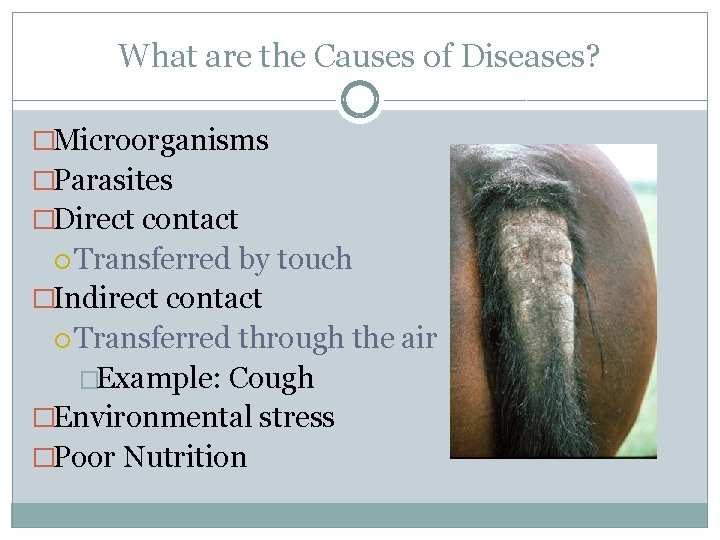
What are the Causes of Diseases? �Microorganisms �Parasites �Direct contact Transferred by touch �Indirect contact Transferred through the air �Example: Cough �Environmental stress �Poor Nutrition
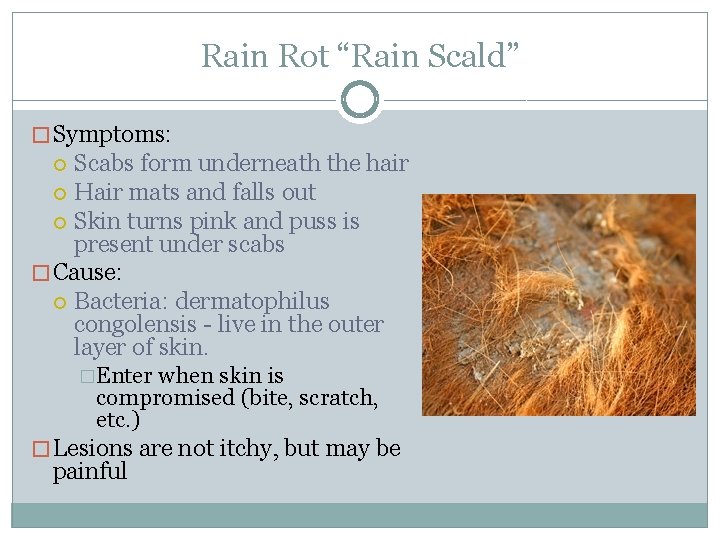
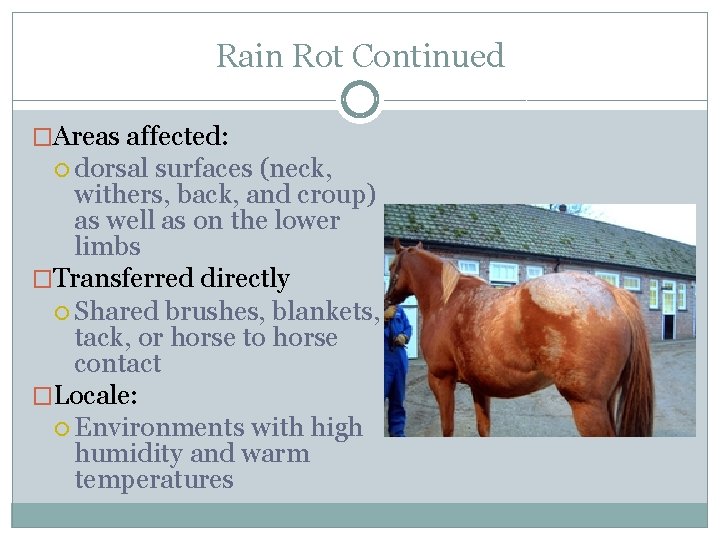
Rain Rot “Rain Scald” � Symptoms: Scabs form underneath the hair Hair mats and falls out Skin turns pink and puss is present under scabs � Cause: Bacteria: dermatophilus congolensis - live in the outer layer of skin. �Enter when skin is compromised (bite, scratch, etc. ) � Lesions are not itchy, but may be painful
Rain Rot Continued �Areas affected: dorsal surfaces (neck, withers, back, and croup) as well as on the lower limbs �Transferred directly Shared brushes, blankets, tack, or horse to horse contact �Locale: Environments with high humidity and warm temperatures
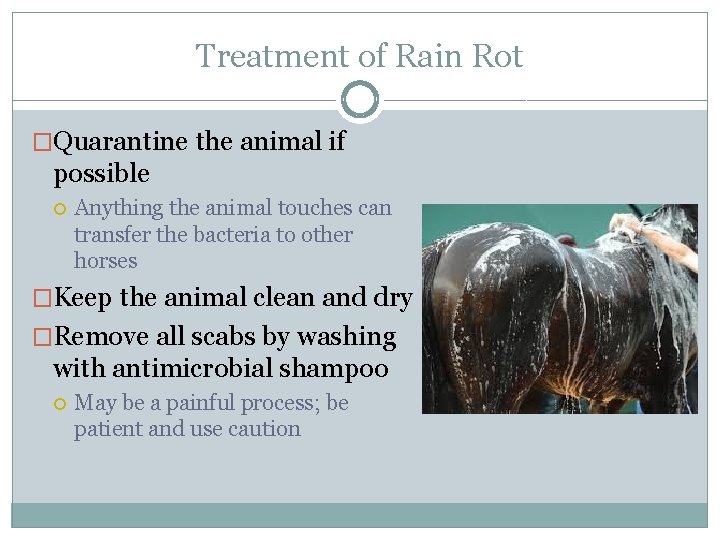
Treatment of Rain Rot �Quarantine the animal if possible Anything the animal touches can transfer the bacteria to other horses �Keep the animal clean and dry �Remove all scabs by washing with antimicrobial shampoo May be a painful process; be patient and use caution
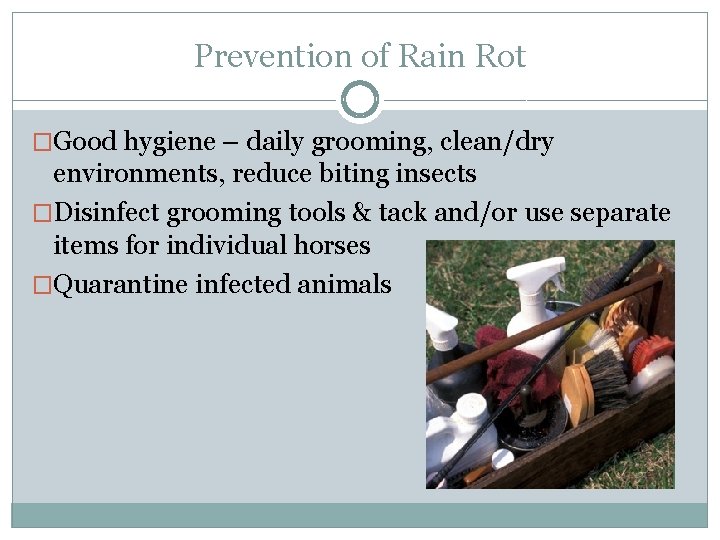
Prevention of Rain Rot �Good hygiene – daily grooming, clean/dry environments, reduce biting insects �Disinfect grooming tools & tack and/or use separate items for individual horses �Quarantine infected animals
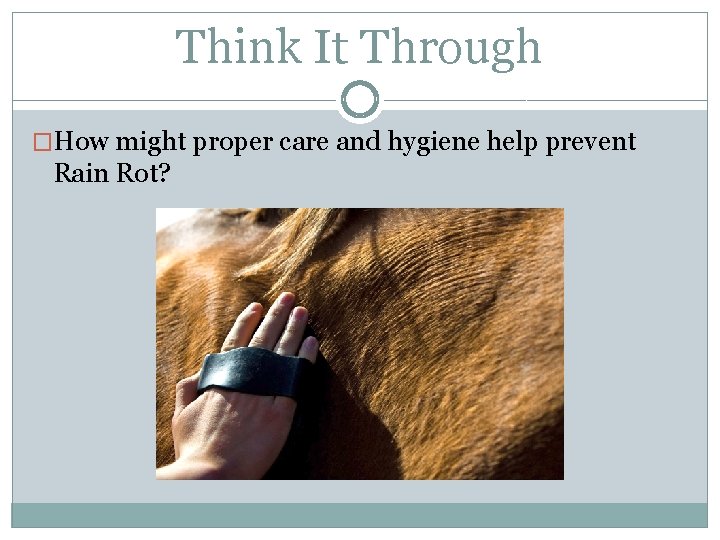
Think It Through �How might proper care and hygiene help prevent Rain Rot?
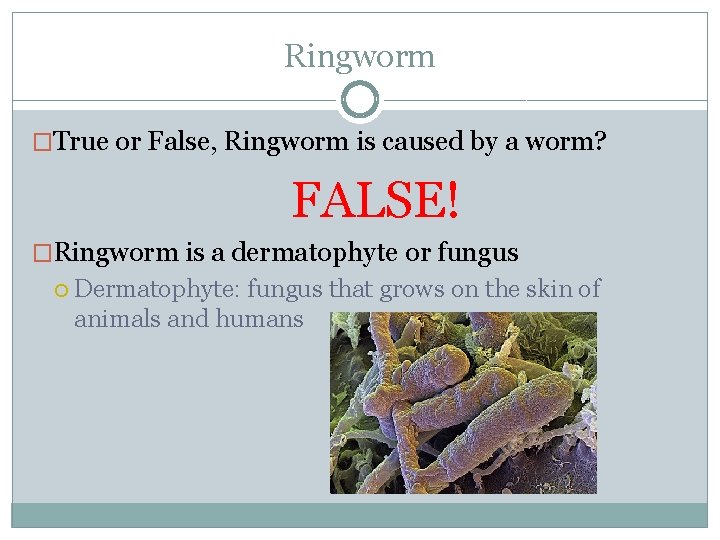
Ringworm �True or False, Ringworm is caused by a worm? FALSE! �Ringworm is a dermatophyte or fungus Dermatophyte: fungus that grows on the skin of animals and humans
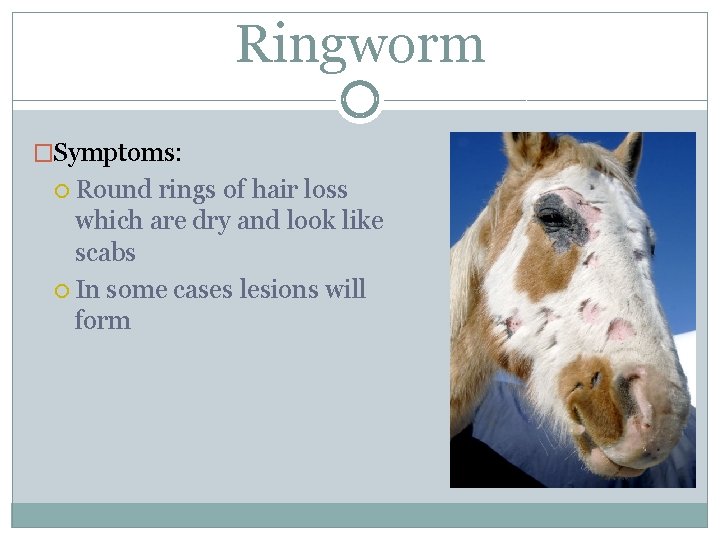
Ringworm �Symptoms: Round rings of hair loss which are dry and look like scabs In some cases lesions will form
Ring Worm
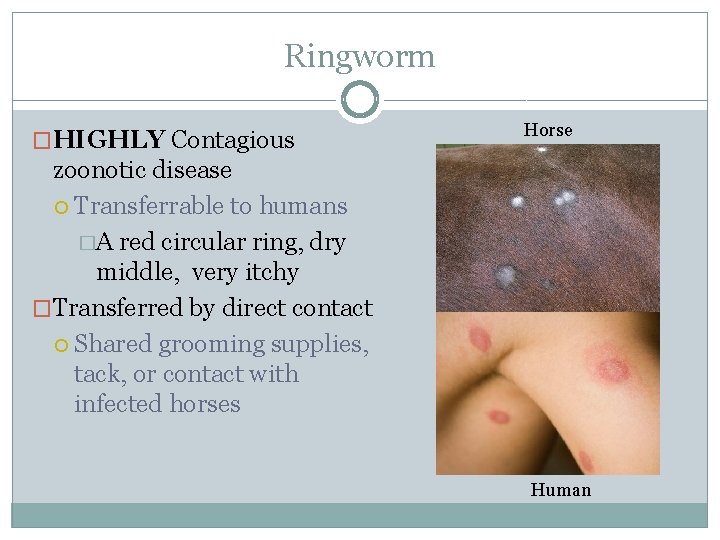
Ringworm �HIGHLY Contagious Horse zoonotic disease Transferrable to humans �A red circular ring, dry middle, very itchy �Transferred by direct contact Shared grooming supplies, tack, or contact with infected horses Human
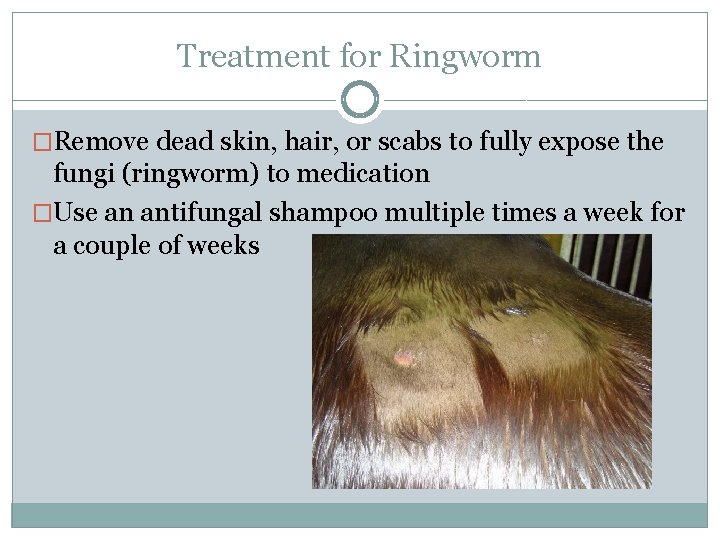
Treatment for Ringworm �Remove dead skin, hair, or scabs to fully expose the fungi (ringworm) to medication �Use an antifungal shampoo multiple times a week for a couple of weeks
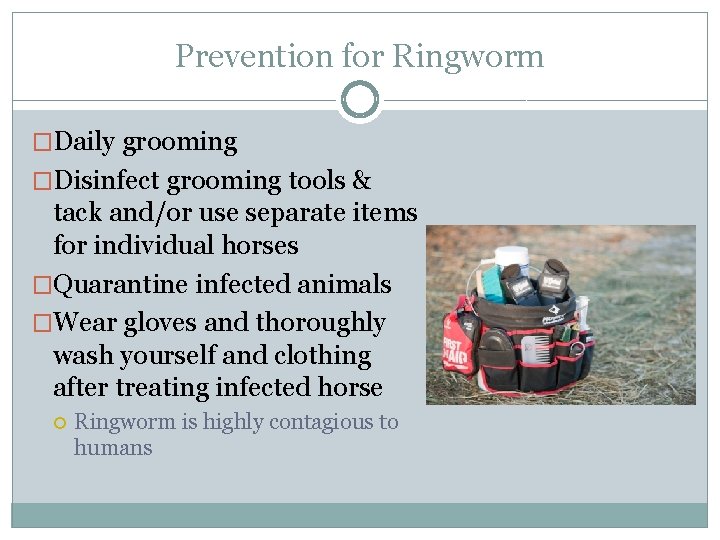
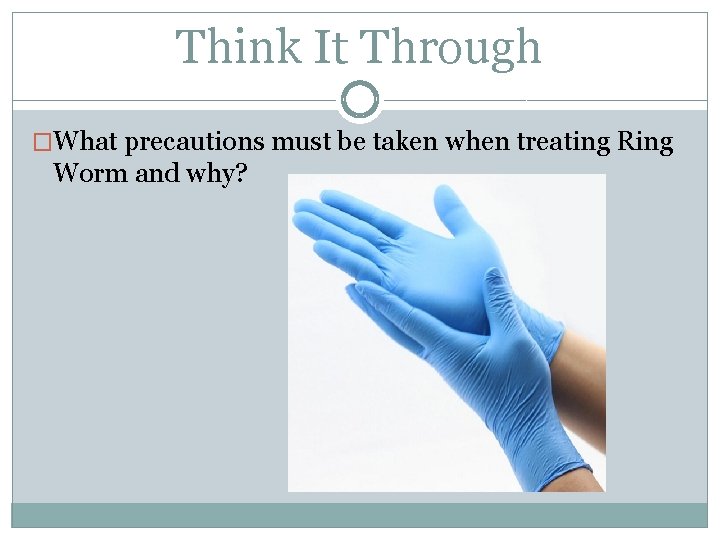
Prevention for Ringworm �Daily grooming �Disinfect grooming tools & tack and/or use separate items for individual horses �Quarantine infected animals �Wear gloves and thoroughly wash yourself and clothing after treating infected horse Ringworm is highly contagious to humans
Think It Through �What precautions must be taken when treating Ring Worm and why?
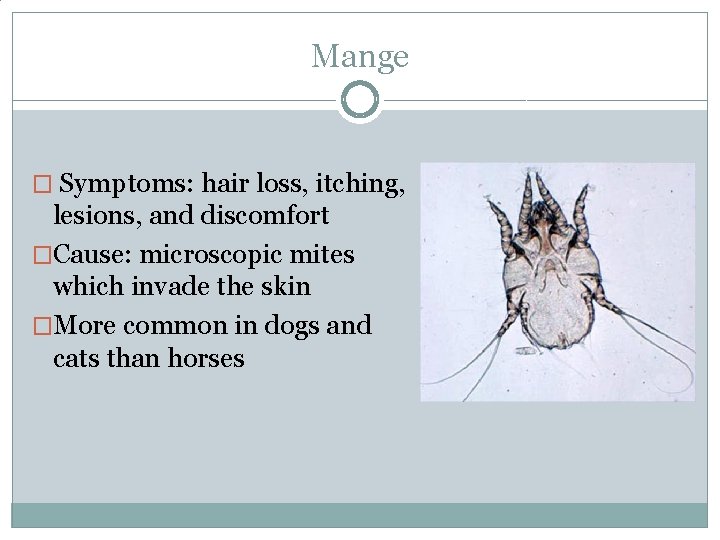
Mange � Symptoms: hair loss, itching, lesions, and discomfort �Cause: microscopic mites which invade the skin �More common in dogs and cats than horses
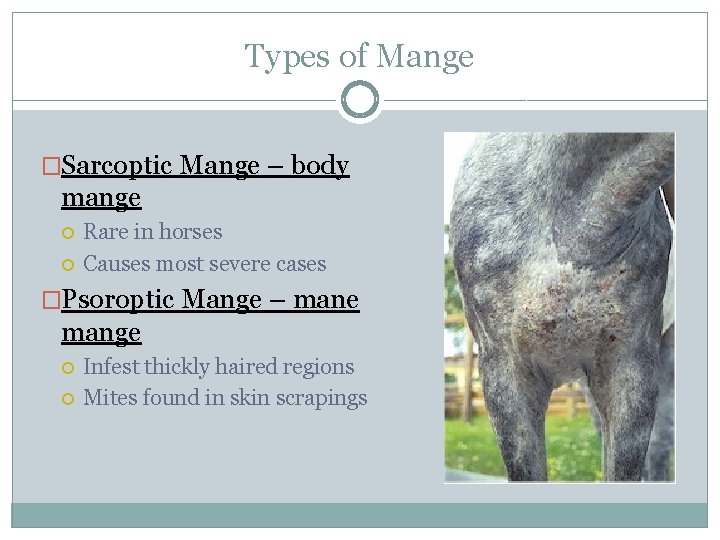
Types of Mange �Sarcoptic Mange – body mange Rare in horses Causes most severe cases �Psoroptic Mange – mane mange Infest thickly haired regions Mites found in skin scrapings
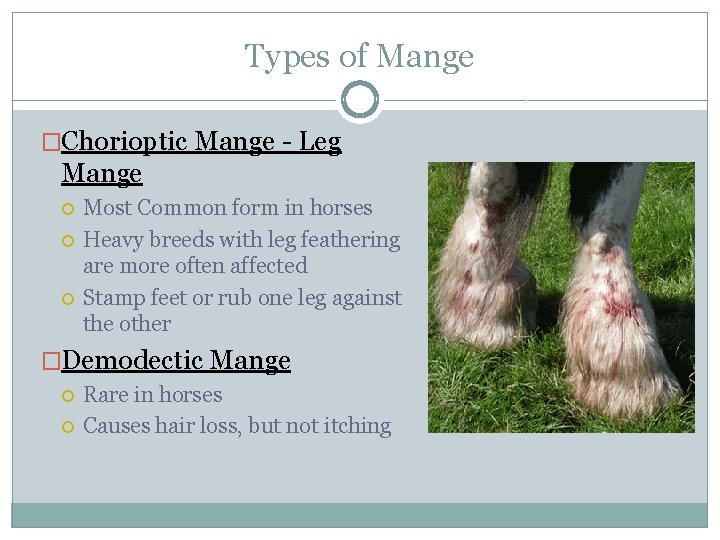
Types of Mange �Chorioptic Mange - Leg Mange Most Common form in horses Heavy breeds with leg feathering are more often affected Stamp feet or rub one leg against the other �Demodectic Mange Rare in horses Causes hair loss, but not itching
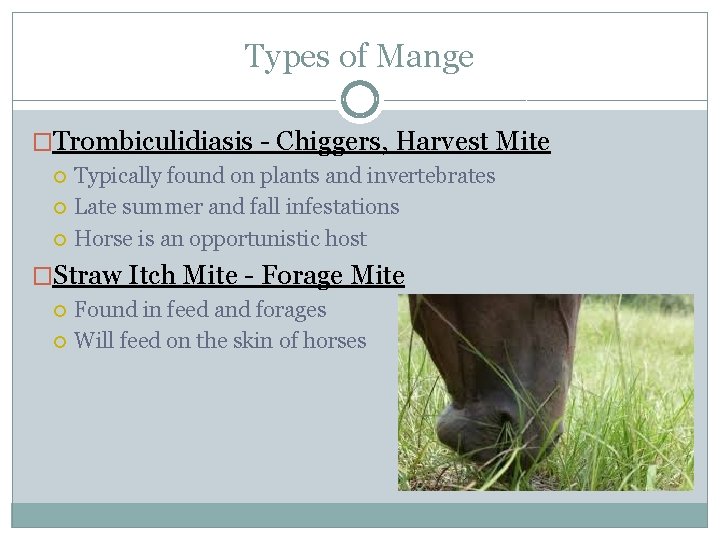
Types of Mange �Trombiculidiasis - Chiggers, Harvest Mite Typically found on plants and invertebrates Late summer and fall infestations Horse is an opportunistic host �Straw Itch Mite - Forage Mite Found in feed and forages Will feed on the skin of horses
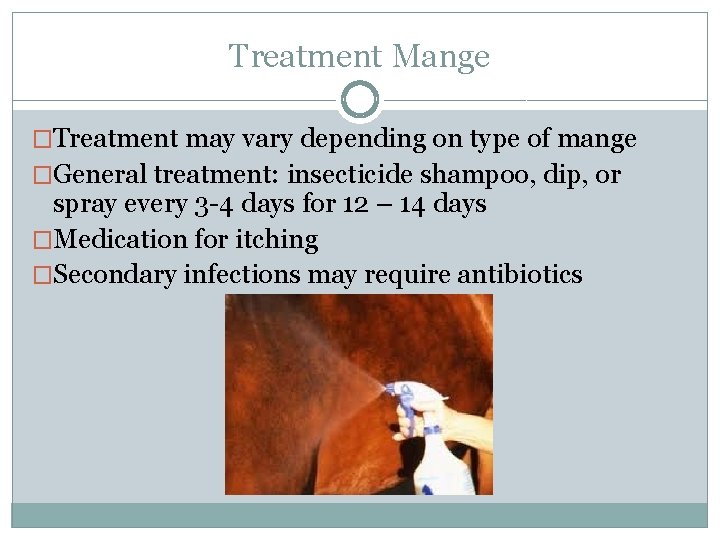
Treatment Mange �Treatment may vary depending on type of mange �General treatment: insecticide shampoo, dip, or spray every 3 -4 days for 12 – 14 days �Medication for itching �Secondary infections may require antibiotics
Prevention of Mange �Daily grooming �Proper nutrition �Clean, dry, spacious environments �Quarantine infected animals
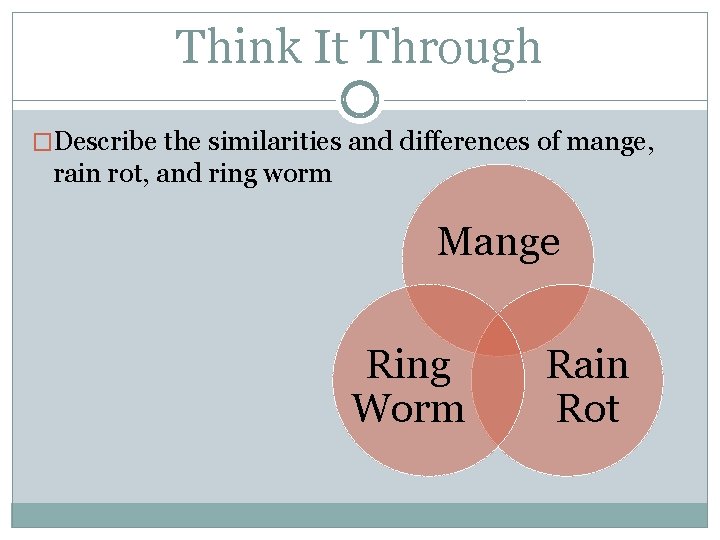
Think It Through �Describe the similarities and differences of mange, rain rot, and ring worm Mange Ring Worm Rain Rot
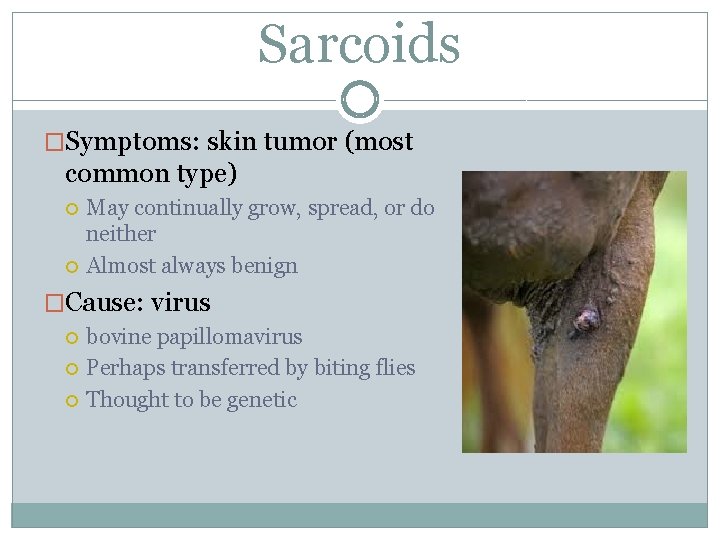
Sarcoids �Symptoms: skin tumor (most common type) May continually grow, spread, or do neither Almost always benign �Cause: virus bovine papillomavirus Perhaps transferred by biting flies Thought to be genetic
Sarcoids
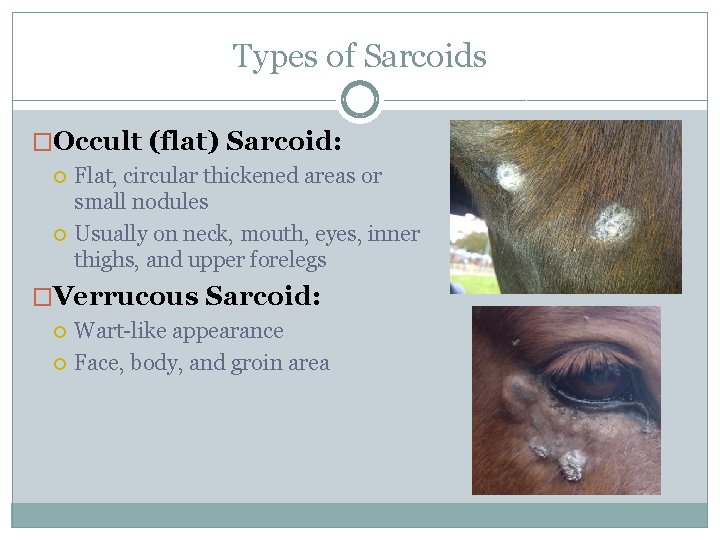
Types of Sarcoids �Occult (flat) Sarcoid: Flat, circular thickened areas or small nodules Usually on neck, mouth, eyes, inner thighs, and upper forelegs �Verrucous Sarcoid: Wart-like appearance Face, body, and groin area
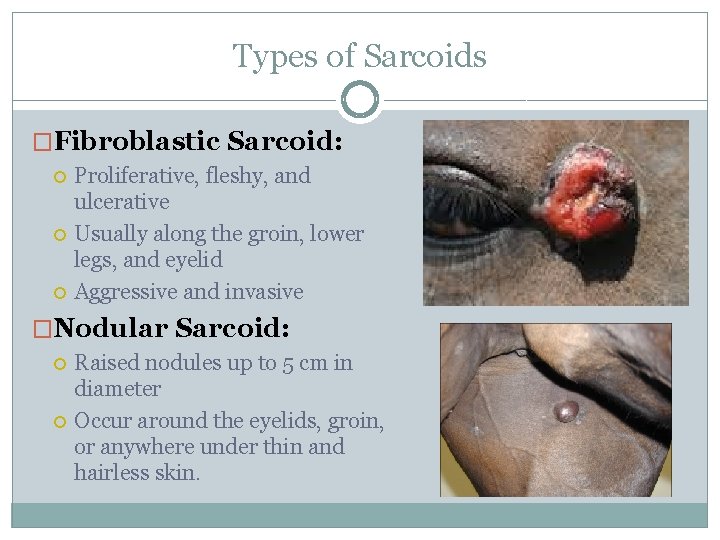
Types of Sarcoids �Fibroblastic Sarcoid: Proliferative, fleshy, and ulcerative Usually along the groin, lower legs, and eyelid Aggressive and invasive �Nodular Sarcoid: Raised nodules up to 5 cm in diameter Occur around the eyelids, groin, or anywhere under thin and hairless skin.
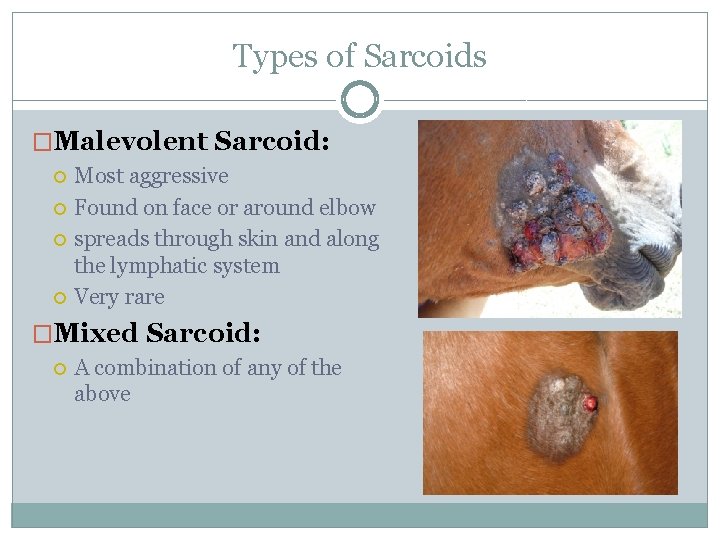
Types of Sarcoids �Malevolent Sarcoid: Most aggressive Found on face or around elbow spreads through skin and along the lymphatic system Very rare �Mixed Sarcoid: A combination of any of the above
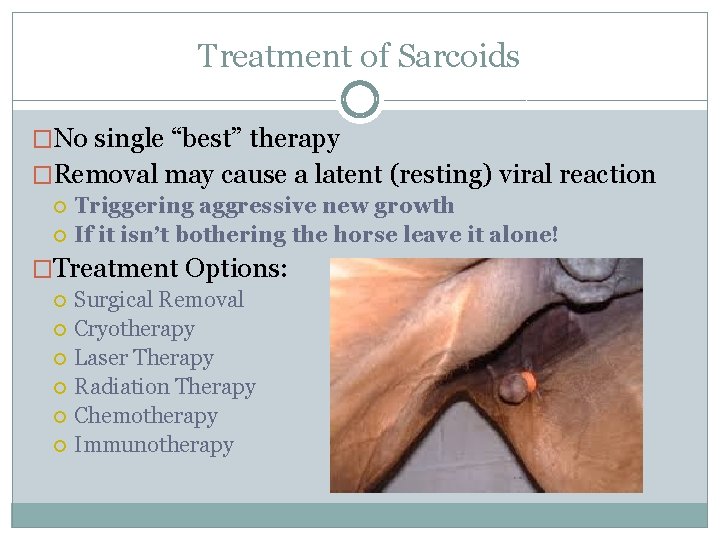
Treatment of Sarcoids �No single “best” therapy �Removal may cause a latent (resting) viral reaction Triggering aggressive new growth If it isn’t bothering the horse leave it alone! �Treatment Options: Surgical Removal Cryotherapy Laser Therapy Radiation Therapy Chemotherapy Immunotherapy
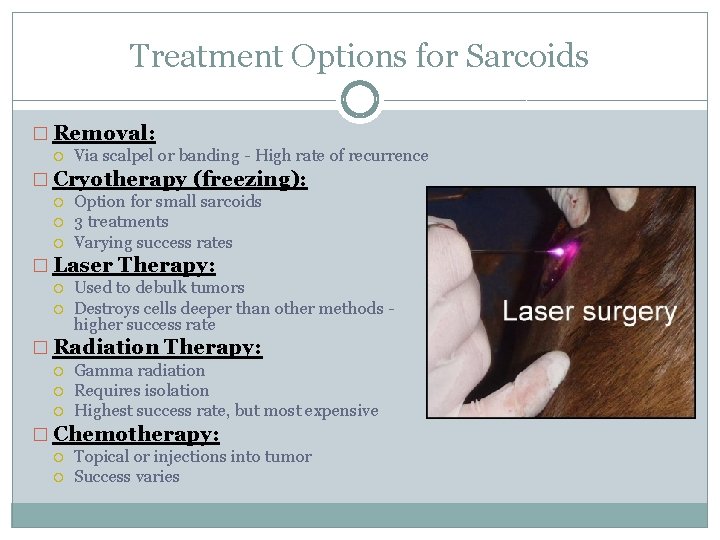
Treatment Options for Sarcoids � Removal: Via scalpel or banding - High rate of recurrence � Cryotherapy (freezing): Option for small sarcoids 3 treatments Varying success rates � Laser Therapy: Used to debulk tumors Destroys cells deeper than other methods higher success rate � Radiation Therapy: Gamma radiation Requires isolation Highest success rate, but most expensive � Chemotherapy: Topical or injections into tumor Success varies
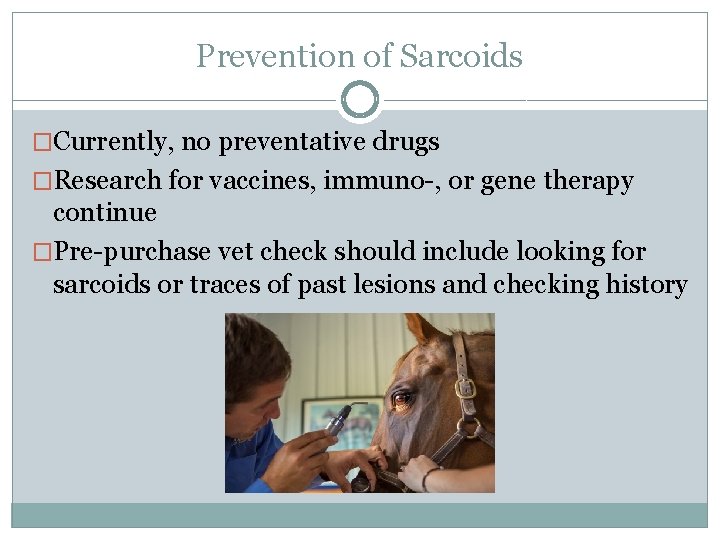
Prevention of Sarcoids �Currently, no preventative drugs �Research for vaccines, immuno-, or gene therapy continue �Pre-purchase vet check should include looking for sarcoids or traces of past lesions and checking history
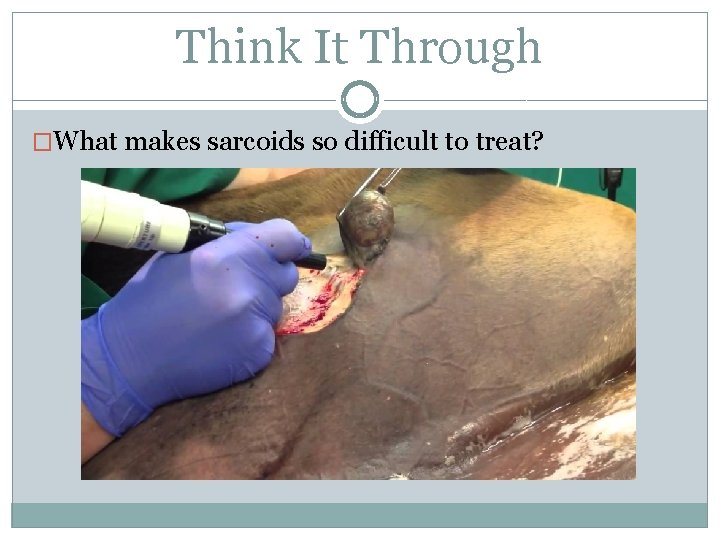
Think It Through �What makes sarcoids so difficult to treat?
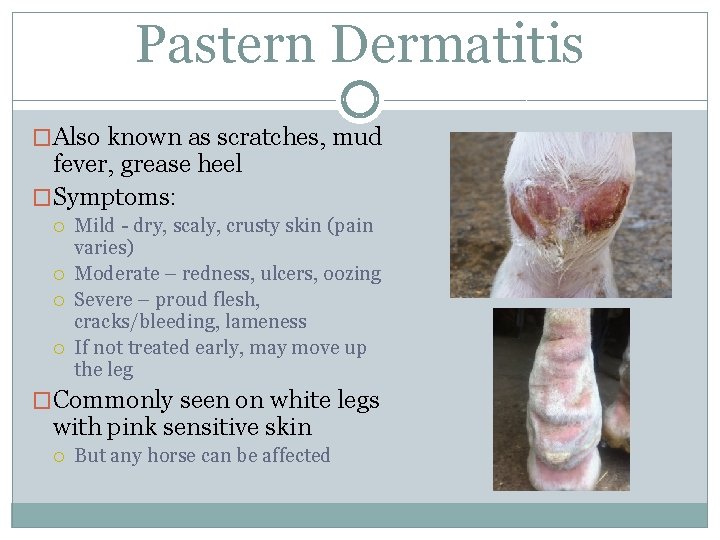
Pastern Dermatitis �Also known as scratches, mud fever, grease heel �Symptoms: Mild - dry, scaly, crusty skin (pain varies) Moderate – redness, ulcers, oozing Severe – proud flesh, cracks/bleeding, lameness If not treated early, may move up the leg �Commonly seen on white legs with pink sensitive skin But any horse can be affected
Pastern Dermatitis
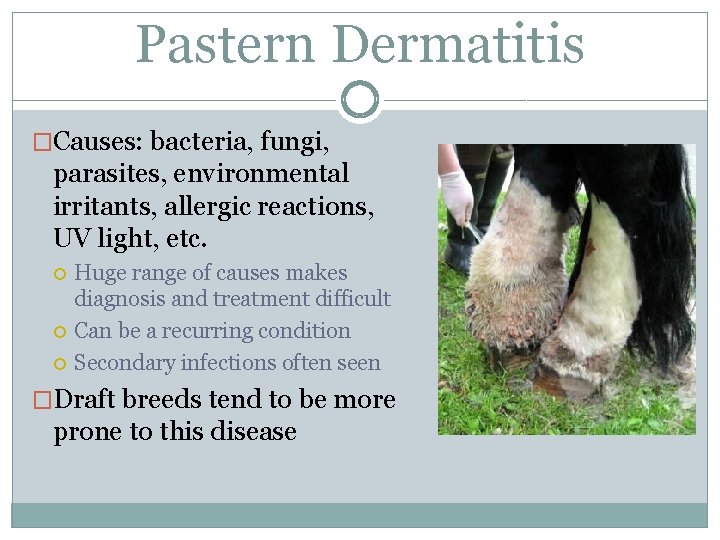
Pastern Dermatitis �Causes: bacteria, fungi, parasites, environmental irritants, allergic reactions, UV light, etc. Huge range of causes makes diagnosis and treatment difficult Can be a recurring condition Secondary infections often seen �Draft breeds tend to be more prone to this disease
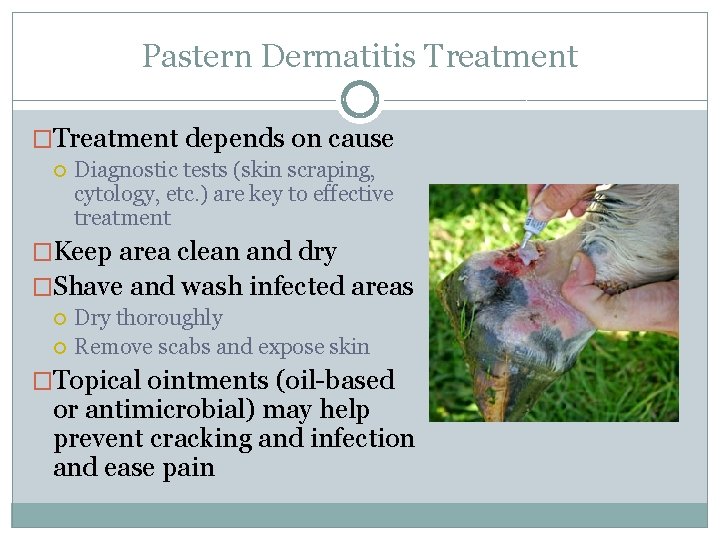
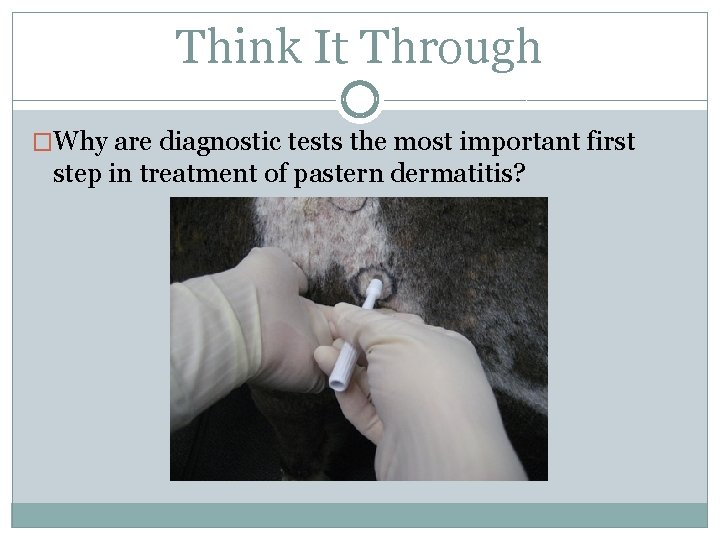
Pastern Dermatitis Treatment �Treatment depends on cause Diagnostic tests (skin scraping, cytology, etc. ) are key to effective treatment �Keep area clean and dry �Shave and wash infected areas Dry thoroughly Remove scabs and expose skin �Topical ointments (oil-based or antimicrobial) may help prevent cracking and infection and ease pain
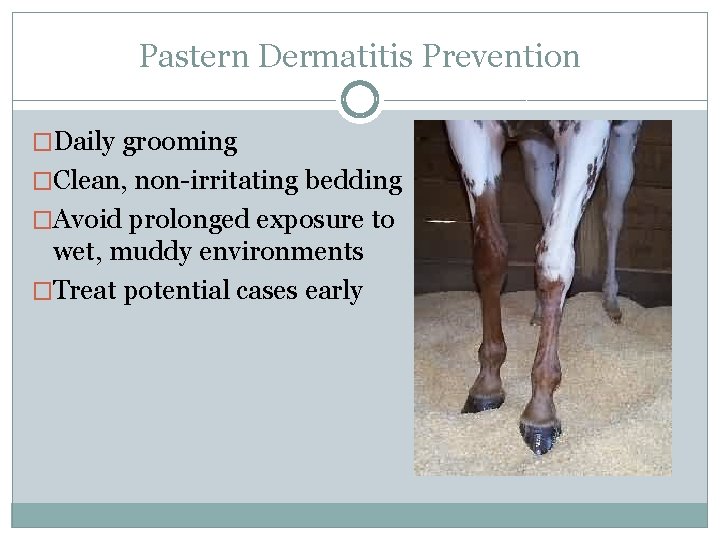
Pastern Dermatitis Prevention �Daily grooming �Clean, non-irritating bedding �Avoid prolonged exposure to wet, muddy environments �Treat potential cases early
Think It Through �Why are diagnostic tests the most important first step in treatment of pastern dermatitis?
An Ounce of Prevention is Worth a Pound of Cure HOW DOES THE TITLE OF THIS SLIDE RELATE TO WHAT YOU HAVE LEARNED TODAY?
The End
Reference Websites � http: //www. equusite. com/articles/health. Rain. Rot. shtml � http: //www. clydevetgroup. co. uk/equine/newsletters/may 05. htm � http: //www. merckmanuals. com/vet/integumentary_system/mange _cutaneous_acariasis_mite_infestation/mange_in_horses. html � http: //www. equifox. co. za/index. php? option=com_content&view=a rticle&id=138&Itemid=7 � http: //www. championvet. com/articles/84 -sarcoids-know-yourenemy. html � http: //www. gvequine. com/Pages/articles 24. php � http: //www. wvu. edu/~agexten/forglvst/Equine. Fact. Sheet. pdf � http: //www. clydevetgroup. co. uk/equine/newsletters/oct 05. htm#
Other References �Arnold, Carolyn DVM, DACVS. Diagnosis and Management of Equine Skin Tumors. Texas A&M University. Print.