
Common Core State Standards for K5 Mathematics K5
- Slides: 63
Common Core State Standards for K-5 Mathematics K-5 Standards for Mathematical Content Wake County Public Schools Elementary Mathematics Department Spring 2012
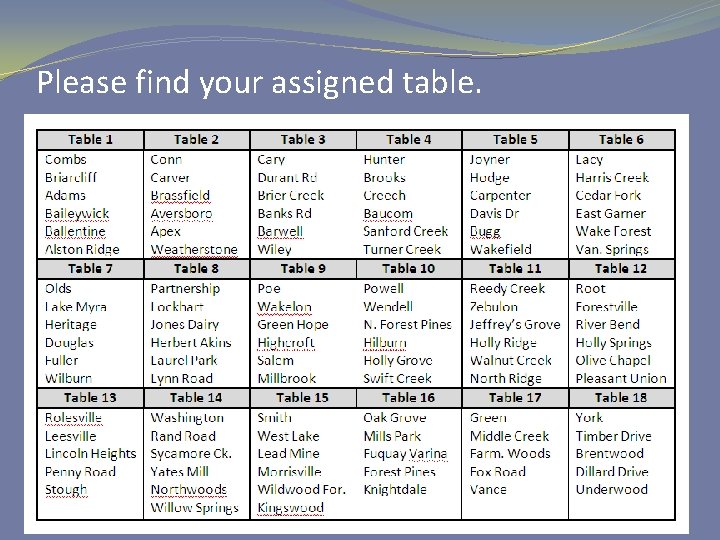
Please find your assigned table.
Project AIM: All Included in Mathematics A partnership between NCSU, Horizon Research, and WCPSS
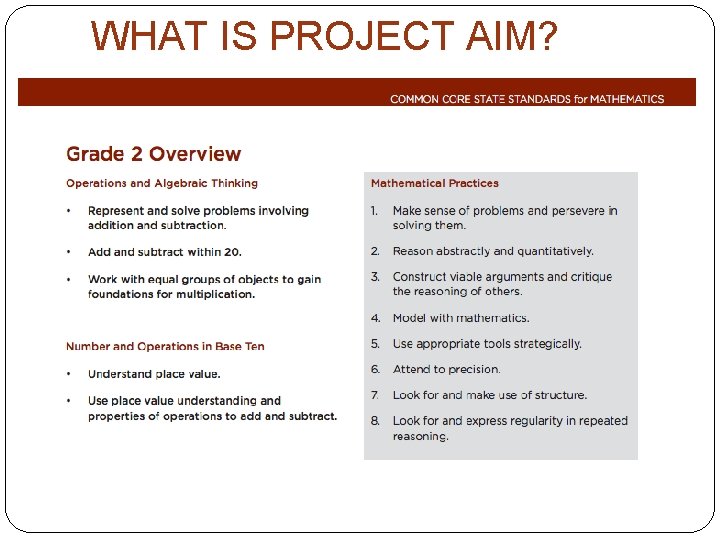
WHAT IS PROJECT AIM? A project to promote mathematics discourse in elementary-school classrooms as a viable approach to support all students in learning meaningful mathematics content. Five year research and development grant funded by the National Science Foundation.
WHAT IS PROJECT AIM?
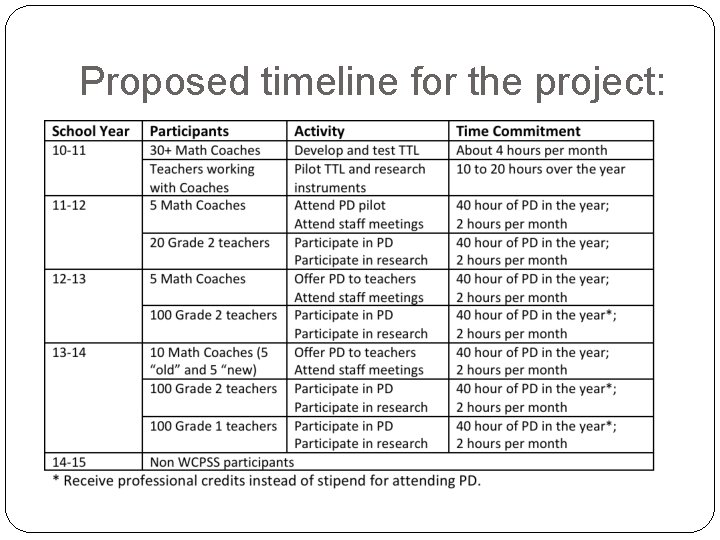
Proposed timeline for the project:
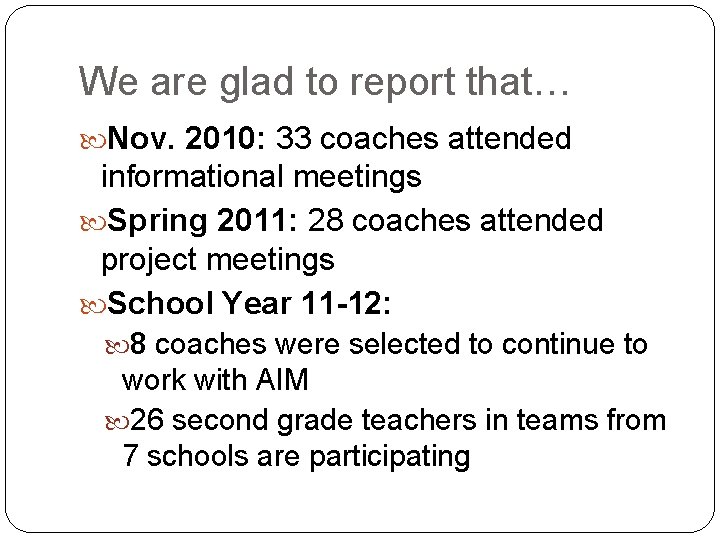
We are glad to report that… Nov. 2010: 33 coaches attended informational meetings Spring 2011: 28 coaches attended project meetings School Year 11 -12: 8 coaches were selected to continue to work with AIM 26 second grade teachers in teams from 7 schools are participating
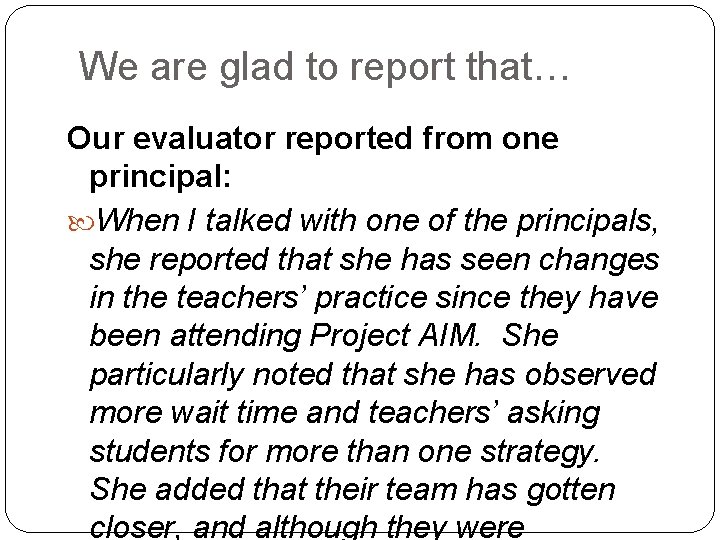
We are glad to report that… Our evaluator reported from one principal: When I talked with one of the principals, she reported that she has seen changes in the teachers’ practice since they have been attending Project AIM. She particularly noted that she has observed more wait time and teachers’ asking students for more than one strategy. She added that their team has gotten closer, and although they were
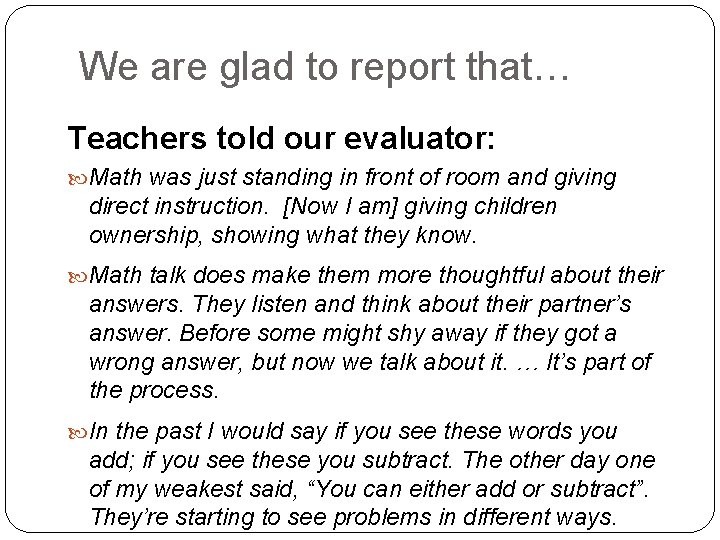
We are glad to report that… Teachers told our evaluator: Math was just standing in front of room and giving direct instruction. [Now I am] giving children ownership, showing what they know. Math talk does make them more thoughtful about their answers. They listen and think about their partner’s answer. Before some might shy away if they got a wrong answer, but now we talk about it. … It’s part of the process. In the past I would say if you see these words you add; if you see these you subtract. The other day one of my weakest said, “You can either add or subtract”. They’re starting to see problems in different ways.
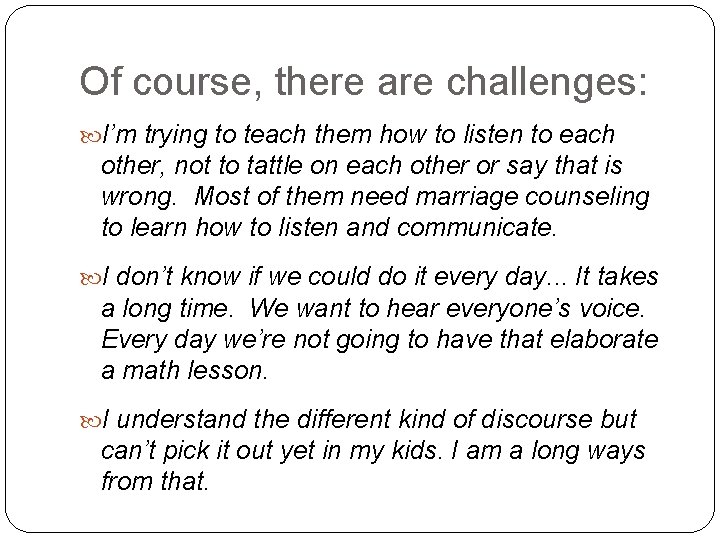
Of course, there are challenges: I’m trying to teach them how to listen to each other, not to tattle on each other or say that is wrong. Most of them need marriage counseling to learn how to listen and communicate. I don’t know if we could do it every day. . . It takes a long time. We want to hear everyone’s voice. Every day we’re not going to have that elaborate a math lesson. I understand the different kind of discourse but can’t pick it out yet in my kids. I am a long ways from that.
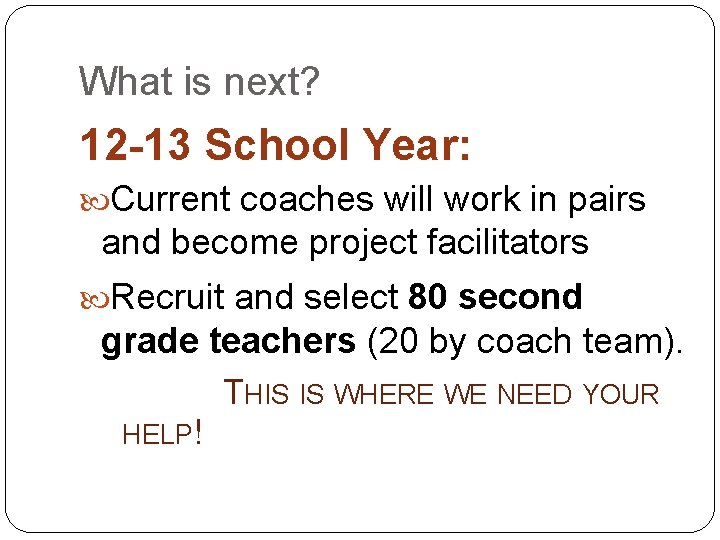
What is next? 12 -13 School Year: Current coaches will work in pairs and become project facilitators Recruit and select 80 second grade teachers (20 by coach team). THIS IS WHERE WE NEED YOUR HELP!
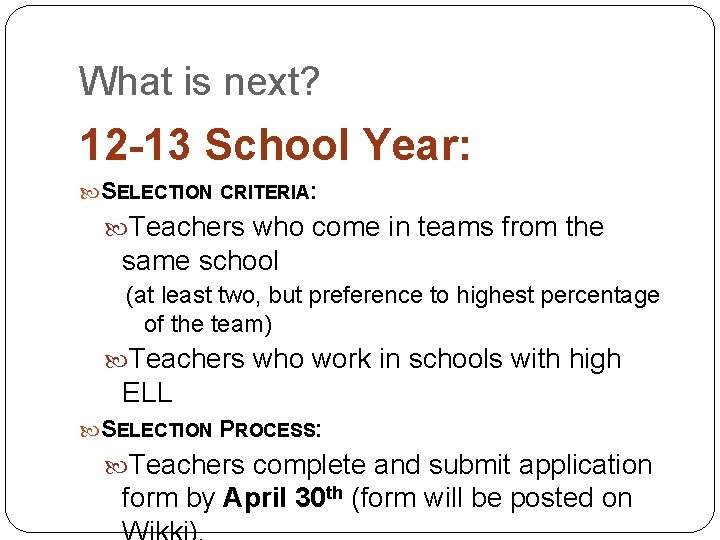
What is next? 12 -13 School Year: SELECTION CRITERIA: Teachers who come in teams from the same school (at least two, but preference to highest percentage of the team) Teachers who work in schools with high ELL SELECTION PROCESS: Teachers complete and submit application form by April 30 th (form will be posted on
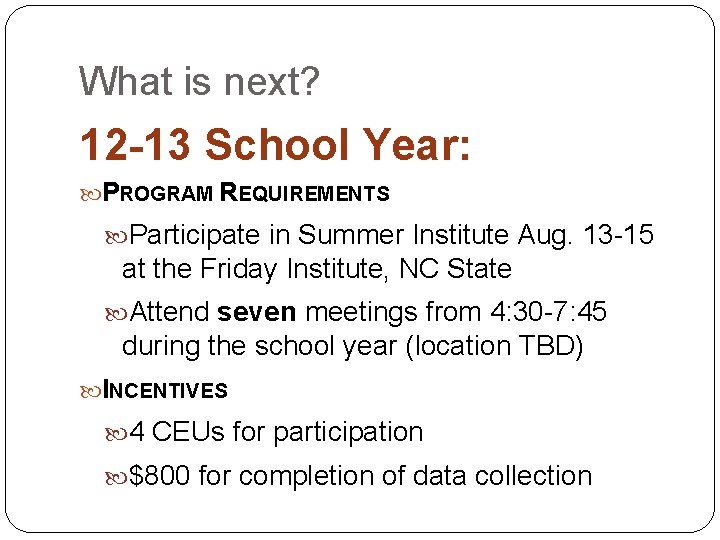
What is next? 12 -13 School Year: PROGRAM REQUIREMENTS Participate in Summer Institute Aug. 13 -15 at the Friday Institute, NC State Attend seven meetings from 4: 30 -7: 45 during the school year (location TBD) INCENTIVES 4 CEUs for participation $800 for completion of data collection
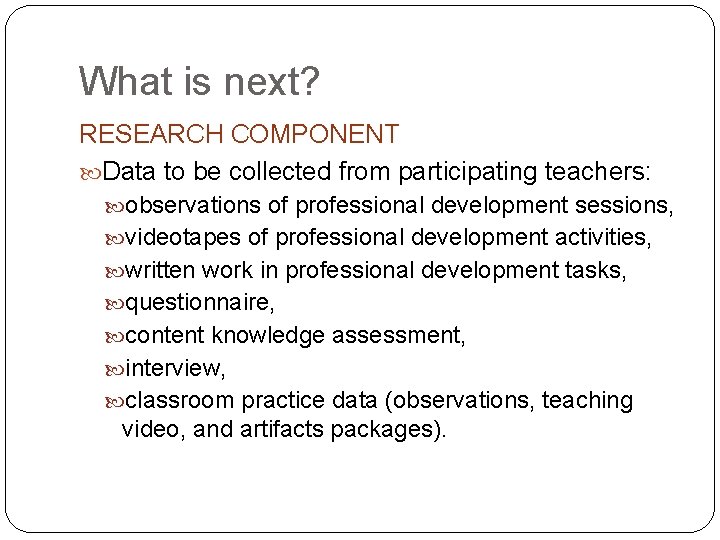
What is next? RESEARCH COMPONENT Data to be collected from participating teachers: observations of professional development sessions, videotapes of professional development activities, written work in professional development tasks, questionnaire, content knowledge assessment, interview, classroom practice data (observations, teaching video, and artifacts packages).
Just like last year… WHAT DO WE NEED FROM PRINCIPALS? Support! We need you to work with us, encouraging teams of 2 nd grade teachers to participate! We need you to support the work of teachers as they strengthen Math Discourse in your schools!
Questions? Contact us: Paola Sztajn: Paola_Sztajn@ncsu. edu
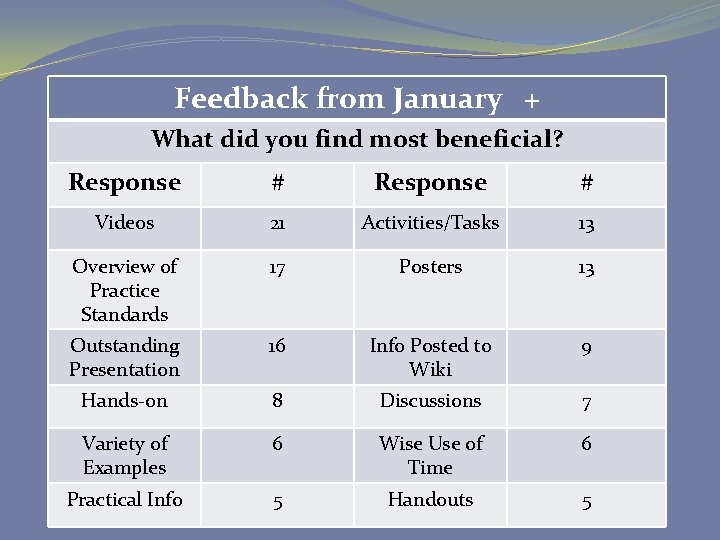
Feedback from January + What did you find most beneficial? Response # Videos 21 Activities/Tasks 13 Overview of Practice Standards 17 Posters 13 Outstanding Presentation 16 Info Posted to Wiki 9 Hands-on 8 Discussions 7 Variety of Examples 6 Wise Use of Time 6 Practical Info 5 Handouts 5
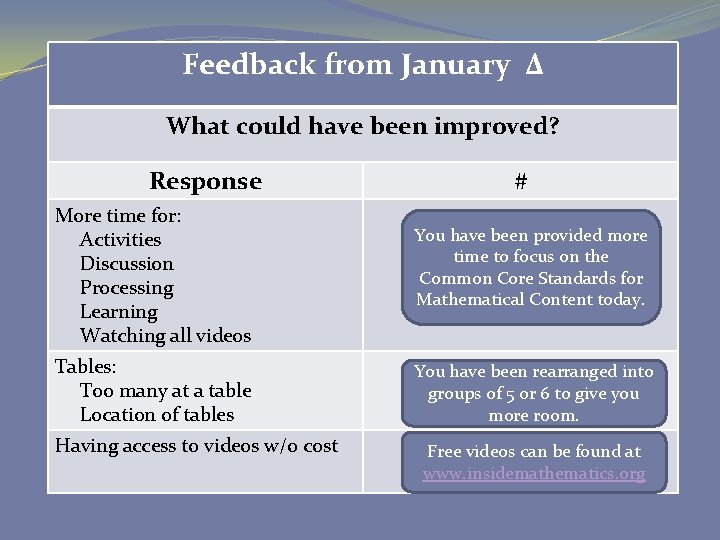
Feedback from January Δ What could have been improved? Response # More time for: Activities Discussion Processing Learning Watching all videos You have been provided more time to focus on the Common Core Standards for Mathematical Content today. Tables: Too many at a table Location of tables 6 rearranged into You have been groups of 5 or 6 to give you more room. Having access to videos w/o cost 22 Free videos 11 can be found at www. insidemathematics. org
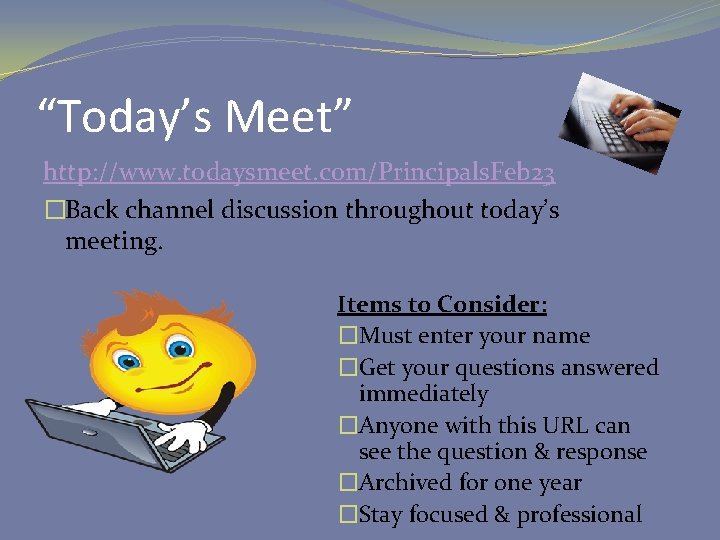
“Today’s Meet” http: //www. todaysmeet. com/Principals. Feb 23 �Back channel discussion throughout today’s meeting. Items to Consider: �Must enter your name �Get your questions answered immediately �Anyone with this URL can see the question & response �Archived for one year �Stay focused & professional
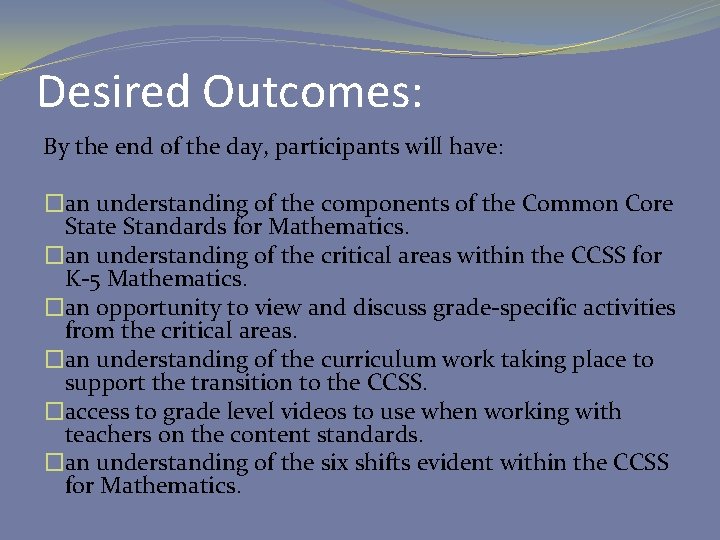
Desired Outcomes: By the end of the day, participants will have: �an understanding of the components of the Common Core State Standards for Mathematics. �an understanding of the critical areas within the CCSS for K-5 Mathematics. �an opportunity to view and discuss grade-specific activities from the critical areas. �an understanding of the curriculum work taking place to support the transition to the CCSS. �access to grade level videos to use when working with teachers on the content standards. �an understanding of the six shifts evident within the CCSS for Mathematics.
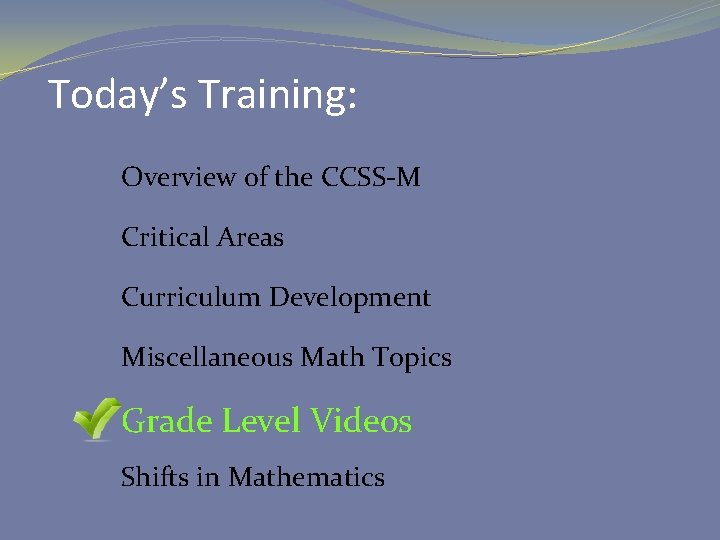
Today’s Training: Overview of the CCSS-M Critical Areas Curriculum Development Miscellaneous Math Topics Grade Level Videos Shifts in Mathematics
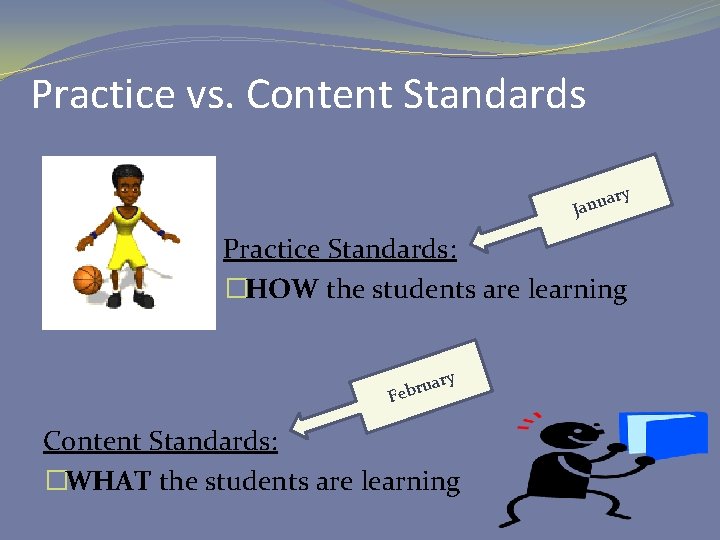
Practice vs. Content Standards a Janu ry Practice Standards: �HOW the students are learning ar u r b e F y Content Standards: �WHAT the students are learning
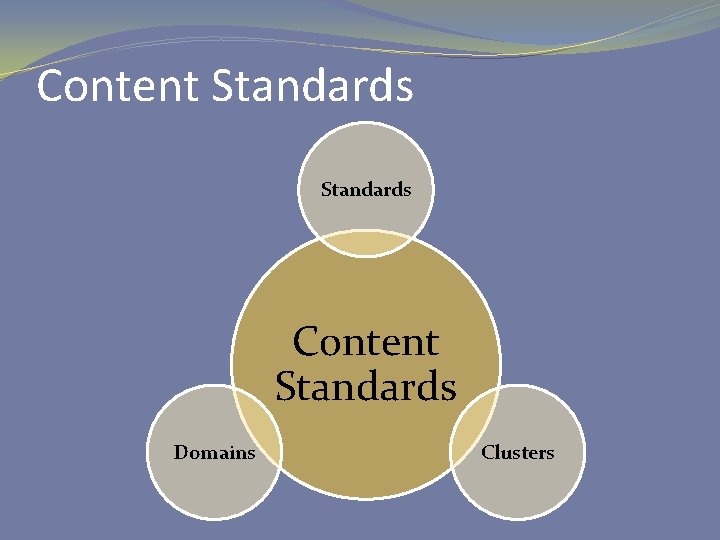
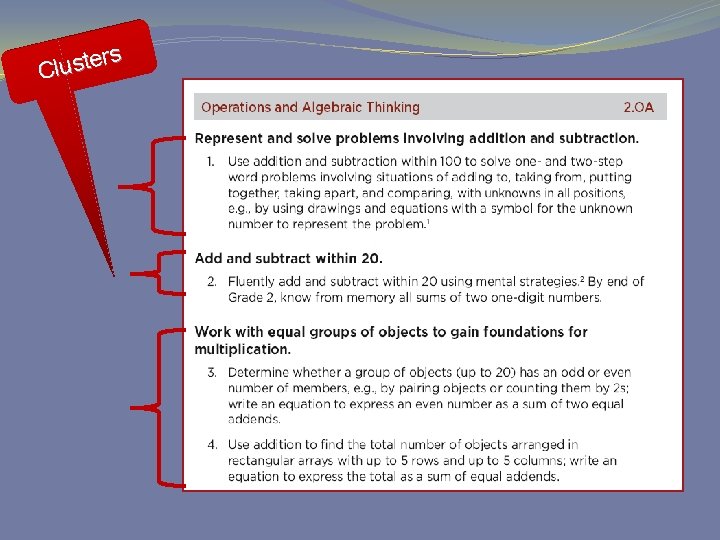
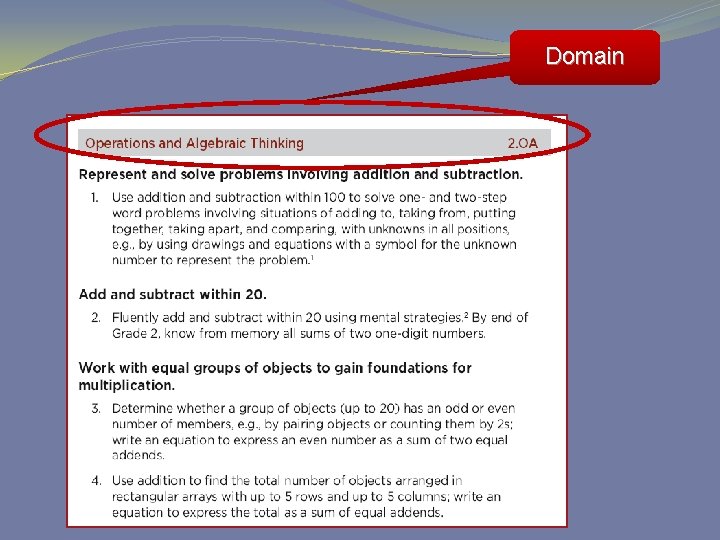
Content Standards Domains Clusters
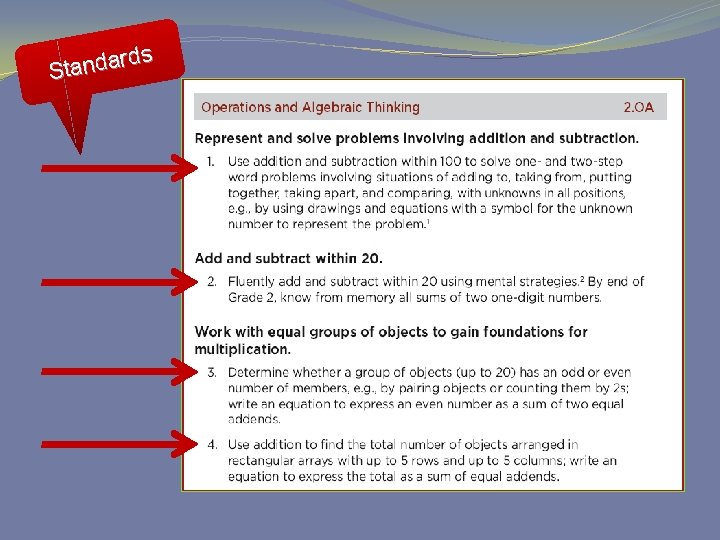
ds r a d n a St
ers t s u l C
Domain
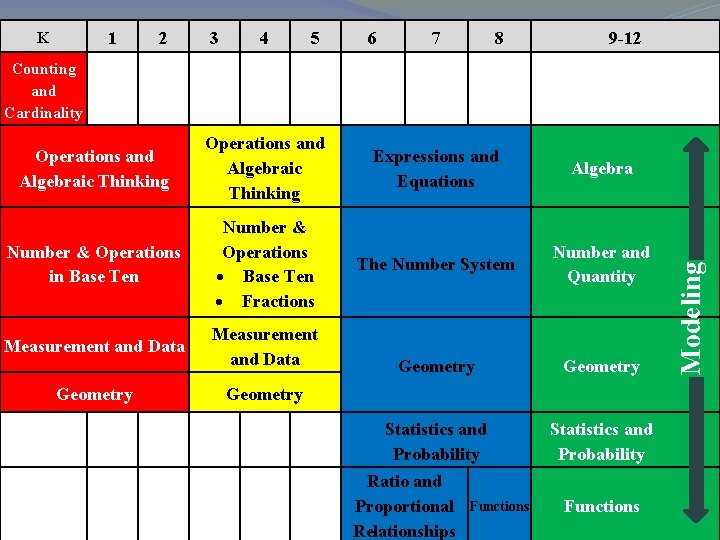
1 K 2 3 4 5 6 7 8 9 -12 Operations and Algebraic Thinking Expressions and Equations Algebra Number & Operations in Base Ten Number & Operations Base Ten Fractions The Number System Number and Quantity Measurement and Data Geometry Statistics and Probability Geometry Ratio and Proportional Relationships Functions Modeling Counting and Cardinality
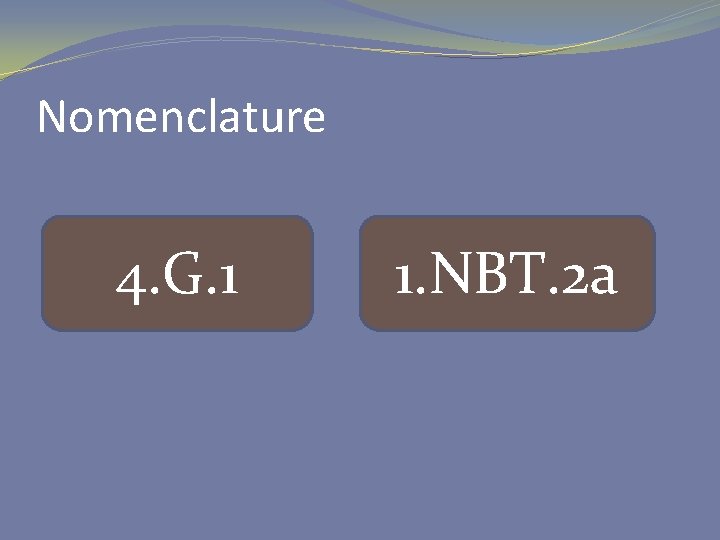
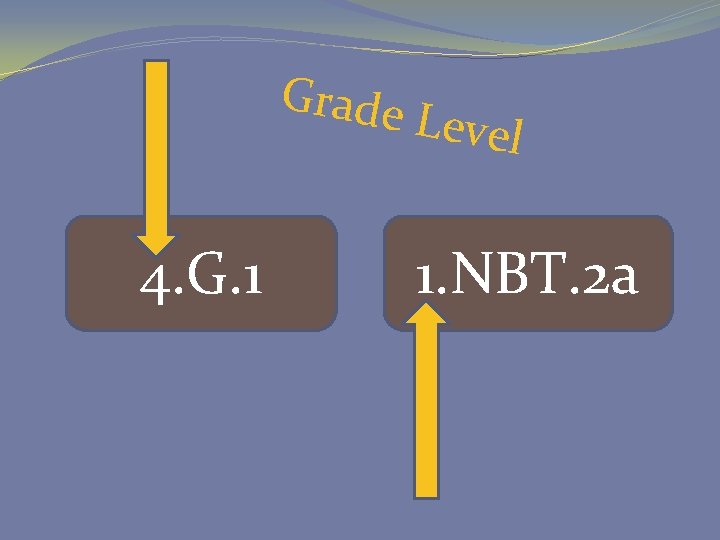
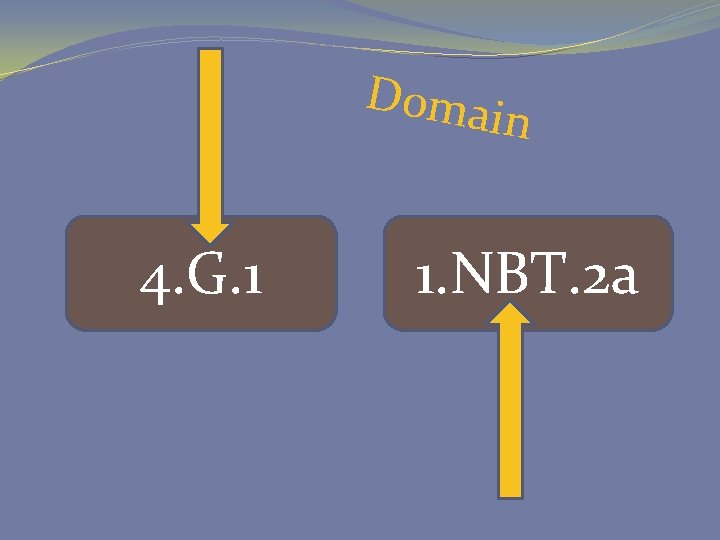
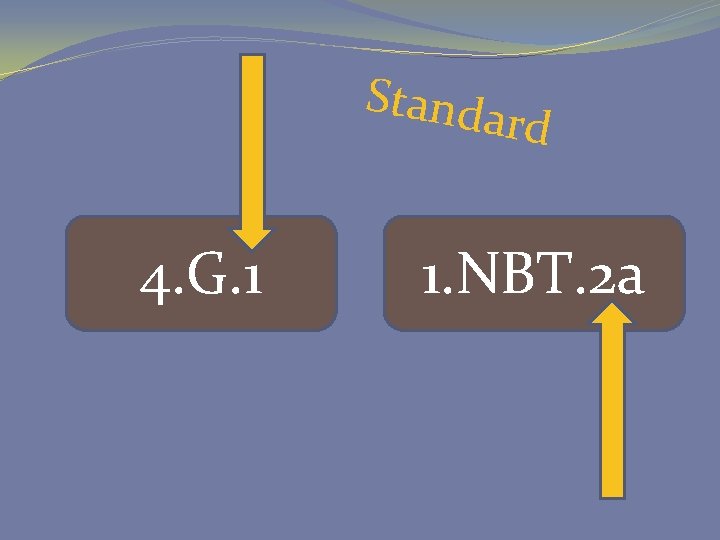
Nomenclature 4. G. 1 1. NBT. 2 a
Grade 4. G. 1 Level 1. NBT. 2 a
Doma in 4. G. 1 1. NBT. 2 a
Standa rd 4. G. 1 1. NBT. 2 a
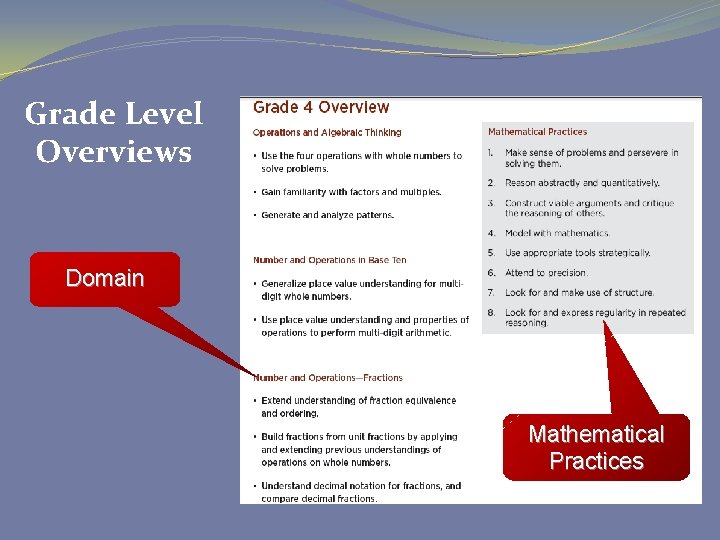
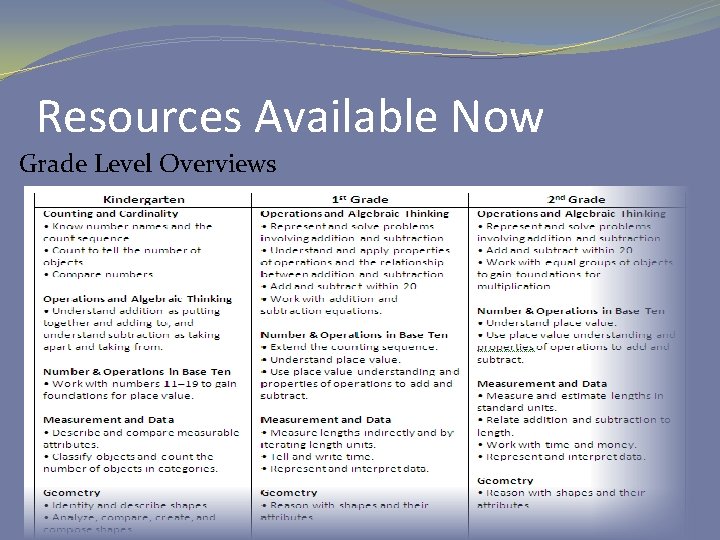
Grade Level Overviews Domain Mathematical Practices
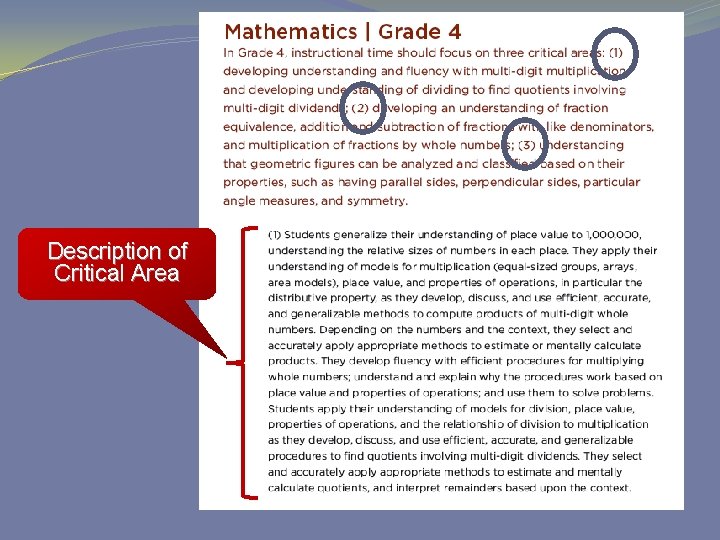
Description of Critical Area
Today’s Training: Overview of the CCSS-M Critical Areas Curriculum Development Miscellaneous Math Topics Grade Level Videos Shifts in Mathematics
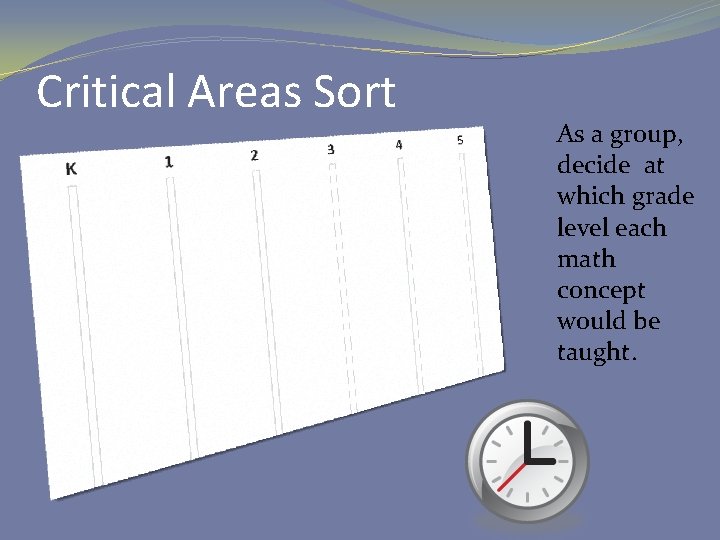
Critical Areas Sort As a group, decide at which grade level each math concept would be taught.
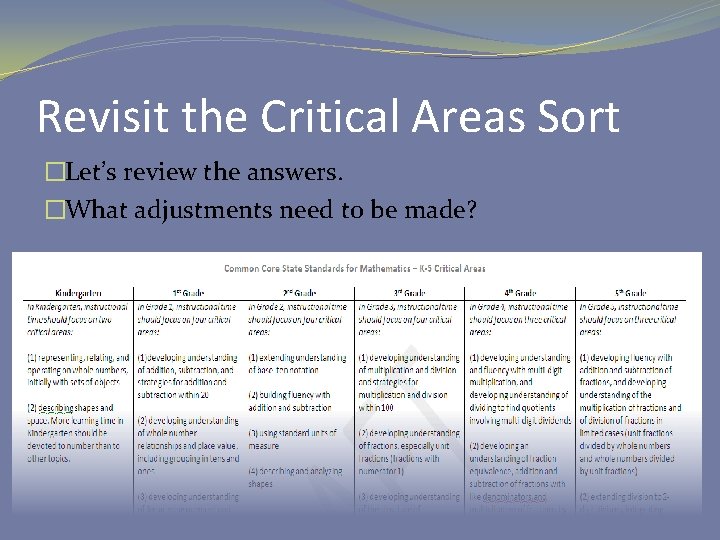
Revisit the Critical Areas Sort �Let’s review the answers. �What adjustments need to be made?
Critical Areas Sort �Take a moment to reflect on this activity. � What challenges did you face? � What are some notable changes you see? � How would this activity benefit teachers?
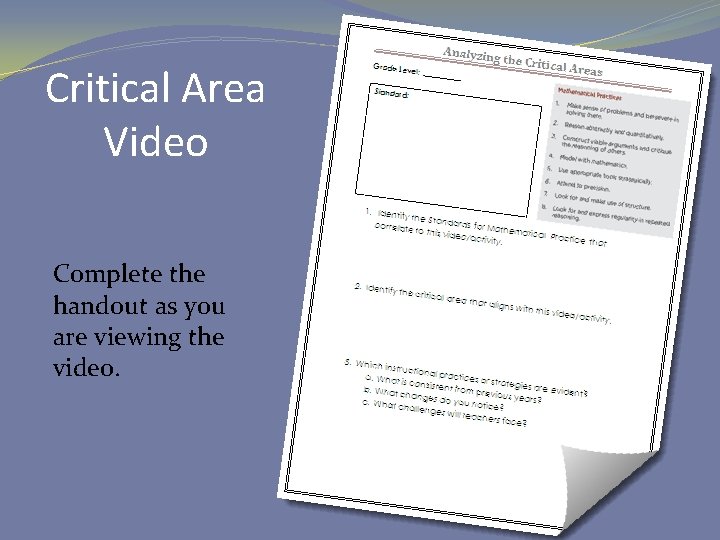
Critical Area Video Complete the handout as you are viewing the video.
Critical Area Video �Identify the Standards for Mathematical Practice that correlate to this video/activity. �Identify the critical area that aligns with this video/activity. �Which instructional practices or strategies are evident? �What is consistent from previous years? �What changes do you notice? �What challenges will teachers face?
Break
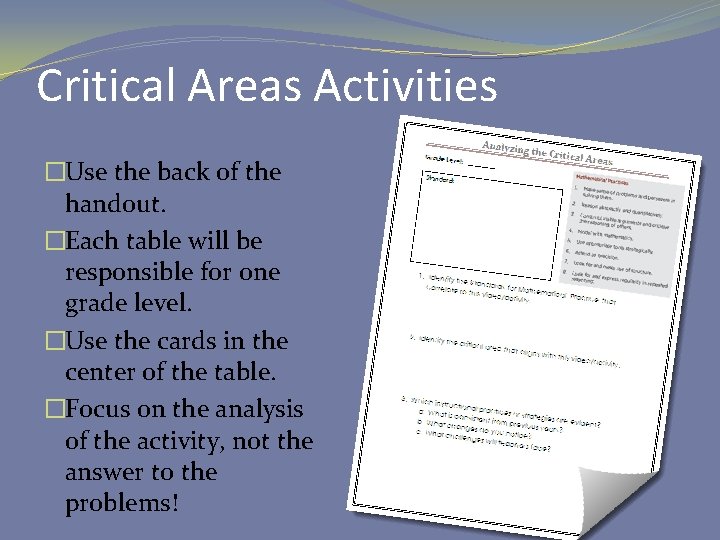
Critical Areas Activities �Use the back of the handout. �Each table will be responsible for one grade level. �Use the cards in the center of the table. �Focus on the analysis of the activity, not the answer to the problems!
Critical Areas Activities �Table Analysis � Read through the activity. � Analyze using the guiding questions on the handout. � You will have 5 minutes to complete.
Critical Areas Activities �Whole Group Discussion � Choose a designated speaker for your table. � Each grade level will share an overview of the activity AND big ideas from the table discussions.
Today’s Training: Overview of the CCSS-M Critical Areas Curriculum Development Miscellaneous Math Topics Grade Level Videos Shifts in Mathematics
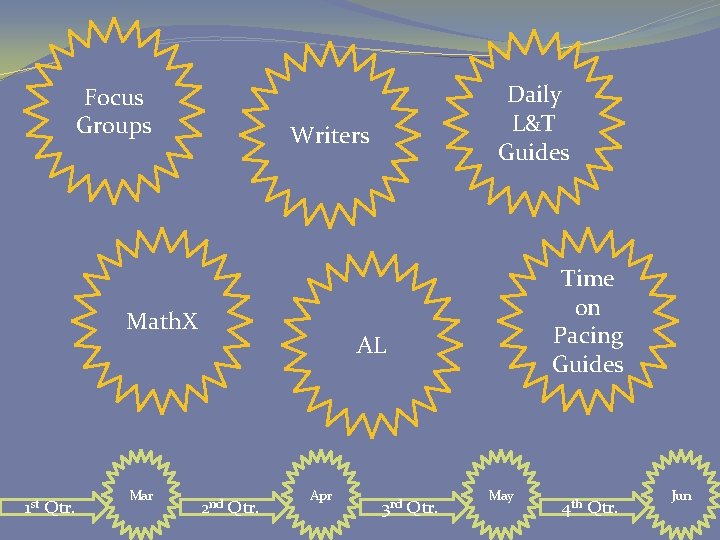
Focus Groups Writers Math. X 1 st Qtr. Mar Daily L&T Guides Time on Pacing Guides AL 2 nd Qtr. Apr 3 rd Qtr. May 4 th Qtr. Jun
Resources Available Now Grade Level Overviews
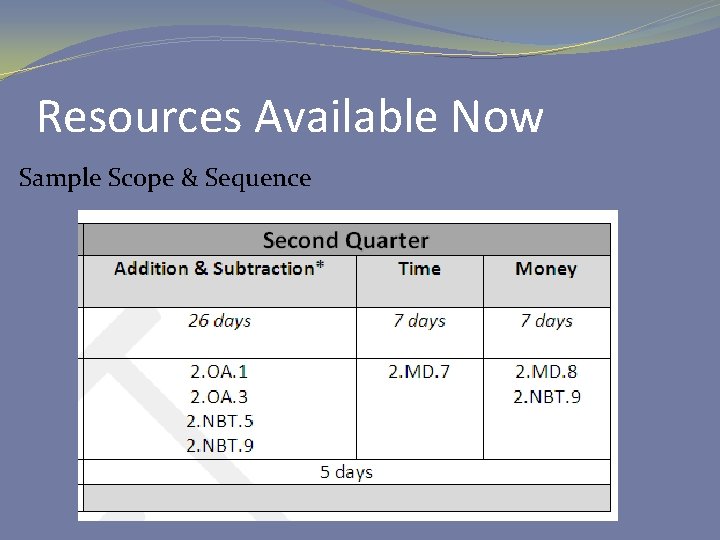
Resources Available Now Sample Scope & Sequence
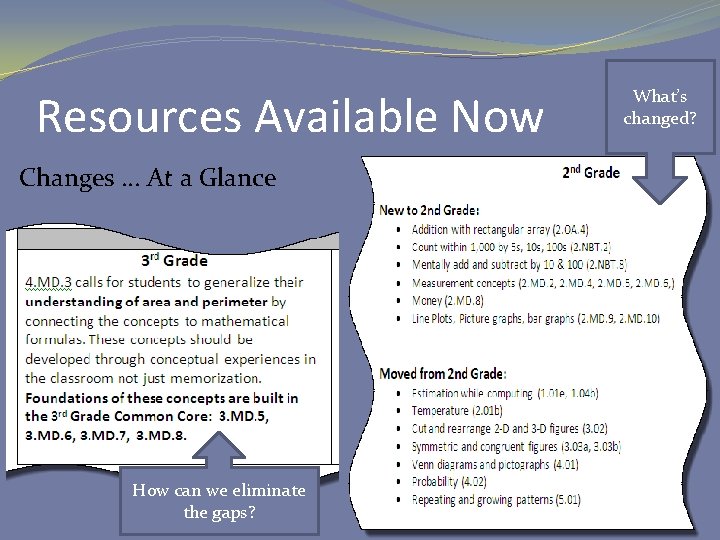
Resources Available Now Changes … At a Glance How can we eliminate the gaps? What’s changed?
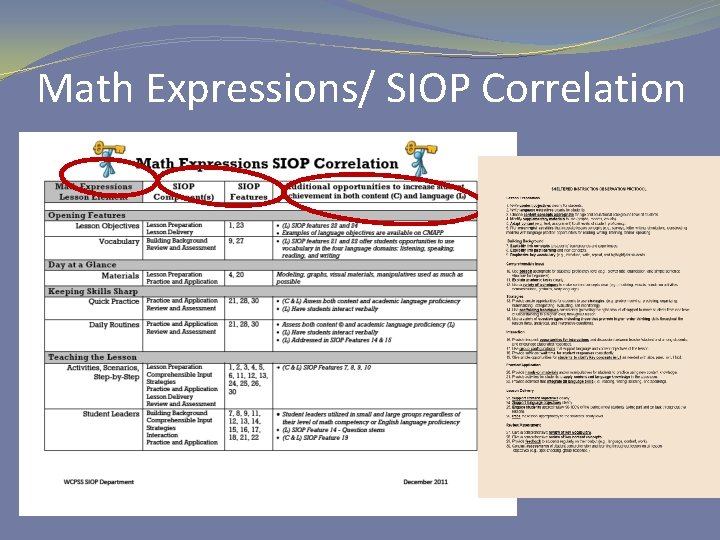
Math Expressions/ SIOP Correlation
Today’s Training: Overview of the CCSS-M Critical Areas Curriculum Development Miscellaneous Math Topics Grade Level Videos Shifts in Mathematics
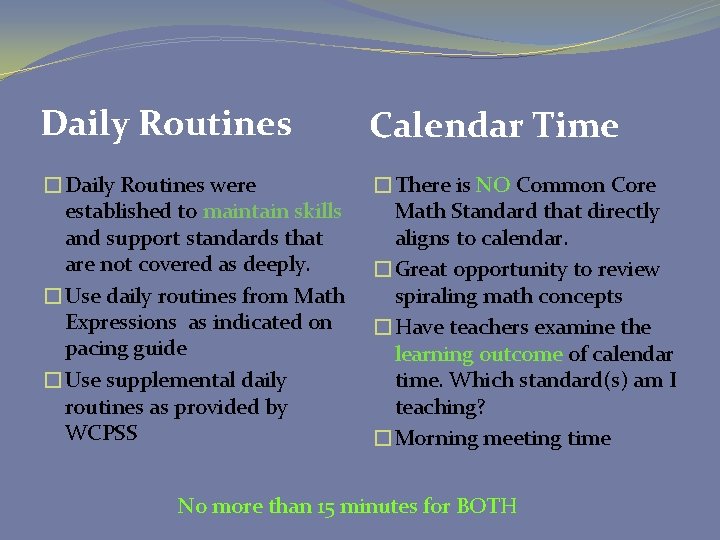
Daily Routines Calendar Time �Daily Routines were established to maintain skills and support standards that are not covered as deeply. �Use daily routines from Math Expressions as indicated on pacing guide �Use supplemental daily routines as provided by WCPSS �There is NO Common Core Math Standard that directly aligns to calendar. �Great opportunity to review spiraling math concepts �Have teachers examine the learning outcome of calendar time. Which standard(s) am I teaching? �Morning meeting time No more than 15 minutes for BOTH
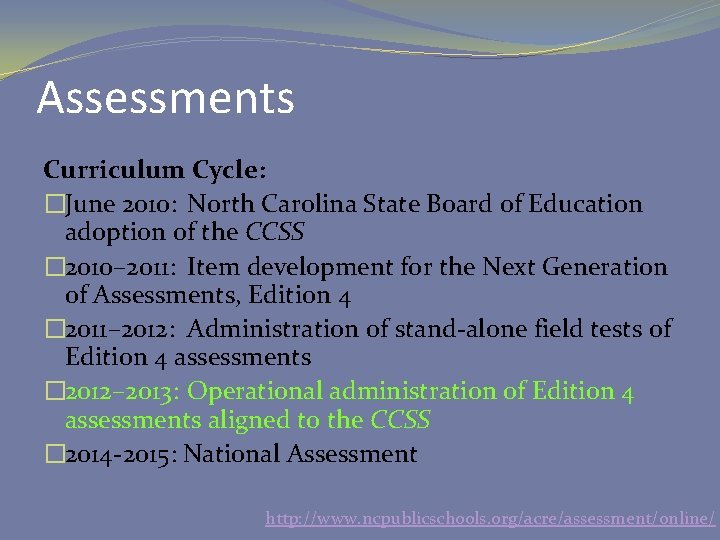
Assessments Curriculum Cycle: �June 2010: North Carolina State Board of Education adoption of the CCSS � 2010– 2011: Item development for the Next Generation of Assessments, Edition 4 � 2011– 2012: Administration of stand-alone field tests of Edition 4 assessments � 2012– 2013: Operational administration of Edition 4 assessments aligned to the CCSS � 2014 -2015: National Assessment http: //www. ncpublicschools. org/acre/assessment/online/
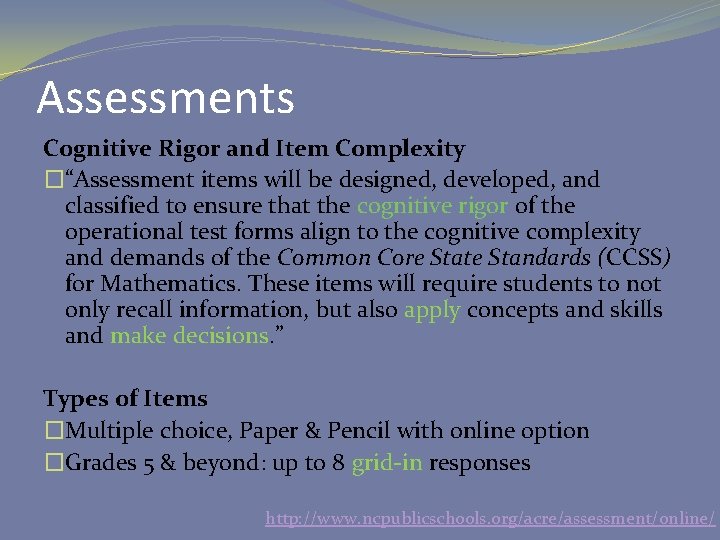
Assessments Cognitive Rigor and Item Complexity �“Assessment items will be designed, developed, and classified to ensure that the cognitive rigor of the operational test forms align to the cognitive complexity and demands of the Common Core State Standards (CCSS) for Mathematics. These items will require students to not only recall information, but also apply concepts and skills and make decisions. ” Types of Items �Multiple choice, Paper & Pencil with online option �Grades 5 & beyond: up to 8 grid-in responses http: //www. ncpublicschools. org/acre/assessment/online/
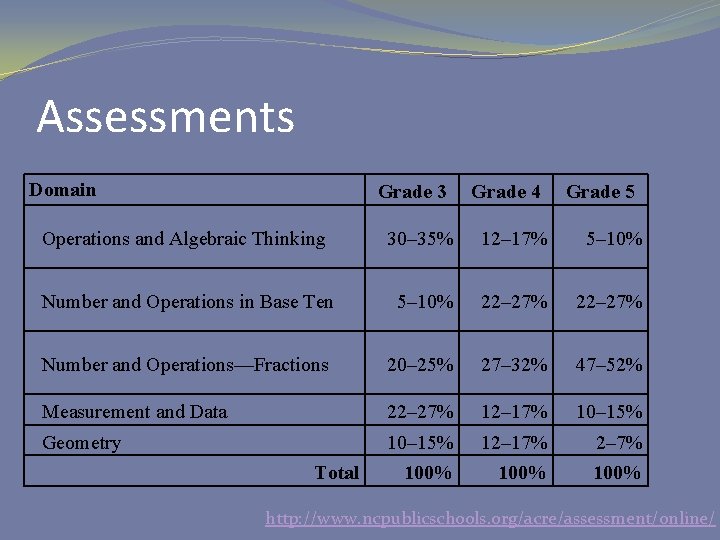
Assessments Domain Grade 3 Grade 4 Grade 5 Operations and Algebraic Thinking 30– 35% 12– 17% 5– 10% Number and Operations in Base Ten 5– 10% 22– 27% Number and Operations—Fractions 20– 25% 27– 32% 47– 52% Measurement and Data 22– 27% 12– 17% 10– 15% Geometry 10– 15% 12– 17% 2– 7% 100% Total http: //www. ncpublicschools. org/acre/assessment/online/
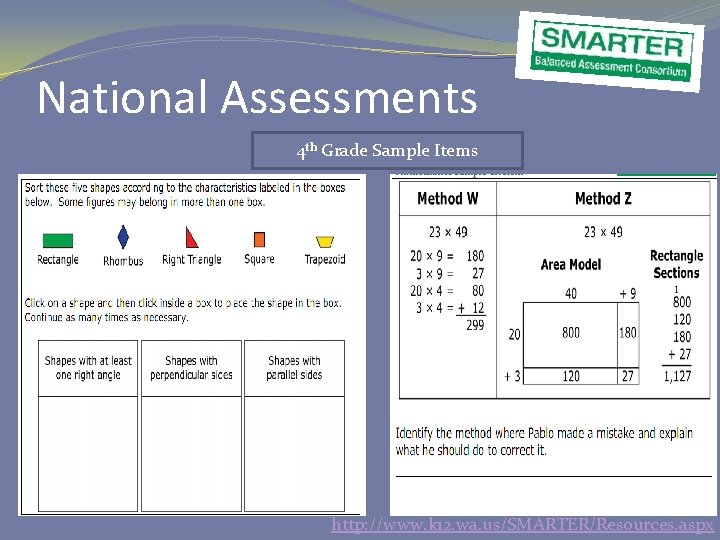
National Assessments 4 th Grade Sample Items http: //www. k 12. wa. us/SMARTER/Resources. aspx
Today’s Training: Overview of the CCSS-M Critical Areas Curriculum Development Miscellaneous Math Topics Grade Level Videos Shifts in Mathematics
Sample Grade Level Video �One video per grade level �Posted to C-MAPP �Still in editing stages �Available by the end of February �Only 1 example today
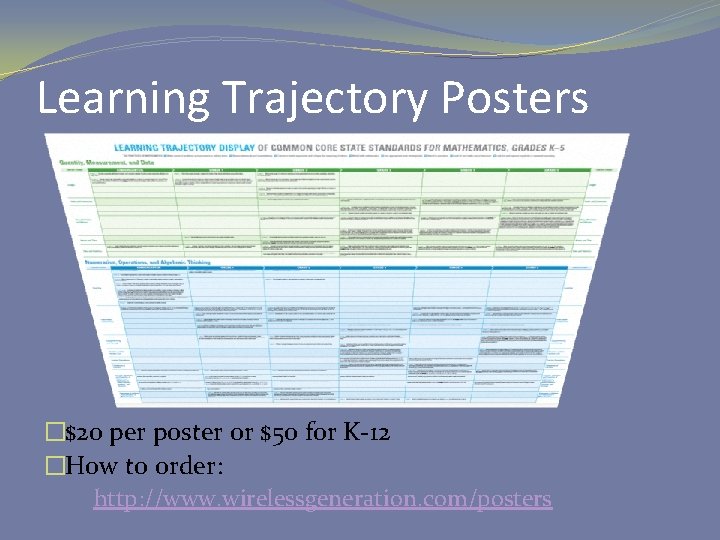
Learning Trajectory Posters �$20 per poster or $50 for K-12 �How to order: �http: //www. wirelessgeneration. com/posters
Reflection �Click HERE to provide feedback on today’s training.
Today’s Training: Overview of the CCSS-M Critical Areas Curriculum Development Miscellaneous Math Topics Grade Level Videos Shifts in Mathematics
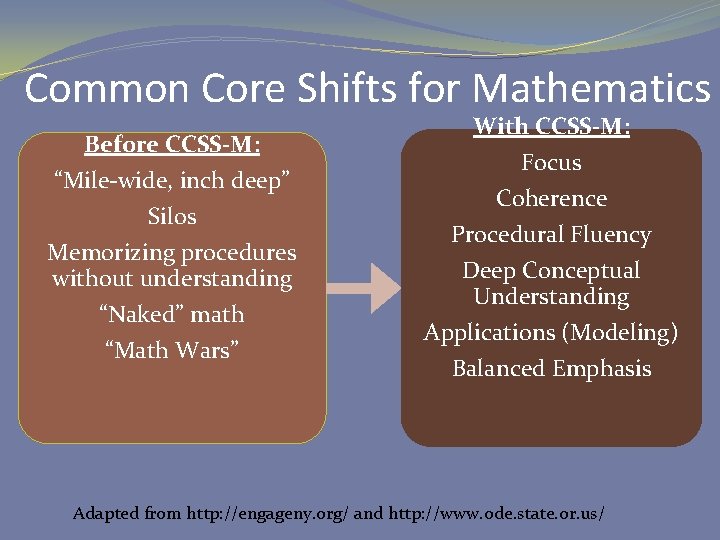
Common Core Shifts for Mathematics Before CCSS-M: “Mile-wide, inch deep” Silos Memorizing procedures without understanding “Naked” math “Math Wars” With CCSS-M: Focus Coherence Procedural Fluency Deep Conceptual Understanding Applications (Modeling) Balanced Emphasis Adapted from http: //engageny. org/ and http: //www. ode. state. or. us/
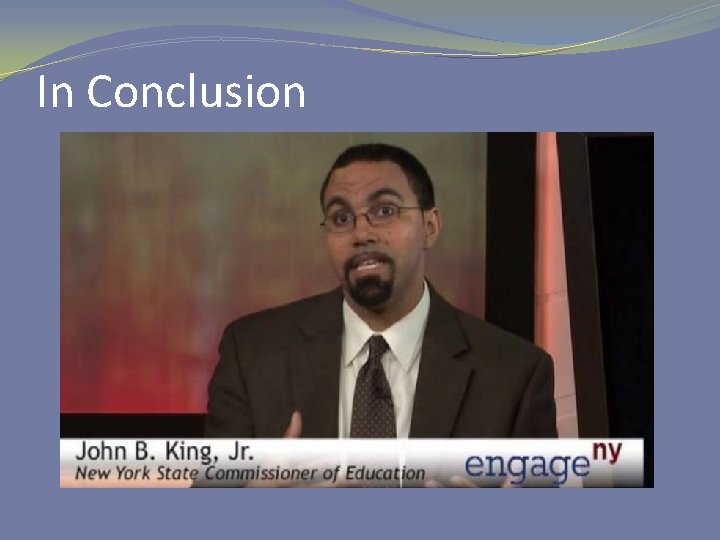
In Conclusion
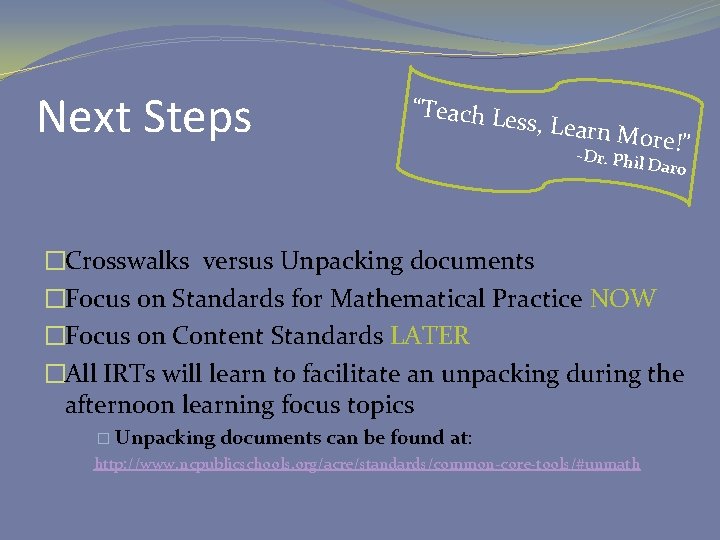
Next Steps “Teach Le ss, Learn More!” -Dr. Phil D aro �Crosswalks versus Unpacking documents �Focus on Standards for Mathematical Practice NOW �Focus on Content Standards LATER �All IRTs will learn to facilitate an unpacking during the afternoon learning focus topics � Unpacking documents can be found at: � http: //www. ncpublicschools. org/acre/standards/common-core-tools/#unmath