
COMMON CORE STANDARDS ENGLISH LANGUAGE ARTS READING COLLEGE

- Slides: 46
COMMON CORE STANDARDS ENGLISH LANGUAGE ARTS READING COLLEGE- AND CAREER-READINESS STANDARDS North East Florida Educational Consortium
Objectives 1. Become familiar with Florida’s One Vision 2. Know the design & organization of the CCSS ELA 3. Begin aligning the CCSS ELA vertically & horizontally 4. Unpack a standard 5. Analyze “text complexity” 6. Putting it all together – A Lesson Plan
Florida’s Vision One System! SUPPORTING ALL STUDENTS FLORIDA INTEGRATION EDUCATION SUPPORT TEAM (F. I. E. S. T. )
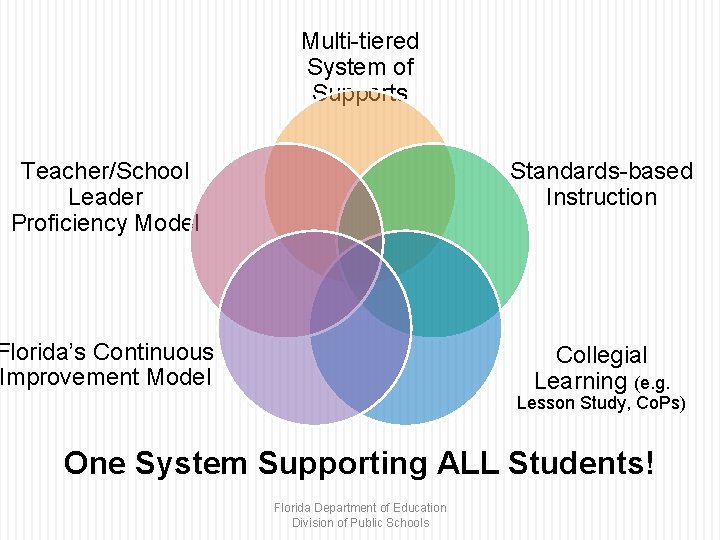
One System Supporting ALL Students! A system in which instruction and learning is based upon common standards, sound research, collaboration, problem solving driven by multiple sources of student data, and culminating in increased student achievement. Florida Department of Education Division of Public Schools
Multi-tiered System of Supports Teacher/School Leader Proficiency Model Standards-based Instruction Florida’s Continuous Improvement Model Collegial Learning (e. g. Lesson Study, Co. Ps) One System Supporting ALL Students! Florida Department of Education Division of Public Schools
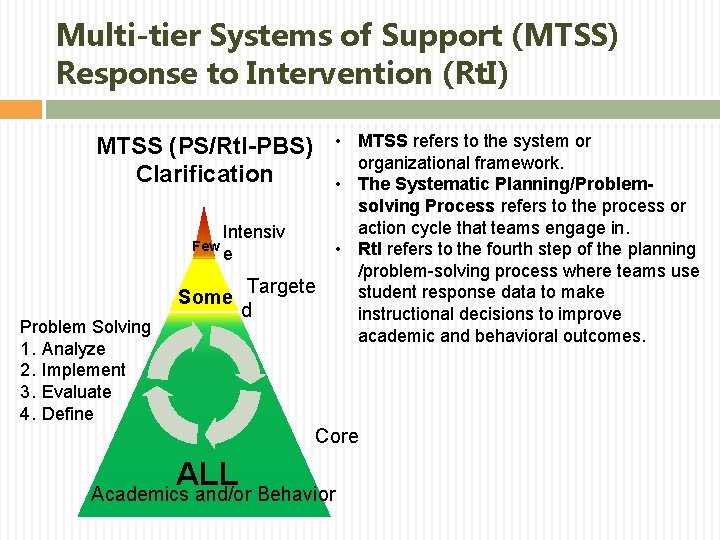
Multi-tier Systems of Support (MTSS) Response to Intervention (Rt. I) MTSS (PS/Rt. I-PBS) Clarification Few Intensiv e Some Problem Solving 1. Analyze 2. Implement 3. Evaluate 4. Define Targete d • MTSS refers to the system or organizational framework. • The Systematic Planning/Problemsolving Process refers to the process or action cycle that teams engage in. • Rt. I refers to the fourth step of the planning /problem-solving process where teams use student response data to make instructional decisions to improve academic and behavioral outcomes. Core ALL Academics and/or Behavior
Standards Based Instruction A Guide for Implementation in Florida’s Public Schools Learning Goals Standard or Benchmark Aligned to Course Description • Guides the development of the lesson beginning with the desired outcome Engaging Lesson • appropriate and meaningful activities that engage students in the learning process, address common misconceptions, and incorporate higher‐order thinking skills • Describes what students should know and be able to do • Includes essential questions & • Rubrics to define levels of knowledge acquisition Formative, Interim, and/or Summative Assessments • Provides multiple sources of student data to guide decisions about adjusting instruction and/or providing interventions
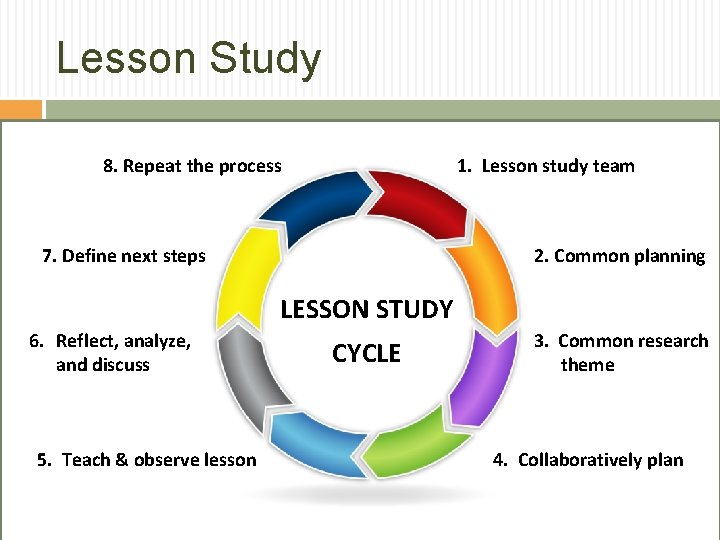
Lesson Study 8. Repeat the process 1. Lesson study team 7. Define next steps 2. Common planning LESSON STUDY 6. Reflect, analyze, and discuss 5. Teach & observe lesson CYCLE 3. Common research theme 4. Collaboratively plan
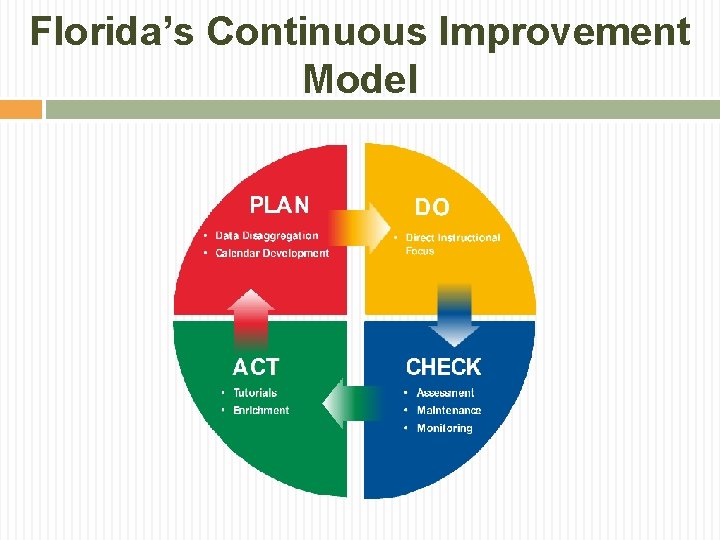
Florida’s Continuous Improvement Model
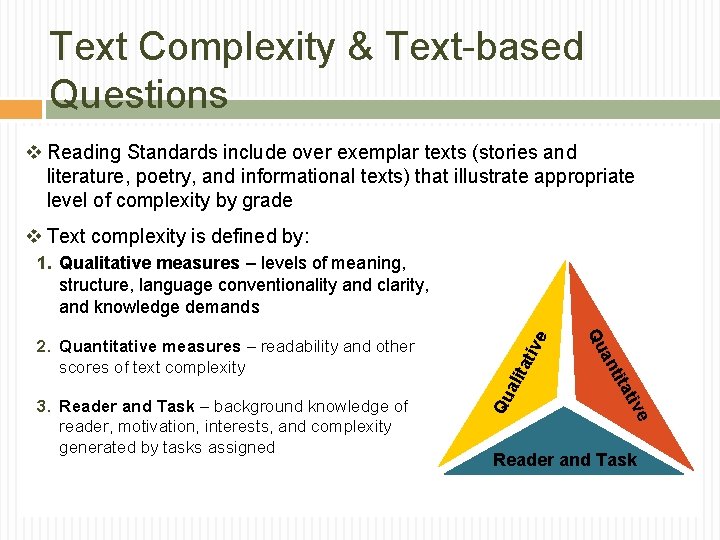
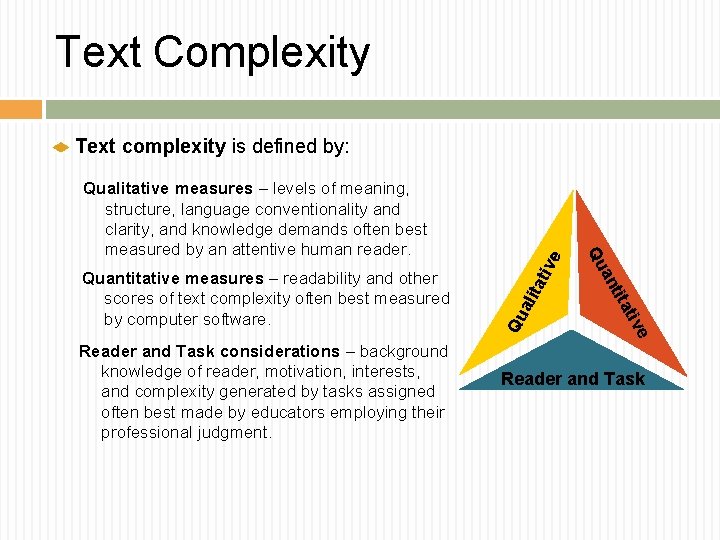
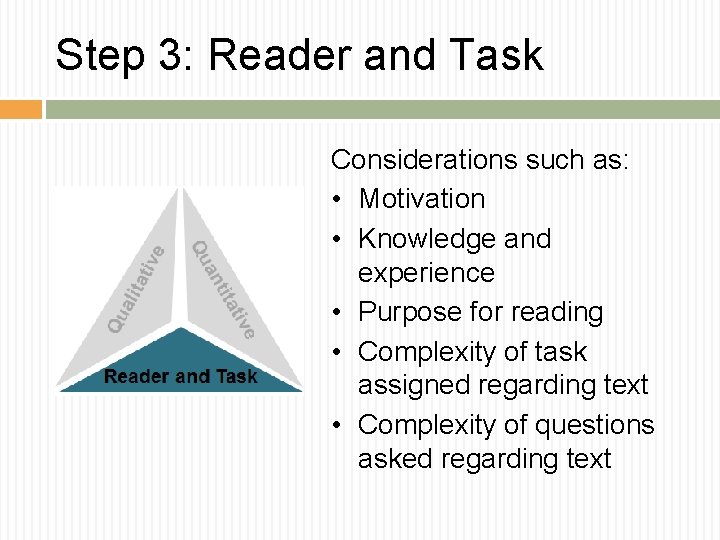
Text Complexity & Text-based Questions v Reading Standards include over exemplar texts (stories and literature, poetry, and informational texts) that illustrate appropriate level of complexity by grade v Text complexity is defined by: tat ali Qu e tiv tita an 3. Reader and Task – background knowledge of reader, motivation, interests, and complexity generated by tasks assigned Qu 2. Quantitative measures – readability and other scores of text complexity ive 1. Qualitative measures – levels of meaning, structure, language conventionality and clarity, and knowledge demands Reader and Task
English Language Arts Reading
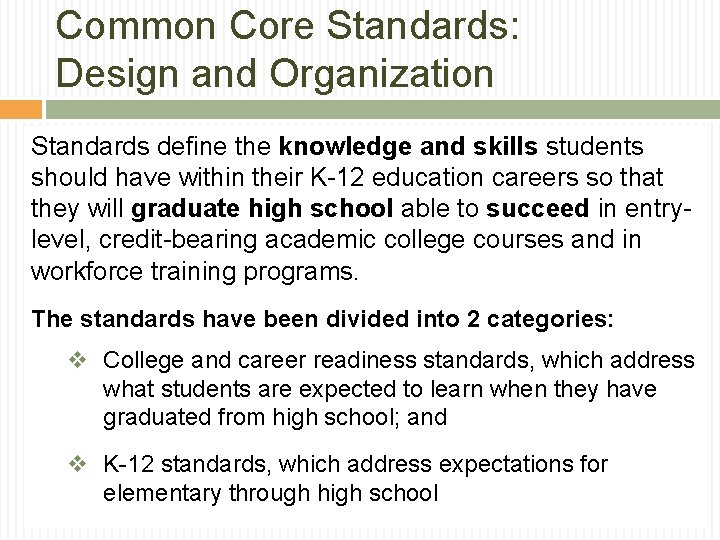
Common Core Standards: Design and Organization Standards define the knowledge and skills students should have within their K-12 education careers so that they will graduate high school able to succeed in entrylevel, credit-bearing academic college courses and in workforce training programs. The standards have been divided into 2 categories: v College and career readiness standards, which address what students are expected to learn when they have graduated from high school; and v K-12 standards, which address expectations for elementary through high school
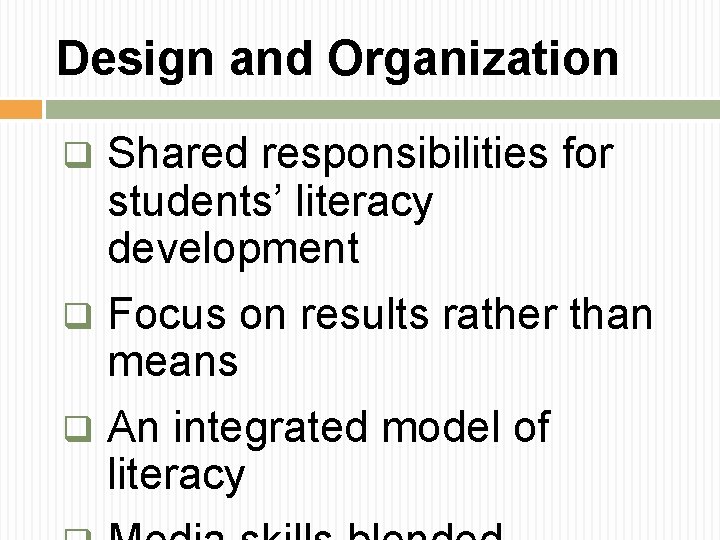
Design and Organization Shared responsibilities for students’ literacy development q Focus on results rather than means q An integrated model of literacy q
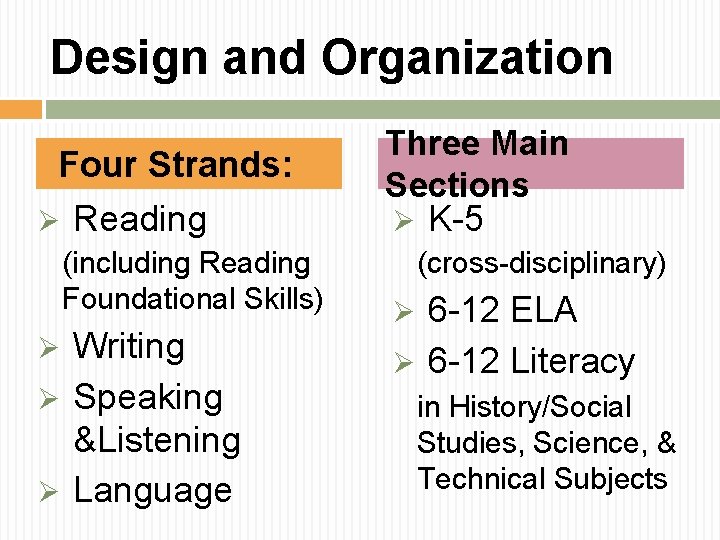
Design and Organization Four Strands: Ø Reading (including Reading Foundational Skills) Writing Ø Speaking &Listening Ø Language Ø Three Main Sections Ø K-5 (cross-disciplinary) 6 -12 ELA Ø 6 -12 Literacy Ø in History/Social Studies, Science, & Technical Subjects
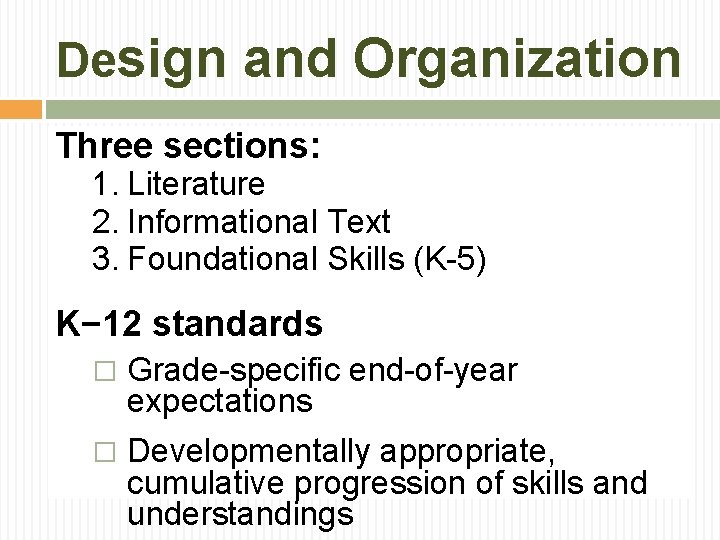
Design and Organization Three sections: 1. Literature 2. Informational Text 3. Foundational Skills (K-5) K− 12 standards � Grade-specific end-of-year expectations � Developmentally appropriate, cumulative progression of skills and understandings
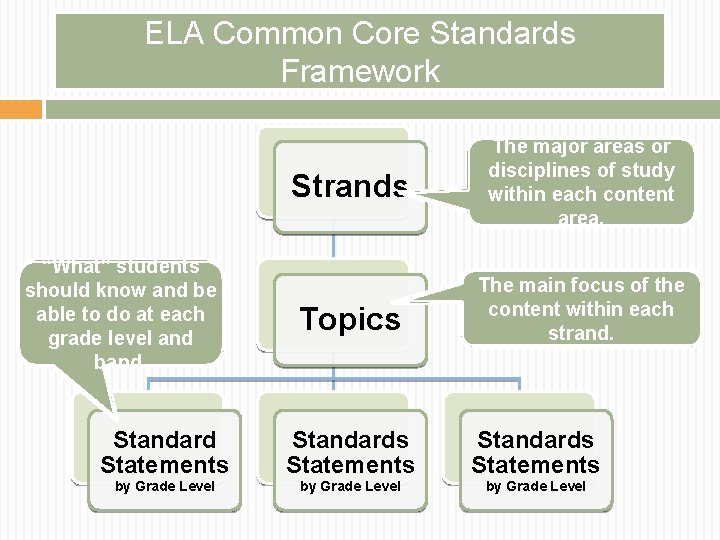
ELA Common Core Standards Framework Strands “What” students should know and be able to do at each grade level and band. Standard Statements by Grade Level Topics Standards Statements by Grade Level The major areas or disciplines of study within each content area. The main focus of the content within each strand. Standards Statements by Grade Level
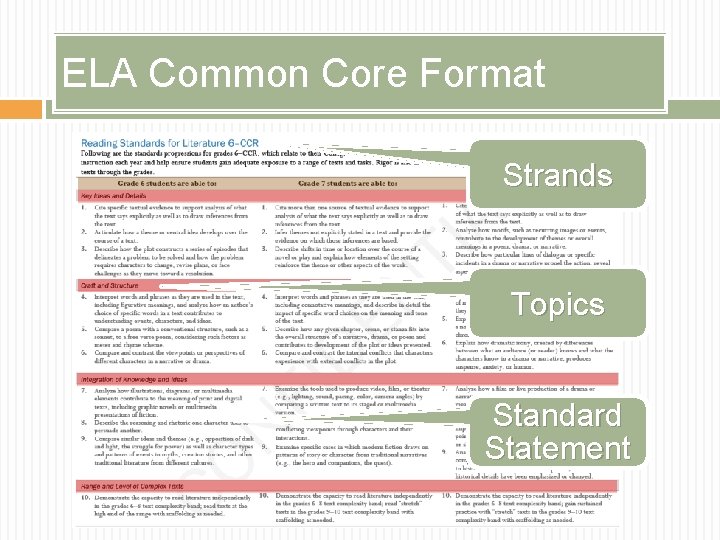
ELA Common Core Format Strands Topics Standard Statement
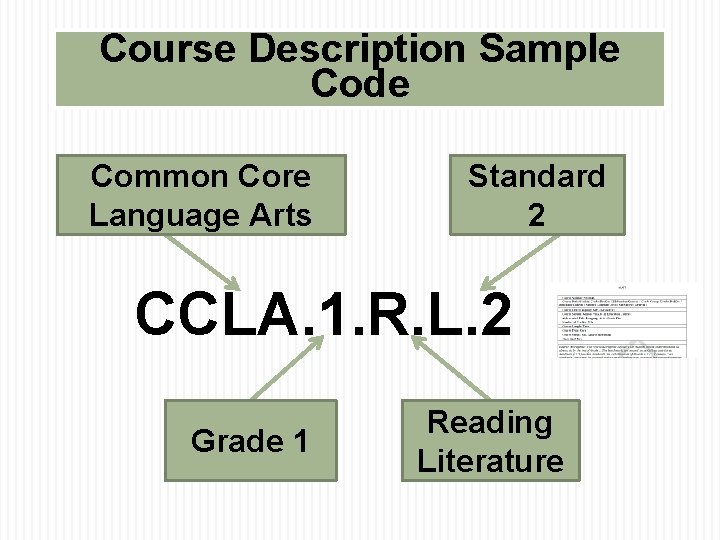
Course Description Sample Code Common Core Language Arts Standard 2 CCLA. 1. R. L. 2 Grade 1 Reading Literature
Aligning the Standards
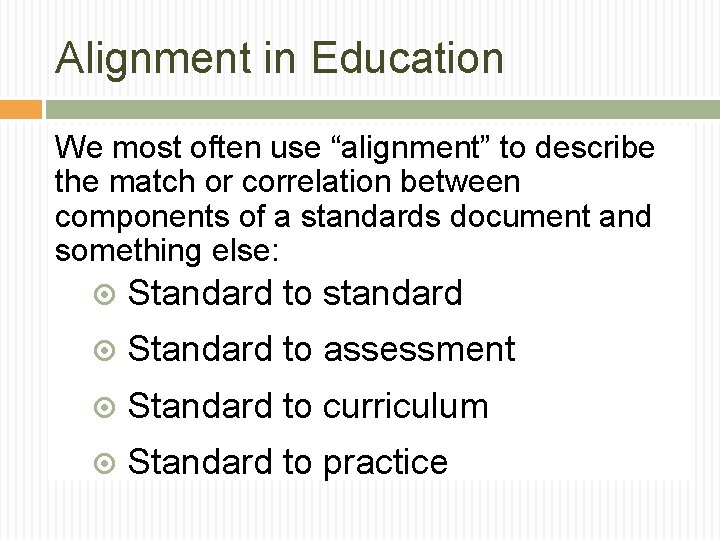
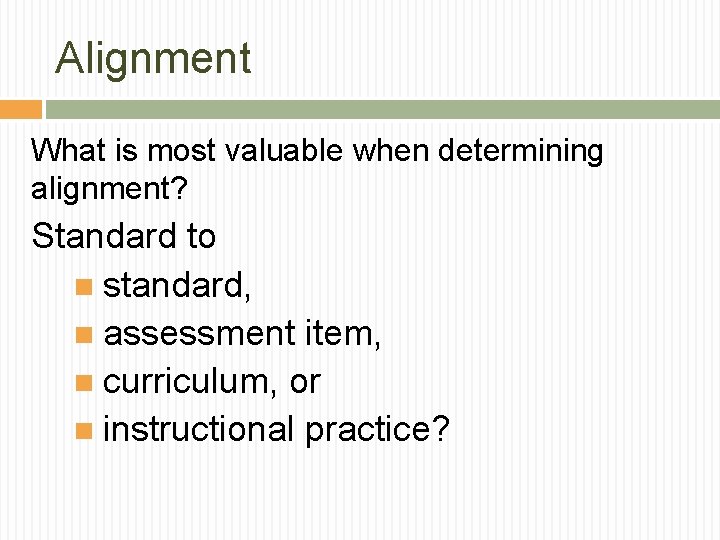
Alignment in Education We most often use “alignment” to describe the match or correlation between components of a standards document and something else: Standard to standard Standard to assessment Standard to curriculum Standard to practice
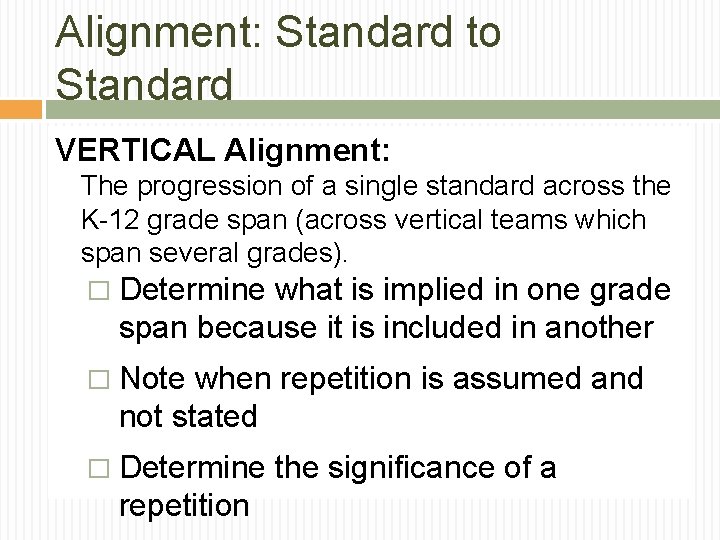
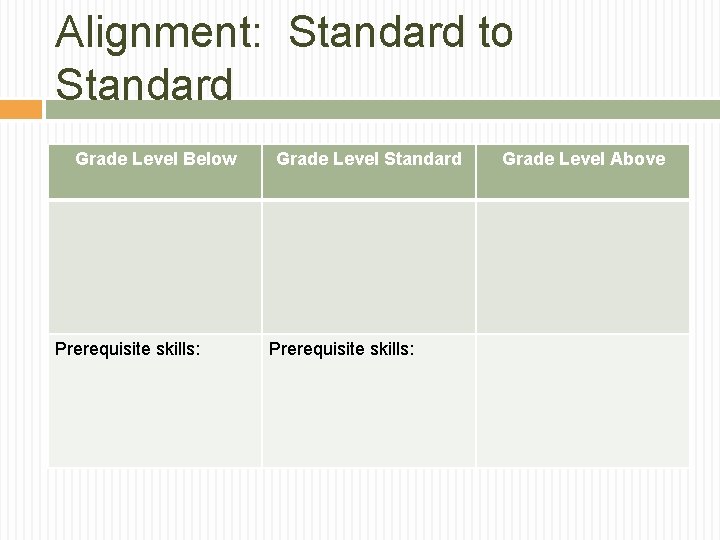
Alignment: Standard to Standard VERTICAL Alignment: The progression of a single standard across the K-12 grade span (across vertical teams which span several grades). � Determine what is implied in one grade span because it is included in another � Note when repetition is assumed and not stated � Determine repetition the significance of a
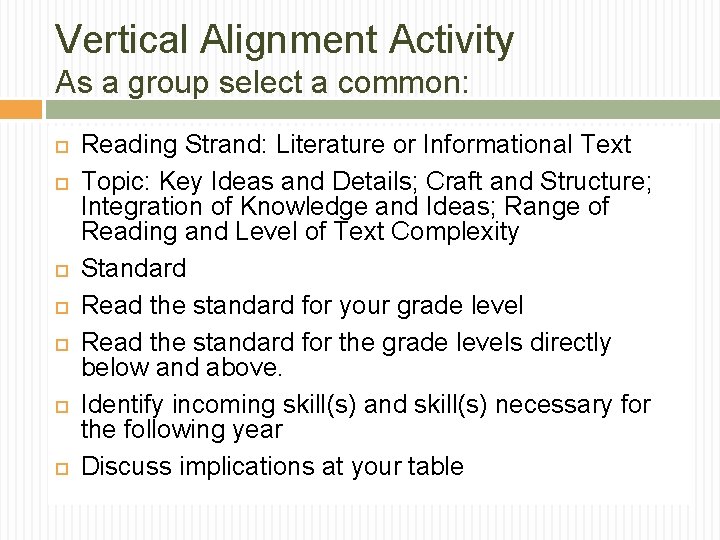
Vertical Alignment Activity As a group select a common: Reading Strand: Literature or Informational Text Topic: Key Ideas and Details; Craft and Structure; Integration of Knowledge and Ideas; Range of Reading and Level of Text Complexity Standard Read the standard for your grade level Read the standard for the grade levels directly below and above. Identify incoming skill(s) and skill(s) necessary for the following year Discuss implications at your table
Alignment: Standard to Standard Grade Level Below Prerequisite skills: Grade Level Standard Prerequisite skills: Grade Level Above
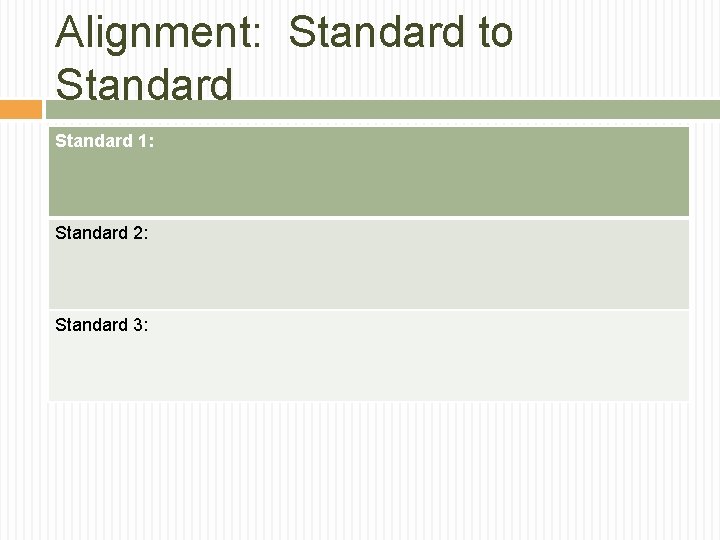
Alignment: Standard to Standard HORIZONTAL Alignment: Look within a single grade level and determine how the standard interacts or relates to other standards.
Alignment: Standard to Standard 1: Standard 2: Standard 3:
Standard to Assessment For each item on a test, determine degree of alignment to the standard. One single item rarely measures the entire standard. Implications for data interpretation: look at collection of items within a category or standard Patterns developed over time are most helpful
Standard to Curriculum What you have now determines what you should do next Determining gaps in your curriculum and practice is most critical
Alignment: Where to Begin Standard to Practice
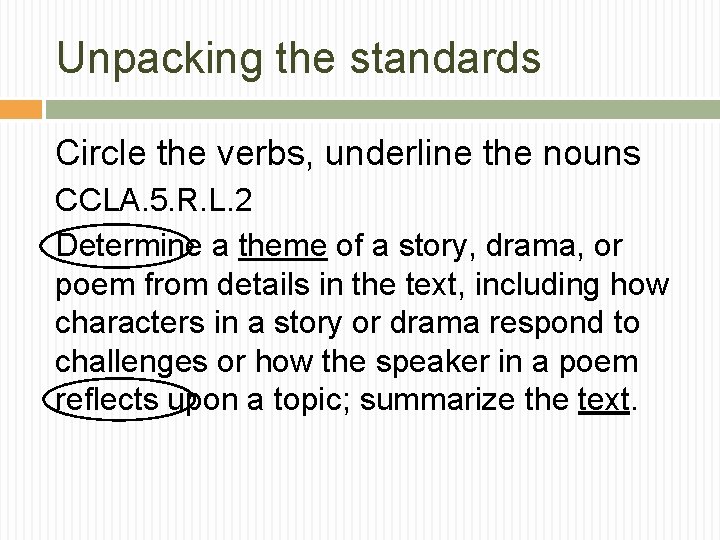
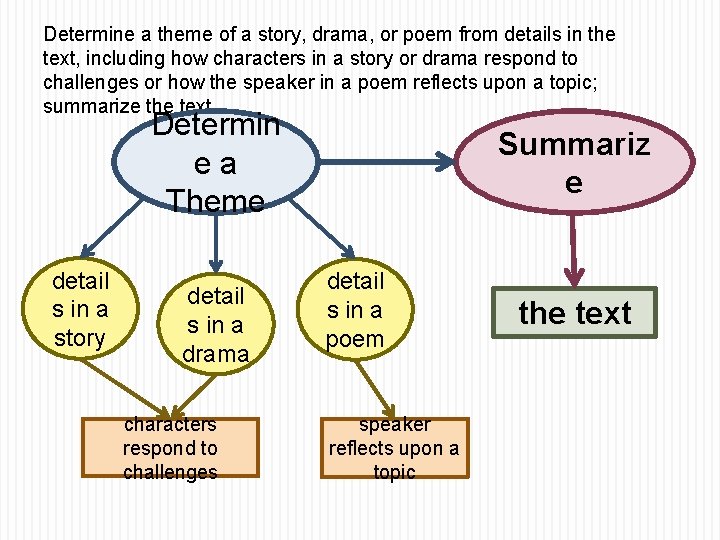
Unpacking the standards Circle the verbs, underline the nouns CCLA. 5. R. L. 2 Determine a theme of a story, drama, or poem from details in the text, including how characters in a story or drama respond to challenges or how the speaker in a poem reflects upon a topic; summarize the text.
Determine a theme of a story, drama, or poem from details in the text, including how characters in a story or drama respond to challenges or how the speaker in a poem reflects upon a topic; summarize the text. Determin ea Theme detail s in a story detail s in a drama characters respond to challenges Summariz e detail s in a poem speaker reflects upon a topic the text
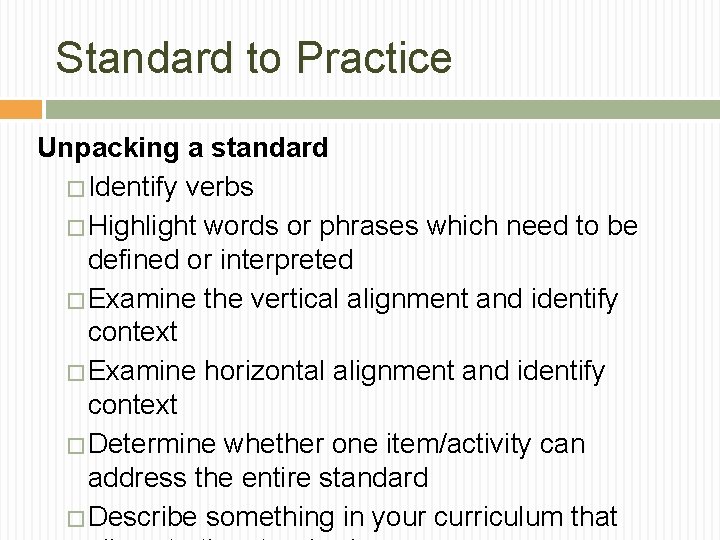
Standard to Practice Unpacking a standard � Identify verbs � Highlight words or phrases which need to be defined or interpreted � Examine the vertical alignment and identify context � Examine horizontal alignment and identify context � Determine whether one item/activity can address the entire standard � Describe something in your curriculum that
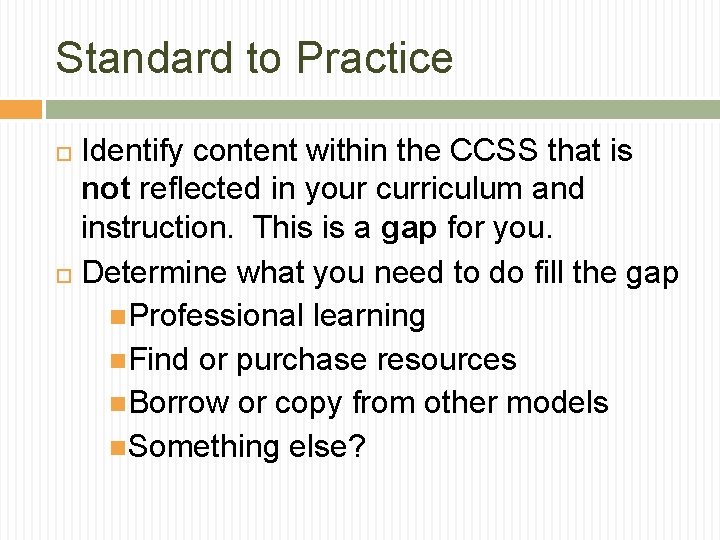
Standard to Practice Identify content within the CCSS that is not reflected in your curriculum and instruction. This is a gap for you. Determine what you need to do fill the gap Professional learning Find or purchase resources Borrow or copy from other models Something else?
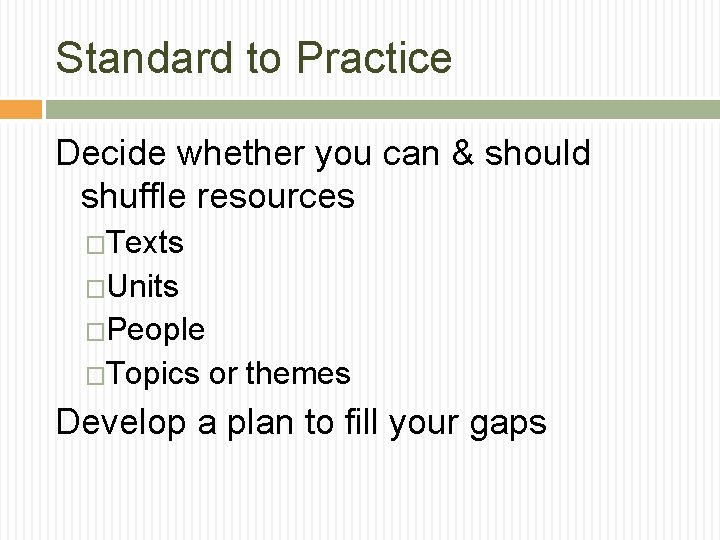
Standard to Practice Decide whether you can & should shuffle resources �Texts �Units �People �Topics or themes Develop a plan to fill your gaps
Alignment What is most valuable when determining alignment? Standard to standard, assessment item, curriculum, or instructional practice?
Text Complexity Text complexity is defined by: ive tat ali e tiv Qu tita Reader and Task considerations – background knowledge of reader, motivation, interests, and complexity generated by tasks assigned often best made by educators employing their professional judgment. an Quantitative measures – readability and other scores of text complexity often best measured by computer software. Qu Qualitative measures – levels of meaning, structure, language conventionality and clarity, and knowledge demands often best measured by an attentive human reader. Reader and Task
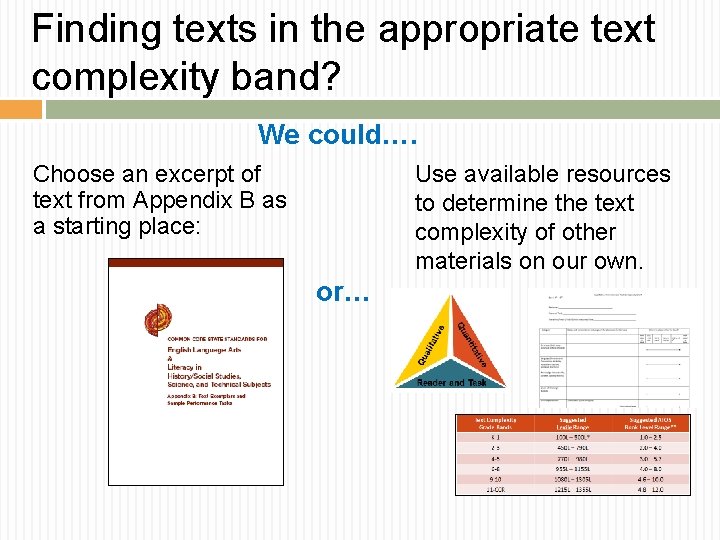
Finding texts in the appropriate text complexity band? We could…. Use available resources to determine the text complexity of other materials on our own. Choose an excerpt of text from Appendix B as a starting place: or…
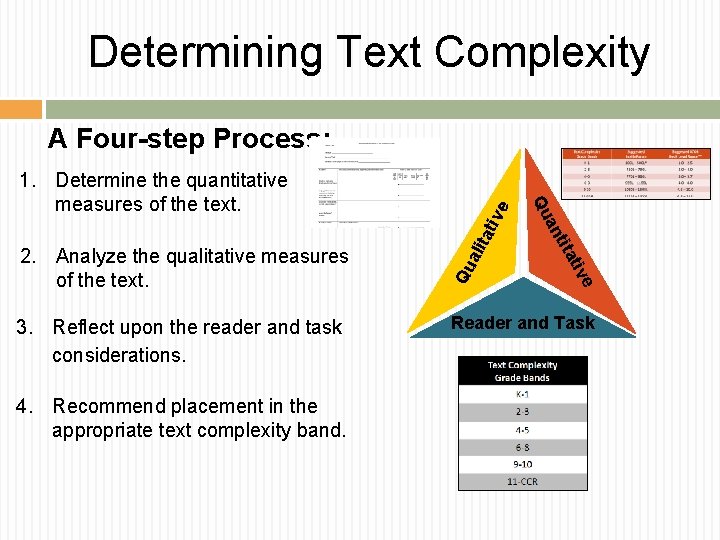
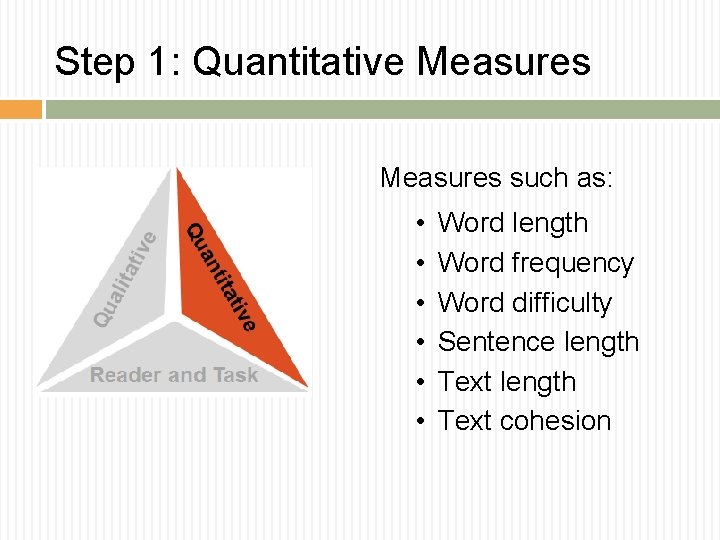
Determining Text Complexity ali Qu e tiv 4. Recommend placement in the appropriate text complexity band. tita 3. Reflect upon the reader and task considerations. an 2. Analyze the qualitative measures of the text. Qu 1. Determine the quantitative measures of the text. tat ive A Four-step Process: Reader and Task
Step 1: Quantitative Measures such as: • • • Word length Word frequency Word difficulty Sentence length Text cohesion
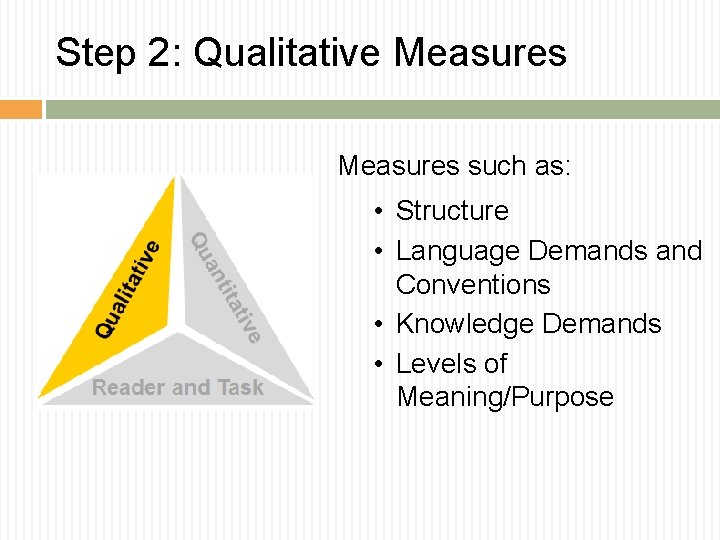
Step 2: Qualitative Measures such as: • Structure • Language Demands and Conventions • Knowledge Demands • Levels of Meaning/Purpose
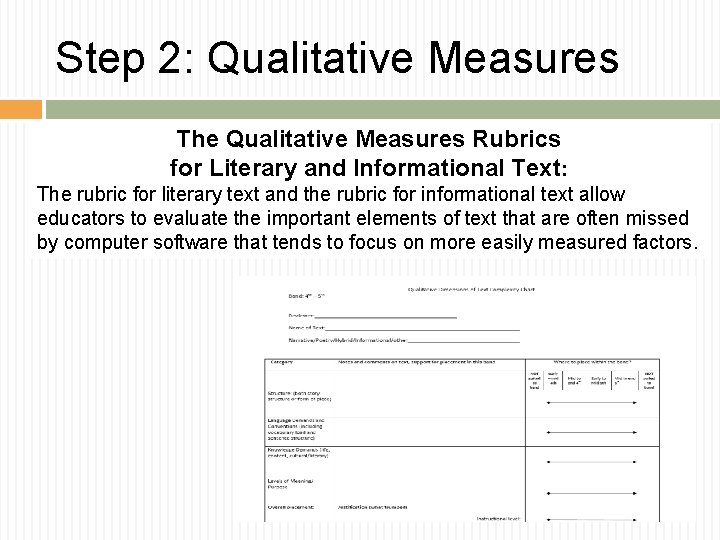
Step 2: Qualitative Measures The Qualitative Measures Rubrics for Literary and Informational Text: The rubric for literary text and the rubric for informational text allow educators to evaluate the important elements of text that are often missed by computer software that tends to focus on more easily measured factors.
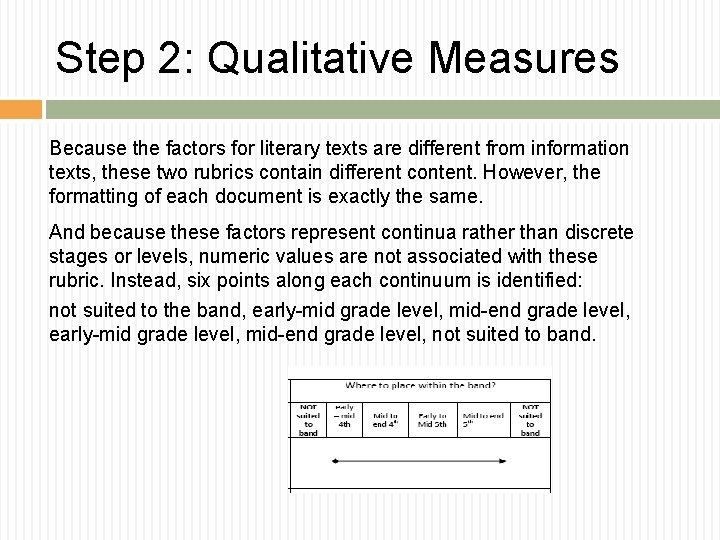
Step 2: Qualitative Measures Because the factors for literary texts are different from information texts, these two rubrics contain different content. However, the formatting of each document is exactly the same. And because these factors represent continua rather than discrete stages or levels, numeric values are not associated with these rubric. Instead, six points along each continuum is identified: not suited to the band, early-mid grade level, mid-end grade level, not suited to band.
Step 3: Reader and Task Considerations such as: • Motivation • Knowledge and experience • Purpose for reading • Complexity of task assigned regarding text • Complexity of questions asked regarding text
Step 3: Reader and Task – Guiding Principles 1. Make close reading and rereading of texts central to lessons. 2. Provide scaffolding that does not preempt or replace text. 3. Ask text dependent questions from a range of question types. 4. Emphasize students supporting answers based upon evidence from the text. 5. Provide extensive research and writing opportunities (claims and evidence).
Just Read, Florida! New Professional Development The Comprehension Instructional Sequence q q An instructional model based upon research evidence introduced this year to Florida’s teachers. The model assists teachers of students in grades 612 in implementing whole-class examination of difficult texts and build students’ specialized knowledge. This sequence helps students grasp textual nuances they would not understand on their own. It is a “text-dependent” approach, ensuring the close examination of key text details and utilizes complex text. Teaching Students to Think as They Read
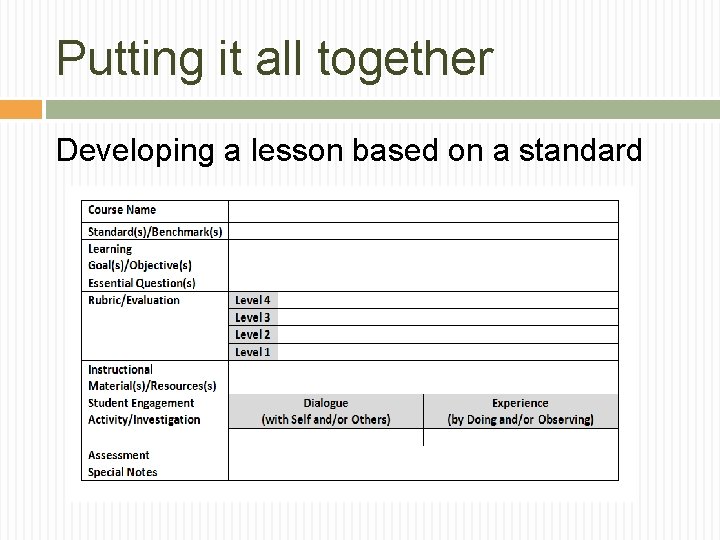
Putting it all together Developing a lesson based on a standard
Thank You! Please email with questions or comments: lewisk@nefec. org