
COMMON COLD NASOPHARYNGITIS RHINOPHARYNGITIS viral rhinitis Most frequent
- Slides: 9
COMMON COLD (NASOPHARYNGITIS, RHINOPHARYNGITIS, viral rhinitis )
� Most frequent viral infection in the general population � It is self limited and caused by virus � Definition – it is an acute inflammation of the mucous membranes of the nasal cavity characterized by nasal congestion, rhinorrhea, sneezing, sore throat and general malaise
Causes � Rhinovirus � Influenza virus � Corona virus � Adenoviruses � Respiratory syncytial virus � Entero virus � Transmission – airborne droplets, direct contact with infected nasal secretions. � Weather – prolonged exposure to cold weather � Upper Respiratory tract infections � Poor immunity � Malnutrition
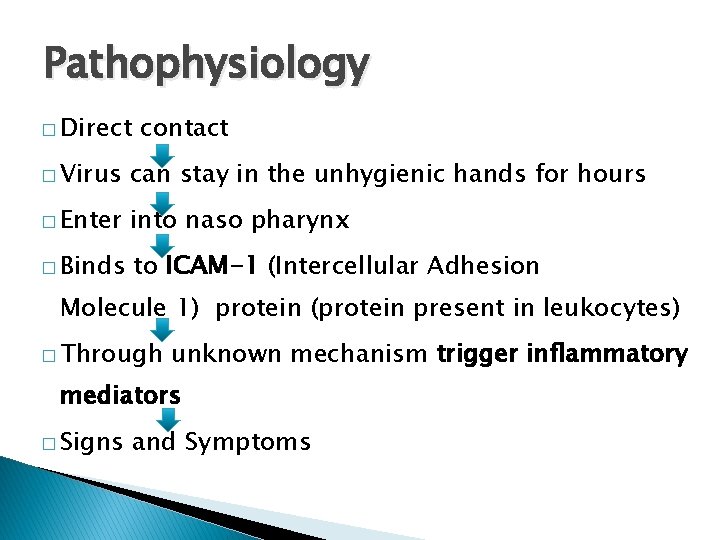
Pathophysiology � Direct contact � Virus can stay in the unhygienic hands for hours � Enter into naso pharynx � Binds to ICAM-1 (Intercellular Adhesion Molecule 1) protein (protein present in leukocytes) � Through unknown mechanism trigger inflammatory mediators � Signs and Symptoms
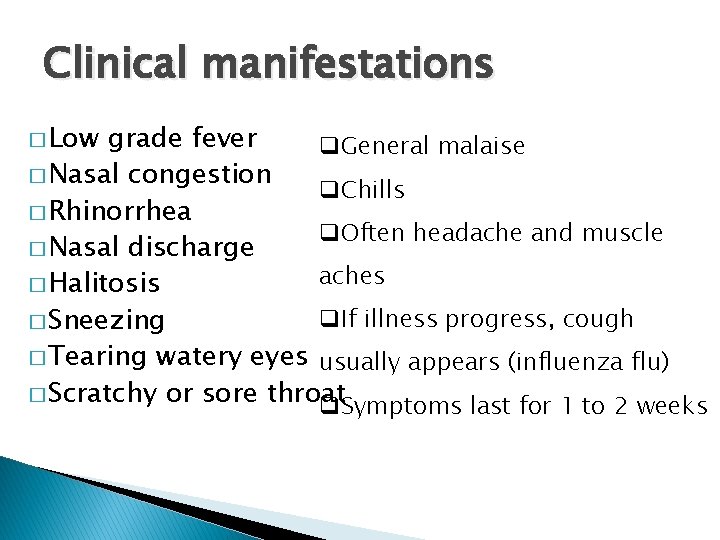
Clinical manifestations � Low grade fever q. General malaise � Nasal congestion q. Chills � Rhinorrhea q. Often headache and muscle � Nasal discharge aches � Halitosis q. If illness progress, cough � Sneezing � Tearing watery eyes usually appears (influenza flu) � Scratchy or sore throat q. Symptoms last for 1 to 2 weeks
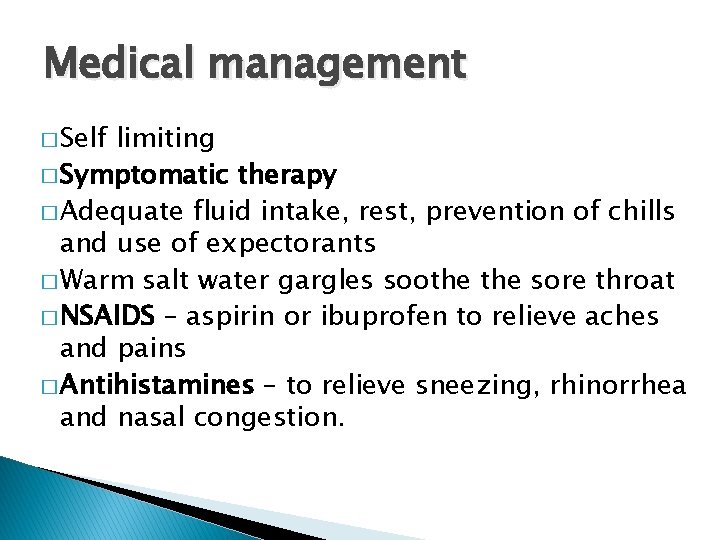
Medical management � Self limiting � Symptomatic therapy � Adequate fluid intake, rest, prevention of chills and use of expectorants � Warm salt water gargles soothe sore throat � NSAIDS – aspirin or ibuprofen to relieve aches and pains � Antihistamines – to relieve sneezing, rhinorrhea and nasal congestion.
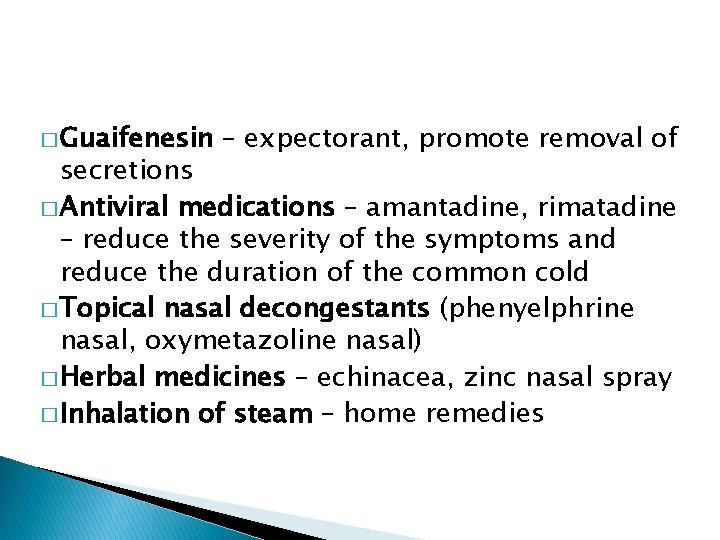
� Guaifenesin – expectorant, promote removal of secretions � Antiviral medications – amantadine, rimatadine – reduce the severity of the symptoms and reduce the duration of the common cold � Topical nasal decongestants (phenyelphrine nasal, oxymetazoline nasal) � Herbal medicines – echinacea, zinc nasal spray � Inhalation of steam – home remedies
Nursing management Teaching patients self care � Viruses transmitted through several ways – direct contact with infected secretions, during coughing and sneezing, � Hand washing – effective measure � Importance of being hygiene � Importance of vaccination � Awareness programme in day care centers, schools and community based.