
Common characters Obligated intracellular parasites Related to arthropod

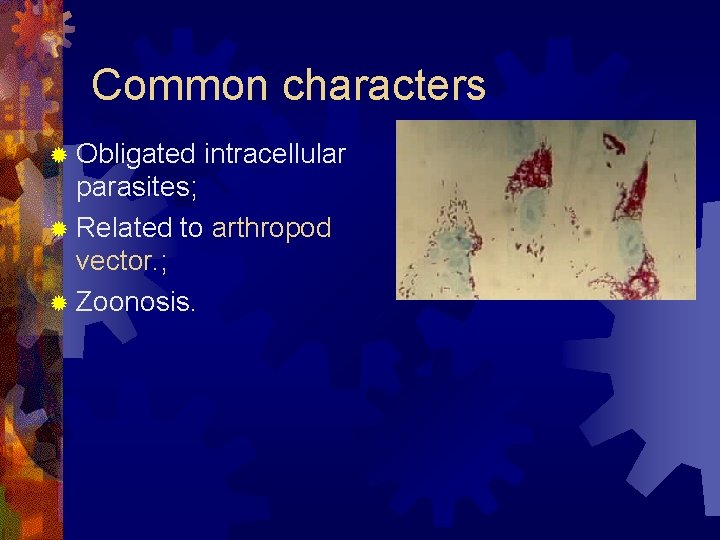
Common characters ® Obligated intracellular parasites; ® Related to arthropod vector. ; ® Zoonosis.
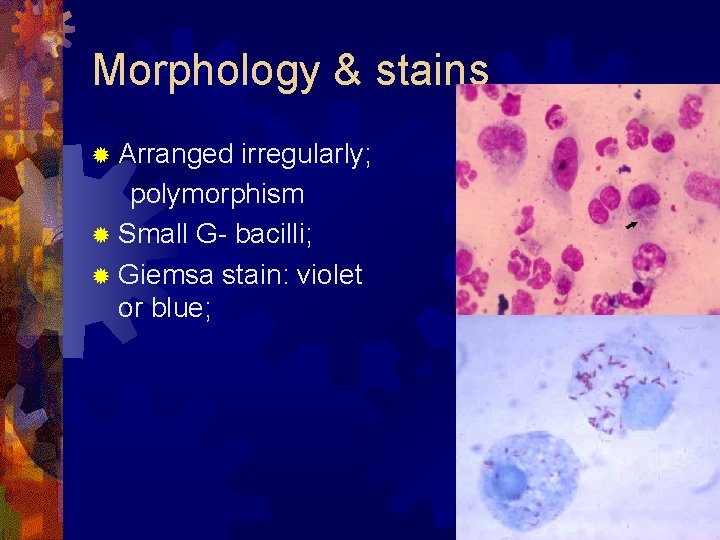
Morphology & stains ® Arranged irregularly; polymorphism ® Small G- bacilli; ® Giemsa stain: violet or blue;
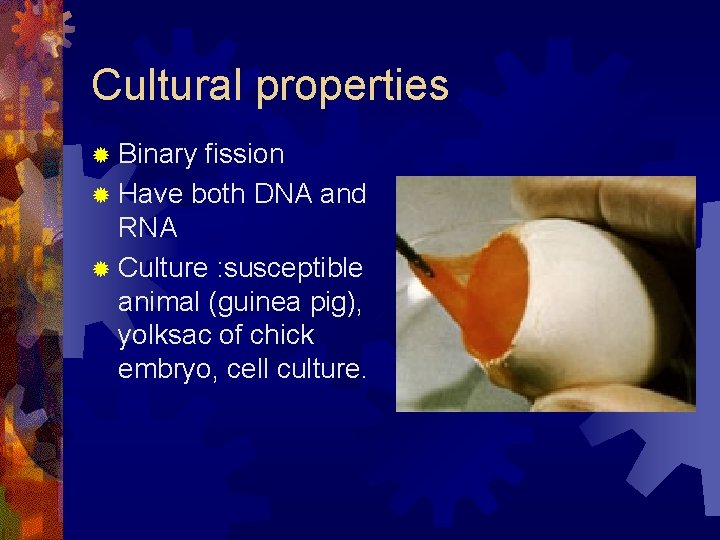
Cultural properties ® Binary fission ® Have both DNA and RNA ® Culture : susceptible animal (guinea pig), yolksac of chick embryo, cell culture.
Resistance weak, sensitive to antibiotic ® Survive in low temperature and dry condition ® Sulfanilamide can stimulate reckettsia’s proliferation ®
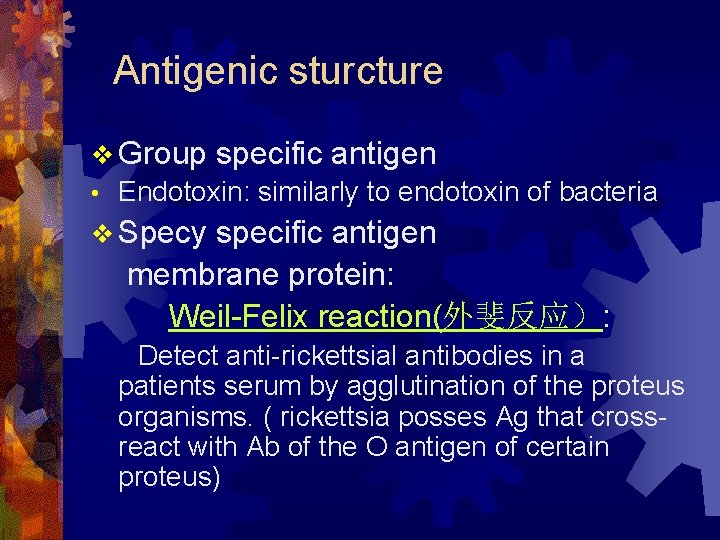
Antigenic sturcture v Group • specific antigen Endotoxin: similarly to endotoxin of bacteria v Specy specific antigen membrane protein: Weil-Felix reaction(外斐反应): Detect anti-rickettsial antibodies in a patients serum by agglutination of the proteus organisms. ( rickettsia posses Ag that crossreact with Ab of the O antigen of certain proteus)
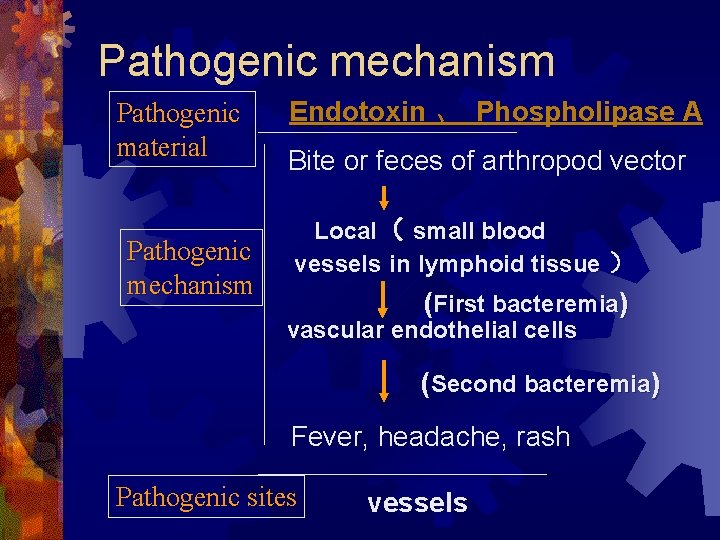
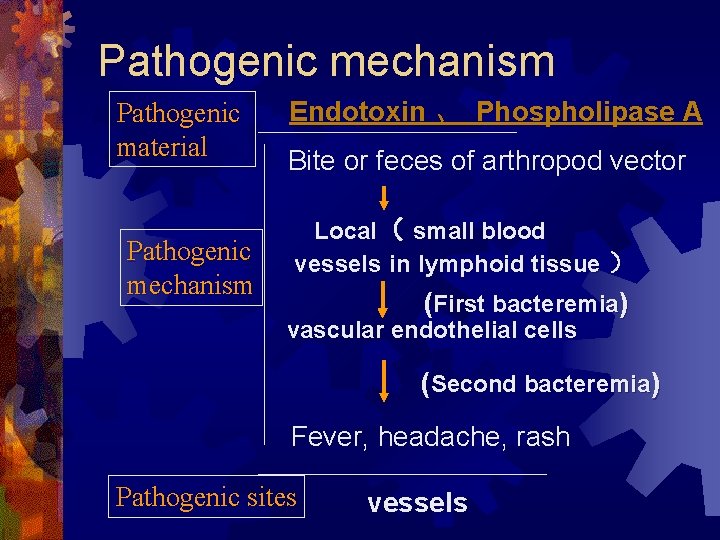
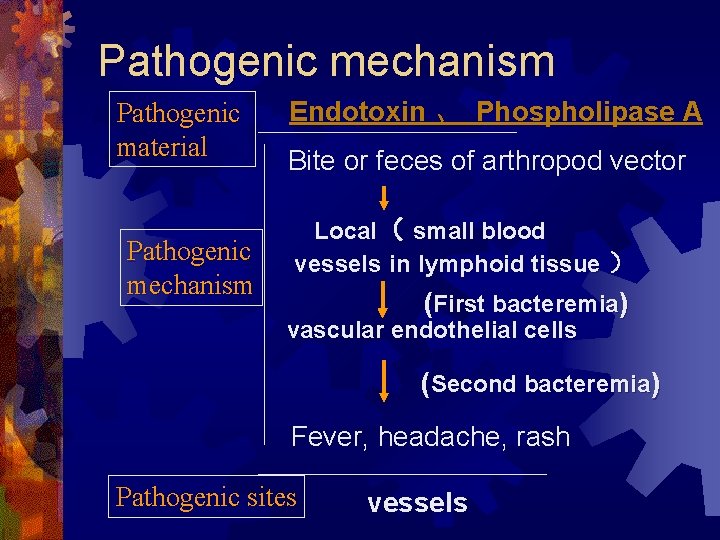
Pathogenic mechanism Pathogenic material Pathogenic mechanism Endotoxin 、 Phospholipase A Bite or feces of arthropod vector Local( small blood vessels in lymphoid tissue ) (First bacteremia) vascular endothelial cells (Second bacteremia) Fever, headache, rash Pathogenic sites vessels
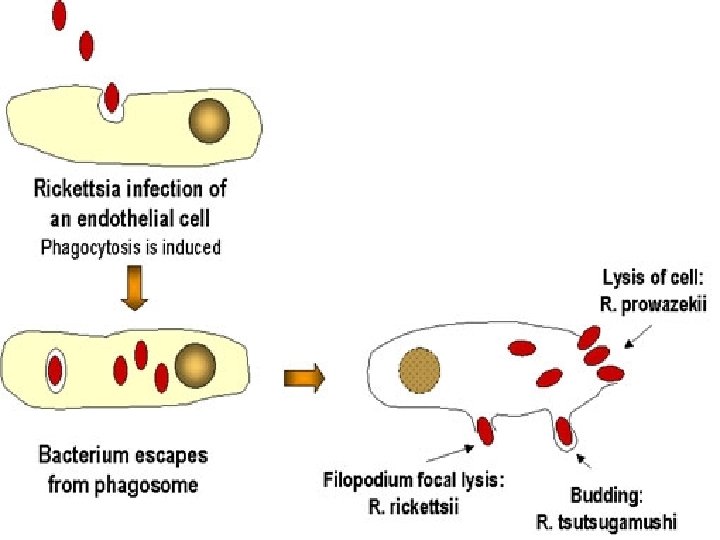
Pathogenicity p Pathogenic materials ® Endotoxin: similarly to endotoxin of bacteria ® Phospholipase A: lysis the cell membrane and lysosome membrane of the host cell, causing hemolysis p Pathogenic mechanism: invade the epithelial cells of small blood vessule
Pathogenic mechanism Pathogenic material Pathogenic mechanism Endotoxin 、 Phospholipase A Bite or feces of arthropod vector Local( small blood vessels in lymphoid tissue ) (First bacteremia) vascular endothelial cells (Second bacteremia) Fever, headache, rash Pathogenic sites vessels
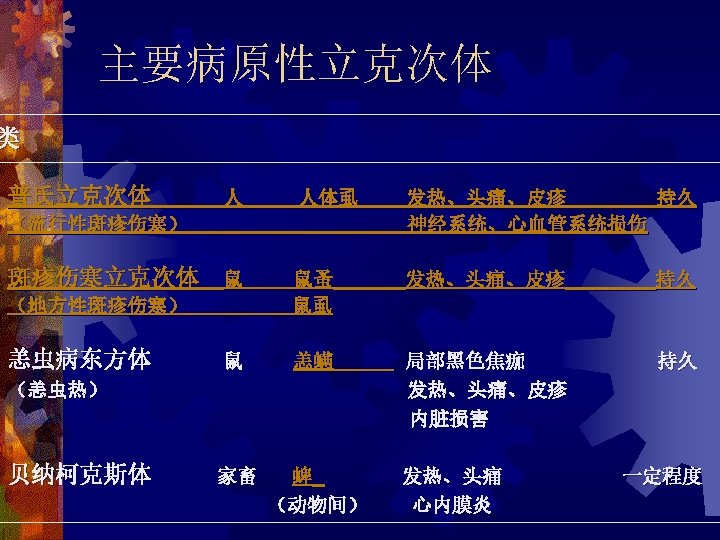
Infective route ® Source: Rickettsiae normally enter the body (mammalian reservoir) through the bite or feces of an infected arthropod vector. -----arthropod vector: mite, tifck, louse, flea ® Pathogenic mechanism: invade the epithelial cells of small blood vessule
Pathogenic mechanism Pathogenic material Pathogenic mechanism Endotoxin 、 Phospholipase A Bite or feces of arthropod vector Local( small blood vessels in lymphoid tissue ) (First bacteremia) vascular endothelial cells (Second bacteremia) Fever, headache, rash Pathogenic sites vessels
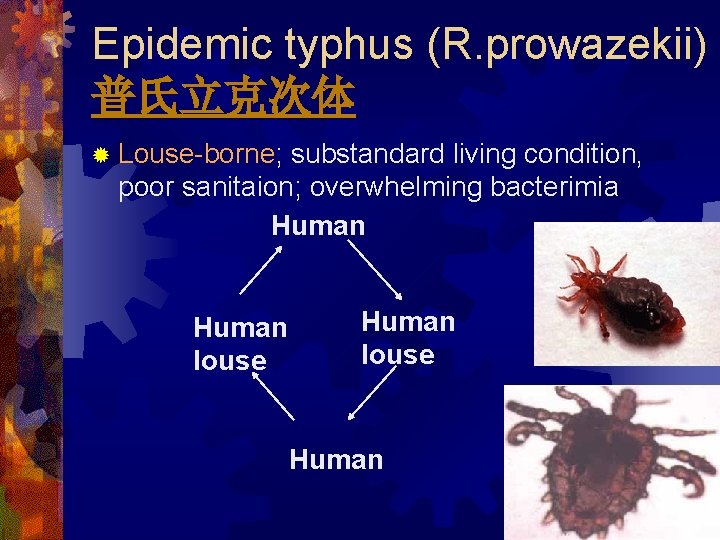
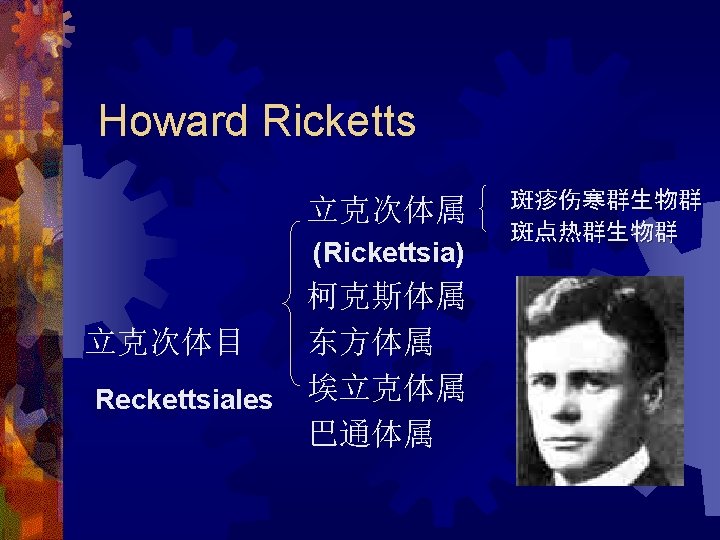
Epidemic typhus (R. prowazekii) 普氏立克次体 ® Louse-borne; substandard living condition, poor sanitaion; overwhelming bacterimia Human louse Human
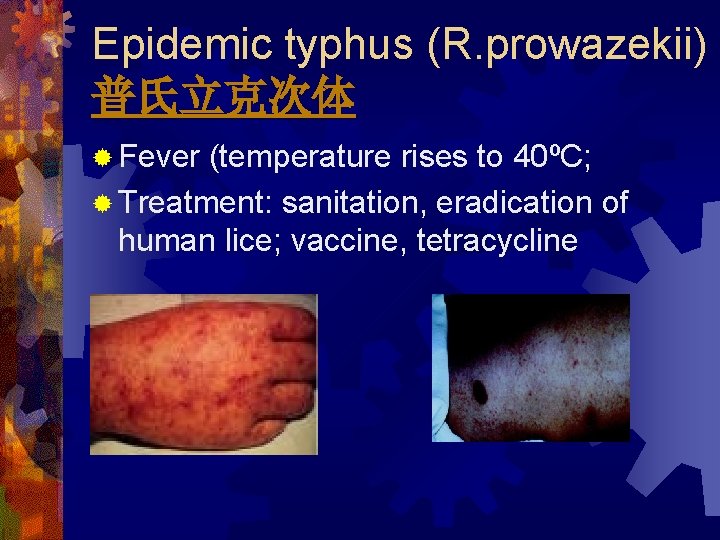
Epidemic typhus (R. prowazekii) 普氏立克次体 ® Fever (temperature rises to 40ºC; ® Treatment: sanitation, eradication of human lice; vaccine, tetracycline
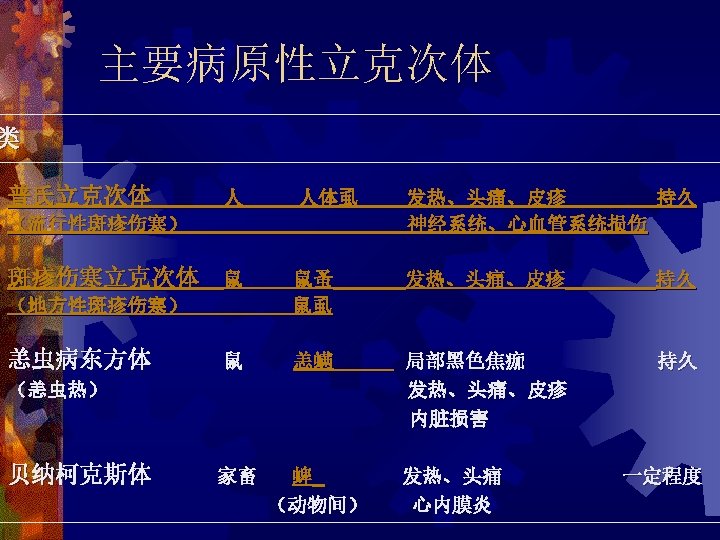
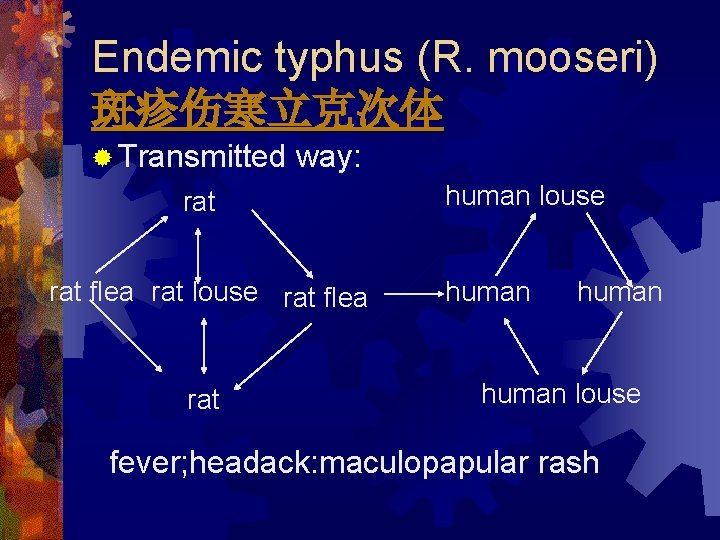
Endemic typhus (R. mooseri) 斑疹伤寒立克次体 ® Transmitted way: rat flea rat louse rat flea rat human louse human louse fever; headack: maculopapular rash
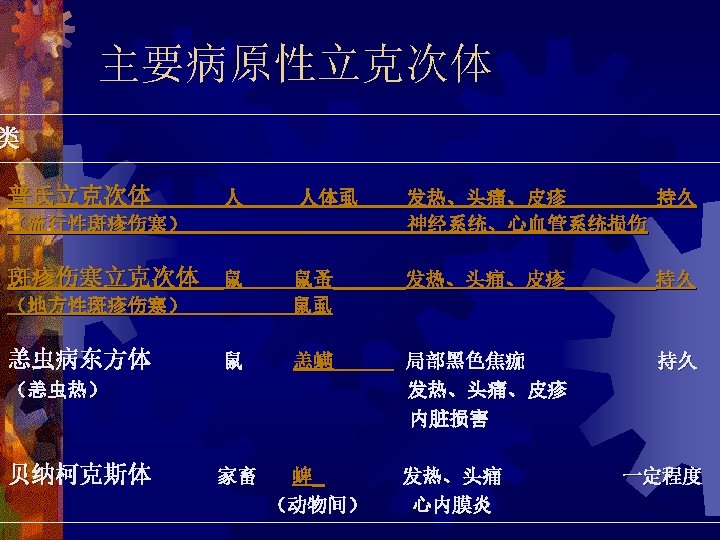
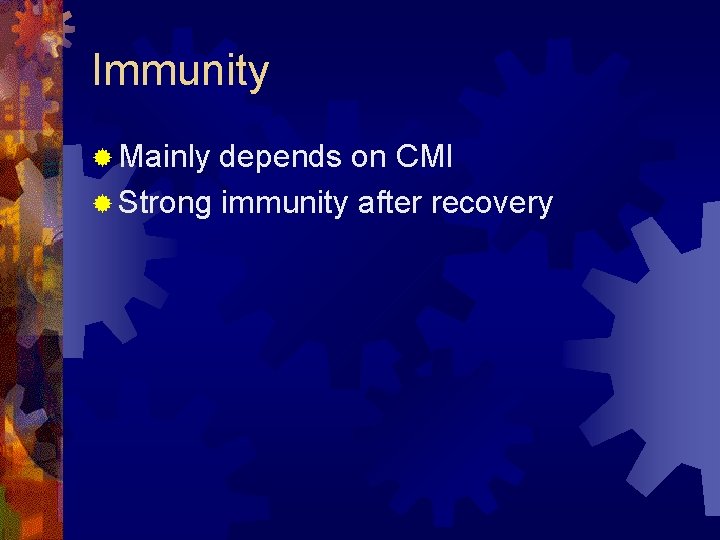
Immunity ® Mainly depends on CMI ® Strong immunity after recovery
Microbiological examination ® Specimen : blood ® Isolation and culture: guinea pig ® Serological test: Weil-Felix reaction
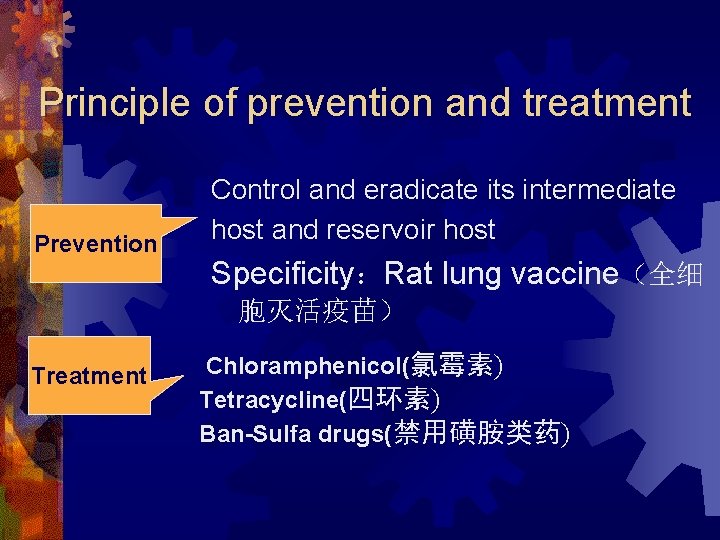
Principle of prevention and treatment Prevention Control and eradicate its intermediate host and reservoir host Specificity:Rat lung vaccine(全细 胞灭活疫苗) Treatment Chloramphenicol(氯霉素) Tetracycline(四环素) Ban-Sulfa drugs(禁用磺胺类药)

- Slides: 23