
Common Cell Functions Text readings chapter 4 Lecture




- Slides: 47
Common Cell Functions Text readings: chapter 4 Lecture Outline 1. 2. 3. 4. 5. Membrane Transport : Diffusion Membrane Transport : Active Processes and Vesicular Transport Cell Cycle Protein Synthesis Cell Replacement and Cancer 71
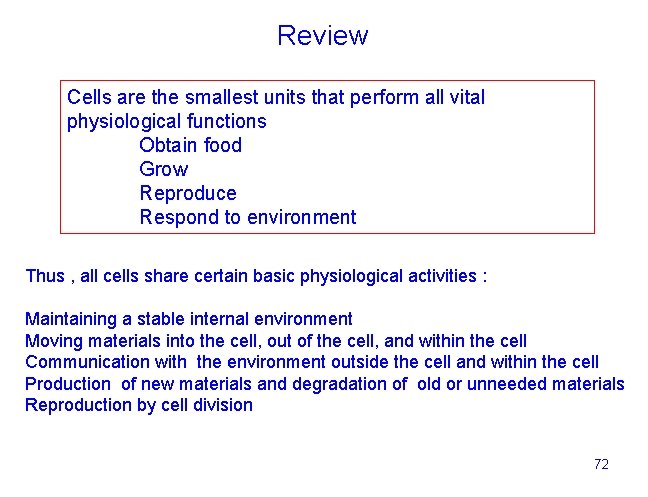
Review Cells are the smallest units that perform all vital physiological functions Obtain food Grow Reproduce Respond to environment Thus , all cells share certain basic physiological activities : Maintaining a stable internal environment Moving materials into the cell, out of the cell, and within the cell Communication with the environment outside the cell and within the cell Production of new materials and degradation of old or unneeded materials Reproduction by cell division 72
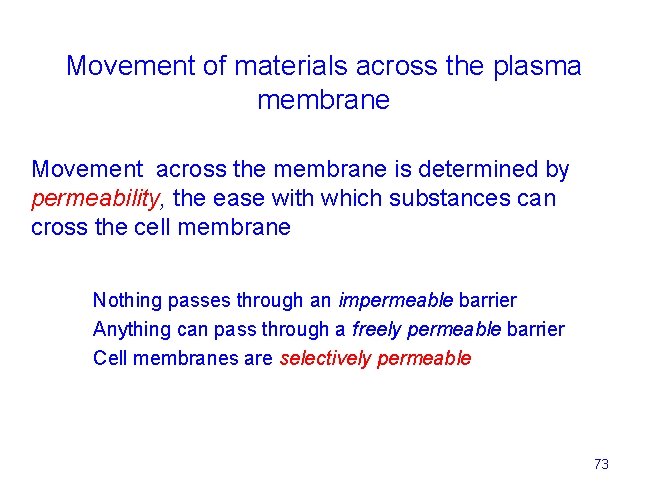
Movement of materials across the plasma membrane Movement across the membrane is determined by permeability, the ease with which substances can cross the cell membrane Nothing passes through an impermeable barrier Anything can pass through a freely permeable barrier Cell membranes are selectively permeable 73
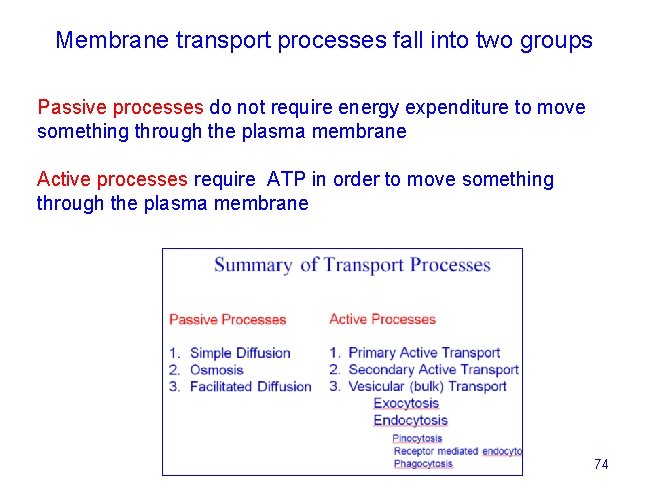
Membrane transport processes fall into two groups Passive processes do not require energy expenditure to move something through the plasma membrane Active processes require ATP in order to move something through the plasma membrane 74
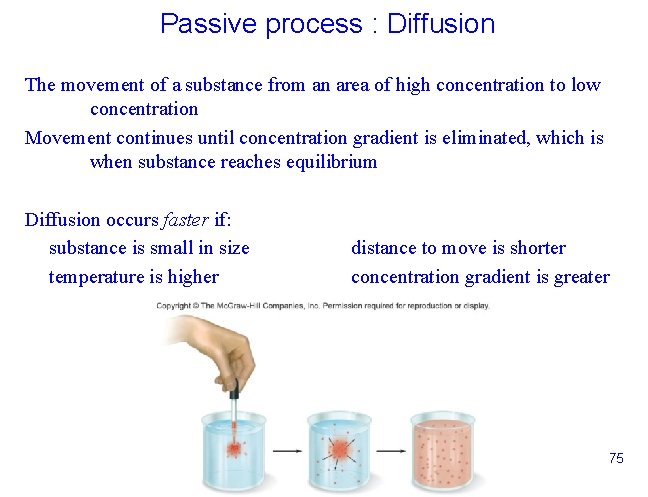
Passive process : Diffusion The movement of a substance from an area of high concentration to low concentration Movement continues until concentration gradient is eliminated, which is when substance reaches equilibrium Diffusion occurs faster if: substance is small in size temperature is higher distance to move is shorter concentration gradient is greater 75
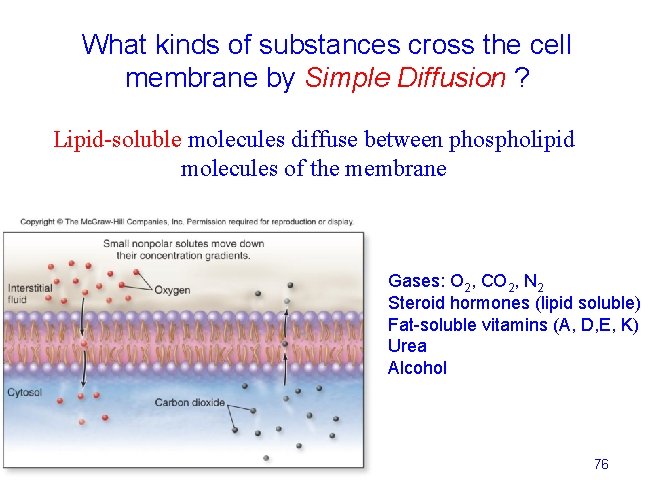
What kinds of substances cross the cell membrane by Simple Diffusion ? Lipid-soluble molecules diffuse between phospholipid molecules of the membrane Gases: O 2, CO 2, N 2 Steroid hormones (lipid soluble) Fat-soluble vitamins (A, D, E, K) Urea Alcohol 76
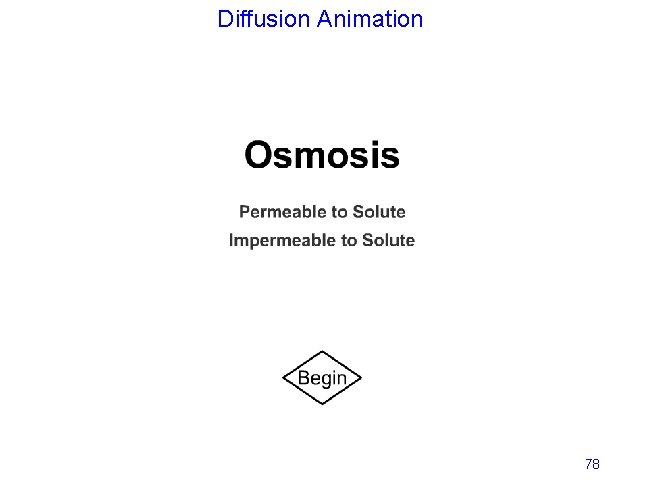
Water uses simple diffusion to cross the cell membrane Osmosis is the special name used to describe the diffusion of water across a semipermeable membrane in response to solute differences Key concept: Water follows the movement of solutes 77
Diffusion Animation Please note that due to differing operating systems, some animations will not appear until the presentation is viewed in presentation mode (Slide Show view). You may see blank slides in the “Normal” or “Slide Sorter” views. All animations will appear after viewing in Slide Show mode and playing each animation. Most animations will require the latest version of the Flash Player, which is available at http: //get. adobe. com/flashplayer. 78
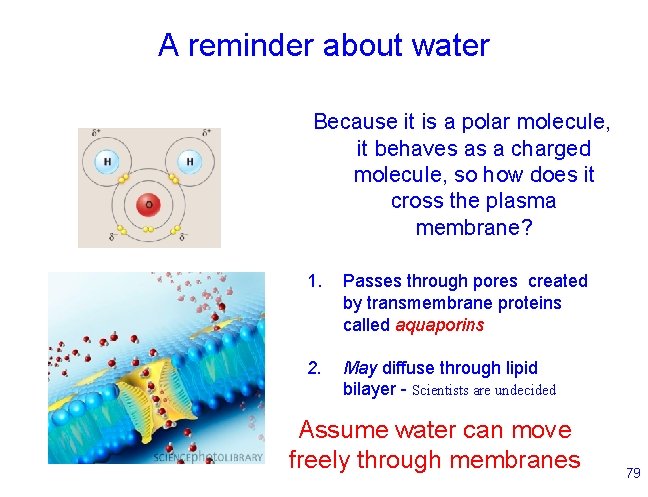
A reminder about water Because it is a polar molecule, it behaves as a charged molecule, so how does it cross the plasma membrane? 1. Passes through pores created by transmembrane proteins called aquaporins 2. May diffuse through lipid bilayer - Scientists are undecided Assume water can move freely through membranes 79
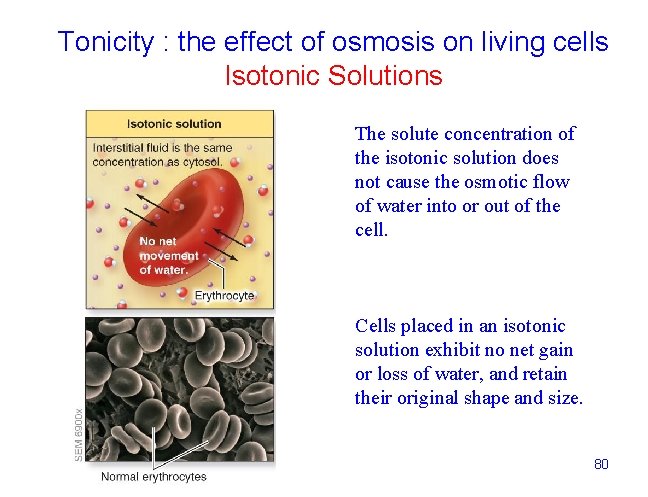
Tonicity : the effect of osmosis on living cells Isotonic Solutions The solute concentration of the isotonic solution does not cause the osmotic flow of water into or out of the cell. Cells placed in an isotonic solution exhibit no net gain or loss of water, and retain their original shape and size. 80
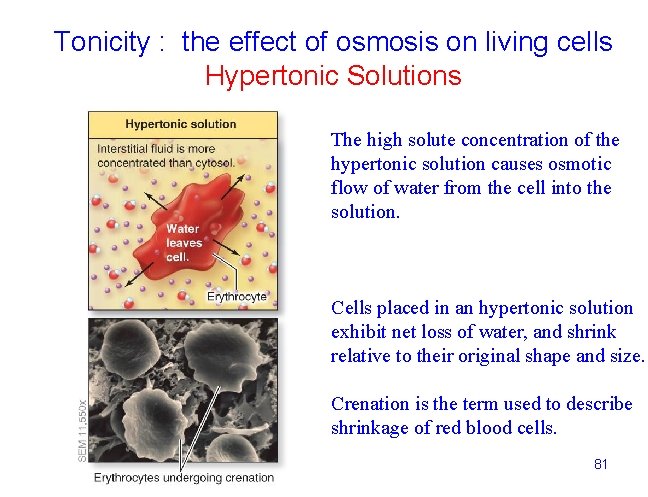
Tonicity : the effect of osmosis on living cells Hypertonic Solutions The high solute concentration of the hypertonic solution causes osmotic flow of water from the cell into the solution. Cells placed in an hypertonic solution exhibit net loss of water, and shrink relative to their original shape and size. Crenation is the term used to describe shrinkage of red blood cells. 81
Tonicity : the effect of osmosis on living cells Hypotonic Solutions The low solute concentration of the hypotonic solution causes osmotic flow of water from the solution into the cell. Cells placed in an hypotonic solution exhibit net gain of water, swell relative to their original shape and size, and may eventually rupture. Hemolysis is the term used to describe rupture of red blood cells. NEVER give someone an IV of pure water. 82
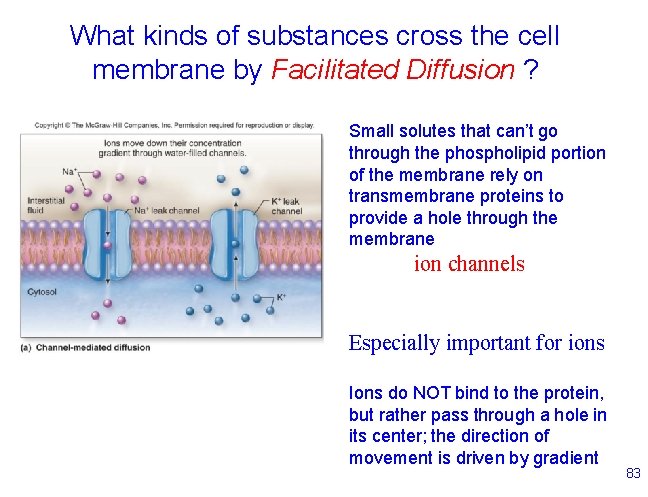
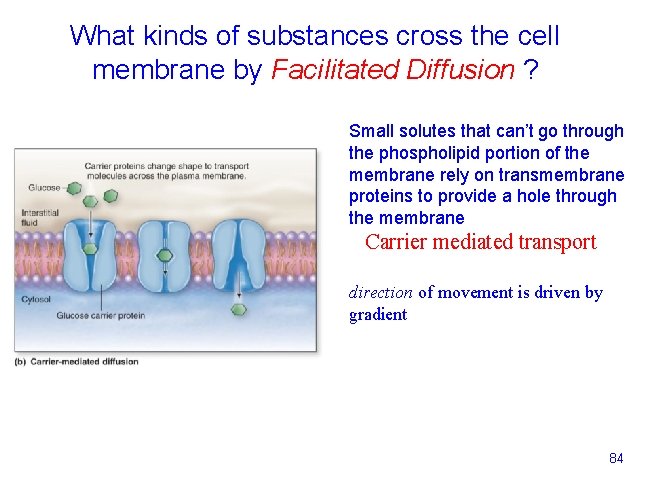
What kinds of substances cross the cell membrane by Facilitated Diffusion ? Small solutes that can’t go through the phospholipid portion of the membrane rely on transmembrane proteins to provide a hole through the membrane ion channels Especially important for ions Ions do NOT bind to the protein, but rather pass through a hole in its center; the direction of movement is driven by gradient 83
What kinds of substances cross the cell membrane by Facilitated Diffusion ? Small solutes that can’t go through the phospholipid portion of the membrane rely on transmembrane proteins to provide a hole through the membrane Carrier mediated transport direction of movement is driven by gradient 84
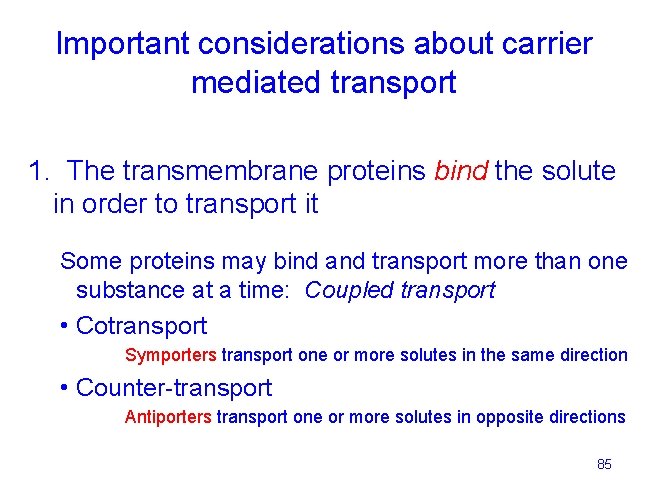
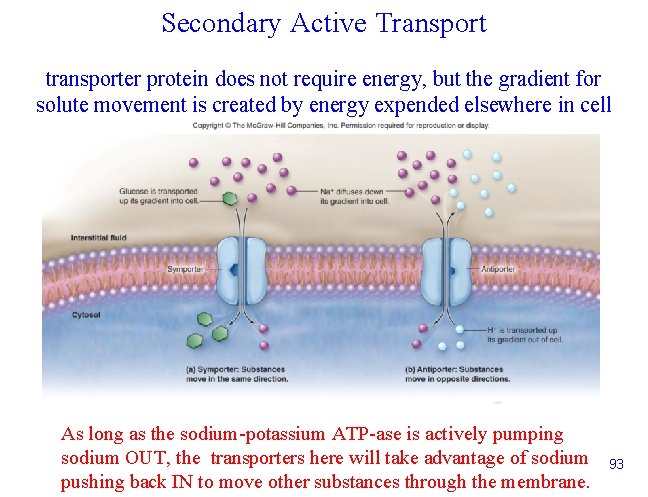
Important considerations about carrier mediated transport 1. The transmembrane proteins bind the solute in order to transport it Some proteins may bind and transport more than one substance at a time: Coupled transport • Cotransport Symporters transport one or more solutes in the same direction • Counter-transport Antiporters transport one or more solutes in opposite directions 85
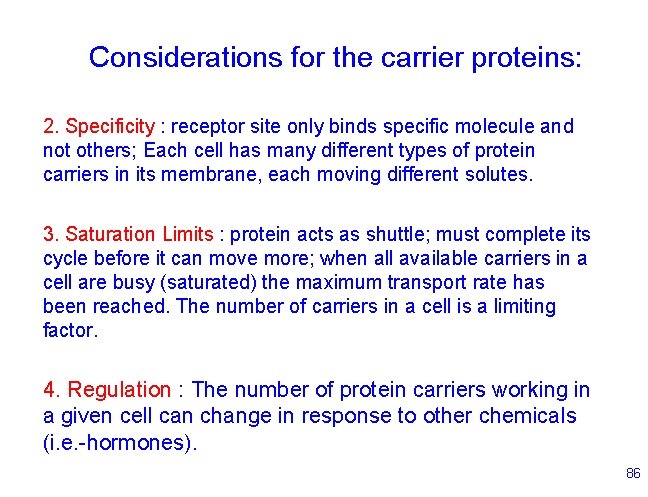
Considerations for the carrier proteins: 2. Specificity : receptor site only binds specific molecule and not others; Each cell has many different types of protein carriers in its membrane, each moving different solutes. 3. Saturation Limits : protein acts as shuttle; must complete its cycle before it can move more; when all available carriers in a cell are busy (saturated) the maximum transport rate has been reached. The number of carriers in a cell is a limiting factor. 4. Regulation : The number of protein carriers working in a given cell can change in response to other chemicals (i. e. -hormones). 86
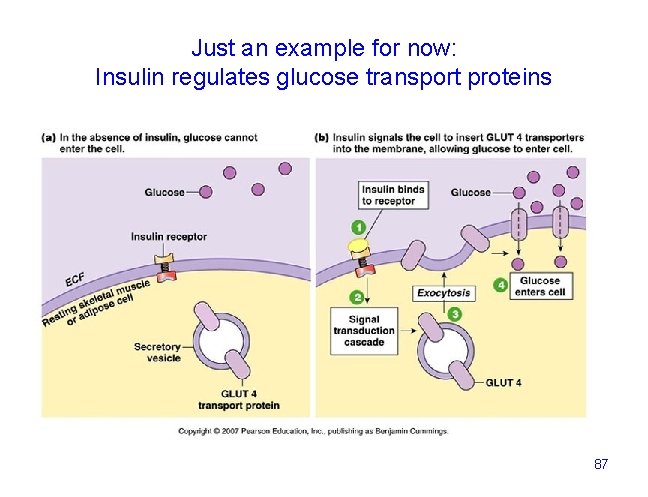
Just an example for now: Insulin regulates glucose transport proteins 87
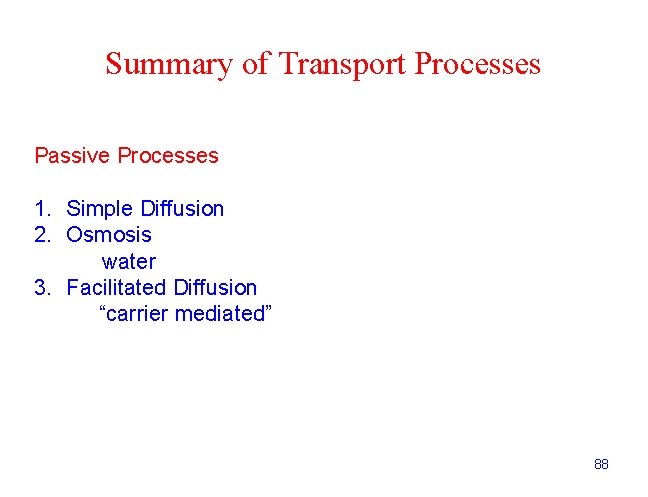
Summary of Transport Processes Passive Processes 1. Simple Diffusion 2. Osmosis water 3. Facilitated Diffusion “carrier mediated” 88
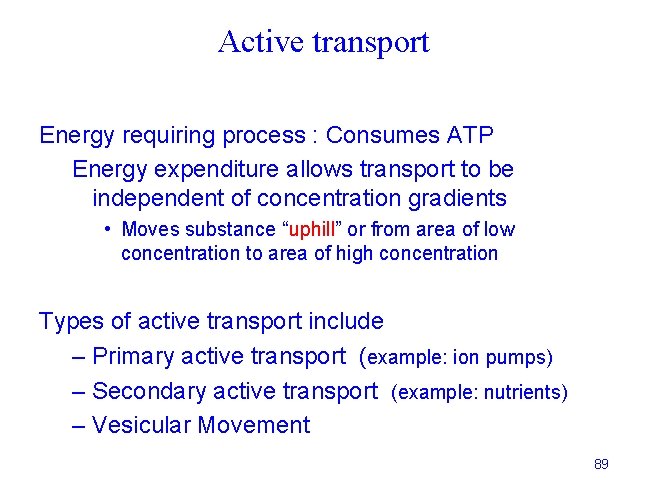
Active transport Energy requiring process : Consumes ATP Energy expenditure allows transport to be independent of concentration gradients • Moves substance “uphill” or from area of low concentration to area of high concentration Types of active transport include – Primary active transport (example: ion pumps) – Secondary active transport (example: nutrients) – Vesicular Movement 89
Active Transport Animation Please note that due to differing operating systems, some animations will not appear until the presentation is viewed in presentation mode (Slide Show view). You may see blank slides in the “Normal” or “Slide Sorter” views. All animations will appear after viewing in Slide Show mode and playing each animation. Most animations will require the latest version of the Flash Player, which is available at http: //get. adobe. com/flashplayer. 90
The active and passive transport properties of a cell leave an uneven distribution of solutes -especially ionsacross the plasma membrane These ion gradients create an electrical potential between the inside and outside of the cell – the transmembrane potential This is the key to nerve and muscle function 91
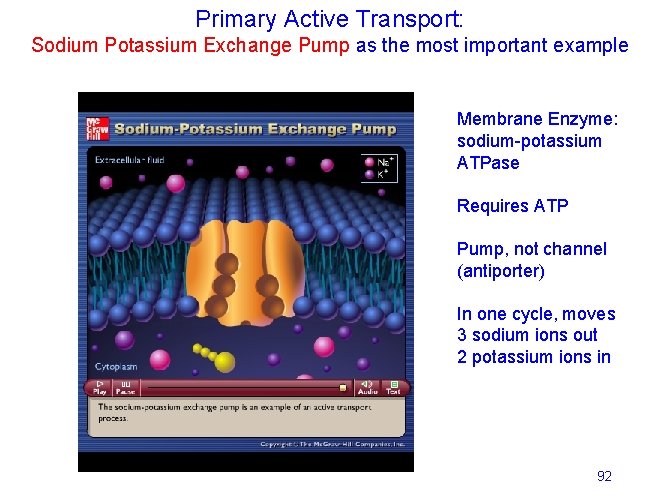
Primary Active Transport: Sodium Potassium Exchange Pump as the most important example Membrane Enzyme: sodium-potassium ATPase Please note that due to differing operating systems, some animations will not appear until the presentation is viewed in presentation mode (Slide Show view). You may see blank slides in the “Normal” or “Slide Sorter” views. All animations will appear after viewing in Slide Show mode and playing each animation. Most animations will require the latest version of the Flash Player, which is available at http: //get. adobe. com/flashplayer. Requires ATP Pump, not channel (antiporter) In one cycle, moves 3 sodium ions out 2 potassium ions in 92
Secondary Active Transport transporter protein does not require energy, but the gradient for solute movement is created by energy expended elsewhere in cell As long as the sodium-potassium ATP-ase is actively pumping sodium OUT, the transporters here will take advantage of sodium pushing back IN to move other substances through the membrane. 93
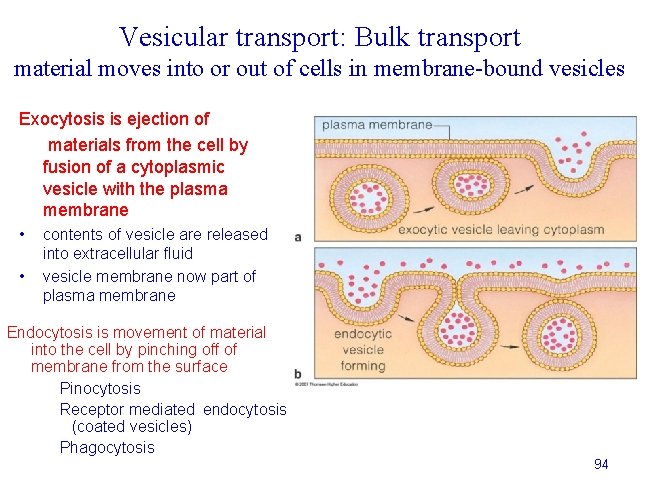
Vesicular transport: Bulk transport material moves into or out of cells in membrane-bound vesicles Exocytosis is ejection of materials from the cell by fusion of a cytoplasmic vesicle with the plasma membrane • • contents of vesicle are released into extracellular fluid vesicle membrane now part of plasma membrane Endocytosis is movement of material into the cell by pinching off of membrane from the surface Pinocytosis Receptor mediated endocytosis (coated vesicles) Phagocytosis 94
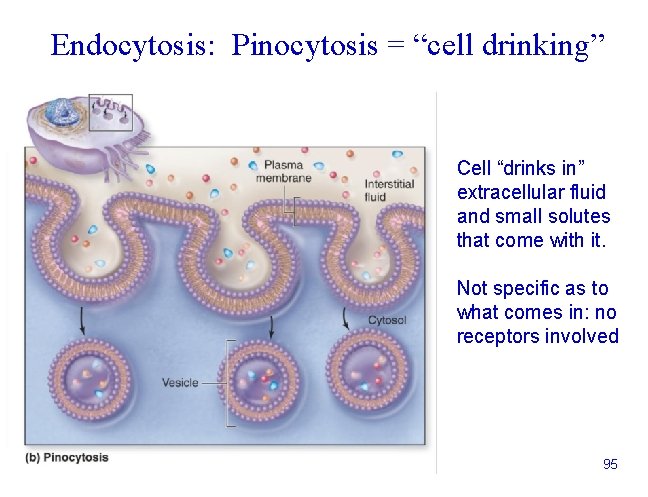
Endocytosis: Pinocytosis = “cell drinking” Cell “drinks in” extracellular fluid and small solutes that come with it. Not specific as to what comes in: no receptors involved 95
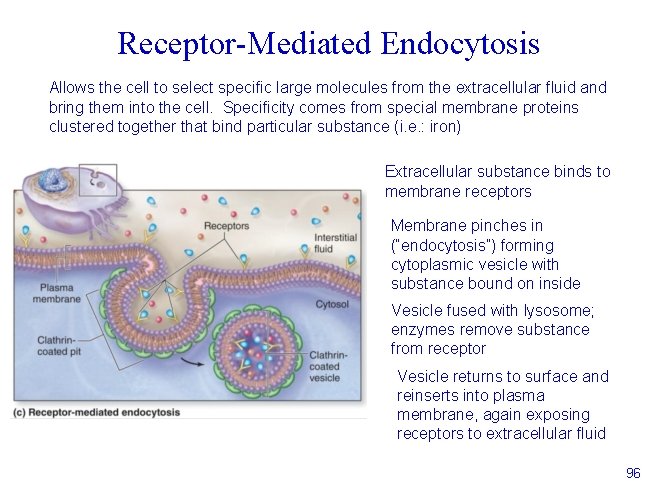
Receptor-Mediated Endocytosis Allows the cell to select specific large molecules from the extracellular fluid and bring them into the cell. Specificity comes from special membrane proteins clustered together that bind particular substance (i. e. : iron) Extracellular substance binds to membrane receptors Membrane pinches in (“endocytosis”) forming cytoplasmic vesicle with substance bound on inside Vesicle fused with lysosome; enzymes remove substance from receptor Vesicle returns to surface and reinserts into plasma membrane, again exposing receptors to extracellular fluid 96
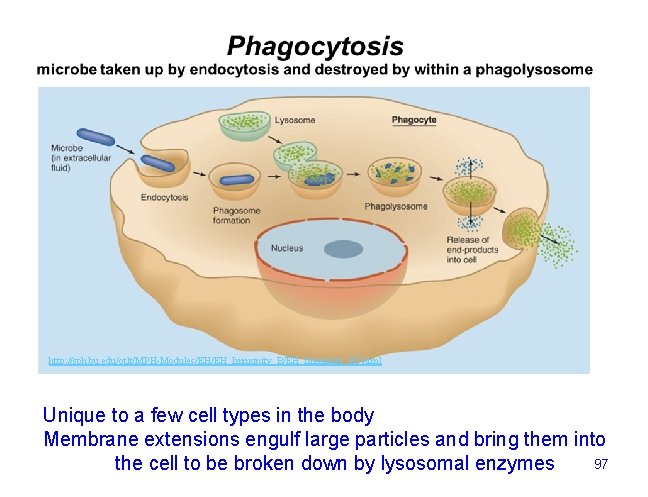
http: //sph. bu. edu/otlt/MPH-Modules/EH/EH_Immunity_B 3. html Unique to a few cell types in the body Membrane extensions engulf large particles and bring them into 97 the cell to be broken down by lysosomal enzymes
Please note that due to differing operating systems, some animations will not appear until the presentation is viewed in presentation mode (Slide Show view). You may see blank slides in the “Normal” or “Slide Sorter” views. All animations will appear after viewing in Slide Show mode and playing each animation. Most animations will require the latest version of the Flash Player, which is available at http: //get. adobe. com/flashplayer. 98
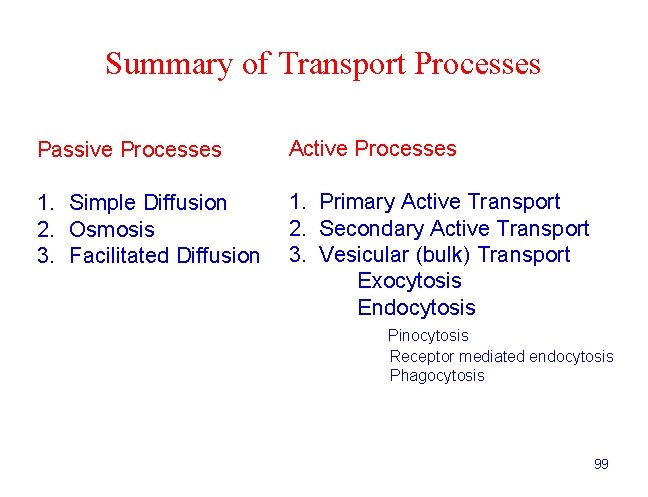
Summary of Transport Processes Passive Processes Active Processes 1. Simple Diffusion 2. Osmosis 3. Facilitated Diffusion 1. Primary Active Transport 2. Secondary Active Transport 3. Vesicular (bulk) Transport Exocytosis Endocytosis Pinocytosis Receptor mediated endocytosis Phagocytosis 99
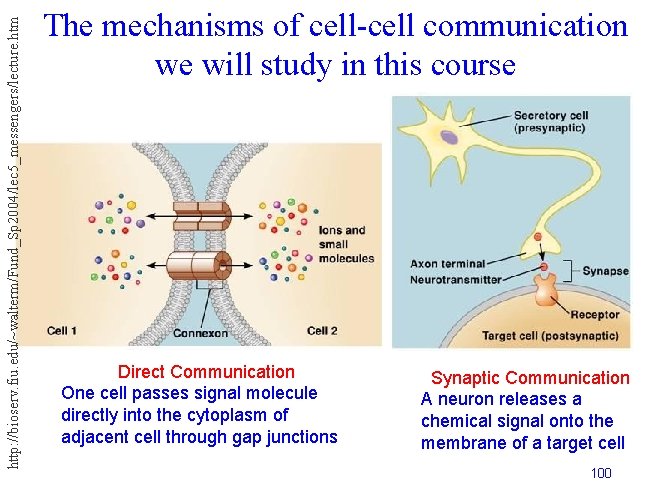
http: //bioserv. fiu. edu/~walterm/Fund_Sp 2004/lec 5_messengers/lecture. htm The mechanisms of cell-cell communication we will study in this course Direct Communication One cell passes signal molecule directly into the cytoplasm of adjacent cell through gap junctions Synaptic Communication A neuron releases a chemical signal onto the membrane of a target cell 100
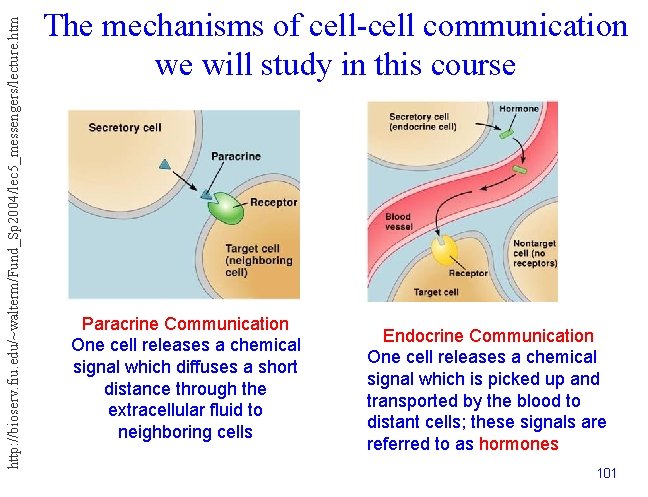
http: //bioserv. fiu. edu/~walterm/Fund_Sp 2004/lec 5_messengers/lecture. htm The mechanisms of cell-cell communication we will study in this course Paracrine Communication One cell releases a chemical signal which diffuses a short distance through the extracellular fluid to neighboring cells Endocrine Communication One cell releases a chemical signal which is picked up and transported by the blood to distant cells; these signals are referred to as hormones 101
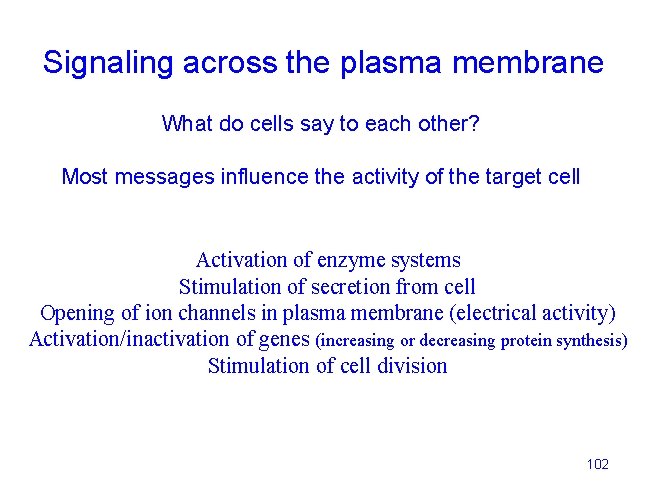
Signaling across the plasma membrane What do cells say to each other? Most messages influence the activity of the target cell Activation of enzyme systems Stimulation of secretion from cell Opening of ion channels in plasma membrane (electrical activity) Activation/inactivation of genes (increasing or decreasing protein synthesis) Stimulation of cell division 102
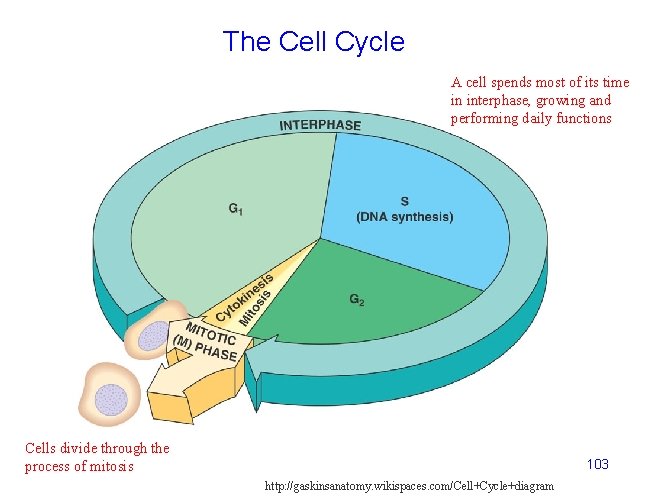
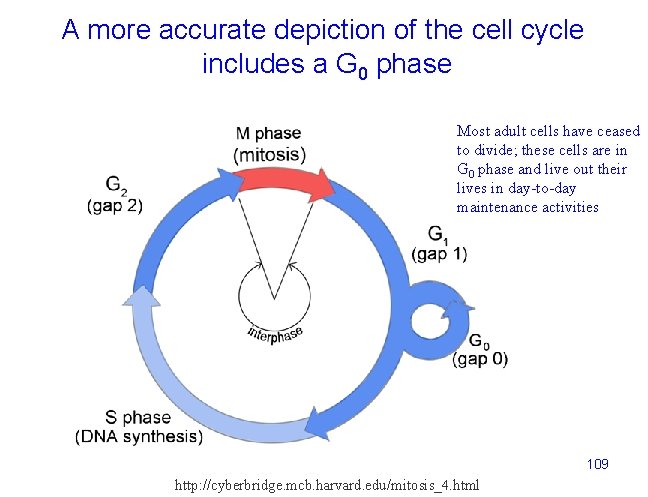
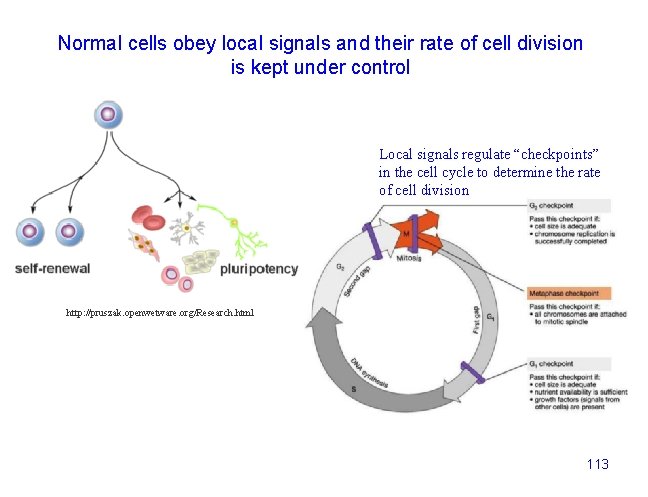
The Cell Cycle A cell spends most of its time in interphase, growing and performing daily functions Cells divide through the process of mitosis 103 http: //gaskinsanatomy. wikispaces. com/Cell+Cycle+diagram
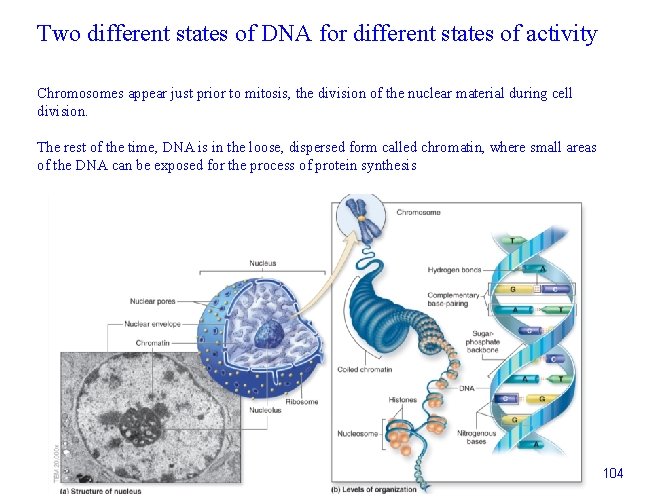
Two different states of DNA for different states of activity Chromosomes appear just prior to mitosis, the division of the nuclear material during cell division. The rest of the time, DNA is in the loose, dispersed form called chromatin, where small areas of the DNA can be exposed for the process of protein synthesis 104
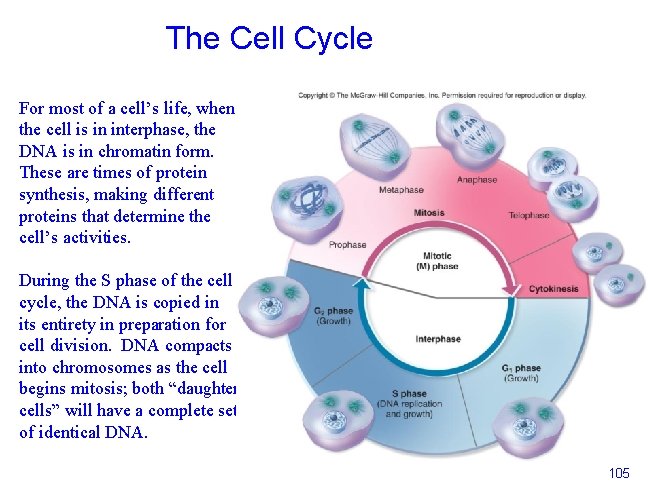
The Cell Cycle For most of a cell’s life, when the cell is in interphase, the DNA is in chromatin form. These are times of protein synthesis, making different proteins that determine the cell’s activities. During the S phase of the cell cycle, the DNA is copied in its entirety in preparation for cell division. DNA compacts into chromosomes as the cell begins mitosis; both “daughter cells” will have a complete set of identical DNA. 105
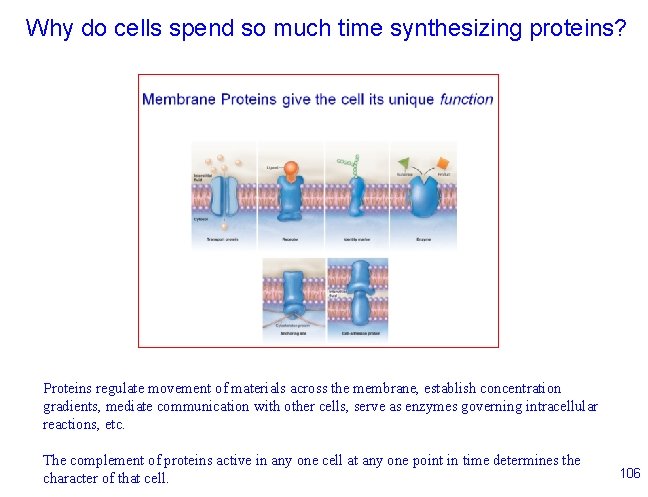
Why do cells spend so much time synthesizing proteins? Proteins regulate movement of materials across the membrane, establish concentration gradients, mediate communication with other cells, serve as enzymes governing intracellular reactions, etc. The complement of proteins active in any one cell at any one point in time determines the character of that cell. 106
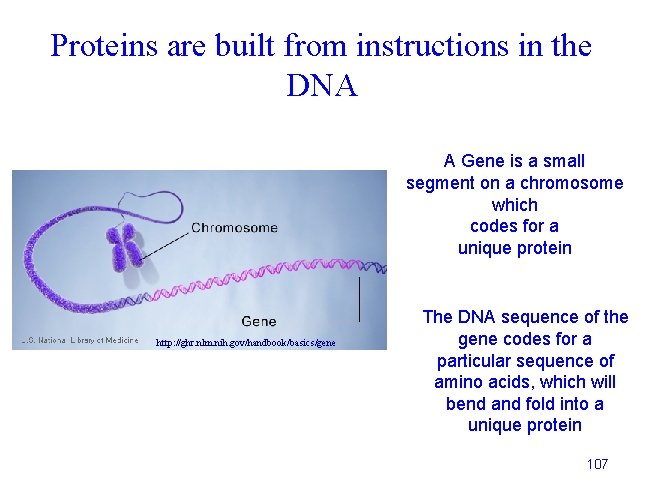
Proteins are built from instructions in the DNA A Gene is a small segment on a chromosome which codes for a unique protein http: //ghr. nlm. nih. gov/handbook/basics/gene The DNA sequence of the gene codes for a particular sequence of amino acids, which will bend and fold into a unique protein 107
Overview of Protein Synthesis : Transcription and Translation 1. 2. 3. 4. 5. Signals tell the DNA to unwind to expose a particular gene A copy of one of the gene strands is made with RNA bases (transcription) into messenger RNA (m. RNA) The m. RNA copy leaves the nucleus and finds a ribosome in the cytoplasm The m. RNA sequence is “read” and a string of amino acids is formed using the RNA code (translation); ribosomes, endoplasmic reticulum and Golgi apparatus are vital organelles The new protein is sent elsewhere in the cell for immediate use or final adjustments 108
A more accurate depiction of the cell cycle includes a G 0 phase Most adult cells have ceased to divide; these cells are in G 0 phase and live out their lives in day-to-day maintenance activities 109 http: //cyberbridge. mcb. harvard. edu/mitosis_4. html
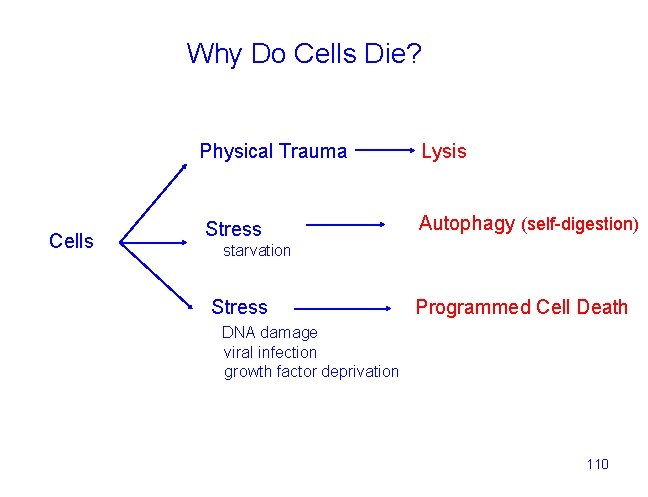
Why Do Cells Die? Cells Physical Trauma Lysis Stress Autophagy (self-digestion) starvation Stress Programmed Cell Death DNA damage viral infection growth factor deprivation 110
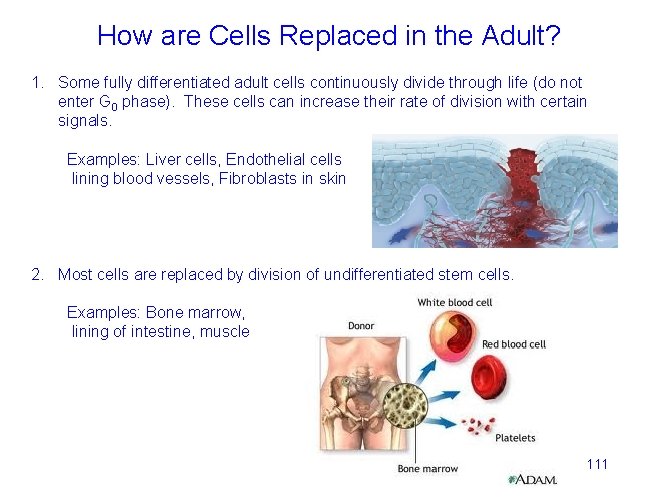
How are Cells Replaced in the Adult? 1. Some fully differentiated adult cells continuously divide through life (do not enter G 0 phase). These cells can increase their rate of division with certain signals. Examples: Liver cells, Endothelial cells lining blood vessels, Fibroblasts in skin 2. Most cells are replaced by division of undifferentiated stem cells. Examples: Bone marrow, lining of intestine, muscle 111
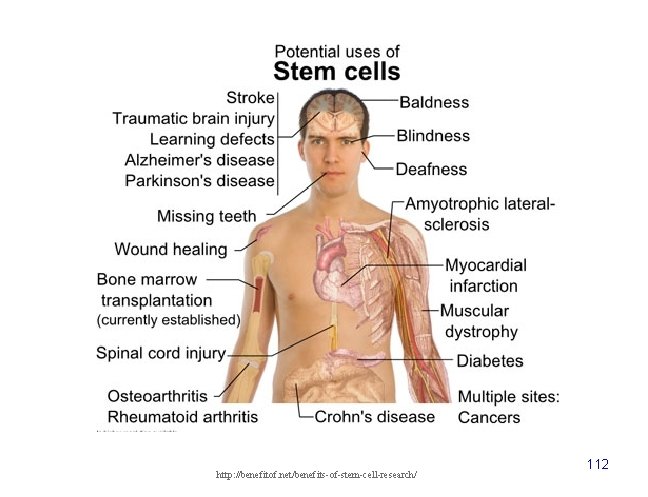
http: //benefitof. net/benefits-of-stem-cell-research/ 112
Normal cells obey local signals and their rate of cell division is kept under control Local signals regulate “checkpoints” in the cell cycle to determine the rate of cell division http: //pruszak. openwetware. org/Research. html 113 http: //www. docstoc. com/
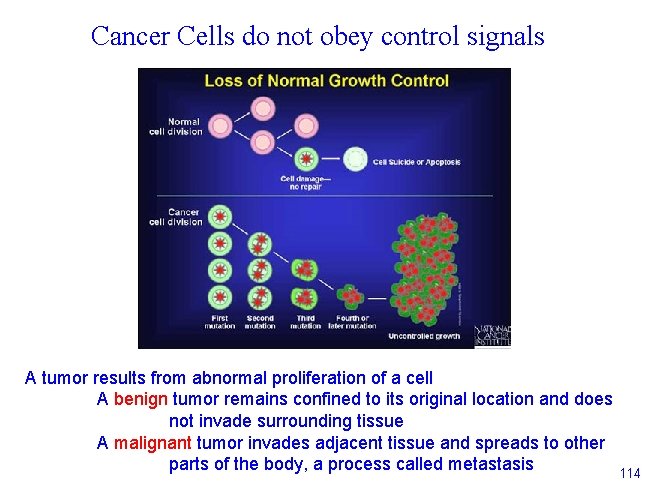
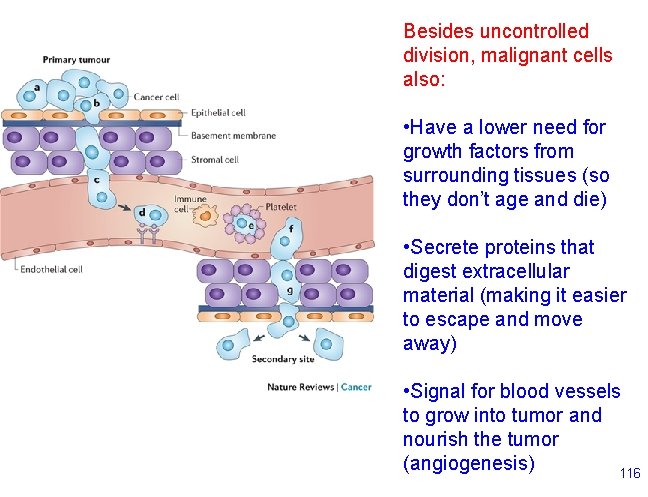
Cancer Cells do not obey control signals A tumor results from abnormal proliferation of a cell A benign tumor remains confined to its original location and does not invade surrounding tissue A malignant tumor invades adjacent tissue and spreads to other parts of the body, a process called metastasis 114
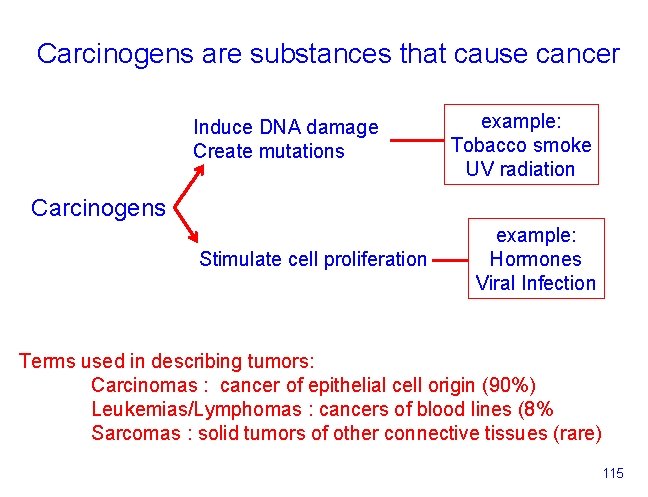
Carcinogens are substances that cause cancer Induce DNA damage Create mutations example: Tobacco smoke UV radiation Carcinogens Stimulate cell proliferation example: Hormones Viral Infection Terms used in describing tumors: Carcinomas : cancer of epithelial cell origin (90%) Leukemias/Lymphomas : cancers of blood lines (8% Sarcomas : solid tumors of other connective tissues (rare) 115
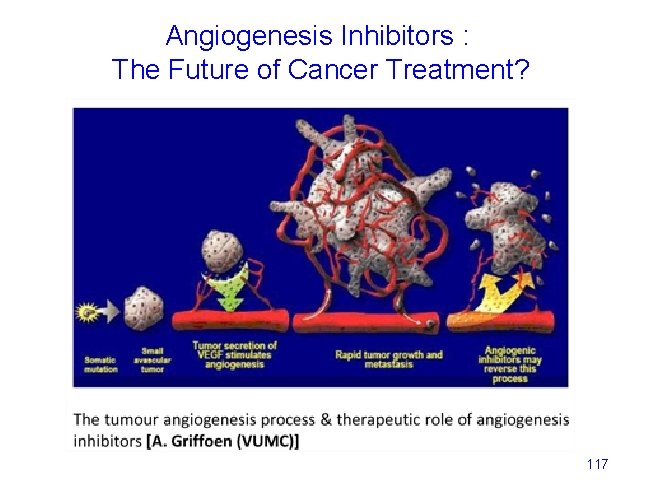
Besides uncontrolled division, malignant cells also: • Have a lower need for growth factors from surrounding tissues (so they don’t age and die) • Secrete proteins that digest extracellular material (making it easier to escape and move away) • Signal for blood vessels to grow into tumor and nourish the tumor (angiogenesis) 116
Angiogenesis Inhibitors : The Future of Cancer Treatment? 117