
Common Brain Mechanisms in ADDICTION OBESITY and Nora
Common Brain Mechanisms in ADDICTION OBESITY and Nora D. Volkow, M. D. Director National Institute on Drug Abuse
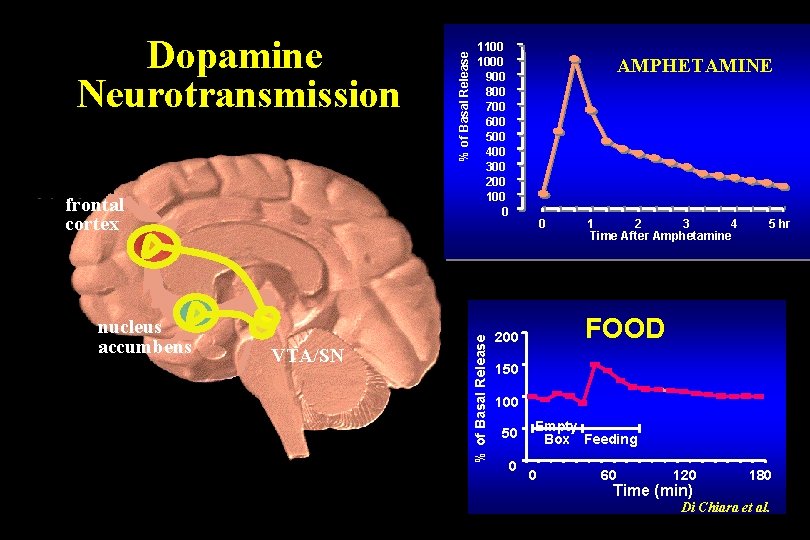
nucleus accumbens VTA/SN % of Basal Release frontal cortex % of Basal Release Dopamine Neurotransmission 1100 1000 900 800 700 600 500 400 300 200 100 0 AMPHETAMINE 0 1 2 3 4 Time After Amphetamine 5 hr FOOD 200 150 100 50 0 Empty Box Feeding 0 60 120 Time (min) 180 Di Chiara et al.
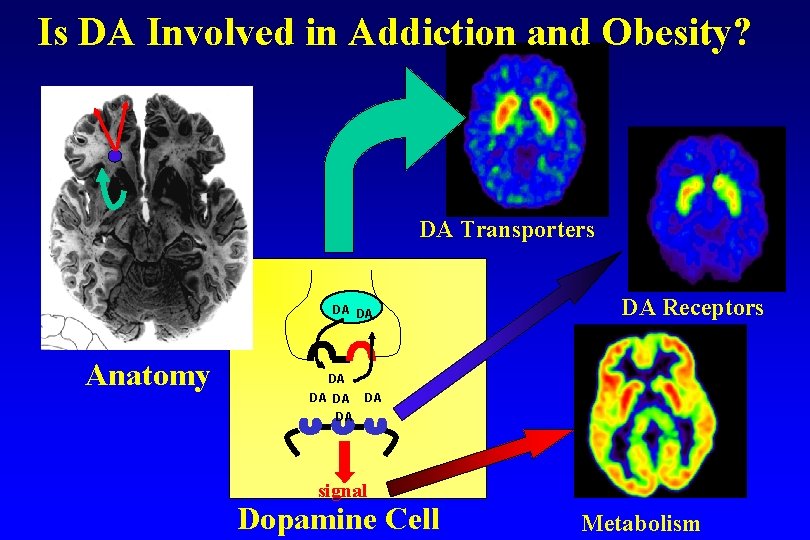
Is DA Involved in Addiction and Obesity? DA Transporters DA DA Anatomy DA Receptors DA DA DA signal Dopamine Cell Metabolism
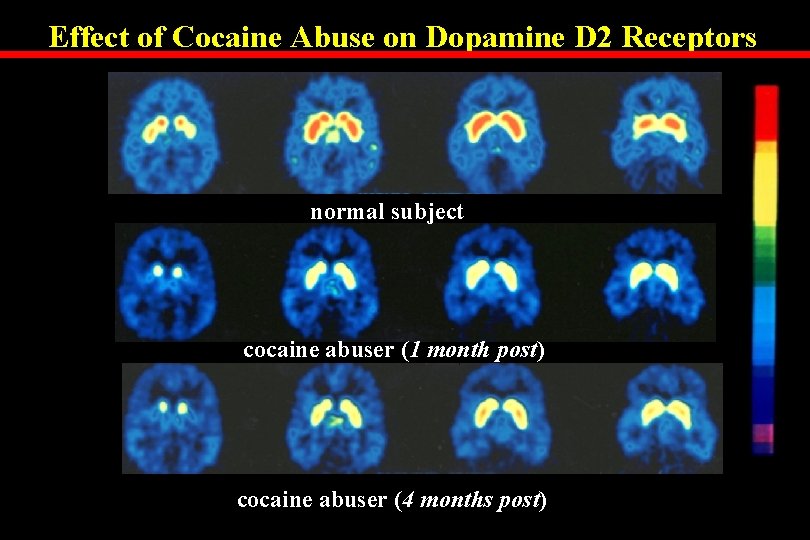
Effect of Cocaine Abuse on Dopamine D 2 Receptors normal subject cocaine abuser (1 month post) cocaine abuser (4 months post)
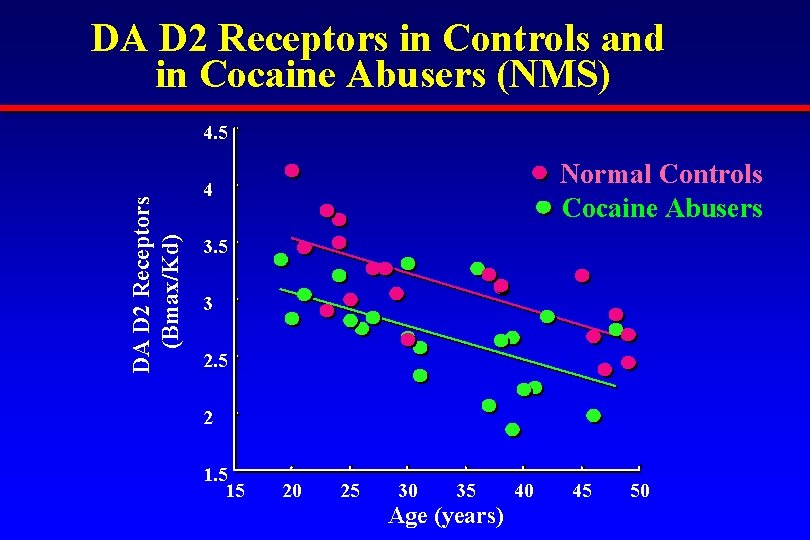
DA D 2 Receptors in Controls and in Cocaine Abusers (NMS) DA D 2 Receptors (Bmax/Kd) 4. 5 Normal Controls Cocaine Abusers 4 3. 5 3 2. 5 2 1. 5 15 20 25 30 35 Age (years) 40 45 50
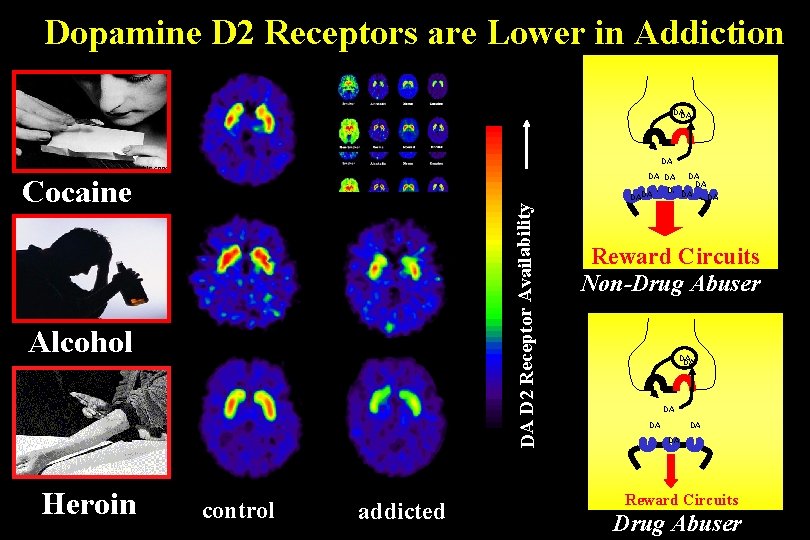
Dopamine D 2 Receptors are Lower in Addiction DA DA DA Cocaine DA D 2 Receptor Availability DADA Alcohol Heroin control addicted DA DA DA Reward Circuits Non-Drug Abuser DA DA DA Reward Circuits Drug Abuser
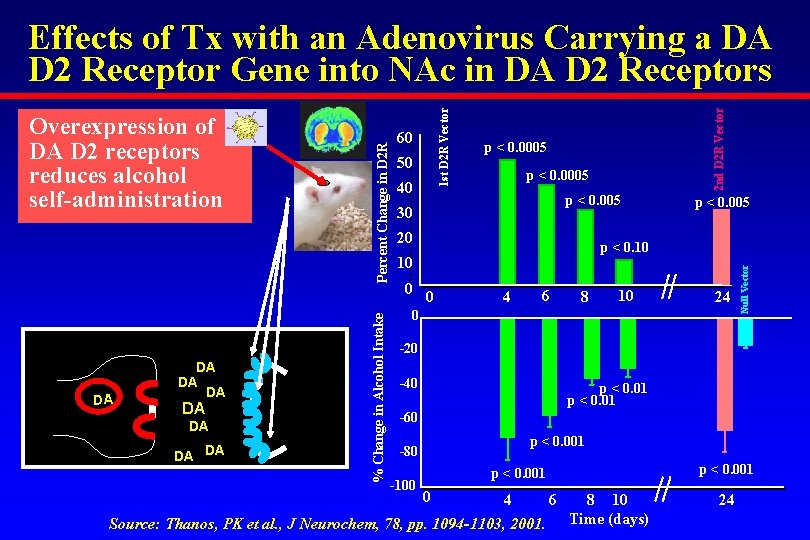
DA DA 50 40 p < 0. 0005 p < 0. 005 30 20 p < 0. 005 p < 0. 10 10 0 2 nd D 2 R Vector 1 st D 2 R Vector 60 0 4 6 8 10 24 0 Null Vector % Change in Alcohol Intake Overexpression of DA D 2 receptors reduces alcohol self-administration Percent Change in D 2 R Effects of Tx with an Adenovirus Carrying a DA D 2 Receptor Gene into NAc in DA D 2 Receptors -20 -40 p < 0. 01 -60 p < 0. 001 -80 -100 p < 0. 001 0 4 Source: Thanos, PK et al. , J Neurochem, 78, pp. 1094 -1103, 2001. 6 8 10 Time (days) 24
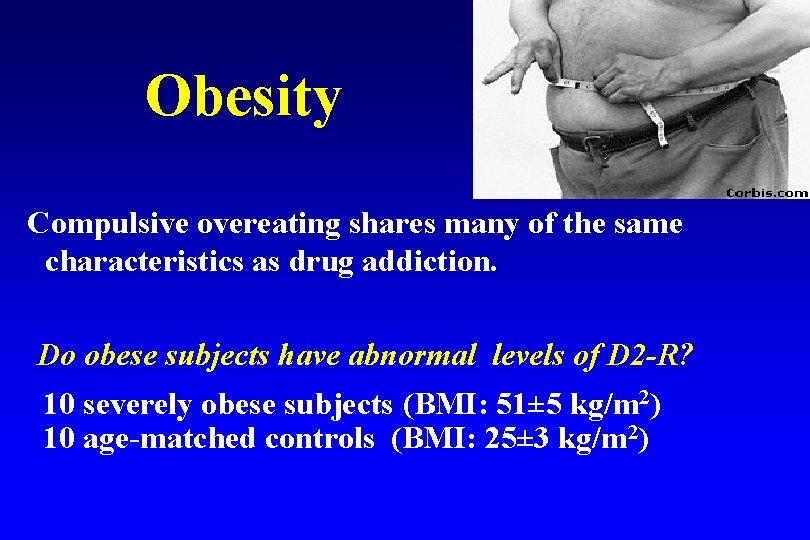
Obesity Compulsive overeating shares many of the same characteristics as drug addiction. Do obese subjects have abnormal levels of D 2 -R? 10 severely obese subjects (BMI: 51± 5 kg/m 2) 10 age-matched controls (BMI: 25± 3 kg/m 2)
![Dopamine D 2 Receptors [11 C]raclopride 2 0 ml/gm Control Subjects 2. 99 (Sd](http://slidetodoc.com/presentation_image_h2/e70095faa80df2da363d589296c59ad7/image-9.jpg "Dopamine D 2 Receptors [11 C]raclopride 2 0 ml/gm Control Subjects 2. 99 (Sd")
Dopamine D 2 Receptors [11 C]raclopride 2 0 ml/gm Control Subjects 2. 99 (Sd 0. 41) Obese Subjects 2. 47 (Sd 0. 36) P < 0. 008 Wang et al, Lancet 2001
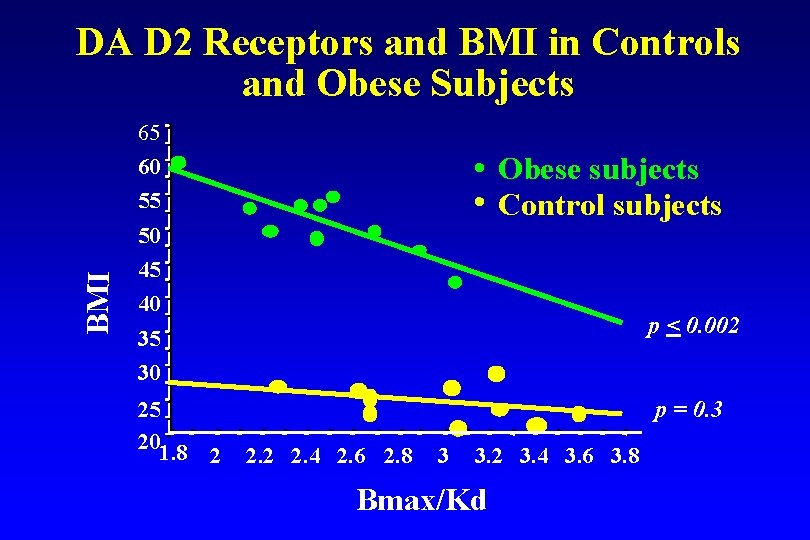
BMI DA D 2 Receptors and BMI in Controls and Obese Subjects 65 60 55 50 45 40 35 30 25 201. 8 • Obese subjects • Control subjects p < 0. 002 p = 0. 3 2 2. 4 2. 6 2. 8 3 3. 2 3. 4 3. 6 3. 8 Bmax/Kd
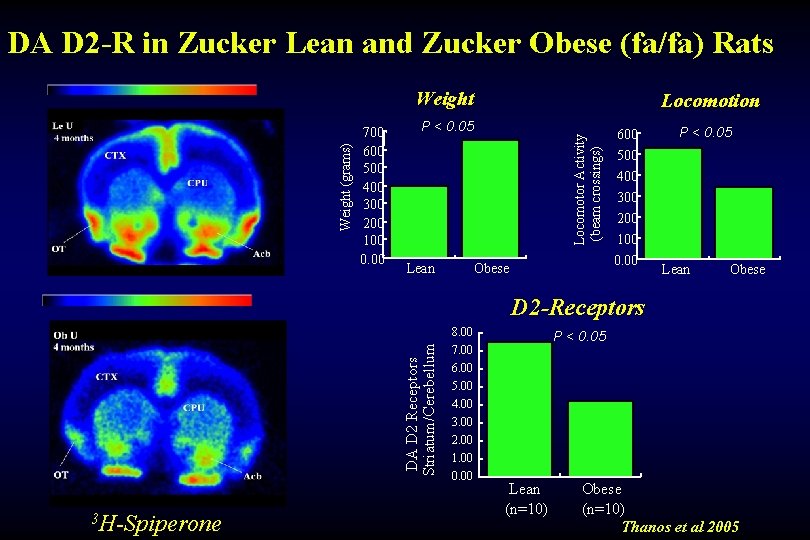
DA D 2 -R in Zucker Lean and Zucker Obese (fa/fa) Rats 700 600 500 400 300 200 100 0. 00 Locomotion P < 0. 05 Lean Locomotor Activity (beam crossings) Weight (grams) Weight 600 500 400 300 200 100 0. 00 Obese P < 0. 05 Lean Obese D 2 -Receptors DA D 2 Receptors Striatum/Cerebellum 8. 00 3 H-Spiperone P < 0. 05 7. 00 6. 00 5. 00 4. 00 3. 00 2. 00 1. 00 0. 00 Lean (n=10) Obese (n=10) Thanos et al 2005
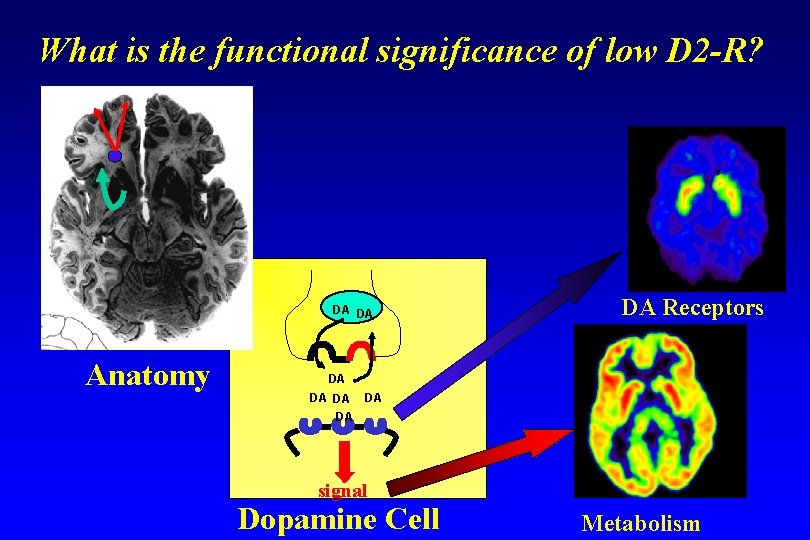
What is the functional significance of low D 2 -R? DA DA Anatomy DA Receptors DA DA DA signal Dopamine Cell Metabolism
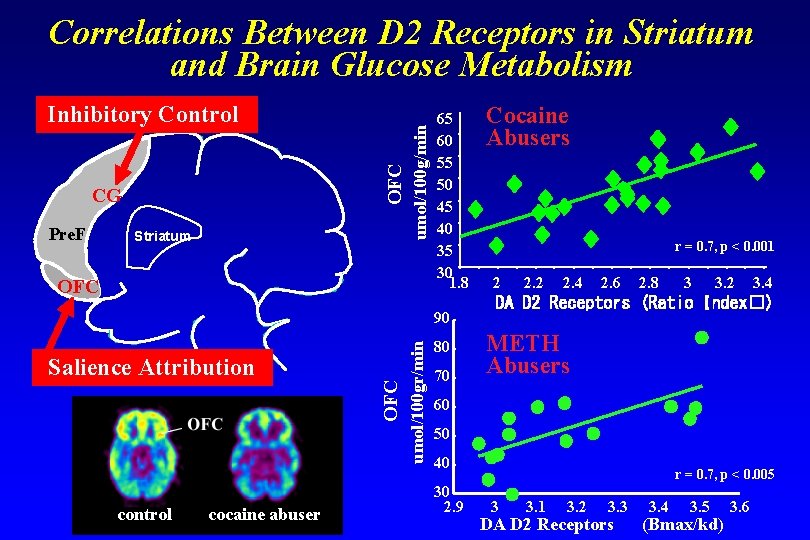
OFC Inhibitory Control CG Pre. F Striatum umol/100 g/min Correlations Between D 2 Receptors in Striatum and Brain Glucose Metabolism OFC 65 60 55 50 45 40 35 30 1. 8 control cocaine abuser umol/100 gr/min Salience Attribution OFC 90 80 70 Cocaine Abusers r = 0. 7, p < 0. 001 2 2. 4 2. 6 2. 8 3 3. 2 3. 4 DA D 2 Receptors (Ratio Index�) METH Abusers 60 50 40 30 2. 9 r = 0. 7, p < 0. 005 3 3. 1 3. 2 3. 3 DA D 2 Receptors 3. 4 3. 5 (Bmax/kd) 3. 6
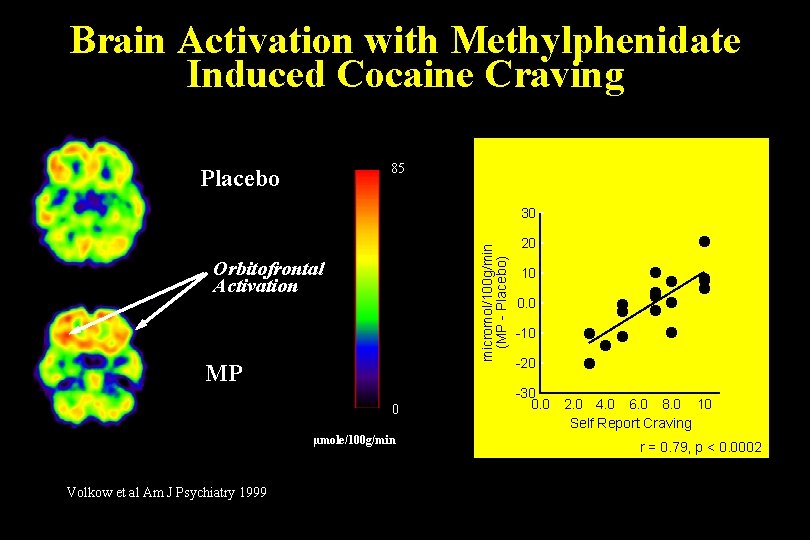
Brain Activation with Methylphenidate Induced Cocaine Craving 85 Placebo micromol/100 g/min (MP - Placebo) 30 Orbitofrontal Activation MP 0 µmole/100 g/min Volkow et al Am J Psychiatry 1999 20 10 0. 0 -10 -20 -30 0. 0 2. 0 4. 0 6. 0 8. 0 10 Self Report Craving r = 0. 79, p < 0. 0002
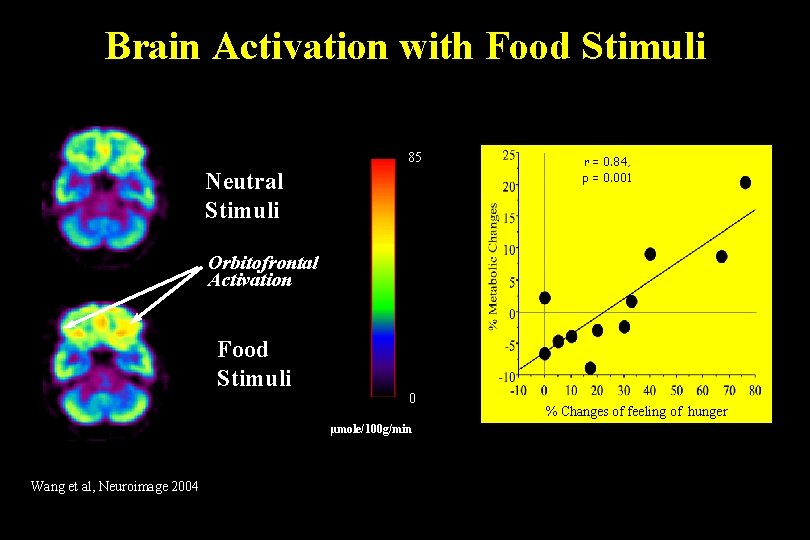
Brain Activation with Food Stimuli 85 Neutral Stimuli r = 0. 84, p = 0. 001 Orbitofrontal Activation Food Stimuli 0 µmole/100 g/min Wang et al, Neuroimage 2004 % Changes of feeling of hunger
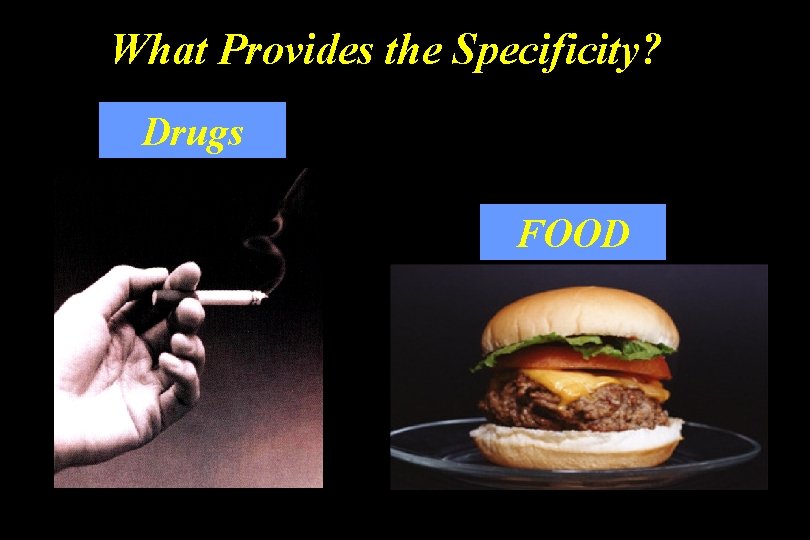
What Provides the Specificity? Drugs FOOD
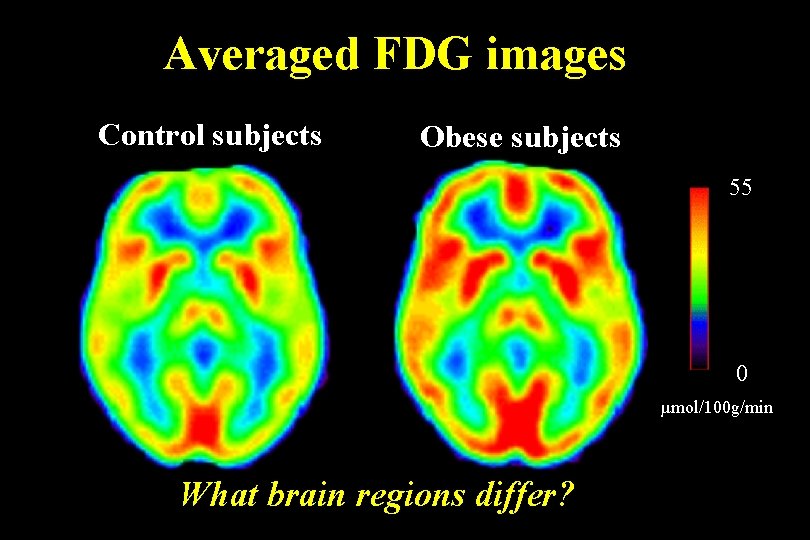
Averaged FDG images Control subjects Obese subjects 55 0 µmol/100 g/min What brain regions differ?
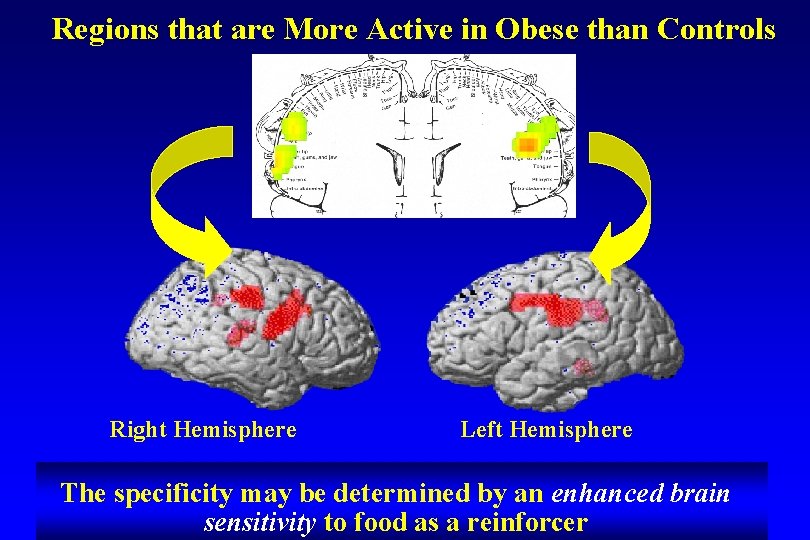
Regions that are More Active in Obese than Controls Right Hemisphere Left Hemisphere The specificity may be determined by an enhanced brain sensitivity to food as a reinforcer
The increased activity in somatosensory cortex for mouth, tongue and lips in obese subjects suggests that enhanced sensitivity in these regions, which are involved in the sensory processing of food may make them more vulnerable to the reinforcing properties of food The specificity for a particular drug or stimuli may be determined by an enhanced brain sensitivity to that particular reinforcer
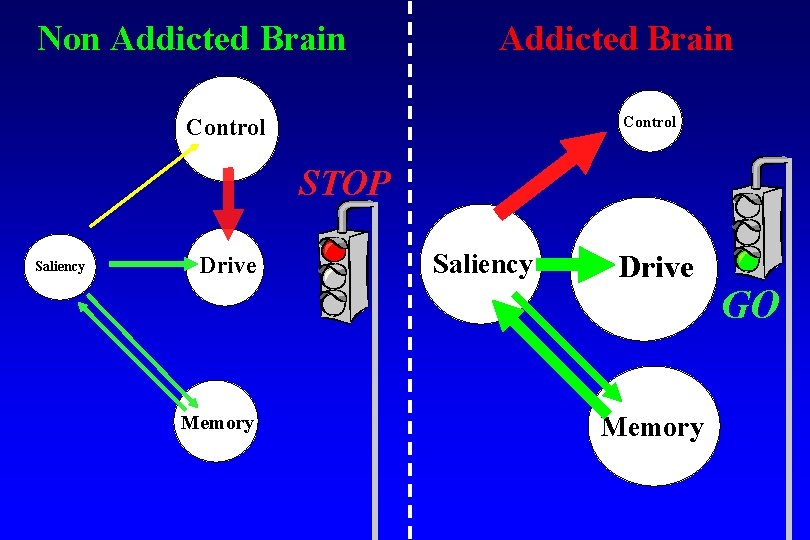
Non Addicted Brain Control STOP Saliency Drive Memory GO

BNL PET Group (Support DOE, NIDA) F. Telang, R. Mac. Gregor, P. Carter, D. Schlyer, C. Shea, J. Gatley, S. Dewey, C. Redvanly, P. King L. Caligiuri, G-J Wang, M. Franceschi, Y-S Ding, J. Logan, N. Volkow, J. Fowler, R. Ferrieri, C. Wong (not shown) D. Alexoff, C. Felder, N. Pappas, D. Franceschi, N. Netusil, V. Garza, R. Carciello, D. Warner, M. Gerasimov
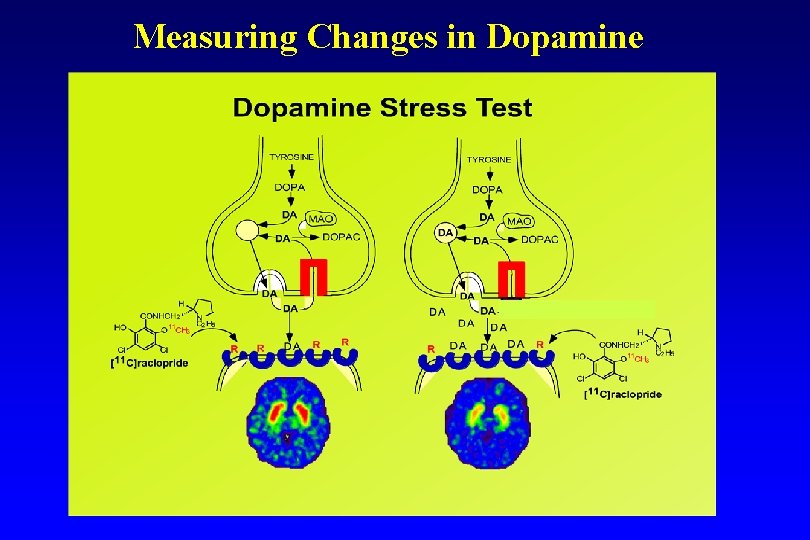
Measuring Changes in Dopamine
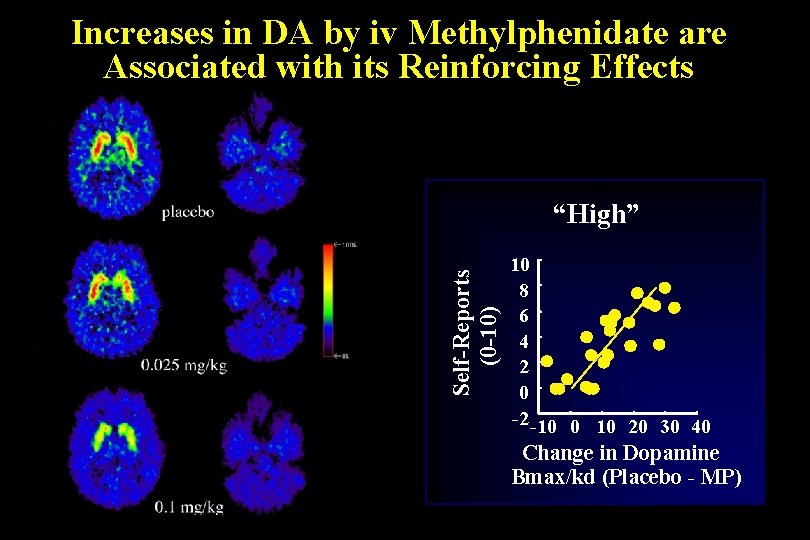
Increases in DA by iv Methylphenidate are Associated with its Reinforcing Effects Self-Reports (0 -10) “High” 10 8 6 4 2 0 -2 -10 0 10 20 30 40 Change in Dopamine Bmax/kd (Placebo - MP)
What is the Role of Dopamine in the Motivation for Food Consumption in Humans? DA regulates food consumption in part by modulating its reinforcing properties through NAc • DA increases in NAc during food expectation and food consumption. DA may also regulate food consumption through mechanisms other than rewarding circuits. • DA deficient KO die of starvation unless DA is restored in dorsal striatum but not in NAc.
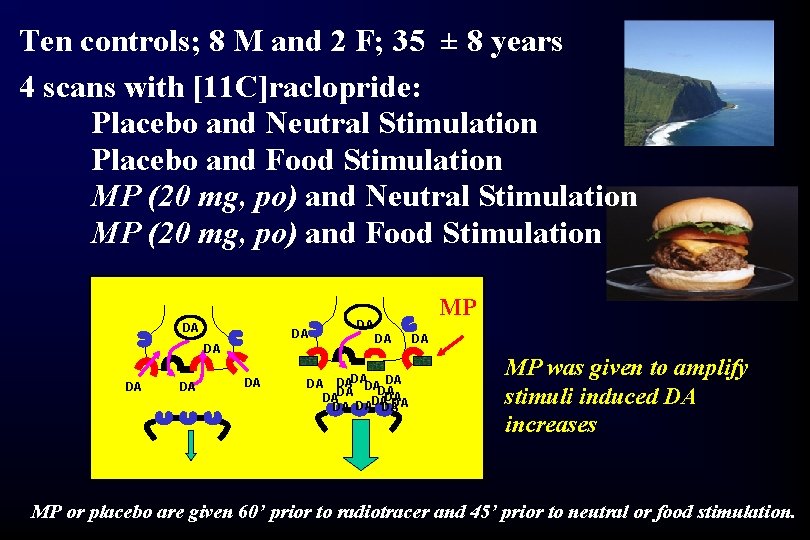
Ten controls; 8 M and 2 F; 35 ± 8 years 4 scans with [11 C]raclopride: Placebo and Neutral Stimulation Placebo and Food Stimulation MP (20 mg, po) and Neutral Stimulation MP (20 mg, po) and Food Stimulation DA DA DA MP DA DADADA DA DA MP was given to amplify stimuli induced DA increases MP or placebo are given 60’ prior to radiotracer and 45’ prior to neutral or food stimulation.
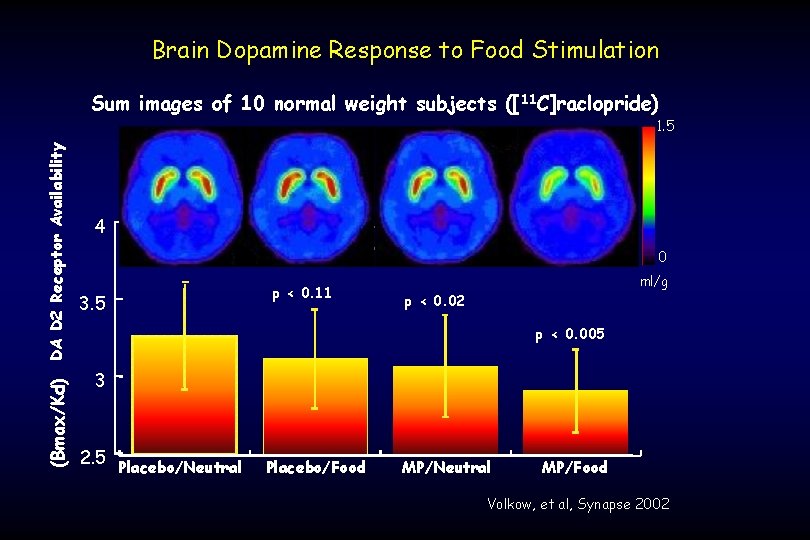
Brain Dopamine Response to Food Stimulation Sum images of 10 normal weight subjects ([11 C]raclopride) (Bmax/Kd) DA D 2 Receptor Availability 1. 5 4 0 3. 5 p < 0. 11 ml/g p < 0. 02 p < 0. 005 3 2. 5 Placebo/Neutral Placebo/Food MP/Neutral MP/Food Volkow, et al, Synapse 2002
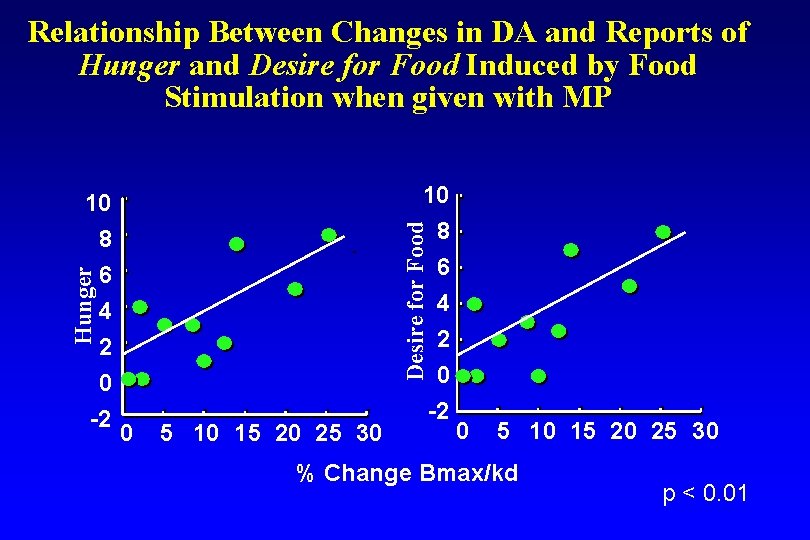
Relationship Between Changes in DA and Reports of Hunger and Desire for Food Induced by Food Stimulation when given with MP 10 8 6 4 2 Hunger Desire for Food 10 8 6 4 2 0 -2 0 5 10 15 20 25 30 % Change Bmax/kd p < 0. 01
Implication These results support the role of DA neurotransmission in dorsal striatum in mediating food motivation in human brain.
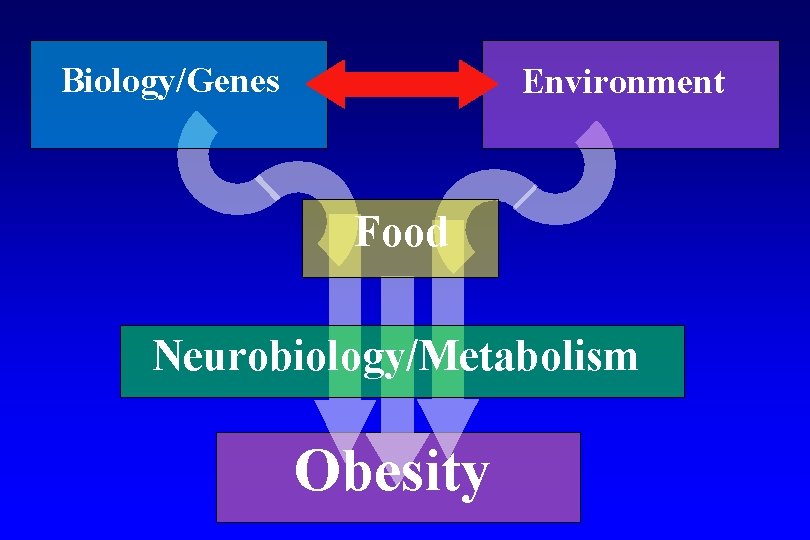
Biology/Genes Environment Food Neurobiology/Metabolism Obesity
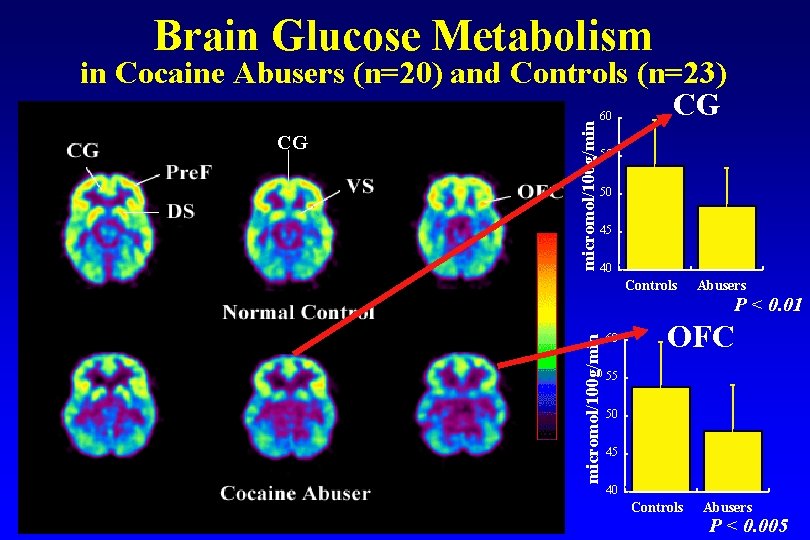
Brain Glucose Metabolism 60 55 50 45 40 Controls Abusers P < 0. 01 micromol/100 g/min CG micromol/100 g/min in Cocaine Abusers (n=20) and Controls (n=23) CG 60 OFC 55 50 45 40 Controls Abusers P < 0. 005
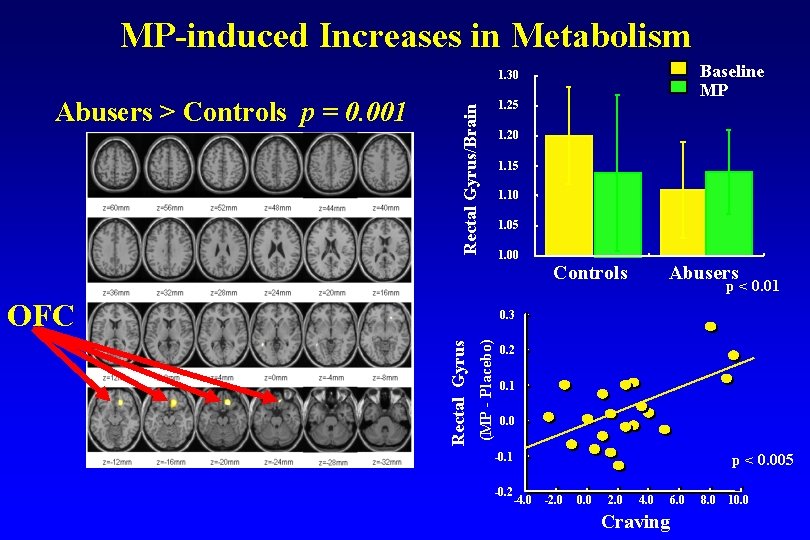
MP-induced Increases in Metabolism Baseline MP 1. 30 1. 25 Rectal Gyrus/Brain Abusers > Controls p = 0. 001 1. 20 1. 15 1. 10 1. 05 1. 00 OFC Controls Abusers p < 0. 01 (MP - Placebo) Rectal Gyrus 0. 3 0. 2 0. 1 0. 0 -0. 1 -0. 2 p < 0. 005 -4. 0 -2. 0 0. 0 2. 0 4. 0 6. 0 Craving 8. 0 10. 0
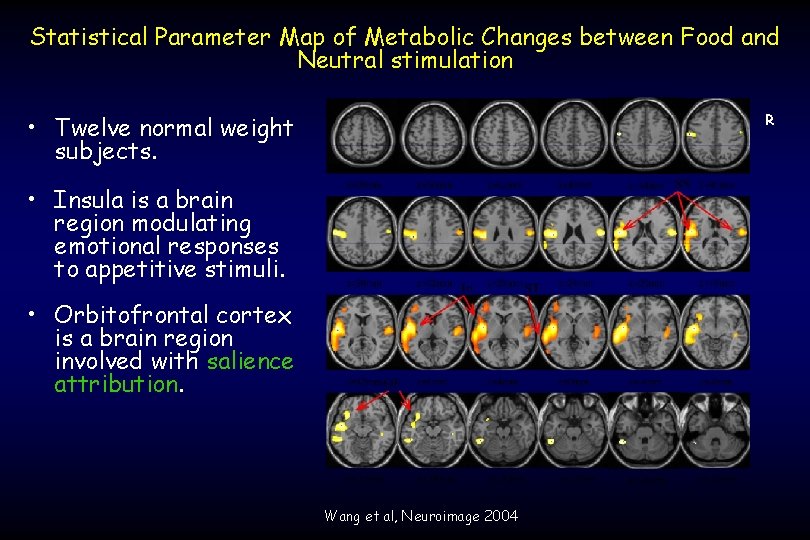
Statistical Parameter Map of Metabolic Changes between Food and Neutral stimulation • Twelve normal weight subjects. R • Insula is a brain region modulating emotional responses to appetitive stimuli. • Orbitofrontal cortex is a brain region involved with salience attribution. Wang et al, Neuroimage 2004
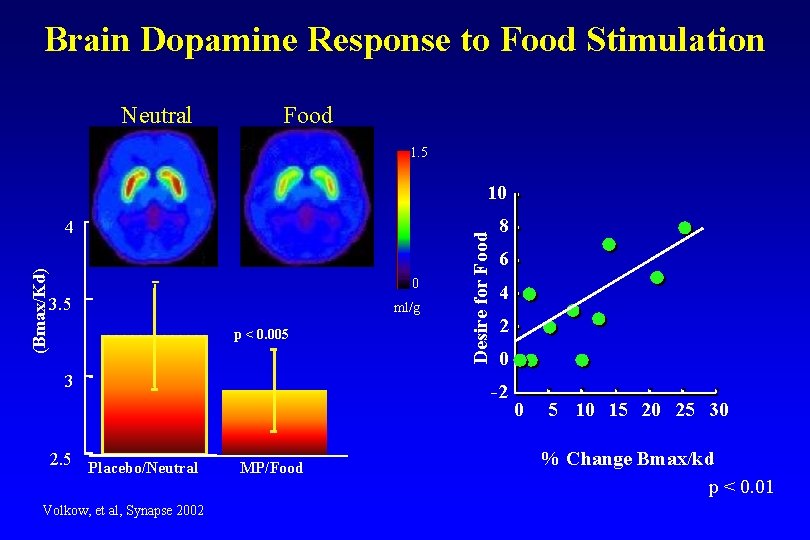
Brain Dopamine Response to Food Stimulation Neutral Food 1. 5 (Bmax/Kd) 4 0 3. 5 ml/g p < 0. 005 3 2. 5 Placebo/Neutral Volkow, et al, Synapse 2002 Desire for Food 10 8 6 4 2 0 -2 MP/Food 0 5 10 15 20 25 30 % Change Bmax/kd p < 0. 01
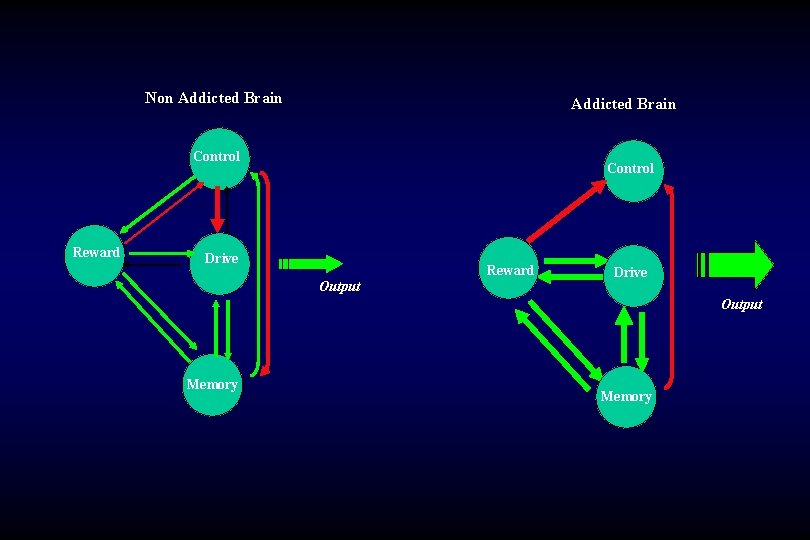
Non Addicted Brain Control Reward Control Drive Reward Output Drive Output Memory
- Slides: 34