
COMMON BEEF BREEDS and other important stuff Vocabulary
COMMON BEEF BREEDS and other important stuff!
Vocabulary l l l Polled- means hornless Ruminant- animal having a four compartment stomach Castration- removal of males testicles Bovine- means cows Calf- immature bovine Heifer- immature female calf that has not had offspring l l l Steer- a male that has been castrated Market weight- 1100 lbs. Herd- group of cattle Sheath- covering of skin around the bulls penis Pendulous sheath that hangs to far under the bull
Vocab. l l l Bull- male that has not been castrated Cow- female that has had a calf. And reached mature body weight. Gestation- period from breeding to calving
The cattle industry at a glance
Cattle operations l l Cow-calf- Raising calves to sell at beef sales and retaining only your best heifers for replacement stock ( Most common in AL) Stocker- feeding of calves after weaning usually on grass then sold to finishing. Finishing- Taking a 500 -600 lbs animal and finishing it out to 1100 lb. Slaughter weight Purebred- Breeding only purebred animals to better the breed. EX: angus bulls to angus to cows
Time line of Cow-calf operation l l l Heifer born in Jan. 11 Heifer bred in Jan 12 (Must be at least 70% of mature body weight) Heifer gives birth (~283 days)in Sept. If a bull he will be castrated at 3 weeks old Given a shot for blackleg at 2 months Calf is weaned at 8 months then in March sold at market weighing 400 -600 lbs.
Bovine Management Practices l - Identification- needed for herd identification and individual animal identification 1. Ear tagging 2. Ear tattooing 3. Ear notching 4. Hot iron branding 5. Freeze Branding
Castration of Bull calf l l Three methods 1 - Emasculation- A tool similar to vice grip used to crush the cord b/w the testicles and penis. 2 - Elastration- putting a strong rubber band on the cord b/w the testicles and the penis. Scrodum losses blood supply and falls off. Total removal- removal of testicles using a razor blade
Bovine Management Practices cont. . De-horning- to prevent development of secondary sex characteristics - 1. Barnes type de-horners - 2. scoop - 3. hot iron - 4. Loppers - 5. Saw l
Bovine Management Practices cont. . l l l Vaccinations- to prevent health problems such as black leg - 1. Subcutaneous- below the skin - 2. Intramuscular- in the muscle - 3. Intravenous- directly into the blood stream - 4. Oral - 5. Pour on type De-Wormers
Breeding management Cow- managed to calve one time per year l Heifer- calve one time per year, but should be managed with the following consideration: - 1. Breed to calve on month ahead of mature cow herd - 2. Breed to a bull known for producing low birth weights - 3. separate heifers from cows at time of calving l
Breeding management cont… l - All animals should be bred during a breeding season of about 60 days: 1. allows concentration of labor during calving season 2. allows calving to occur during peak grass season 3. eliminates the need for maintaining a bull year round 4. cull all open cows and heifers after the 60 day period
Artificial Insemination (AI) l Means of obtaining pregnancy without the use of a natural service - Advantages 1. Improvement of herd 2. wider selection of sire 3. Prevention of disease spread 4. Increases in offspring uniformity 5. Reduced cost of keeping sire 6. reduced chance of damage to dam 7. safety
Artificial Insemination (AI) cont… Disadvantages of using AI: l – – – Skilled technician required Close supervision of female required More equipment needed Sources of seamen for AI: - Studs Collecting from own sire Buying frozen straws from a breeder
Artificial Insemination (AI) cont… l - Factors that affect volume of semen produced: 1. Age 2. size 3. health 4. frequency of collection
Estrus Detection l - Estrus detection is the most important factor of AI program Too early sperm dies Too late egg dies Estrus cycle (definition)- The interval b/w the onset of one estrus and the onset of the next estrus; usually days in beef cattle
Estrus Detection cont… l - Behavioral estrus: 1. is 6 to 14 hours in length 2. vulva and vagina become enlarged 3. seeks out bull, stands to be mated 4. ovulation occurs 8 to 10 hours after standing heat
Estrus Detection cont… l - Signs of behavioral estrus: 1. standing to be ridden 2. riding others 3. nervousness, restlessness 4. clear sticky mucus flowing from vulva 5. hair standing up to tail head 6. bellowing
Ways to detect Estrus l - 1. Heat detection patches Released by pressure( red dye) 2. Chin ball marking harness ( belt worn by bull that marks a cow upon mounting) 3. Teaser bull (bulls penis has been altered so that it can not bred 4. Steroid treated animals.
EPD- best way to select superior animals!!!! l l Expected Progeny Difference- or how the offspring of one parent will perform compared to the average performance for the breed. - cannot be used to compare one breed to another, and can only be used with purebred cattle. - is determined by the accurate record keeping of a sire or dam and their offspring The performance of an animals progeny in the past is the most accurate way to predict how well the future progeny will perform.
Items on a EPD sheet l l l Birth date Birth weight Weaning weight Age at weaning Yearling weight Birth weight EPD l l Birth weight EPD Weaning weight EPD Yearling Weight EPD Milk EPD
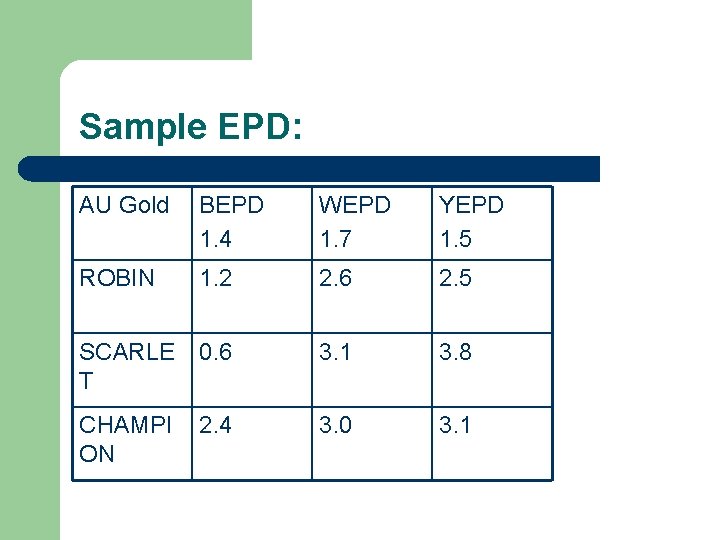
Sample EPD: AU Gold BEPD 1. 4 WEPD 1. 7 YEPD 1. 5 ROBIN 1. 2 2. 6 2. 5 SCARLE T 0. 6 3. 1 3. 8 CHAMPI ON 2. 4 3. 0 3. 1
WHAT IS A BREED? l A breed consists of animals which have been selected for certain characteristics and which breed true for those characteristics
PRIOR TO 1965… l l l There were very few different breeds of cattle in the United States. Dominant breeds included: Texas Longhorns (from Spanish Longhorns) Angus Hereford Shorthorn Composite breeds were also being developed.
WHAT’S A COMPOSITE? l l A composite breed is developed from two or more previously established breeds. Examples would include: Santa Gertrudis (Brahman X Shorthorn) Brangus (Brahman X Angus) Braford (Brahman X Hereford)
BEFORE THE 1960’s… l l l Approximately 20 different breeds were available in the United States. Today, there are over 70 breeds found in the United States. The development of the feedlot industry created the catalyst for the increase in the number of breeds.
CURRENTLY… l l l The number of breeds in the United States will vary. Importations from other countries will affect the numbers. Only about 12 -15 breeds of the approximately 70 actually have a major influence on the cattle industry!
CROSSBREDS l l A large portion of the U. S. cattle industry relies on crossbreeding to improve and/or enhance the genetics of purebreds. However, a large problem then exists with management and consistency in product quality.

What do you call a cow on the barnyard floor?
Ground Beef Ha! Ha!
COMMON U. S. BREEDS l The next group of slides represent breeds common in the United States. l You will need to take notes about each breed!
British Breeds These breeds were first developed in the british isles, I. e. Scotland, Ireland, England
ANGUS
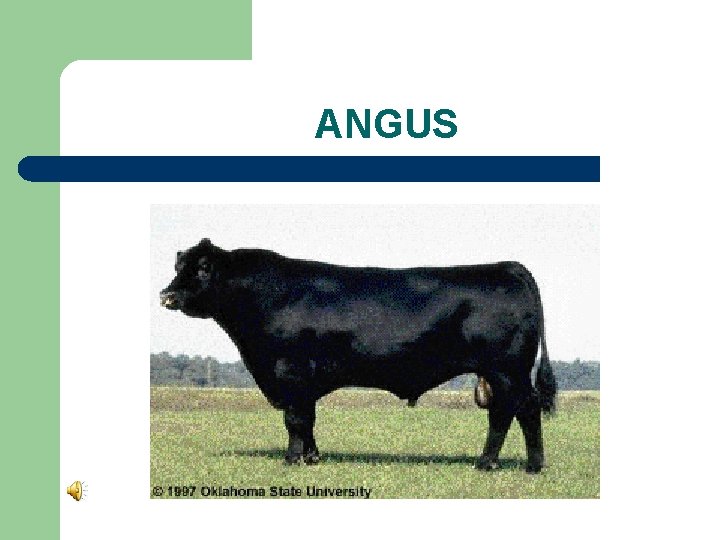
ANGUS l l l Color: black Horned of Polled: polled Cow mature size: 11501250 lbs. Origin: Scotland 1 - most popular breed Desirable: - Carcass quality - Fertile, good milking, easy calving - Polled l Undesirable: -Breeding problems w/ bulls - not as cold tolerant as Herefords l
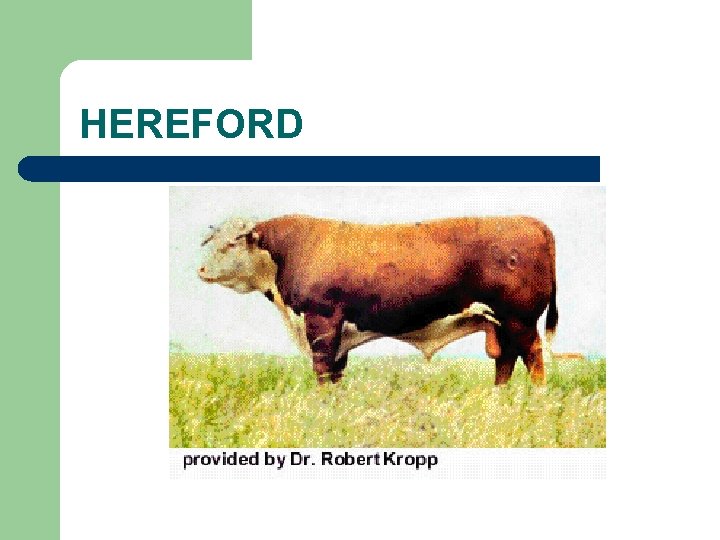
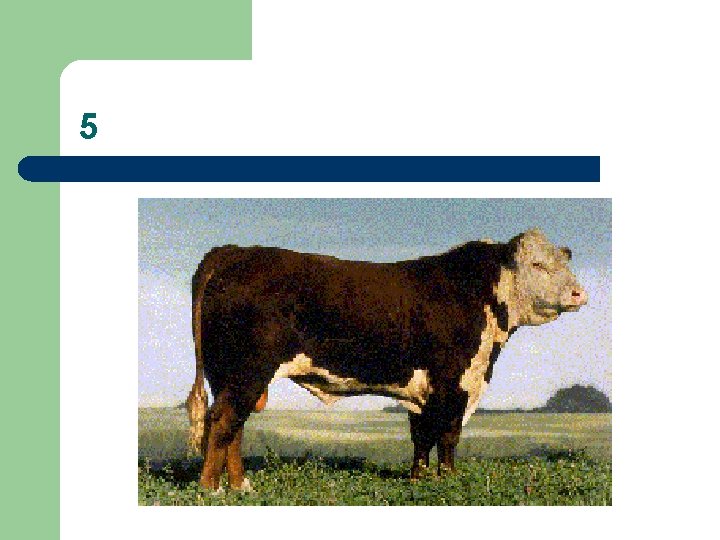
HEREFORD
Hereford l l l Color: red body, white extremities Horned of Polled: horned Cow mature size: 1150 lbs. Origin: England 2 - most popular breed Desirable: l -Hardiness in winter -fertility of female -good disposition l l - Undesirable: low milk production Do not marble well
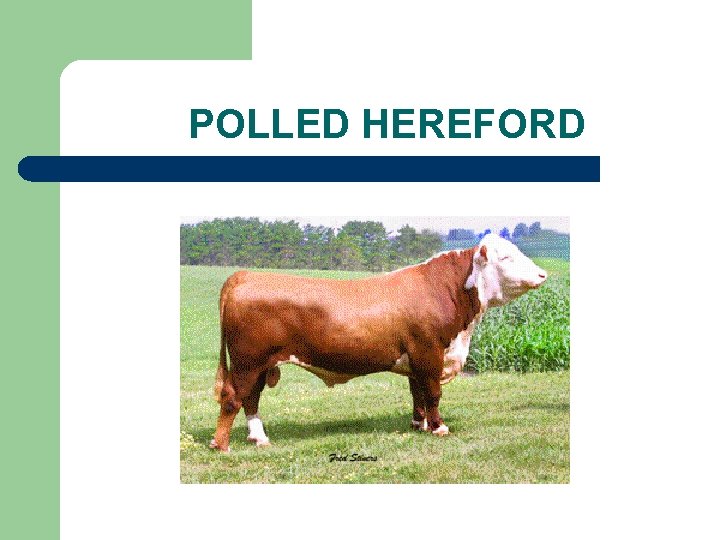
POLLED HEREFORD
Polled Hereford l l Color: Same as Hereford Horned of Polled: polled Cow mature size: Origin: Iowa U. S. l Desirable: larger frame than horned Hereford l Undesirable: less muscling
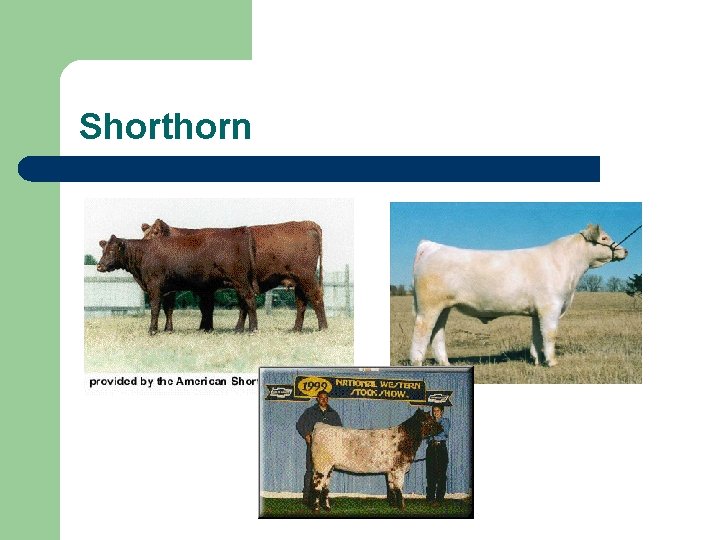
Shorthorn
Shorthorn l l Color: Red, roan or white Horned of Polled: both Cow mature size: 1050 Origin: England l - Desirable: Easy calving Good disposition Undesirable: light muscling Poor carcass cutability
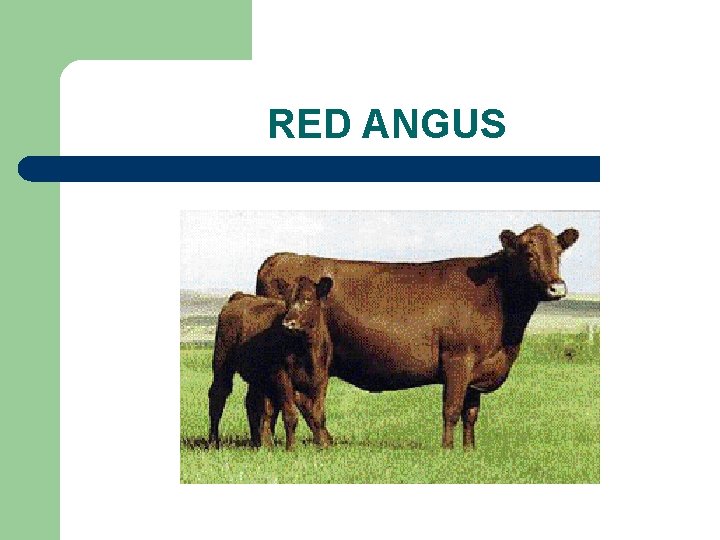
RED ANGUS
Red Angus l l Color: Red Horned of Polled: polled Cow mature size: 1100 Origin: U. S. not as popular as angus l Desirable: similar to angus l Undesirable: similar to angus
The following breeds are Continental breeds This means they were developed in France, Spain etc…
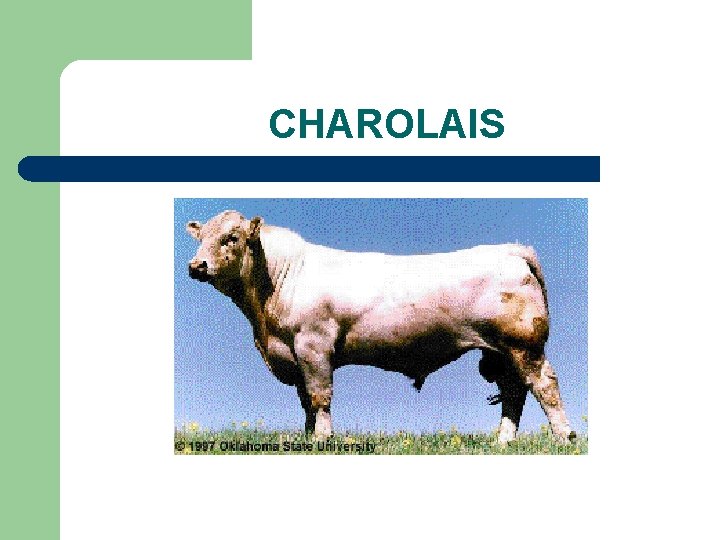
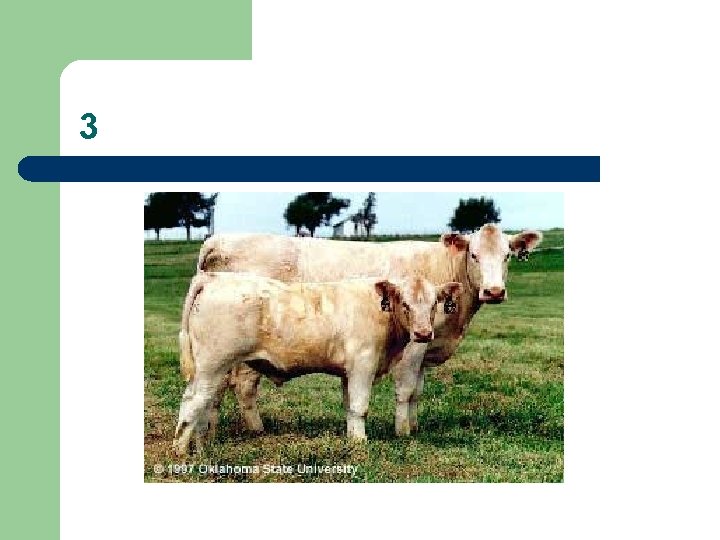
CHAROLAIS
Charolais l l l Color: creamy white Horned of Polled: Both Cow mature size: 1550 Origin: France 5 - most popular breed l - Desirable: Heavy muscling Rapid growth Undesirable: less fertile Milk production
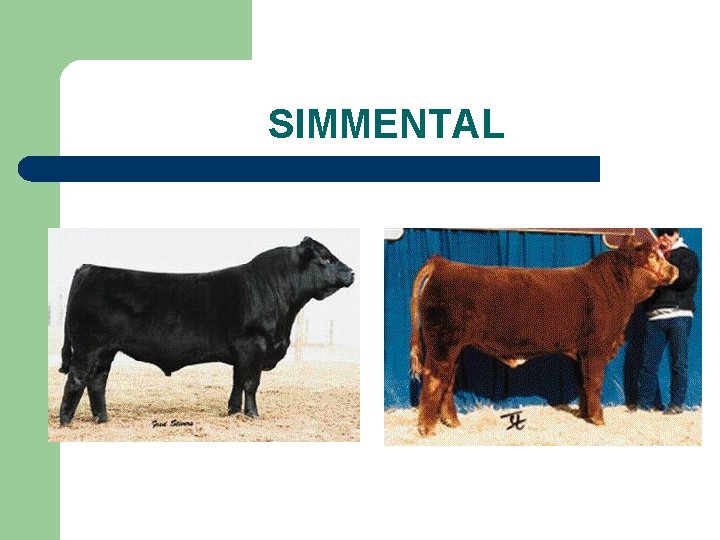
SIMMENTAL
Simmental l l Color: Yellow to red and white and black Horned of Polled: predominately horned, some polled Cow mature size: 1500 Origin: Switzerland 4 - most popular breed l - Desirable: High milk production Rapid Growth Good sire or dam breed Undesirable: - Some calving difficulties “high birth weight” l
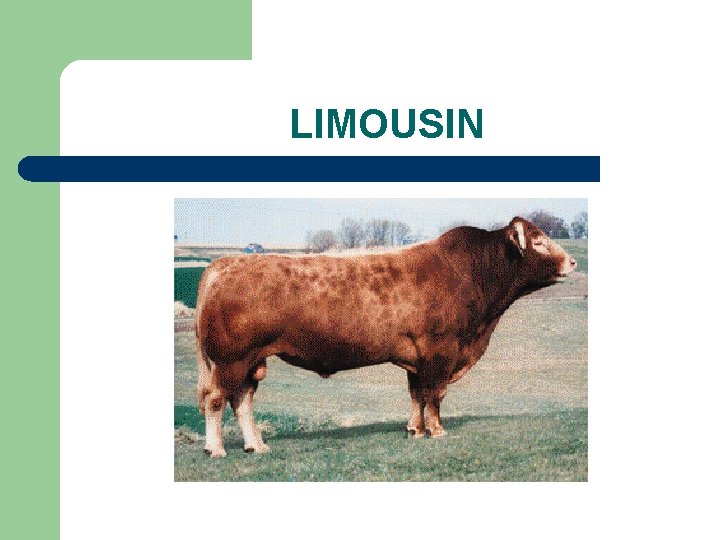
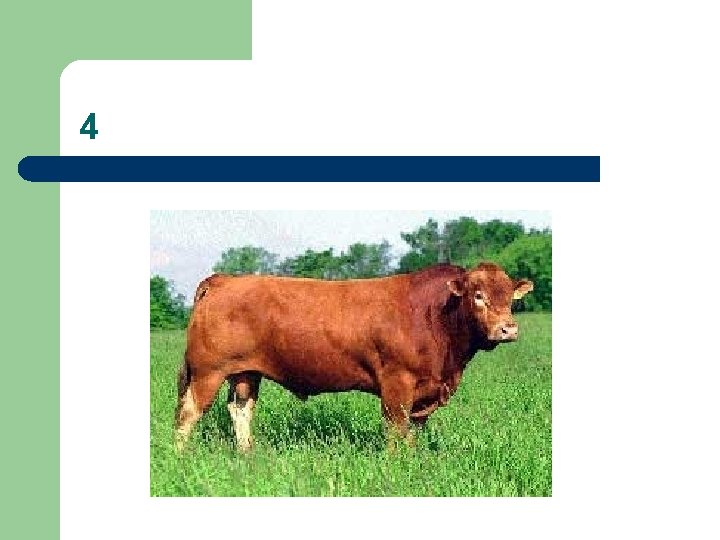
LIMOUSIN
Limousin l l l Color: golden red to light yellow Horned of Polled: both Cow mature size: 1300 Origin: France 3 - most popular breed l l - Desirable: Highest yielding carcass of all breeds Easy calving Undesirable: Slow ADG Nervous Milk production
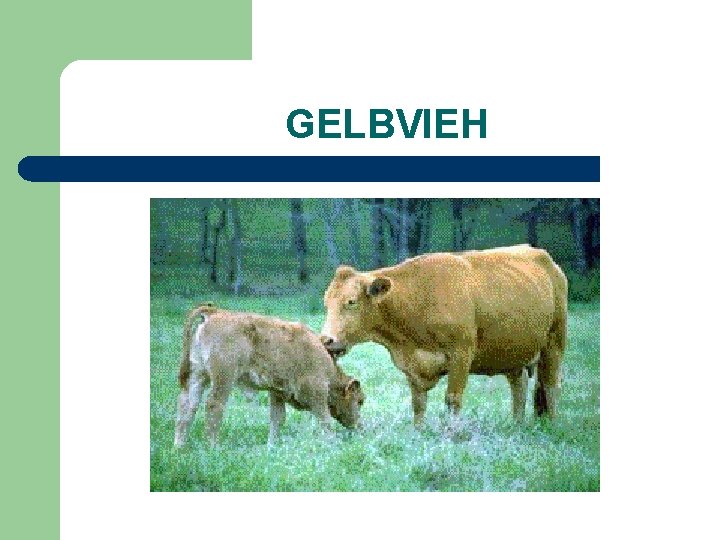
GELBVIEH
Gelbvieh pronounced “GELP-Fee” l l l Color: yellow to golden red Horned of Polled: both Cow mature size: 1300 Origin: Austria “West Germany” 8 - most popular breed Desirable: -rapid growth - good carcass - Good mothers l Undesirable: - calving difficulties l
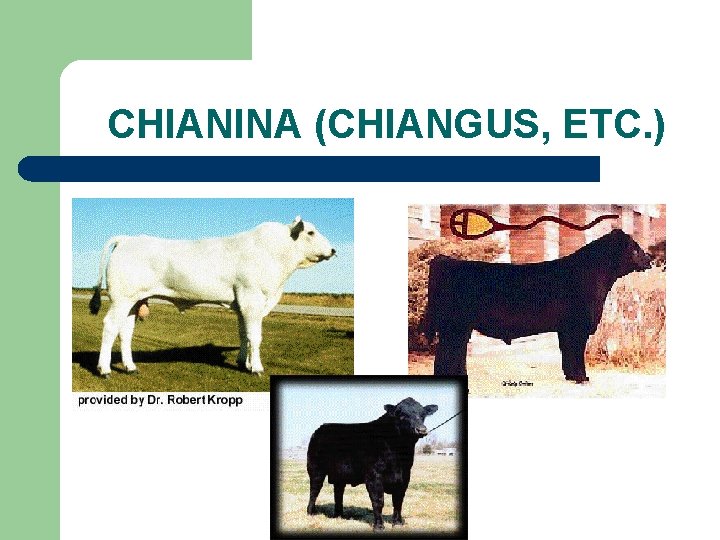
CHIANINA (CHIANGUS, ETC. )
Chianina l l Color: White to grey muzzle, feet, and switch Horned of Polled: Cow mature size: 1700 Origin: Italy l - Desirable: rapid growth Ease of calving Undesirable: poor fertility Nervous Milk production not good
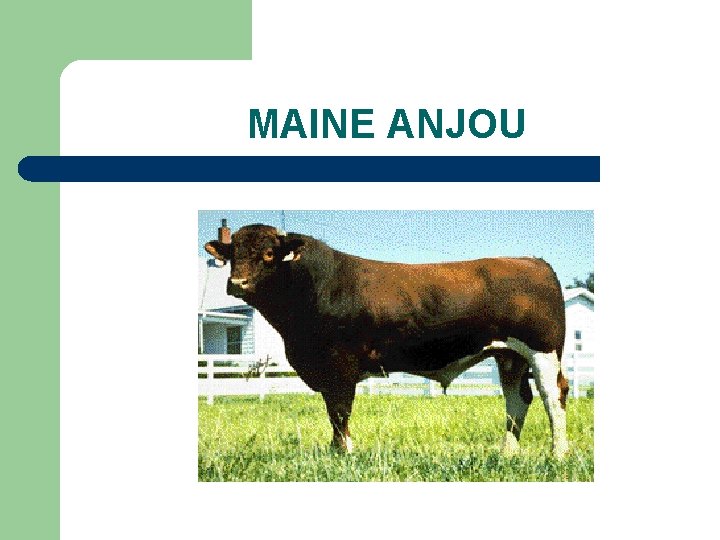
MAINE ANJOU
Maine- Anjou l l Color: red and white Horned or Polled: horned Cow mature size: 1700 Origin: France Desirable: raid growth - high milk production l l - Undesirable: extreme calving difficulty High calf mortality
Why do cows wear bells?
Their horns don't work!
Brahman and Brahman General Crosses 1. 2. 3. Characteristics: Heat tolerance Parasite tolerance High Heterosis when crossed with british breeds, and other exotics
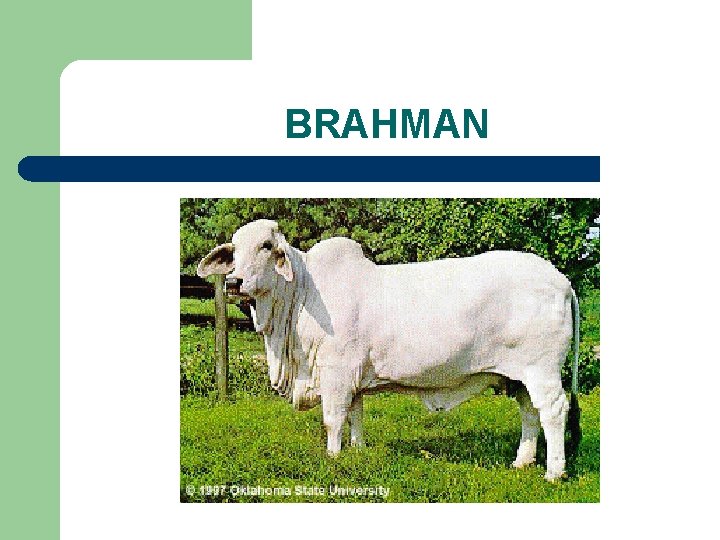
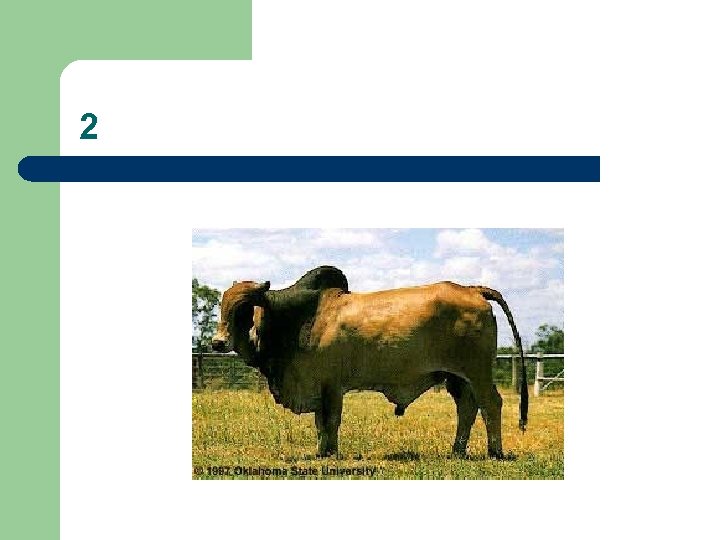
BRAHMAN
Brahman l l l Color: White, black, brown, red Horned of Polled: horned usually Cow mature size: Origin: India 10 - most popular breed l l - Desirable: ease of calving High heterosis Great mothers Undesirable: low fertility Slow growth Lack good muscle
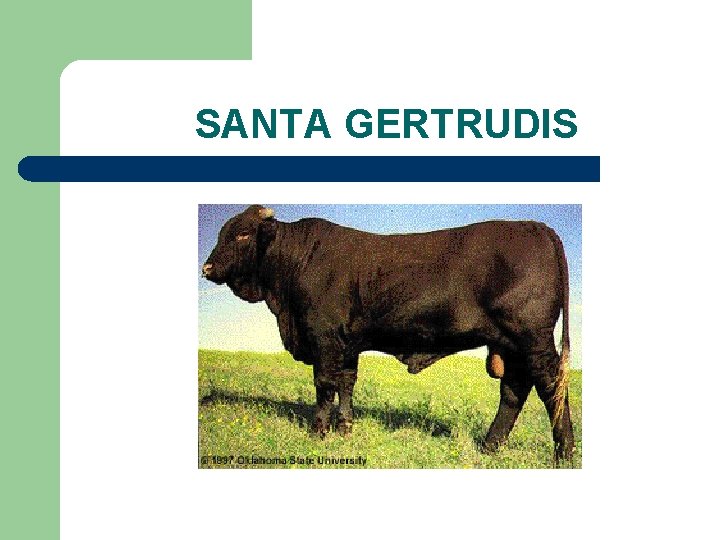
SANTA GERTRUDIS
Santa Gertrudis l l l Color: dark red Horned of Polled: both Cow mature size: 1450 Origin: U. S. King ranch in Texas First beef breed developed in the U. S. l - Desirable: Rapid growth Good milk production Undesirable: - lower fertility than other Brahman X british crosses l
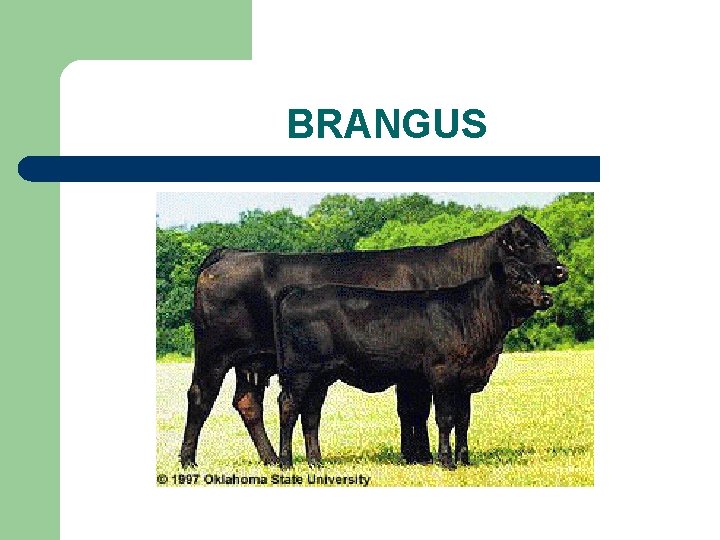
BRANGUS
Brangus l l l Color: Black Horned of Polled: both Cow mature size: 1300 Origin: U. S. A. ( 5/8 Angus and 3/8 Brahman 9 - most popular breed - l - Desirable: good milk production High fertility Undesirable: Nervous Pendulous sheath Meat is tough Not adapted to cold climate
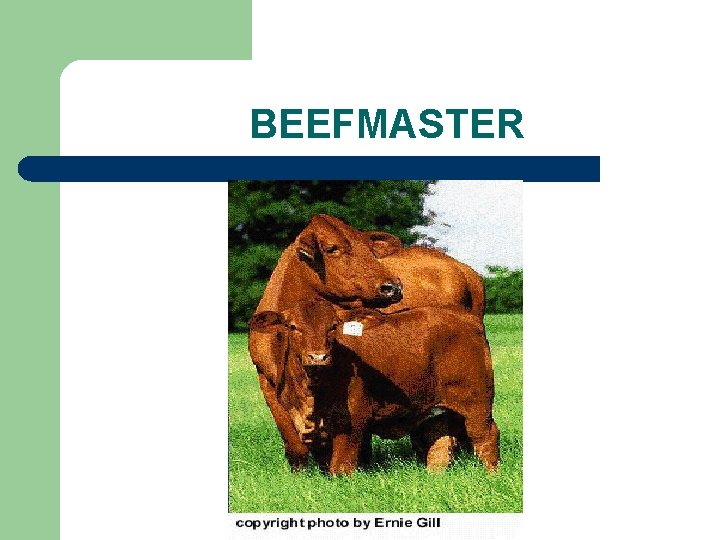
BEEFMASTER
Beefmaster l l l Color: Red and white Horned of Polled: predominately horned Cow mature size: Origin: U. S. 6 - most popular breed l Desirable: Similar to brangus but lower fertility l Undesirable:

What do you call a cow that has 3 legs?
Lean beef !
The Texas Longhorn This breed was developed purely by nature in the wide open spaces of of the U. S. southwest.
LONGHORN
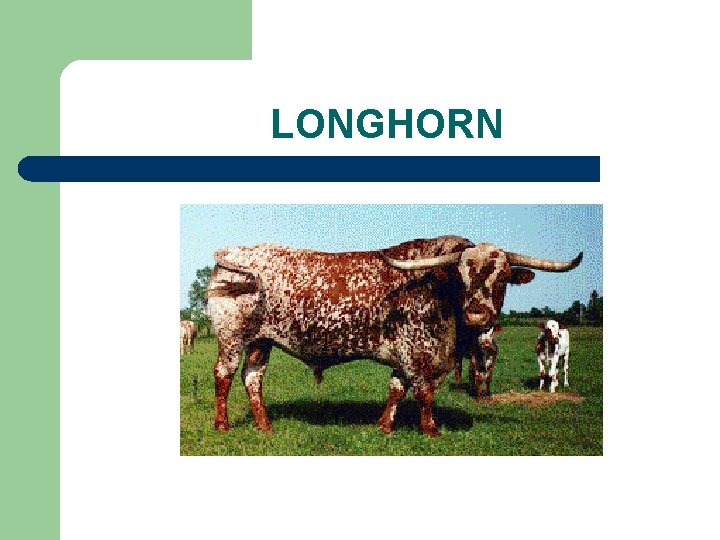
Longhorn - Color: White body covered w/ red or black spots l Horned of Polled: Big horns l Cow mature size: l Desirable: very prolific l Undesirable: meat is tough
TO LEARN MORE… l For more information on any of these breeds of cattle or for rarer breeds, please visit the following website: www. ansi. okstate. edu/breeds/ Once there, click on beef breeds and select the breed you would like to know more about!

Test your knowledge
The farmer had been taken so many times by the local car dealer that when the dealer wanted to buy a cow, the farmer priced it to him like this: Basic cow, $200; two-tone exterior, $45; extra stomach $75; product storage compartment, $60; dispensing device, four spigots at $10 each, $40; genuine cowhide upholstery, $125; dual horns, $15; automatic fly swatter, $35. Total = $595.
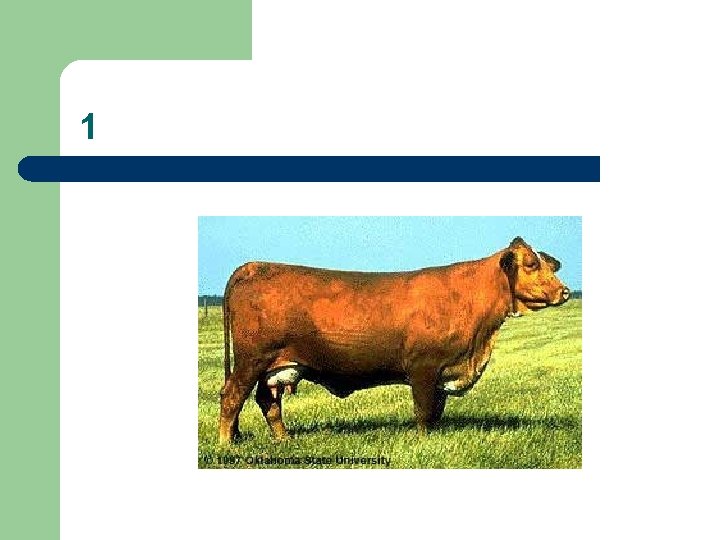
1
2
3
4
5
6
7
8
9
10
11
12
13
14
15
16
- Slides: 90