
Common Astronomy Units Organization and Dimensional Analysis Using



- Slides: 23
Common Astronomy Units, Organization, and Dimensional Analysis (Using Sci. No. ) ASTRONOMY
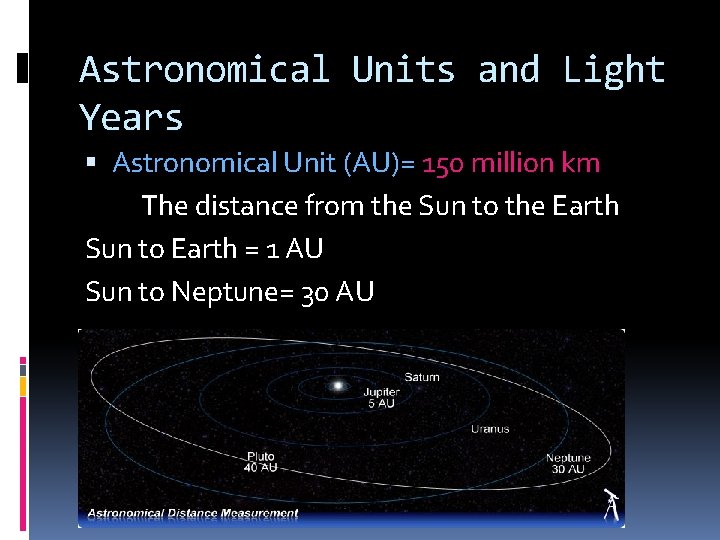
Astronomical Units and Light Years Astronomical Unit (AU)= 150 million km The distance from the Sun to the Earth Sun to Earth = 1 AU Sun to Neptune= 30 AU
The Light Year A unit of distance, not time Light Year- the distance light can travel in one earth year Light Speed- 3. 00 X 108 meters per sec (m/s) The fastest thing in the universe
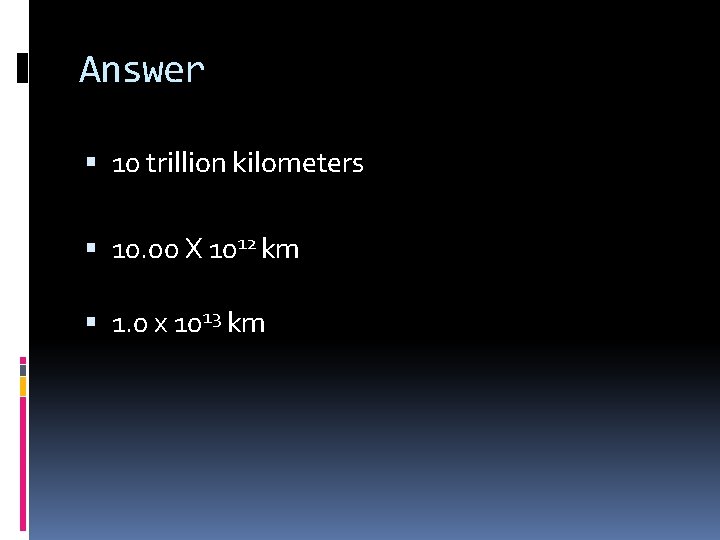
Math Time… Let’s find out what the actual distance of a light year is If we know light goes 30000 m/s (3. 00 x 108) And A light year is how far light goes in a year Find the distance of a light year in km…
Answer 10 trillion kilometers 10. 00 X 1012 km 1. 0 x 1013 km
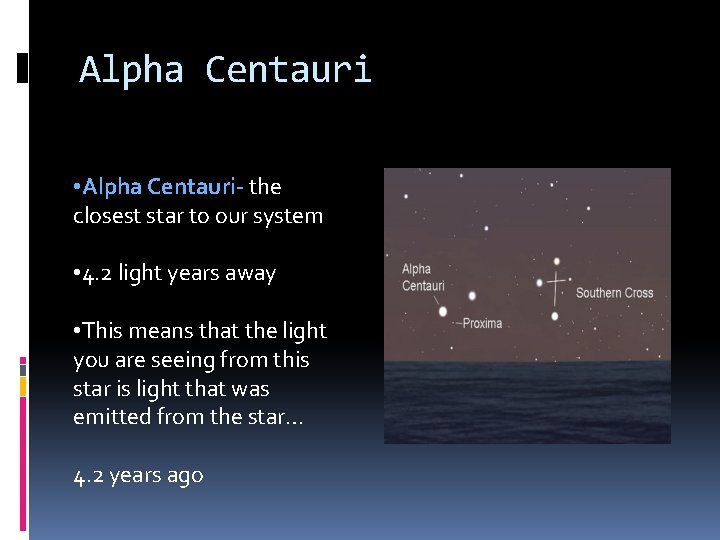
Alpha Centauri • Alpha Centauri- the closest star to our system • 4. 2 light years away • This means that the light you are seeing from this star is light that was emitted from the star… 4. 2 years ago
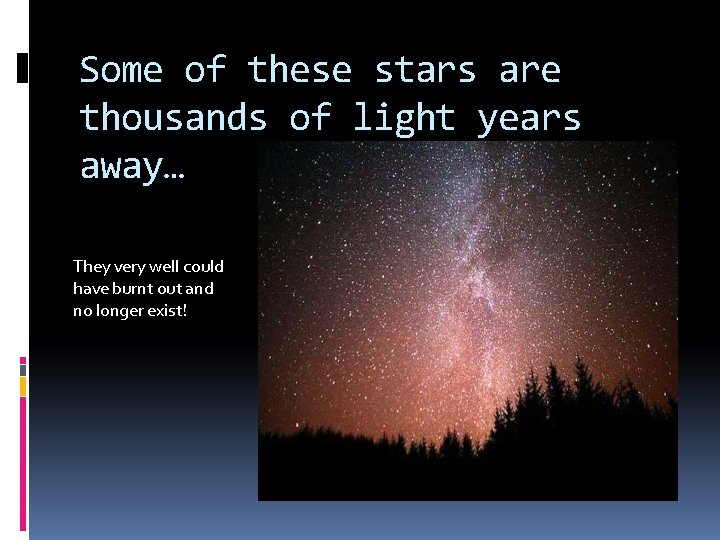
Some of these stars are thousands of light years away… They very well could have burnt out and no longer exist!
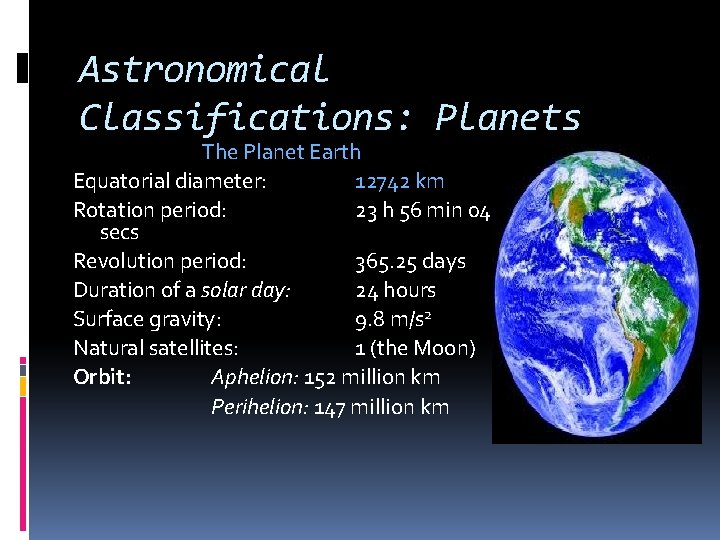
Astronomical Classifications: Planets The Planet Earth Equatorial diameter: 12742 km Rotation period: 23 h 56 min 04 secs Revolution period: 365. 25 days Duration of a solar day: 24 hours Surface gravity: 9. 8 m/s 2 Natural satellites: 1 (the Moon) Orbit: Aphelion: 152 million km Perihelion: 147 million km
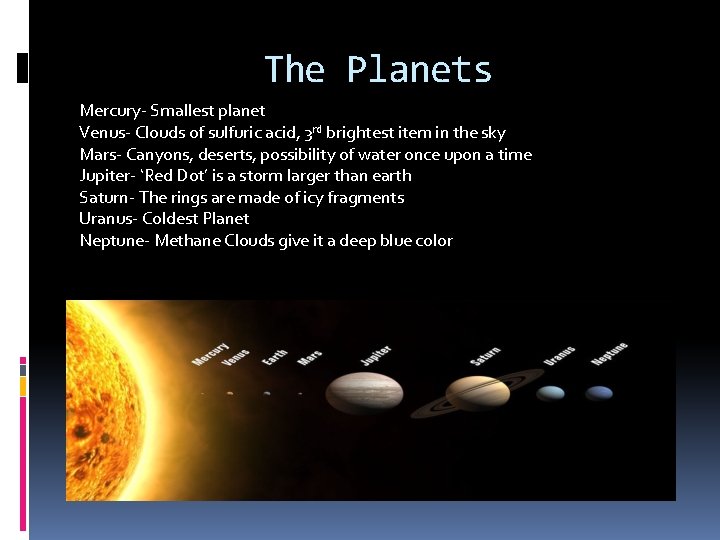
The Planets Mercury- Smallest planet Venus- Clouds of sulfuric acid, 3 rd brightest item in the sky Mars- Canyons, deserts, possibility of water once upon a time Jupiter- ‘Red Dot’ is a storm larger than earth Saturn- The rings are made of icy fragments Uranus- Coldest Planet Neptune- Methane Clouds give it a deep blue color
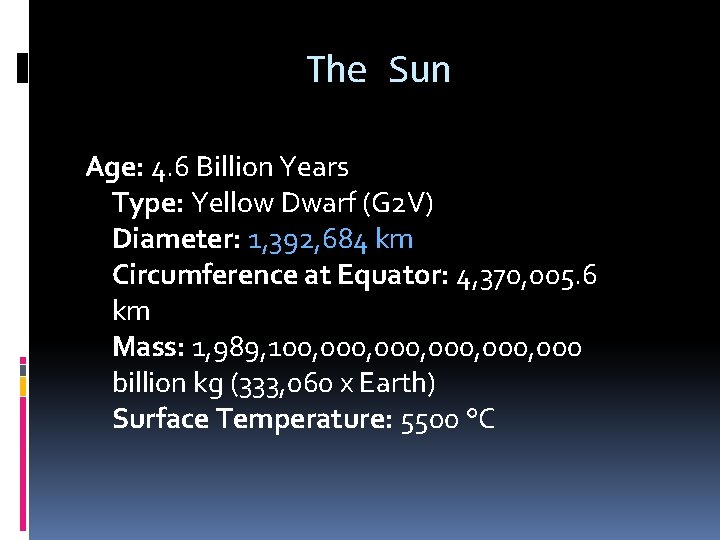
The Sun Age: 4. 6 Billion Years Type: Yellow Dwarf (G 2 V) Diameter: 1, 392, 684 km Circumference at Equator: 4, 370, 005. 6 km Mass: 1, 989, 100, 000, 000 billion kg (333, 060 x Earth) Surface Temperature: 5500 °C
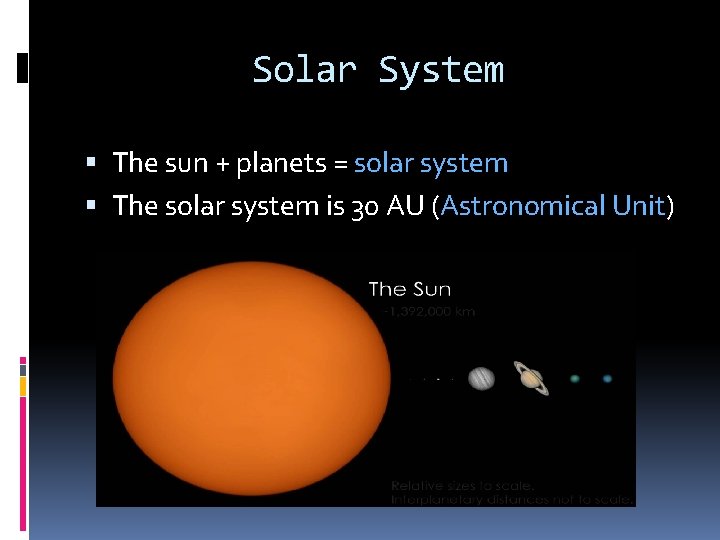
Solar System The sun + planets = solar system The solar system is 30 AU (Astronomical Unit)
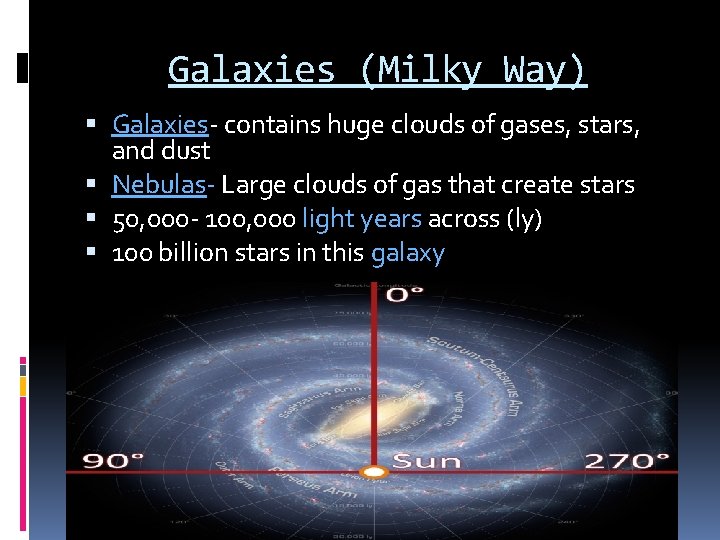
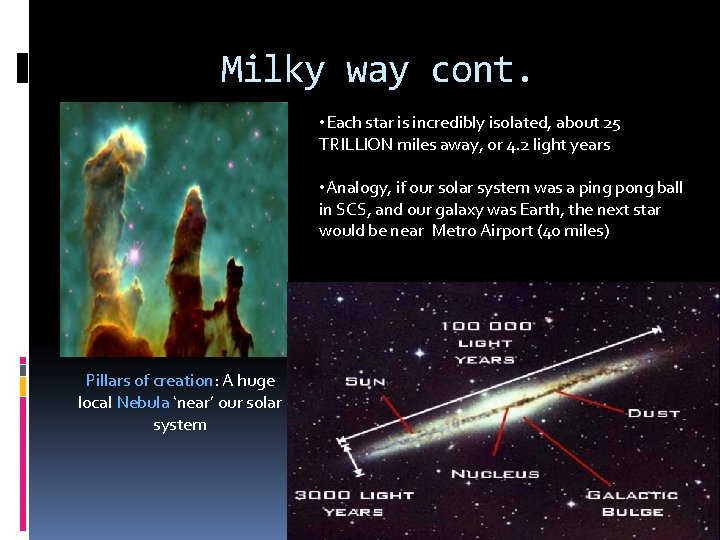
Galaxies (Milky Way) Galaxies- contains huge clouds of gases, stars, and dust Nebulas- Large clouds of gas that create stars 50, 000 - 100, 000 light years across (ly) 100 billion stars in this galaxy
Milky way cont. • Each star is incredibly isolated, about 25 TRILLION miles away, or 4. 2 light years • Analogy, if our solar system was a ping pong ball in SCS, and our galaxy was Earth, the next star would be near Metro Airport (40 miles) Pillars of creation: A huge local Nebula ‘near’ our solar system
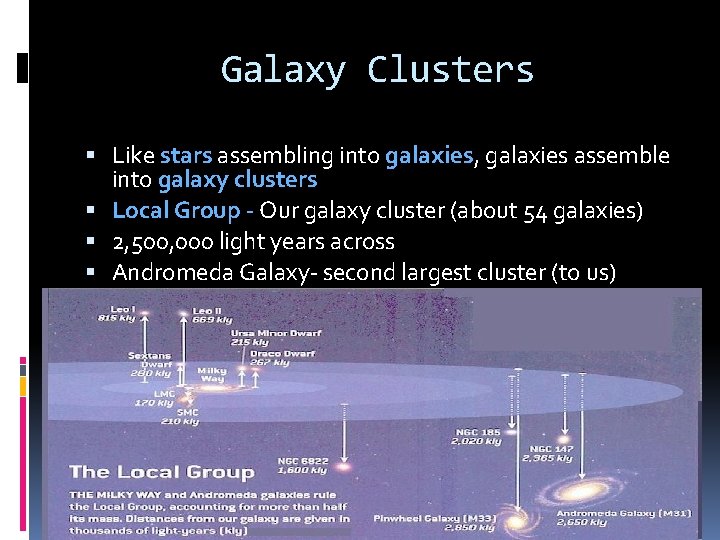
Galaxy Clusters Like stars assembling into galaxies, galaxies assemble into galaxy clusters Local Group - Our galaxy cluster (about 54 galaxies) 2, 500, 000 light years across Andromeda Galaxy- second largest cluster (to us)
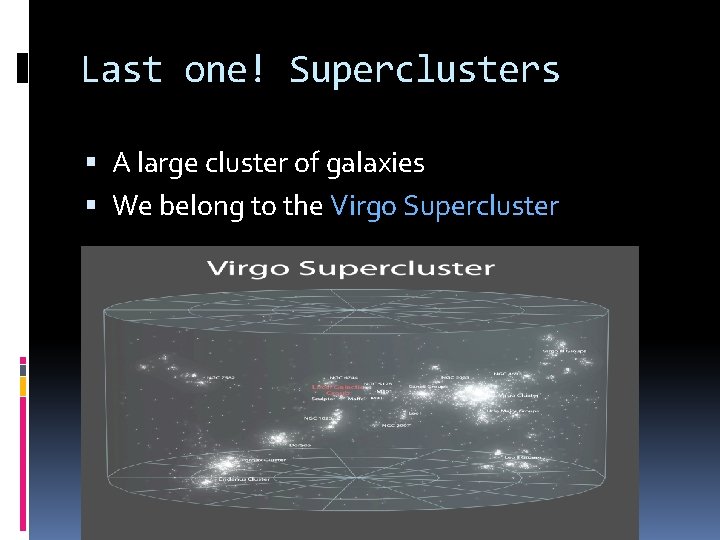
Last one! Superclusters A large cluster of galaxies We belong to the Virgo Supercluster
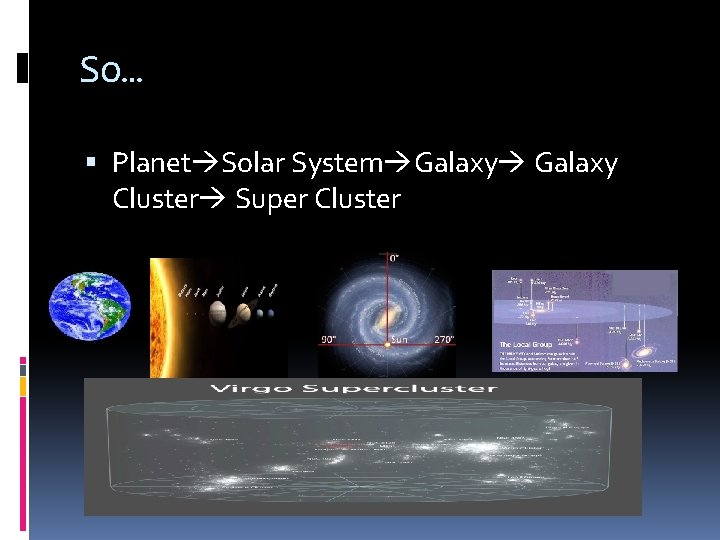
So… Planet Solar System Galaxy Cluster Super Cluster
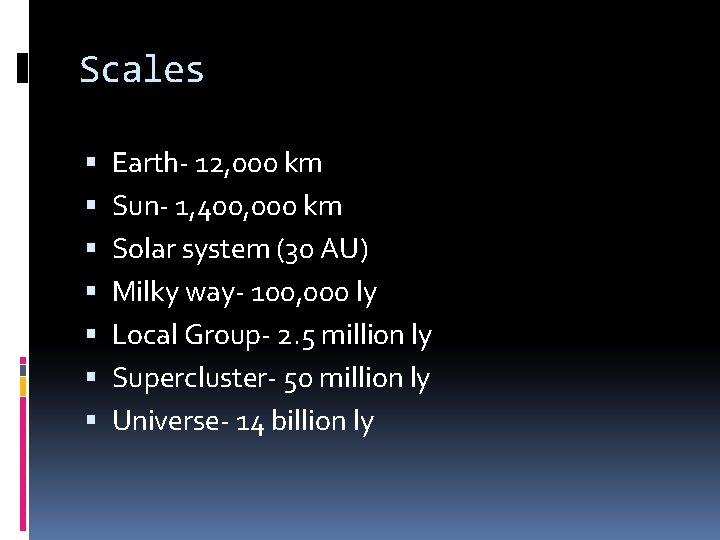
Scales Earth- 12, 000 km Sun- 1, 400, 000 km Solar system (30 AU) Milky way- 100, 000 ly Local Group- 2. 5 million ly Supercluster- 50 million ly Universe- 14 billion ly
https: //www. youtube. com/watc h? v=3 bmb 0 YE 9 VGM
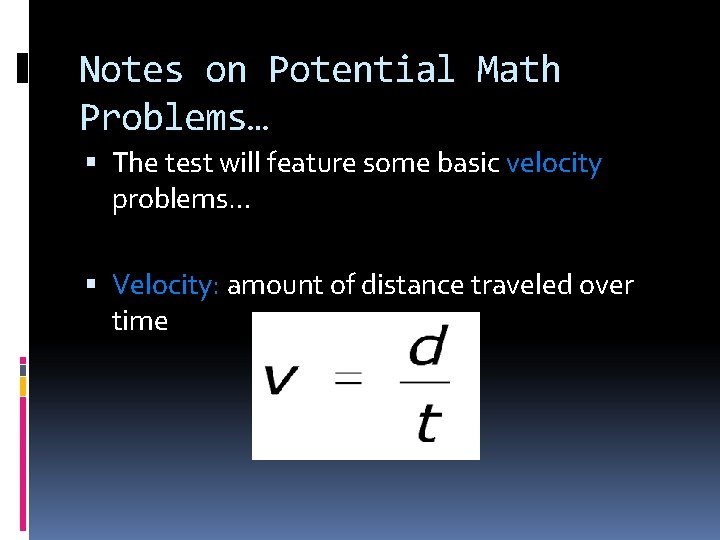
Notes on Potential Math Problems… The test will feature some basic velocity problems… Velocity: amount of distance traveled over time
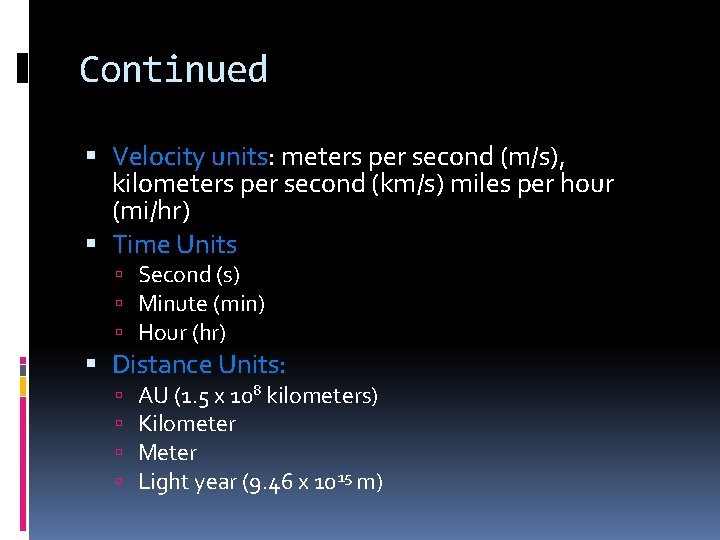
Continued Velocity units: meters per second (m/s), kilometers per second (km/s) miles per hour (mi/hr) Time Units Second (s) Minute (min) Hour (hr) Distance Units: AU (1. 5 x 10⁸ kilometers) Kilometer Meter Light year (9. 46 x 1015 m)
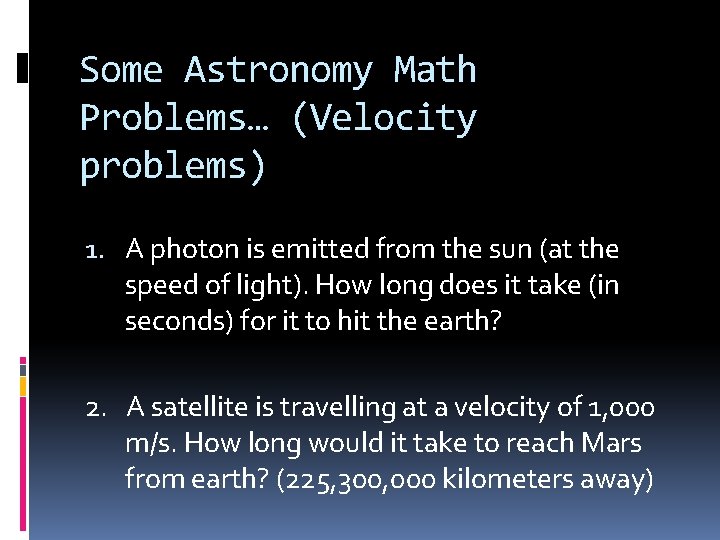
Some Astronomy Math Problems… (Velocity problems) 1. A photon is emitted from the sun (at the speed of light). How long does it take (in seconds) for it to hit the earth? 2. A satellite is travelling at a velocity of 1, 000 m/s. How long would it take to reach Mars from earth? (225, 300, 000 kilometers away)
https: //www. youtube. com/watc h? v=F 23 ne. XH_yo. Q