
COMMON ANCESTRY 22620 Standard SEP Engaging in Argument
- Slides: 13
COMMON ANCESTRY 2/26/20
Standard: SEP: Engaging in Argument from evidence CCC: Patterns I can… ٭ Recognize similarities and differences between four big cats. ٭ Make observations of extant organisms to be able to identify common characteristics within organisms, to show evidence of common ancestry. ٭ Create a cladogram.
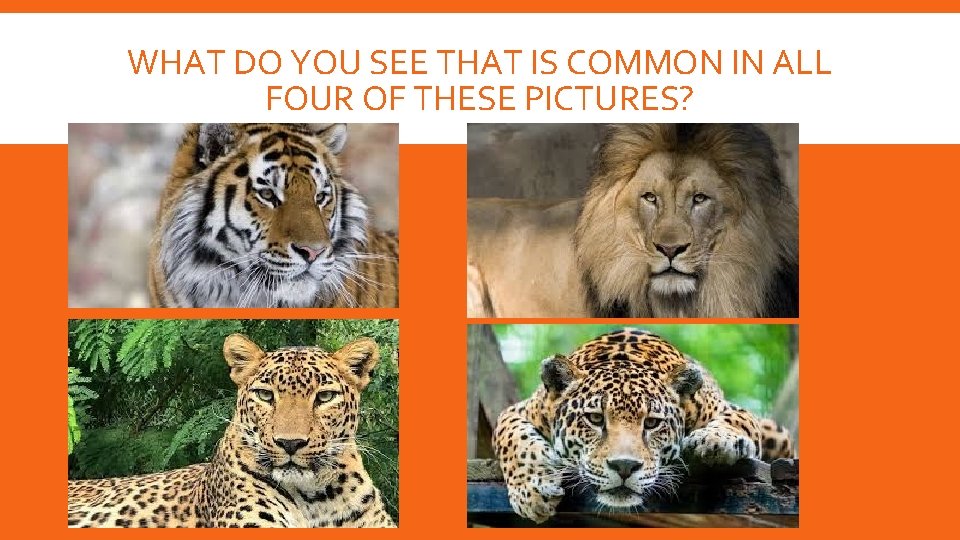
WHAT DO YOU SEE THAT IS COMMON IN ALL FOUR OF THESE PICTURES?
BIG CATS 1. What family do these organisms belong to? 2. What is one anatomical (bodily structure) feature they all have in common? 3. What environment does each one live in? 4. Compare and contrast their behaviors. 5. Could we believe that these organisms are somewhat related? How or How not?
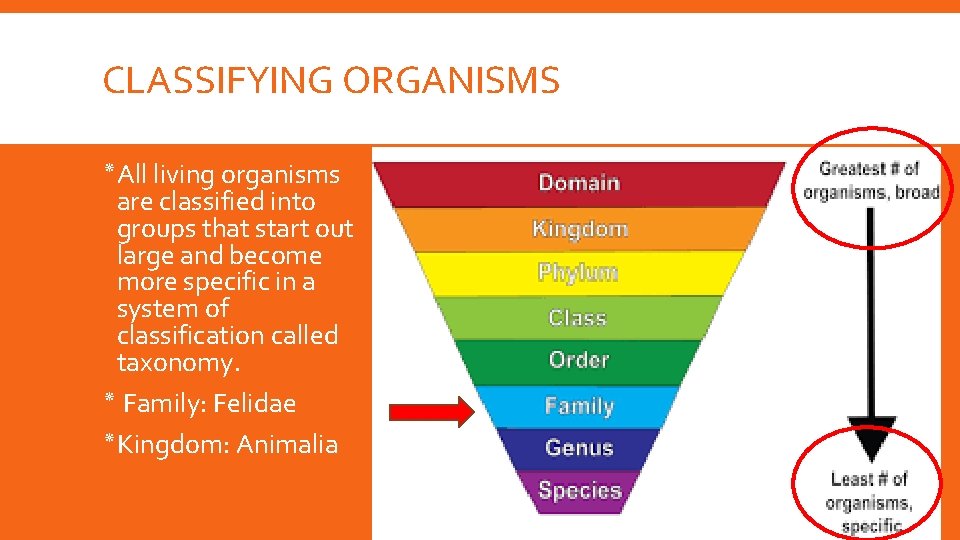
CLASSIFYING ORGANISMS ٭ All living organisms are classified into groups that start out large and become more specific in a system of classification called taxonomy. ٭ Family: Felidae ٭ Kingdom: Animalia
Standard: SEP: Engaging in Argument from evidence CCC: Patterns I can… ٭ Recognize similarities and differences between four big cats. ٭ Make observations of extant organisms to be able to identify common characteristics within organisms, to show evidence of common ancestry. ٭ Create a cladogram.
LETS OBSERVE! ٭ With your lab group make observations of the body structures of the snake, rabbit, lion, and kangaroo. ٭ Questions to consider: ٭ What similar structures do you see or know exist in these animals and what are the function of those structures? ٭ What identifiable structures or characteristics make them different or unique? ٭ Do some organisms possess structures not found in other organisms that provide them with unique abilities?
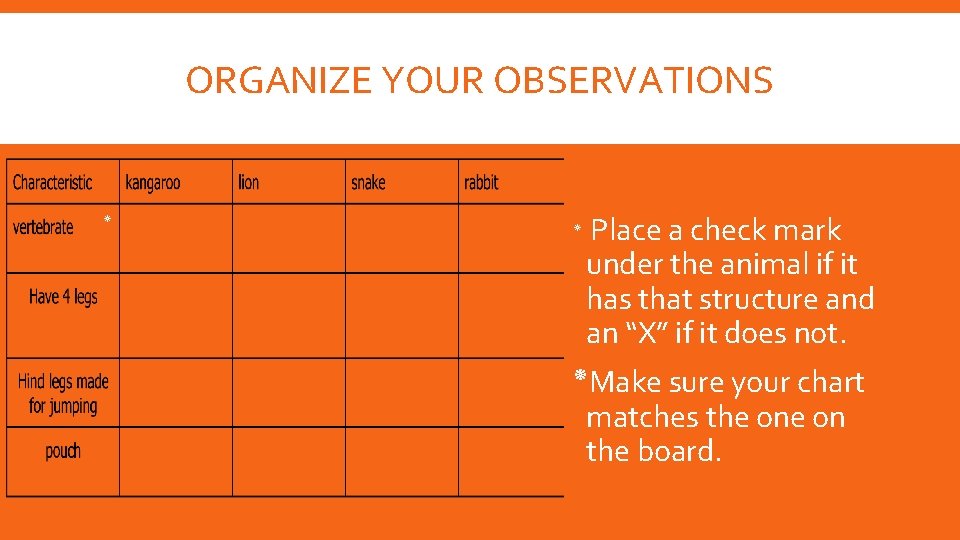
ORGANIZE YOUR OBSERVATIONS ٭ ٭ Place a check mark under the animal if it has that structure and an “X” if it does not. ٭ Make sure your chart matches the on the board.
Standard: SEP: Engaging in Argument from evidence CCC: Patterns I can… ٭ Recognize similarities and differences between four big cats. ٭ Make observations of extant organisms to be able to identify common characteristics within organisms, to show evidence of common ancestry. ٭ Create a cladogram.
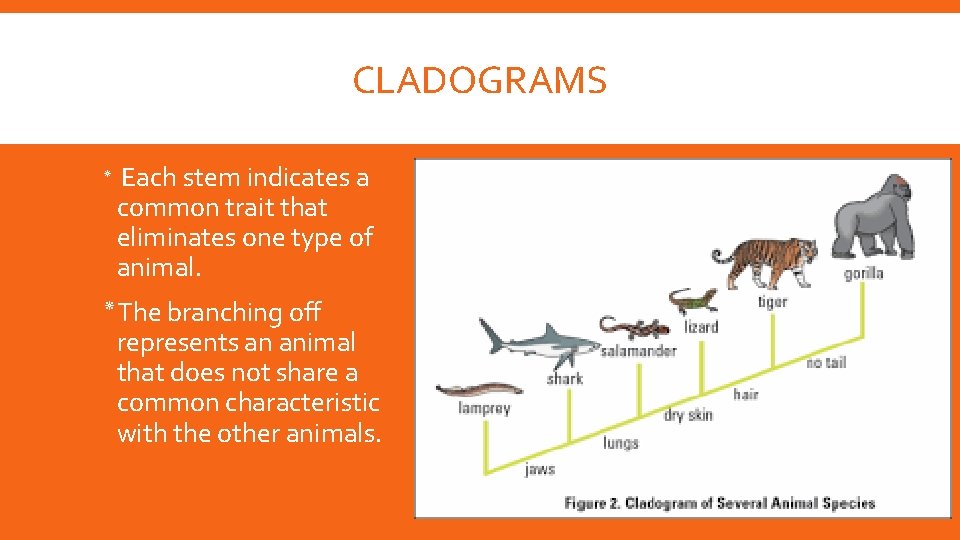
CLADOGRAMS ٭ Cladistics: a method of classification where organisms are grouped based on common ancestors. ٭ Clade: a group or organisms that evolved from a common ancestor. ٭ Biologists, paleontologists, and other scientists use these diagrams to further organize their data into a form that can be more easily interpreted analyzed for similarities and differences in groups of animals and to show common ancestry between animals.
CLADOGRAMS ٭ Each stem indicates a common trait that eliminates one type of animal. ٭ The branching off represents an animal that does not share a common characteristic with the other animals.
Standard: SEP: Engaging in Argument from evidence CCC: Patterns I can… ٭ Recognize similarities and differences between four big cats. ٭ Make observations of extant organisms to be able to identify common characteristics within organisms, to show evidence of common ancestry. ٭ Create a cladogram.
EXIT TICKET (CHOOSE A LETTER AND WRITE AN EXPLANATION) Scientists combine evidence from fossils, body structures, early development, DNA, and protein structures to. . . ? a. determine whether an organism will have gills during its early development. b. determine the evolutionary relationships among extant and extinct species. c. decide which fossils are older than others.