
Commissioning the National Organ Retrieval Service Karen Quinn







- Slides: 15
Commissioning the National Organ Retrieval Service Karen Quinn, Assistant Director, UK Commissioning
Background to National Organ Retrieval Service (NORS) A UK-wide network of dedicated Organ Retrieval Teams should be established to ensure timely, high quality organ removal from all donors • Fully staffed on-call availability 24/7 • Ability to despatch a team within an hour if required • Three hour travel to donor hospital for minimum 90% • Responsible for all equipment, perfusion fluids, drugs and documentation for retrieval
NORS Introduced The UK National Organ Retrieval Service 1 April 2010 7 Abdominal Teams 6 Cardiothoracic Teams Abdominal teams: Cardiothoracic teams: Birmingham/Cardiff Cambridge Kings, London Leeds & Manchester Birmingham Abdominal retrieval team Cardiothoracic organ retrieval team Multi-organ retrieval team Newcastle Harefield Manchester Newcastle Papworth Oxford/Royal Free, London Multi-organ team: Scotland General principle: • The closest available team to the donor hospital is designated to retrieve • The other teams will provide back-up if the closest team is already committed to retrieval elsewhere
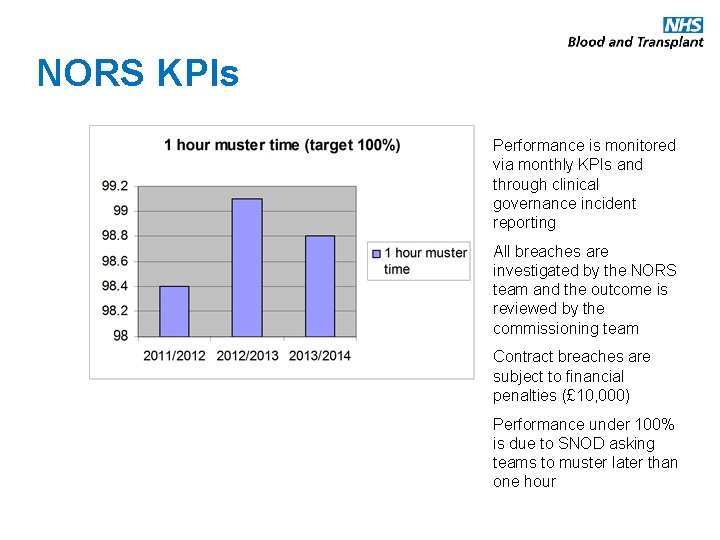
NORS KPIs Performance is monitored via monthly KPIs and through clinical governance incident reporting All breaches are investigated by the NORS team and the outcome is reviewed by the commissioning team Contract breaches are subject to financial penalties (£ 10, 000) Performance under 100% is due to SNOD asking teams to muster later than one hour
NORS KPIs Travel time should be within three hours on at least 90% of occasions Slight reduction in performance since 2011 (from 94% to 93%), likely due to increasing demand teams travelling out of zone
NORS KPIs 3 hour target introduced July 2012 Reasons for early stand-down are monitored Most common reason is at the request of the recipient surgeon (commonly due to concerns about organ quality or because donor is too stable) NORS teams are willing to wait for three hours and only stand down if the SNOD allows it
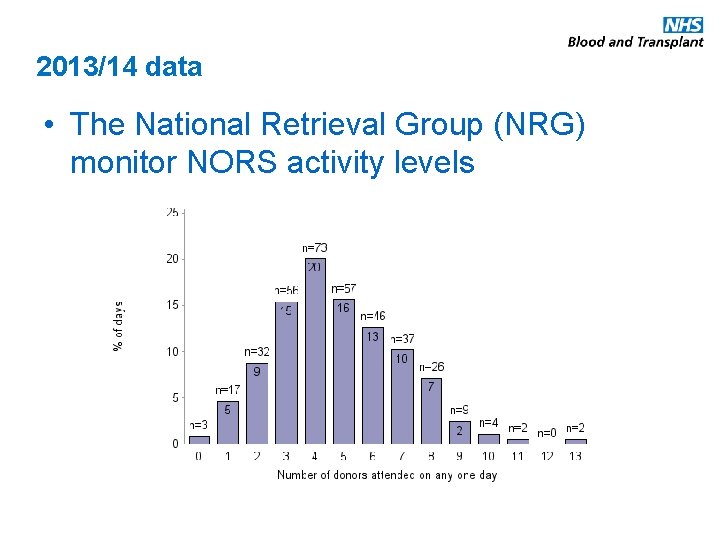
2013/14 data • The National Retrieval Group (NRG) monitor NORS activity levels
Abdominal team activity • 11 occasions when all 7 teams on call were out retrieving • Activity levels vary across the teams
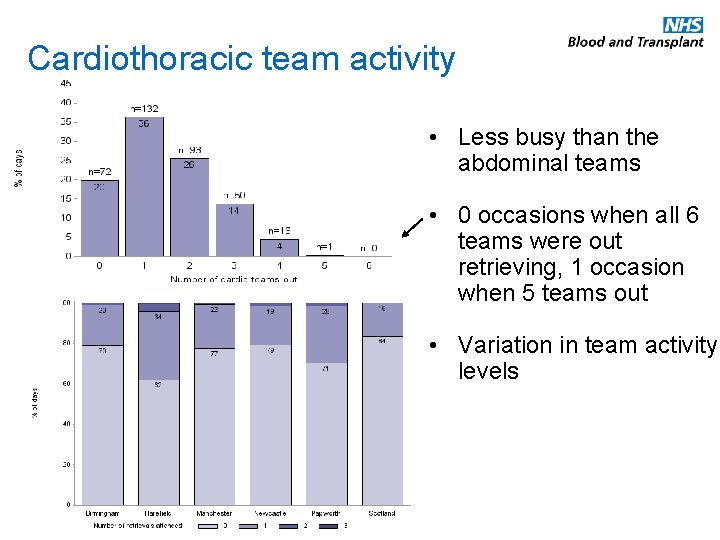
Cardiothoracic team activity • Less busy than the abdominal teams • 0 occasions when all 6 teams were out retrieving, 1 occasion when 5 teams out • Variation in team activity levels
Example of inefficient team travels • No central coordination • SNODs are responsible for organising the organ retrieval • No knowledge of activity across the rest of the country
What has worked well • Improved collaboration between NORS Teams • Achievement of one hour muster and three hour travel times • Introduction of three hour stand down times for abdominal teams • Nationally agreed perfusion protocol for abdominal teams • Introduction of a tariff for consumables
What could be better • Funding inequitable due to differing service models • Some teams more fully utilised than others • Ability to cope with future projected growth to meet TOT 2020 • Sustainability
NORS Review • NORS Review agreed by NHSBT Board Sept 2013 • Independent Chair and Project Manager appointed March 2014 • Final Report presented to NORS Review Board March 3 rd 2015 • Final report to come to NHSBT Board March 26 th 2015 • Implementation Event May 21 st 2015
Work streams • Workforce • Capacity • Commissioning • Future Service Requirements
Outcomes • Standardised model for all NORS teams • Realignment of current capacity • KPIs focused on quality • Flexibility to adapt to new ways of working • Supported by co-ordinated despatch