
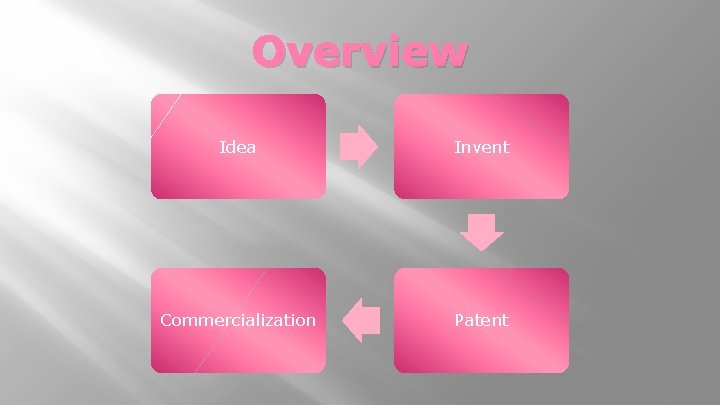
COMMERCIALIZING THE INNOVATION Overview Idea Invent Commercialization Patent

- Slides: 16
COMMERCIALIZING THE INNOVATION
Overview Idea Invent Commercialization Patent
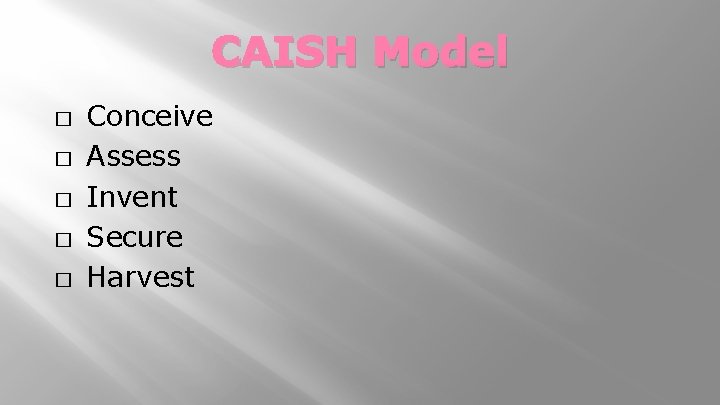
CAISH Model � � � Conceive Assess Invent Secure Harvest
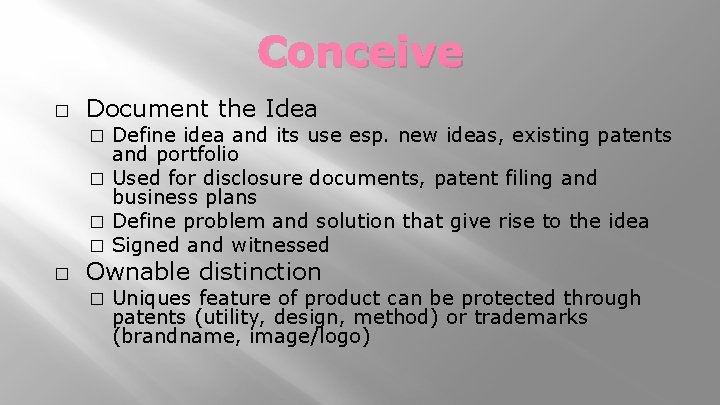
Conceive � Document the Idea Define idea and its use esp. new ideas, existing patents and portfolio � Used for disclosure documents, patent filing and business plans � Define problem and solution that give rise to the idea � Signed and witnessed � � Ownable distinction � Uniques feature of product can be protected through patents (utility, design, method) or trademarks (brandname, image/logo)
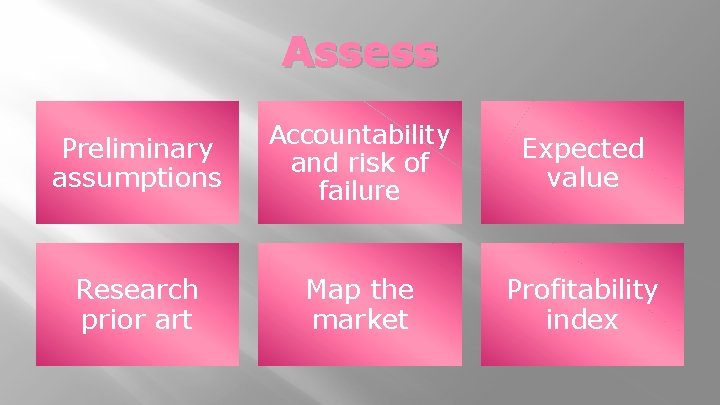
Assess Preliminary assumptions Accountability and risk of failure Expected value Research prior art Map the market Profitability index
Assess � Preliminary assumptions � � Accountability and risk of failure � � � Ball park estimates based on limited research Quick first evaluation of idea Reviewed by technical, business and operations personnel Manage estimation techniques Used by team experienced in sales, marketing, operations, finance, legal and technical Expected value � � Develop assumptions: best, worst, likelihood – example Challenge assumptions to increase volume/price, reduce costs based on historical performance of similar products or market research
Assess � Research prior art Tools for background investigation: Internet, telephone, hands-on evaluation, market research, research/trade journals, consumer publications, patent office � Keep organised records of findings � � Map the market � � Study and understand markets, substitutes, competitors New solution to existing problem? Fit user’s current behaviour? IP implications: licensing, cross-licensing, litigation, competitor action Profitability index � � Divide expected profit of a project by cost of bottleneck resources Compare with other projects
Invent � � Develop the technology Reduce it to practice Use milestones to track and manage progress based on budgets, schedules and deadlines Driven by creativity and innovation
Secure � Protect the technology – patent Where significant opportunities identified � Where potential licensees have significant operations � Where competitive products are manufactured, assembled and widely sold � � Patent law Opinion of unique and novel invention – subject to being challenged � Prevent others from making, using and selling within protected country �
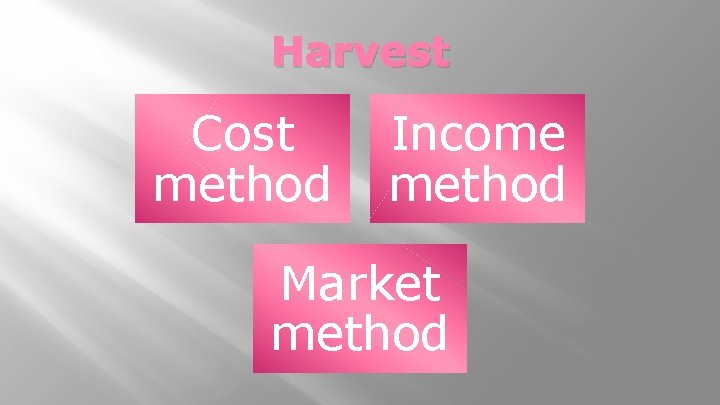
Harvest Cost method Income method Market method
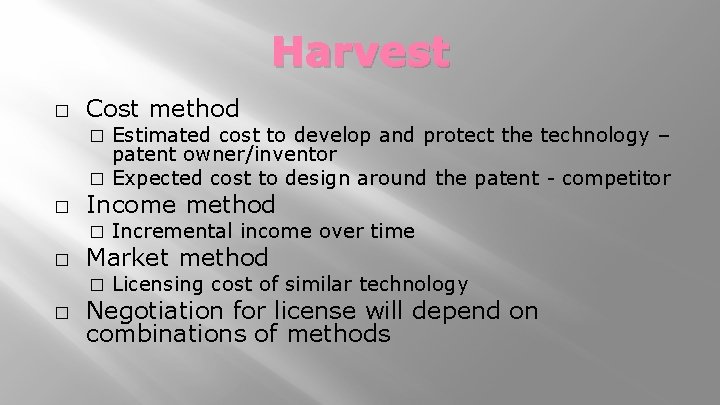
Harvest � Cost method Estimated cost to develop and protect the technology – patent owner/inventor � Expected cost to design around the patent - competitor � � Income method � � Market method � � Incremental income over time Licensing cost of similar technology Negotiation for license will depend on combinations of methods
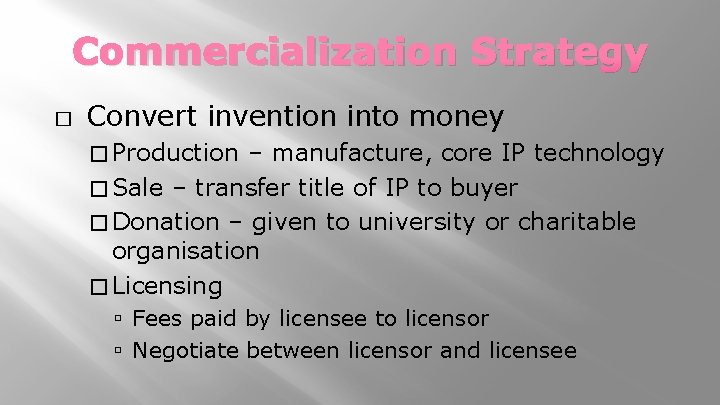
Commercialization Strategy � Convert invention into money � Production – manufacture, core IP technology � Sale – transfer title of IP to buyer � Donation – given to university or charitable organisation � Licensing Fees paid by licensee to licensor Negotiate between licensor and licensee
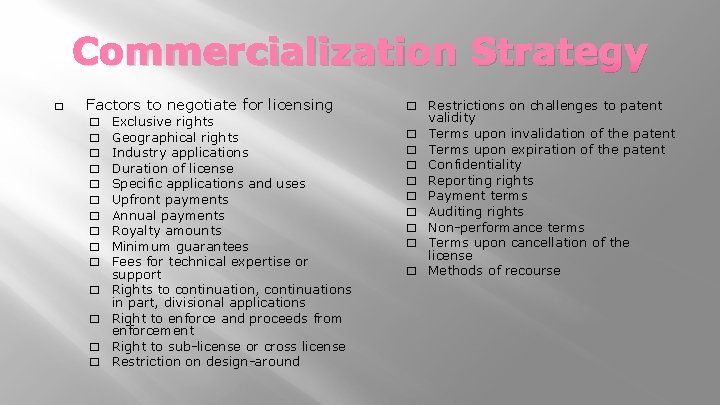
Commercialization Strategy � Factors to negotiate for licensing � � � � � � Exclusive rights Geographical rights Industry applications Duration of license Specific applications and uses Upfront payments Annual payments Royalty amounts Minimum guarantees Fees for technical expertise or support Rights to continuation, continuations in part, divisional applications Right to enforce and proceeds from enforcement Right to sub-license or cross license Restriction on design-around � Restrictions on challenges to patent validity Terms upon invalidation of the patent Terms upon expiration of the patent Confidentiality Reporting rights Payment terms Auditing rights Non-performance terms Terms upon cancellation of the license Methods of recourse
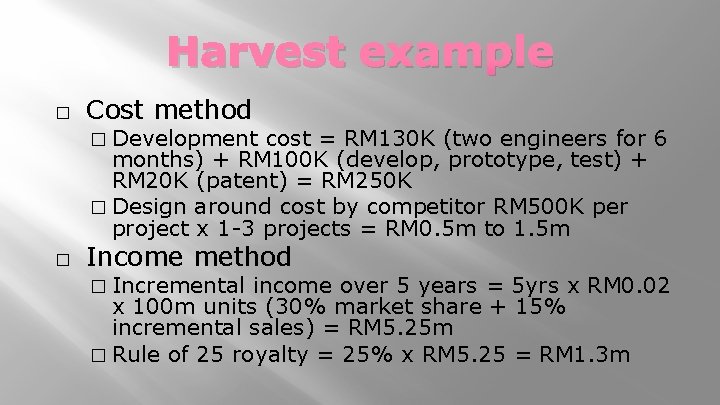
Harvest example � Cost method � Development cost = RM 130 K (two engineers for 6 months) + RM 100 K (develop, prototype, test) + RM 20 K (patent) = RM 250 K � Design around cost by competitor RM 500 K per project x 1 -3 projects = RM 0. 5 m to 1. 5 m � Income method � Incremental income over 5 years = 5 yrs x RM 0. 02 x 100 m units (30% market share + 15% incremental sales) = RM 5. 25 m � Rule of 25 royalty = 25% x RM 5. 25 = RM 1. 3 m
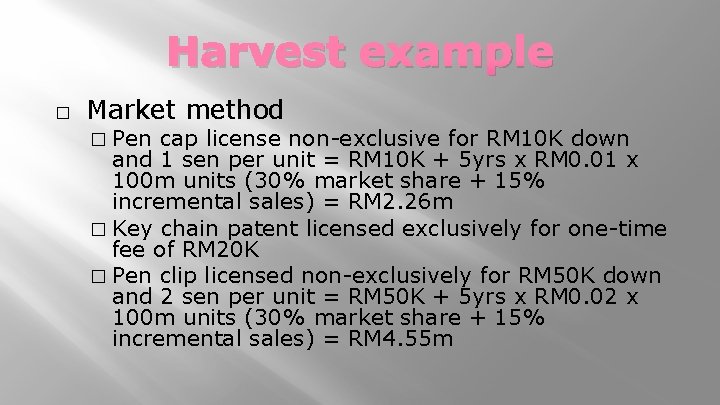
Harvest example � Market method � Pen cap license non-exclusive for RM 10 K down and 1 sen per unit = RM 10 K + 5 yrs x RM 0. 01 x 100 m units (30% market share + 15% incremental sales) = RM 2. 26 m � Key chain patent licensed exclusively for one-time fee of RM 20 K � Pen clip licensed non-exclusively for RM 50 K down and 2 sen per unit = RM 50 K + 5 yrs x RM 0. 02 x 100 m units (30% market share + 15% incremental sales) = RM 4. 55 m
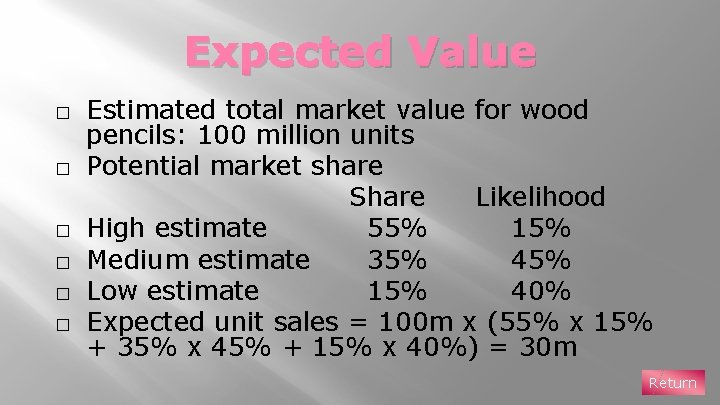
Expected Value � � � Estimated total market value for wood pencils: 100 million units Potential market share Share Likelihood High estimate 55% 15% Medium estimate 35% 45% Low estimate 15% 40% Expected unit sales = 100 m x (55% x 15% + 35% x 45% + 15% x 40%) = 30 m Return