
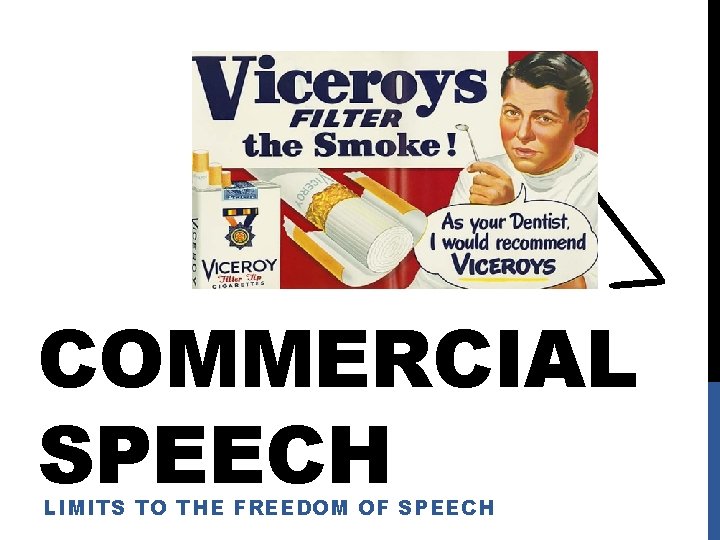
COMMERCIAL SPEECH LIMITS TO THE FREEDOM OF SPEECH

- Slides: 6
COMMERCIAL SPEECH LIMITS TO THE FREEDOM OF SPEECH
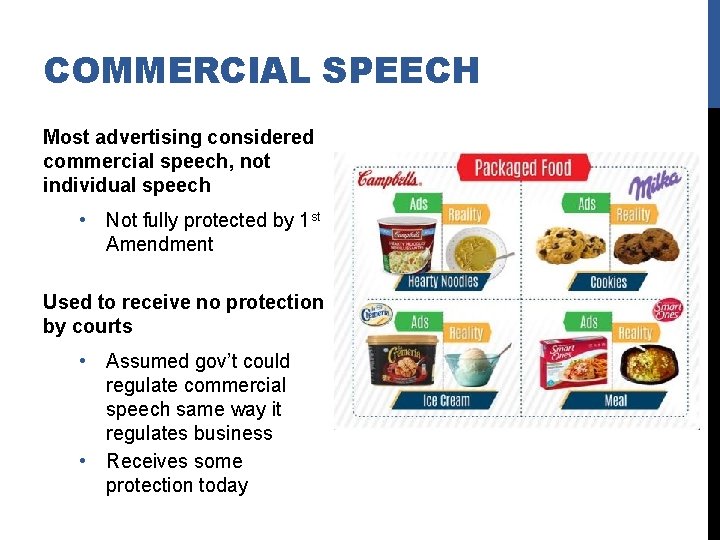
COMMERCIAL SPEECH Most advertising considered commercial speech, not individual speech • Not fully protected by 1 st Amendment Used to receive no protection by courts • Assumed gov’t could regulate commercial speech same way it regulates business • Receives some protection today
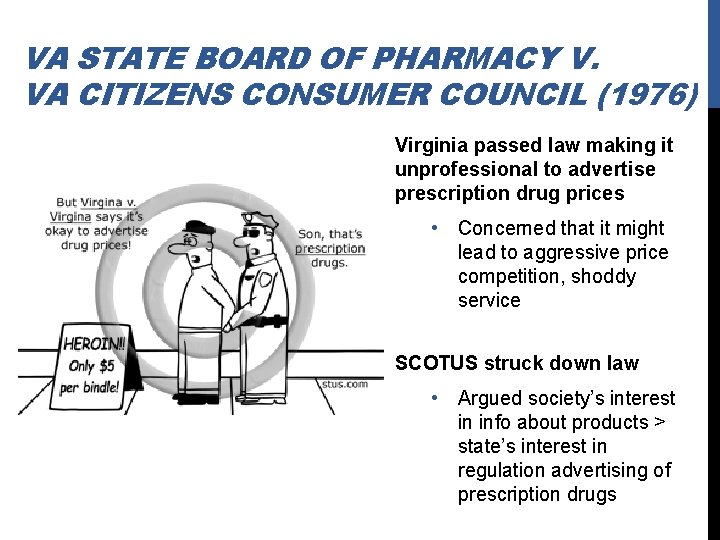
VA STATE BOARD OF PHARMACY V. VA CITIZENS CONSUMER COUNCIL (1976) Virginia passed law making it unprofessional to advertise prescription drug prices • Concerned that it might lead to aggressive price competition, shoddy service SCOTUS struck down law • Argued society’s interest in info about products > state’s interest in regulation advertising of prescription drugs
VA STATE BOARD OF PHARMACY V. VA CITIZENS CONSUMER COUNCIL (1976) “As to the particular consumer’s interest in the free flow of commercial information, that interest may be as keen, if not keener by far, than his interest in the day’s most urgent political debate… Advertising, however tasteless and excessive it sometimes may seem, is nonetheless dissemination of information as to who is producing and selling what product for what reason, and at what price. ”
GOVERNMENT & COMMERCIAL SPEECH In general, courts allow gov’t to ban commercial speech that… • • Is false or misleading Provides info about illegal products If neither exists, gov’t limited in ways to regulate Businesses allowed to exaggerate some • • Called “puffery” Disclaimers often included
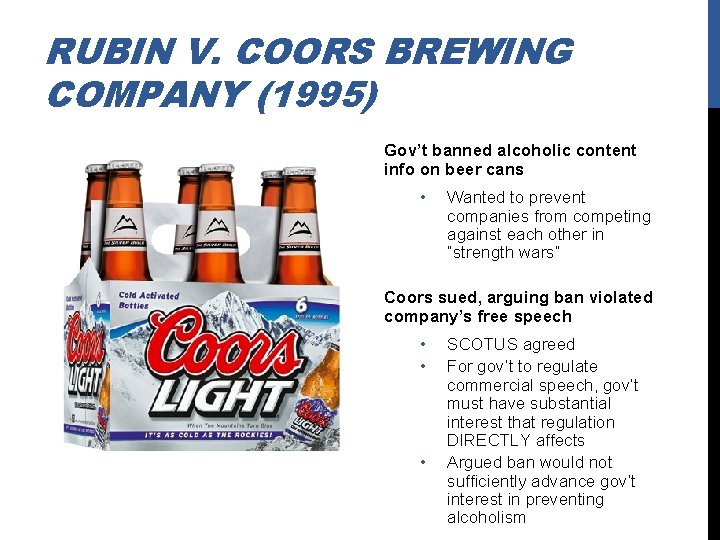
RUBIN V. COORS BREWING COMPANY (1995) Gov’t banned alcoholic content info on beer cans • Wanted to prevent companies from competing against each other in “strength wars” Coors sued, arguing ban violated company’s free speech • • • SCOTUS agreed For gov’t to regulate commercial speech, gov’t must have substantial interest that regulation DIRECTLY affects Argued ban would not sufficiently advance gov’t interest in preventing alcoholism