
Commercial Revolution and the Expansion of Colonial Claims





- Slides: 15
Commercial Revolution and the Expansion of Colonial Claims
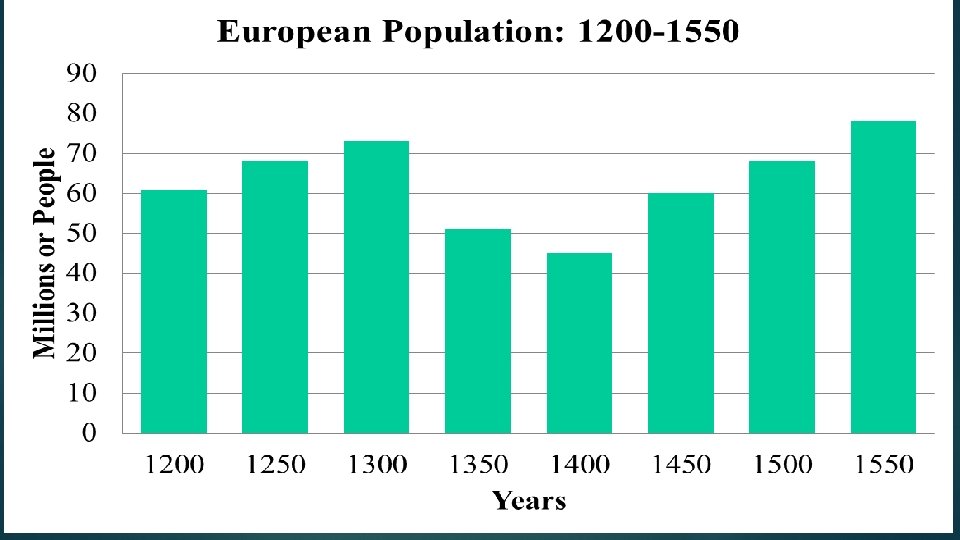
Commercial Revolution Causes European population growth recovered to its pre-Plague level: 70 million in 1500; 90 million in 1600; thus, more consumers existed. The “Price revolution”: long slow upward trend in prices States and emerging empires sought to increase their economic power. Rise As in capitalism colonial expansion continued through the 1700 s mercantilist policies grew and wealth began to trickle down to new social classes particularly the middle class.
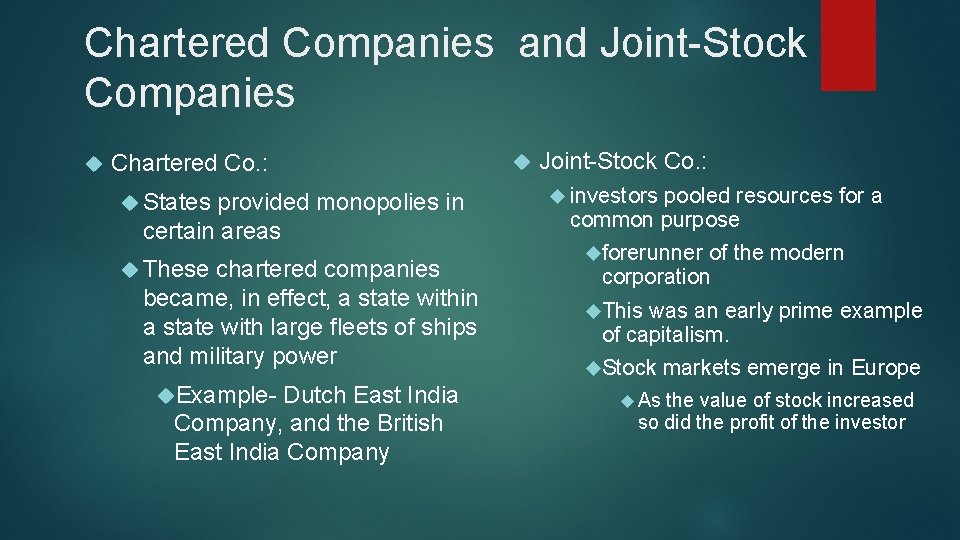
Chartered Companies and Joint-Stock Companies Chartered Co. : States provided monopolies in certain areas These chartered companies became, in effect, a state within a state with large fleets of ships and military power Example- Dutch East India Company, and the British East India Company Joint-Stock Co. : investors pooled resources for a common purpose forerunner of the modern corporation This was an early prime example of capitalism. Stock As markets emerge in Europe the value of stock increased so did the profit of the investor
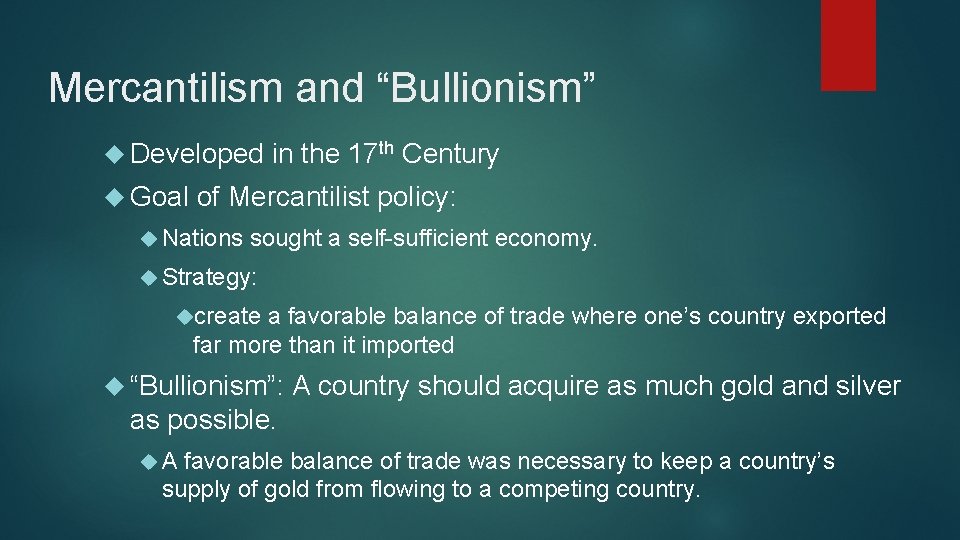
Mercantilism and “Bullionism” Developed Goal in the 17 th Century of Mercantilist policy: Nations sought a self-sufficient economy. Strategy: create a favorable balance of trade where one’s country exported far more than it imported “Bullionism”: A country should acquire as much gold and silver as possible. A favorable balance of trade was necessary to keep a country’s supply of gold from flowing to a competing country.
Effects of the Commercial Revolution Many The individuals began to move back into towns and cities emergence of more powerful nation states occurred. Wealth The was increasingly taxed for state purposes. age of exploration emerged as competing nations sought to create new empires overseas
The bourgeoisie (middle class) grew in political and economic significance. First evident in the Italian city-states during the Renaissance. (merchants) Became the most powerful class in the Netherlands. (over seas trade and joint-stock companies) In France, it grew in political power at the expense of the nobility. The gentry exerted increasing influence in English politics. The standard of living increased (e. g. greater varieties of foods, spices, utensils), especially among the upper and middle classes.
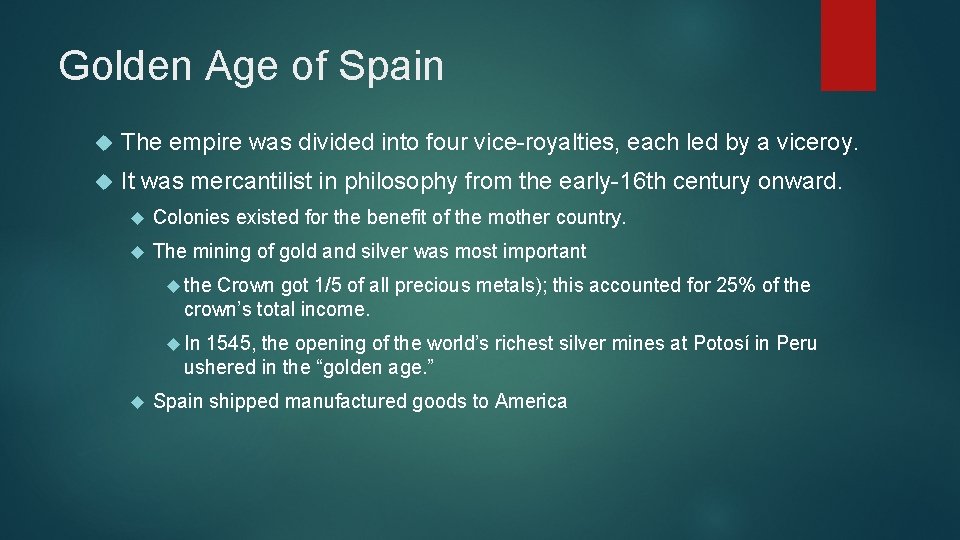
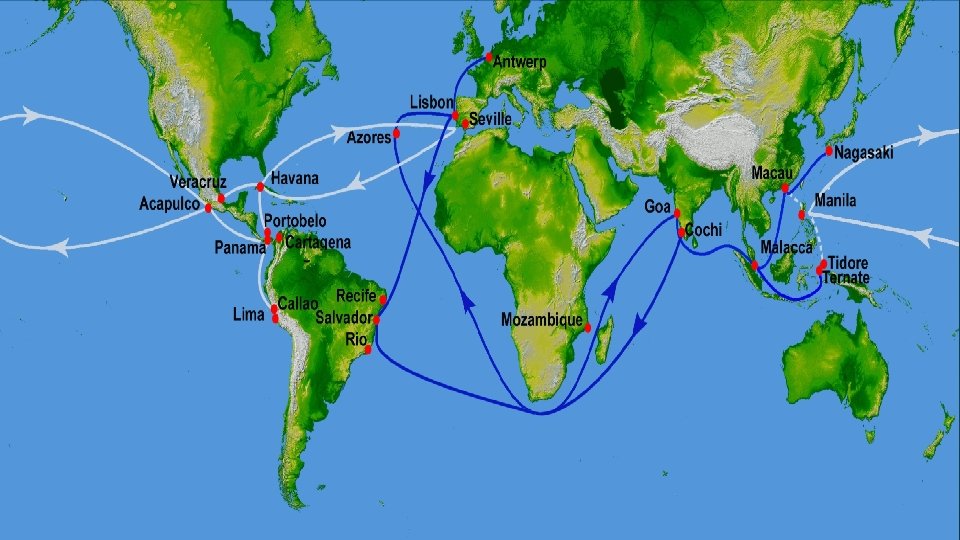
Golden Age of Spain The empire was divided into four vice-royalties, each led by a viceroy. It was mercantilist in philosophy from the early-16 th century onward. Colonies existed for the benefit of the mother country. The mining of gold and silver was most important the Crown got 1/5 of all precious metals); this accounted for 25% of the crown’s total income. In 1545, the opening of the world’s richest silver mines at Potosí in Peru ushered in the “golden age. ” Spain shipped manufactured goods to America
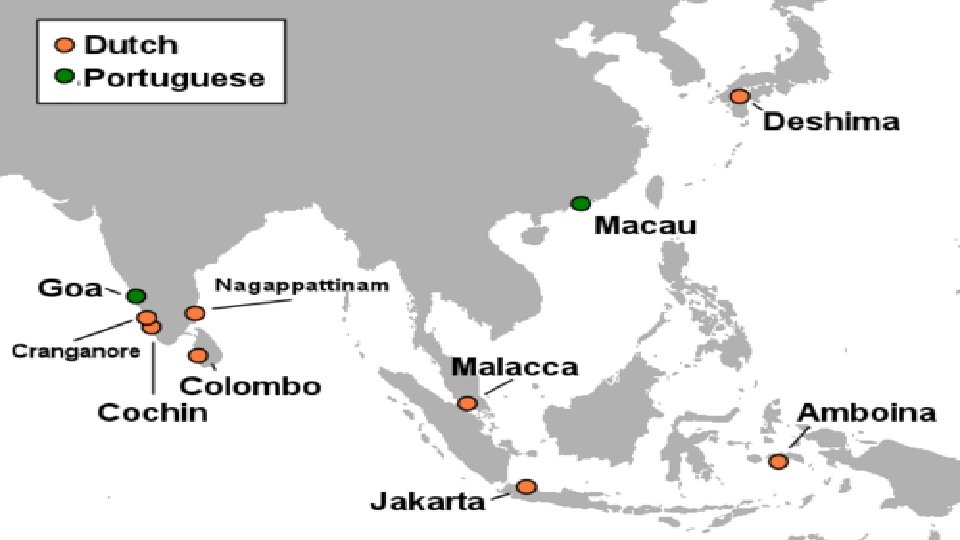
Dutch Claims (Netherlands) The Dutch East India Company (VOC) was founded in 1602 and became the major force behind Dutch imperialism. Expelled the Portuguese from Ceylon (Sri Lanka) and other Spice Islands (Indonesia). By 1650, began challenging Spain in the New World and controlled much of the American and African trade
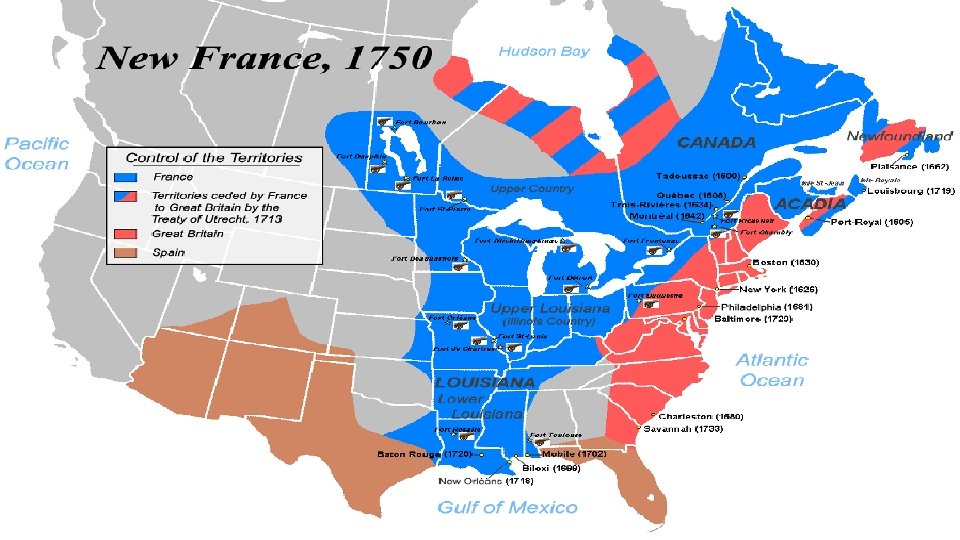
French Claims Quebec, France’s first settlement in the New World, was not founded until 1608. France eventually lay claim to over one-half of North America before being expelled in 1763. Will also have claims in the Carribean and in South Asia.
English Claims England The first permanent settlement in North America was not founded until 1607 in Jamestown (Virginia). Tens of thousands of Englishmen came to the eastern coast of North America in the 17 th and 18 th centuries Far more English came to the New World than the French, Spanish and Portuguese combined; By India 1775 2. 5 million Europeans lived in the original thirteen American colonies will come under the control of the British East India Company after the conclusion of the French and Indian War (Seven Years War) in 1763.