
Commercial Kitchen Safety Regulatory agencies we work with

- Slides: 12
Commercial Kitchen Safety
Regulatory agencies we work with…………………. • • United States Department of Agriculture (USDA) Center for Disease Control (CDC) Food and Drug Administration (FDA) United States Health Service (USHS) National Restaurant Association (NRA) New York State Department of Agriculture and Markets (NYSDAM) Oneida County Department of Health (OCDH) The National Restaurant Association is the largest foodservice trade association in the world, representing and advocating on behalf of more than 500, 000 restaurant businesses. The mission is to serve members by advancing and protecting America’s restaurant and foodservice industry. NRA develops and delivers the most current and respected safety training certification programs across the country for all who are part of the food service industry. These programs cover topics such as disease control, crosscontamination prevention, safe food handling and storage and employee training to ensure the safety of the food that is served to the public in all commercial environments where food is sold and served.
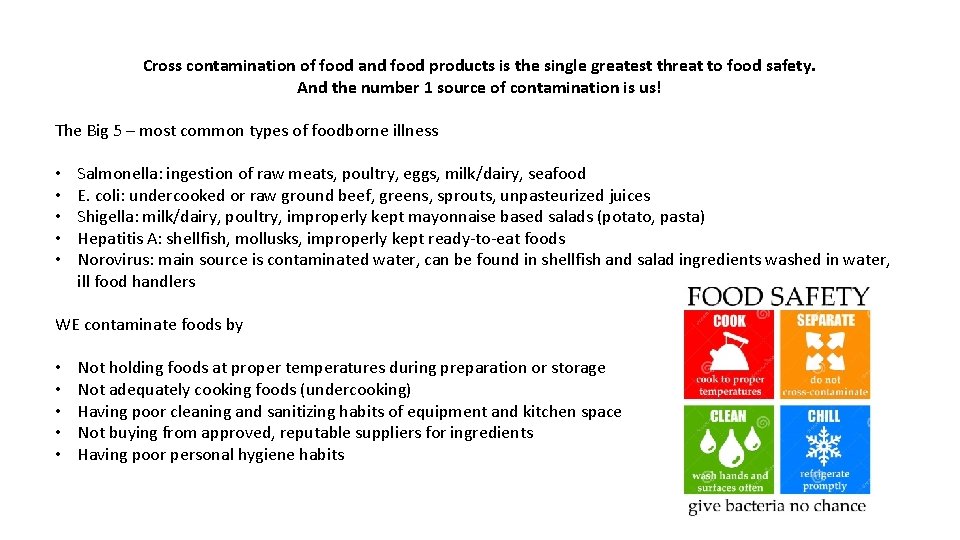
Cross contamination of food and food products is the single greatest threat to food safety. And the number 1 source of contamination is us! The Big 5 – most common types of foodborne illness • • • Salmonella: ingestion of raw meats, poultry, eggs, milk/dairy, seafood E. coli: undercooked or raw ground beef, greens, sprouts, unpasteurized juices Shigella: milk/dairy, poultry, improperly kept mayonnaise based salads (potato, pasta) Hepatitis A: shellfish, mollusks, improperly kept ready-to-eat foods Norovirus: main source is contaminated water, can be found in shellfish and salad ingredients washed in water, ill food handlers WE contaminate foods by • • • Not holding foods at proper temperatures during preparation or storage Not adequately cooking foods (undercooking) Having poor cleaning and sanitizing habits of equipment and kitchen space Not buying from approved, reputable suppliers for ingredients Having poor personal hygiene habits
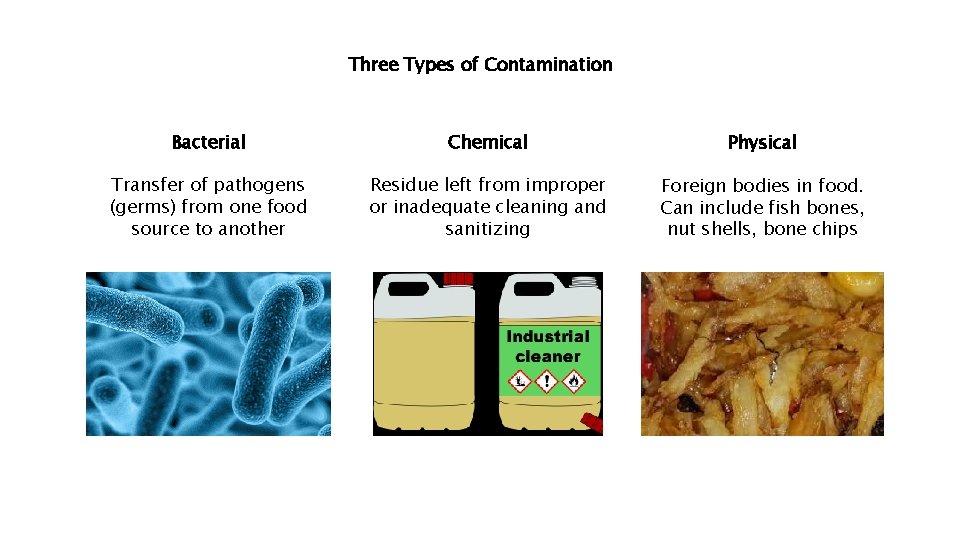
Three Types of Contamination Bacterial Chemical Physical Transfer of pathogens (germs) from one food source to another Residue left from improper or inadequate cleaning and sanitizing Foreign bodies in food. Can include fish bones, nut shells, bone chips
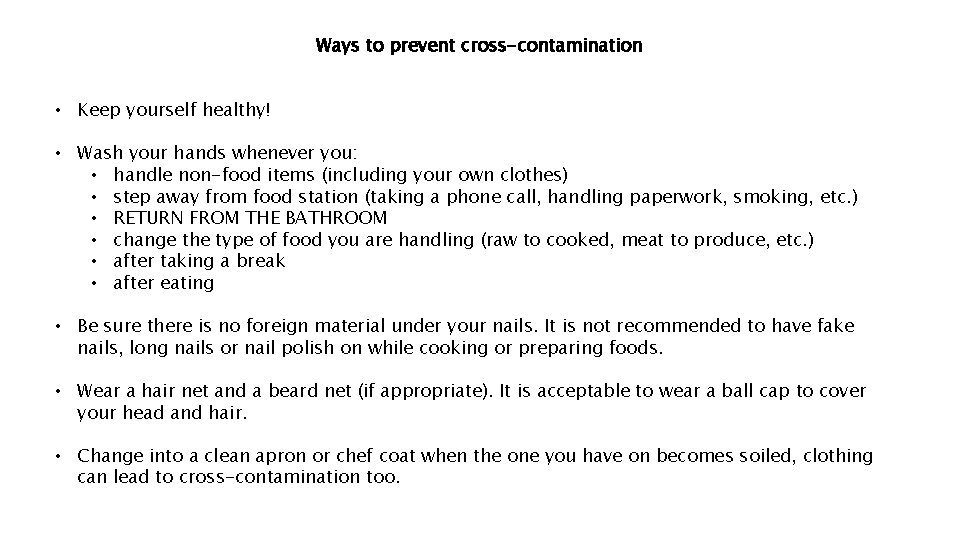
Ways to prevent cross-contamination • Keep yourself healthy! • Wash your hands whenever you: • handle non-food items (including your own clothes) • step away from food station (taking a phone call, handling paperwork, smoking, etc. ) • RETURN FROM THE BATHROOM • change the type of food you are handling (raw to cooked, meat to produce, etc. ) • after taking a break • after eating • Be sure there is no foreign material under your nails. It is not recommended to have fake nails, long nails or nail polish on while cooking or preparing foods. • Wear a hair net and a beard net (if appropriate). It is acceptable to wear a ball cap to cover your head and hair. • Change into a clean apron or chef coat when the one you have on becomes soiled, clothing can lead to cross-contamination too.
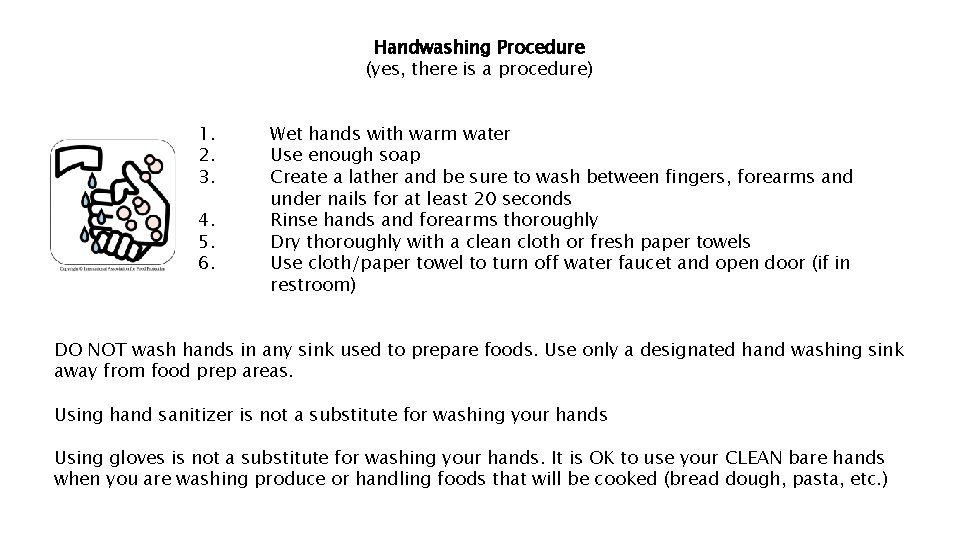
Handwashing Procedure (yes, there is a procedure) 1. 2. 3. 4. 5. 6. Wet hands with warm water Use enough soap Create a lather and be sure to wash between fingers, forearms and under nails for at least 20 seconds Rinse hands and forearms thoroughly Dry thoroughly with a clean cloth or fresh paper towels Use cloth/paper towel to turn off water faucet and open door (if in restroom) DO NOT wash hands in any sink used to prepare foods. Use only a designated hand washing sink away from food prep areas. Using hand sanitizer is not a substitute for washing your hands Using gloves is not a substitute for washing your hands. It is OK to use your CLEAN bare hands when you are washing produce or handling foods that will be cooked (bread dough, pasta, etc. )
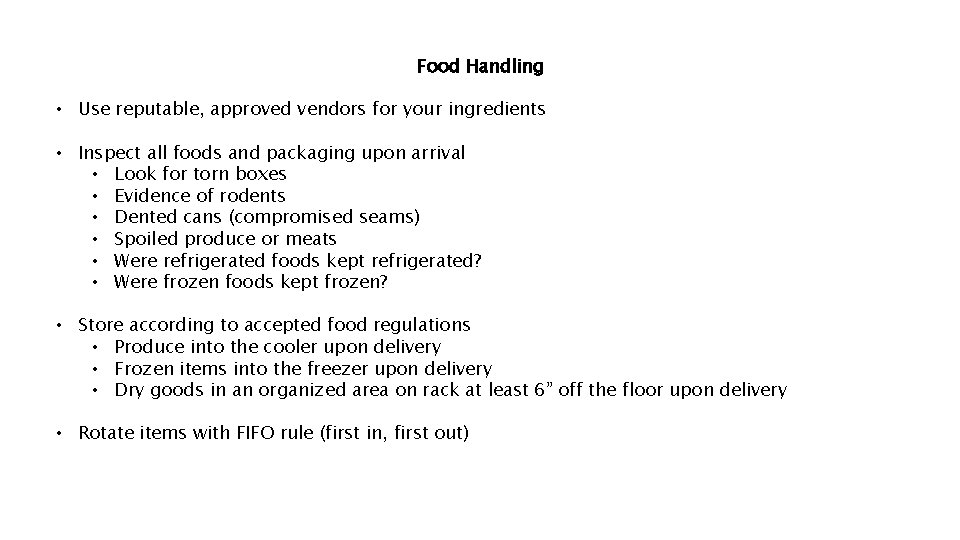
Food Handling • Use reputable, approved vendors for your ingredients • Inspect all foods and packaging upon arrival • Look for torn boxes • Evidence of rodents • Dented cans (compromised seams) • Spoiled produce or meats • Were refrigerated foods kept refrigerated? • Were frozen foods kept frozen? • Store according to accepted food regulations • Produce into the cooler upon delivery • Frozen items into the freezer upon delivery • Dry goods in an organized area on rack at least 6” off the floor upon delivery • Rotate items with FIFO rule (first in, first out)
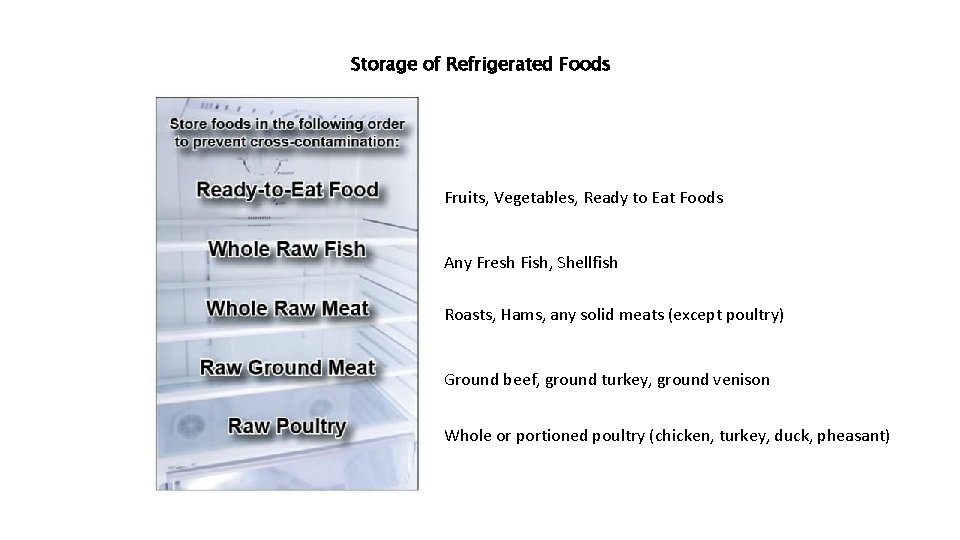
Storage of Refrigerated Foods Fruits, Vegetables, Ready to Eat Foods Any Fresh Fish, Shellfish Roasts, Hams, any solid meats (except poultry) Ground beef, ground turkey, ground venison Whole or portioned poultry (chicken, turkey, duck, pheasant)
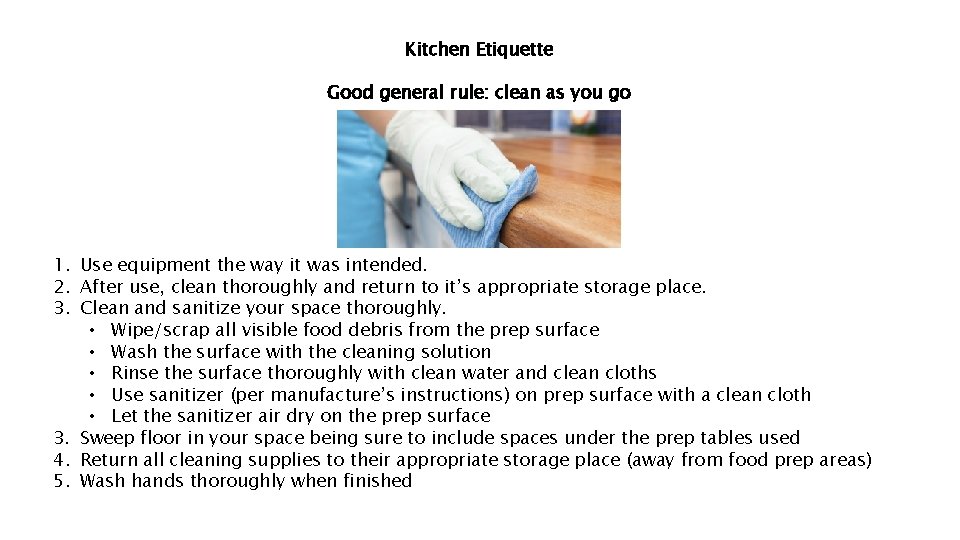
Kitchen Etiquette Good general rule: clean as you go 1. Use equipment the way it was intended. 2. After use, clean thoroughly and return to it’s appropriate storage place. 3. Clean and sanitize your space thoroughly. • Wipe/scrap all visible food debris from the prep surface • Wash the surface with the cleaning solution • Rinse the surface thoroughly with clean water and clean cloths • Use sanitizer (per manufacture’s instructions) on prep surface with a clean cloth • Let the sanitizer air dry on the prep surface 3. Sweep floor in your space being sure to include spaces under the prep tables used 4. Return all cleaning supplies to their appropriate storage place (away from food prep areas) 5. Wash hands thoroughly when finished
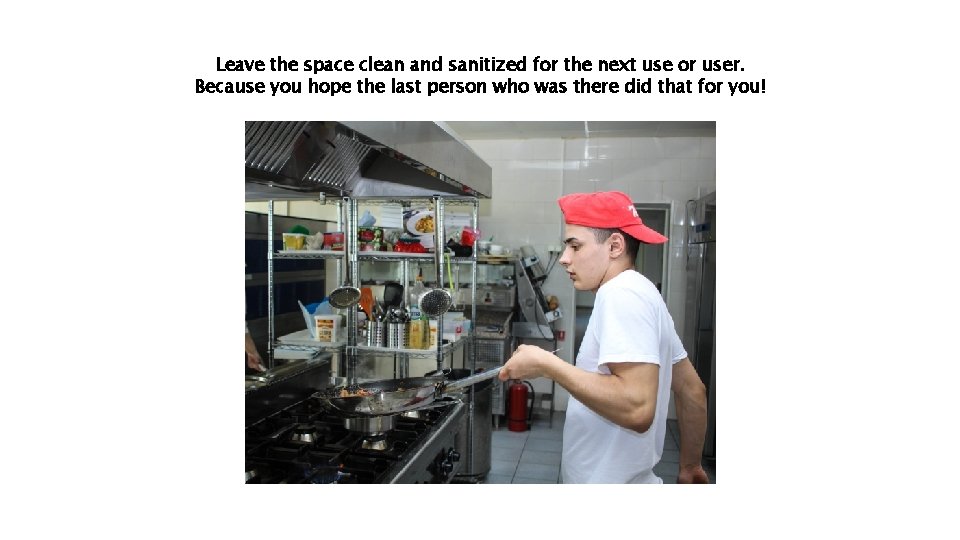
Leave the space clean and sanitized for the next use or user. Because you hope the last person who was there did that for you!
Resources: Cornell Food Venture Center Dropbox (GOLD!): https: //cornell. box. com/v/NECFEGuide New York State Department of Agriculture and Markets: https: //www. agriculture. ny. gov/FS/consumer/FSI-898 D_Home_Processor. pdf Cornell Food Venture Center: https: //cfvc. foodscience. cals. cornell. edu/ Nelson Farms: https: //nelsonfarms. org/
Beth Irons Oneida County Public Market Manager, Farm & Food Business Incubator Kitchen Manager Cornell Cooperative Extension Oneida County 121 Second Street Oriskany, New York 13424 315 -736 -3394, ext. 103 315 -798 -3639 egi 3@cornell. edu info@oneidacountymarket. com www. oneidacountymarket. com