
Commercial aspects of regulation Peter Lundy MSc DIC
- Slides: 42
Commercial aspects of regulation Peter Lundy MSc DIC BSc(Eng) Information and Communications Technology consultant November 2008 This project is funded by the European Union 1
Agenda 1. 2. 3. 4. Telecoms technologies Overview of competitive telecoms markets The main market players Customer service and convergence This project is funded by the European Union 2
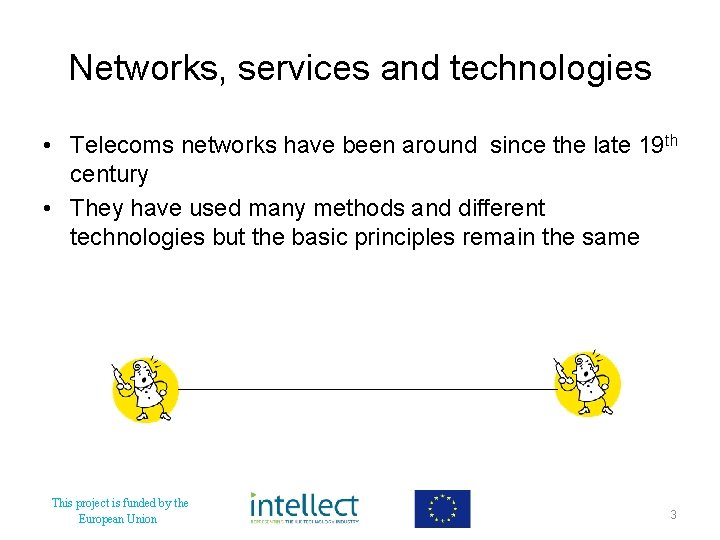
Networks, services and technologies • Telecoms networks have been around since the late 19 th century • They have used many methods and different technologies but the basic principles remain the same This project is funded by the European Union 3
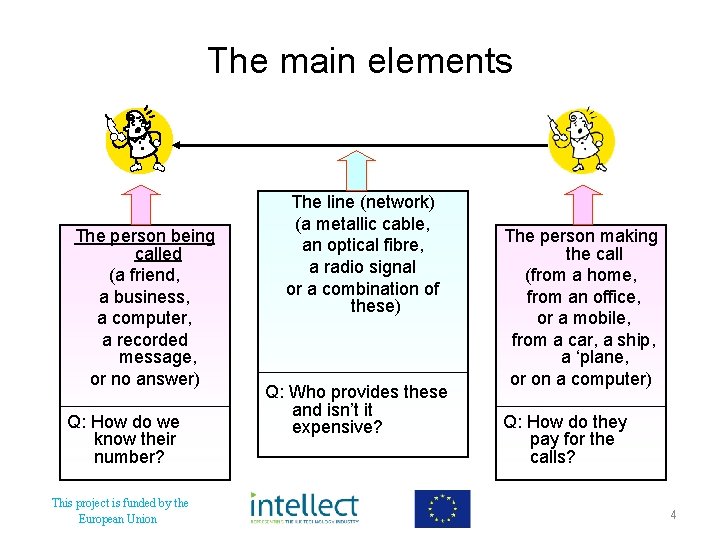
The main elements The person being called (a friend, a business, a computer, a recorded message, or no answer) Q: How do we know their number? This project is funded by the European Union The line (network) (a metallic cable, an optical fibre, a radio signal or a combination of these) Q: Who provides these and isn’t it expensive? The person making the call (from a home, from an office, or a mobile, from a car, a ship, a ‘plane, or on a computer) Q: How do they pay for the calls? 4
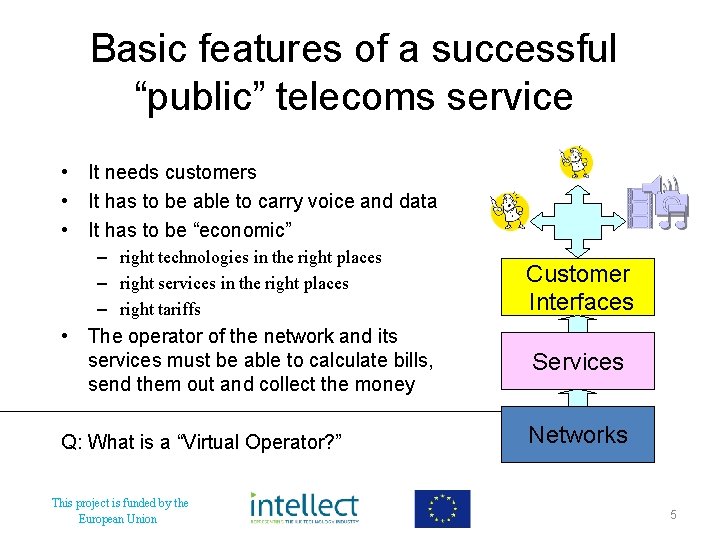
Basic features of a successful “public” telecoms service • It needs customers • It has to be able to carry voice and data • It has to be “economic” – right technologies in the right places – right services in the right places – right tariffs Customer Interfaces • The operator of the network and its services must be able to calculate bills, send them out and collect the money Services Q: What is a “Virtual Operator? ” Networks This project is funded by the European Union 5
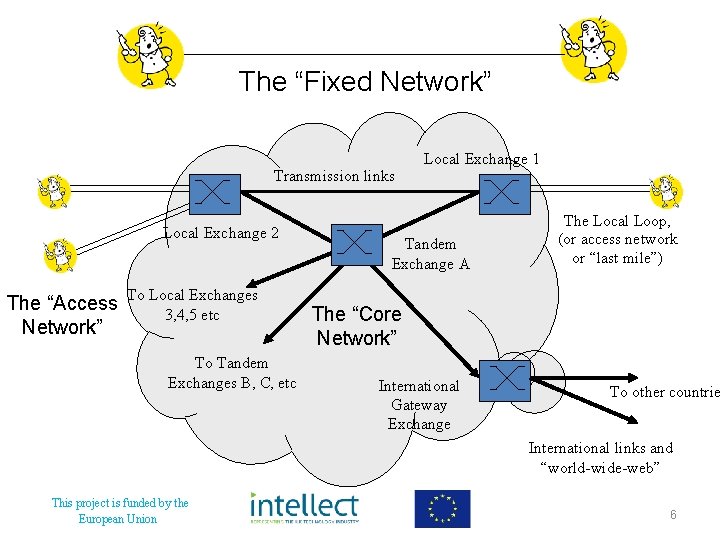
The “Fixed Network” Transmission links Local Exchange 2 The “Access Network” To Local Exchanges 3, 4, 5 etc To Tandem Exchanges B, C, etc Local Exchange 1 Tandem Exchange A The Local Loop, (or access network or “last mile”) The “Core Network” International Gateway Exchange To other countrie International links and “world-wide-web” This project is funded by the European Union 6
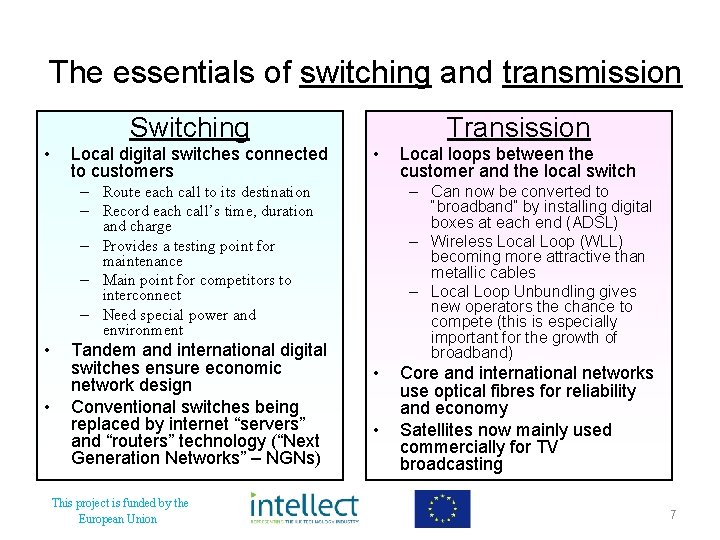
The essentials of switching and transmission Switching • Local digital switches connected to customers Transission • – Route each call to its destination – Record each call’s time, duration and charge – Provides a testing point for maintenance – Main point for competitors to interconnect – Need special power and environment • • Tandem and international digital switches ensure economic network design Conventional switches being replaced by internet “servers” and “routers” technology (“Next Generation Networks” – NGNs) This project is funded by the European Union Local loops between the customer and the local switch – Can now be converted to “broadband” by installing digital boxes at each end (ADSL) – Wireless Local Loop (WLL) becoming more attractive than metallic cables – Local Loop Unbundling gives new operators the chance to compete (this is especially important for the growth of broadband) • • Core and international networks use optical fibres for reliability and economy Satellites now mainly used commercially for TV broadcasting 7
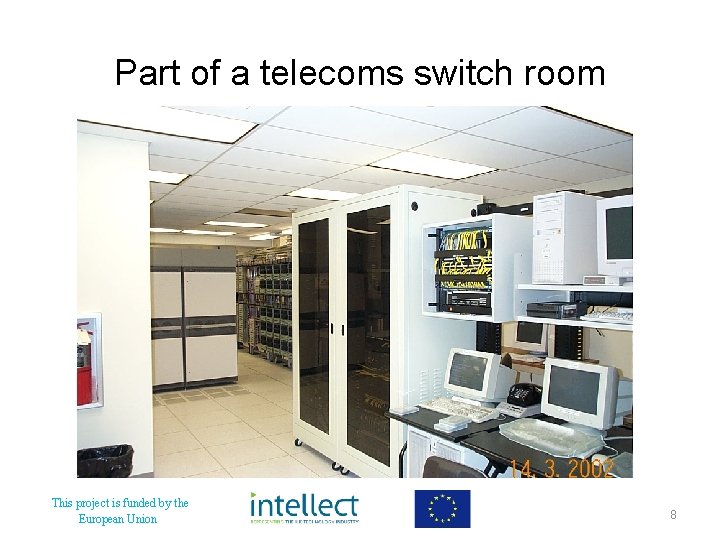
Part of a telecoms switch room This project is funded by the European Union 8
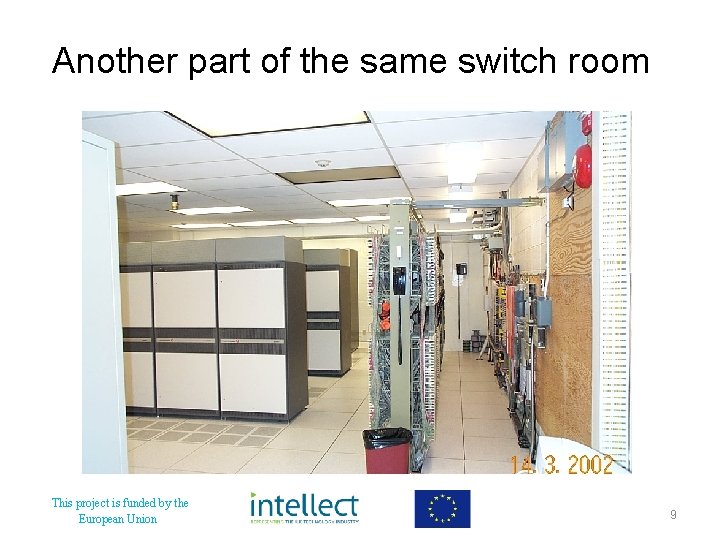
Another part of the same switch room This project is funded by the European Union 9
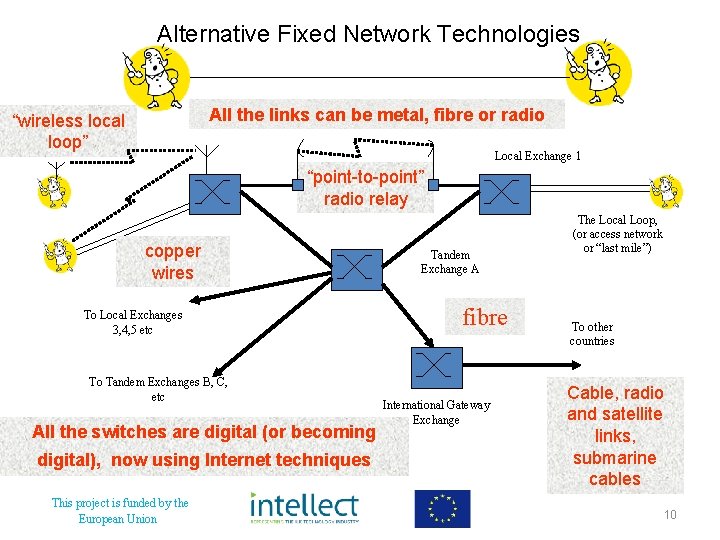
Alternative Fixed Network Technologies All the links can be metal, fibre or radio “wireless local loop” Local Exchange 1 “point-to-point” radio relay copper wires To Local Exchanges 3, 4, 5 etc To Tandem Exchanges B, C, etc All the switches are digital (or becoming digital), now using Internet techniques This project is funded by the European Union Tandem Exchange A fibre International Gateway Exchange The Local Loop, (or access network or “last mile”) To other countries Cable, radio and satellite links, submarine cables 10
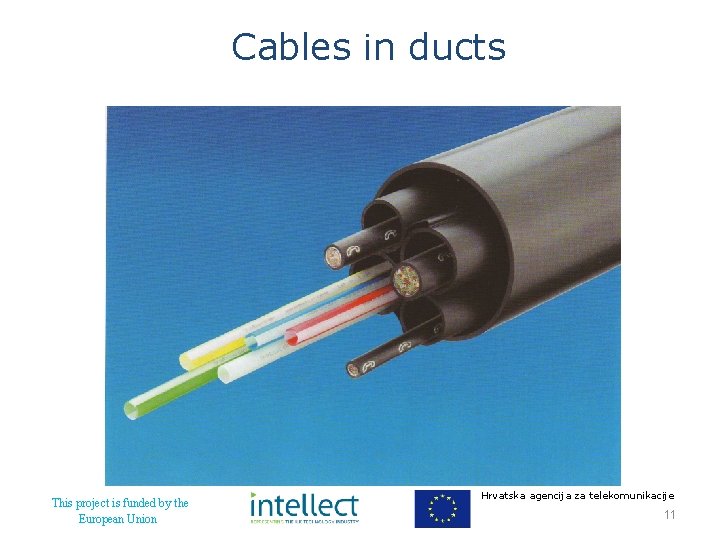
Cables in ducts This project is funded by the European Union Hrvatska agencija za telekomunikacije 11
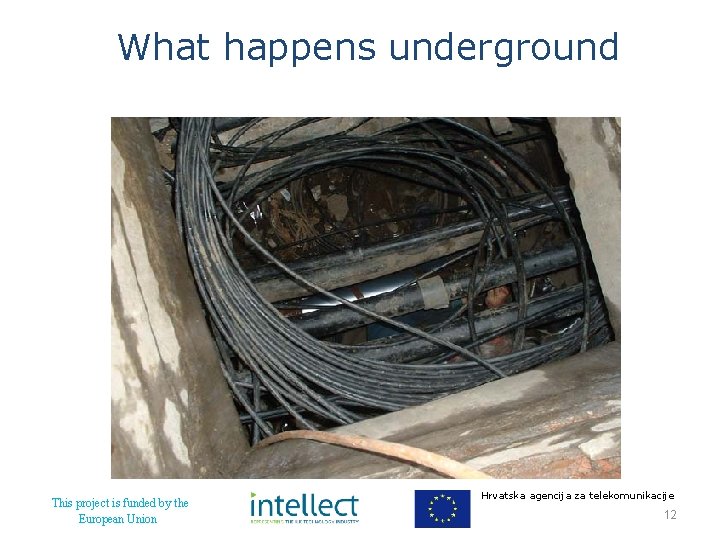
What happens underground This project is funded by the European Union Hrvatska agencija za telekomunikacije 12
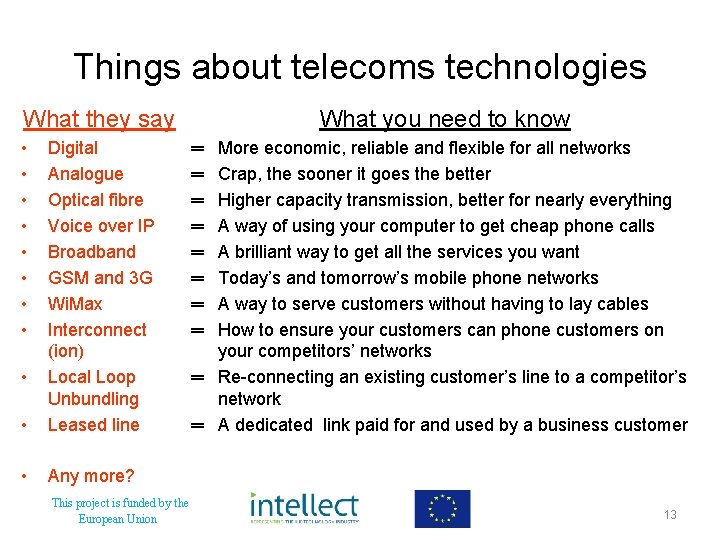
Things about telecoms technologies What they say • • • Digital Analogue Optical fibre Voice over IP Broadband GSM and 3 G Wi. Max Interconnect (ion) Local Loop Unbundling Leased line • Any more? • This project is funded by the European Union What you need to know ═ ═ ═ ═ More economic, reliable and flexible for all networks Crap, the sooner it goes the better Higher capacity transmission, better for nearly everything A way of using your computer to get cheap phone calls A brilliant way to get all the services you want Today’s and tomorrow’s mobile phone networks A way to serve customers without having to lay cables How to ensure your customers can phone customers on your competitors’ networks ═ Re-connecting an existing customer’s line to a competitor’s network ═ A dedicated link paid for and used by a business customer 13
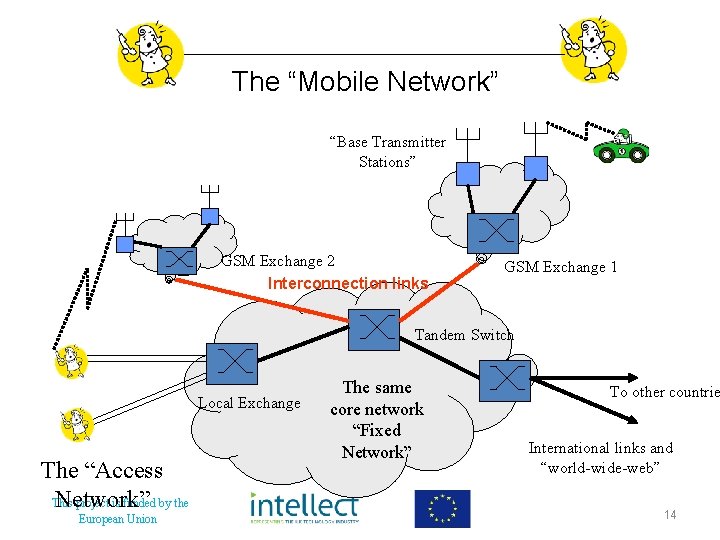
The “Mobile Network” “Base Transmitter Stations” GSM Exchange 2 Interconnection links GSM Exchange 1 Tandem Switch Local Exchange The “Access This project is funded by the Network” European Union The same core network “Fixed Network” To other countrie International links and “world-wide-web” 14
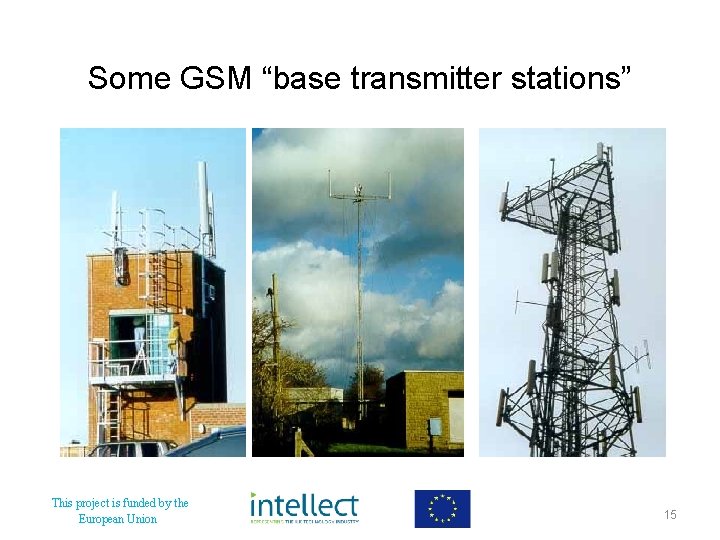
Some GSM “base transmitter stations” This project is funded by the European Union 15
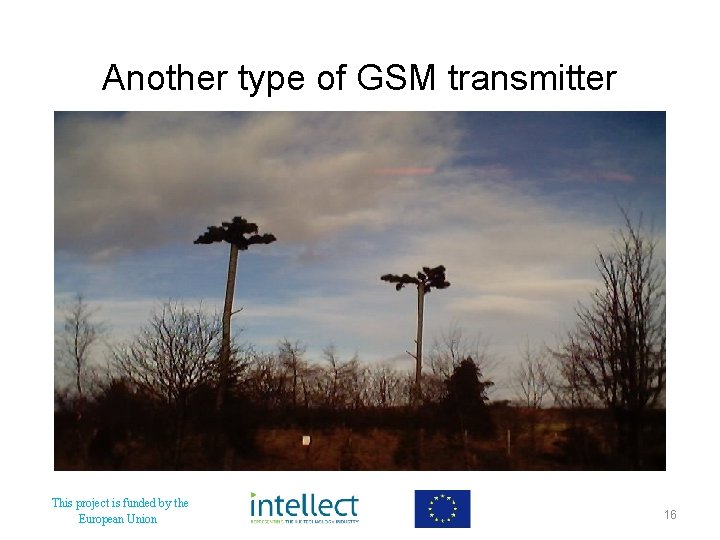
Another type of GSM transmitter This project is funded by the European Union 16
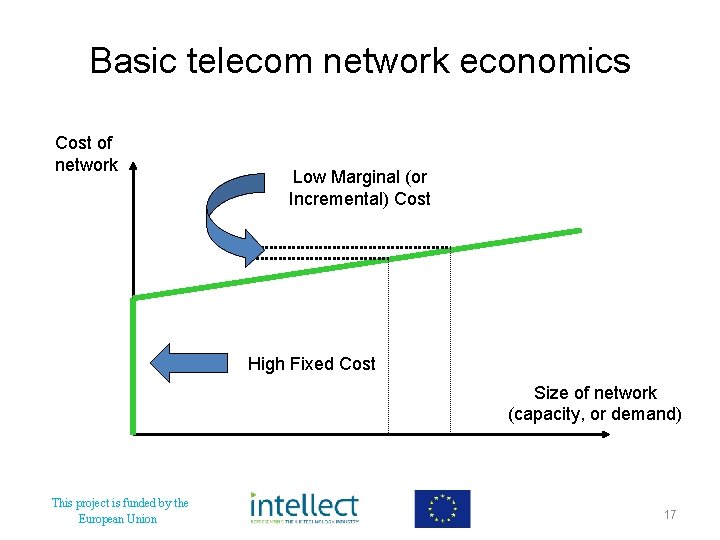
Basic telecom network economics Cost of network Low Marginal (or Incremental) Cost High Fixed Cost Size of network (capacity, or demand) This project is funded by the European Union 17
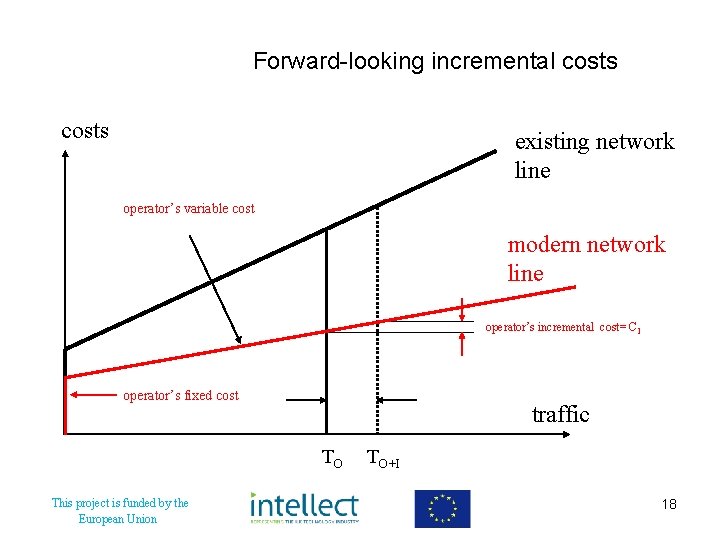
Forward-looking incremental costs existing network line operator’s variable cost modern network line operator’s incremental cost= C I operator’s fixed cost traffic TO This project is funded by the European Union TO+I 18
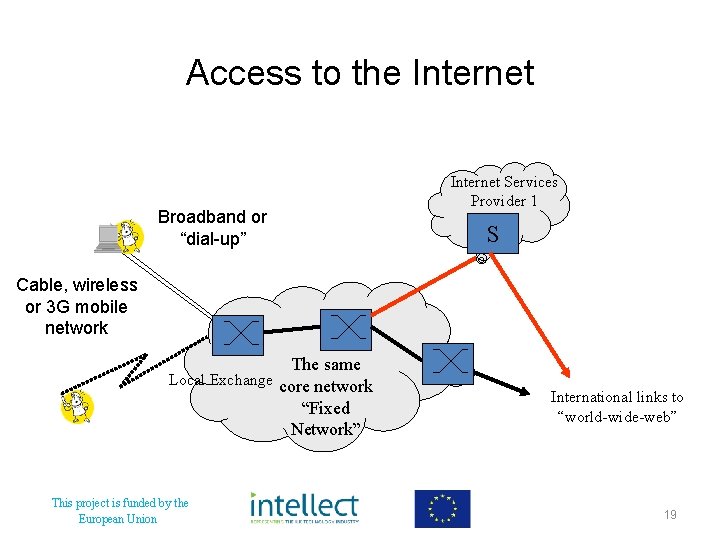
Access to the Internet Broadband or “dial-up” Internet Services Provider 1 S Cable, wireless or 3 G mobile network The same Local Exchange core network “Fixed Network” This project is funded by the European Union International links to “world-wide-web” 19
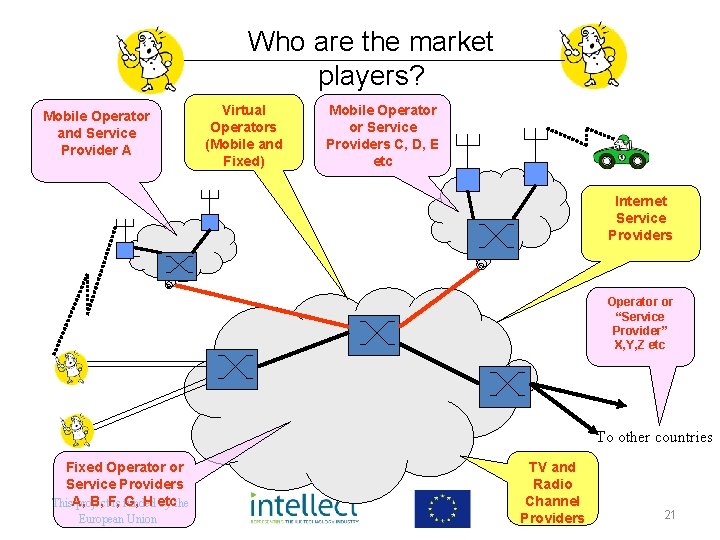
Old and new market players • Today’s telecom networks can be provided by anyone • Different operators can (and do) provide local, regional, national and international networks and services • The players can provide all or only part of the networks and services • Interconnection has to be easy and economic, so that we don’t need lots of separate national networks • The ex-monopoly operator – “the incumbent” has; – advantages (size, money, customers, know-how) and – disadvantages (legacy networks and attitudes, inefficiency and often relatively poor quality and customer service) This project is funded by the European Union 20
Who are the market players? Mobile Operator and Service Provider A Virtual Operators (Mobile and Fixed) Mobile Operator or Service Providers C, D, E etc Internet Service Providers Operator or “Service Provider” X, Y, Z etc To other countries Fixed Operator or Service Providers B, F, G, H etc This. A, project is funded by the European Union TV and Radio Channel Providers 21
Regulation • Technical standards are now global, this is the equipment manufacturers’ problem • A regulator has to help all market players to provide good quality networks and services, irrespective of the technologies being used • Fair competition means a fair amount of co-operation too, technically and commercially • The suppliers, the technology, the networks, the services, the operators and the regulators are really only there for one reason - consumers This project is funded by the European Union 22
Competitive markets -agenda • How is competition provided? • How the incumbents behave • The role of regulation This project is funded by the European Union 23
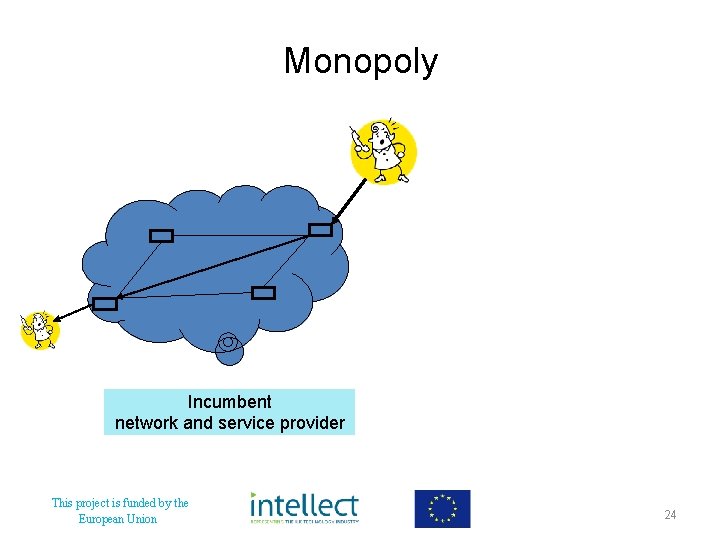
Monopoly Incumbent network and service provider This project is funded by the European Union 24
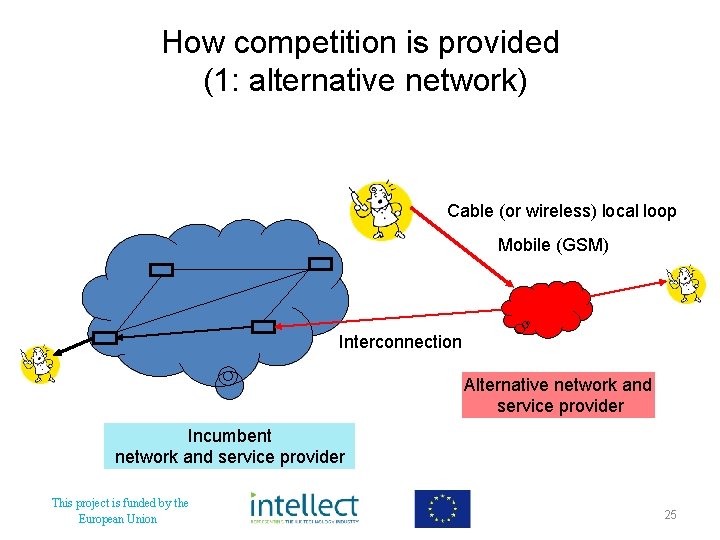
How competition is provided (1: alternative network) Cable (or wireless) local loop Mobile (GSM) Interconnection Alternative network and service provider Incumbent network and service provider This project is funded by the European Union 25
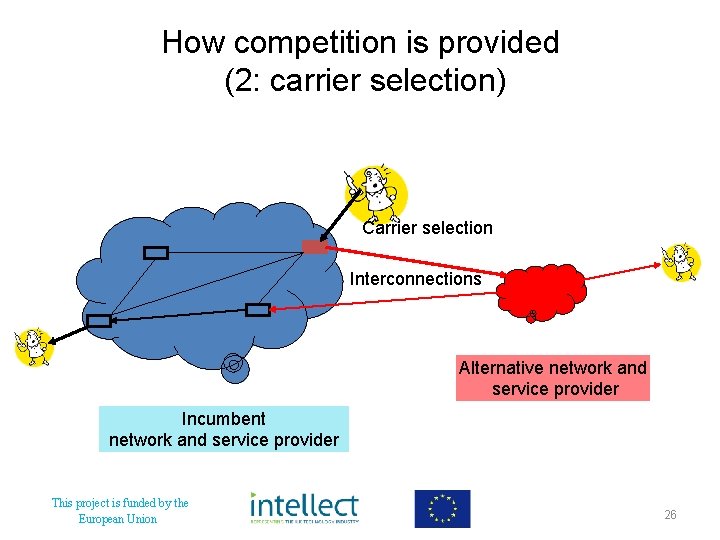
How competition is provided (2: carrier selection) Carrier selection Interconnections Alternative network and service provider Incumbent network and service provider This project is funded by the European Union 26
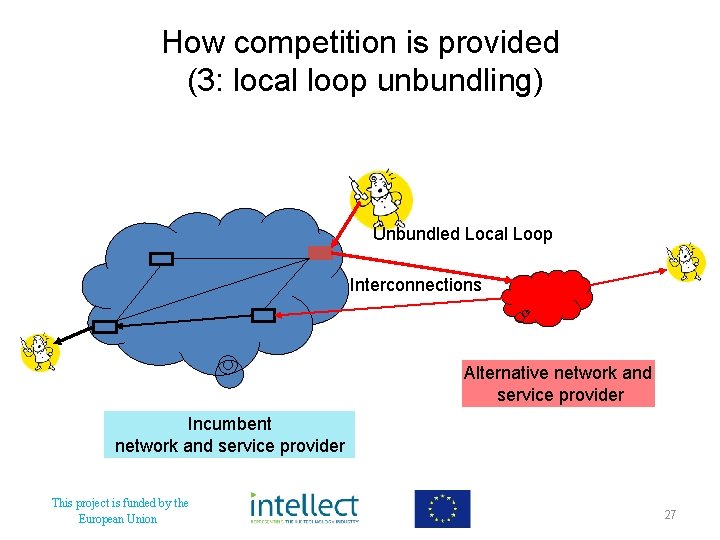
How competition is provided (3: local loop unbundling) Unbundled Local Loop Interconnections Alternative network and service provider Incumbent network and service provider This project is funded by the European Union 27
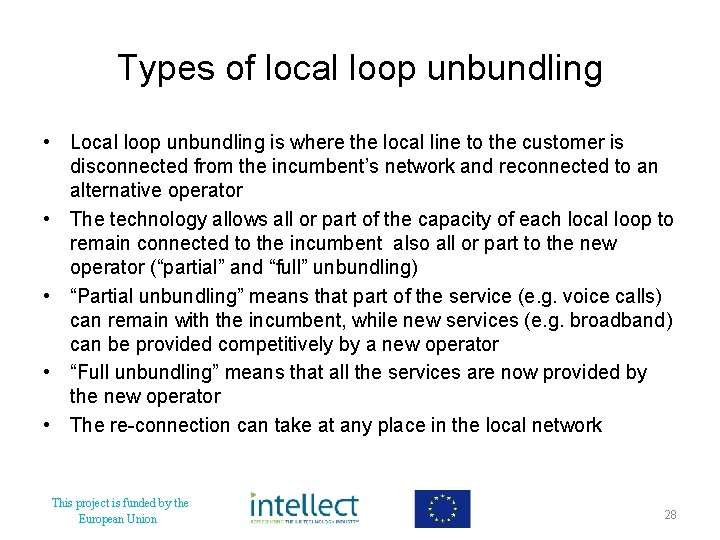
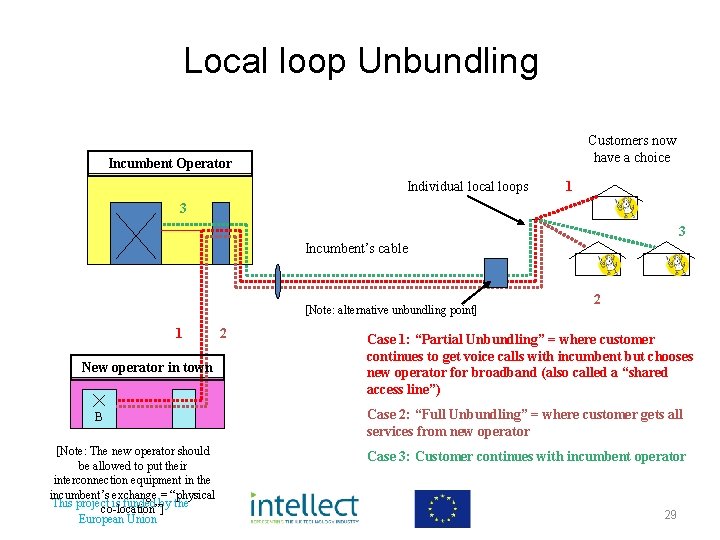
Types of local loop unbundling • Local loop unbundling is where the local line to the customer is disconnected from the incumbent’s network and reconnected to an alternative operator • The technology allows all or part of the capacity of each local loop to remain connected to the incumbent also all or part to the new operator (“partial” and “full” unbundling) • “Partial unbundling” means that part of the service (e. g. voice calls) can remain with the incumbent, while new services (e. g. broadband) can be provided competitively by a new operator • “Full unbundling” means that all the services are now provided by the new operator • The re-connection can take at any place in the local network This project is funded by the European Union 28
Local loop Unbundling Customers now have a choice Incumbent Operator Individual local loops 1 3 3 Incumbent’s cable [Note: alternative unbundling point] 1 New operator in town B [Note: The new operator should be allowed to put their interconnection equipment in the incumbent’s exchange = “physical This project is funded by the co-location”] European Union 2 2 Case 1: “Partial Unbundling” = where customer continues to get voice calls with incumbent but chooses new operator for broadband (also called a “shared access line”) Case 2: “Full Unbundling” = where customer gets all services from new operator Case 3: Customer continues with incumbent operator 29
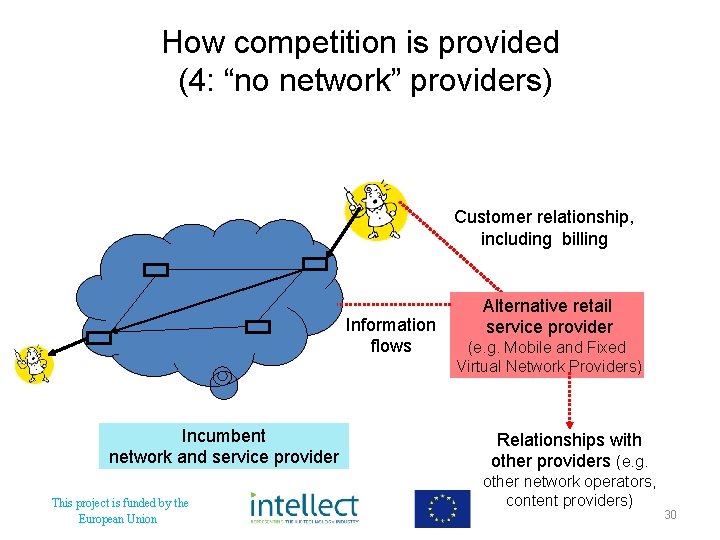
How competition is provided (4: “no network” providers) Customer relationship, including billing Information flows Incumbent network and service provider This project is funded by the European Union Alternative retail service provider (e. g. Mobile and Fixed Virtual Network Providers) Relationships with other providers (e. g. other network operators, content providers) 30
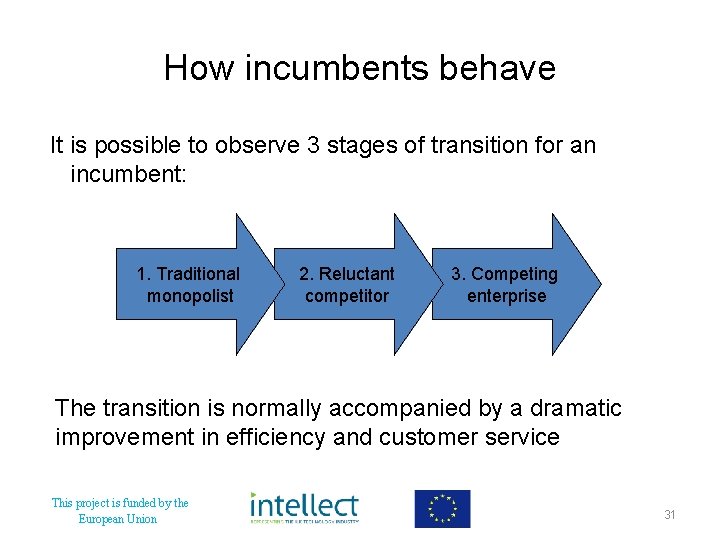
How incumbents behave It is possible to observe 3 stages of transition for an incumbent: 1. Traditional monopolist 2. Reluctant competitor 3. Competing enterprise The transition is normally accompanied by a dramatic improvement in efficiency and customer service This project is funded by the European Union 31
Phase 1: the incumbent as a traditional monopolist • • • Government-owned, no competition Tariffs out of balance Under-investment Inefficient, unreliable and inconsistent Poor customer service Long waiting times for customers (The bad old days) This project is funded by the European Union 32
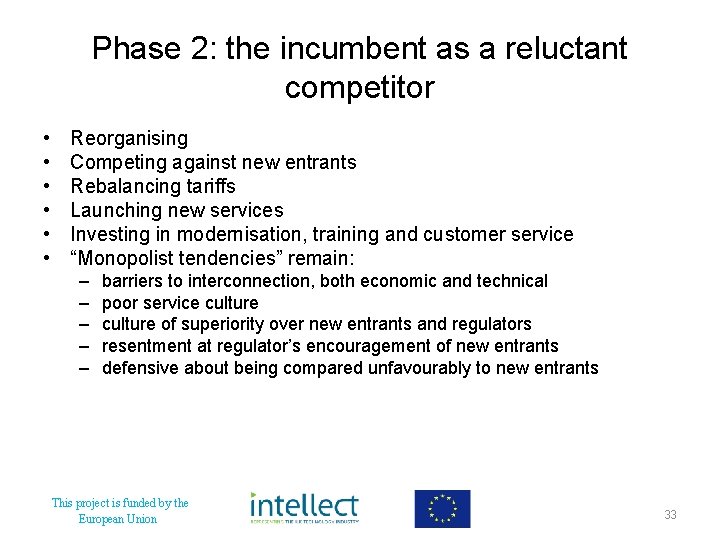
Phase 2: the incumbent as a reluctant competitor • • • Reorganising Competing against new entrants Rebalancing tariffs Launching new services Investing in modernisation, training and customer service “Monopolist tendencies” remain: – – – barriers to interconnection, both economic and technical poor service culture of superiority over new entrants and regulators resentment at regulator’s encouragement of new entrants defensive about being compared unfavourably to new entrants This project is funded by the European Union 33
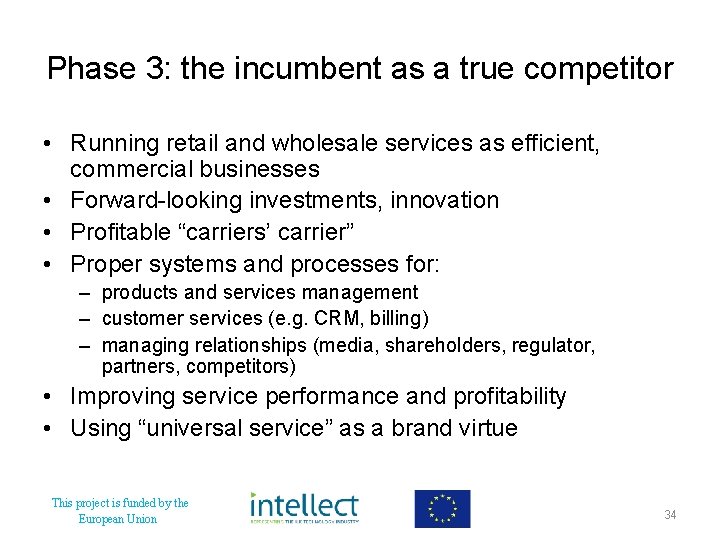
Phase 3: the incumbent as a true competitor • Running retail and wholesale services as efficient, commercial businesses • Forward-looking investments, innovation • Profitable “carriers’ carrier” • Proper systems and processes for: – products and services management – customer services (e. g. CRM, billing) – managing relationships (media, shareholders, regulator, partners, competitors) • Improving service performance and profitability • Using “universal service” as a brand virtue This project is funded by the European Union 34
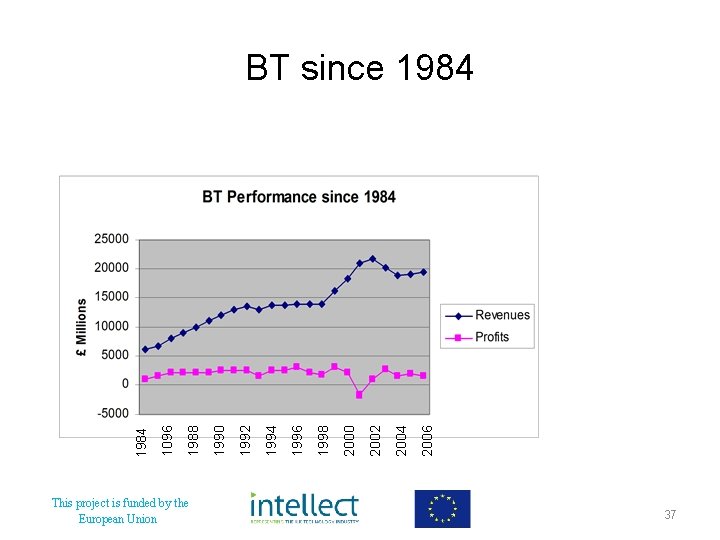
British Telecommunications was separated from the British Post Office in 1981. It has been competing in telecommunications in the UK since 1983 and by 1993, it became a 100% privatised company. In 2001, its mobile operations (now O 2) were de-merged from BT. As BT Group plc, it now serves customers in 170 countries. In the UK it offers voice, broadband, internet, mobile and TV services This project is funded by the European Union 35
This project is funded by the European Union 2006 2004 2002 2000 1998 1996 1994 1992 1990 1988 1986 1984 Staff numbers – decline and fall? 36
This project is funded by the European Union 2006 2004 2002 2000 1998 1996 1994 1992 1990 1988 1096 1984 BT since 1984 37
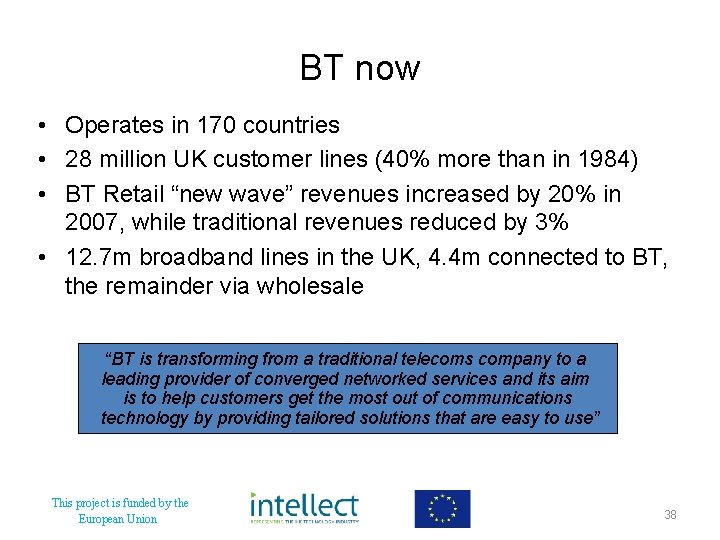
BT now • Operates in 170 countries • 28 million UK customer lines (40% more than in 1984) • BT Retail “new wave” revenues increased by 20% in 2007, while traditional revenues reduced by 3% • 12. 7 m broadband lines in the UK, 4. 4 m connected to BT, the remainder via wholesale “BT is transforming from a traditional telecoms company to a leading provider of converged networked services and its aim is to help customers get the most out of communications technology by providing tailored solutions that are easy to use” This project is funded by the European Union 38
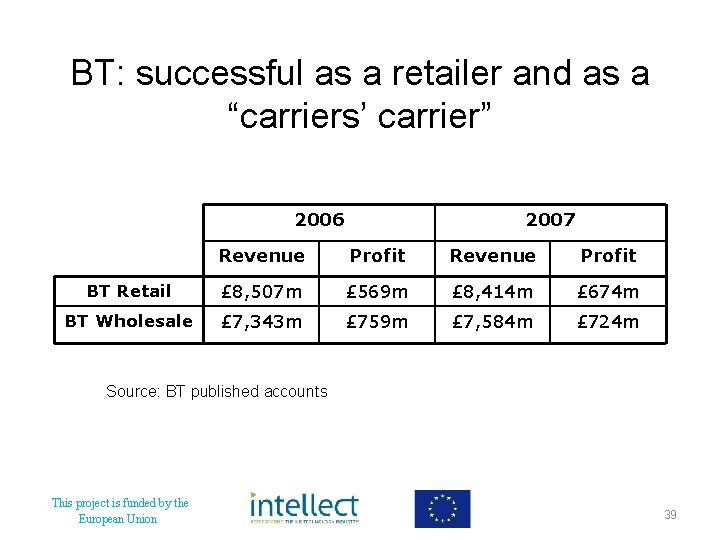
BT: successful as a retailer and as a “carriers’ carrier” 2006 2007 Revenue Profit BT Retail £ 8, 507 m £ 569 m £ 8, 414 m £ 674 m BT Wholesale £ 7, 343 m £ 759 m £ 7, 584 m £ 724 m Source: BT published accounts This project is funded by the European Union 39
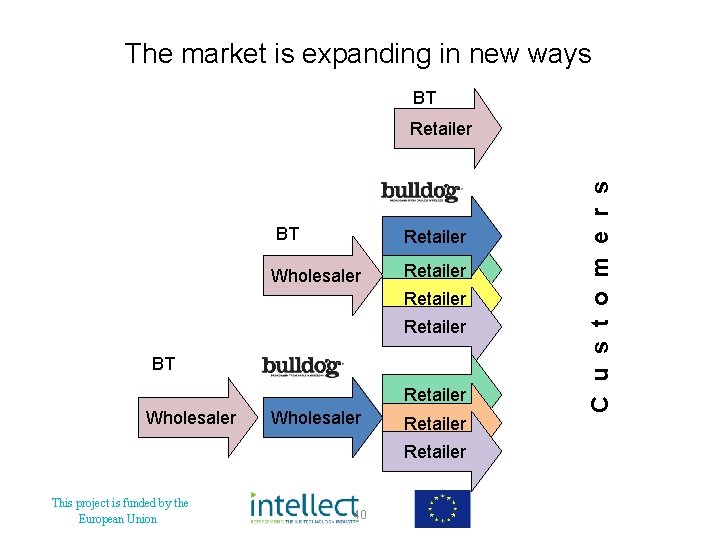
The market is expanding in new ways BT BT Retailer Wholesaler Retailer BT Retailer Wholesaler Retailer This project is funded by the European Union 40 C u s t o m e r s Retailer
What does this mean for regulation? • The regulator’s role is to further the interests of consumers in relevant markets, where appropriate by promoting competition • “Light regulatory touch”, for example adopting a forwardlooking stance on enabling technologies like convergence and Vo. IP • Market analysis in separate and “converged” markets • Action to ensure competition in all telecoms markets This project is funded by the European Union 41
Overall regulatory environment • Regulator independence – regulators should be able to exercise their powers impartially and transparently • Converged regulators – most Member States have established converged regulators with powers covering the whole e-communications sector • Regulatory focus – local loop unbundling – effective interconnection – Regulatory accounting: separation of costs, cost modelling • Regulator involvement – well-ordered public consultation in relation to regulatory decisions This project is funded by the European Union 42