
COMMENSURABILITY Two line segments are commensurable if they
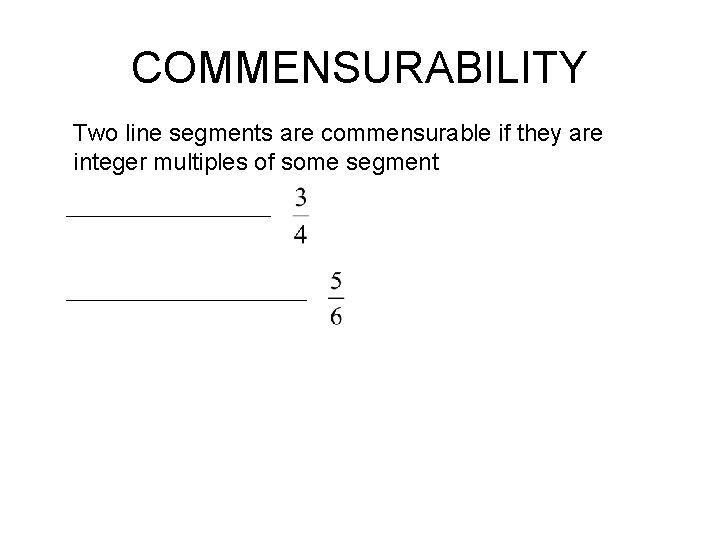
COMMENSURABILITY Two line segments are commensurable if they are integer multiples of some segment
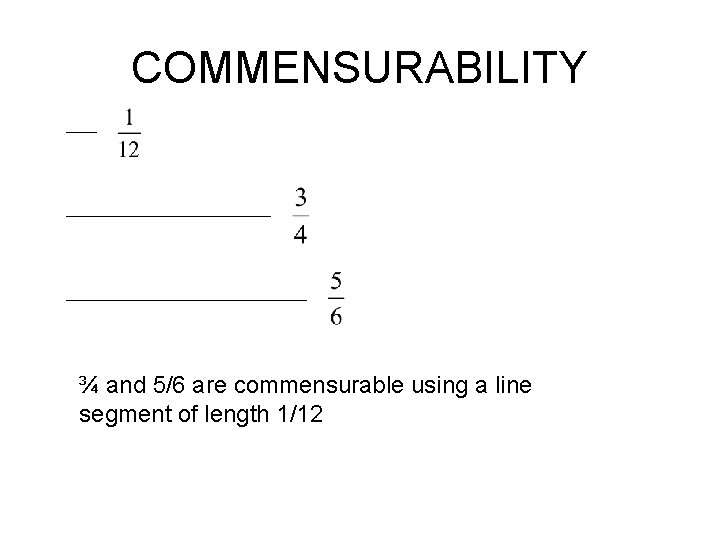
COMMENSURABILITY ¾ and 5/6 are commensurable using a line segment of length 1/12
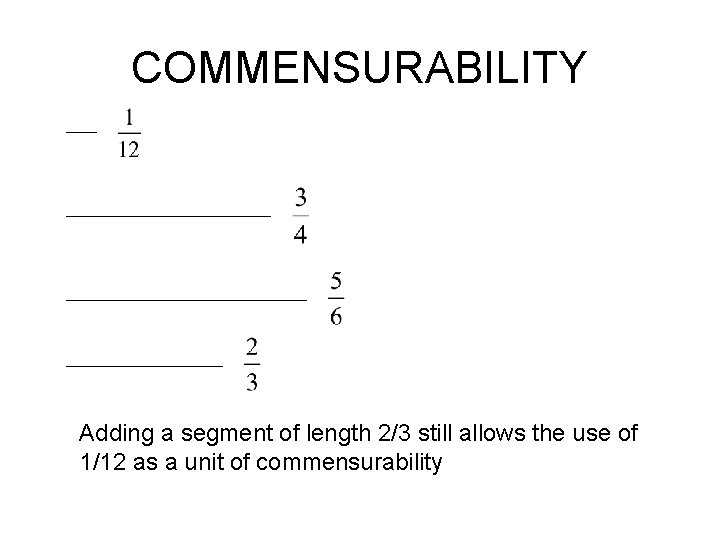
COMMENSURABILITY Adding a segment of length 2/3 still allows the use of 1/12 as a unit of commensurability
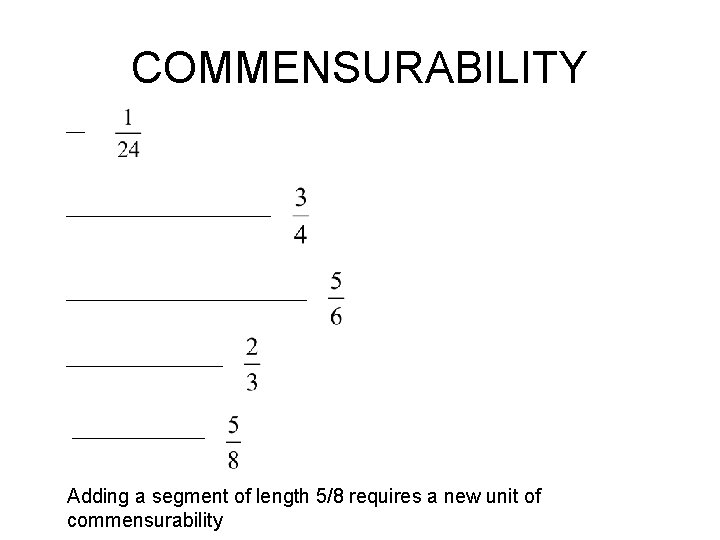
COMMENSURABILITY Adding a segment of length 5/8 requires a new unit of commensurability
COMMENSURABILITY • All rationals are commensurable • A rational is never commensurable with an irrational • The sum and difference of commensurable quantities are both commensurable
Now let’s turn our attention to the symbol of the Pythagoreans, the pentagram. Pentagrams dating to 3000 B. C. have been found by archeologists. I wonder what the “priests” of that era thought about pentagrams. Did they have mystical significance?
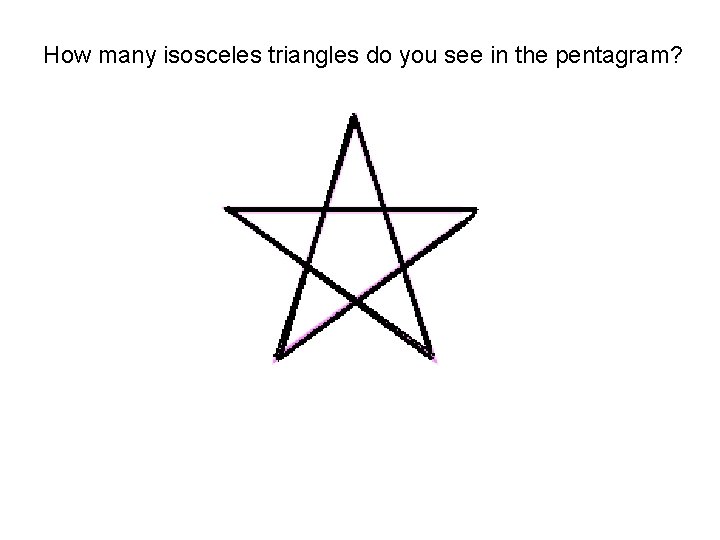
How many isosceles triangles do you see in the pentagram?
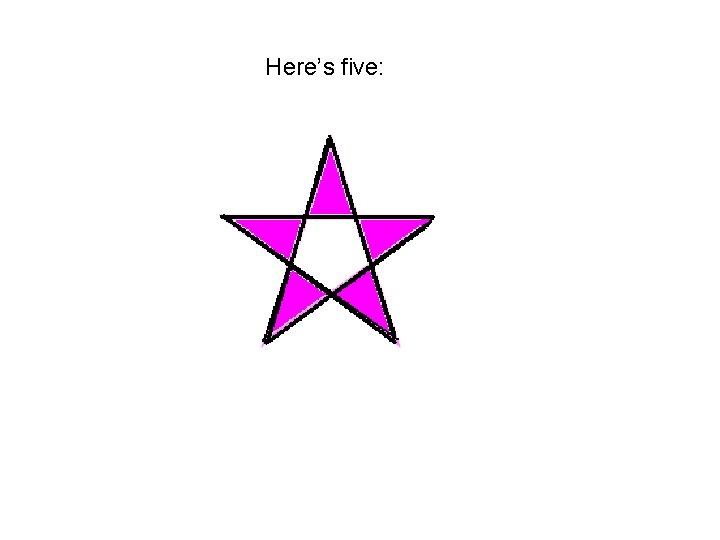
Here’s five:
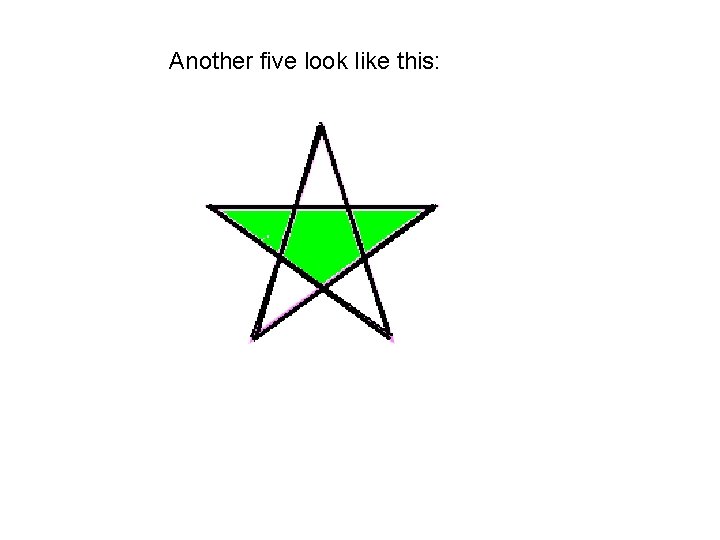
Another five look like this:
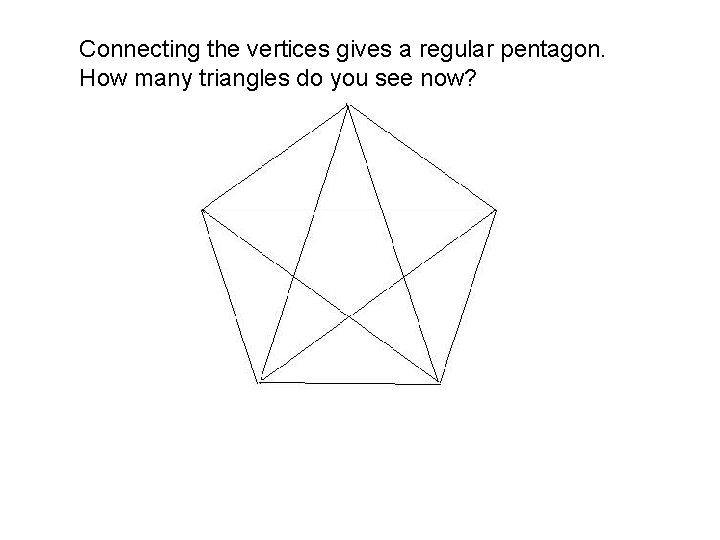
Connecting the vertices gives a regular pentagon. How many triangles do you see now?

The original five:
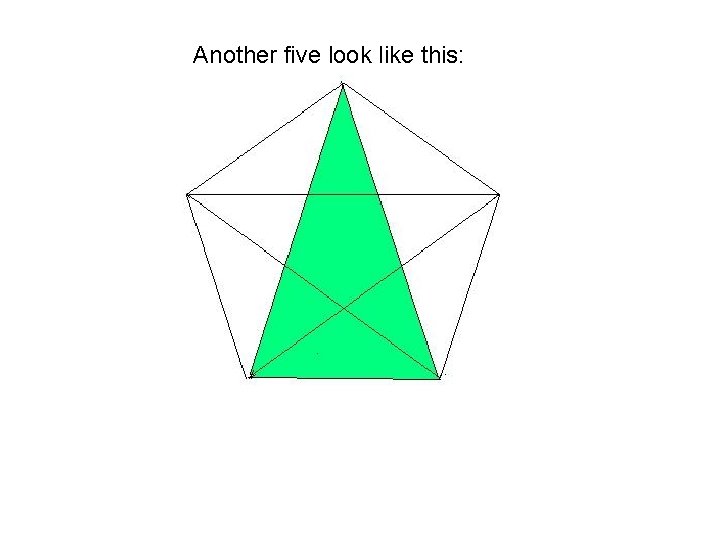
Another five look like this:
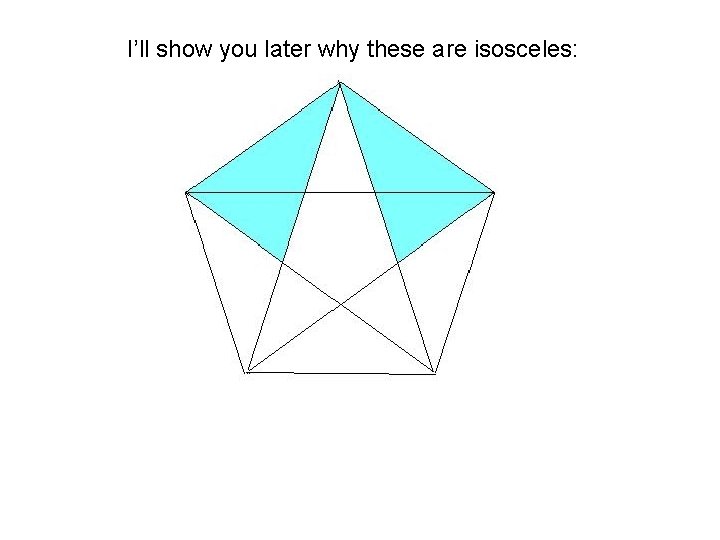
I’ll show you later why these are isosceles:
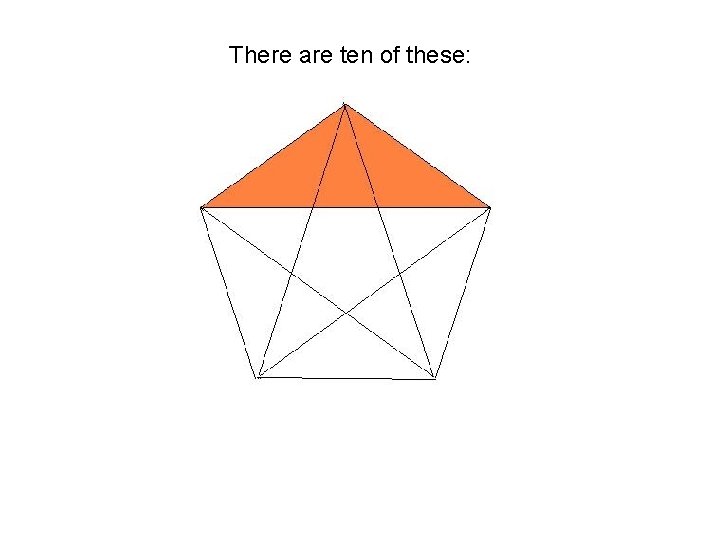
There are ten of these:
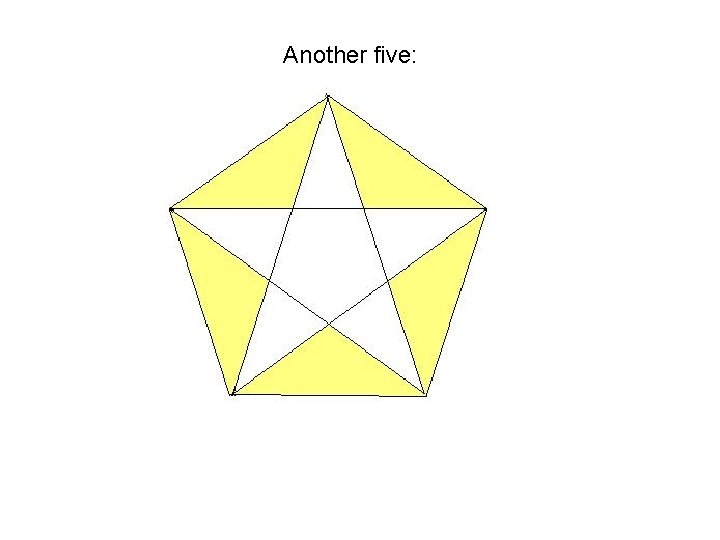
Another five:
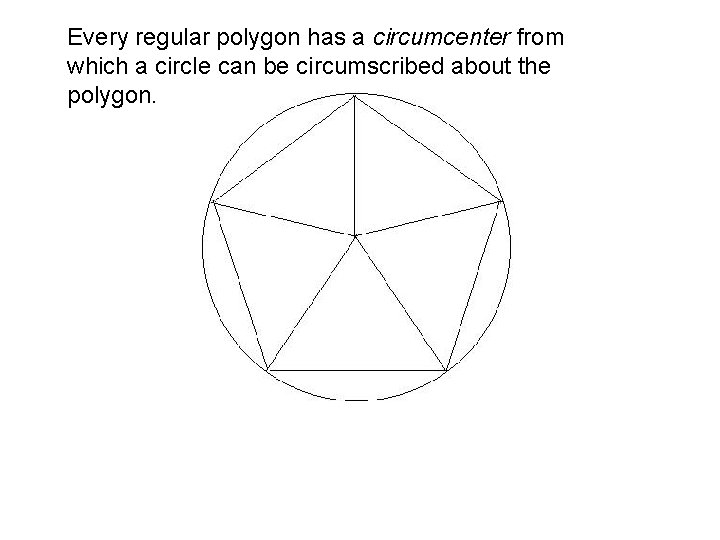
Every regular polygon has a circumcenter from which a circle can be circumscribed about the polygon.
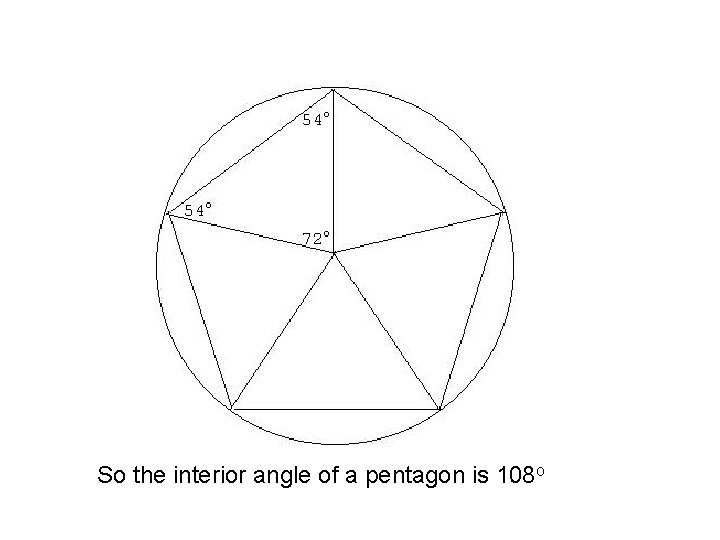
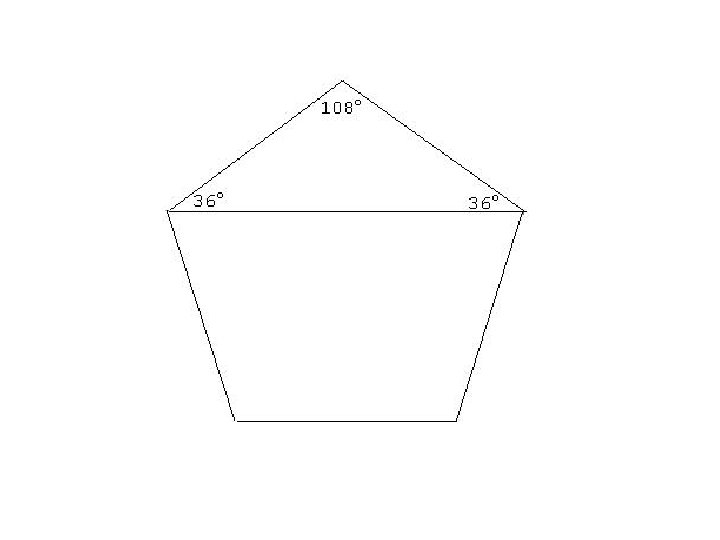
So the interior angle of a pentagon is 108 o
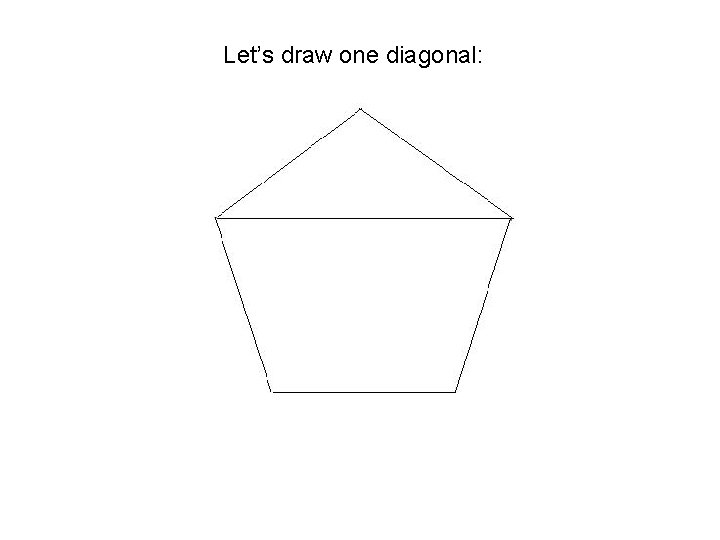
Let’s draw one diagonal:
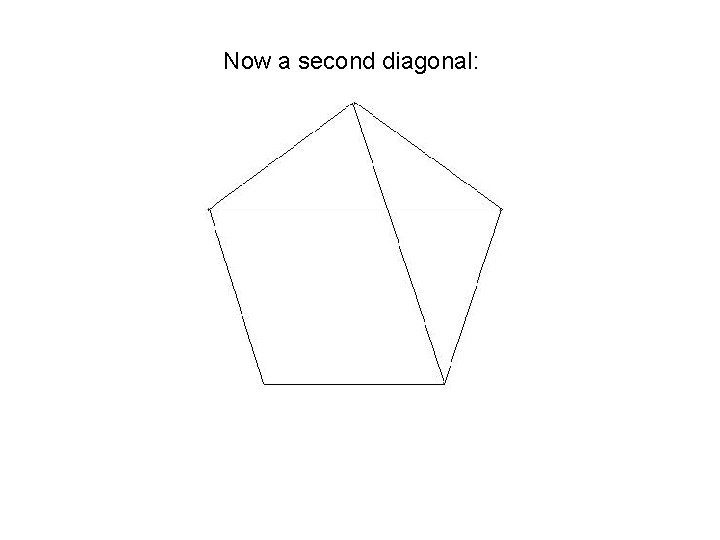
Now a second diagonal:
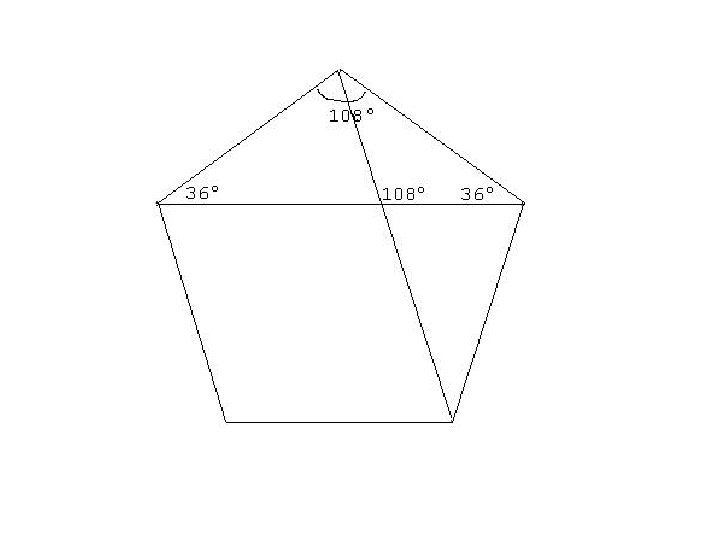
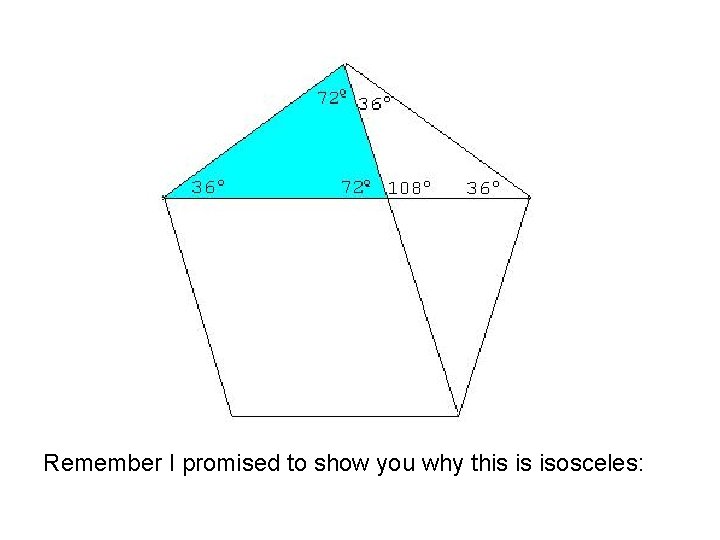
Remember I promised to show you why this is isosceles:
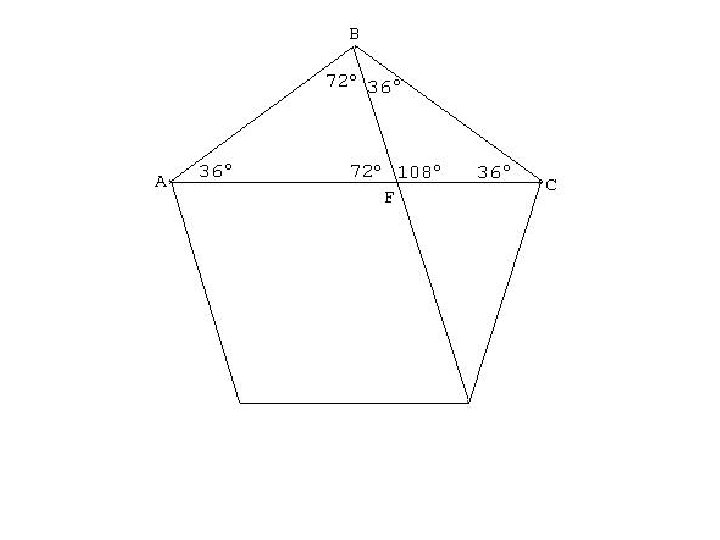
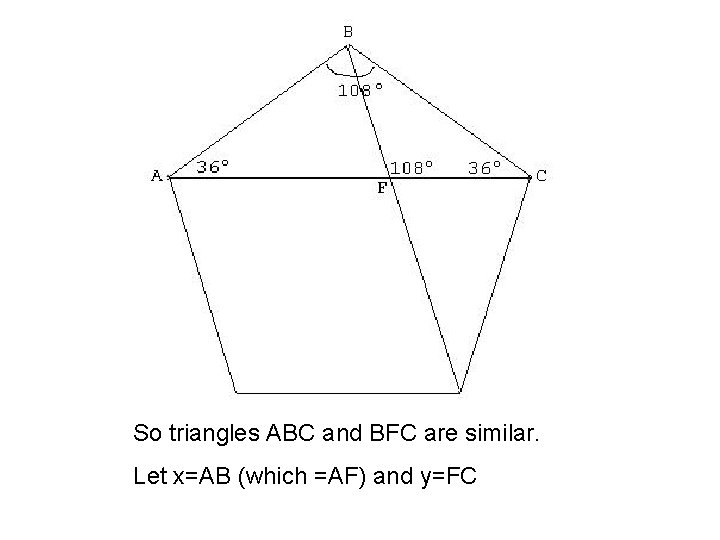
So triangles ABC and BFC are similar. Let x=AB (which =AF) and y=FC
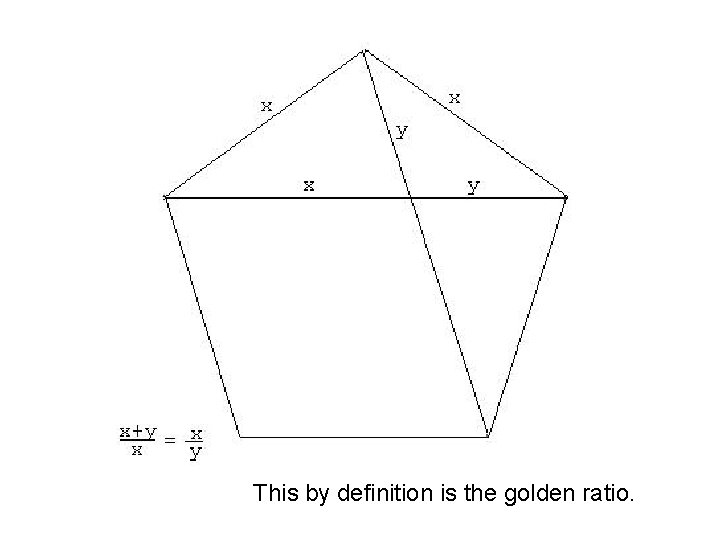
This by definition is the golden ratio.
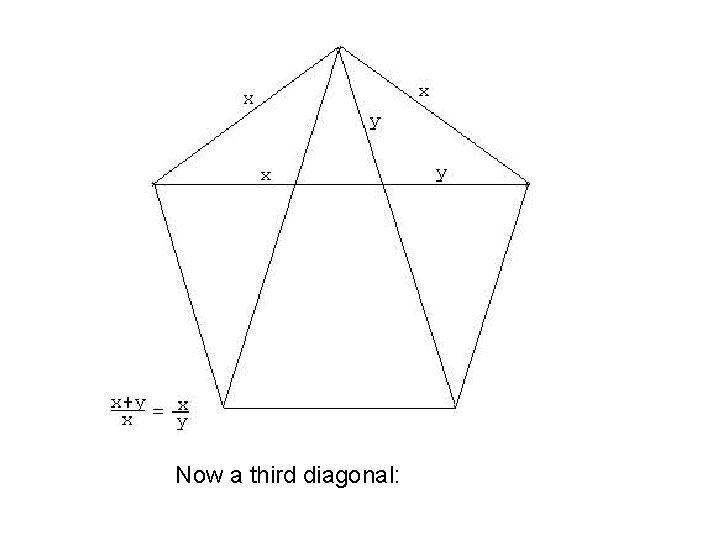
Now a third diagonal:
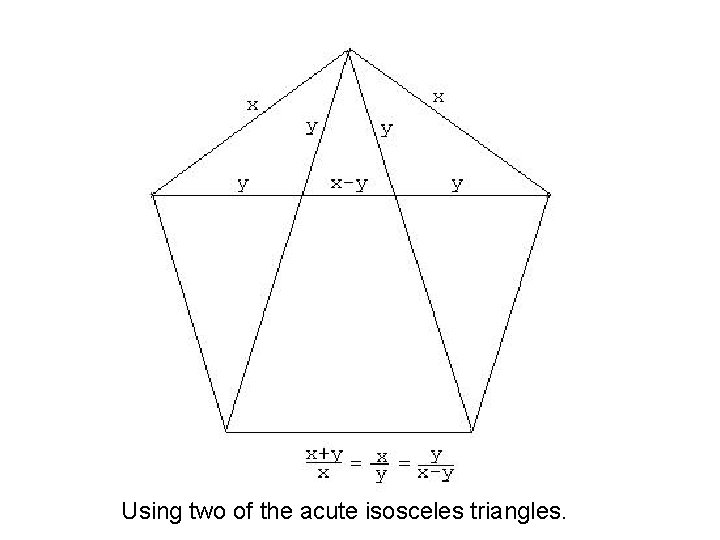
Using two of the acute isosceles triangles.
So in all the obtuse isosceles triangles we’ve identified, the ratio of the base to the side is the golden ratio, and in the acute isosceles triangles, the ratio of the side to the base is the golden ratio.
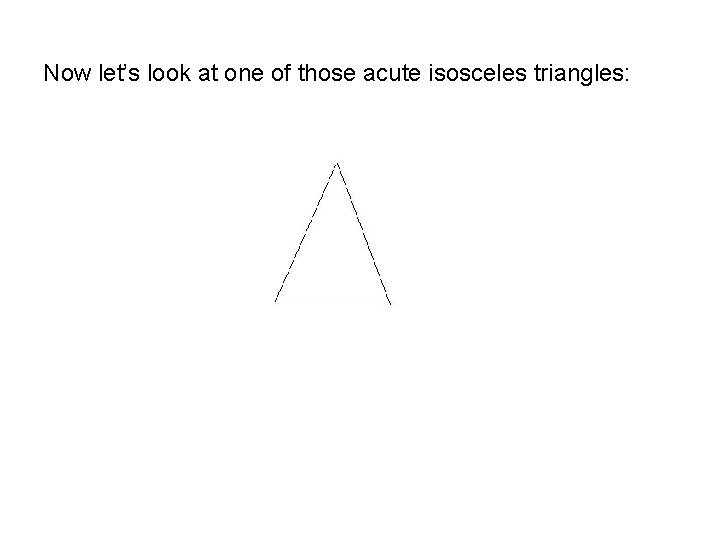
Now let’s look at one of those acute isosceles triangles:
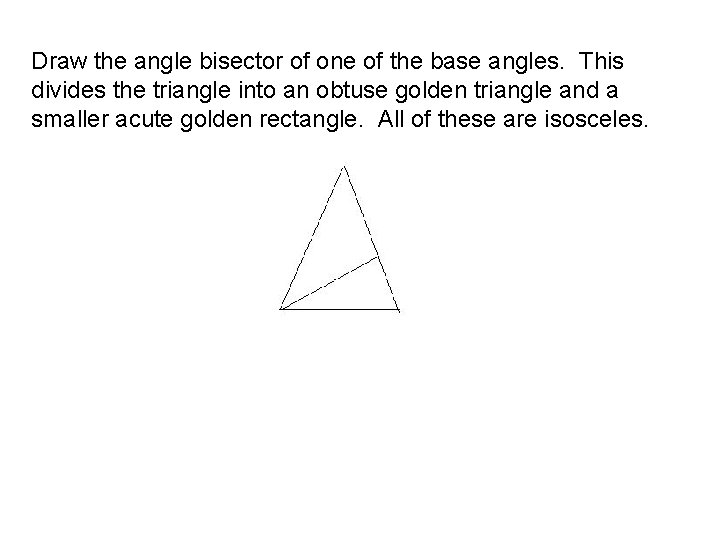
Draw the angle bisector of one of the base angles. This divides the triangle into an obtuse golden triangle and a smaller acute golden rectangle. All of these are isosceles.
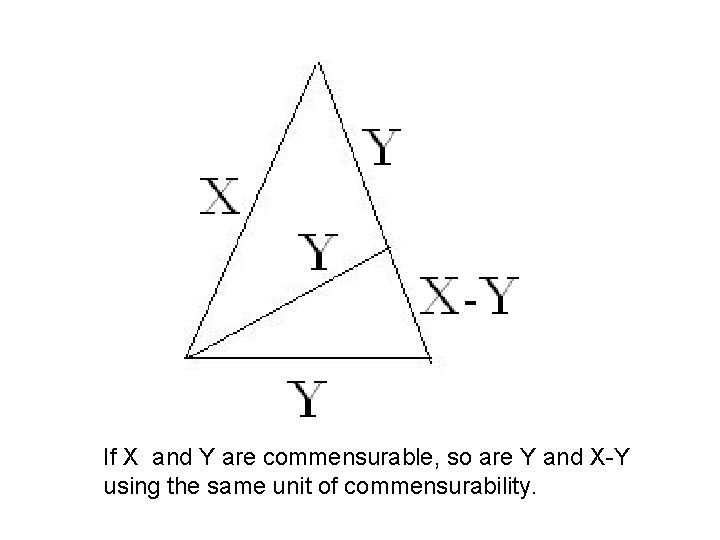
If X and Y are commensurable, so are Y and X-Y using the same unit of commensurability.
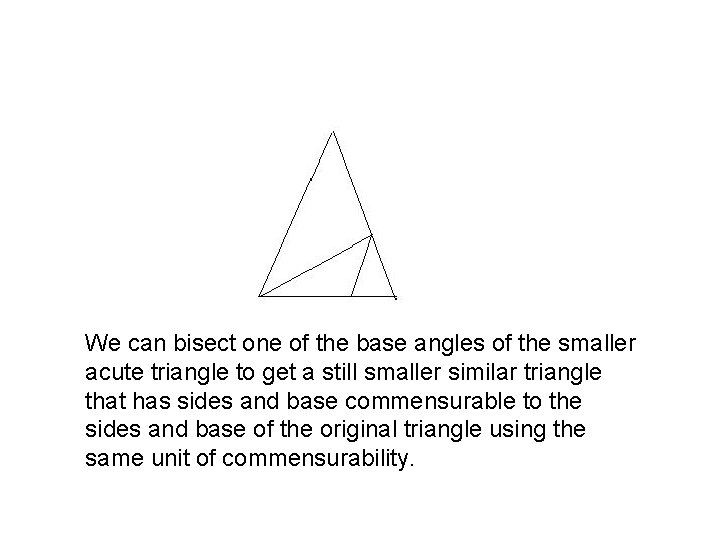
We can bisect one of the base angles of the smaller acute triangle to get a still smaller similar triangle that has sides and base commensurable to the sides and base of the original triangle using the same unit of commensurability.
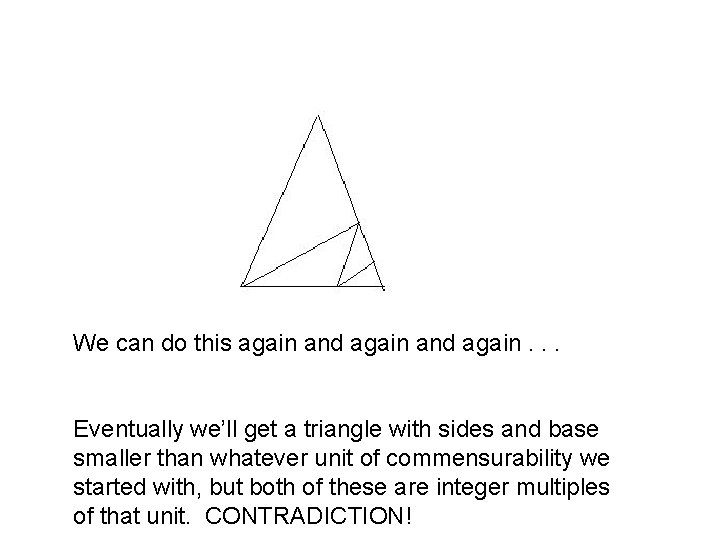
We can do this again and again. . . Eventually we’ll get a triangle with sides and base smaller than whatever unit of commensurability we started with, but both of these are integer multiples of that unit. CONTRADICTION!
This would have been a pretty easy discovery for the Pythagoreans. Some historians have proposed that they probably discovered that the golden ratio is irrational before they tackled the square root of 2 (assuming they eventually did tackle that one). Let’s tackle the square root of 2 next.
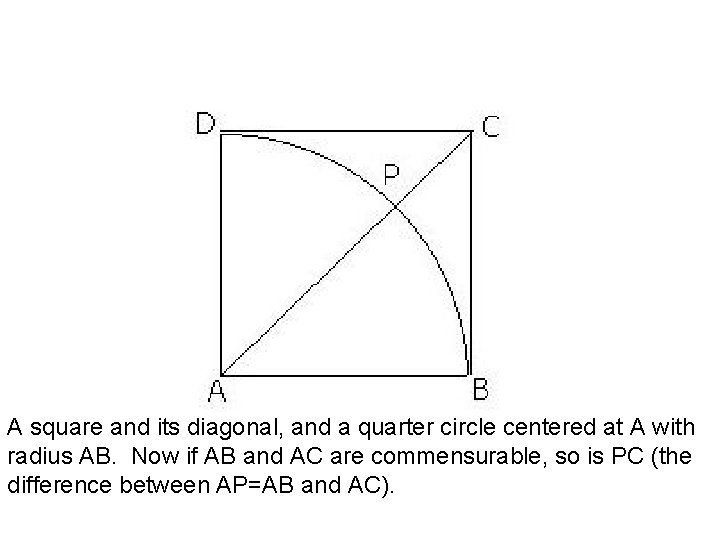
A square and its diagonal, and a quarter circle centered at A with radius AB. Now if AB and AC are commensurable, so is PC (the difference between AP=AB and AC).
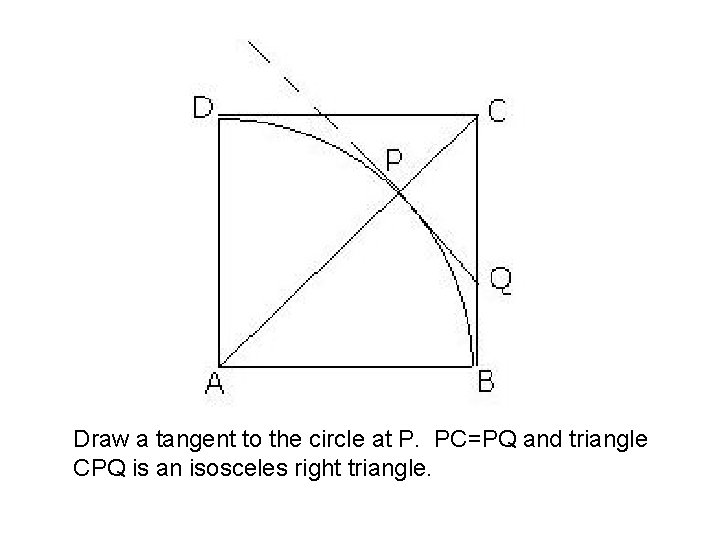
Draw a tangent to the circle at P. PC=PQ and triangle CPQ is an isosceles right triangle.
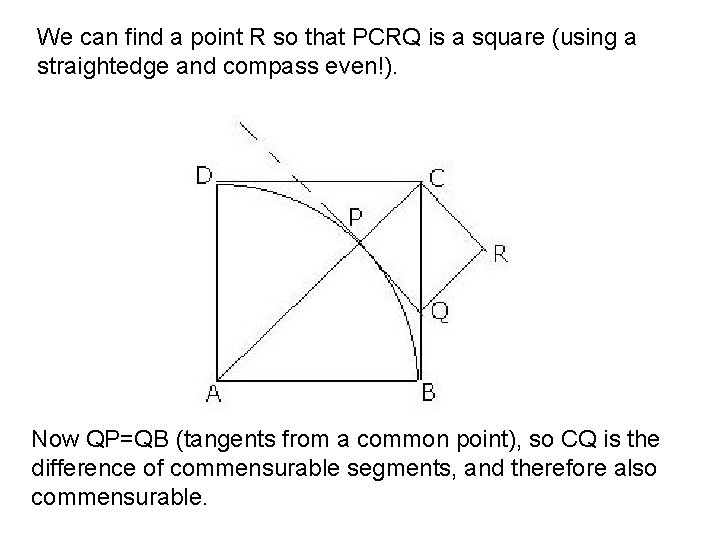
We can find a point R so that PCRQ is a square (using a straightedge and compass even!). Now QP=QB (tangents from a common point), so CQ is the difference of commensurable segments, and therefore also commensurable.
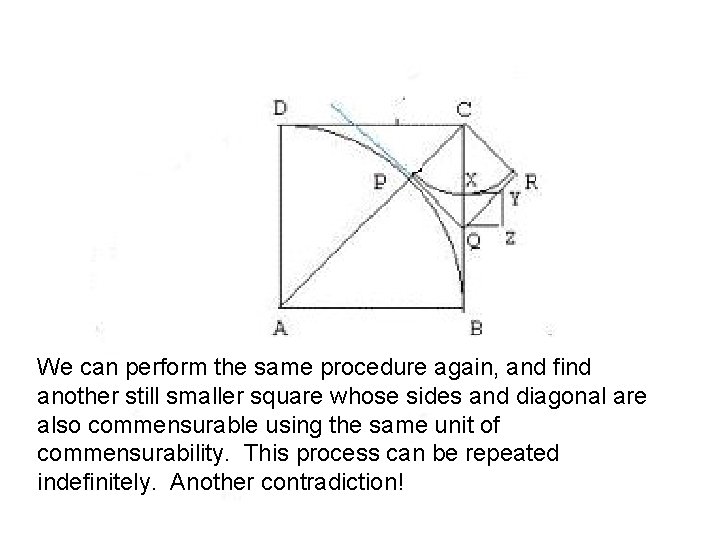
We can perform the same procedure again, and find another still smaller square whose sides and diagonal are also commensurable using the same unit of commensurability. This process can be repeated indefinitely. Another contradiction!
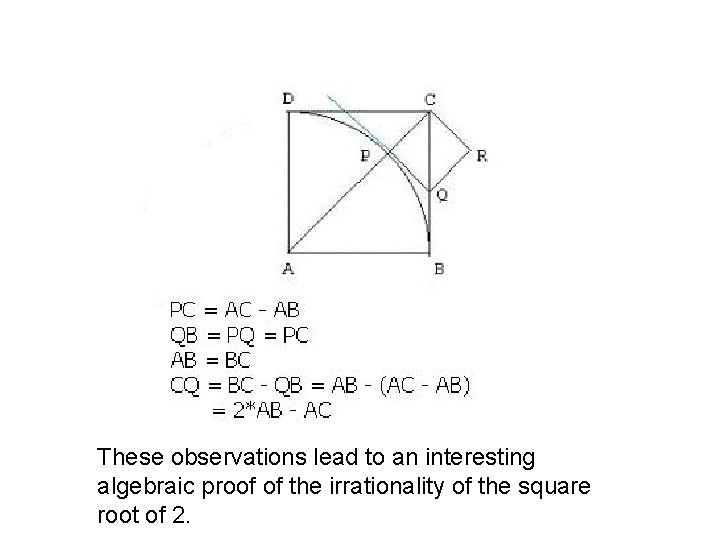
These observations lead to an interesting algebraic proof of the irrationality of the square root of 2.
I call this a “twofer” proof, because you can get two proofs for the price of one here. The original assumptions are slightly different, and endings are too, but the “guts” of the proof are the same. The next slide shows the beginning of this proof. I’ve copied the center column to another slide for easier readibility when a projection system is used.
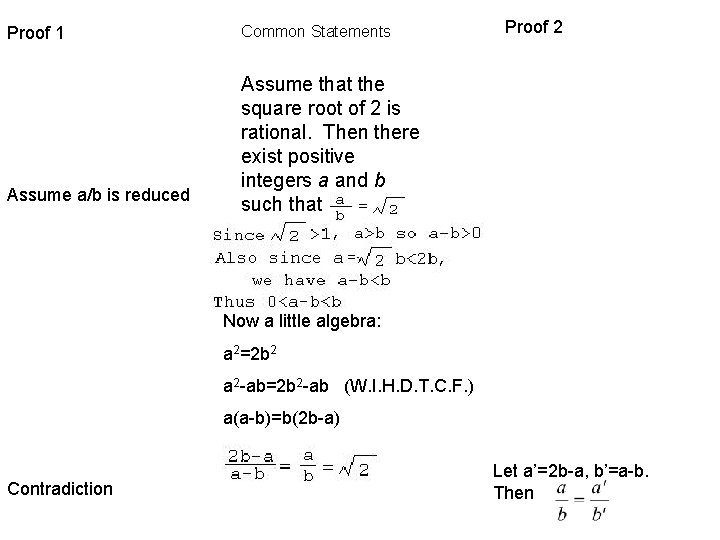
Proof 1 Assume a/b is reduced Common Statements Proof 2 Assume that the square root of 2 is rational. Then there exist positive integers a and b such that Now a little algebra: a 2=2 b 2 a 2 -ab=2 b 2 -ab (W. I. H. D. T. C. F. ) a(a-b)=b(2 b-a) Contradiction Let a’=2 b-a, b’=a-b. Then
The next slide is the middle column of the previous slide in a larger font:
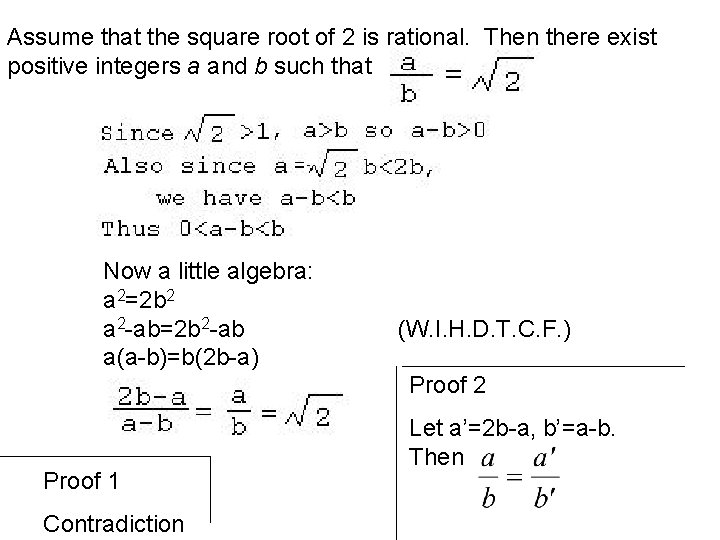
Assume that the square root of 2 is rational. Then there exist positive integers a and b such that Now a little algebra: a 2=2 b 2 a 2 -ab=2 b 2 -ab a(a-b)=b(2 b-a) (W. I. H. D. T. C. F. ) Proof 2 Proof 1 Contradiction Let a’=2 b-a, b’=a-b. Then
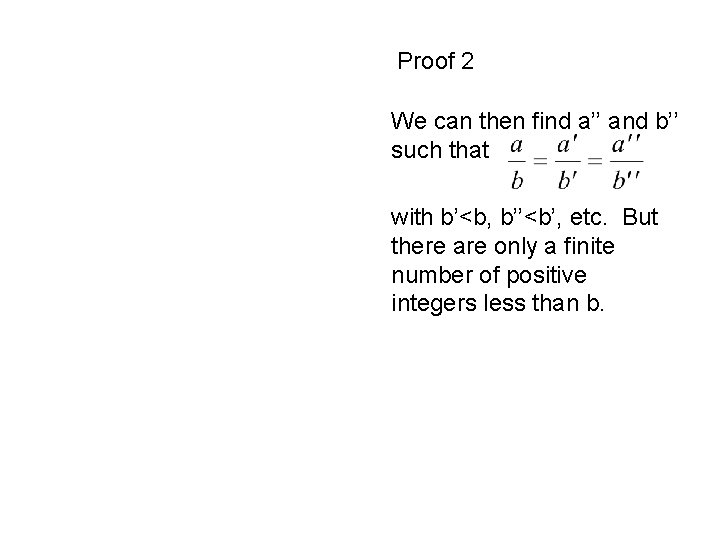
Proof 2 We can then find a’’ and b’’ such that with b’<b, b’’<b’, etc. But there are only a finite number of positive integers less than b.
You may have wondered about W. I. H. D. T. C. F. in the previous proof. As you will recall from high school geometry, abbreviations are often used in justifying the steps of a proof (SSS for Side-Side, SAS, etc. ) In more advanced courses, W. L. O. G. is often used for “Without Loss of Generality. ” Students also often complain that teachers have a bad habit of saying that something is “obvious” when in fact it doesn’t seem obvious at all. One student is reported to have used the abbreviation I. O. T. T. C. O. as a justification for a step in a proof, and when challenged by his professor to explain that, he said it stood for “Intuitively Obvious To The Casual Observer. ” There a number of proofs in higher math where making an expression more complicated than it already was is useful. In the proof of the chain rule in calculus, a term is added and subtracted from an expression which, if the reader is not thinking ahead, seems like an unlikely thing to do. Subtracting ab from both sides of the expression in the previous proof is a similar step, and I justified it by and abbreviation for “Where In Hell Did That Come From? ”
Now let’s look at some interesting arithmetic properties of the golden ratio.
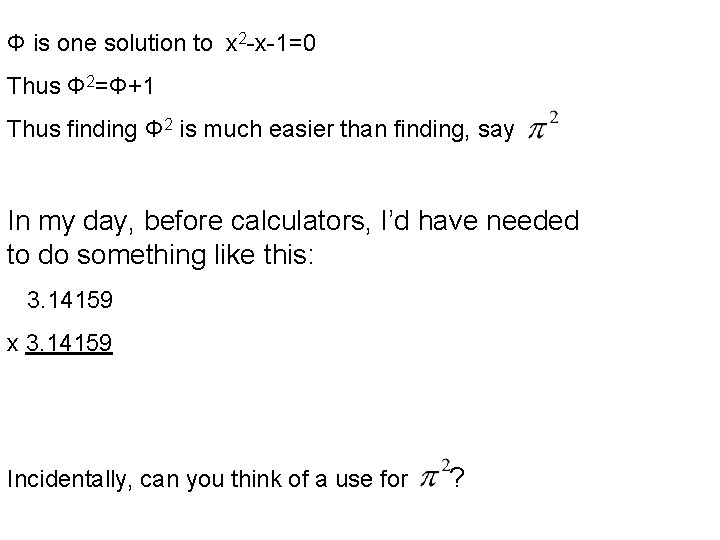
Φ is one solution to x 2 -x-1=0 Thus Φ 2=Φ+1 Thus finding Φ 2 is much easier than finding, say In my day, before calculators, I’d have needed to do something like this: 3. 14159 x 3. 14159 Incidentally, can you think of a use for ?
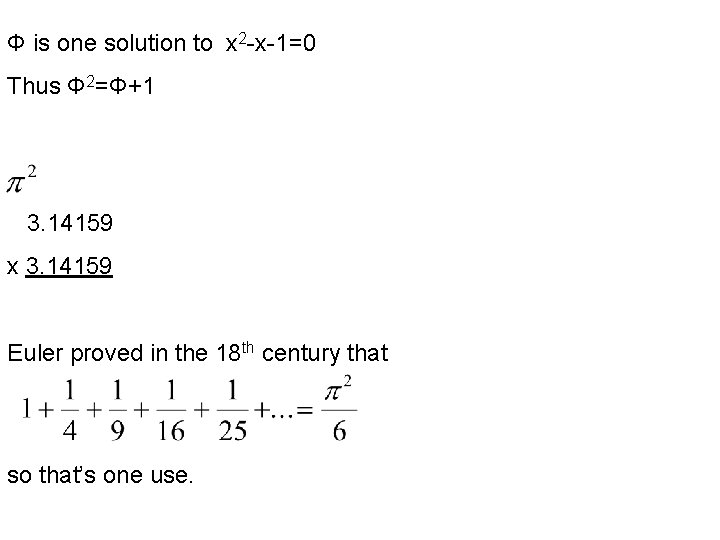
Φ is one solution to x 2 -x-1=0 Thus Φ 2=Φ+1 3. 14159 x 3. 14159 Euler proved in the 18 th century that so that’s one use.
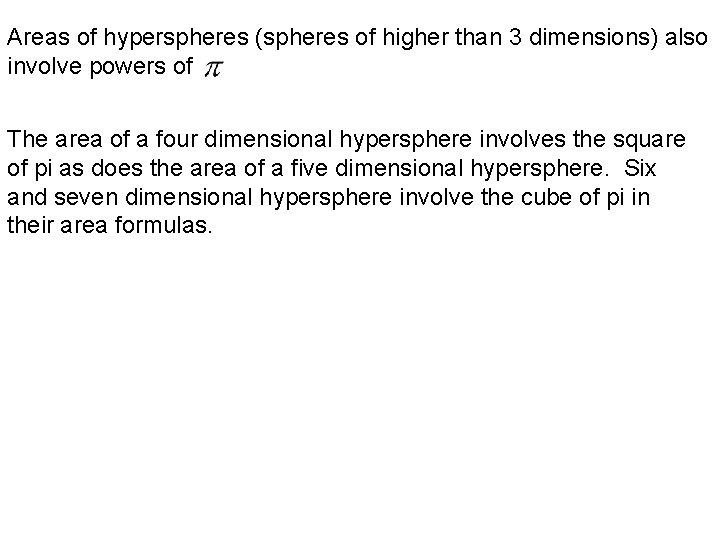
Areas of hyperspheres (spheres of higher than 3 dimensions) also involve powers of The area of a four dimensional hypersphere involves the square of pi as does the area of a five dimensional hypersphere. Six and seven dimensional hypersphere involve the cube of pi in their area formulas.
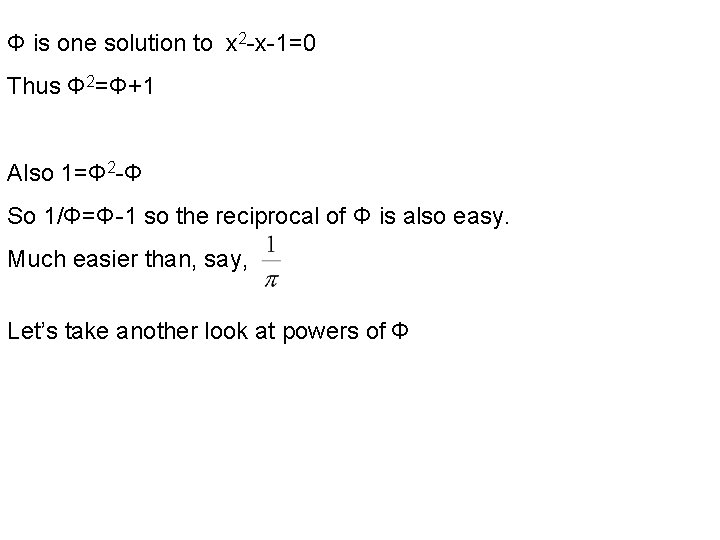
Φ is one solution to x 2 -x-1=0 Thus Φ 2=Φ+1 Also 1=Φ 2 -Φ So 1/Φ=Φ-1 so the reciprocal of Φ is also easy. Much easier than, say, Let’s take another look at powers of Φ
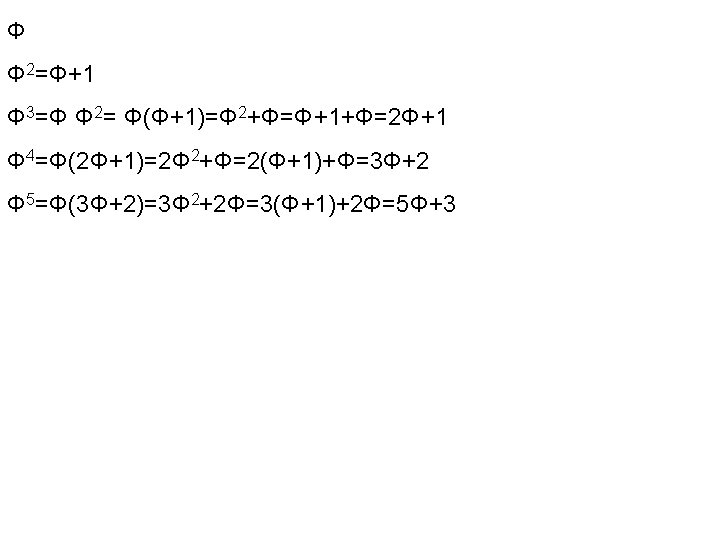
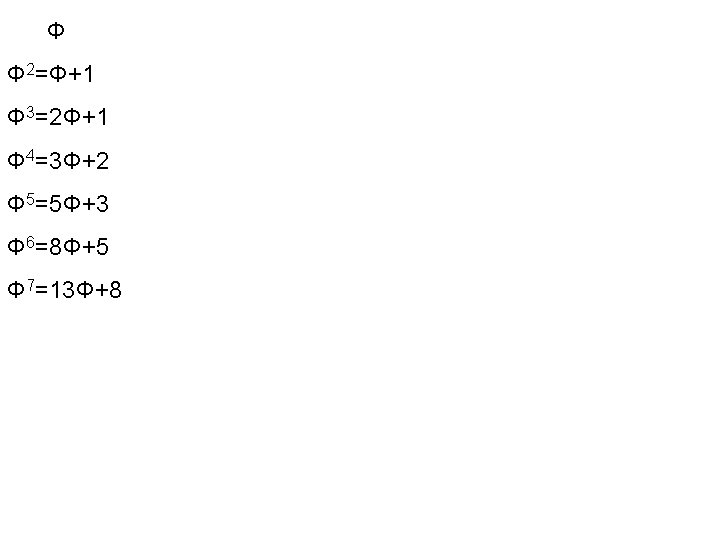
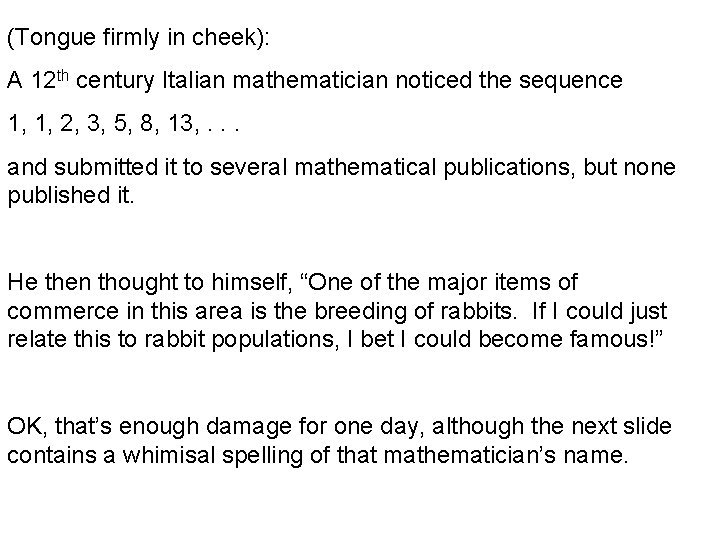
(Tongue firmly in cheek): A 12 th century Italian mathematician noticed the sequence 1, 1, 2, 3, 5, 8, 13, . . . and submitted it to several mathematical publications, but none published it. He then thought to himself, “One of the major items of commerce in this area is the breeding of rabbits. If I could just relate this to rabbit populations, I bet I could become famous!” OK, that’s enough damage for one day, although the next slide contains a whimisal spelling of that mathematician’s name.
F IB B O O O N N N • http: //web. aurora. edu/~bdillon/pentagon. ppt • http: //web. aurora. edu/~bdillon/golden. ppt • http: //web. aurora. edu/~bdillon/math. htm • The files pentagon 2. ppt and golden 2. ppt (on the same site) have more comments in them.
- Slides: 54