
COMMAS DIRECT ADDRESS Use commas to separate a
- Slides: 6
COMMAS
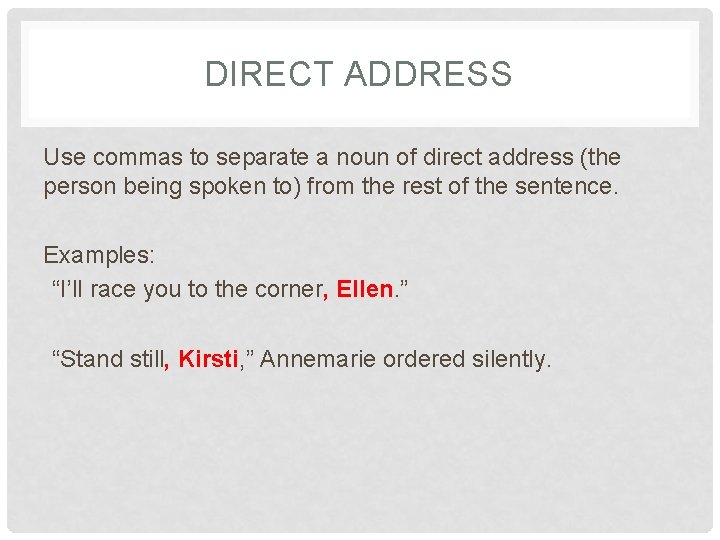
DIRECT ADDRESS Use commas to separate a noun of direct address (the person being spoken to) from the rest of the sentence. Examples: “I’ll race you to the corner, Ellen. ” “Stand still, Kirsti, ” Annemarie ordered silently.
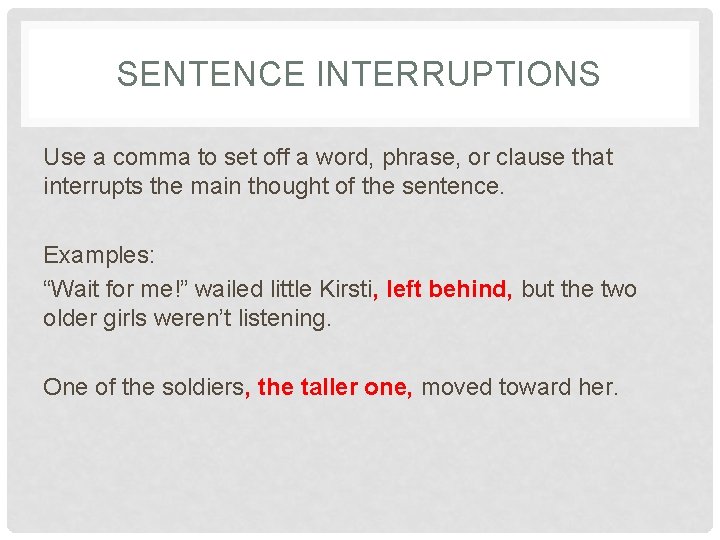
SENTENCE INTERRUPTIONS Use a comma to set off a word, phrase, or clause that interrupts the main thought of the sentence. Examples: “Wait for me!” wailed little Kirsti, left behind, but the two older girls weren’t listening. One of the soldiers, the taller one, moved toward her.
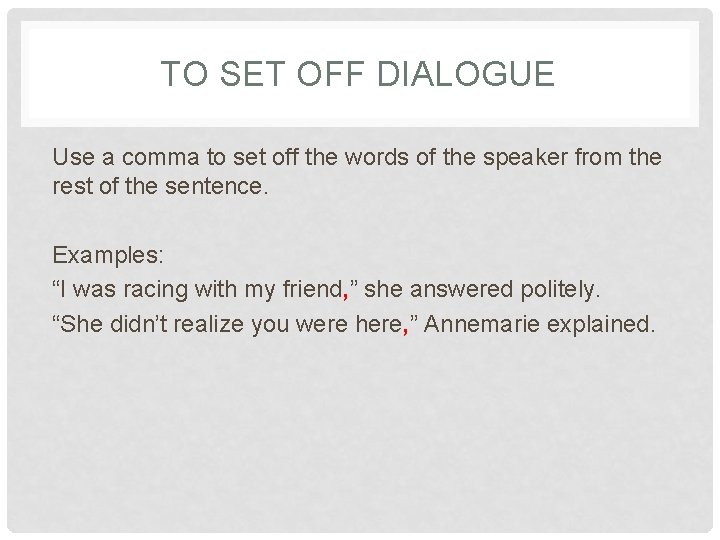
TO SET OFF DIALOGUE Use a comma to set off the words of the speaker from the rest of the sentence. Examples: “I was racing with my friend, ” she answered politely. “She didn’t realize you were here, ” Annemarie explained.
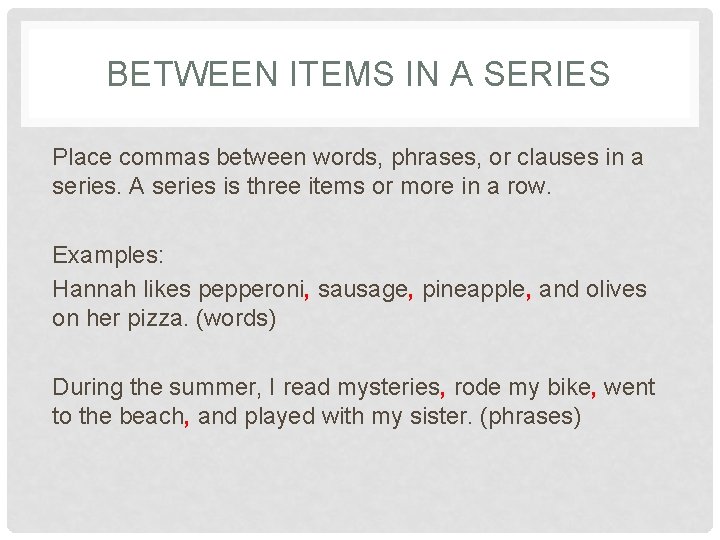
BETWEEN ITEMS IN A SERIES Place commas between words, phrases, or clauses in a series. A series is three items or more in a row. Examples: Hannah likes pepperoni, sausage, pineapple, and olives on her pizza. (words) During the summer, I read mysteries, rode my bike, went to the beach, and played with my sister. (phrases)
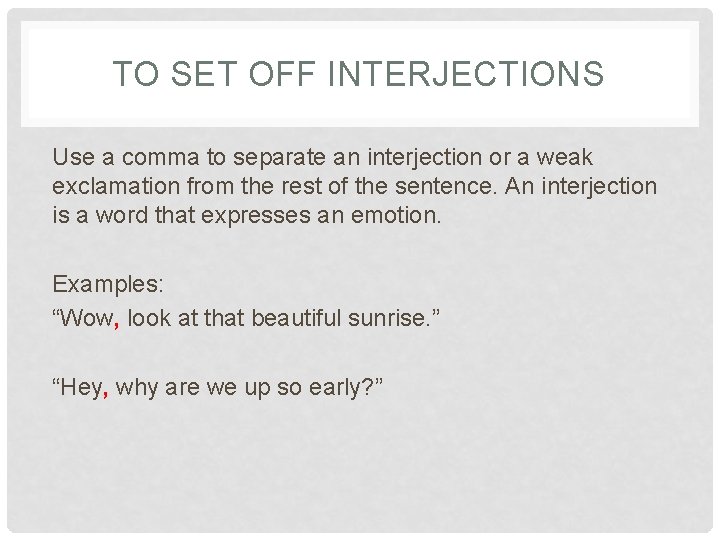
TO SET OFF INTERJECTIONS Use a comma to separate an interjection or a weak exclamation from the rest of the sentence. An interjection is a word that expresses an emotion. Examples: “Wow, look at that beautiful sunrise. ” “Hey, why are we up so early? ”