
Commands in Spanish Three Types of Commands Informal

- Slides: 14
Commands in Spanish
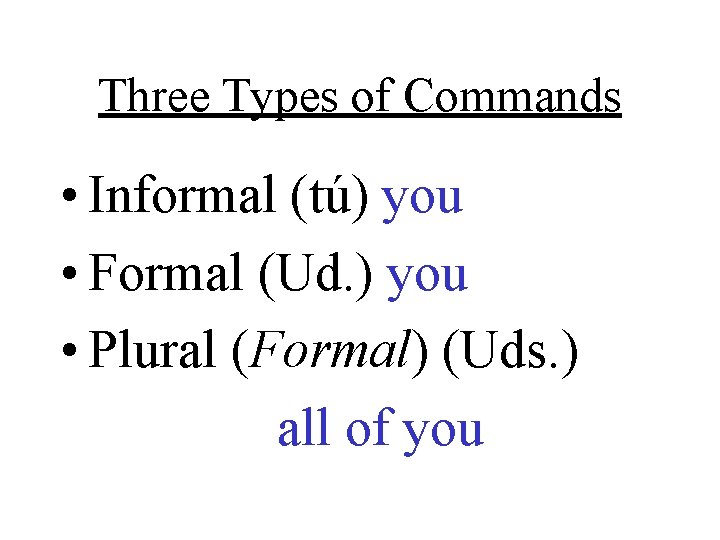
Three Types of Commands • Informal (tú) you • Formal (Ud. ) you • Plural (Formal) (Uds. ) all of you
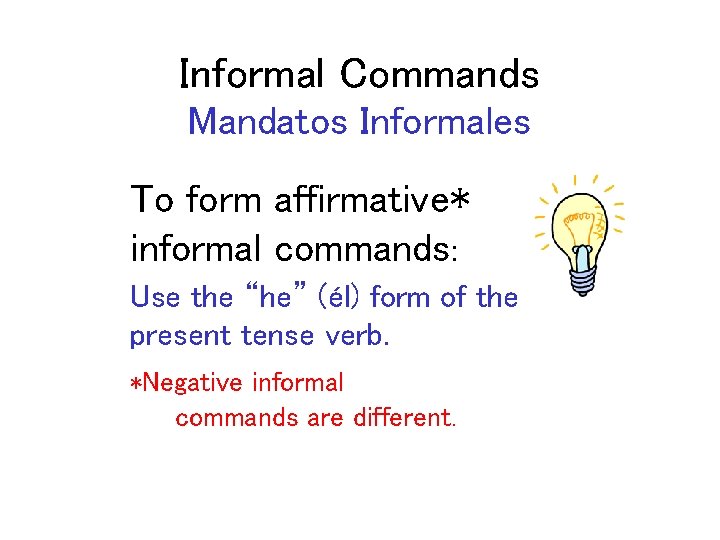
Informal Commands Mandatos Informales To form affirmative* informal commands: Use the “he” (él) form of the present tense verb. *Negative informal commands are different.
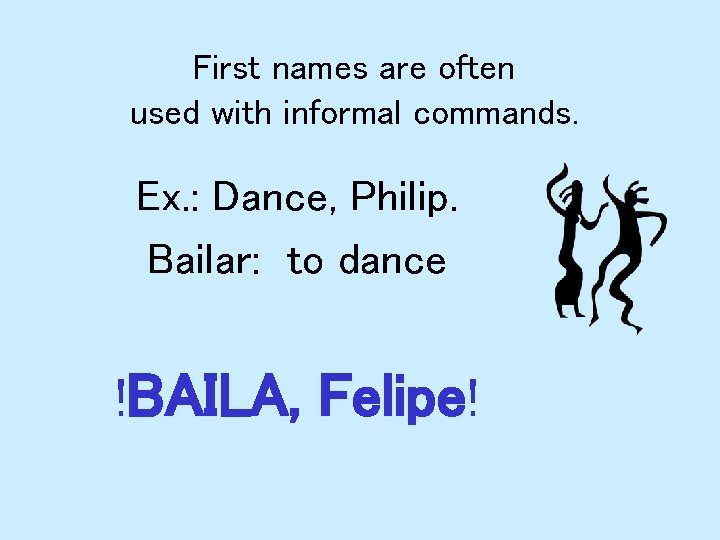
First names are often used with informal commands. Ex. : Dance, Philip. Bailar: to dance !BAILA, Felipe!
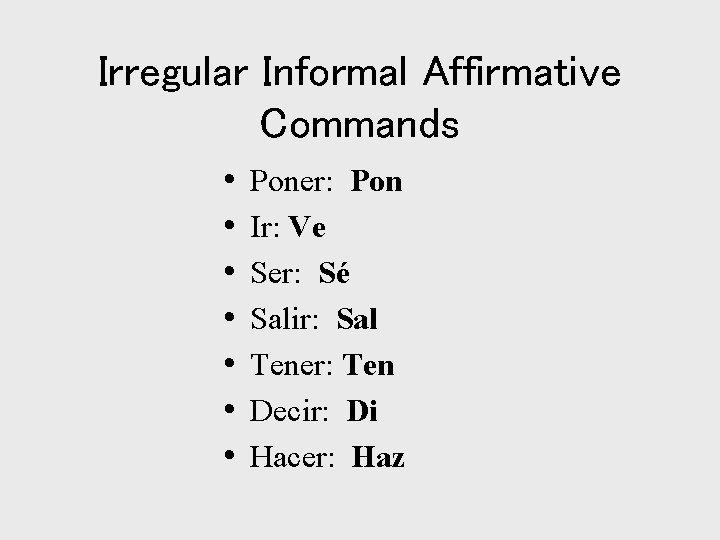
Irregular Informal Affirmative Commands • • Poner: Pon Ir: Ve Ser: Sé Salir: Sal Tener: Ten Decir: Di Hacer: Haz
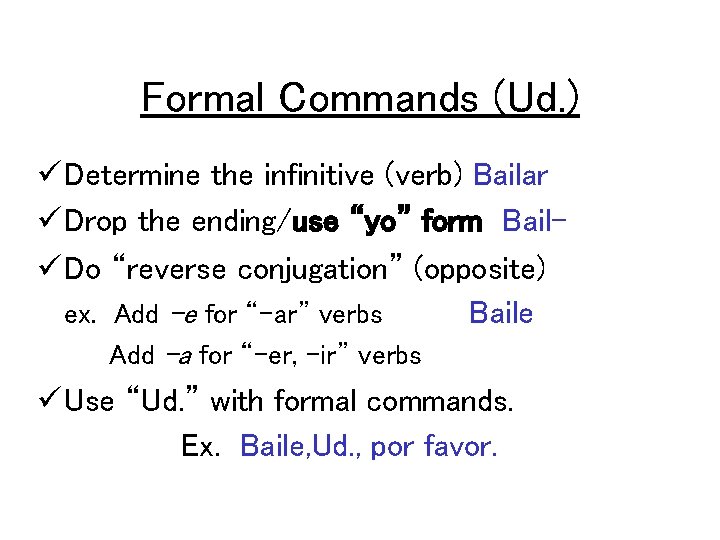
Formal Commands (Ud. ) ü Determine the infinitive (verb) Bailar ü Drop the ending/use “yo” form Bailü Do “reverse conjugation” (opposite) ex. Add –e for “-ar” verbs Baile Add –a for “-er, -ir” verbs ü Use “Ud. ” with formal commands. Ex. Baile, Ud. , por favor.
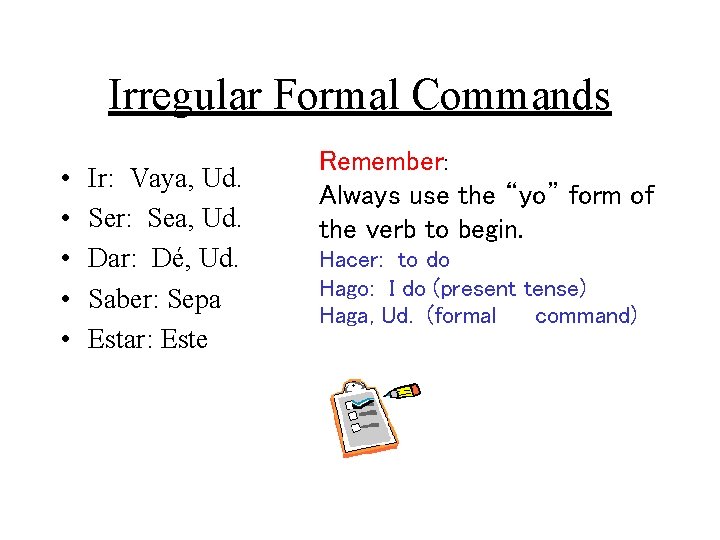
Irregular Formal Commands • • • Ir: Vaya, Ud. Ser: Sea, Ud. Dar: Dé, Ud. Saber: Sepa Estar: Este Remember: Always use the “yo” form of the verb to begin. Hacer: to do Hago: I do (present tense) Haga, Ud. (formal command)
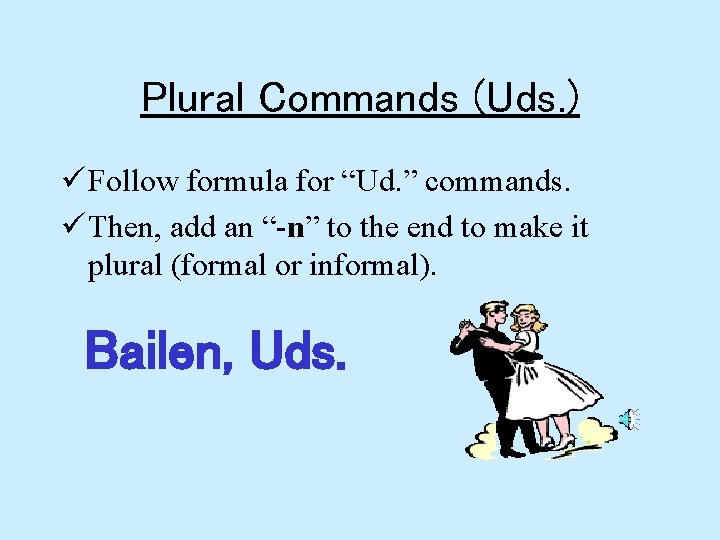
Plural Commands (Uds. ) ü Follow formula for “Ud. ” commands. ü Then, add an “-n” to the end to make it plural (formal or informal). Bailen, Uds.
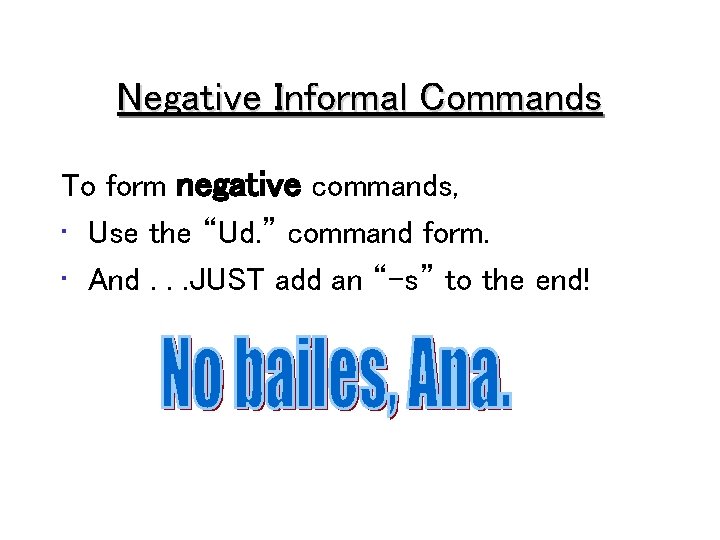
Negative Informal Commands To form negative commands, • Use the “Ud. ” command form. • And. . . JUST add an “-s” to the end!
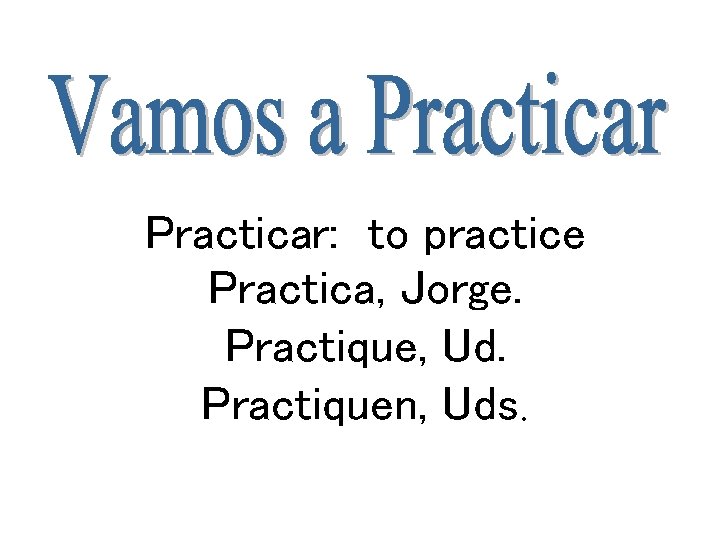
Practicar: to practice Practica, Jorge. Practique, Ud. Practiquen, Uds.
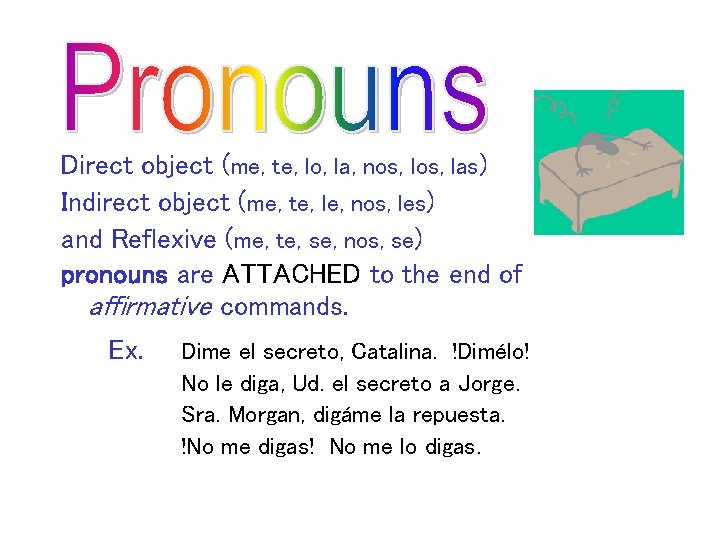
Direct object (me, te, lo, la, nos, las) Indirect object (me, te, le, nos, les) and Reflexive (me, te, se, nos, se) pronouns are ATTACHED to the end of affirmative commands. Ex. Dime el secreto, Catalina. !Dimélo! No le diga, Ud. el secreto a Jorge. Sra. Morgan, digáme la repuesta. !No me digas! No me lo digas.
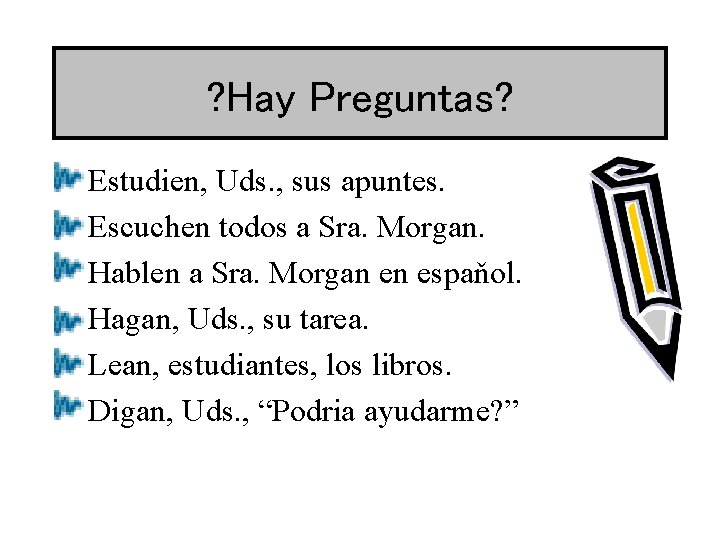
? Hay Preguntas? • • • Estudien, Uds. , sus apuntes. Escuchen todos a Sra. Morgan. Hablen a Sra. Morgan en espaňol. Hagan, Uds. , su tarea. Lean, estudiantes, los libros. Digan, Uds. , “Podria ayudarme? ”
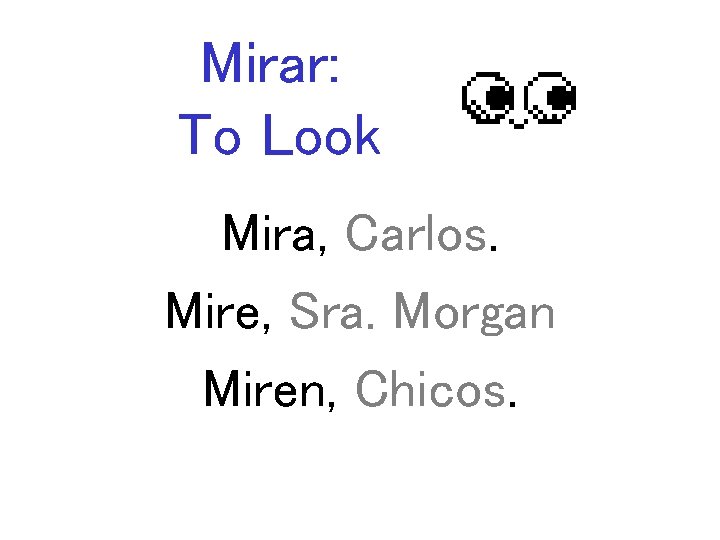
Mirar: To Look Mira, Carlos. Mire, Sra. Morgan Miren, Chicos.
Works Cited © Ferris Bueller’s Voice: http: //soundamerica. com © Eyes http: //hoxie. org © Pencil http: //hoxie. org