
COMMAND TERMS Verbs used in examination questions Command
COMMAND TERMS Verbs used in examination questions.
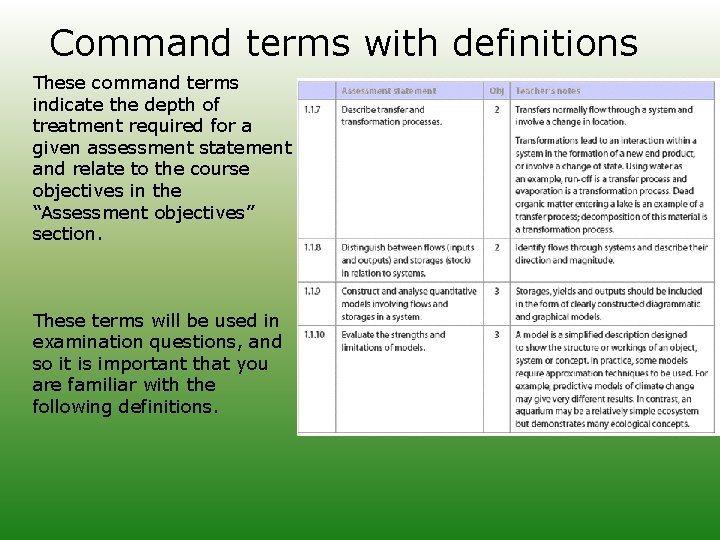
Command terms with definitions These command terms indicate the depth of treatment required for a given assessment statement and relate to the course objectives in the “Assessment objectives” section. These terms will be used in examination questions, and so it is important that you are familiar with the following definitions.
Objective 1 Objectives 1 are lower‑order skills and usually worth 1 or 2 points
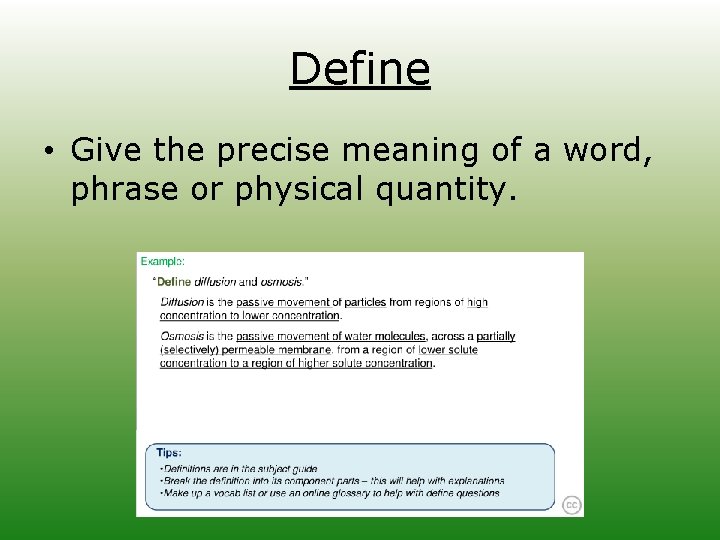
Define • Give the precise meaning of a word, phrase or physical quantity.
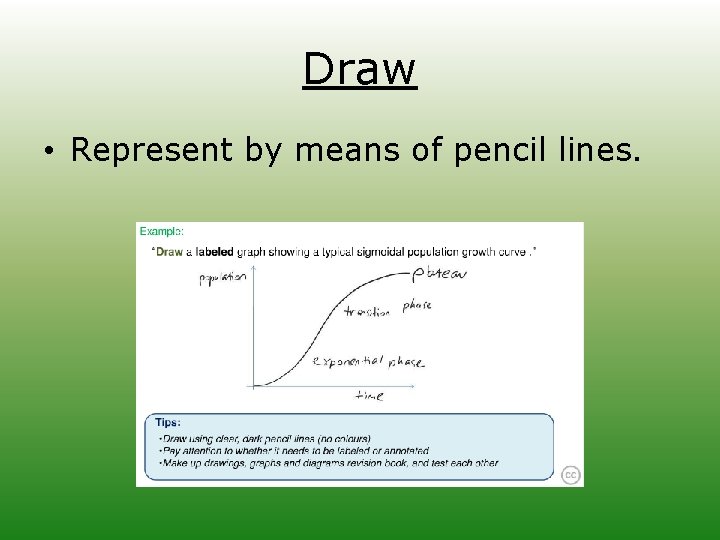
Draw • Represent by means of pencil lines.
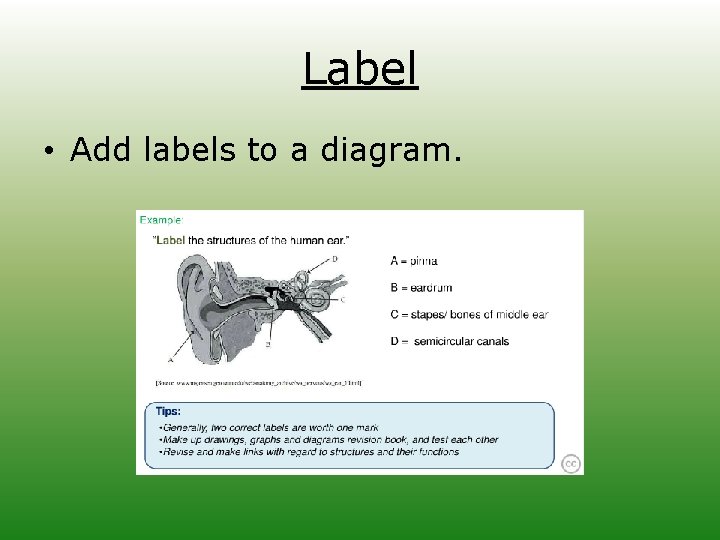
Label • Add labels to a diagram.
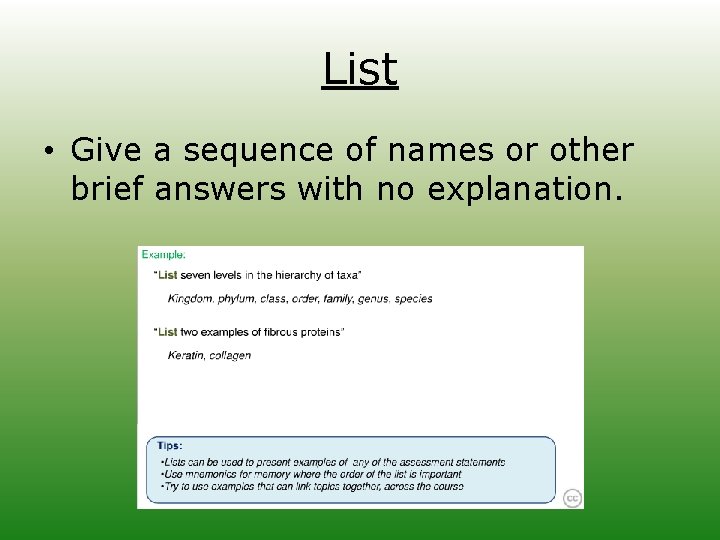
List • Give a sequence of names or other brief answers with no explanation.
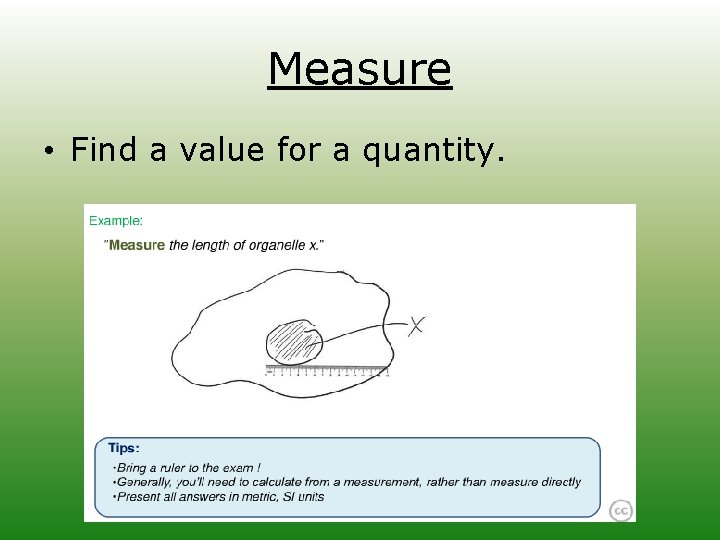
Measure • Find a value for a quantity.
State • Give a specific name, Value, or other brief answer without explanation or calculation.
Objective 2 Objectives 2 are lower‑order skills and
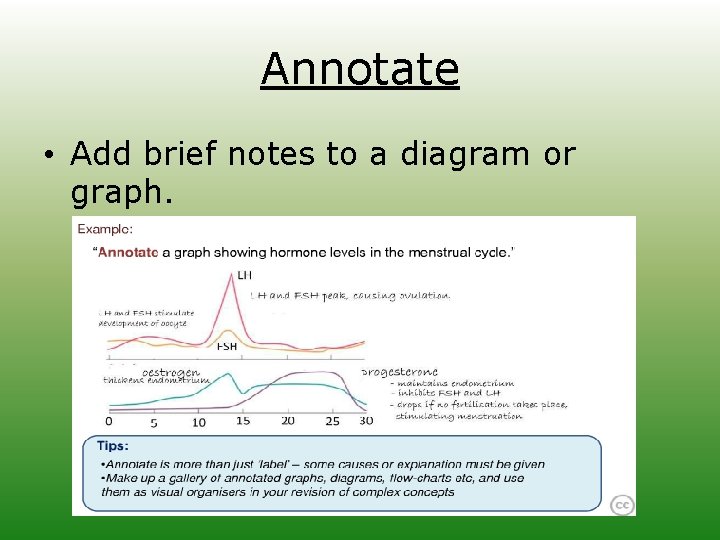
Annotate • Add brief notes to a diagram or graph.
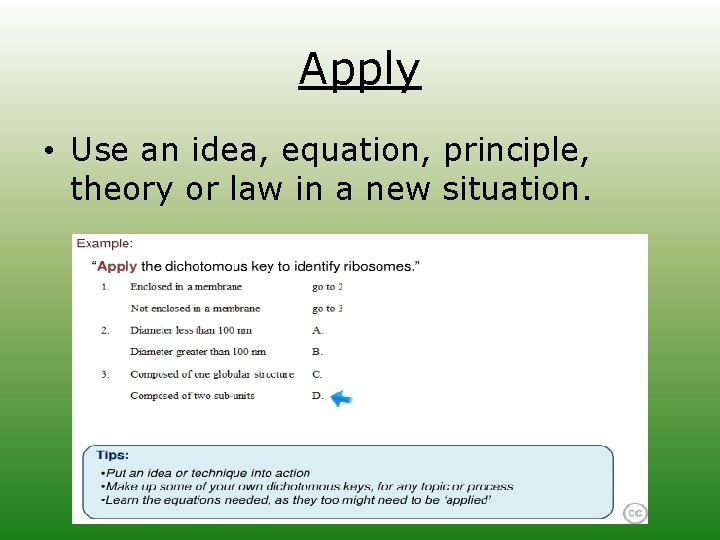
Apply • Use an idea, equation, principle, theory or law in a new situation.
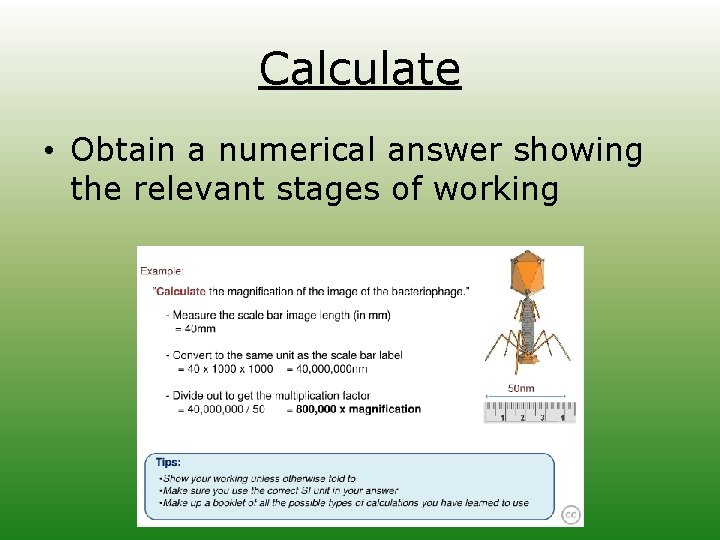
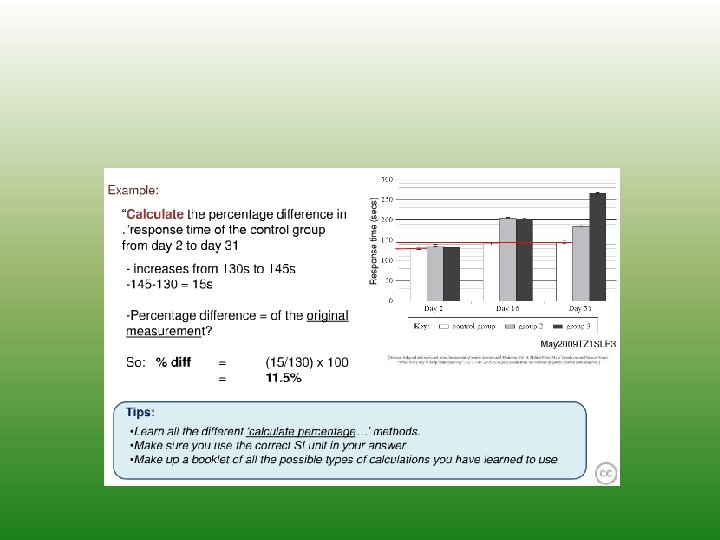
Calculate • Obtain a numerical answer showing the relevant stages of working
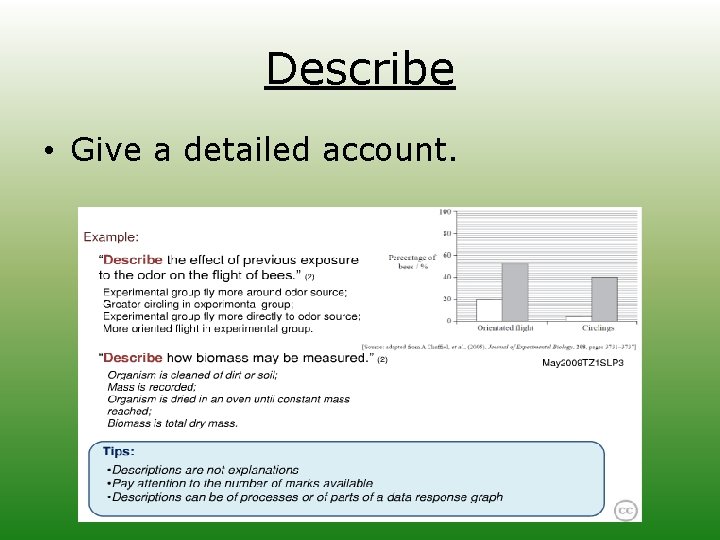
Describe • Give a detailed account.
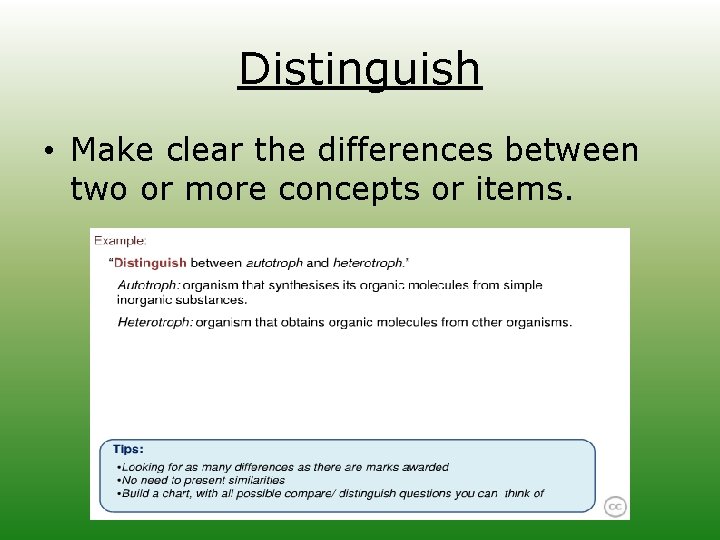
Distinguish • Make clear the differences between two or more concepts or items.
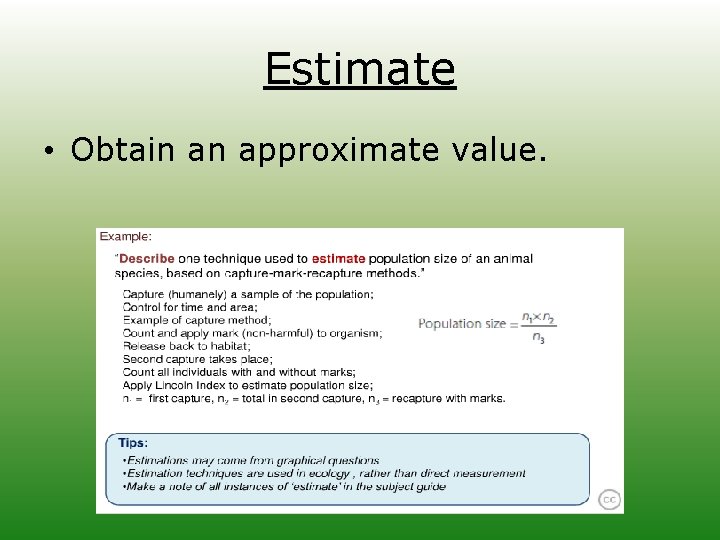
Estimate • Obtain an approximate value.
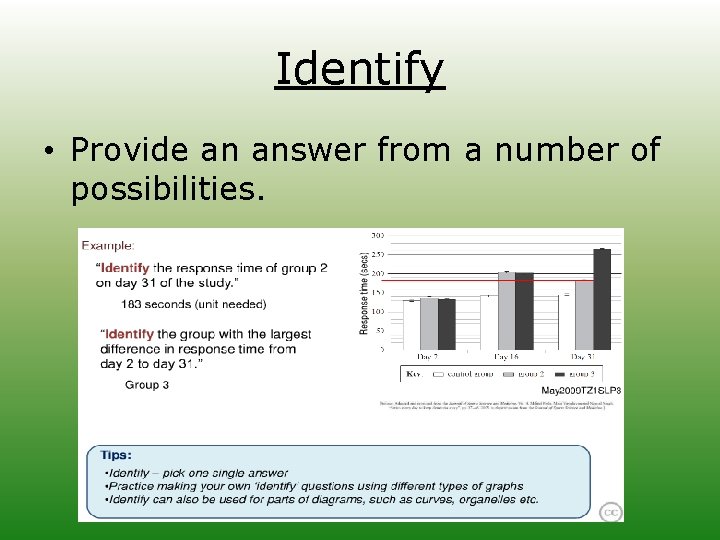
Identify • Provide an answer from a number of possibilities.
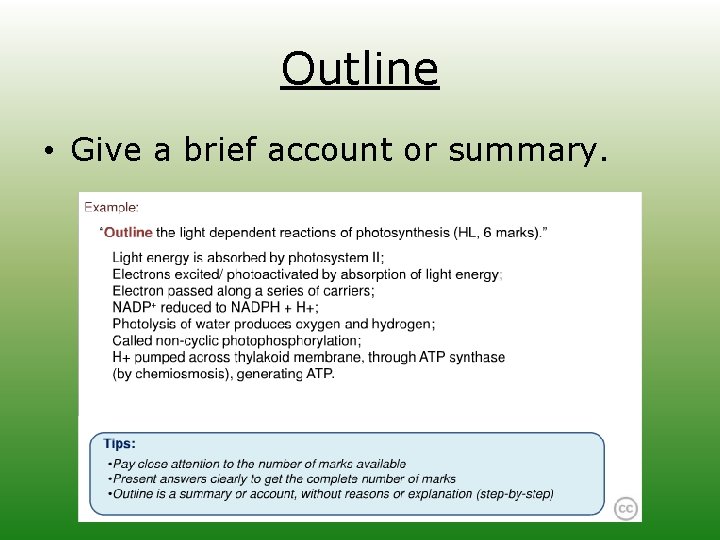
Outline • Give a brief account or summary.
Objective 3 objectives 3 relate to higher-order skills and have a higher point value on the test.
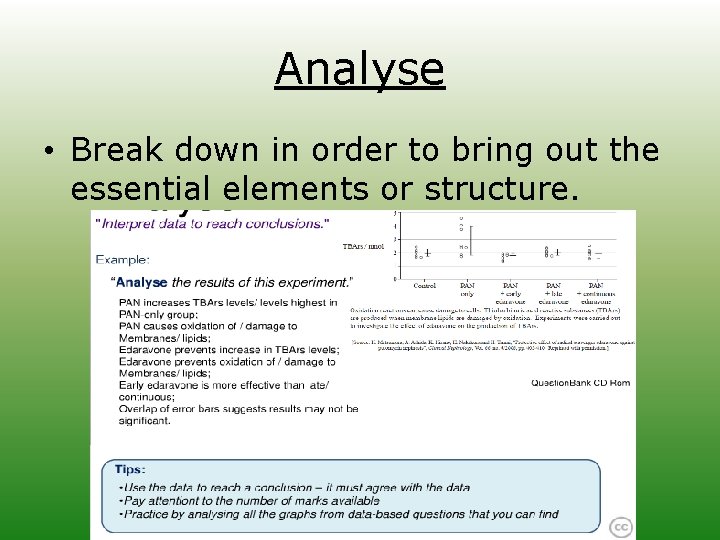
Analyse • Break down in order to bring out the essential elements or structure.
Comment • Give a judgment based on a given statement or result of a calculation.
Compare or Compare & Contrast • Give an account of similarities and differences between two (or more) items, referring to both (all) of them throughout. Compare and contrast the production : respiration ratios of a food production system you have studied and a natural ecosystem with a climax community. (6) Compare the efficiency of terrestrial and aquatic food productions
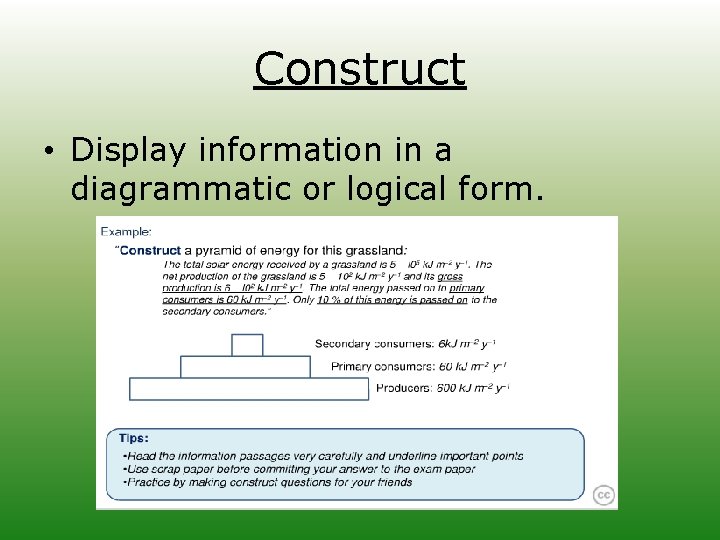
Construct • Display information in a diagrammatic or logical form.
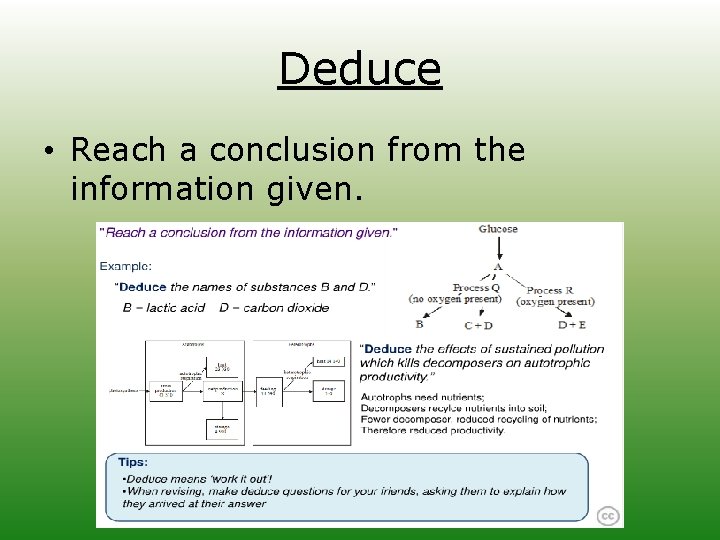
Deduce • Reach a conclusion from the information given.
Derive • Manipulate a mathematical relationship(s) to give a new equation or relationship.
Design • Produce a plan, simulation or model.
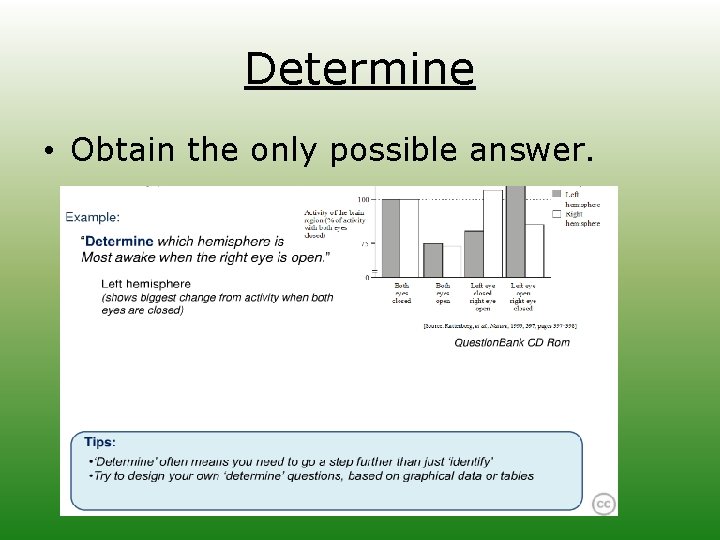
Determine • Obtain the only possible answer.
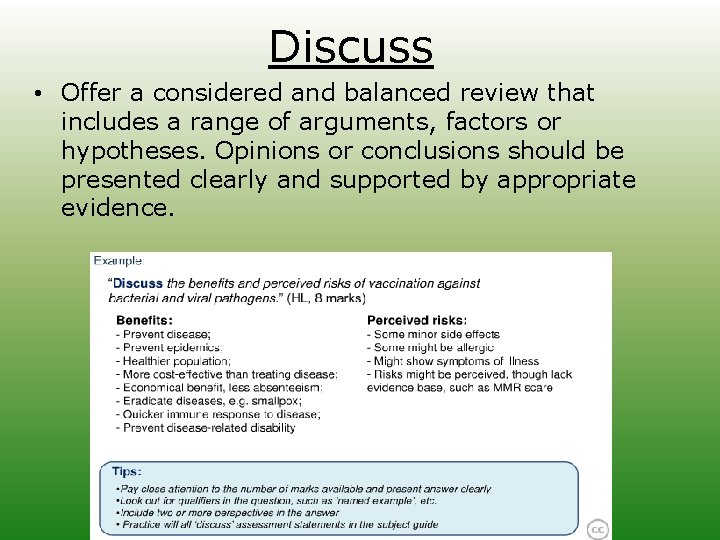
Discuss • Offer a considered and balanced review that includes a range of arguments, factors or hypotheses. Opinions or conclusions should be presented clearly and supported by appropriate evidence.
Evaluate • Make an appraisal by weighing up the strengths and limitations. Evaluate species based conservation as an approach for preserving biodiversity and suggest why trophy hunting (i. e. hunting animals for sport) may represent an acceptable method of achieving this goal.
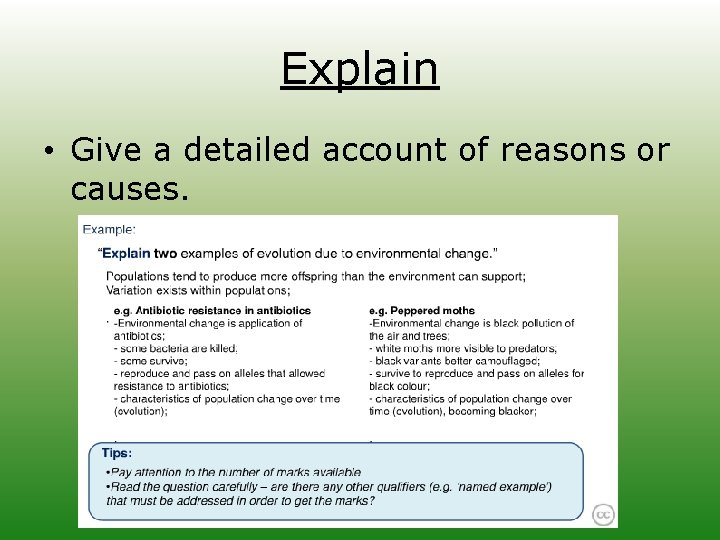
Explain • Give a detailed account of reasons or causes.
Justify • Give valid reasons or evidence to support an answer or conclusion. Justify whether you believe that sustainable development is possible on Earth in the long term.
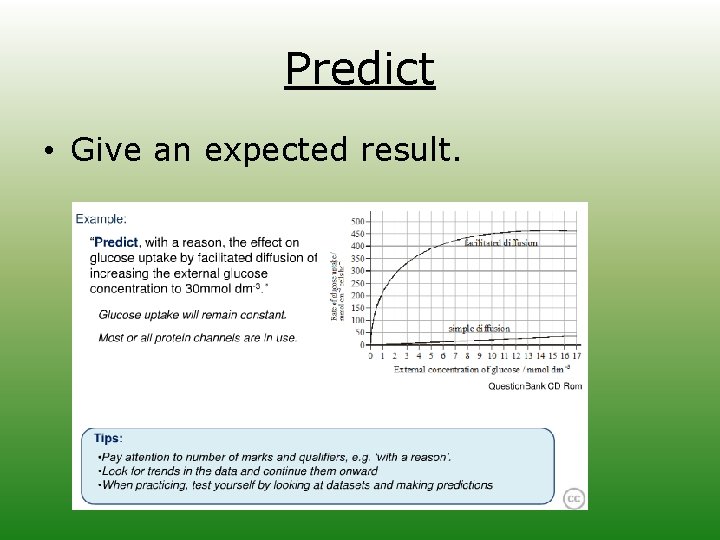
Predict • Give an expected result.
Solve • Obtain an answer using algebraic and/or numerical methods.
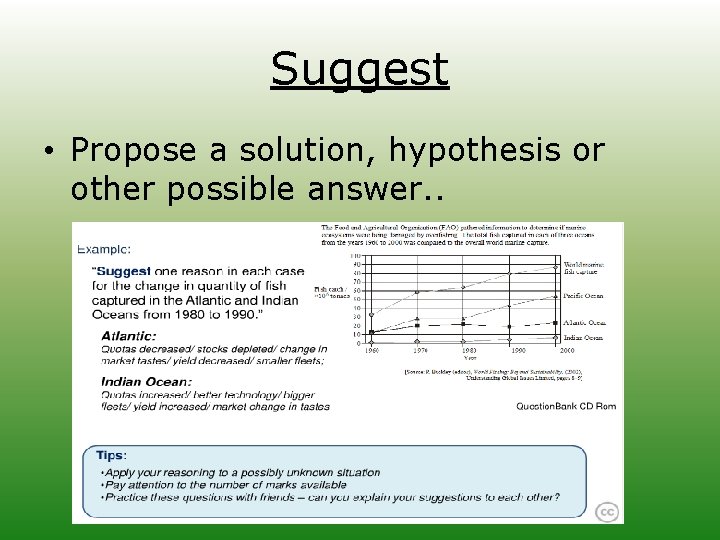
Suggest • Propose a solution, hypothesis or other possible answer. .
- Slides: 35