
Comma Usage Mrs Zakrewski 7 th Grade Language

- Slides: 21
Comma Usage Mrs. Zakrewski 7 th Grade Language Arts 1
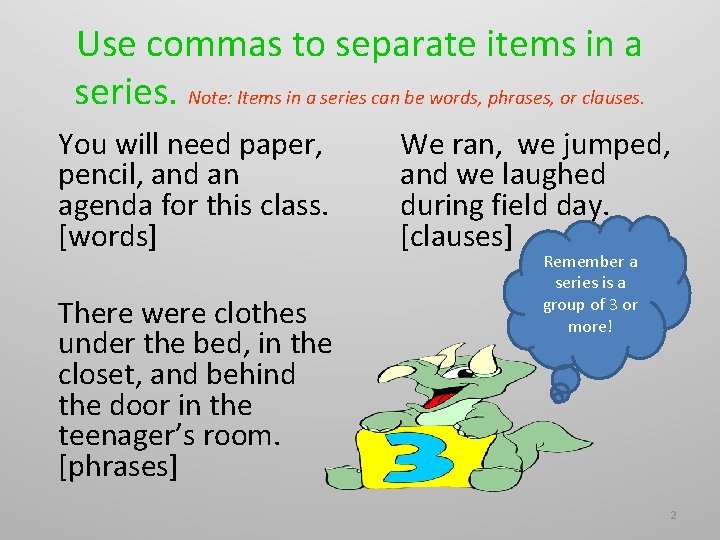
Use commas to separate items in a series. Note: Items in a series can be words, phrases, or clauses. You will need paper, pencil, and an agenda for this class. [words] There were clothes under the bed, in the closet, and behind the door in the teenager’s room. [phrases] We ran, we jumped, and we laughed during field day. [clauses] Remember a series is a group of 3 or more! 2
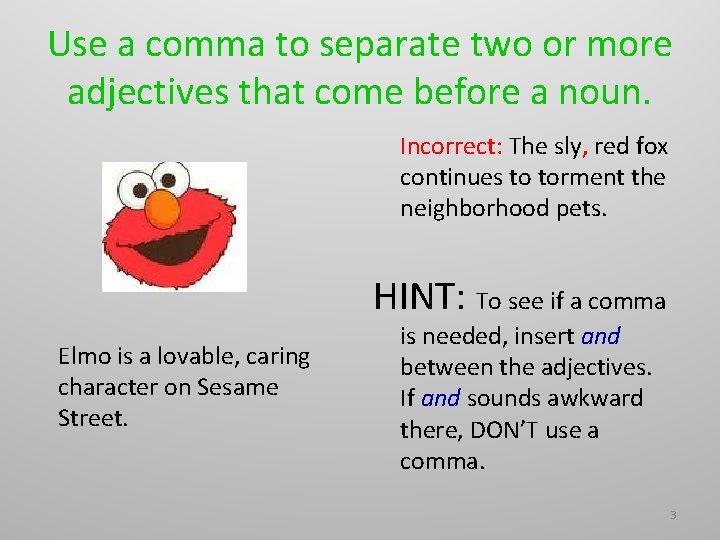
Use a comma to separate two or more adjectives that come before a noun. Incorrect: The sly, red fox continues to torment the neighborhood pets. HINT: To see if a comma Elmo is a lovable, caring character on Sesame Street. is needed, insert and between the adjectives. If and sounds awkward there, DON’T use a comma. 3
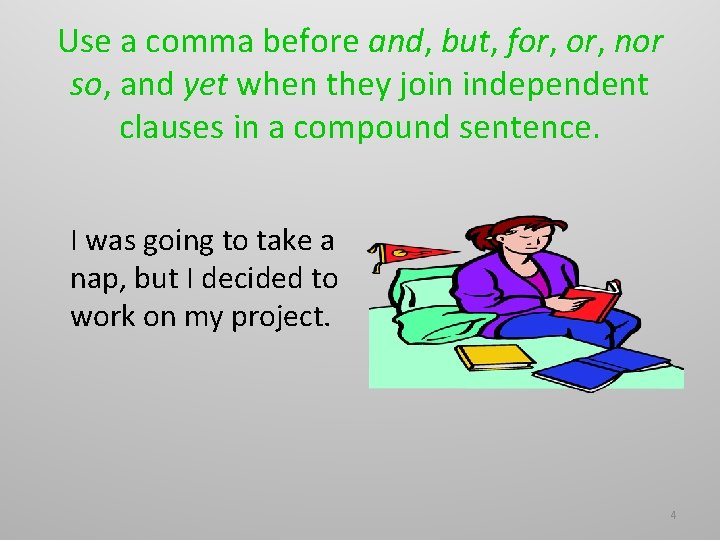
Use a comma before and, but, for, nor so, and yet when they join independent clauses in a compound sentence. I was going to take a nap, but I decided to work on my project. 4
Use commas to set off an expression that interrupts a sentence. My answer is correct, I think. 5
Use commas to set off nonessential participial phrases or nonessential subordinate clauses. HINT: Nonessential is information that is NOT needed to understand the meaning of the sentence. My brother, listening to music, did not hear me. 6
Use commas to set off appositives and appositive phrases that are nonessential. Our neighbor, Perry Platypus, is a secret agent. Jamaica, a popular island for tourists, is in the Caribbean Sea. 7
Use commas to set off words that are used in direct address. Peter, remember with great power there must also come great responsibility. 8
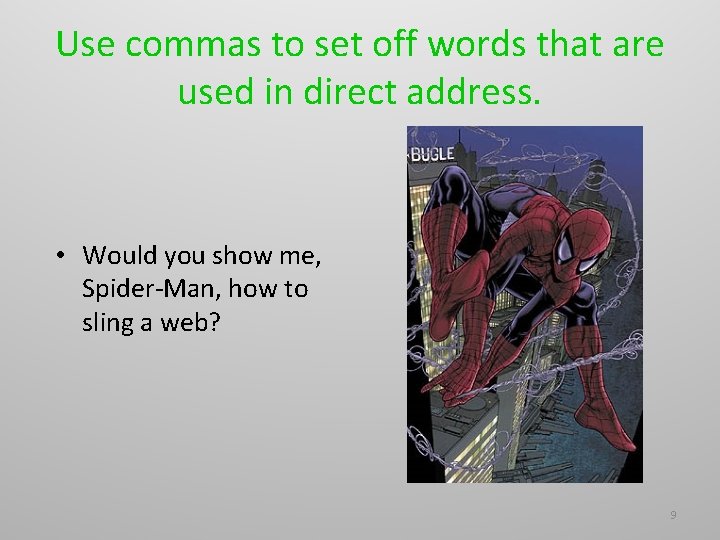
Use commas to set off words that are used in direct address. • Would you show me, Spider-Man, how to sling a web? 9
Use commas to set off parenthetical expressions. That test, in my opinion, was the most difficult test we have had in social studies so far this A parenthetical expression year. is a side remark that NOTE: adds information or relates ideas. 10
Use a comma after introductory words. Yes, you may turn in your extra credit. 11
Use a comma after an introductory participial phrase. Greeted with applause from the audience, Donna accepted her award. 12
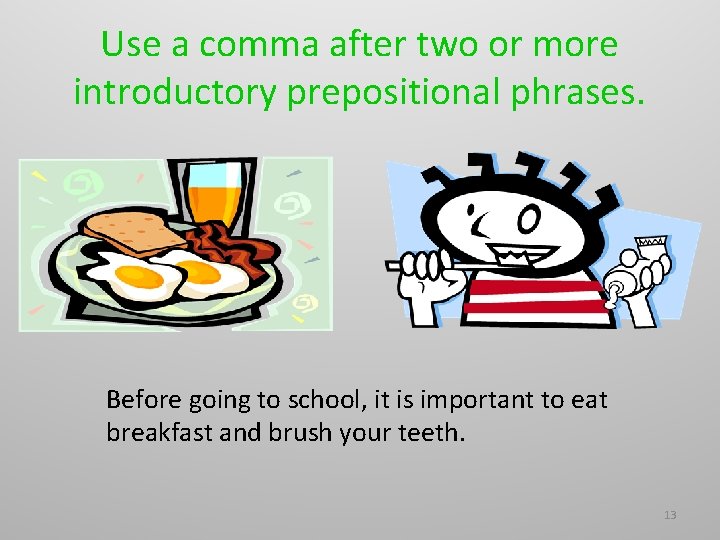
Use a comma after two or more introductory prepositional phrases. Before going to school, it is important to eat breakfast and brush your teeth. 13
Use a comma after an introductory adverb clause. After I finish my homework, I like to play video games. 14
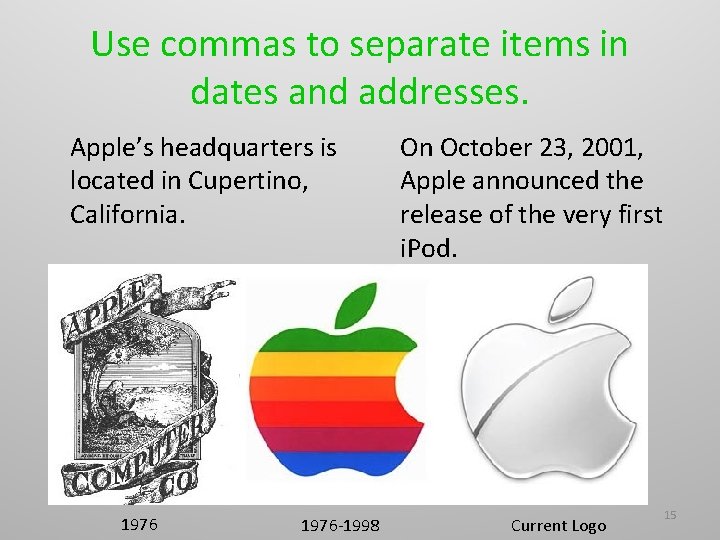
Use commas to separate items in dates and addresses. Apple’s headquarters is located in Cupertino, California. 1976 -1998 On October 23, 2001, Apple announced the release of the very first i. Pod. Current Logo 15
Use a comma after the salutation of a friendly letter and after the closing of any letter. Salutation Dear Mr. Truett, Closing Yours truly, 16
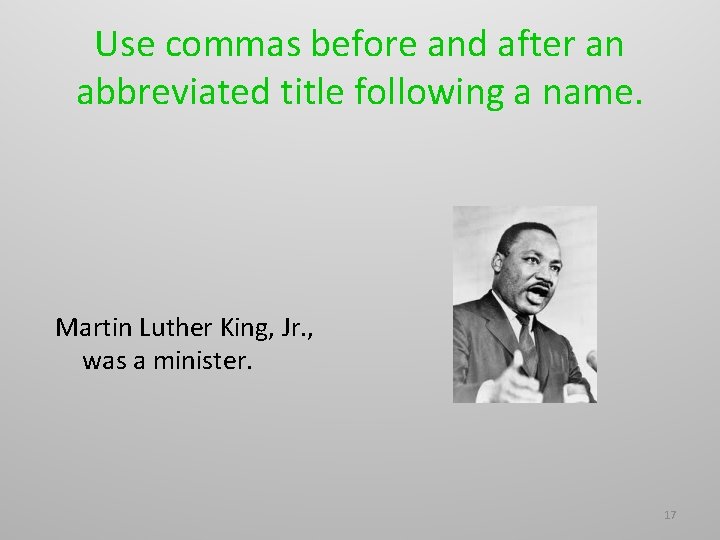
Use commas before and after an abbreviated title following a name. Martin Luther King, Jr. , was a minister. 17
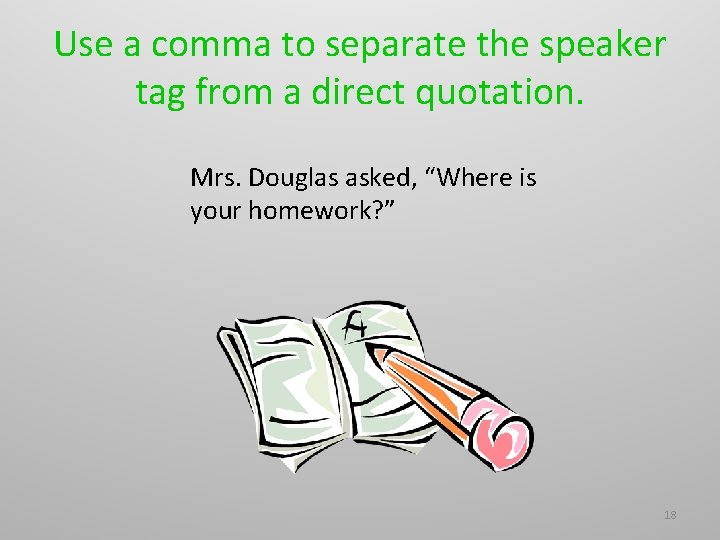
Use a comma to separate the speaker tag from a direct quotation. Mrs. Douglas asked, “Where is your homework? ” 18
Use a comma to separate the speaker tag from a direct quotation. “There will be a test on Thursday, ” said Mrs. Downs. NOTE: When a quotation comes before the speaker tag and is a statement or command, use a comma after the last word and before the closing quotation mark. 19
Use a comma to separate the speaker tag from a direct quotation. “That equation, ” said Mrs. Sims, “is equivalent to this equation. ” NOTE: In an interrupted quotation, use commas before and after the speaker tag. 20
21