
COMM 100 Day 3 The Self in Human

- Slides: 12
COMM 100 -Day 3
The Self in Human Communication • The self is a person’s essential being. • It distinguishes us from others • It is the subject of introspection and reflexive action. • It is an image of who we are.
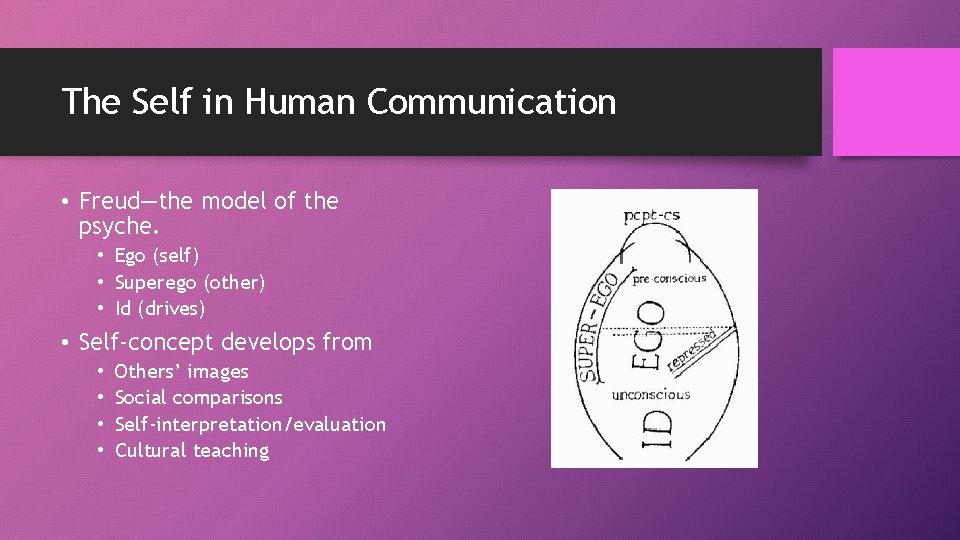
The Self in Human Communication • Freud—the model of the psyche. • Ego (self) • Superego (other) • Id (drives) • Self-concept develops from • • Others’ images Social comparisons Self-interpretation/evaluation Cultural teaching
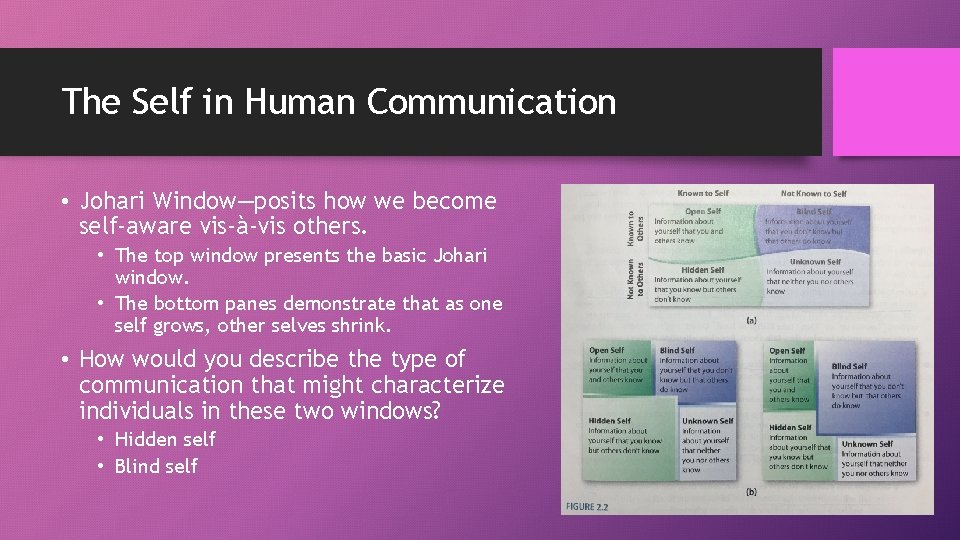
The Self in Human Communication • Johari Window—posits how we become self-aware vis-à-vis others. • The top window presents the basic Johari window. • The bottom panes demonstrate that as one self grows, other selves shrink. • How would you describe the type of communication that might characterize individuals in these two windows? • Hidden self • Blind self
Communication in Contexts • With family members • Direct definition • Identity scripts • Attachment styles • With peers • Reflected appraisals • Social comparisons • Self-disclosure • With society • • Race Gender Sexual affinity Socio-economic status
Self-Disclosure • Self-disclosure is a type of communication where you reveal information about yourself. • Rewards of self-disclosure: • Helps you gain a new perspective on yourself • Helps you to deal with problems • Improves communication by helping you understand the nature and messages of others • It demonstrates trust, care, respect, and develops more meaningful relationships
Self-Disclosure • Risks of self-disclosure: • The more you reveal, the more you open yourself to attack. • There are material risks—like LGBTQ children and their parents. • There are professional risks—pictures on facebook.
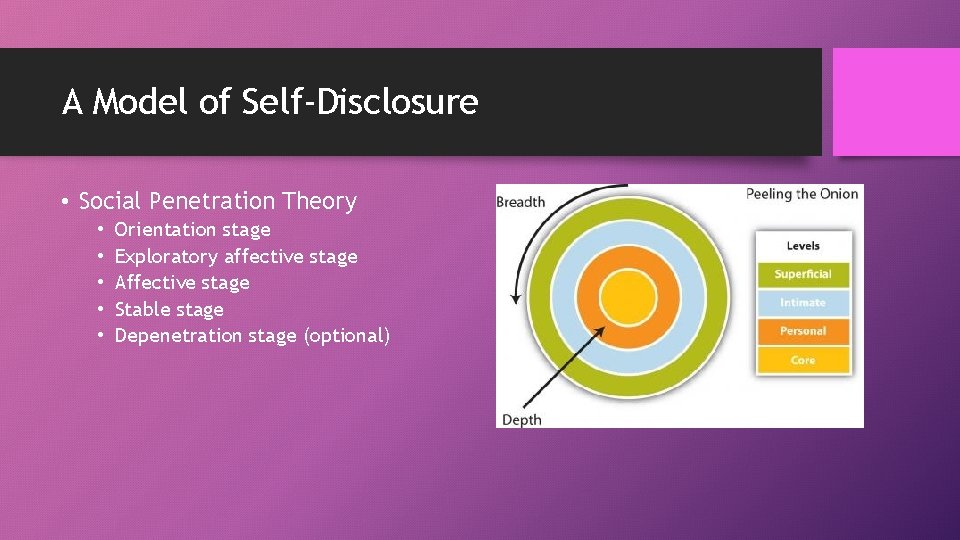
A Model of Self-Disclosure • Social Penetration Theory • • • Orientation stage Exploratory affective stage Affective stage Stable stage Depenetration stage (optional)
Impression Management • You cannot communicate. • We are always performing our “self” for others. • Impression management is the idea that we communicate we want through a complex process of performance.
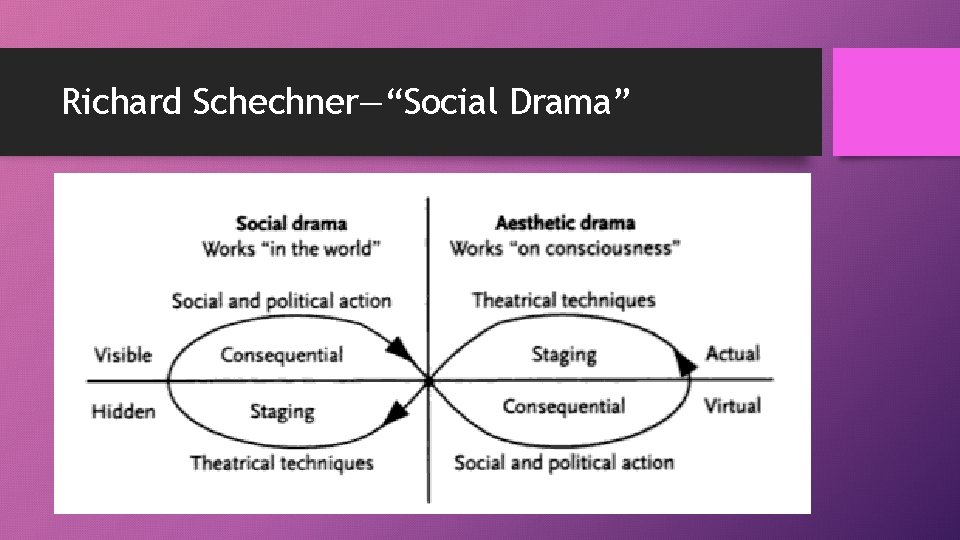
Richard Schechner—“Social Drama”
Impression Management • When do we perform? • What are the motivations to perform “self” to others?
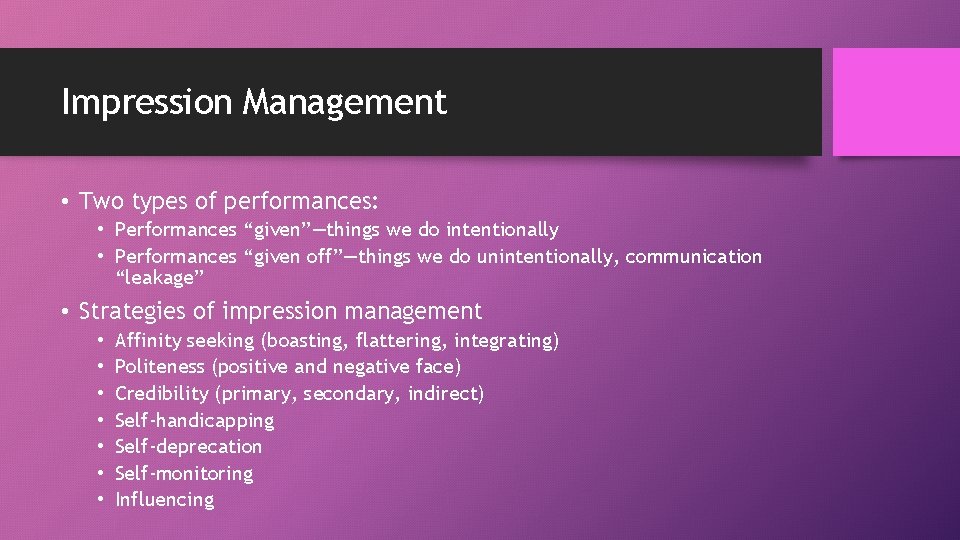
Impression Management • Two types of performances: • Performances “given”—things we do intentionally • Performances “given off”—things we do unintentionally, communication “leakage” • Strategies of impression management • • Affinity seeking (boasting, flattering, integrating) Politeness (positive and negative face) Credibility (primary, secondary, indirect) Self-handicapping Self-deprecation Self-monitoring Influencing