
COMI1230 Systems Analysis Design Week 1 Outline Systems
- Slides: 12
COMI-1230 Systems Analysis & Design
Week 1 Outline Systems Analysis & Design Overview of Systems Analysis
Systems Analysis & Design Overview What is Systems Analysis? Understanding and specifying in detail what the information system should do Much of what you do as an analyst will be gathering and digesting data and information What about Systems Design? Specifying in detail how the components of the system should be implemented It is critical that the Analysis is done before Design
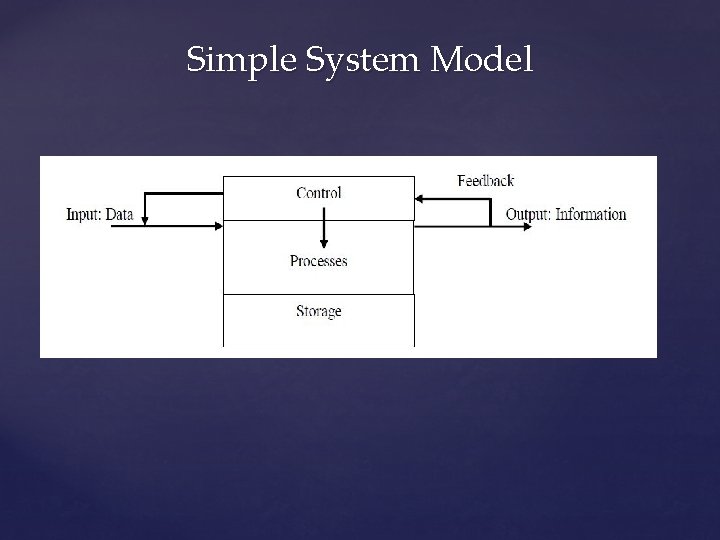
Systems Analysis & Design Overview Why is Systems Analysis & Design important? Critical to the design and support of Information Systems What is an Information System? Set of interrelated components that function to provide required information for a specified purpose Can be described using the simple systems model I—P—O
Simple System Model
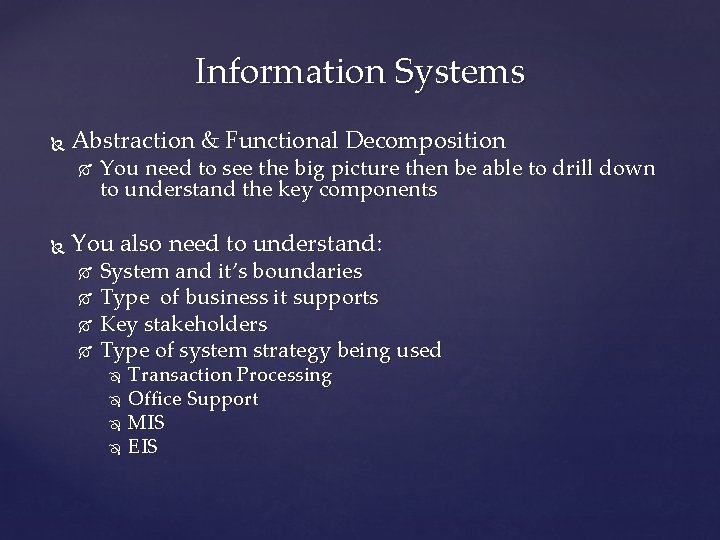
Information Systems Abstraction & Functional Decomposition You need to see the big picture then be able to drill down to understand the key components You also need to understand: System and it’s boundaries Type of business it supports Key stakeholders Type of system strategy being used Transaction Processing Office Support MIS EIS
The Systems Analyst Key skills: Technical knowledge and capability Business knowledge Of the specific business or at least the business sector Communication skills Teamwork and collaboration are critical Ability to communicate to a variety of different audiences in way they understand
Framework to manage Systems Analysis & Design System Development Life Cycle Types: Traditional approach JAD RAD OOAD (Chapter 3) Agile
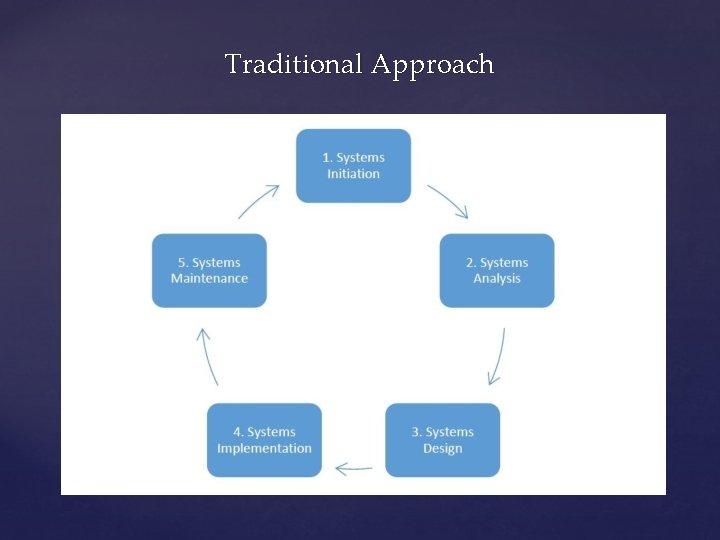
Traditional Approach Use Structured Analysis Rely on process models that show data flows into a system and is processed by applying business rules resulting in the desired result Primarily sequential More detailed I—P—O DFD’s are key element AKA Waterfall Model Five Phases Plan (or Initiation) Analysis Design Implementation Support (or Maintenance)
Traditional Approach
Alternate Approaches to Systems Development JAD (Joint Application Development) RAD (Rapid Application Development) Team based Involves the development teams and stakeholders to get more input throughout the process and hopefully speed up development Similar to JAD where it involves stakeholders and the development team in a very interactive iterative way to get feedback early and often in the process to speed up the development Agile More current approach Flexible alternative to Traditional Approach Builds upon the ideas of JAD and RAD
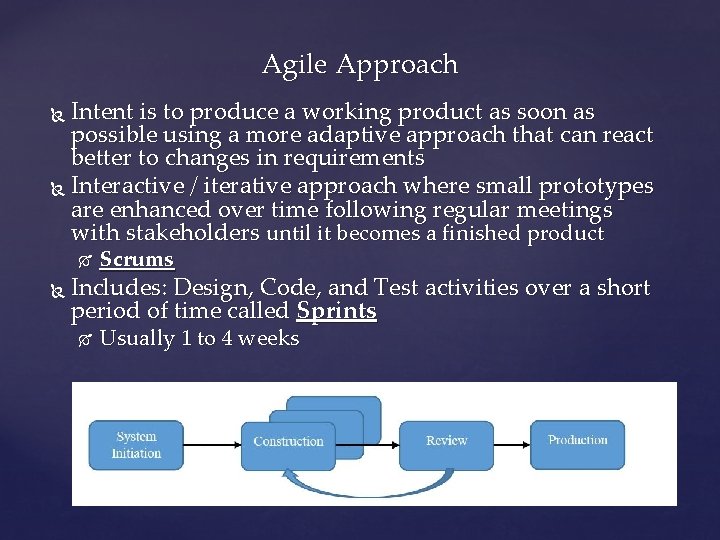
Agile Approach Intent is to produce a working product as soon as possible using a more adaptive approach that can react better to changes in requirements Interactive / iterative approach where small prototypes are enhanced over time following regular meetings with stakeholders until it becomes a finished product Scrums Usually 1 to 4 weeks Includes: Design, Code, and Test activities over a short period of time called Sprints