
COMETS KUIPER BELT AND SOLAR SYSTEM DYNAMICS Silvia
COMETS, KUIPER BELT AND SOLAR SYSTEM DYNAMICS Silvia Protopapa & Elias Roussos Lectures on “Origins of Solar Systems” February 13 -15, 2006 Part I: Solar System Dynamics
----Introduction to Solar System Dynamics---- Part I: Solar System Dynamics • Orbital elements & useful parameters • Orbital perturbations and their importance • Discovery of Oort Cloud and Kuiper Belt and basic facts for these two populations Part II: Lessons from Pluto for the origin of the Solar System (Silvia Protopapa) Part III: Comets (Cecilia Tubiana - SIII Seminar, 15/2/2006)
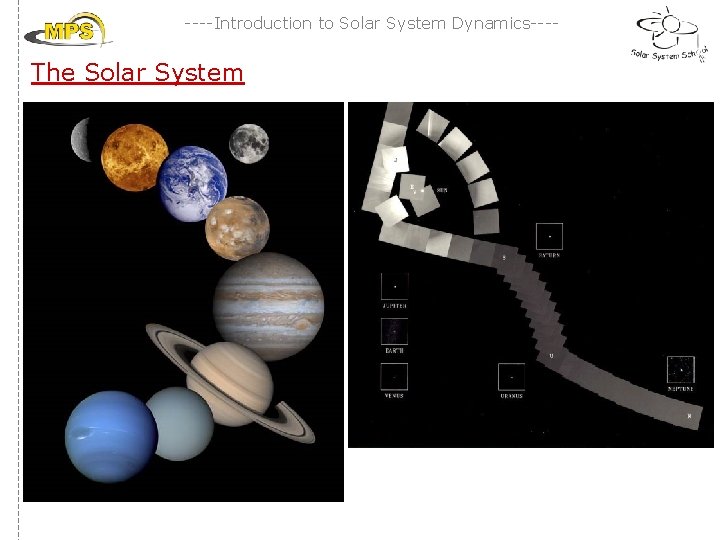
----Introduction to Solar System Dynamics---- The Solar System
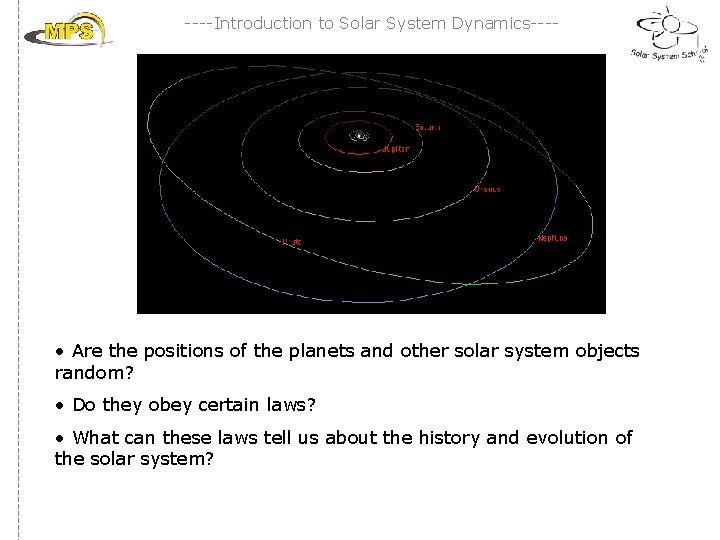
----Introduction to Solar System Dynamics---- • Are the positions of the planets and other solar system objects random? • Do they obey certain laws? • What can these laws tell us about the history and evolution of the solar system?
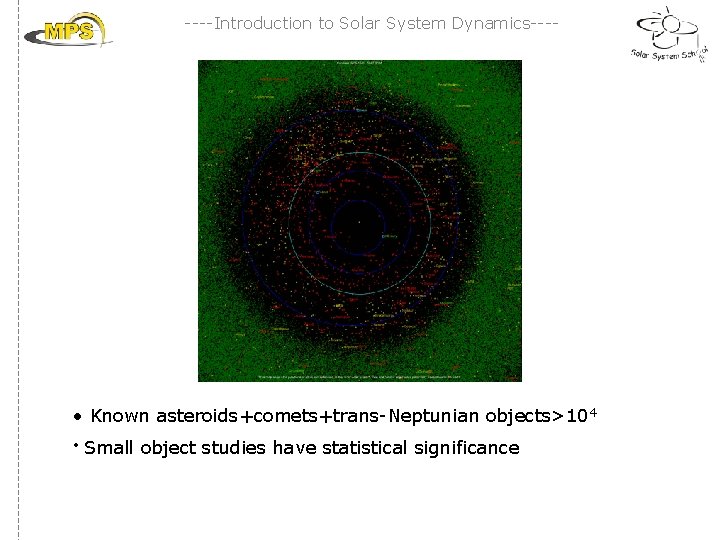
----Introduction to Solar System Dynamics---- • Known asteroids+comets+trans-Neptunian objects>104 • Small object studies have statistical significance
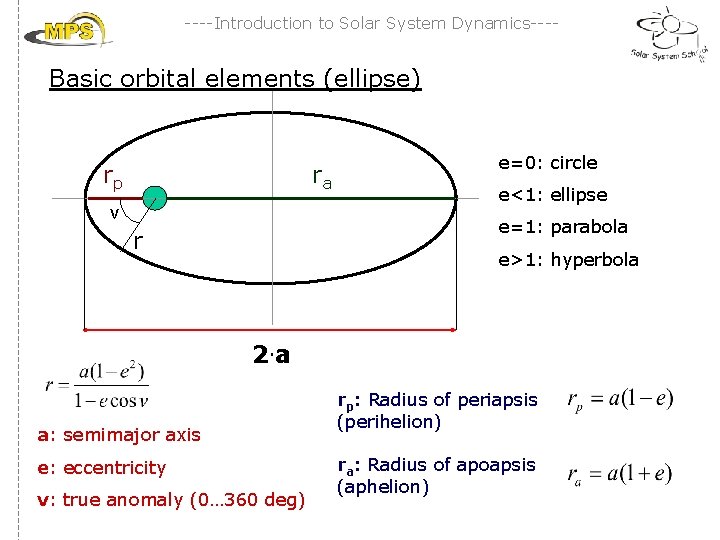
----Introduction to Solar System Dynamics---- Basic orbital elements (ellipse) rp ra v e=0: circle e<1: ellipse e=1: parabola r e>1: hyperbola 2. a a: semimajor axis e: eccentricity v: true anomaly (0… 360 deg) rp: Radius of periapsis (perihelion) ra: Radius of apoapsis (aphelion)
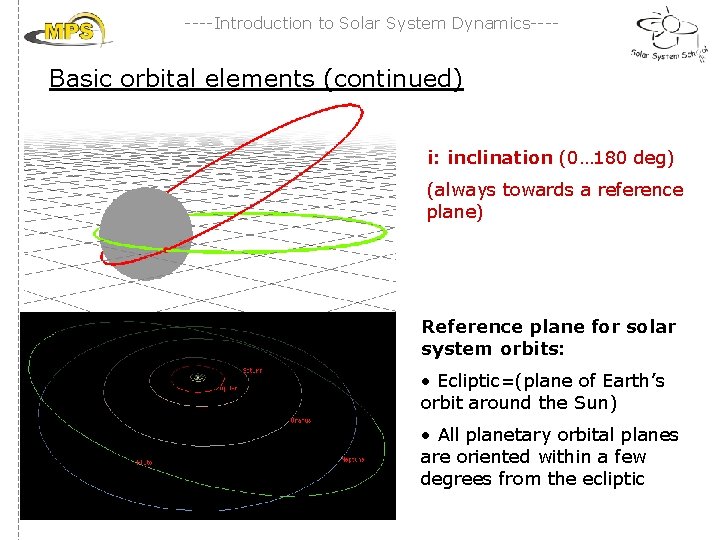
----Introduction to Solar System Dynamics---- Basic orbital elements (continued) i: inclination (0… 180 deg) (always towards a reference plane) Reference plane for solar system orbits: • Ecliptic=(plane of Earth’s orbit around the Sun) • All planetary orbital planes are oriented within a few degrees from the ecliptic
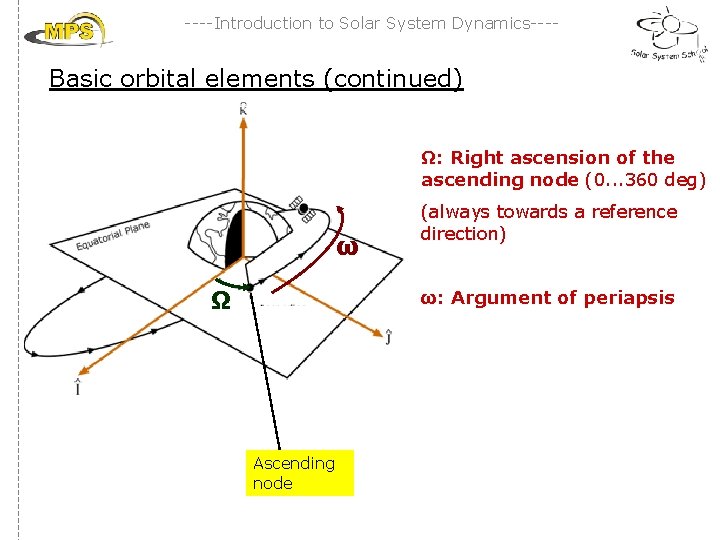
----Introduction to Solar System Dynamics---- Basic orbital elements (continued) Ω: Right ascension of the ascending node (0. . . 360 deg) ω Ω (always towards a reference direction) ω: Argument of periapsis Ascending node
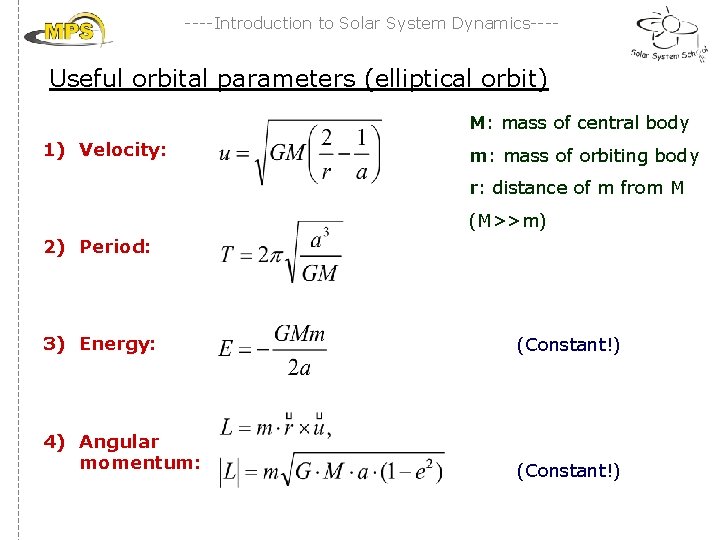
----Introduction to Solar System Dynamics---- Useful orbital parameters (elliptical orbit) M: mass of central body 1) Velocity: m: mass of orbiting body r: distance of m from M (M>>m) 2) Period: 3) Energy: (Constant!) 4) Angular momentum: (Constant!)
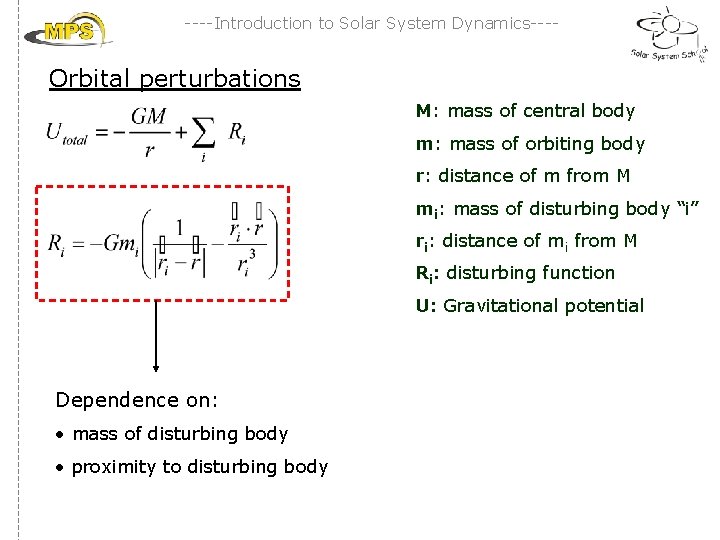
----Introduction to Solar System Dynamics---- Orbital perturbations M: mass of central body m: mass of orbiting body r: distance of m from M mi: mass of disturbing body “i” ri: distance of mi from M Ri: disturbing function U: Gravitational potential Dependence on: • mass of disturbing body • proximity to disturbing body
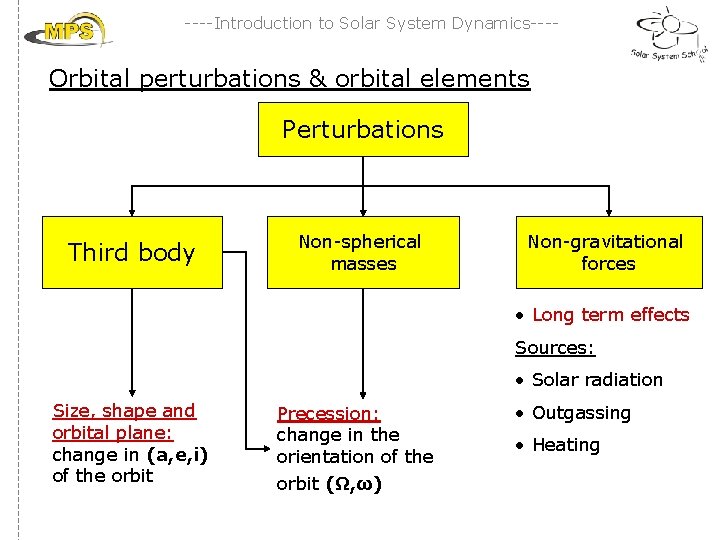
----Introduction to Solar System Dynamics---- Orbital perturbations & orbital elements Perturbations Third body Non-spherical masses Non-gravitational forces • Long term effects Sources: • Solar radiation Size, shape and orbital plane: change in (a, e, i) of the orbit Precession: change in the orientation of the orbit (Ω, ω) • Outgassing • Heating
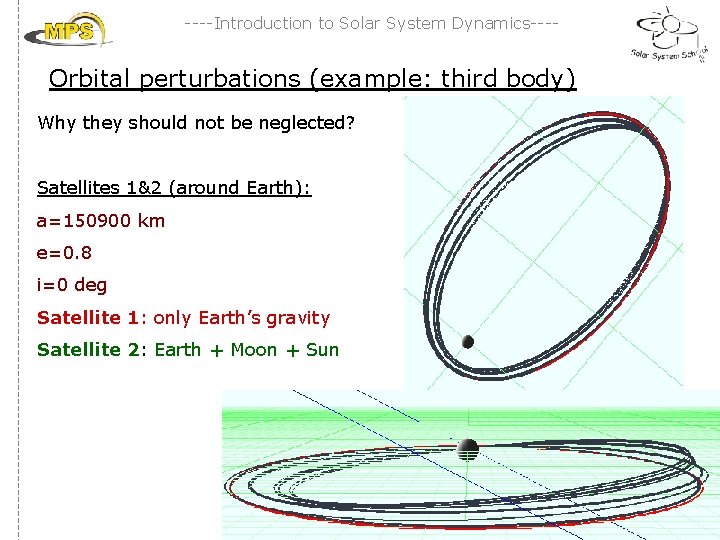
----Introduction to Solar System Dynamics---- Orbital perturbations (example: third body) Why they should not be neglected? Satellites 1&2 (around Earth): a=150900 km e=0. 8 i=0 deg Satellite 1: only Earth’s gravity Satellite 2: Earth + Moon + Sun

----Introduction to Solar System Dynamics---- Orbital perturbations: consequences 1. Collisions • Important in the early solar system • Not only the result of perturbations 2. Capture to orbit • Important for giant planets 3. Scattering of solar system objects • Escape orbits • Distant populations of small bodies 4. Chaotic orbits 5. Stable or unstable configurations: resonances
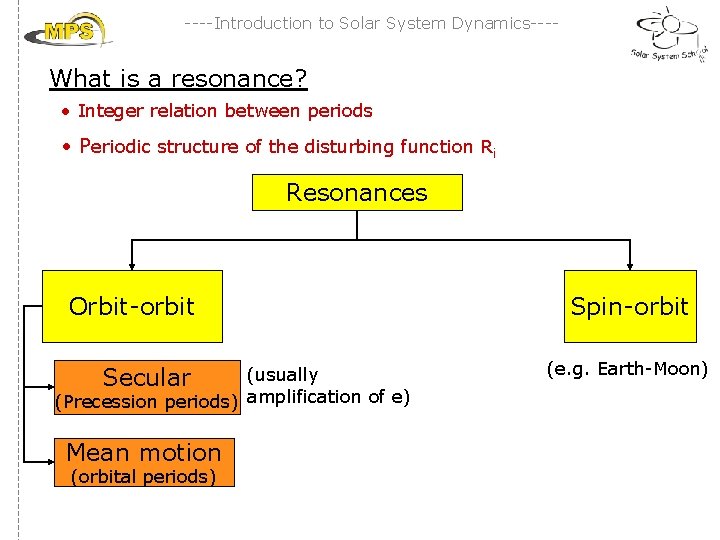
----Introduction to Solar System Dynamics---- What is a resonance? • Integer relation between periods • Periodic structure of the disturbing function Ri Resonances Orbit-orbit Secular (usually (Precession periods) amplification of e) Mean motion (orbital periods) Spin-orbit (e. g. Earth-Moon)
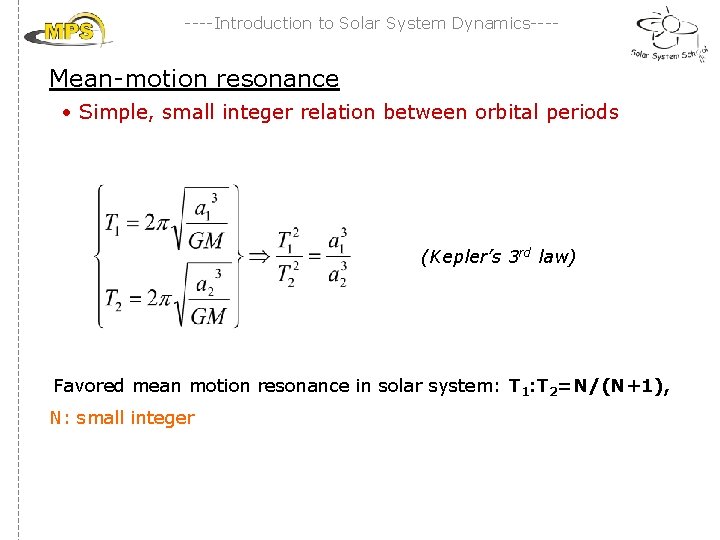
----Introduction to Solar System Dynamics---- Mean-motion resonance • Simple, small integer relation between orbital periods (Kepler’s 3 rd law) Favored mean motion resonance in solar system: T 1: T 2=N/(N+1), N: small integer
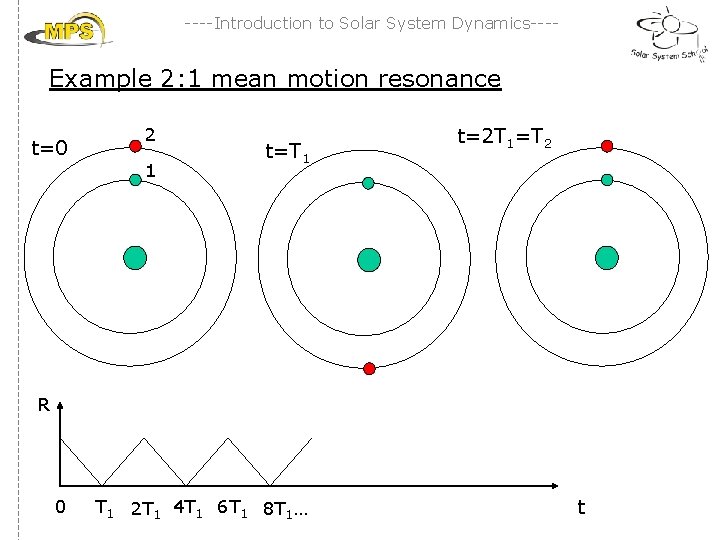
----Introduction to Solar System Dynamics---- Example 2: 1 mean motion resonance t=0 2 1 t=T 1 t=2 T 1=T 2 R 0 T 1 2 T 1 4 T 1 6 T 1 8 T 1… t
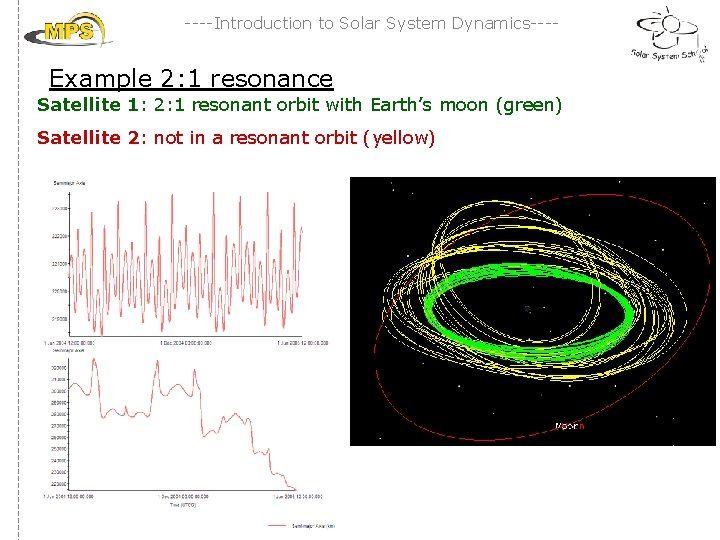
----Introduction to Solar System Dynamics---- Example 2: 1 resonance Satellite 1: 2: 1 resonant orbit with Earth’s moon (green) Satellite 2: not in a resonant orbit (yellow)
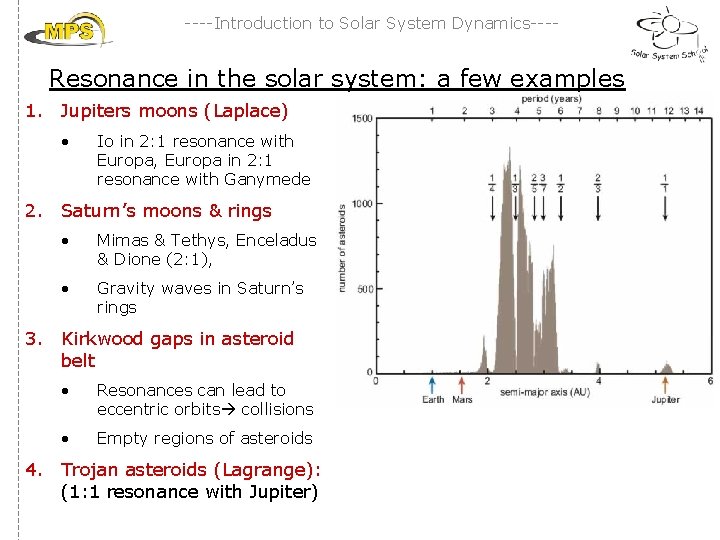
----Introduction to Solar System Dynamics---- Resonance in the solar system: a few examples 1. Jupiters moons (Laplace) • Io in 2: 1 resonance with Europa, Europa in 2: 1 resonance with Ganymede 2. Saturn’s moons & rings • Mimas & Tethys, Enceladus & Dione (2: 1), • Gravity waves in Saturn’s rings 3. Kirkwood gaps in asteroid belt • Resonances can lead to eccentric orbits collisions • Empty regions of asteroids 4. Trojan asteroids (Lagrange): (1: 1 resonance with Jupiter)
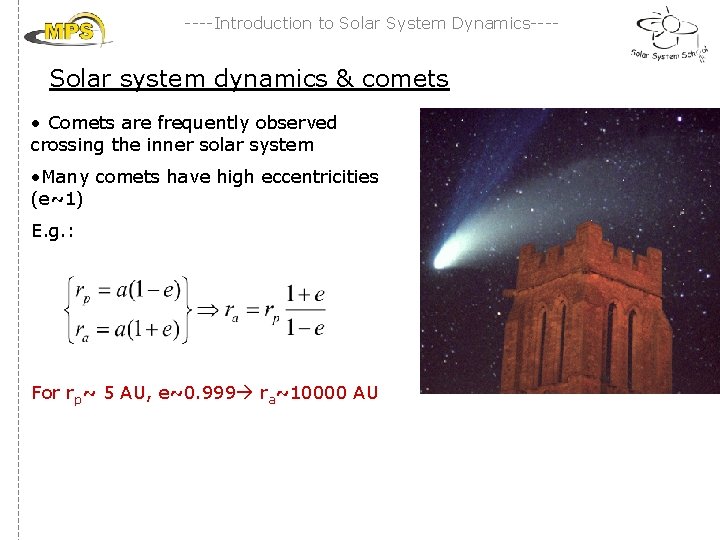
----Introduction to Solar System Dynamics---- Solar system dynamics & comets • Comets are frequently observed crossing the inner solar system • Many comets have high eccentricities (e~1) E. g. : For rp~ 5 AU, e~0. 999 ra~10000 AU
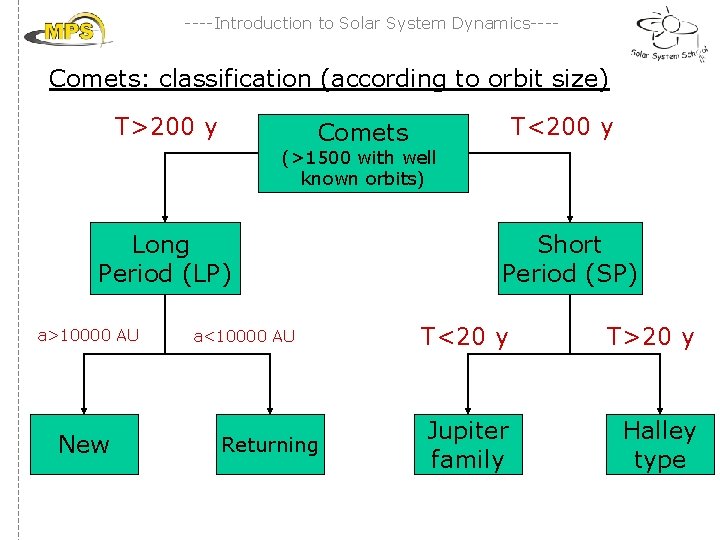
----Introduction to Solar System Dynamics---- Comets: classification (according to orbit size) T>200 y T<200 y Comets (>1500 with well known orbits) Long Period (LP) a>10000 AU New a<10000 AU Returning Short Period (SP) T<20 y T>20 y Jupiter family Halley type
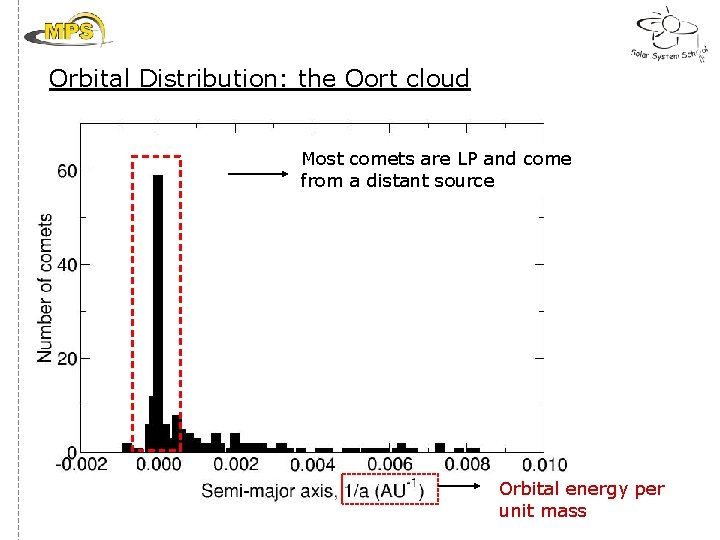
Orbital Distribution: the Oort cloud Most comets are LP and come from a distant source Orbital energy per unit mass
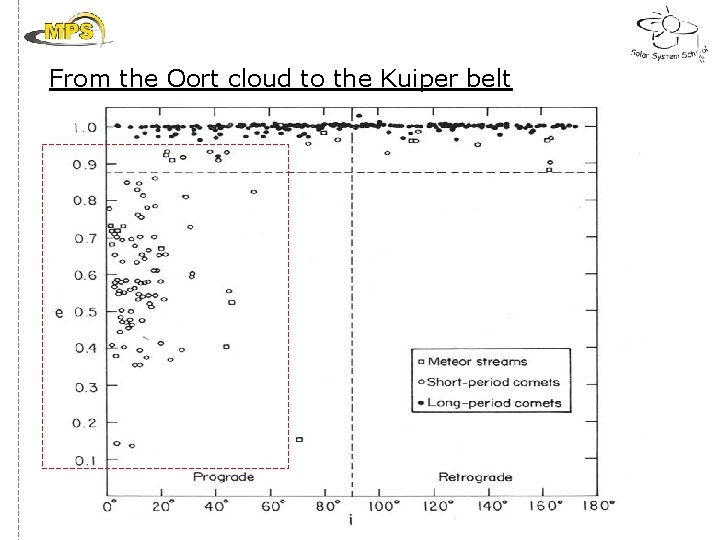
From the Oort cloud to the Kuiper belt
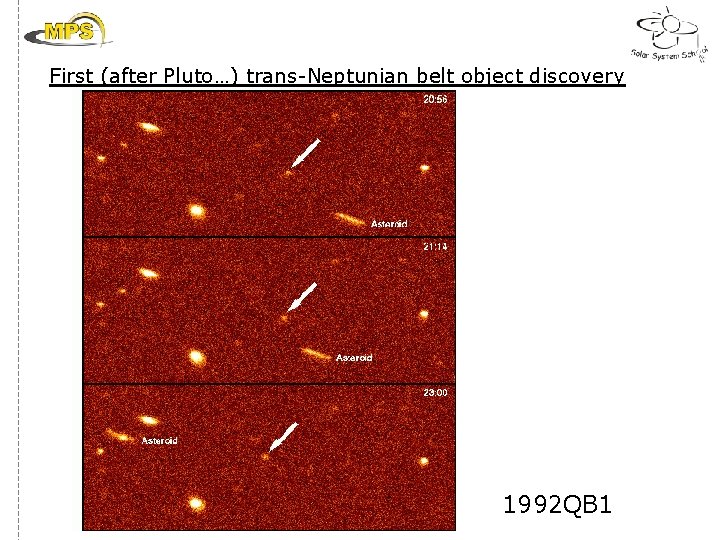
First (after Pluto…) trans-Neptunian belt object discovery 1992 QB 1
Additional slides
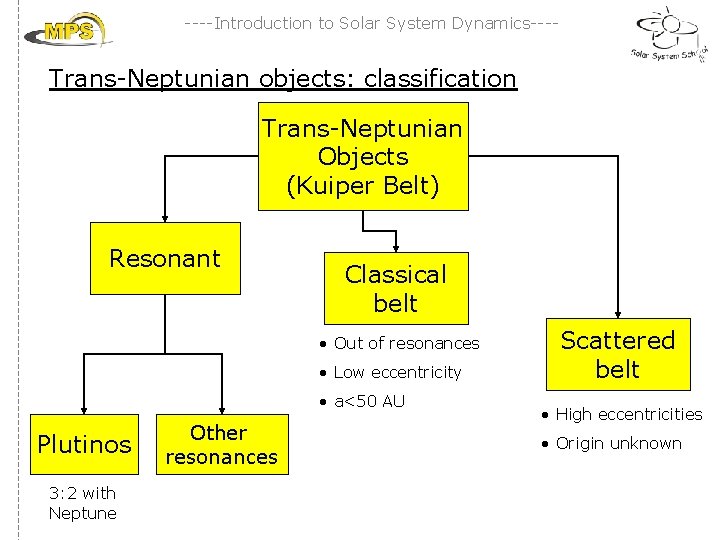
----Introduction to Solar System Dynamics---- Trans-Neptunian objects: classification Trans-Neptunian Objects (Kuiper Belt) Resonant Classical belt • Out of resonances • Low eccentricity • a<50 AU Plutinos 3: 2 with Neptune Other resonances Scattered belt • High eccentricities • Origin unknown
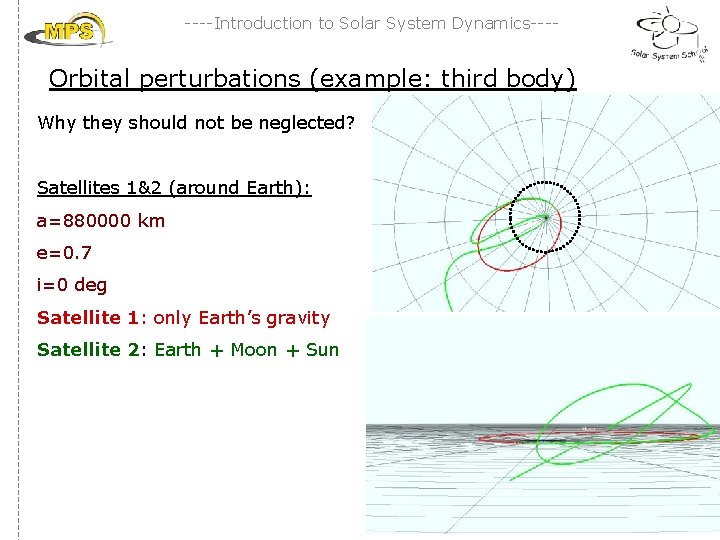
----Introduction to Solar System Dynamics---- Orbital perturbations (example: third body) Why they should not be neglected? Satellites 1&2 (around Earth): a=880000 km e=0. 7 i=0 deg Satellite 1: only Earth’s gravity Satellite 2: Earth + Moon + Sun
- Slides: 26