
Combustion Reactions What is combustion a very rapid
Combustion Reactions
What is combustion? • a very rapid reaction of a substance with oxygen to produce compounds called oxides. FUEL + OXYGEN OXIDE + ENERGY
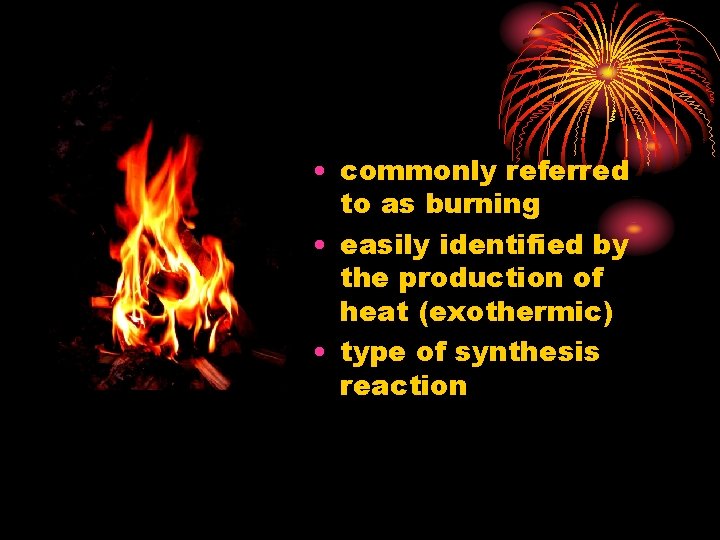
• commonly referred to as burning • easily identified by the production of heat (exothermic) • type of synthesis reaction
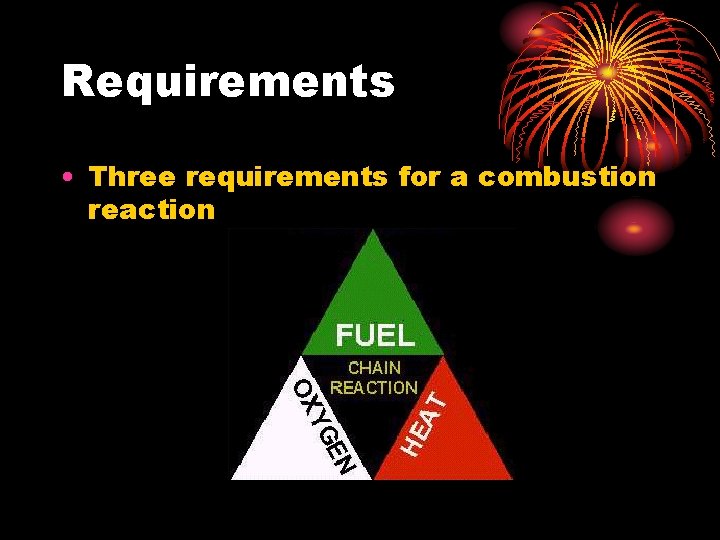
Requirements • Three requirements for a combustion reaction
Fuels • Gaseous Fuels • • Natural Gas/Methane - used for cooking, heating etc. Acetylene - used in welding, cutting etc. • Liquid Fuels • Petrol - used for internal combustion engines etc. • Paraffin/kerosene - used in heating appliances etc • Alcohols - used widely but includes preservatives, preparations, solvents etc. • Oils - used for lubrication etc.
Fuels • Solid Fuels • Wood/paper/card. • Plastics - most plastics will release toxic smoke during combustion. • Metals - some metals are flammable, although usually very high temperatures are required. • Foodstuffs - we actually 'burn' our food in order to cook it. The most common fuels are hydrocarbons
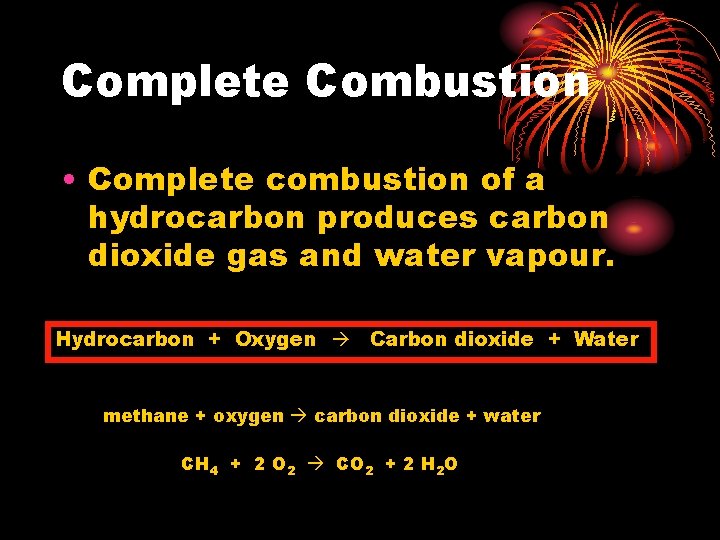
Complete Combustion • Complete combustion of a hydrocarbon produces carbon dioxide gas and water vapour. Hydrocarbon + Oxygen Carbon dioxide + Water methane + oxygen carbon dioxide + water CH 4 + 2 O 2 CO 2 + 2 H 2 O

Complete Combustion • Complete combustions occurs when: • Sufficient oxygen is present • Temperature is hot enough Complete combustion is characterized by a blue flame. The flame is hotter than the flame of incomplete combustion.
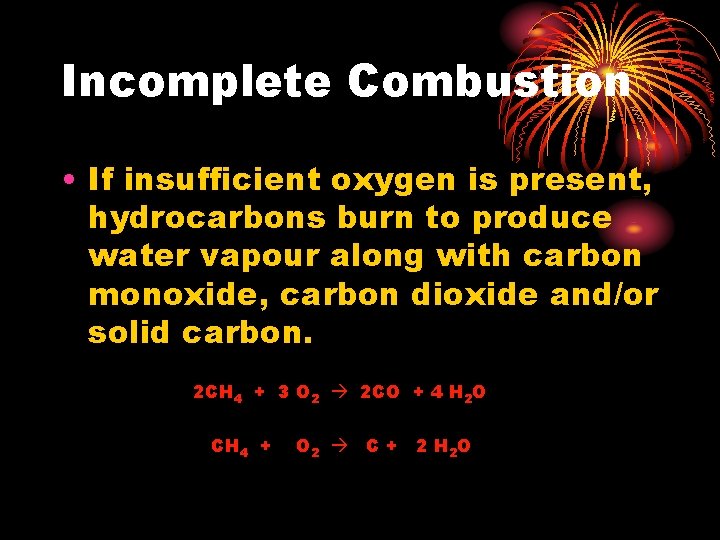
Incomplete Combustion • If insufficient oxygen is present, hydrocarbons burn to produce water vapour along with carbon monoxide, carbon dioxide and/or solid carbon. 2 CH 4 + 3 O 2 2 CO + 4 H 2 O CH 4 + O 2 C + 2 H 2 O
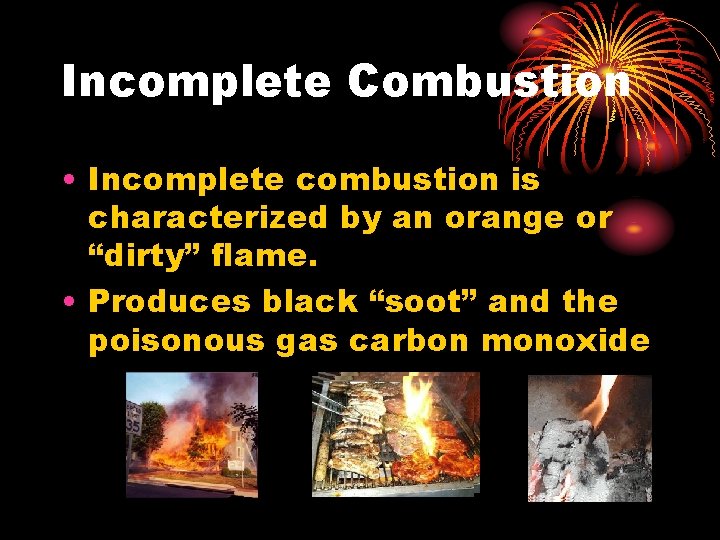
Incomplete Combustion • Incomplete combustion is characterized by an orange or “dirty” flame. • Produces black “soot” and the poisonous gas carbon monoxide
Time to Get to Work • combustion animation Page 140 #19 -24 Page 141 #41, 43, 46, 47, 49
- Slides: 11