
Combining scientific data in frameworks for decisionmaking examples
Combining scientific data in frameworks for decision-making: examples from two transboundary lakes (Lake Champlain, USA & Canada, and Lake Ohrid, Macedonia & Albania) Mary C. Watzin University of Vermont, Rubenstein School of Environment and Natural Resources, Burlington, VT, USA and contributors to Lake Ohrid State of the Environment Report

Ecosystem Indicators • An ecosystem indicator can be any measure that provides information about the quality or condition of the ecosystem or the effectiveness of management. • Because all ecosystem components and processes cannot be measured and evaluated, ecological indicators are used to determine ecosystem condition with a reduced set of measurements that can represent or “indicate” the overall state of the system.
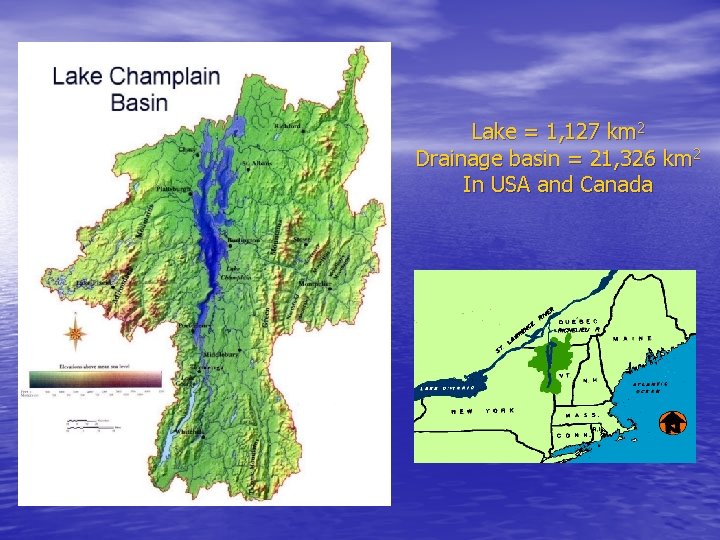
Lake = 1, 127 km 2 Drainage basin = 21, 326 km 2 In USA and Canada
Lake Champlain Basin Program “Opportunities for Action, ” an evolving plan for the future of the Lake Champlain Basin Includes: • Water Quality (nutrients and toxic substances) • Human Health • Fish and Wildlife • Exotic Species Management • Wetlands and Riparian Habitats • Recreation • Cultural Heritage Resources • Public Education and Local Action
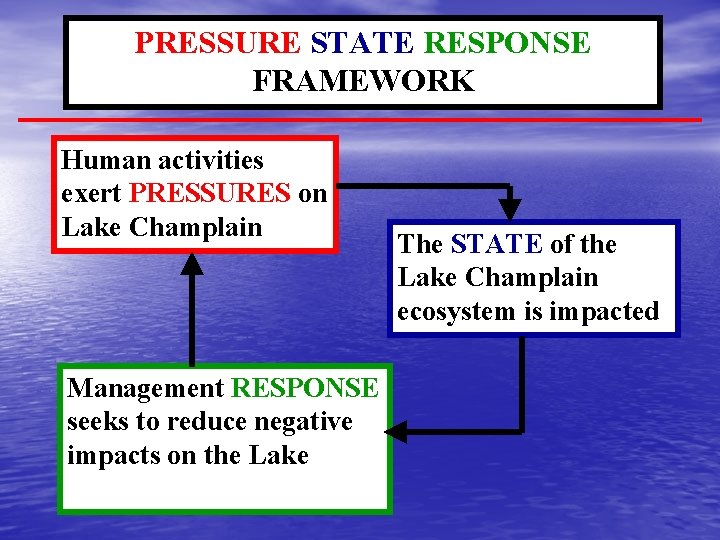
PRESSURE STATE RESPONSE FRAMEWORK Human activities exert PRESSURES on Lake Champlain Management RESPONSE seeks to reduce negative impacts on the Lake The STATE of the Lake Champlain ecosystem is impacted

Essential Indicator Characteristics • Ecologically relevant – Relates to essential components of the ecosystem and responds to relevant stressors • Politically/Socially relevant – Linked to the concerns of the public and the government • Measurable, statistically sound, interpretable
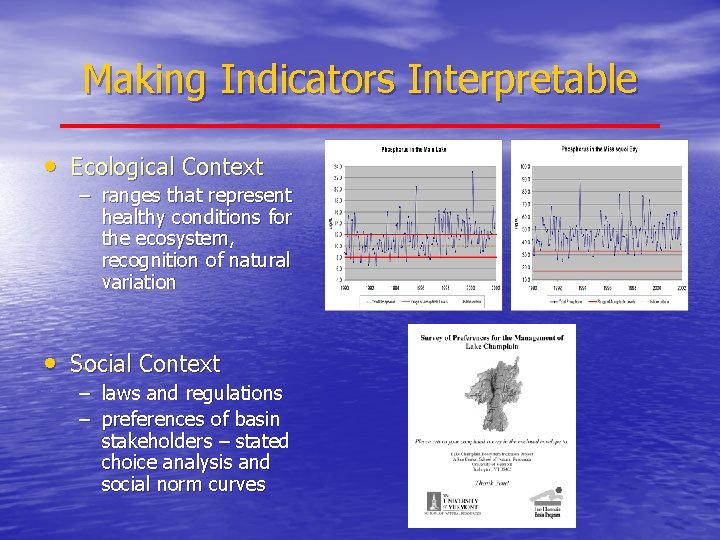
Making Indicators Interpretable • Ecological Context – ranges that represent healthy conditions for the ecosystem, recognition of natural variation • Social Context – laws and regulations – preferences of basin stakeholders – stated choice analysis and social norm curves

PRESSURE STATE RESPONSE FRAMEWORK Human activities exert PRESSURES on Lake Champlain Management RESPONSE seeks to reduce negative impacts on the Lake The STATE of the Lake Champlain ecosystem is impacted
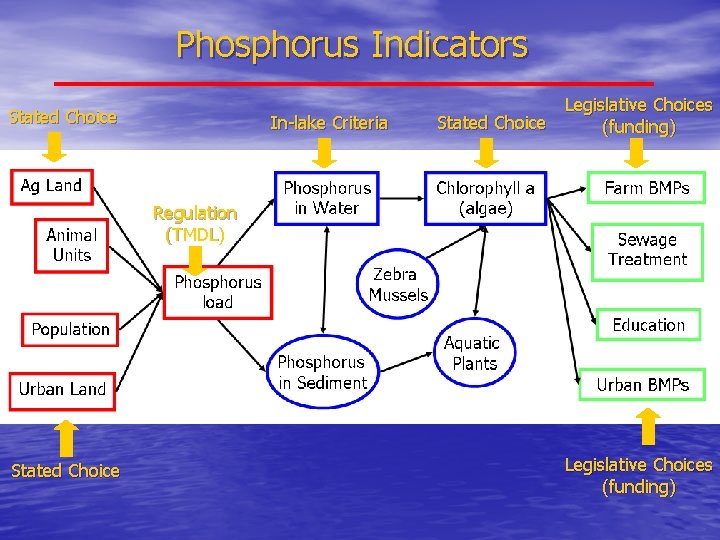
Phosphorus Indicators Stated Choice In-lake Criteria Legislative Choices Stated Choice (funding) Regulation (TMDL) Stated Choice Legislative Choices (funding)
Lake Ohrid Conservation Project • Seeks to provide a comprehensive, transboundary approach to management of the Lake Ohrid watershed, combining restoration, conservation and protection of the lake with sustainable use of its natural resources. • Threats to sustainable use: – – – Eutrophication Bacterial Pollution Shoreline Habitat Destruction and Pollution Declines in Fisheries Population Altered Flow of the Sateska River Global Environment Facility World Bank Ministry of Environment, Albania Ministry of Environment and Physical Planning, Macedonia
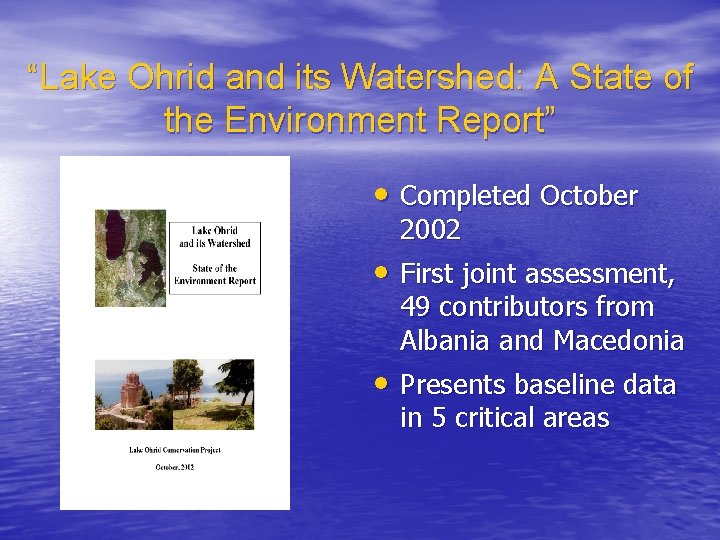
“Lake Ohrid and its Watershed: A State of the Environment Report” • Completed October 2002 • First joint assessment, 49 contributors from Albania and Macedonia • Presents baseline data in 5 critical areas
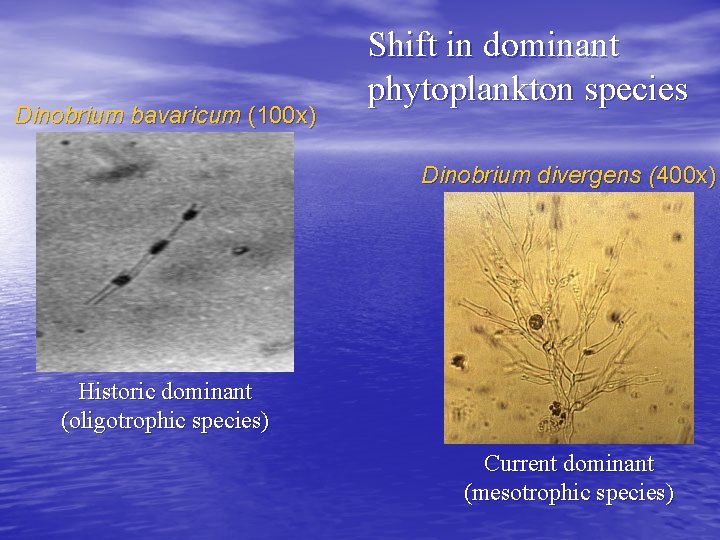
Dinobrium bavaricum (100 x) Shift in dominant phytoplankton species Dinobrium divergens (400 x) Historic dominant (oligotrophic species) Current dominant (mesotrophic species)
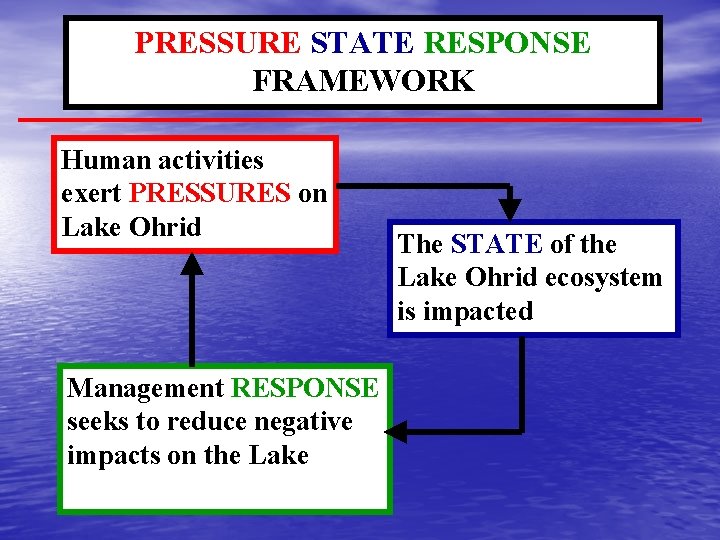
PRESSURE STATE RESPONSE FRAMEWORK Human activities exert PRESSURES on Lake Ohrid Management RESPONSE seeks to reduce negative impacts on the Lake The STATE of the Lake Ohrid ecosystem is impacted
Ecological Indicators Programs Can: • Focus monitoring efforts and make monitoring data • • • accessible and interpretable for managers and the public Help managers follow trends, track progress and make adaptive management decisions Can be organized into regular State of Environment Reports or “Environmental Scorecards” Provide a framework for improved understanding of ecosystem structure and function
- Slides: 14