
Combining ictbased classroom education and informal elearning in
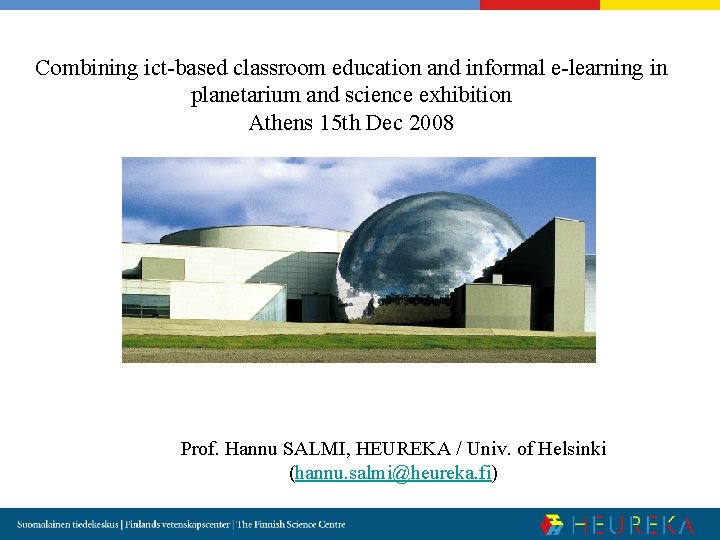
Combining ict-based classroom education and informal e-learning in planetarium and science exhibition Athens 15 th Dec 2008 Prof. Hannu SALMI, HEUREKA / Univ. of Helsinki (hannu. salmi@heureka. fi)
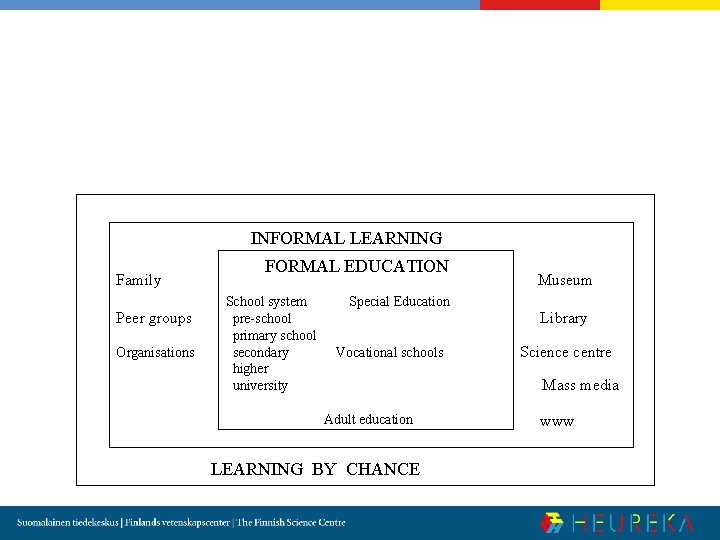
INFORMAL LEARNING Family Peer groups Organisations FORMAL EDUCATION School system pre-school primary school secondary higher university Special Education Vocational schools Museum Library Science centre Mass media Adult education LEARNING BY CHANCE www

Towards Open Learning Environment • • To create a meaningful combination of programmes (laboratory, planetarium, etc. ) exhibitions internet - www classroom is clearly one of the main challenges of informal learning
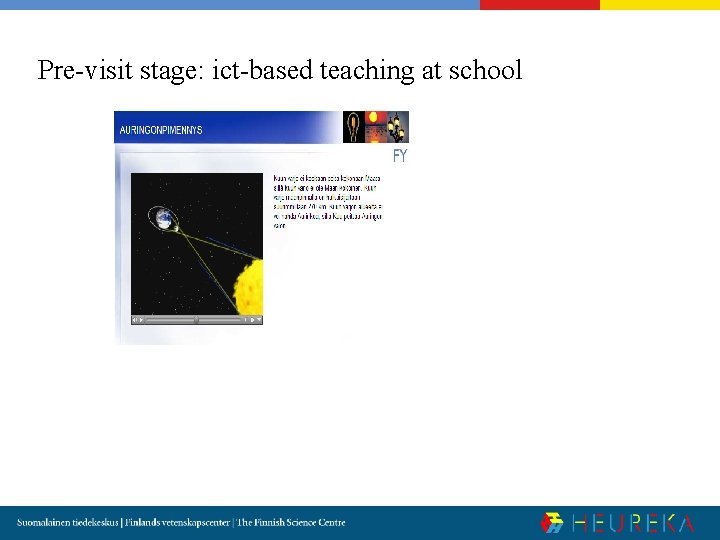
Pre-visit stage: ict-based teaching at school
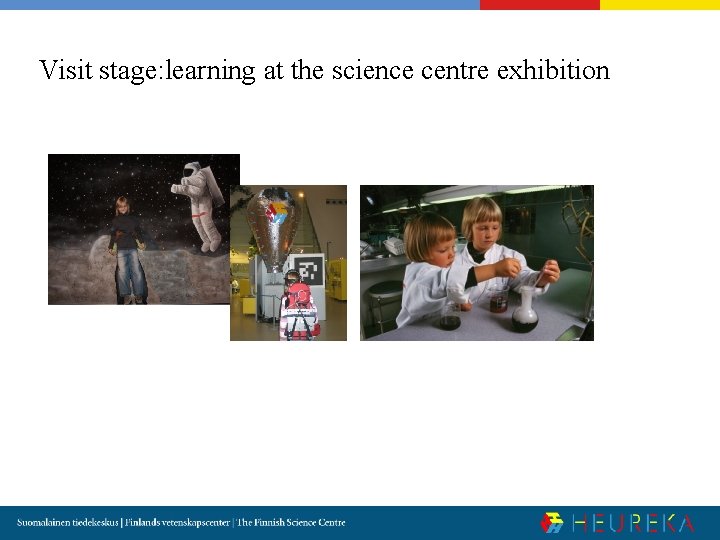
Visit stage: learning at the science centre exhibition
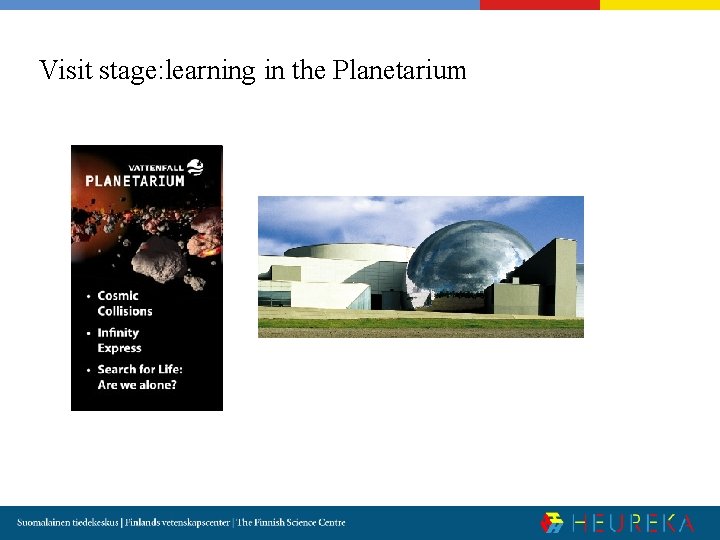
Visit stage: learning in the Planetarium
Pedagogical background: e. Learning based on the evidence collected from the teahers Questionnaire • for 225 teacher students in Dec 2008 • for 200 in-service teachers in Jan 2008
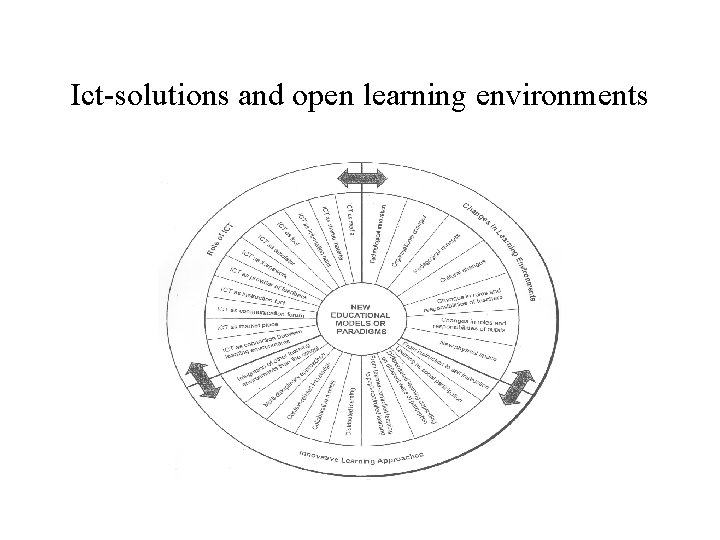
Ict-solutions and open learning environments
Role of ICT • ICT as connection between learning environments • ICT as instruction tool • ICT as communication forum • ICT as media
Physical openness • points out the accessible of facilities to be used for flexible teaching and learning situations
Innovative Learning Approaches • Integration of other learning environments than the school • Differentiated learning depending on different ways of perception • From teacher-controlled learning to pupil orientated learning • Context-related knowledge
Changes in Learning Environments • • Technological innovation New physical space Changes in roles and responsibilities of pupils Changes in roles and responsibilities of teachers
Combination of Portal, Classroom, and Hands-on Exhibit / Planetarium • • Physical openness Didactic openness Psychological openness Virtual openness
Psychological openness • consists of the feeling of independence of space and time • this feeling, that the learner can influence his or her own learning creates motivation for learning.
Virtual openness • is created by using information and communication technology in teaching and learning process
References: Salmi, H. 2005. Open Learning Environments: combining web-based virtual and hands-on science centre learning In E-LEARNING AND VIRTUAL SCIENCE CENTERS by Wee, L. & Subramaniam, R. Idea Group, Hershey, USA Salmi, H. 2003. Science centres as learning laboratories. Int. Jour. Of Technology Management, vol. 25, no 5, 460 -476. Salmi, H. 1993. Science centre education. Research Report 119. University of Helsinki.
- Slides: 16