
Combines the performance of plastics with environmental sustainability
Combines the performance of plastics with environmental sustainability. 1
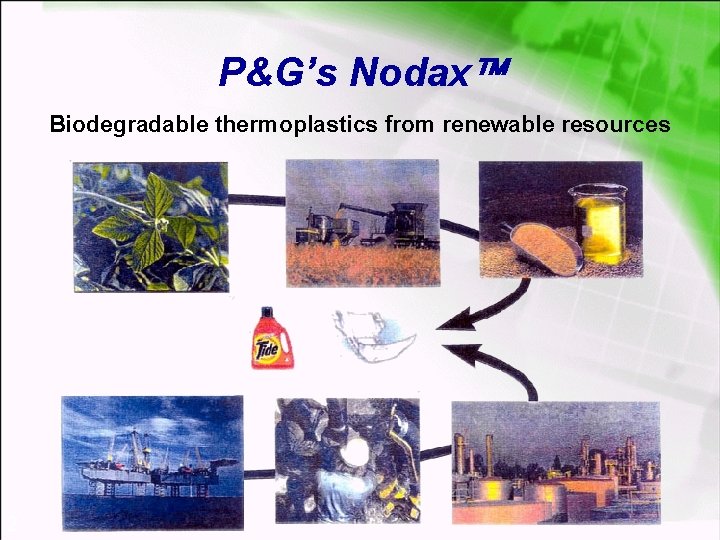
P&G’s Nodax Biodegradable thermoplastics from renewable resources 2
Nodax. TM Project Overall Objective Produce a novel and functional polymer from a renewable resource that is competitive with conventional petroleum-based polymers in price, and offers improved end-use properties. Approach Thermoplastic aliphatic polyester (Nodax. TM) production in microorganisms or agricultural crops to achieve price and volume objectives. Commercialization 3 1. Broadly license and transfer R&D for production of neat polymer, resins and forms. 2. Create demand by internal use and broad licensing of other end users. 3. Cooperate and collaborate with other companies to capitalize on synergies with other bioplastics to grow entire market.

Nodax. TM - P&G Bioplastics Materials Properties • Comparable to high-grade polyethylene – Strength, flexibility, toughness • Additional beneficial characteristics of polyesters – Dyeability, printability, compatibility, etc. • Gas Barrier properties combined with heat sealability • Hard springy elasticity upon stretching • Chemically digestibility in hot alkaline solutions Additional Features • Produced from renewable resources • Fully biodegradable and compostable • Novel and proprietary materials Estimated Cost • $ 1. 00 - $ 2. 50/kg. (Target) • Competitive with high-end commodity plastics 4
Historical Background Issues • P&G’s detergent phosphate experience • Increasing solid Waste concerns 1970 ~ 1980 ~ – Are we running out of landfills? – Plastic packages, diapers and other disposable products Technical Approach • Biodegradable/compostable plastics – Disintegration to pieces – Mineralization to CO 2, CH 4, and H 2 O Specific Actions • Quick fix with available materials – Starch-based resins – Cellulose derivatives • Long-term solution – Next generation degradable polymers – Major technical discontinuity 5 1990 ~

Polyhydroxyalkanoates (PHAs) 6
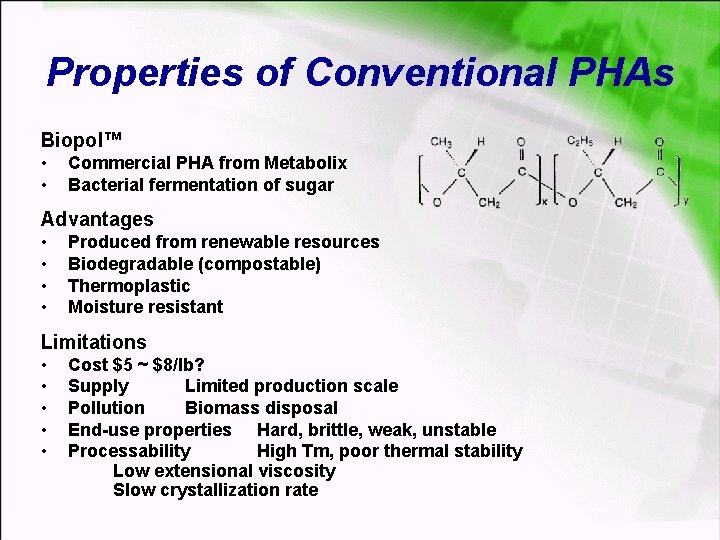
Properties of Conventional PHAs Biopol™ • • Commercial PHA from Metabolix Bacterial fermentation of sugar Advantages • • Produced from renewable resources Biodegradable (compostable) Thermoplastic Moisture resistant Limitations • • • 7 Cost $5 ~ $8/lb? Supply Limited production scale Pollution Biomass disposal End-use properties Hard, brittle, weak, unstable Processability High Tm, poor thermal stability Low extensional viscosity Slow crystallization rate
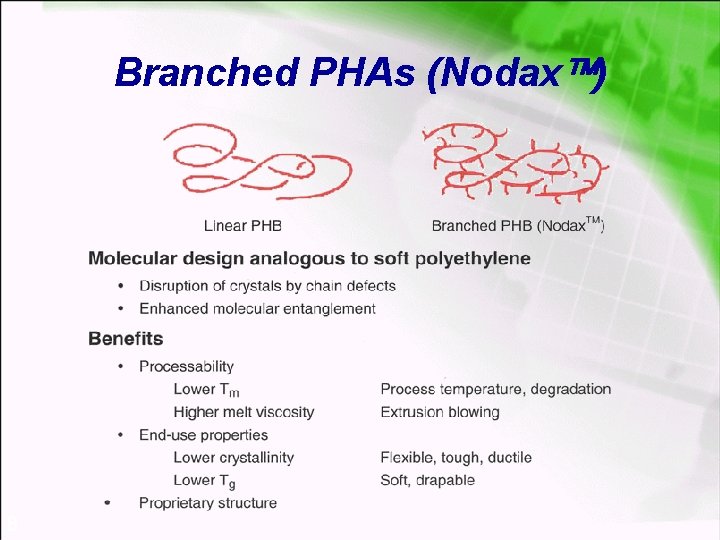
Branched PHAs (Nodax ) 8
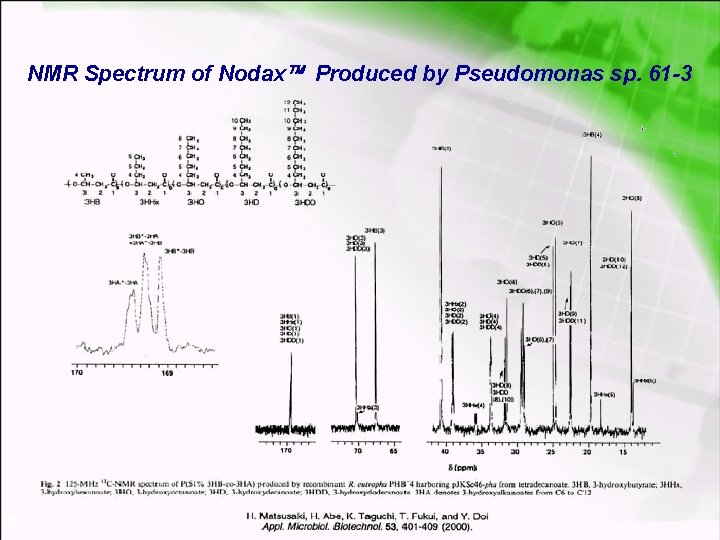
NMR Spectrum of Nodax Produced by Pseudomonas sp. 61 -3 9
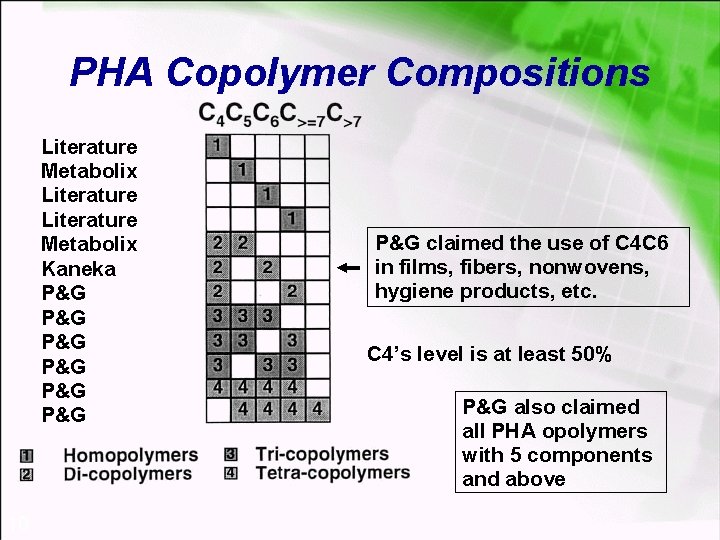
PHA Copolymer Compositions Literature Metabolix Kaneka P&G P&G P&G 10 P&G claimed the use of C 4 C 6 in films, fibers, nonwovens, hygiene products, etc. C 4’s level is at least 50% P&G also claimed all PHA opolymers with 5 components and above
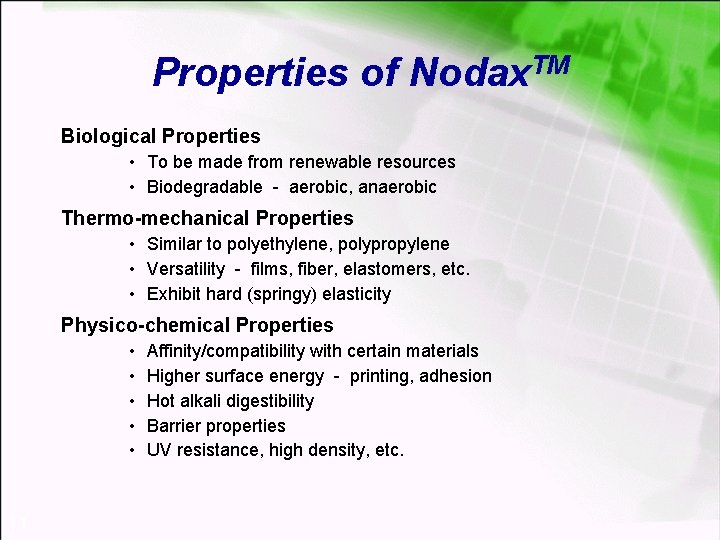
Properties of Nodax. TM Biological Properties • To be made from renewable resources • Biodegradable - aerobic, anaerobic Thermo-mechanical Properties • Similar to polyethylene, polypropylene • Versatility - films, fiber, elastomers, etc. • Exhibit hard (springy) elasticity Physico-chemical Properties • • • 11 Affinity/compatibility with certain materials Higher surface energy - printing, adhesion Hot alkali digestibility Barrier properties UV resistance, high density, etc.
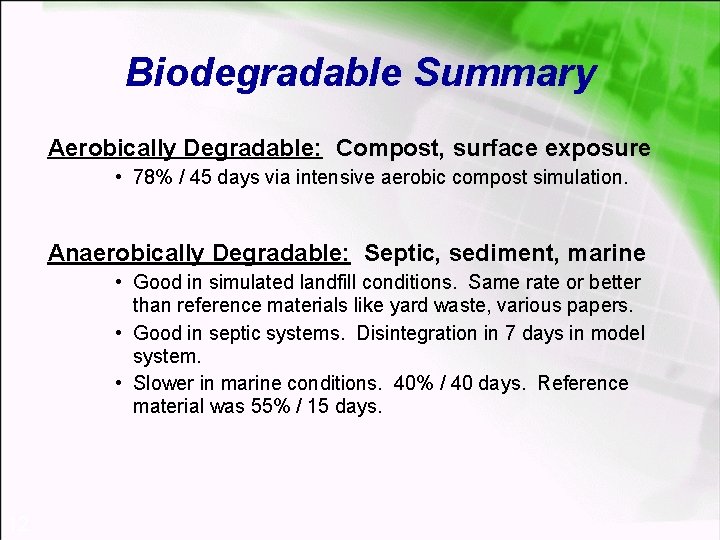
Biodegradable Summary Aerobically Degradable: Compost, surface exposure • 78% / 45 days via intensive aerobic compost simulation. Anaerobically Degradable: Septic, sediment, marine • Good in simulated landfill conditions. Same rate or better than reference materials like yard waste, various papers. • Good in septic systems. Disintegration in 7 days in model system. • Slower in marine conditions. 40% / 40 days. Reference material was 55% / 15 days. 12
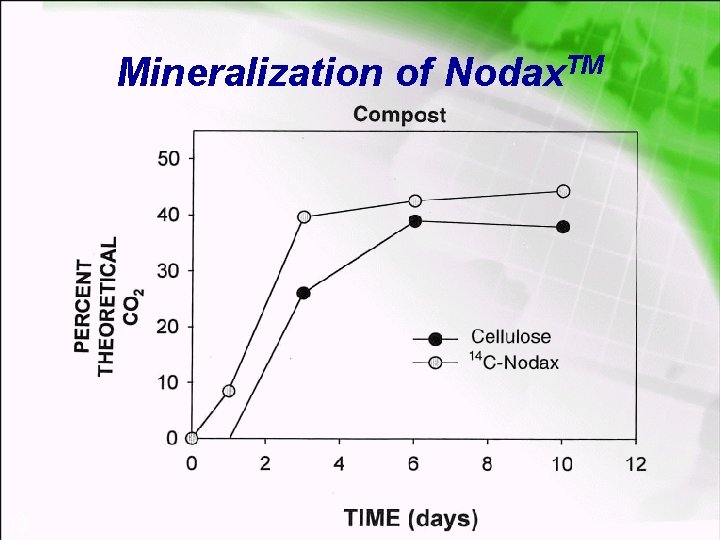
Mineralization of Nodax. TM 13
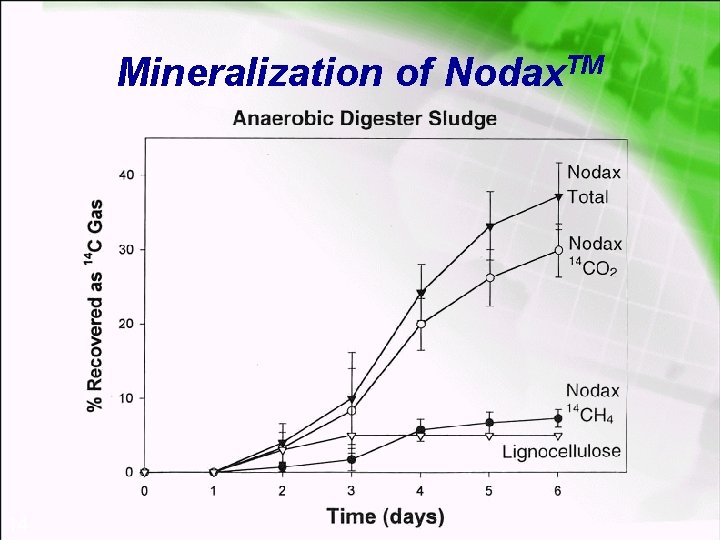
Mineralization of Nodax. TM 14
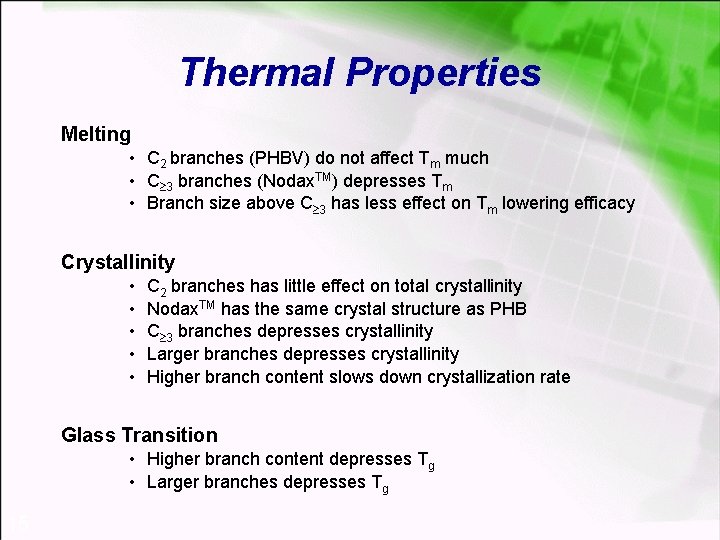
Thermal Properties Melting • C 2 branches (PHBV) do not affect Tm much • C 3 branches (Nodax. TM) depresses Tm • Branch size above C 3 has less effect on Tm lowering efficacy Crystallinity • • • C 2 branches has little effect on total crystallinity Nodax. TM has the same crystal structure as PHB C 3 branches depresses crystallinity Larger branches depresses crystallinity Higher branch content slows down crystallization rate Glass Transition • Higher branch content depresses Tg • Larger branches depresses Tg 15
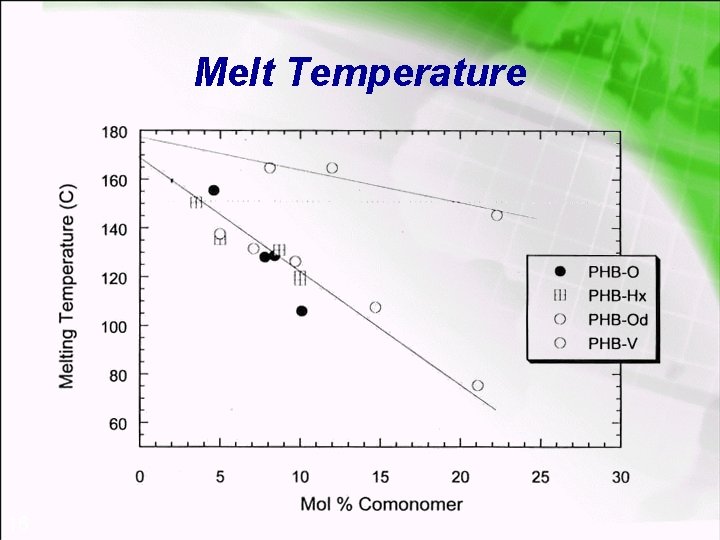
Melt Temperature 16
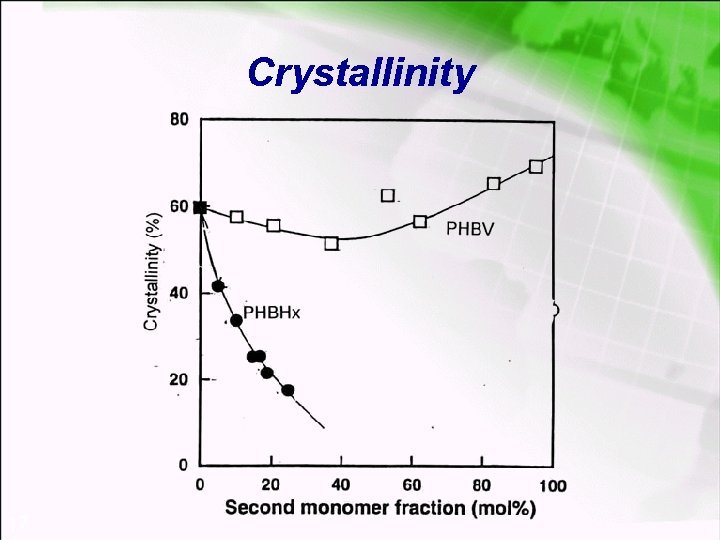
Crystallinity 17
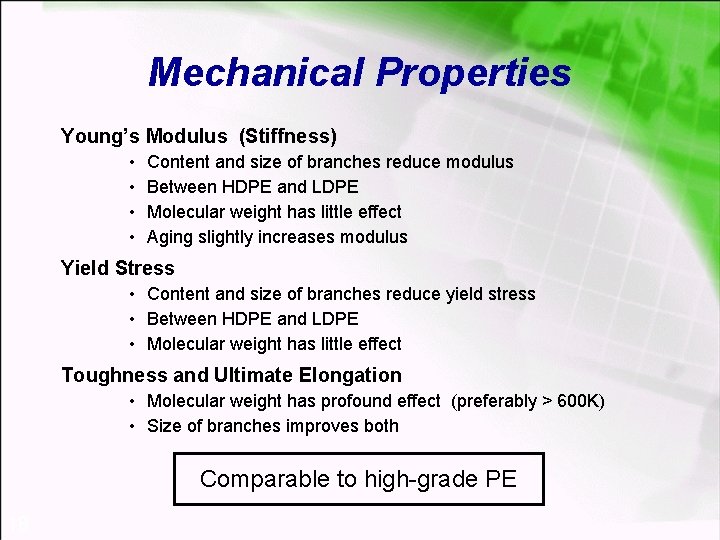
Mechanical Properties Young’s Modulus (Stiffness) • • Content and size of branches reduce modulus Between HDPE and LDPE Molecular weight has little effect Aging slightly increases modulus Yield Stress • Content and size of branches reduce yield stress • Between HDPE and LDPE • Molecular weight has little effect Toughness and Ultimate Elongation • Molecular weight has profound effect (preferably > 600 K) • Size of branches improves both Comparable to high-grade PE 18
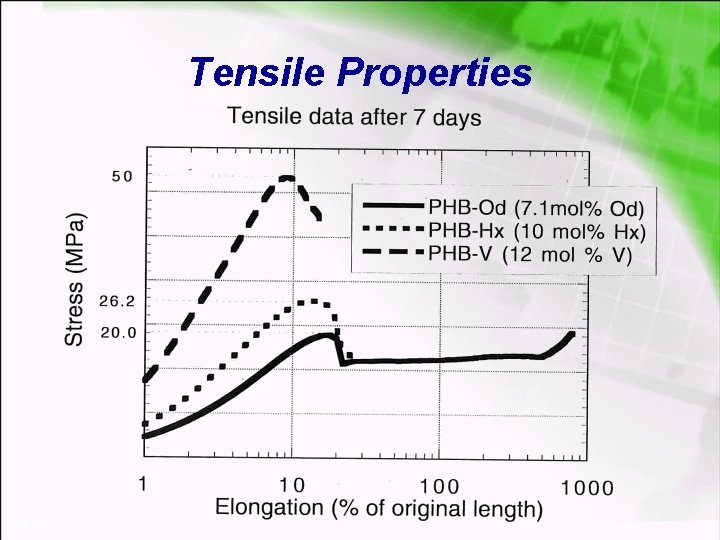
Tensile Properties 19
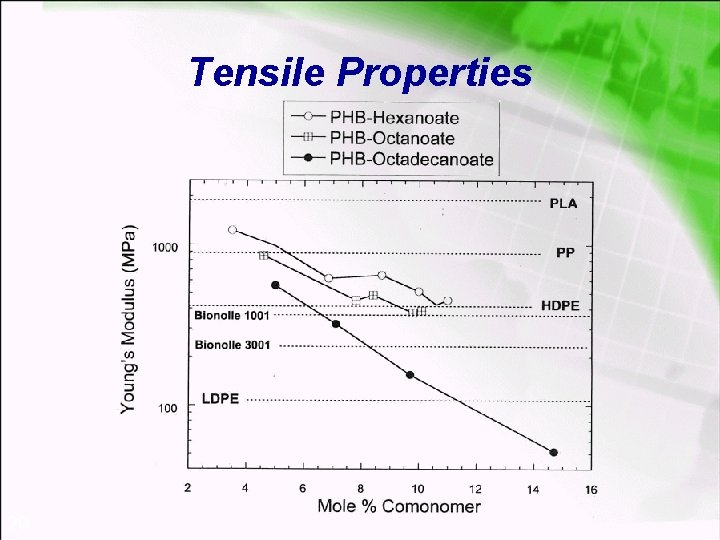
Tensile Properties 20
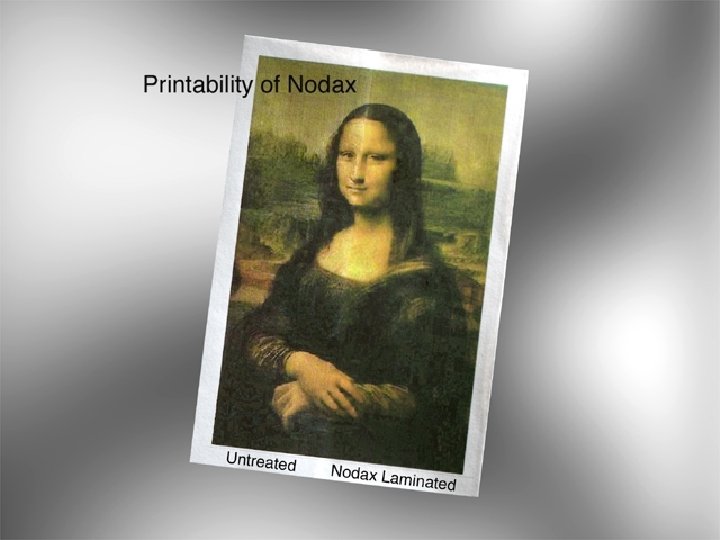
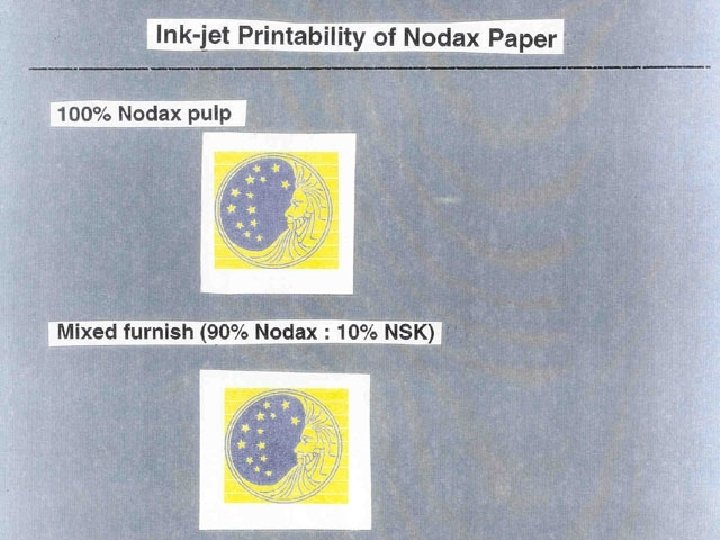
Interactions with Other Materials Bulk Phase Properties • Solubility – “green” non-CFC solvents (acetone, ethyl acetate, etc. ) • Compatibility – plasticizers, antioxidants, processing aids • Blendability, miscibility • Dyeability • Moisture and grease resistance • Barrier – O 2, CO 2, odor Surface Properties • • 21 Adhesion Dispersibility Wettability Printability
PLA vs. PHA (Nodax. TM) Polylactic acid Physical Properties • Often amorphous • Transparent • Brittle, hard, and stiff • Use temperature < 60° C Degradation Mechanisms • Hydrolytic attack • Not directly biodegradable • Temperature, p. H, and moisture effect • Spontaneous degradation Processability • Quick quench • Fiber spinning 22 Polyhydroxyalkanoates • Semicrystalline • Tough, ductile and drapable • Usually opaque • Use temperature < 120º C • Enzymatic digestion • Rapid biotic degradation • Aerobic or anaerobic conditions • Relatively stable in ambient • Slow crystallization • Films, fibers
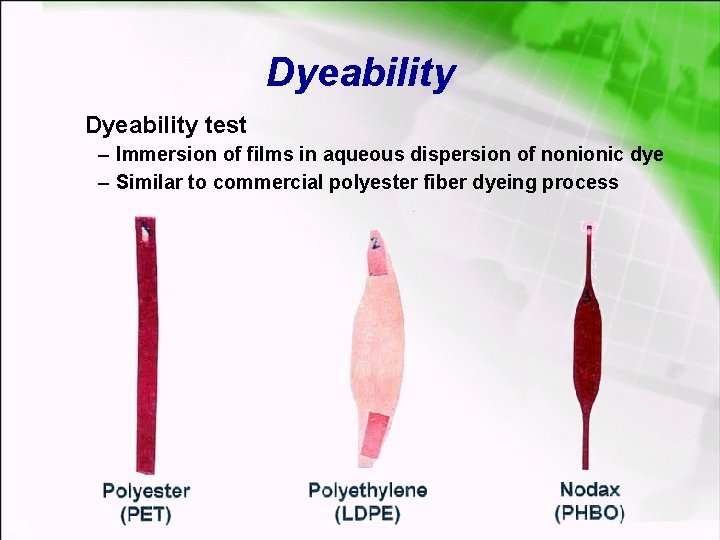
Dyeability test – Immersion of films in aqueous dispersion of nonionic dye – Similar to commercial polyester fiber dyeing process 23
24
25
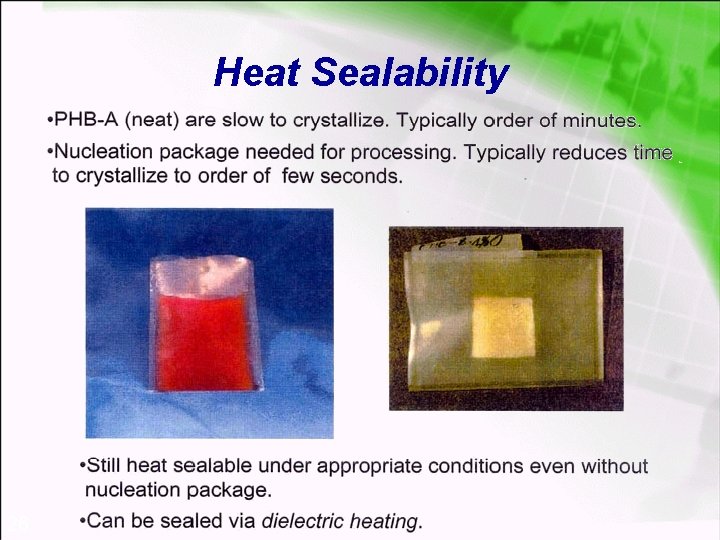
Heat Sealability 26
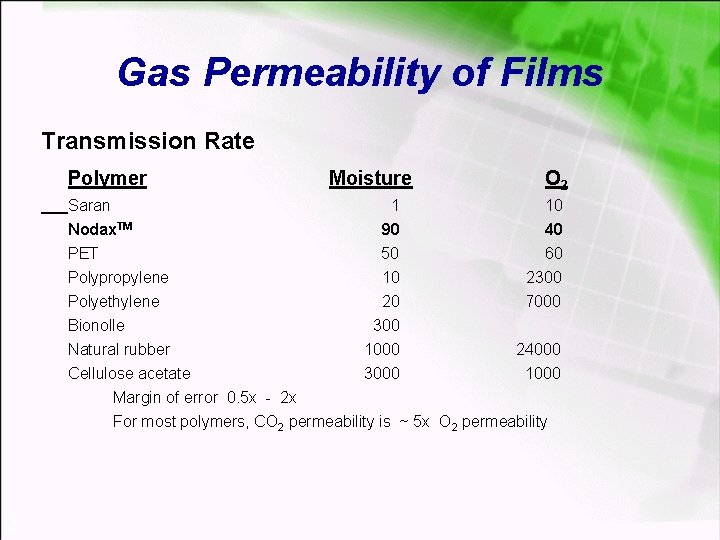
Gas Permeability of Films Transmission Rate Polymer Saran Nodax. TM Moisture 1 90 O 2 10 40 PET 50 60 Polypropylene 10 2300 Polyethylene 20 7000 Bionolle 300 Natural rubber 1000 24000 Cellulose acetate 3000 1000 Margin of error 0. 5 x - 2 x For most polymers, CO 2 permeability is ~ 5 x O 2 permeability 27
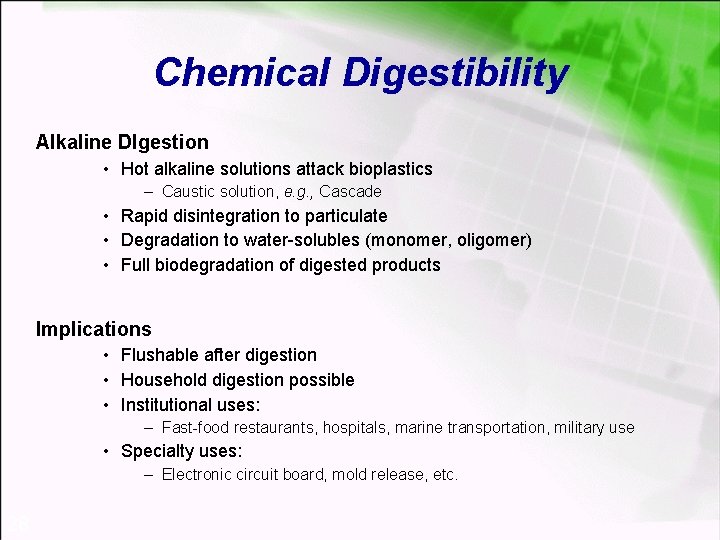
Chemical Digestibility Alkaline DIgestion • Hot alkaline solutions attack bioplastics – Caustic solution, e. g. , Cascade • Rapid disintegration to particulate • Degradation to water-solubles (monomer, oligomer) • Full biodegradation of digested products Implications • Flushable after digestion • Household digestion possible • Institutional uses: – Fast-food restaurants, hospitals, marine transportation, military use • Specialty uses: – Electronic circuit board, mold release, etc. 28
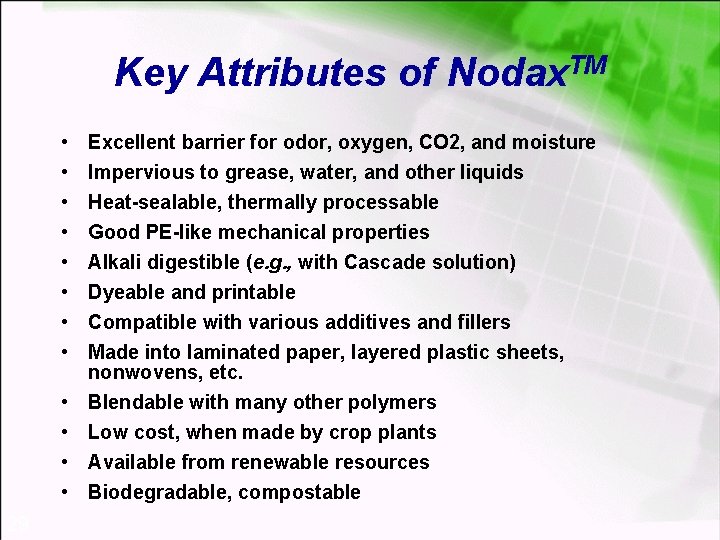
Key Attributes of Nodax. TM • • • 29 Excellent barrier for odor, oxygen, CO 2, and moisture Impervious to grease, water, and other liquids Heat-sealable, thermally processable Good PE-like mechanical properties Alkali digestible (e. g. , with Cascade solution) Dyeable and printable Compatible with various additives and fillers Made into laminated paper, layered plastic sheets, nonwovens, etc. Blendable with many other polymers Low cost, when made by crop plants Available from renewable resources Biodegradable, compostable
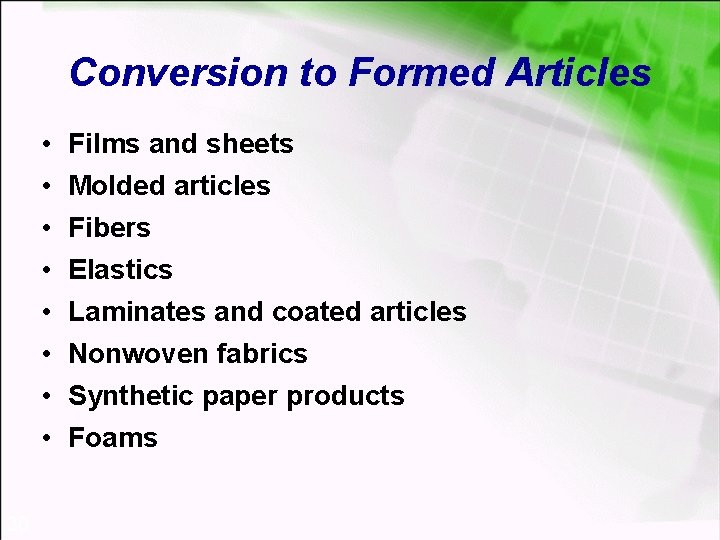
Conversion to Formed Articles • • 30 Films and sheets Molded articles Fibers Elastics Laminates and coated articles Nonwoven fabrics Synthetic paper products Foams
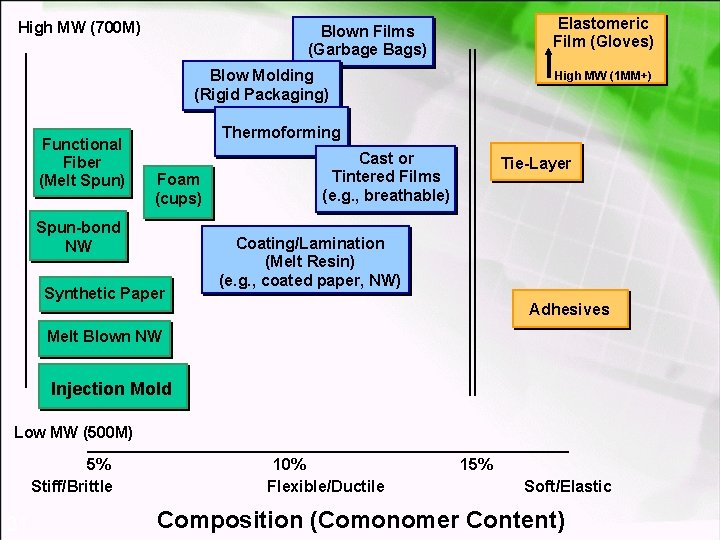
High MW (700 M) Elastomeric Film (Gloves) Blown Films (Garbage Bags) Blow Molding (Rigid Packaging) Functional Fiber (Melt Spun) High MW (1 MM+) Thermoforming Foam (cups) Spun-bond NW Synthetic Paper Cast or Tintered Films (e. g. , breathable) Tie-Layer Coating/Lamination (Melt Resin) (e. g. , coated paper, NW) Adhesives Melt Blown NW Injection Mold Low MW (500 M) 5% Stiff/Brittle 31 10% Flexible/Ductile 15% Soft/Elastic Composition (Comonomer Content)
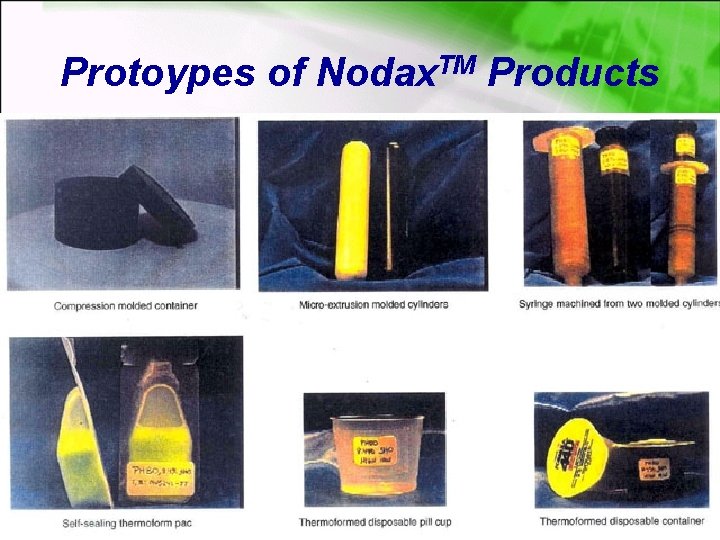
Protoypes of Nodax. TM Products 32
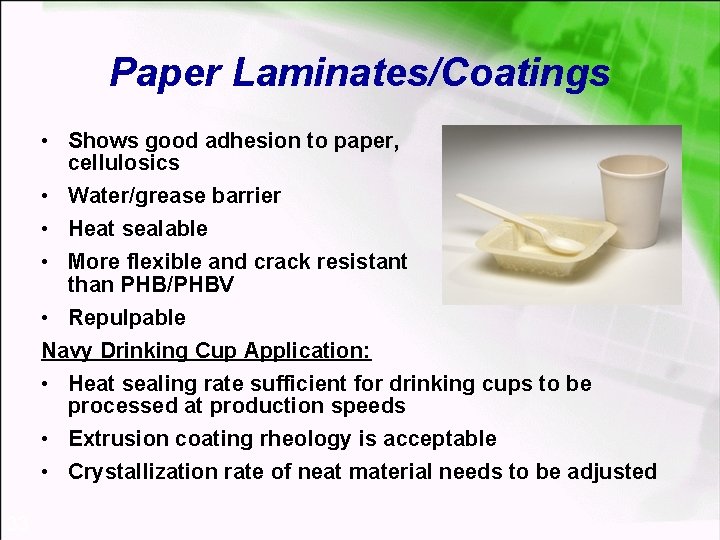
Paper Laminates/Coatings • Shows good adhesion to paper, cellulosics • Water/grease barrier • Heat sealable • More flexible and crack resistant than PHB/PHBV • Repulpable Navy Drinking Cup Application: • Heat sealing rate sufficient for drinking cups to be processed at production speeds • Extrusion coating rheology is acceptable • Crystallization rate of neat material needs to be adjusted 33
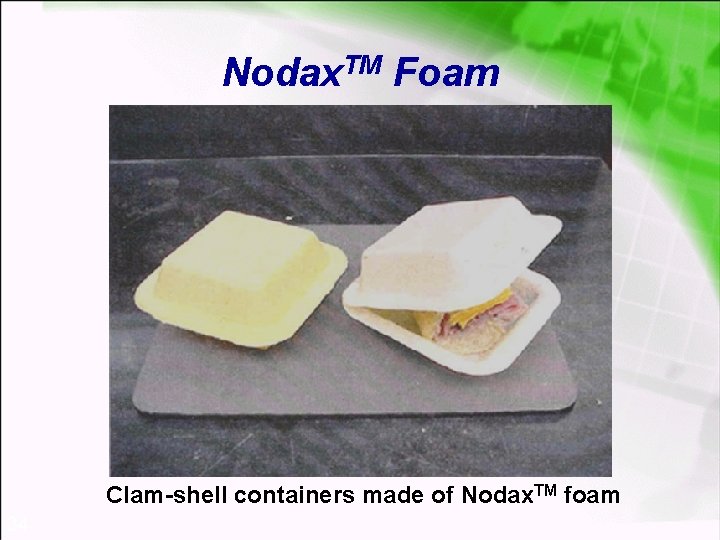
Nodax. TM Foam Clam-shell containers made of Nodax. TM foam 34
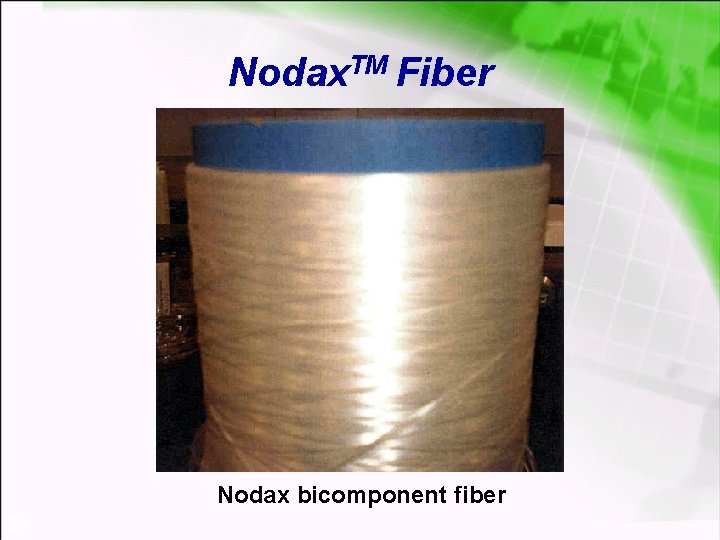
Nodax. TM Fiber Nodax bicomponent fiber 35
Combines the performance of plastics with environmental sustainability. 36
- Slides: 36