
Combined short and longterm heat storage for solar
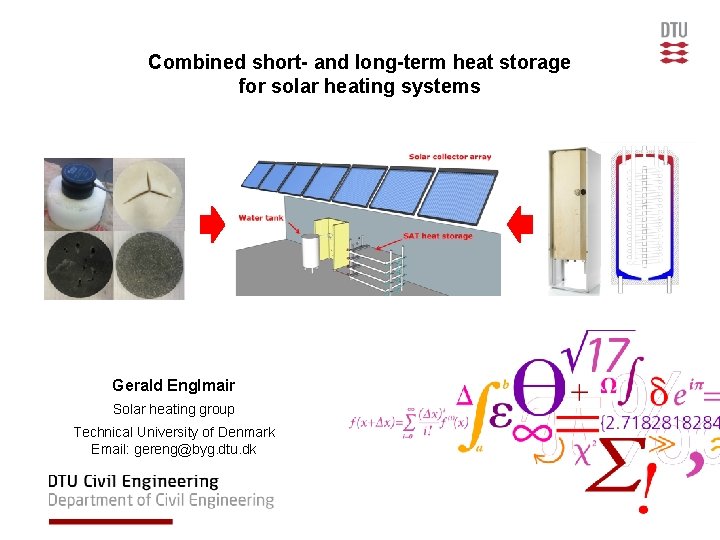
Combined short- and long-term heat storage for solar heating systems Gerald Englmair Solar heating group Technical University of Denmark Email: gereng@byg. dtu. dk
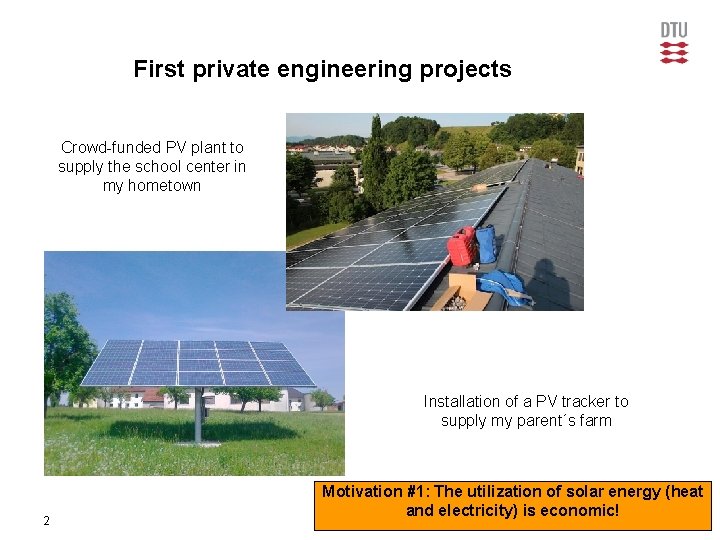
First private engineering projects Crowd-funded PV plant to supply the school center in my hometown Installation of a PV tracker to supply my parent´s farm 2 Motivation #1: The utilization of solar energy (heat and electricity) is economic!
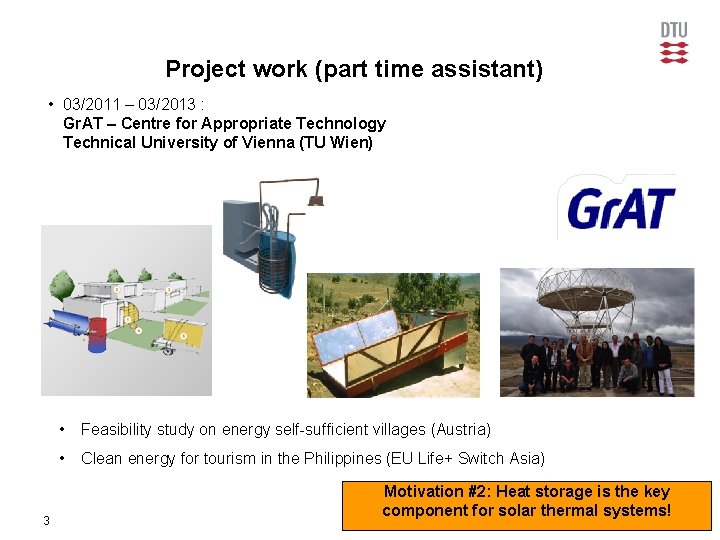
Project work (part time assistant) • 03/2011 – 03/2013 : Gr. AT – Centre for Appropriate Technology Technical University of Vienna (TU Wien) 3 • Feasibility study on energy self-sufficient villages (Austria) • Clean energy for tourism in the Philippines (EU Life+ Switch Asia) Motivation #2: Heat storage is the key component for solar thermal systems!
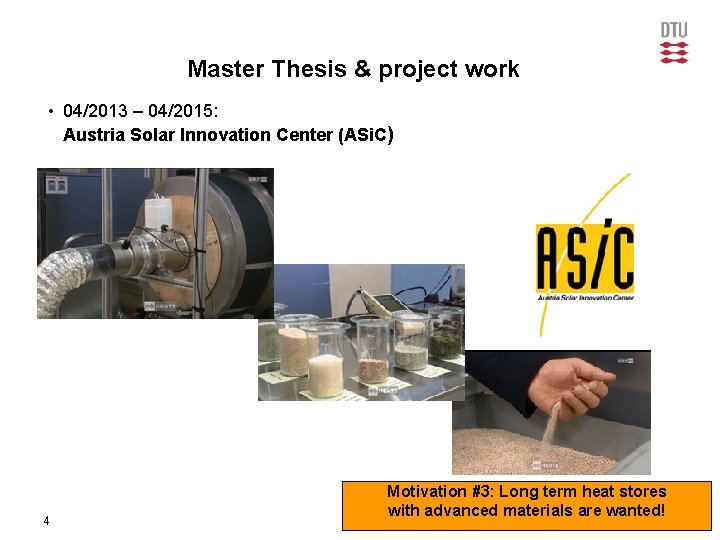
Master Thesis & project work • 04/2013 – 04/2015: Austria Solar Innovation Center (ASi. C) 4 Motivation #3: Long term heat stores with advanced materials are wanted!
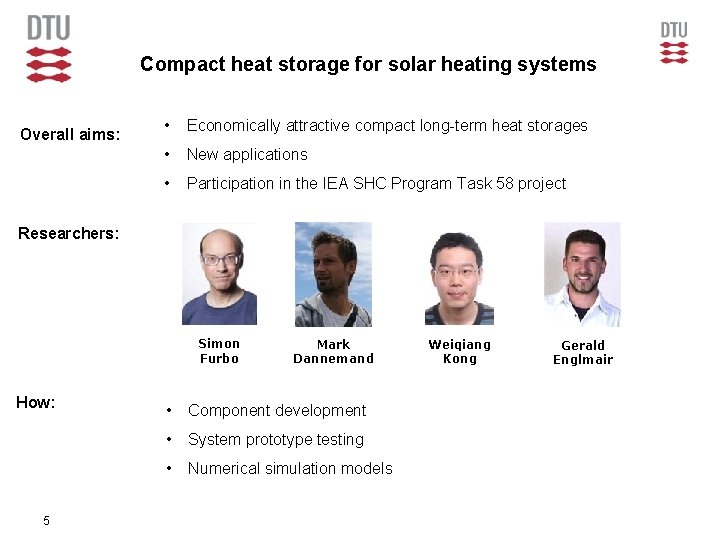
Compact heat storage for solar heating systems Overall aims: • Economically attractive compact long-term heat storages • New applications • Participation in the IEA SHC Program Task 58 project Researchers: Simon Furbo How: 5 Mark Dannemand • Component development • System prototype testing • Numerical simulation models Weiqiang Kong Gerald Englmair
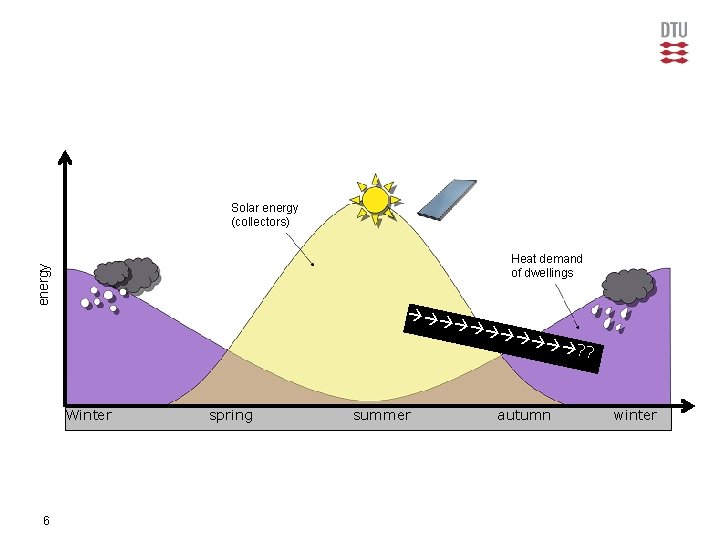
Solar energy (collectors) energy Heat demand of dwellings Winter 6 spring summer autumn ? ? winter
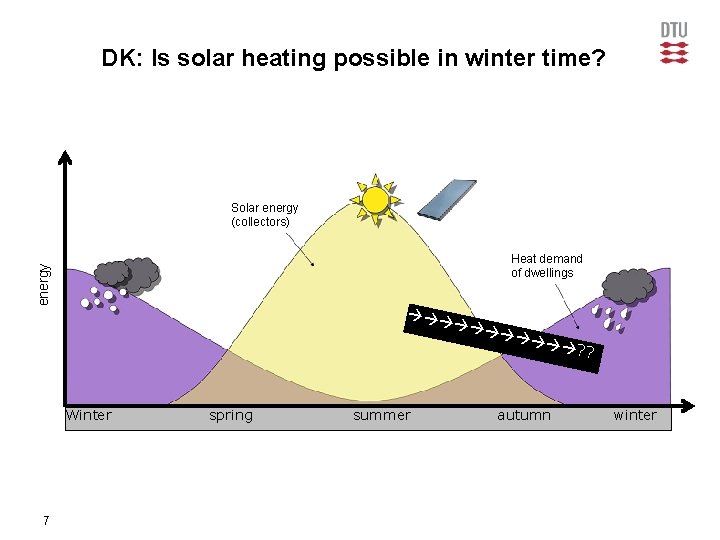
DK: Is solar heating possible in winter time? Solar energy (collectors) energy Heat demand of dwellings Winter 7 spring summer autumn ? ? winter
8
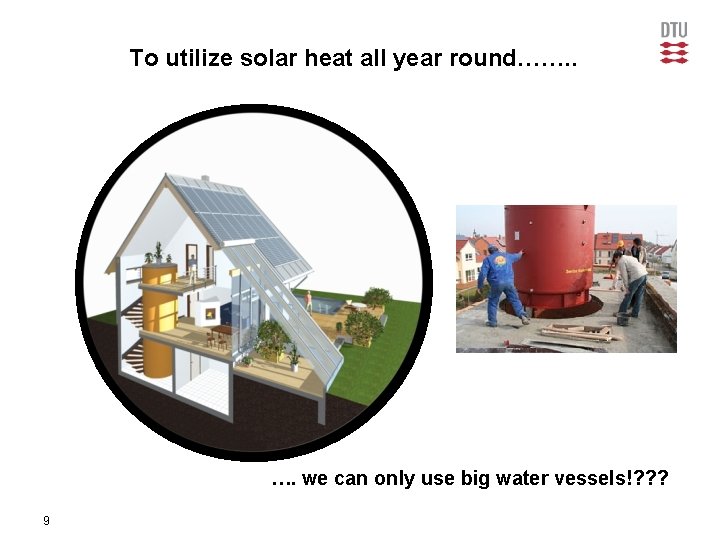
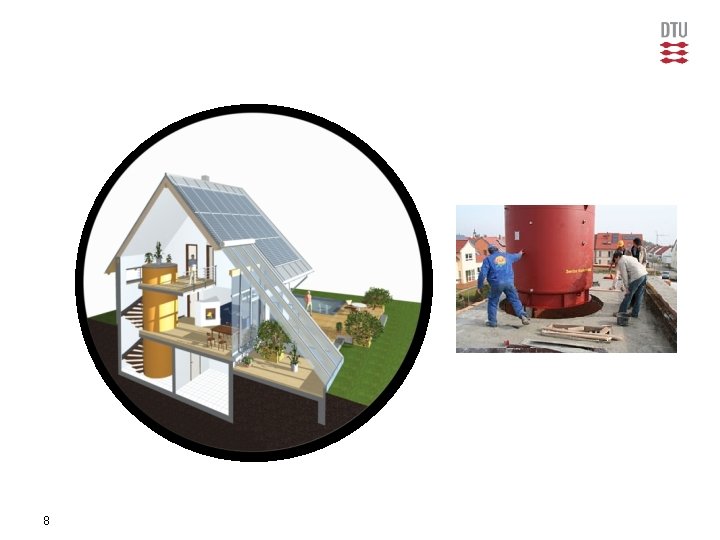
To utilize solar heat all year round……. . …. we can only use big water vessels!? ? ? 9
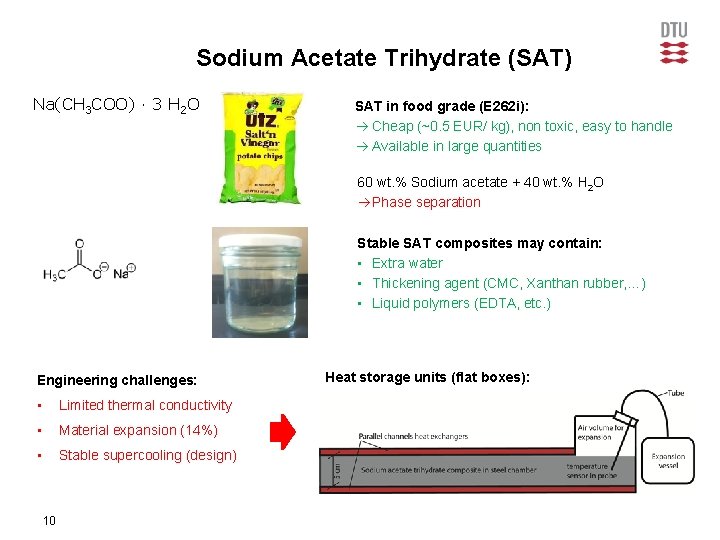
Sodium Acetate Trihydrate (SAT) Na(CH 3 COO) · 3 H 2 O SAT in food grade (E 262 i): Cheap (~0. 5 EUR/ kg), non toxic, easy to handle Available in large quantities 60 wt. % Sodium acetate + 40 wt. % H 2 O Phase separation Stable SAT composites may contain: • Extra water • Thickening agent (CMC, Xanthan rubber, …) • Liquid polymers (EDTA, etc. ) Engineering challenges: • Limited thermal conductivity • Material expansion (14%) • Stable supercooling (design) 10 Heat storage units (flat boxes):
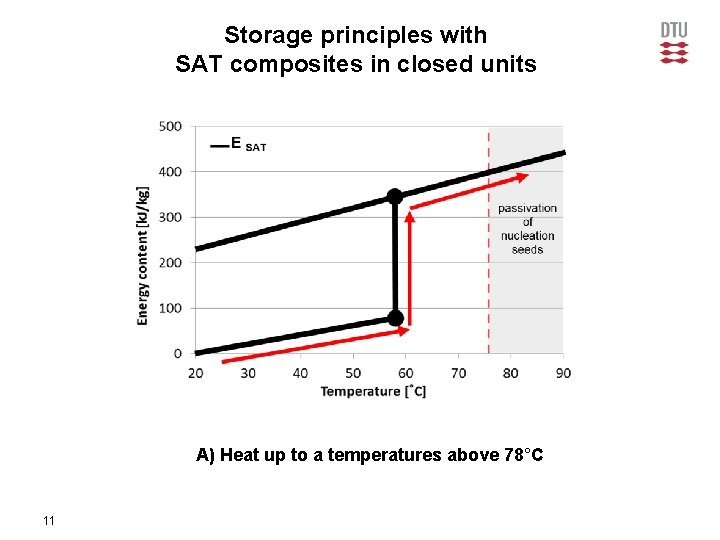
Storage principles with SAT composites in closed units A) Heat up to a temperatures above 78°C 11
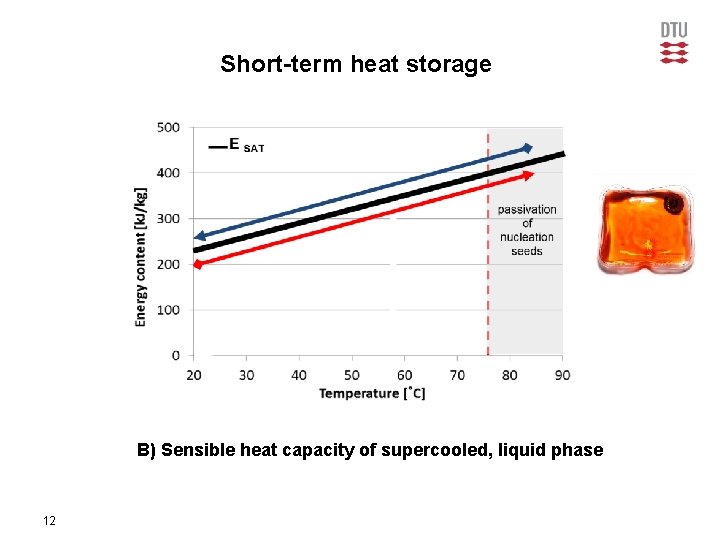
Short-term heat storage B) Sensible heat capacity of supercooled, liquid phase 12
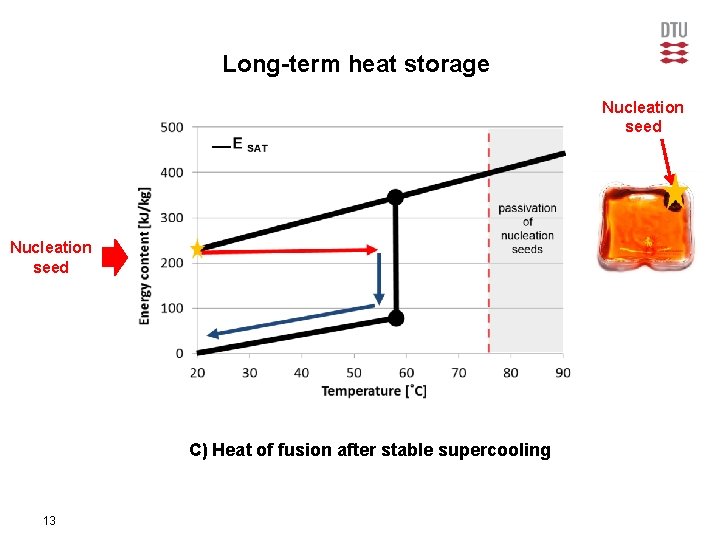
Long-term heat storage Nucleation seed C) Heat of fusion after stable supercooling 13
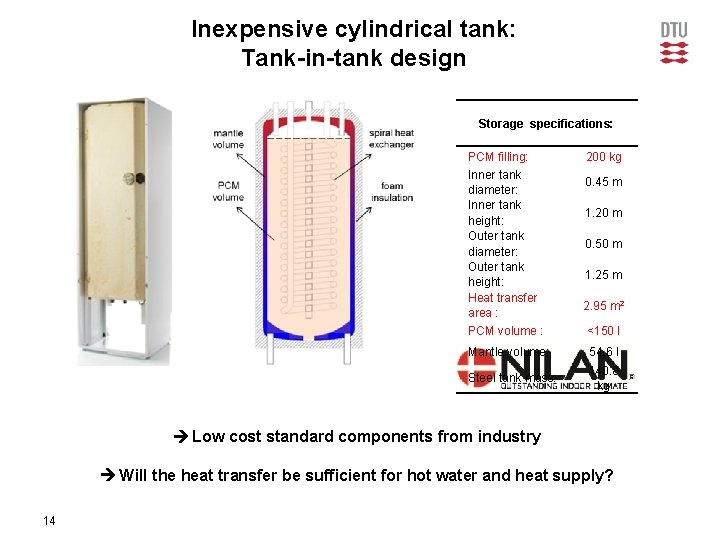
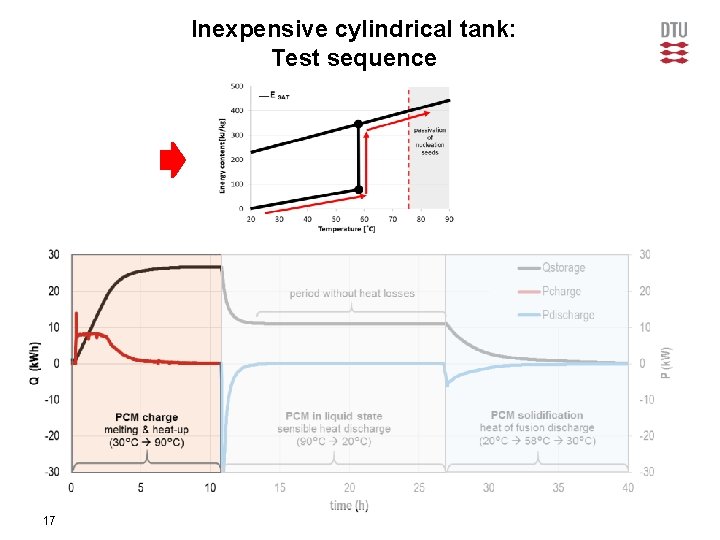
Inexpensive cylindrical tank: Tank-in-tank design Storage specifications: PCM filling: Inner tank diameter: Inner tank height: Outer tank diameter: Outer tank height: Heat transfer area : PCM volume : 200 kg 0. 45 m 1. 20 m 0. 50 m 1. 25 m 2. 95 m 2 <150 l Mantle volume: 54. 6 l Steel tank mass: 140. 8 kg Low cost standard components from industry Will the heat transfer be sufficient for hot water and heat supply? 14
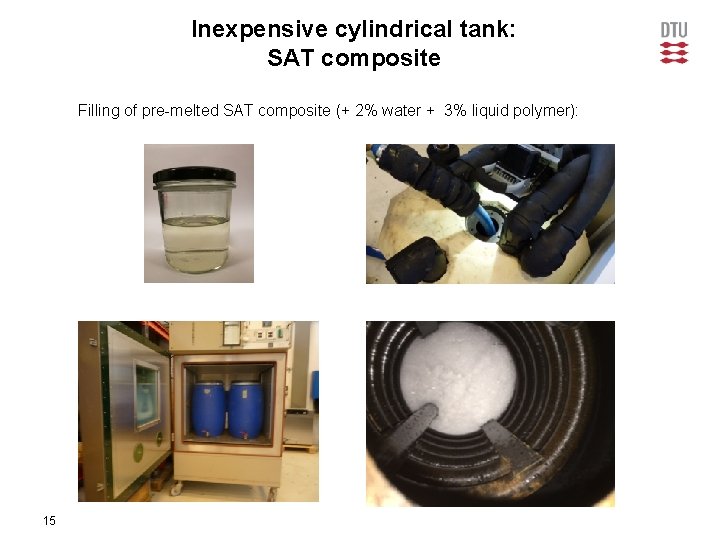
Inexpensive cylindrical tank: SAT composite Filling of pre-melted SAT composite (+ 2% water + 3% liquid polymer): 15
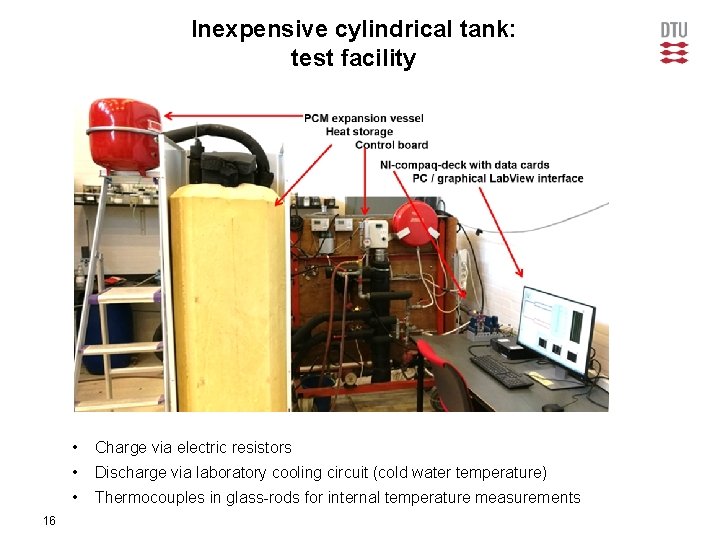
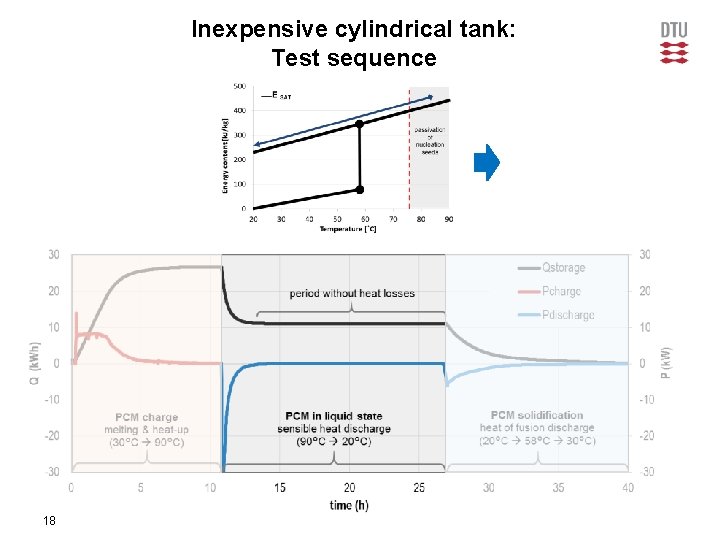
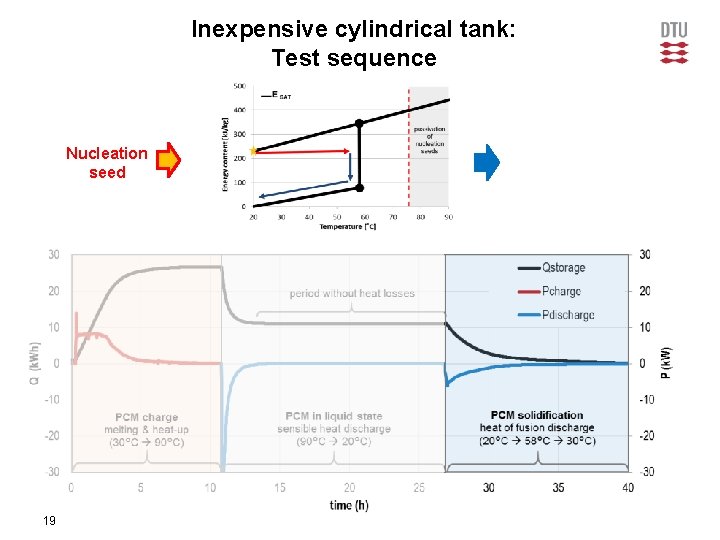
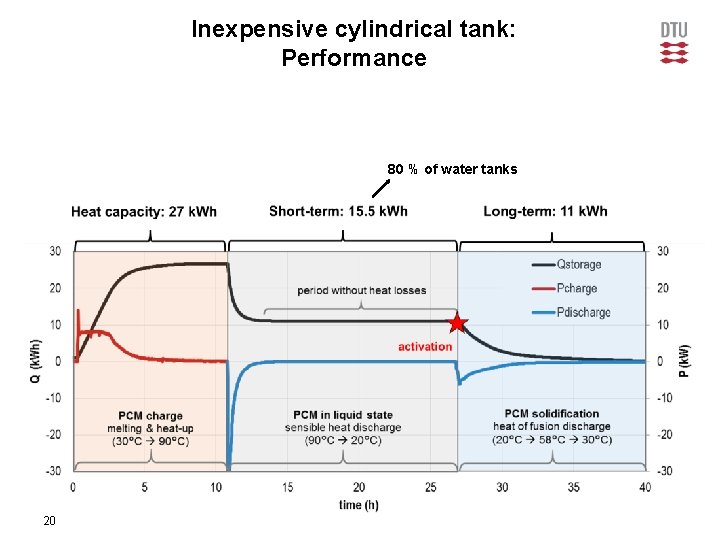
Inexpensive cylindrical tank: test facility 16 • Charge via electric resistors • Discharge via laboratory cooling circuit (cold water temperature) • Thermocouples in glass-rods for internal temperature measurements
Inexpensive cylindrical tank: Test sequence 17
Inexpensive cylindrical tank: Test sequence 18
Inexpensive cylindrical tank: Test sequence Nucleation seed 19
Inexpensive cylindrical tank: Performance 80 % of water tanks 20
Demonstration system 21
Demonstration system 22
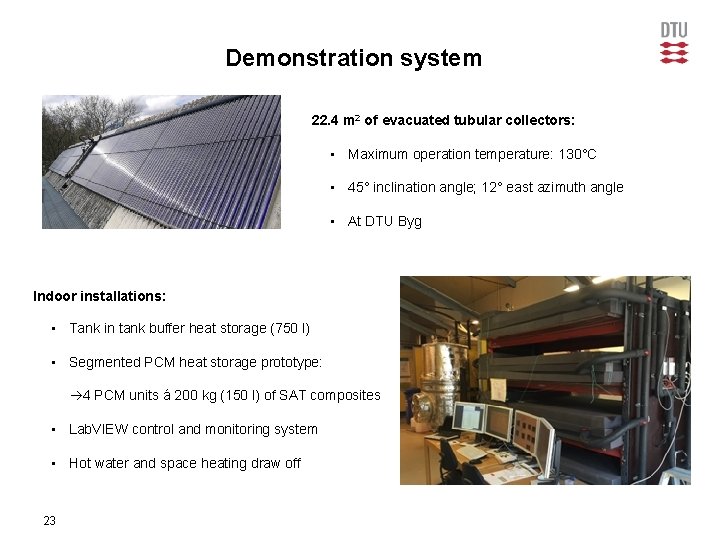
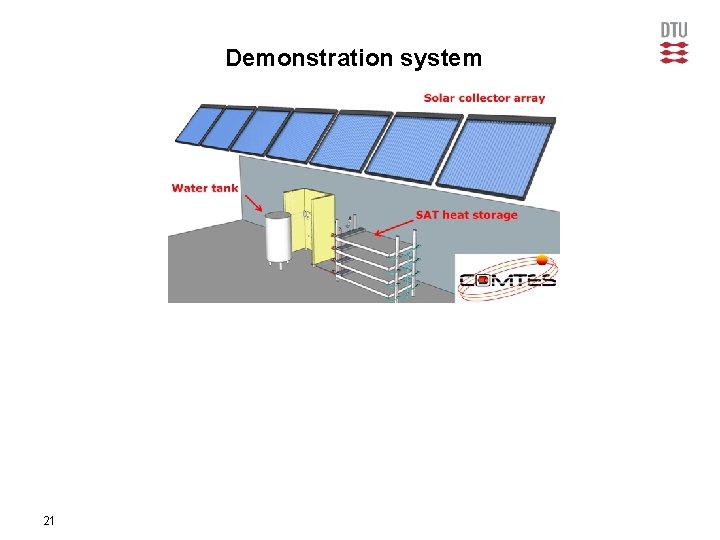
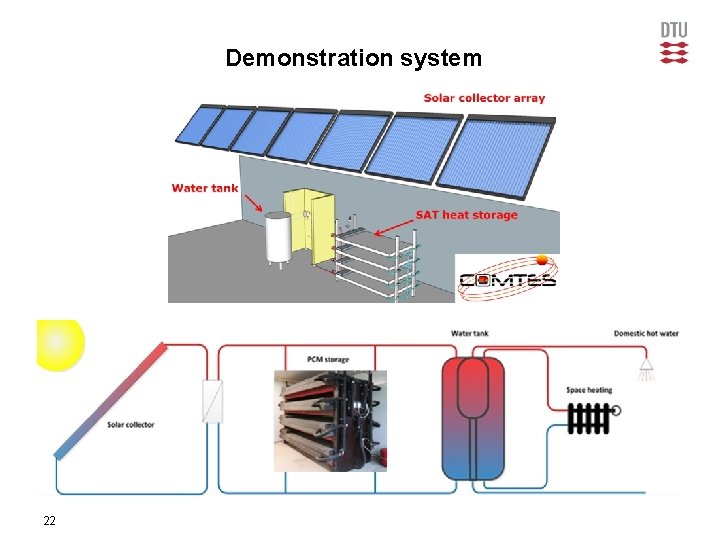
Demonstration system 22. 4 m 2 of evacuated tubular collectors: • Maximum operation temperature: 130°C • 45° inclination angle; 12° east azimuth angle • At DTU Byg Indoor installations: • Tank in tank buffer heat storage (750 l) • Segmented PCM heat storage prototype: 4 PCM units á 200 kg (150 l) of SAT composites • Lab. VIEW control and monitoring system • Hot water and space heating draw off 23
Proof of concept 24
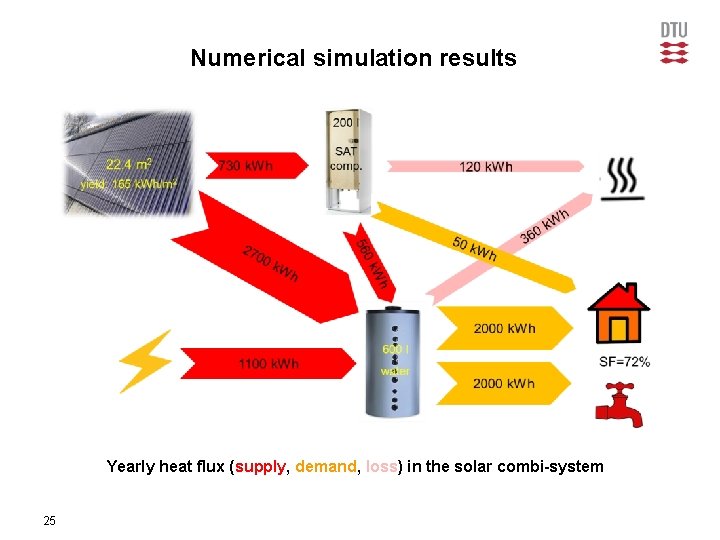
Numerical simulation results Yearly heat flux (supply, demand, loss) in the solar combi-system 25
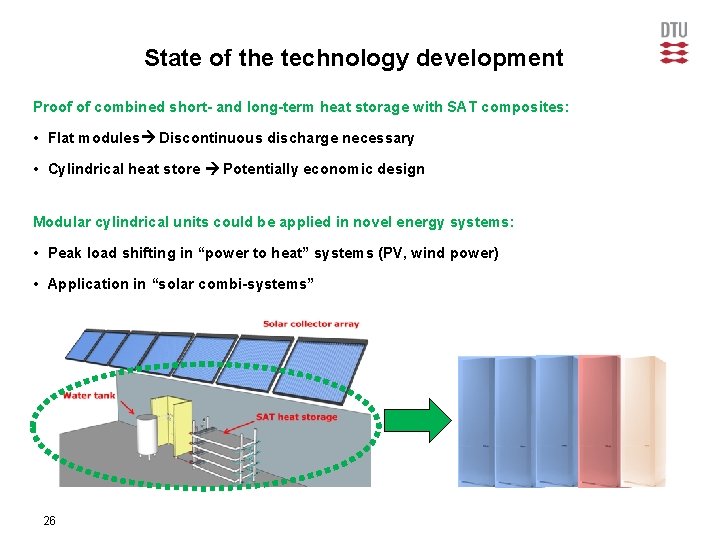
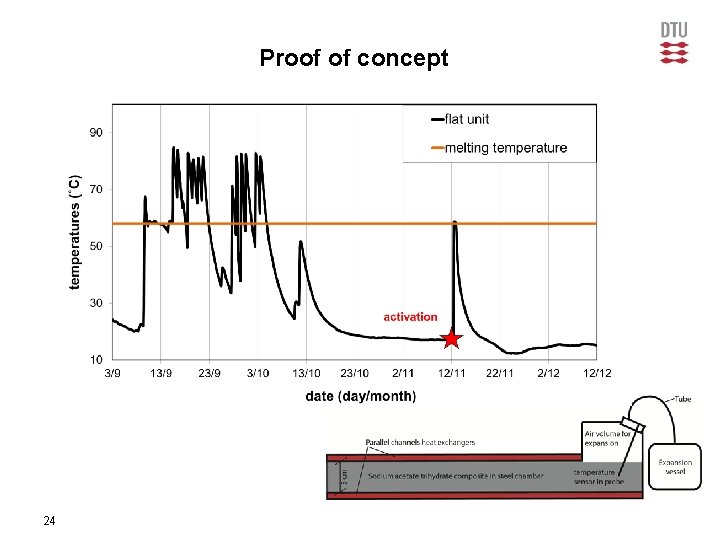
State of the technology development Proof of combined short- and long-term heat storage with SAT composites: • Flat modules Discontinuous discharge necessary • Cylindrical heat store Potentially economic design Modular cylindrical units could be applied in novel energy systems: • Peak load shifting in “power to heat” systems (PV, wind power) • Application in “solar combi-systems” 26
THANK YOU FOR YOUR ATTENTION! Acknowledgements: Gerald Englmair Email: gereng@byg. dtu. dk We would like to thank our partners at NILAN A/S and HM Heizkörper Gmb. H & Co KG for the good collaboration. The work was supported by the Sino Danish Center (SDC) for Education and research.
- Slides: 27