
Combined Science Physics Key Stage 4 Electricity Thermistors
Combined Science - Physics - Key Stage 4 - Electricity Thermistors Worksheet Miss Walrond 1

Q 1. (a)Alex wants to use a thermistor as a temperature sensor. He sets up the circuit shown below. Draw the symbol for a thermistor in the space labelled R 2. [1] OCR, Twenty First Century Physics B, Paper. J 259/03, June 2018 2
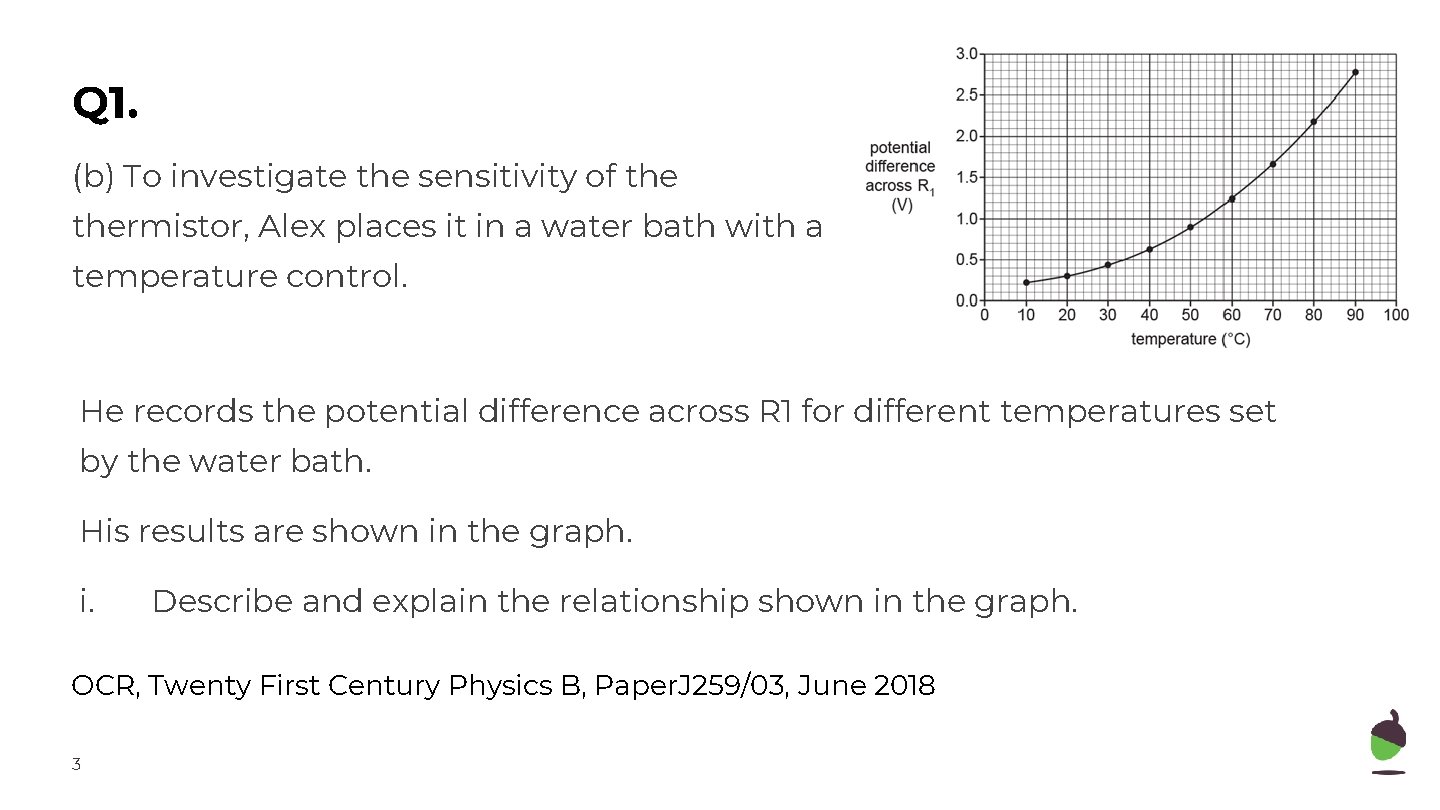
Q 1. (b) To investigate the sensitivity of thermistor, Alex places it in a water bath with a temperature control. He records the potential difference across R 1 for different temperatures set by the water bath. His results are shown in the graph. i. Describe and explain the relationship shown in the graph. OCR, Twenty First Century Physics B, Paper. J 259/03, June 2018 3
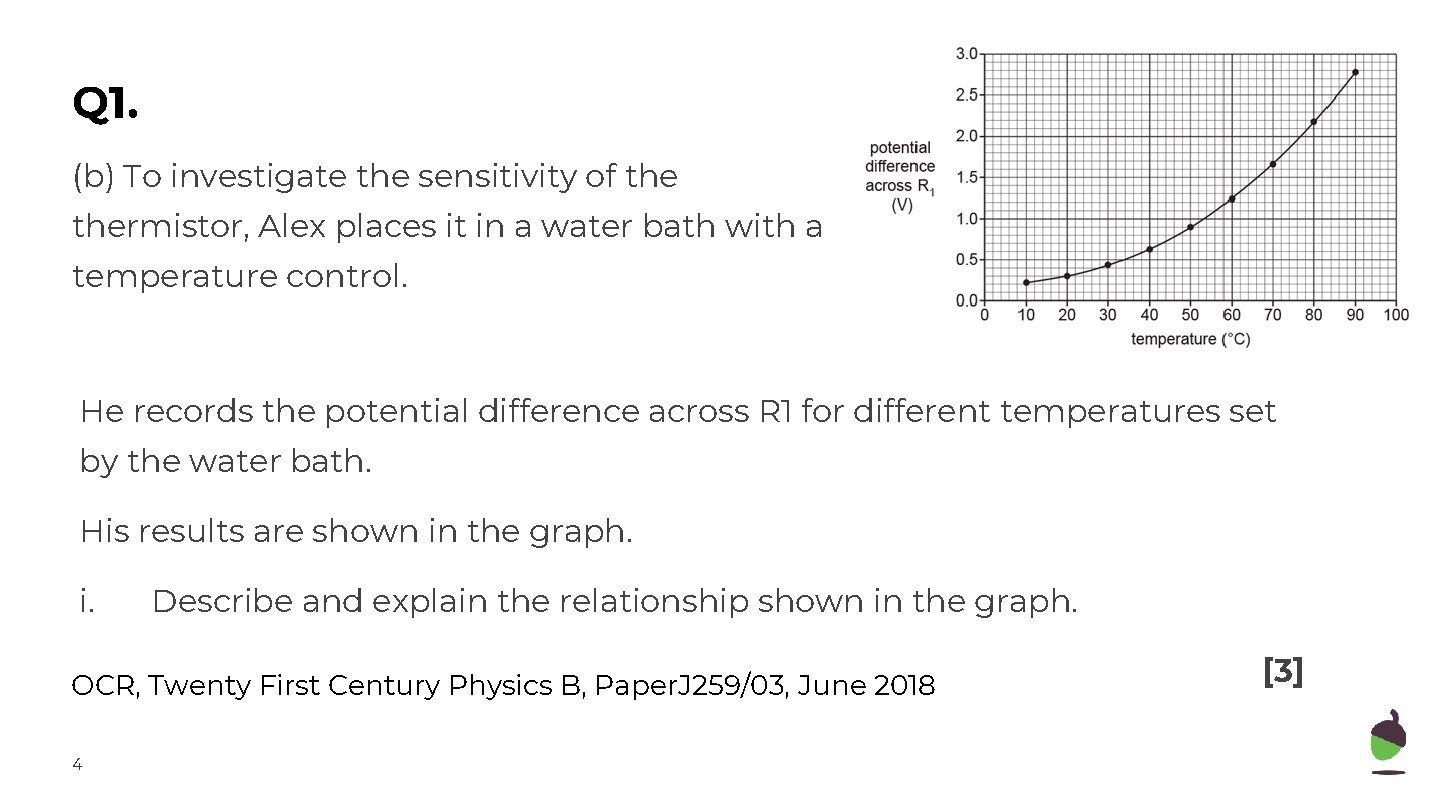
Q 1. (b) To investigate the sensitivity of thermistor, Alex places it in a water bath with a temperature control. He records the potential difference across R 1 for different temperatures set by the water bath. His results are shown in the graph. i. Describe and explain the relationship shown in the graph. OCR, Twenty First Century Physics B, Paper. J 259/03, June 2018 4 [3]
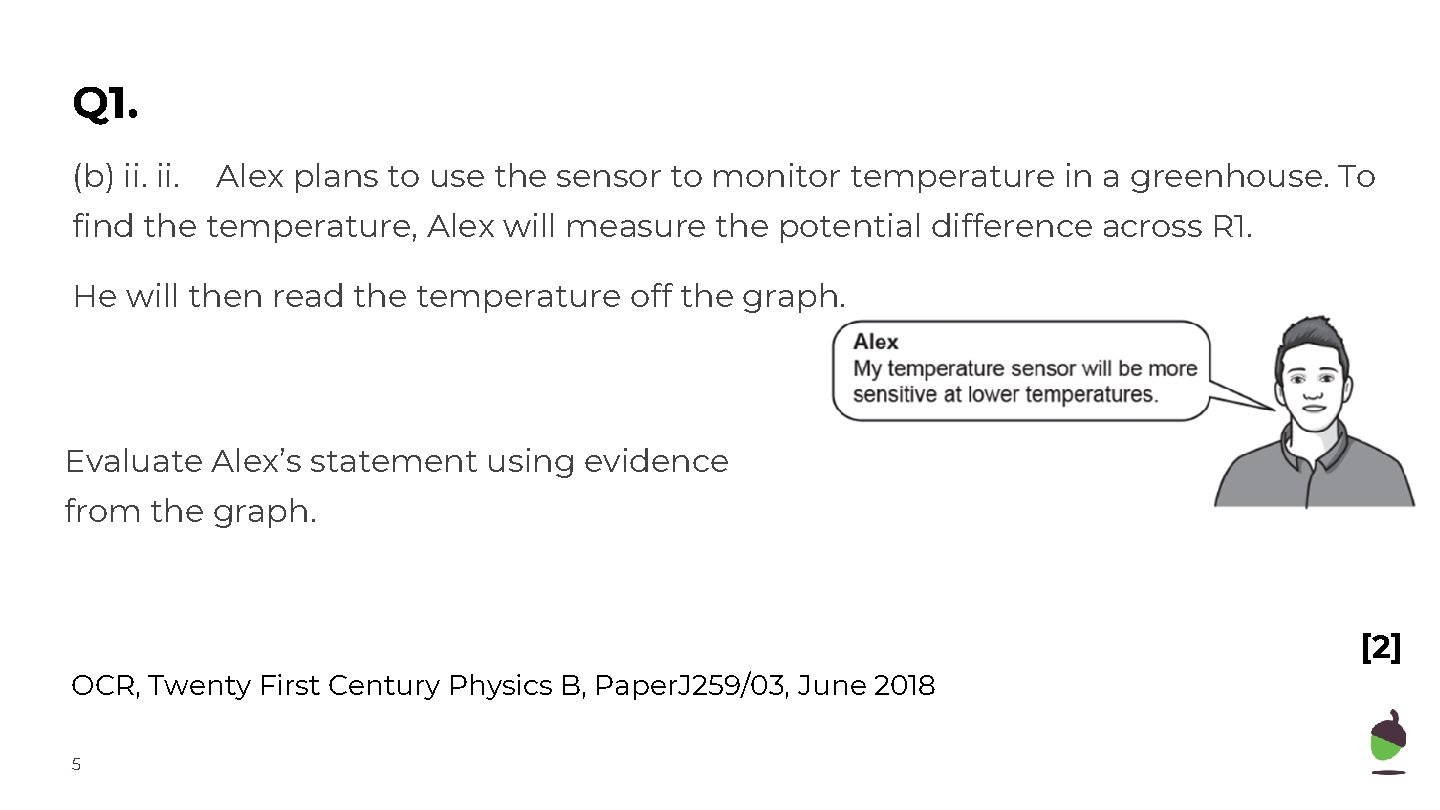
Q 1. (b) ii. Alex plans to use the sensor to monitor temperature in a greenhouse. To find the temperature, Alex will measure the potential difference across R 1. He will then read the temperature off the graph. Evaluate Alex’s statement using evidence from the graph. OCR, Twenty First Century Physics B, Paper. J 259/03, June 2018 5 [2]
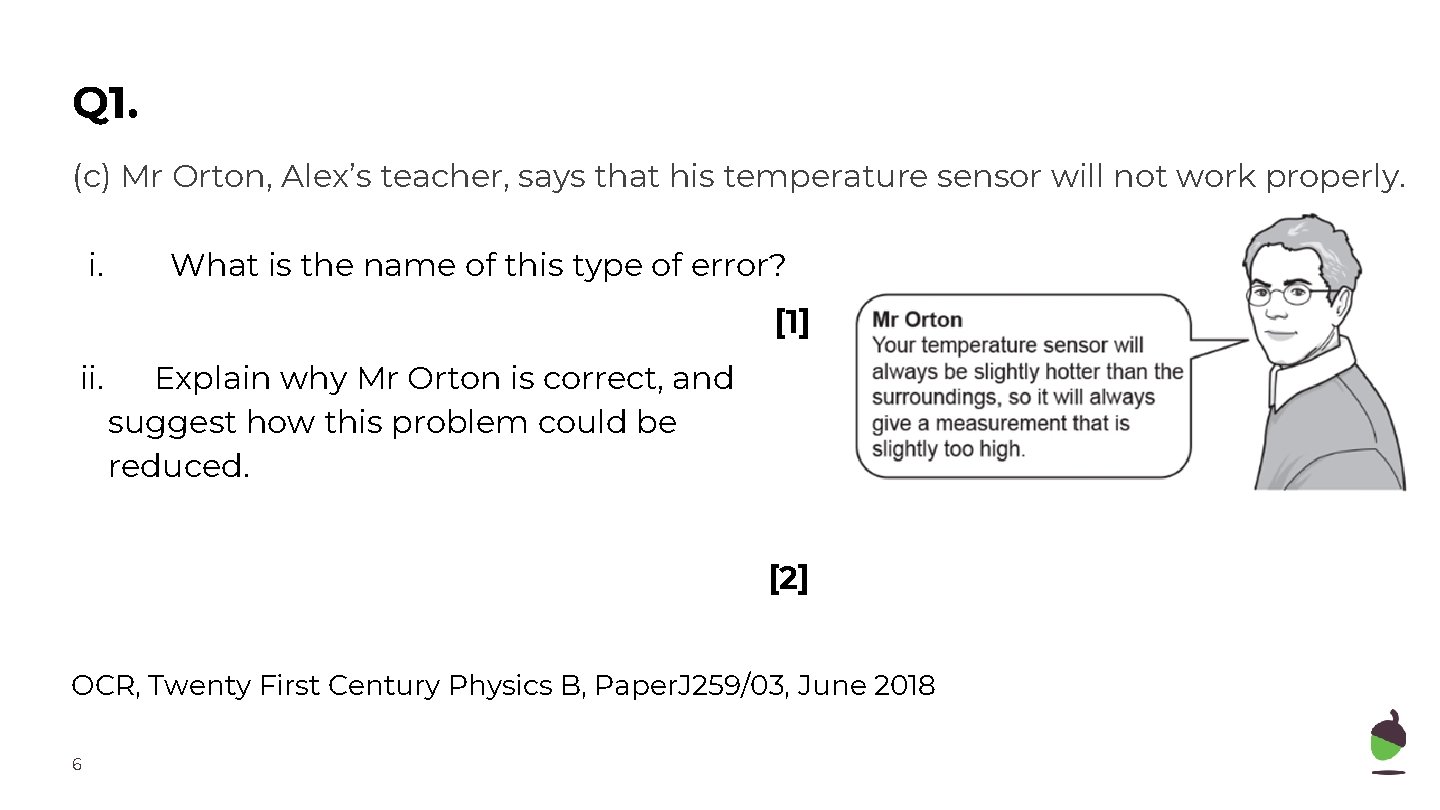
Q 1. (c) Mr Orton, Alex’s teacher, says that his temperature sensor will not work properly. i. What is the name of this type of error? [1] ii. Explain why Mr Orton is correct, and suggest how this problem could be reduced. [2] OCR, Twenty First Century Physics B, Paper. J 259/03, June 2018 6

Answers 7
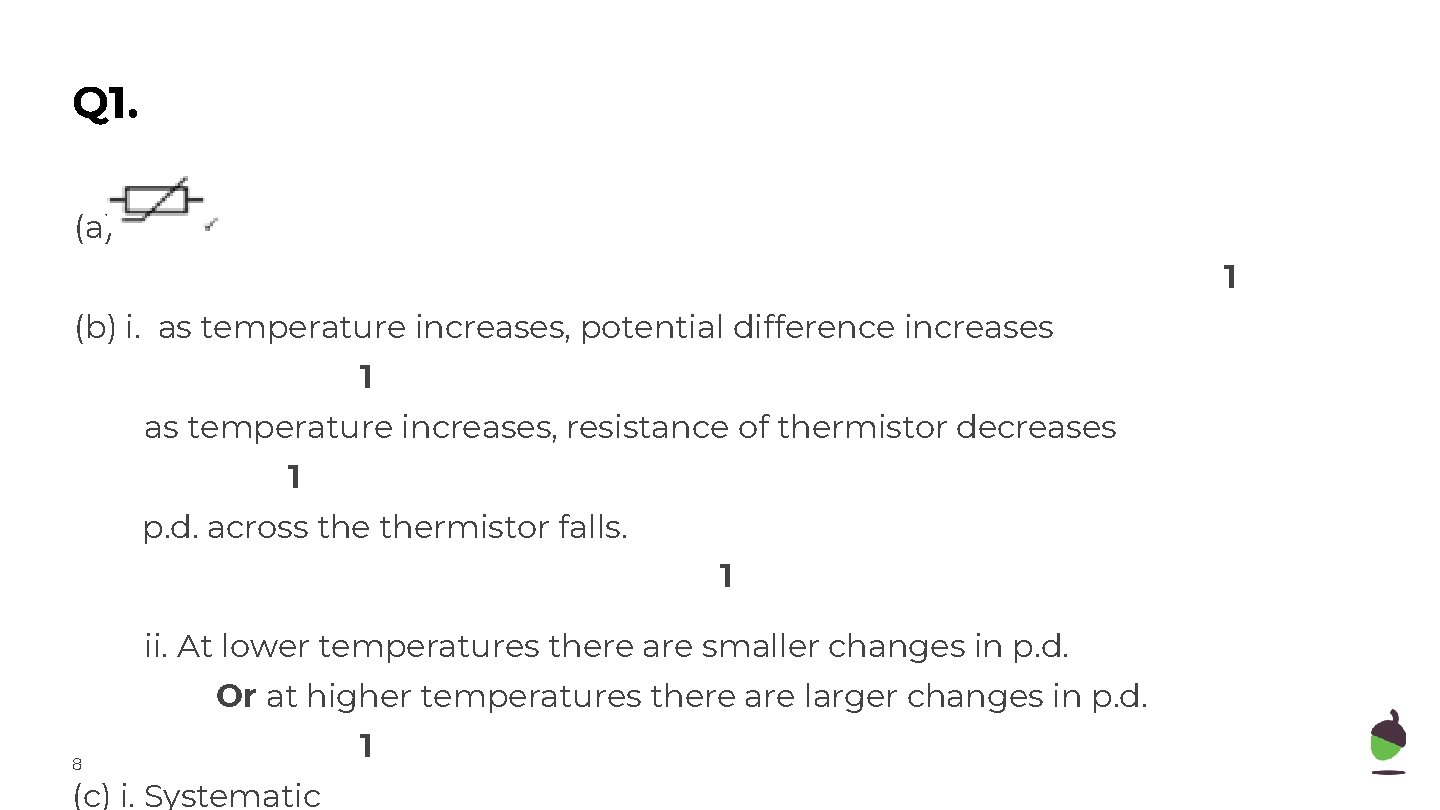
Q 1. (a) 1 (b) i. as temperature increases, potential difference increases 1 as temperature increases, resistance of thermistor decreases 1 p. d. across thermistor falls. 1 ii. At lower temperatures there are smaller changes in p. d. Or at higher temperatures there are larger changes in p. d. 8 (c) i. Systematic 1

In lesson questions 9
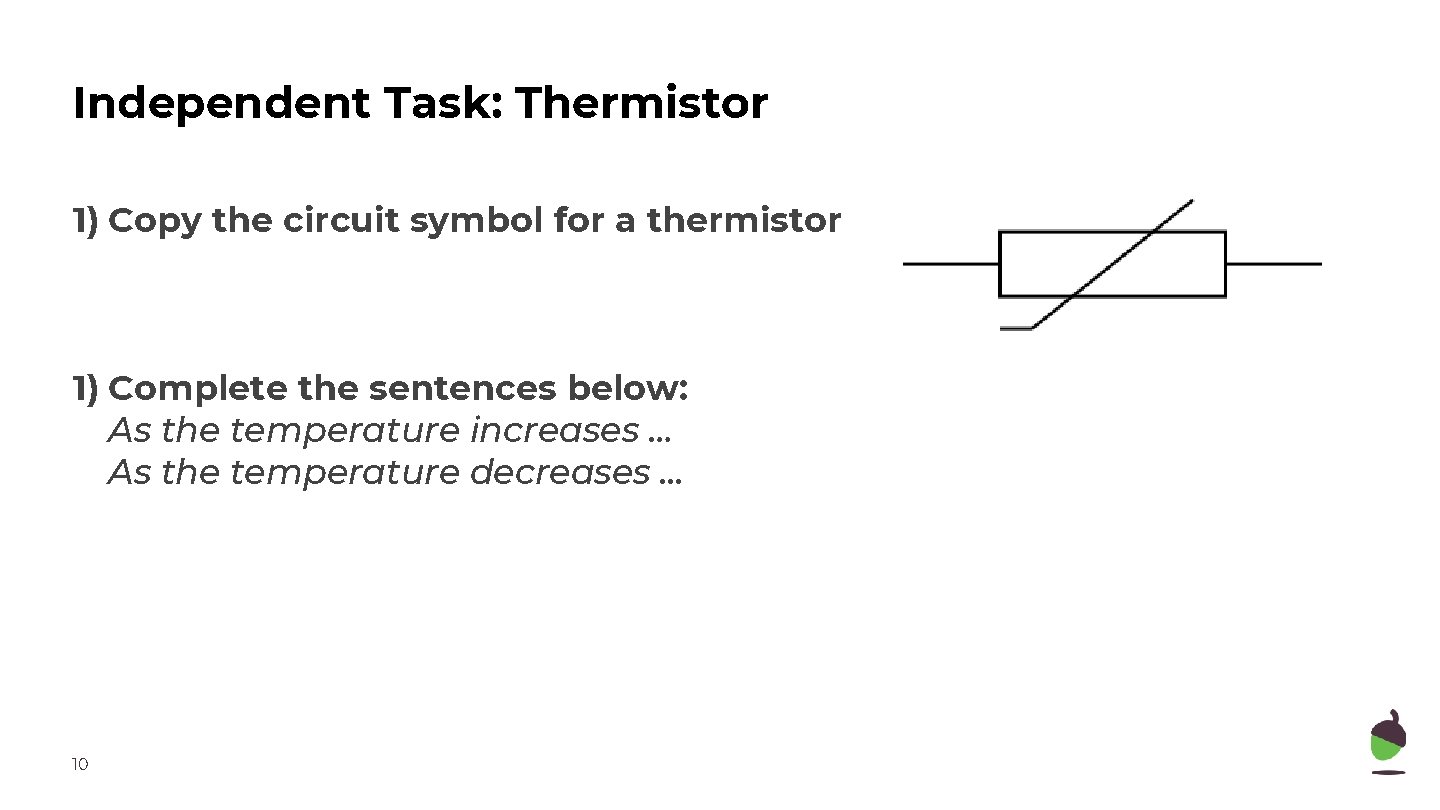
Independent Task: Thermistor 1) Copy the circuit symbol for a thermistor 1) Complete the sentences below: As the temperature increases … As the temperature decreases. . . 10
Review - Investigating Thermistors part 1 1) Name the independent variable in this investigation. 2) Name the dependent variable in this investigation. 3) Write down a safety consideration 11
Review - Investigating Thermistors part 3 1) Explain what happens to the current through thermistor when the temperature decreases. As the temperature decreases the current … 12
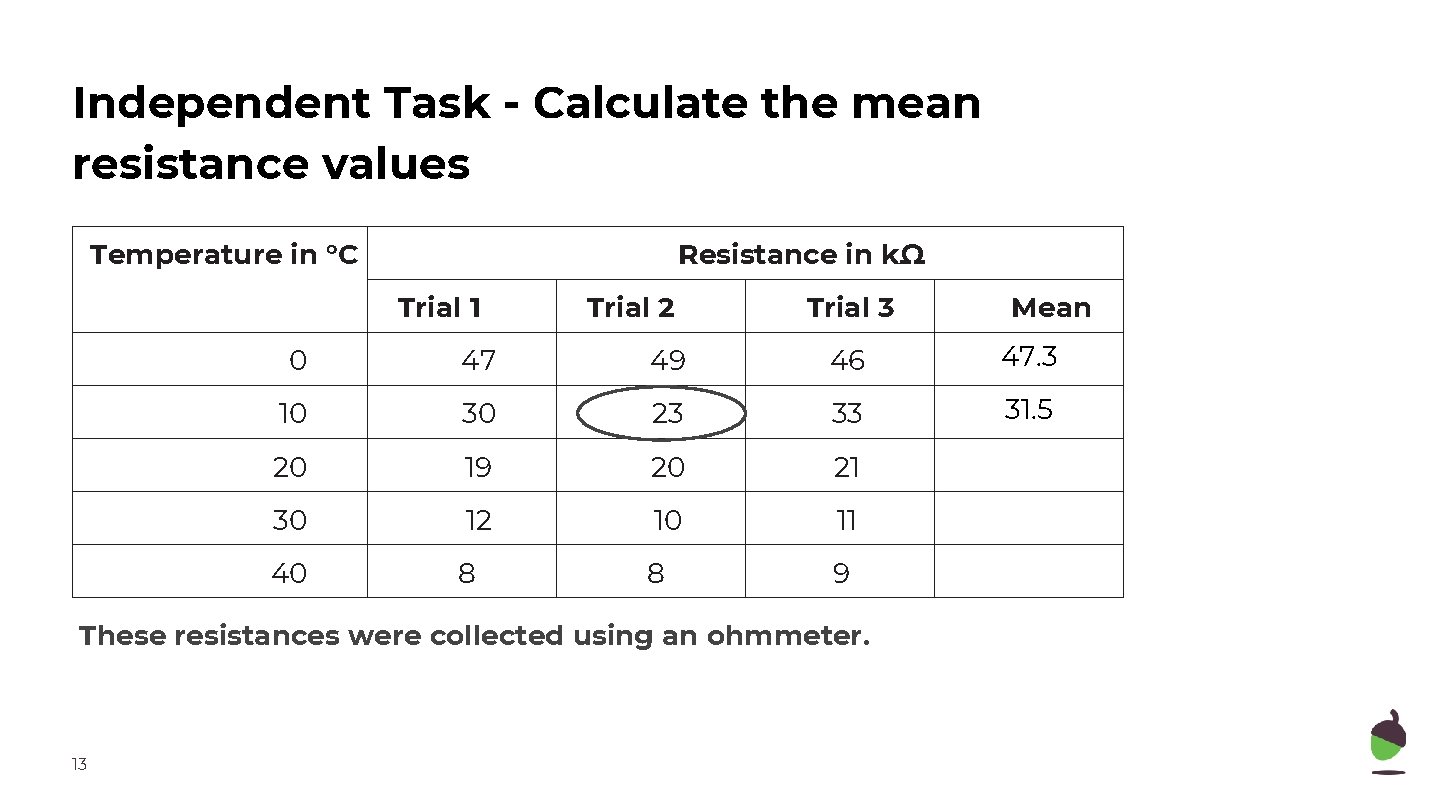
Independent Task - Calculate the mean resistance values Temperature in °C Resistance in kΩ Trial 1 Trial 2 Trial 3 0 47 49 46 47. 3 10 30 23 33 31. 5 20 19 20 21 30 12 10 11 40 8 8 9 These resistances were collected using an ohmmeter. 13 Mean
Investigating Thermistors part 4 Sketch the graph on the right. Describe the relationship shown on the graph. 14

Worked Example Answers as discussed in the next slide have not been seen or verified by OCR. 1. Look at the circuit Trevor connects. He gently heats thermistor. Describe and explain how heating thermistor affects the brightness of the lamp. [2] OCR, Gateway Physics A, Paper B 752/02, June 2013 15
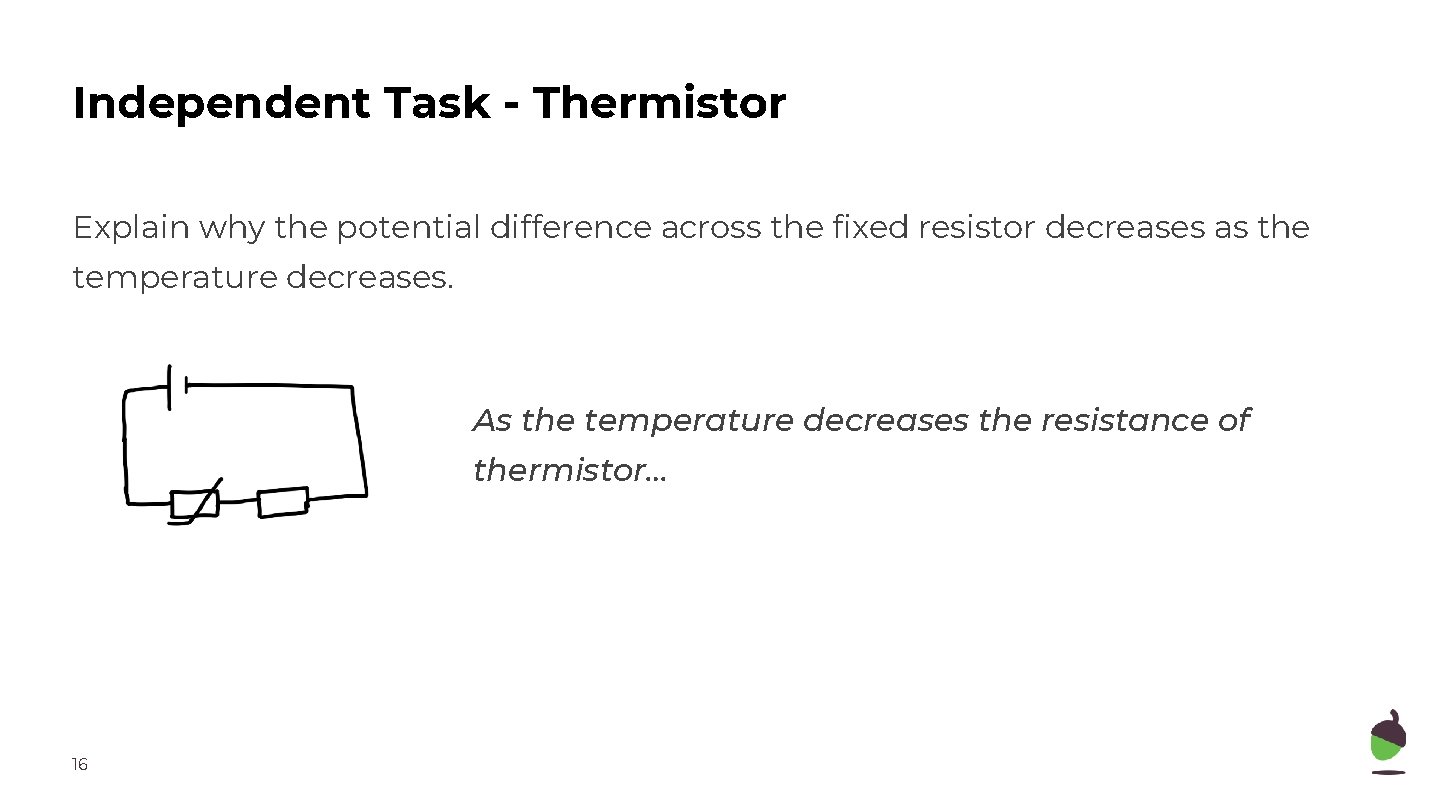
Independent Task - Thermistor Explain why the potential difference across the fixed resistor decreases as the temperature decreases. As the temperature decreases the resistance of thermistor… 16
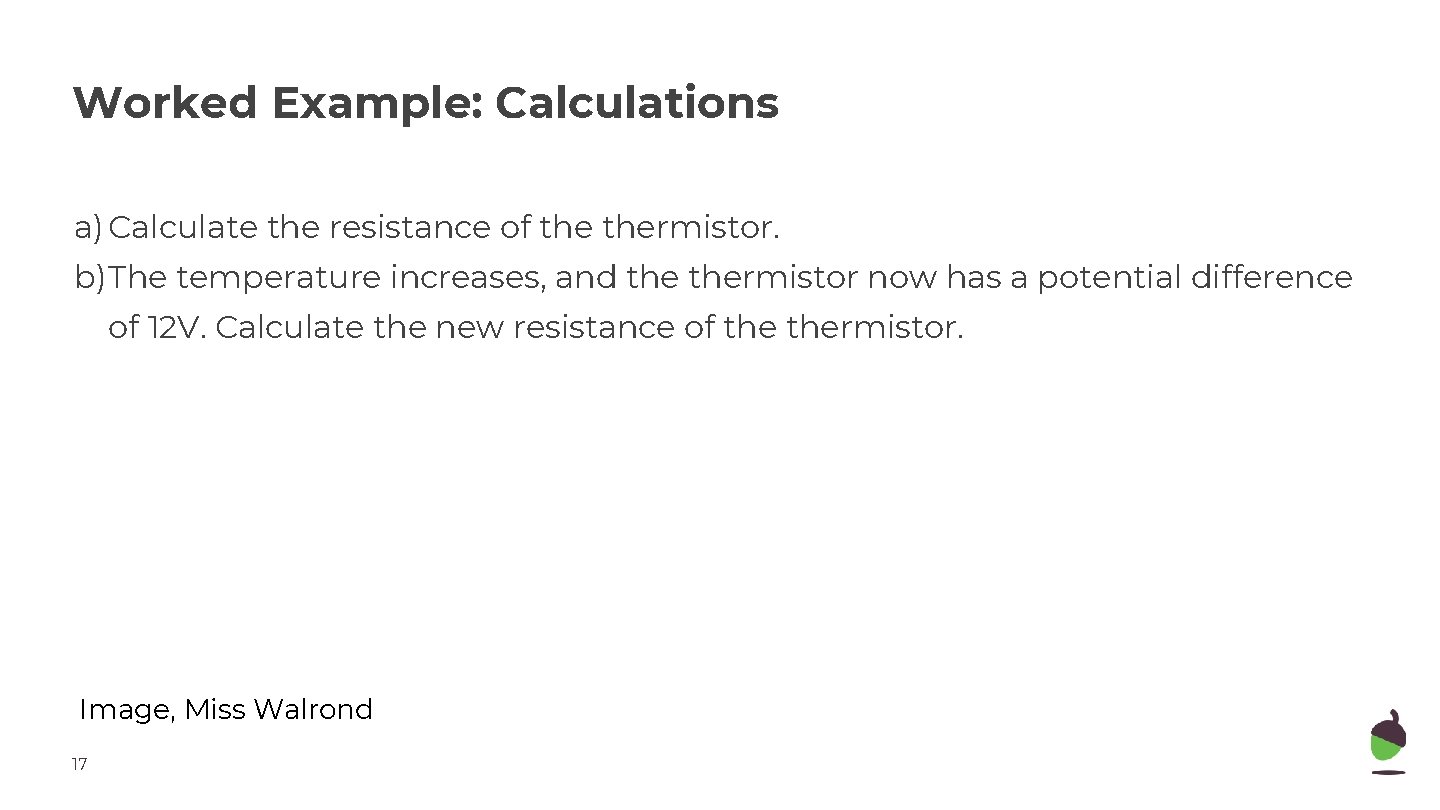
Worked Example: Calculations a) Calculate the resistance of thermistor. b)The temperature increases, and thermistor now has a potential difference of 12 V. Calculate the new resistance of thermistor. Image, Miss Walrond 17
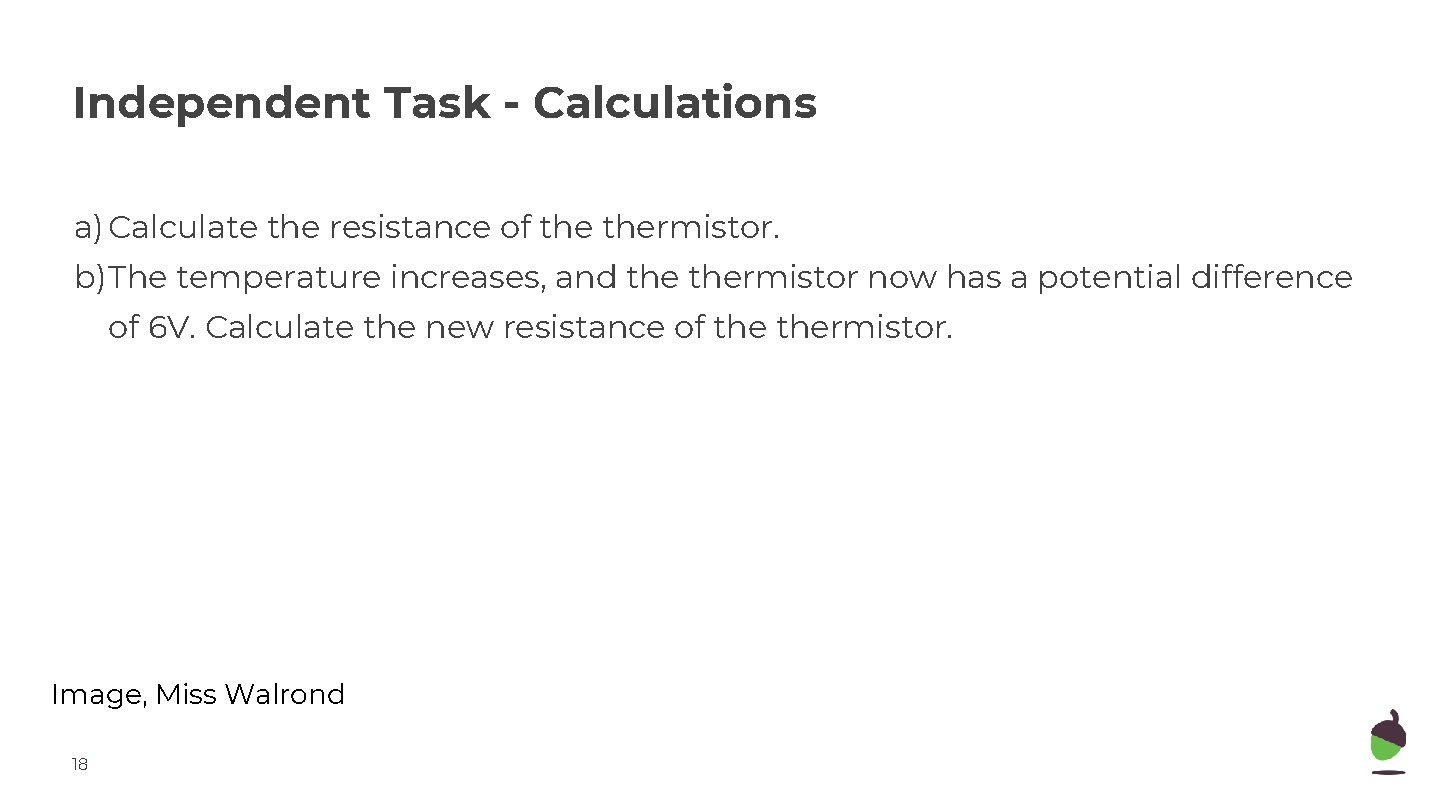
Independent Task - Calculations a) Calculate the resistance of thermistor. b)The temperature increases, and thermistor now has a potential difference of 6 V. Calculate the new resistance of thermistor. Image, Miss Walrond 18

Answers 19
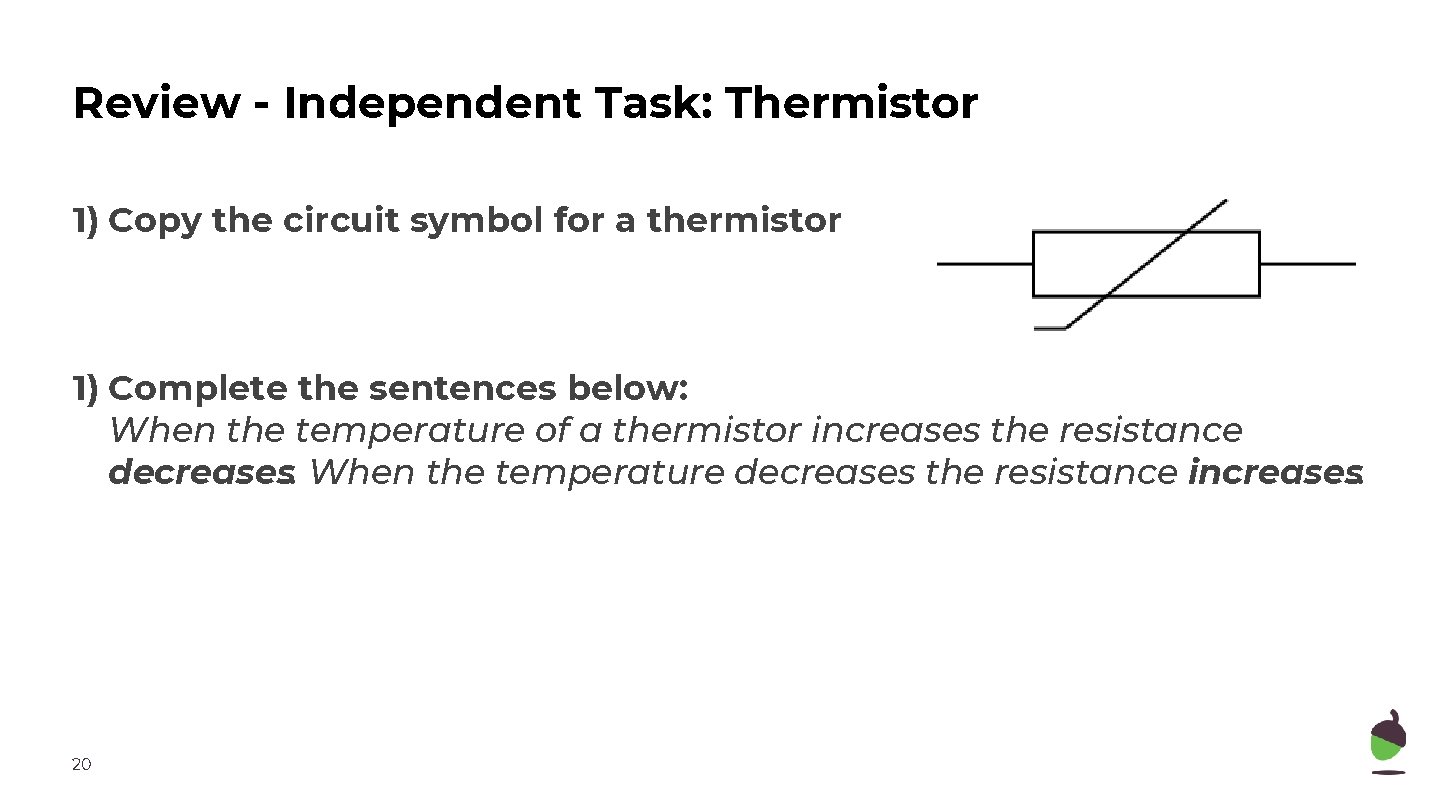
Review - Independent Task: Thermistor 1) Copy the circuit symbol for a thermistor 1) Complete the sentences below: When the temperature of a thermistor increases the resistance decreases. When the temperature decreases the resistance increases. 20
Review - Investigating Thermistors Independent variable: Light intensity or distance of a lamp from the LDR Dependent variable: Resistance of the LDR. Safety Consideration: Make sure that thermistor is well insulated. Make sure that no water splashes out of the water bath. 21
Review - Investigating thermistors part 3. 1) As the temperature decreases thermistor’s current decreases this is because the resistance increases. 22
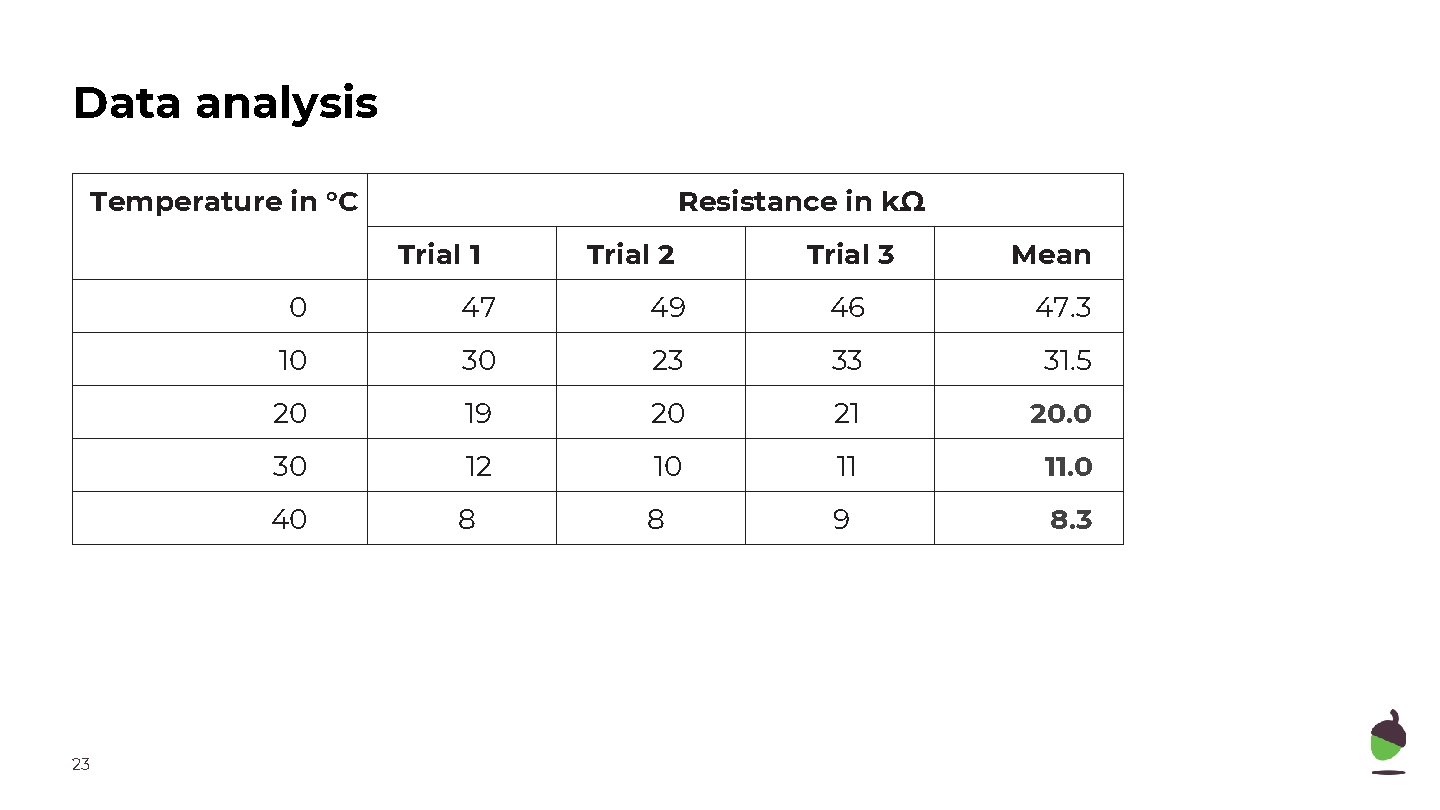
Data analysis Temperature in °C Resistance in kΩ Trial 1 23 Trial 2 Trial 3 Mean 0 47 49 46 47. 3 10 30 23 33 31. 5 20 19 20 21 20. 0 30 12 10 11 11. 0 40 8 8 9 8. 3
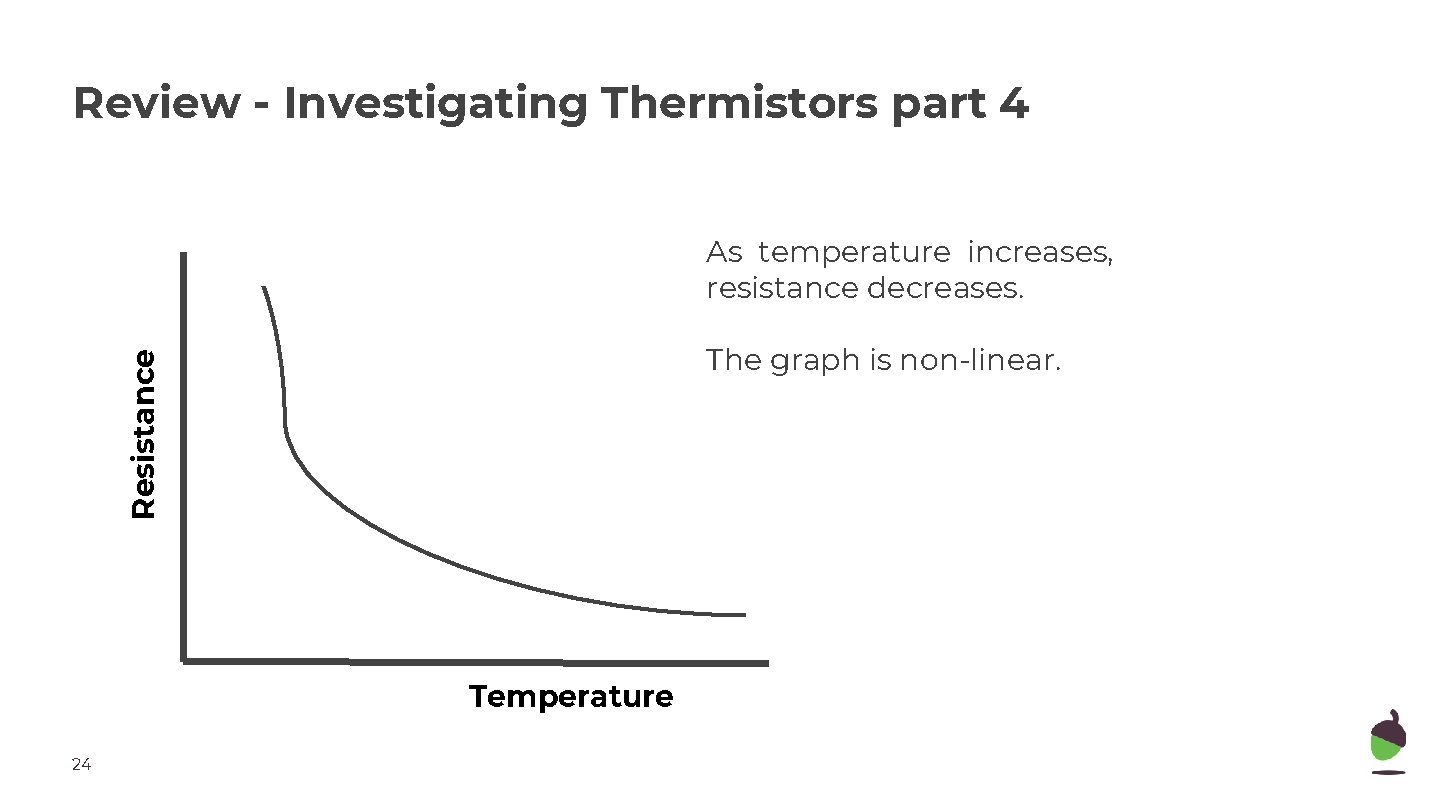
Review - Investigating Thermistors part 4 As temperature increases, resistance decreases. Resistance The graph is non-linear. Temperature 24
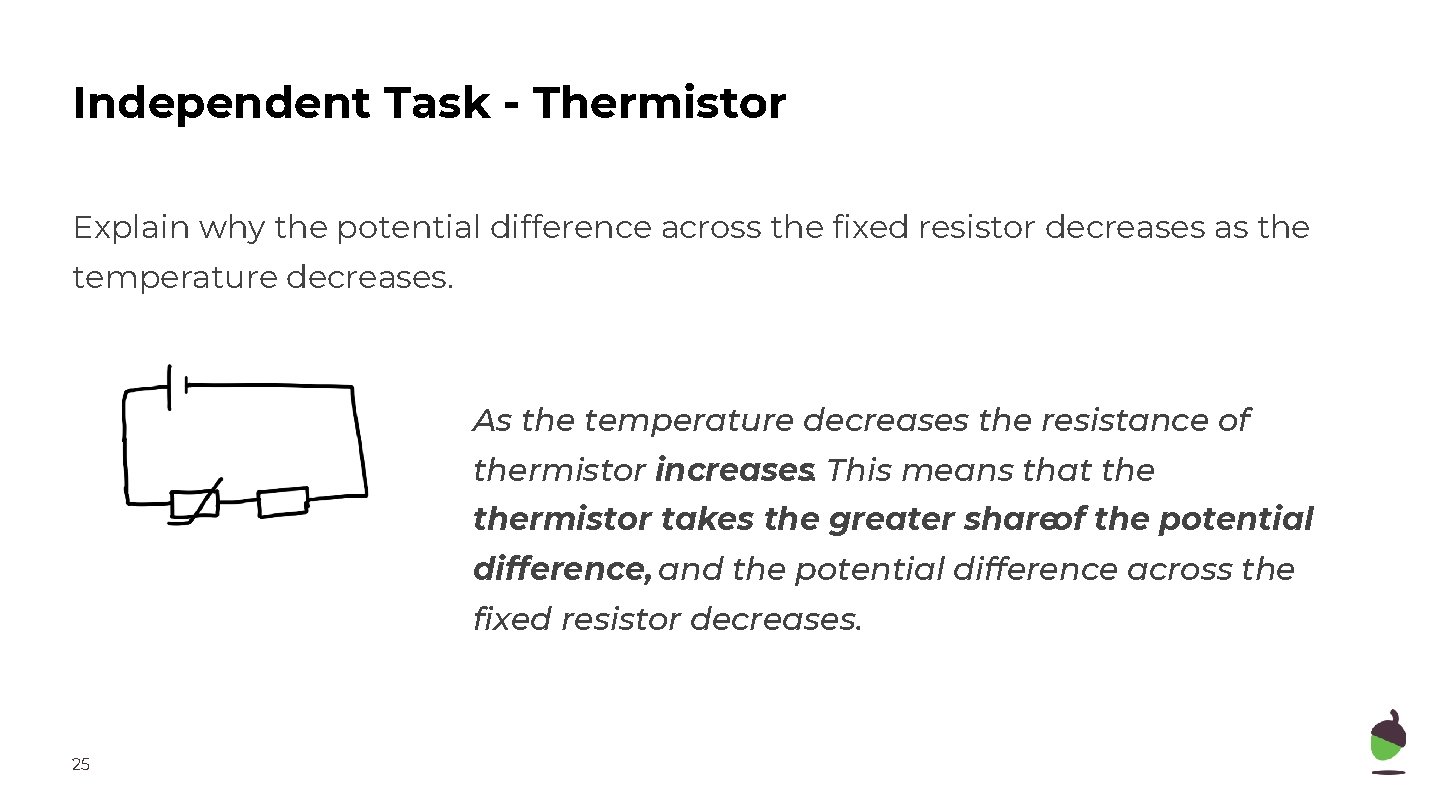
Independent Task - Thermistor Explain why the potential difference across the fixed resistor decreases as the temperature decreases. As the temperature decreases the resistance of thermistor increases. This means that thermistor takes the greater shareof the potential difference, and the potential difference across the fixed resistor decreases. 25
Review: Independent Task - Calculations a) Calculate the resistance of thermistor. 600 �� b)The temperature increases, and thermistor now has a potential difference of 6 V. Calculate the new resistance of thermistor. 200 �� 26
- Slides: 26