
Combined Science Physics Key Stage 4 Electricity The
Combined Science - Physics - Key Stage 4 - Electricity The National Grid Worksheet Miss Walrond 1
Q 1. The voltage of electricity used in the home is 230 V. The voltage of electricity used for some power lines is more than 110 000 V. Transformers are used as part of the National Grid. Explain why transformers improve the transfer of electricity to the home. [2] Answers as discussed in the next slide have not been seen or verified by OCR, Gateway Physics A, Paper B 752/01, June 2015 2

Answers 3
Q 1. 1) Any two from: - transformers can be used to change voltage or increase voltage or decrease voltage (1) You might have mentioned a step up transformere here. - 110 000 V is dangerous or make the voltage safer for people (in their homes) (1) You might have mentioned a step down transformer here. - less power loss (at high voltages) or more efficient (at high voltages) (1) Or this increases the efficiency as the current is lower. 4

In lesson questions 5
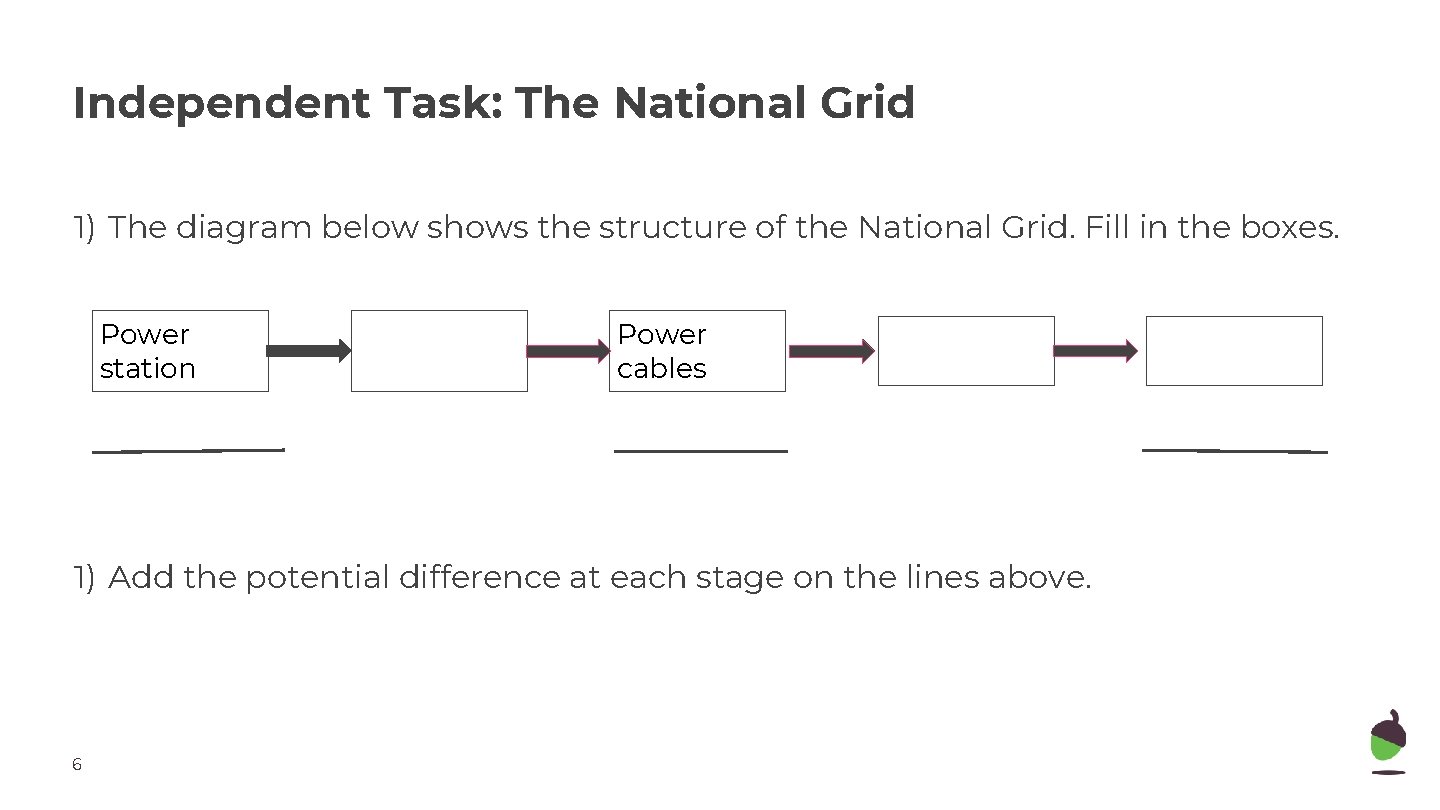
Independent Task: The National Grid 1) The diagram below shows the structure of the National Grid. Fill in the boxes. Power station Power cables 1) Add the potential difference at each stage on the lines above. 6
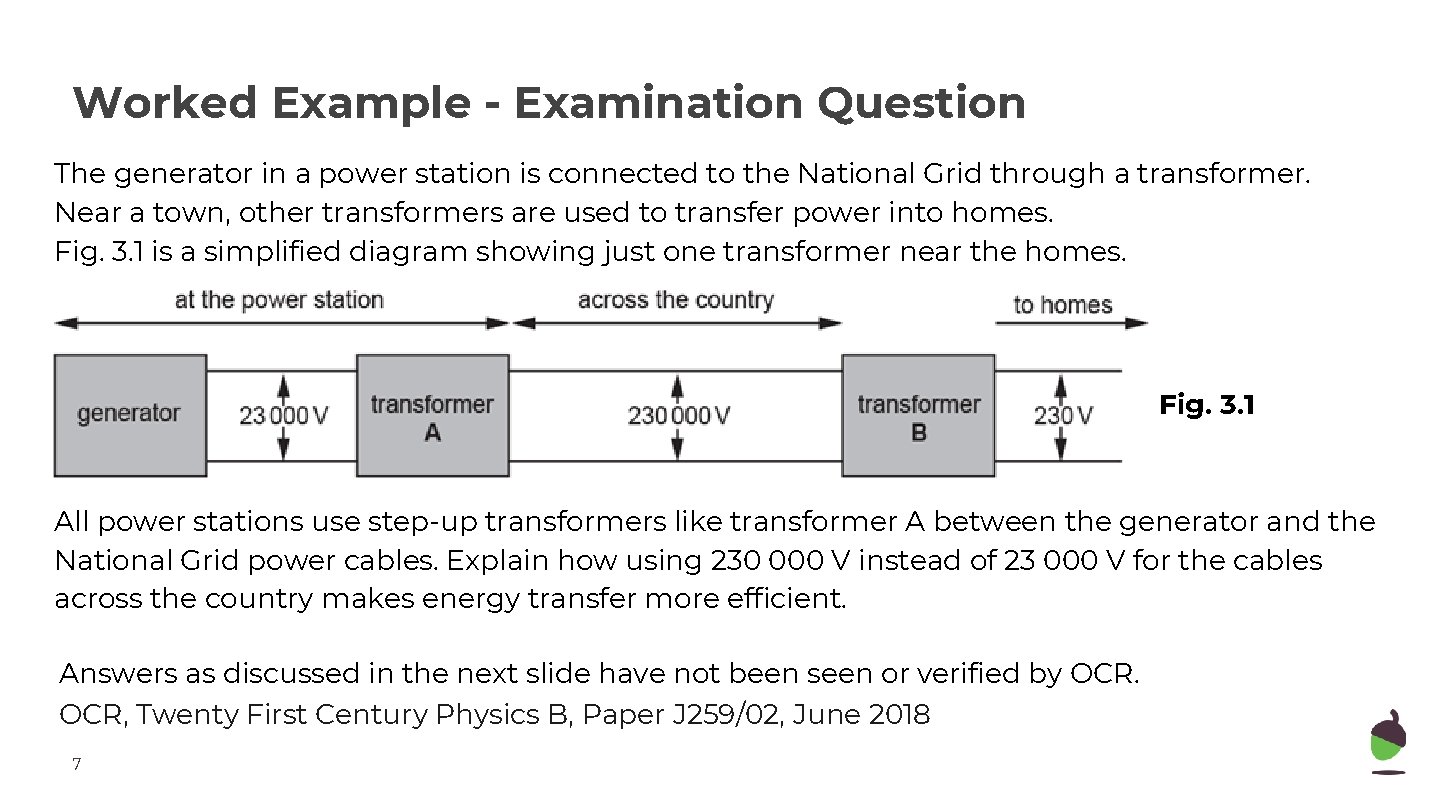
Worked Example - Examination Question The generator in a power station is connected to the National Grid through a transformer. Near a town, other transformers are used to transfer power into homes. Fig. 3. 1 is a simplified diagram showing just one transformer near the homes. Fig. 3. 1 All power stations use step-up transformers like transformer A between the generator and the National Grid power cables. Explain how using 230 000 V instead of 23 000 V for the cables across the country makes energy transfer more efficient. Answers as discussed in the next slide have not been seen or verified by OCR, Twenty First Century Physics B, Paper J 259/02, June 2018 7
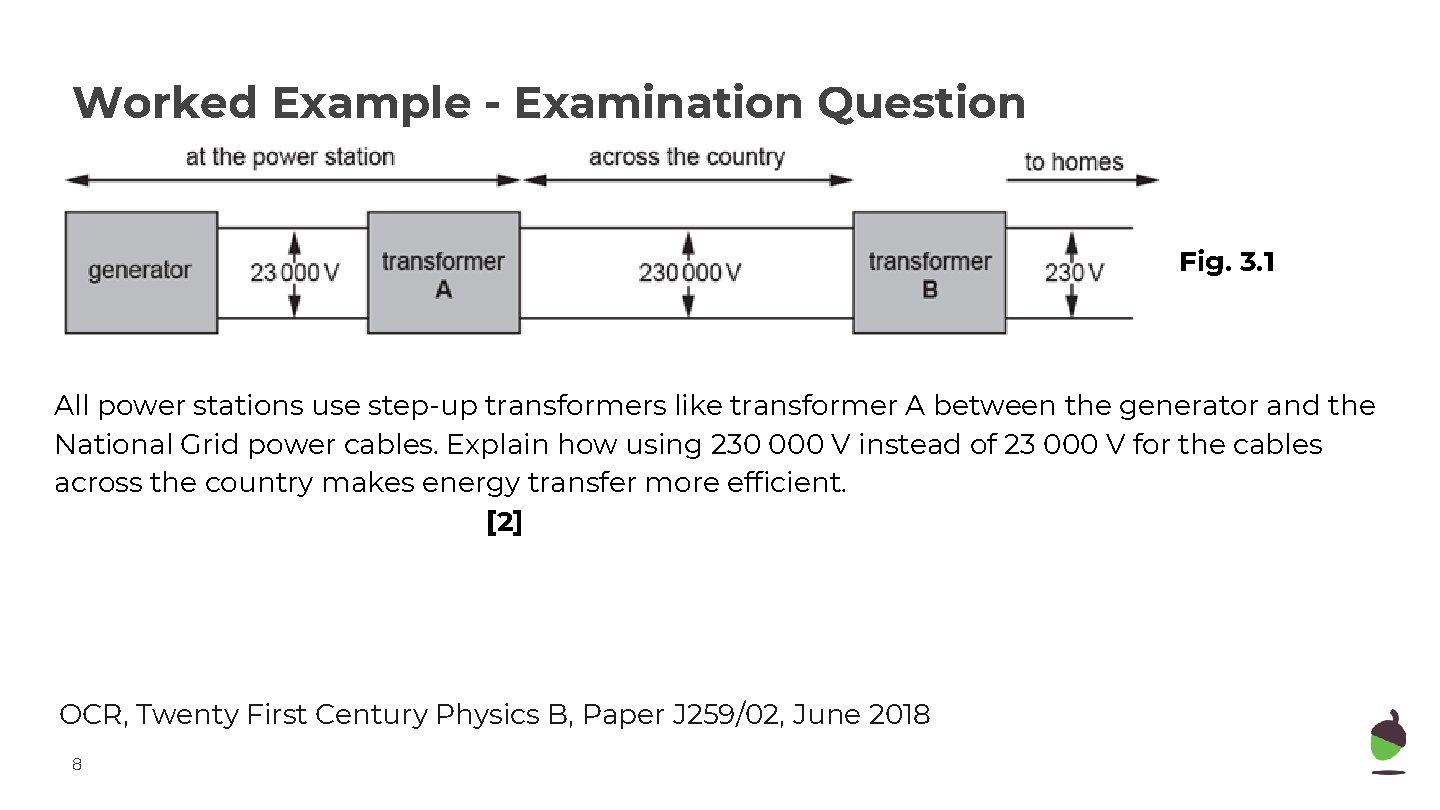
Worked Example - Examination Question Fig. 3. 1 All power stations use step-up transformers like transformer A between the generator and the National Grid power cables. Explain how using 230 000 V instead of 23 000 V for the cables across the country makes energy transfer more efficient. [2] OCR, Twenty First Century Physics B, Paper J 259/02, June 2018 8
Independent Task: Energy Transfer in the National Grid The potential difference across National Grid power cables is 400, 000 V. Explain why it is important to distribute electricity through power cables at a high potential difference. When the potential difference is high, the current is …. This means that the energy wasted due. . . 9
Independent Task: Underground and overhead cables. 1) Write a list of advantages of underground cables. 2) Write a list of advantages of overhead cables. 3) Write at least one disadvantages of underground cables. 4)Write at least one disadvantage of overhead cables. 10

Answers 11
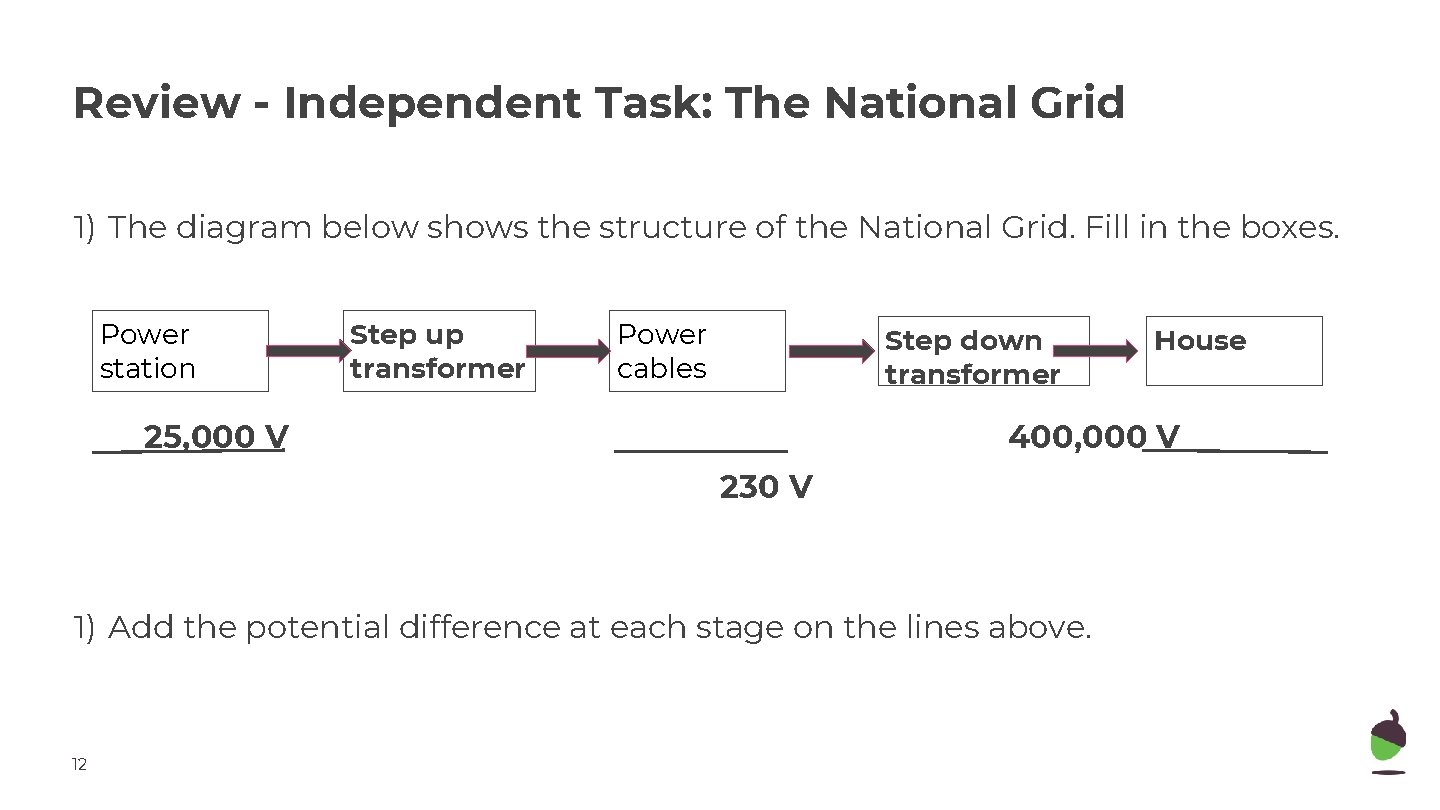
Review - Independent Task: The National Grid 1) The diagram below shows the structure of the National Grid. Fill in the boxes. Power station Step up transformer Power cables Step down transformer 25, 000 V 400, 000 V 230 V 1) Add the potential difference at each stage on the lines above. 12 House
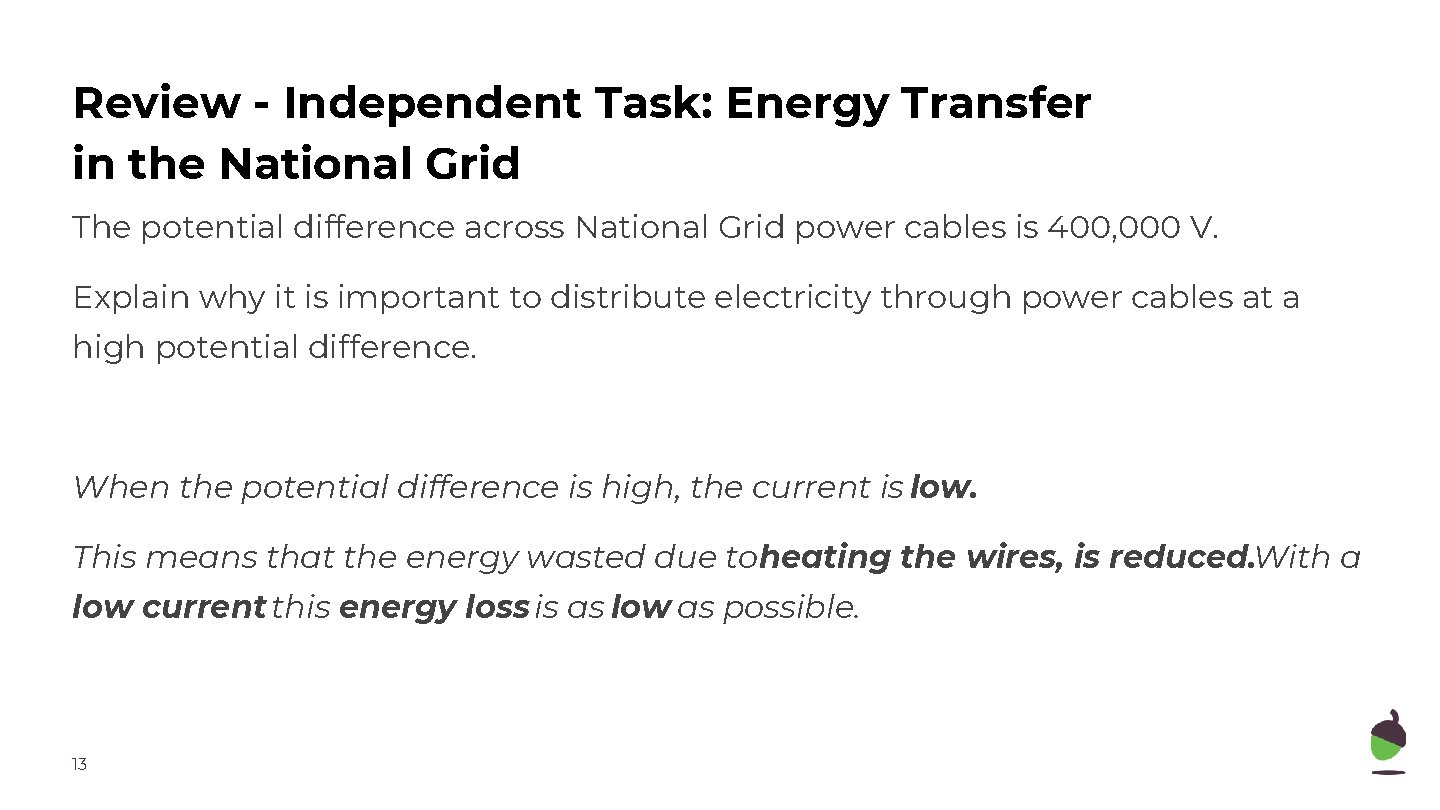
Review - Independent Task: Energy Transfer in the National Grid The potential difference across National Grid power cables is 400, 000 V. Explain why it is important to distribute electricity through power cables at a high potential difference. When the potential difference is high, the current is low. This means that the energy wasted due toheating the wires, is reduced. With a low current this energy loss is as low as possible. 13
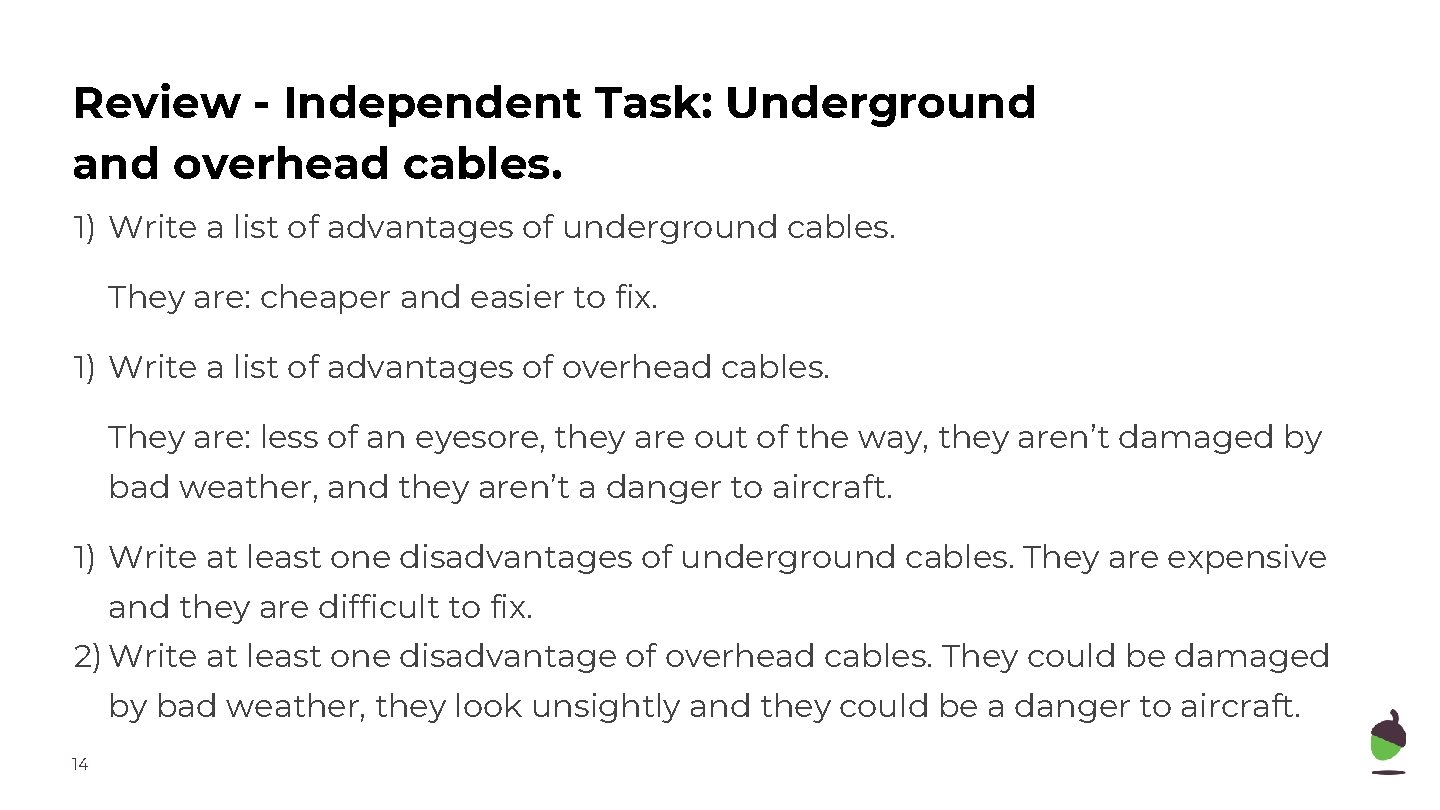
Review - Independent Task: Underground and overhead cables. 1) Write a list of advantages of underground cables. They are: cheaper and easier to fix. 1) Write a list of advantages of overhead cables. They are: less of an eyesore, they are out of the way, they aren’t damaged by bad weather, and they aren’t a danger to aircraft. 1) Write at least one disadvantages of underground cables. They are expensive and they are difficult to fix. 2) Write at least one disadvantage of overhead cables. They could be damaged by bad weather, they look unsightly and they could be a danger to aircraft. 14
- Slides: 14