
Combined Science Physics Key Stage 4 Electricity Properties
Combined Science - Physics - Key Stage 4 - Electricity Properties of resistors Worksheet Miss Walrond 1
Q 1. (a). A student finds a resistor which has no markings on it. The student uses a voltmeter, an ammeter and a cell to find the resistance of the resistor. Draw a circuit diagram the student could use to find the resistance of the resistor. OCR, Gateway Physics A, Paper J 249/01, Specimen 2 [3]
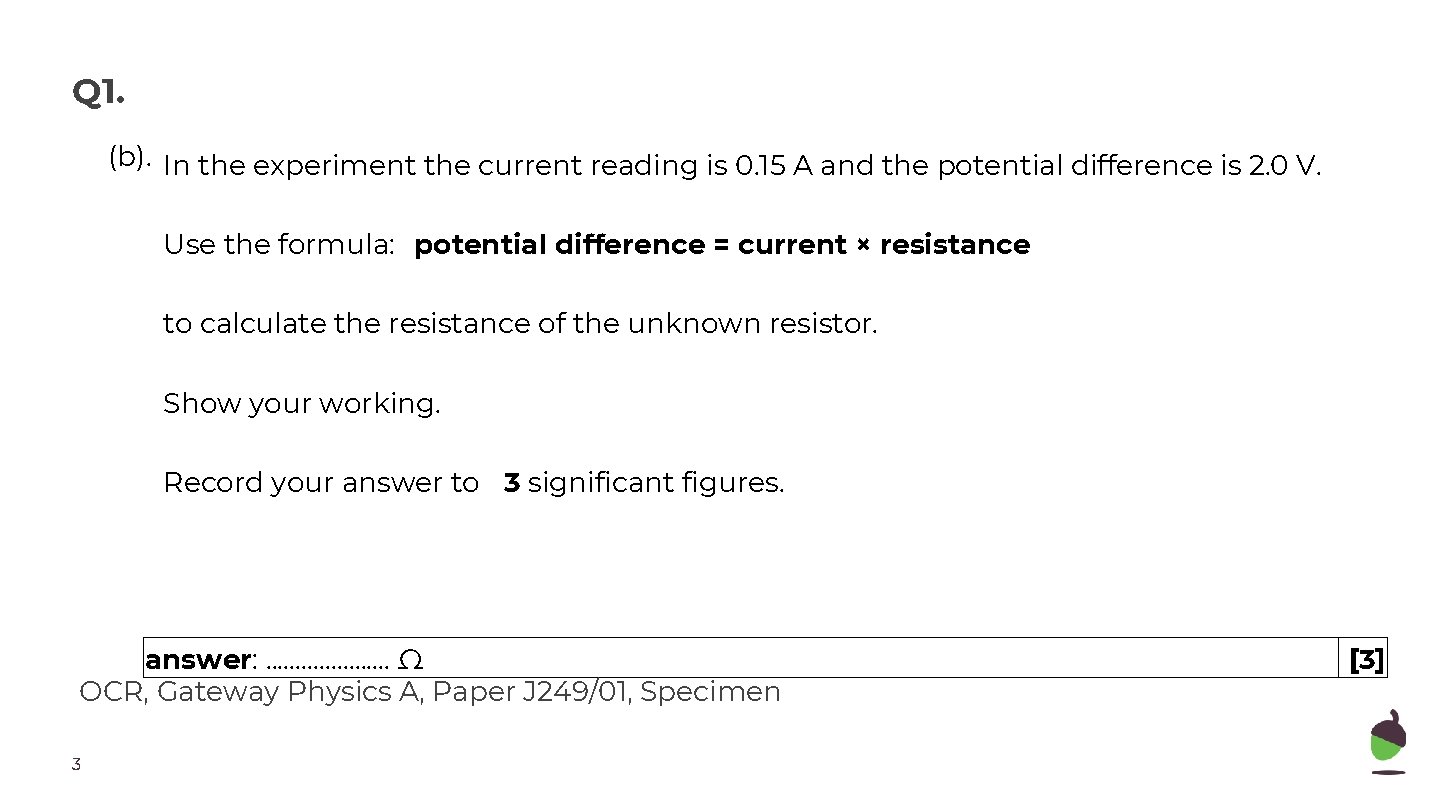
Q 1. (b). In the experiment the current reading is 0. 15 A and the potential difference is 2. 0 V. Use the formula: potential difference = current × resistance to calculate the resistance of the unknown resistor. Show your working. Record your answer to 3 significant figures. answer: . . Ω OCR, Gateway Physics A, Paper J 249/01, Specimen 3 [3]

Answers 4
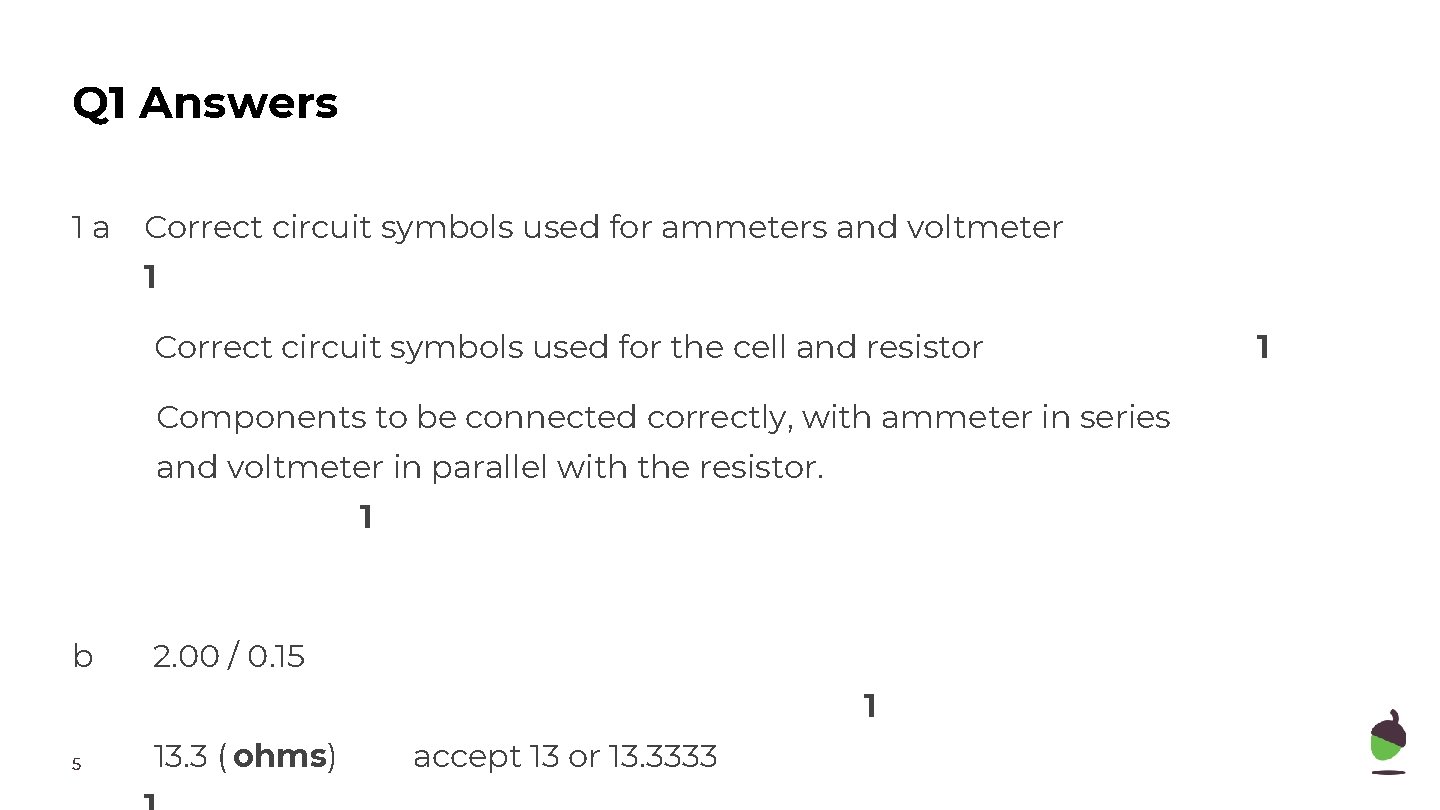
Q 1 Answers 1 a Correct circuit symbols used for ammeters and voltmeter 1 Correct circuit symbols used for the cell and resistor Components to be connected correctly, with ammeter in series and voltmeter in parallel with the resistor. 1 b 2. 00 / 0. 15 1 5 13. 3 ( ohms) accept 13 or 13. 3333 1

In lesson questions 6
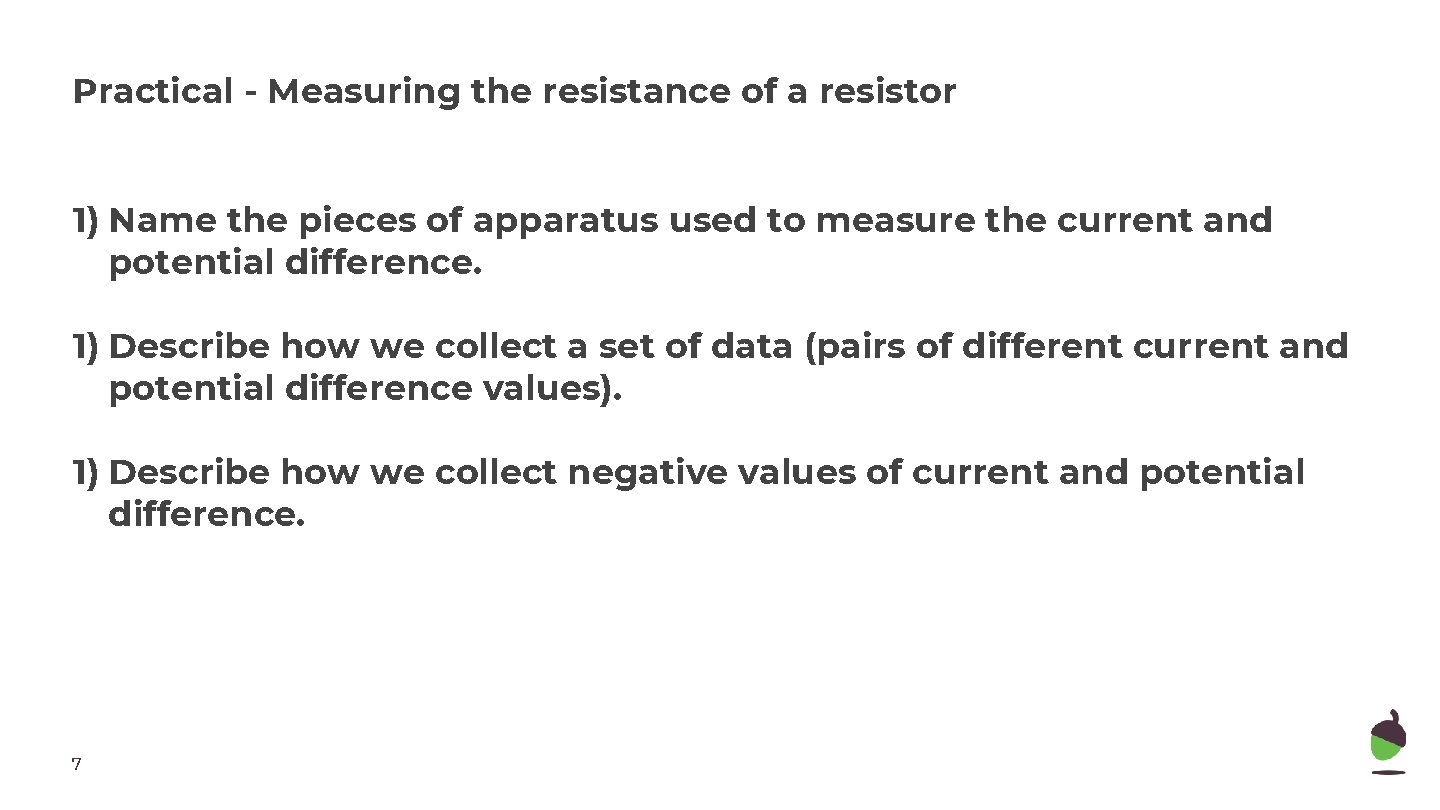
Practical - Measuring the resistance of a resistor 1) Name the pieces of apparatus used to measure the current and potential difference. 1) Describe how we collect a set of data (pairs of different current and potential difference values). 1) Describe how we collect negative values of current and potential difference. 7
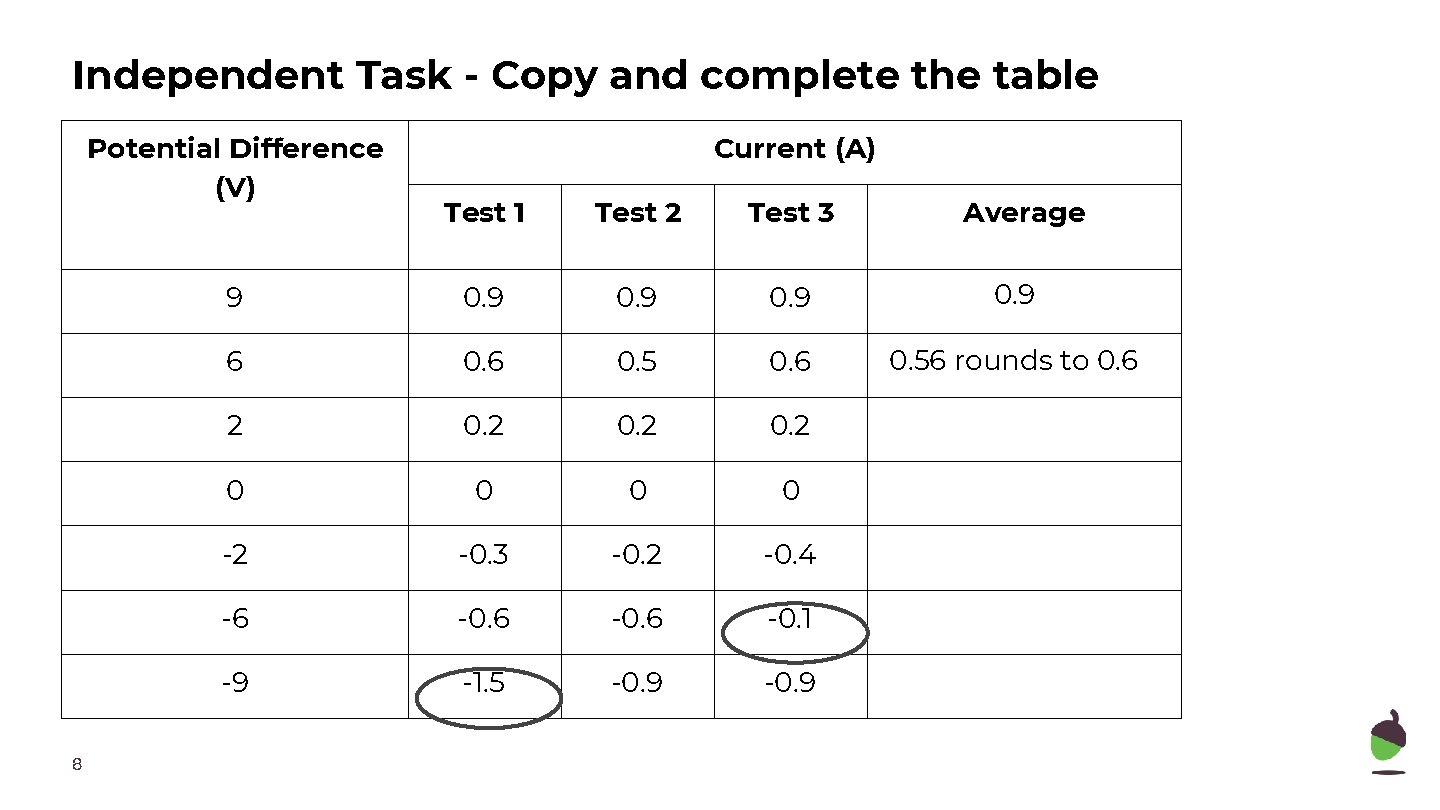
Independent Task - Copy and complete the table Potential Difference (V) 8 Current (A) Test 1 Test 2 Test 3 Average 9 0. 9 6 0. 5 0. 6 0. 56 rounds to 0. 6 2 0 0 -2 -0. 3 -0. 2 -0. 4 -6 -0. 1 -9 -1. 5 -0. 9
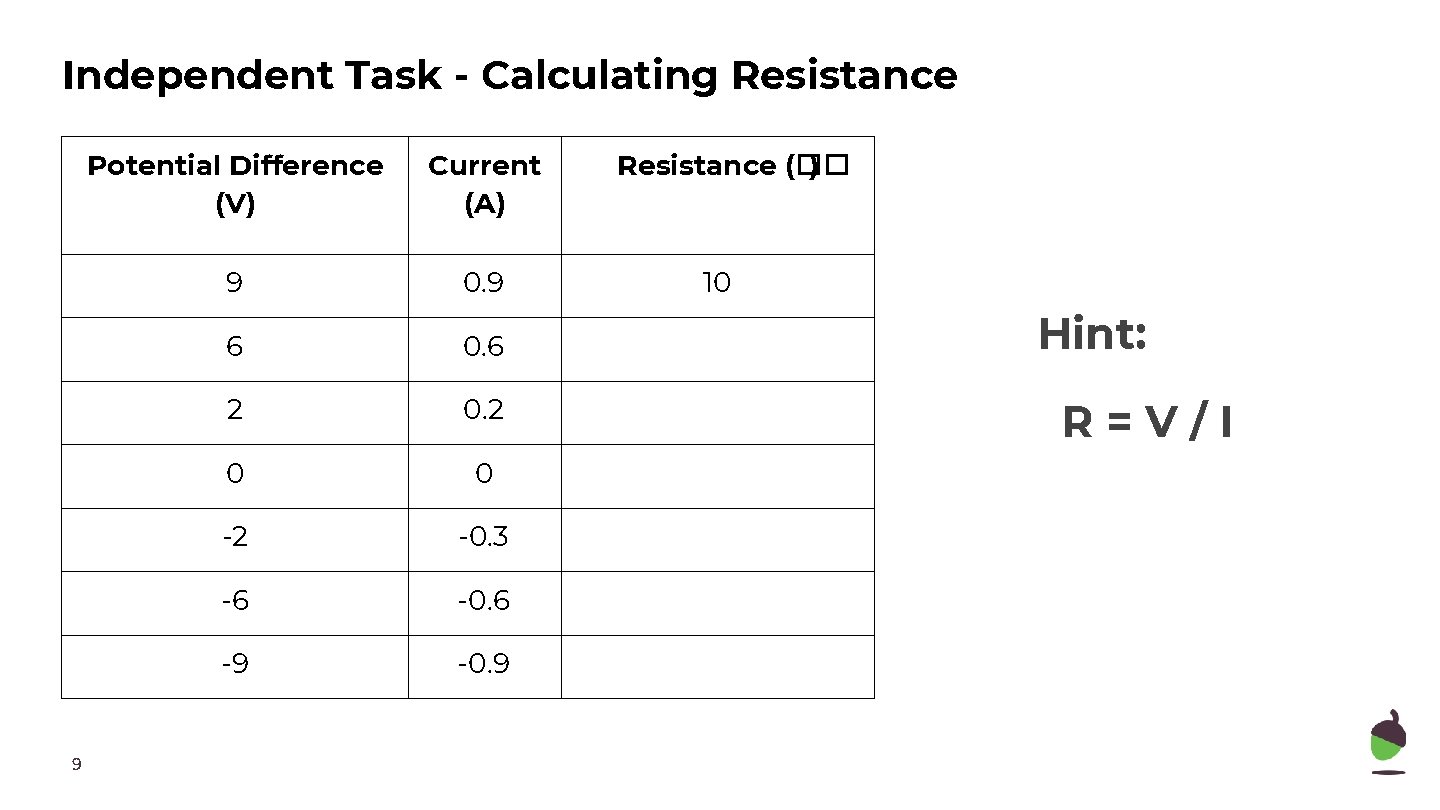
Independent Task - Calculating Resistance 9 Potential Difference (V) Current (A) 9 0. 9 6 0. 6 2 0 0 -2 -0. 3 -6 -0. 6 -9 -0. 9 Resistance (�� ) 10 Hint: R=V/I
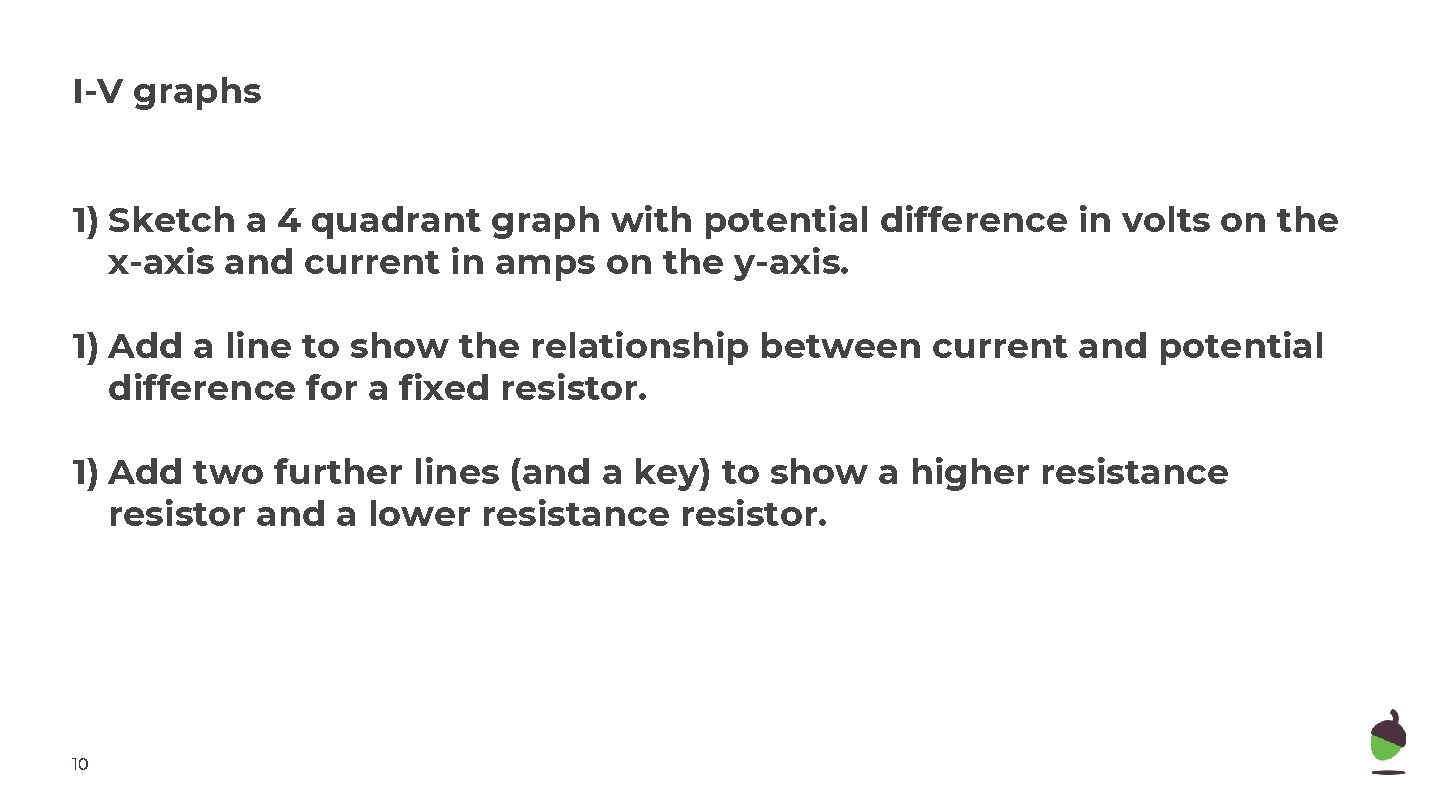
I-V graphs 1) Sketch a 4 quadrant graph with potential difference in volts on the x-axis and current in amps on the y-axis. 1) Add a line to show the relationship between current and potential difference for a fixed resistor. 1) Add two further lines (and a key) to show a higher resistance resistor and a lower resistance resistor. 10
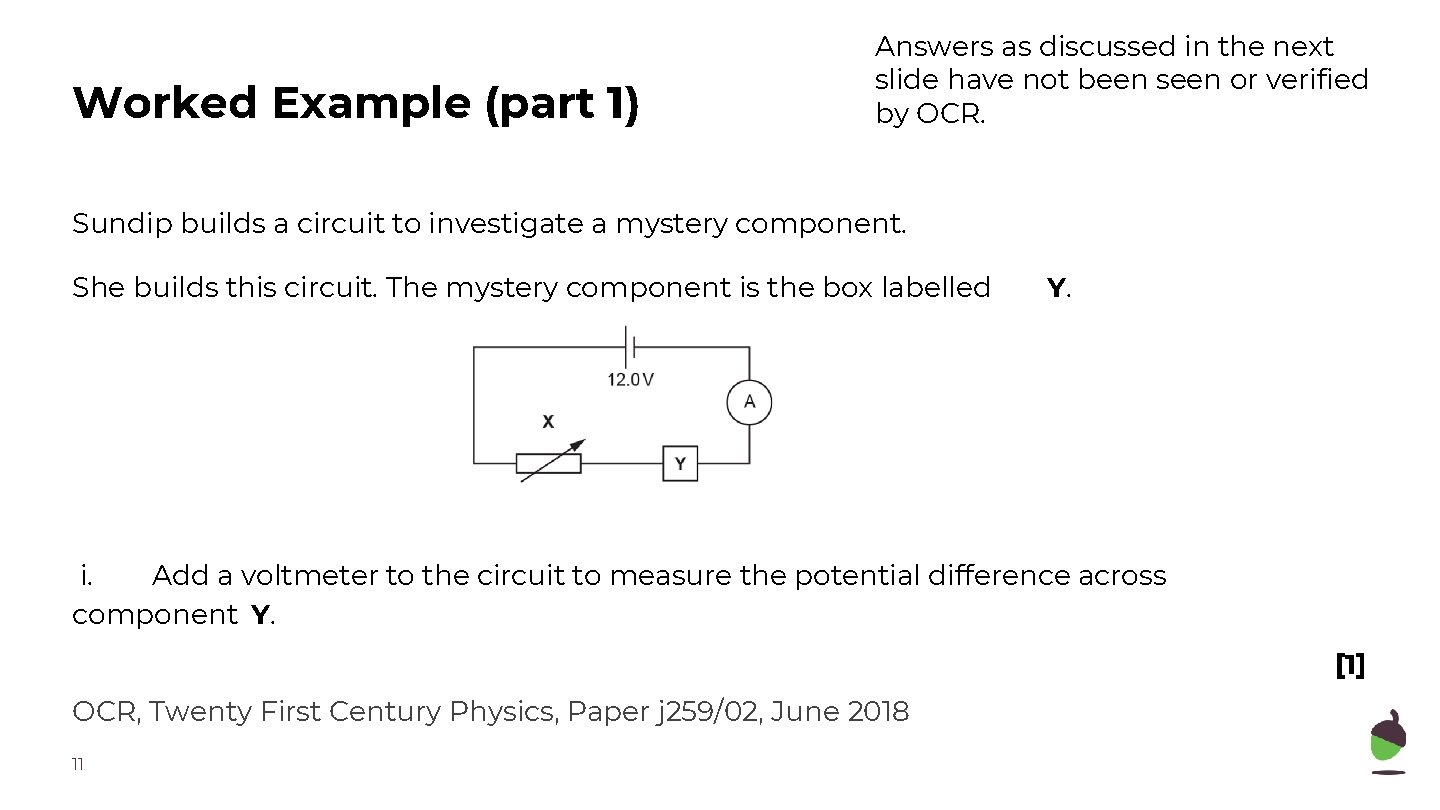
Worked Example (part 1) Answers as discussed in the next slide have not been seen or verified by OCR. Sundip builds a circuit to investigate a mystery component. She builds this circuit. The mystery component is the box labelled Y. i. Add a voltmeter to the circuit to measure the potential difference across component Y. [1] OCR, Twenty First Century Physics, Paper j 259/02, June 2018 11
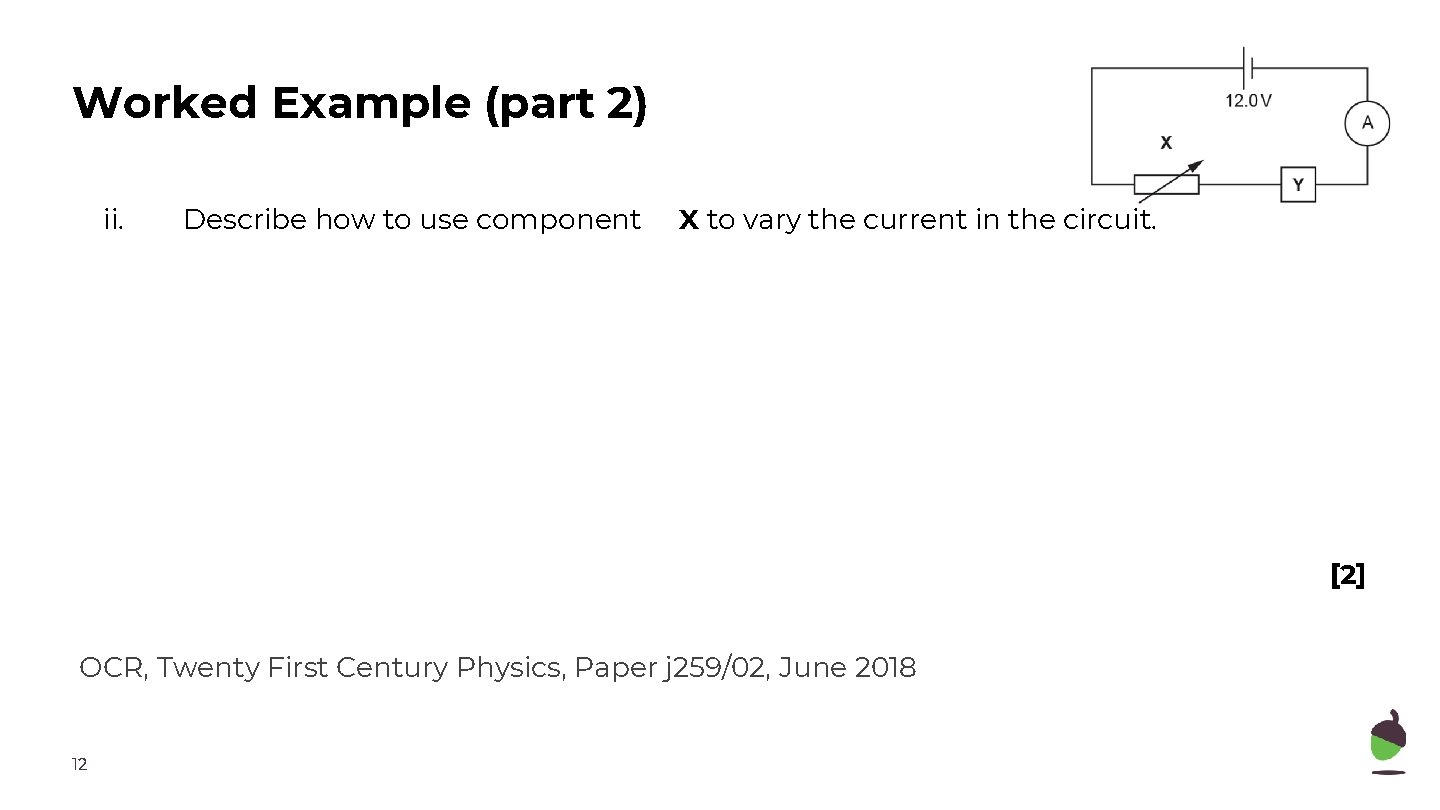
Worked Example (part 2) ii. Describe how to use component X to vary the current in the circuit. [2] OCR, Twenty First Century Physics, Paper j 259/02, June 2018 12

Answers 13
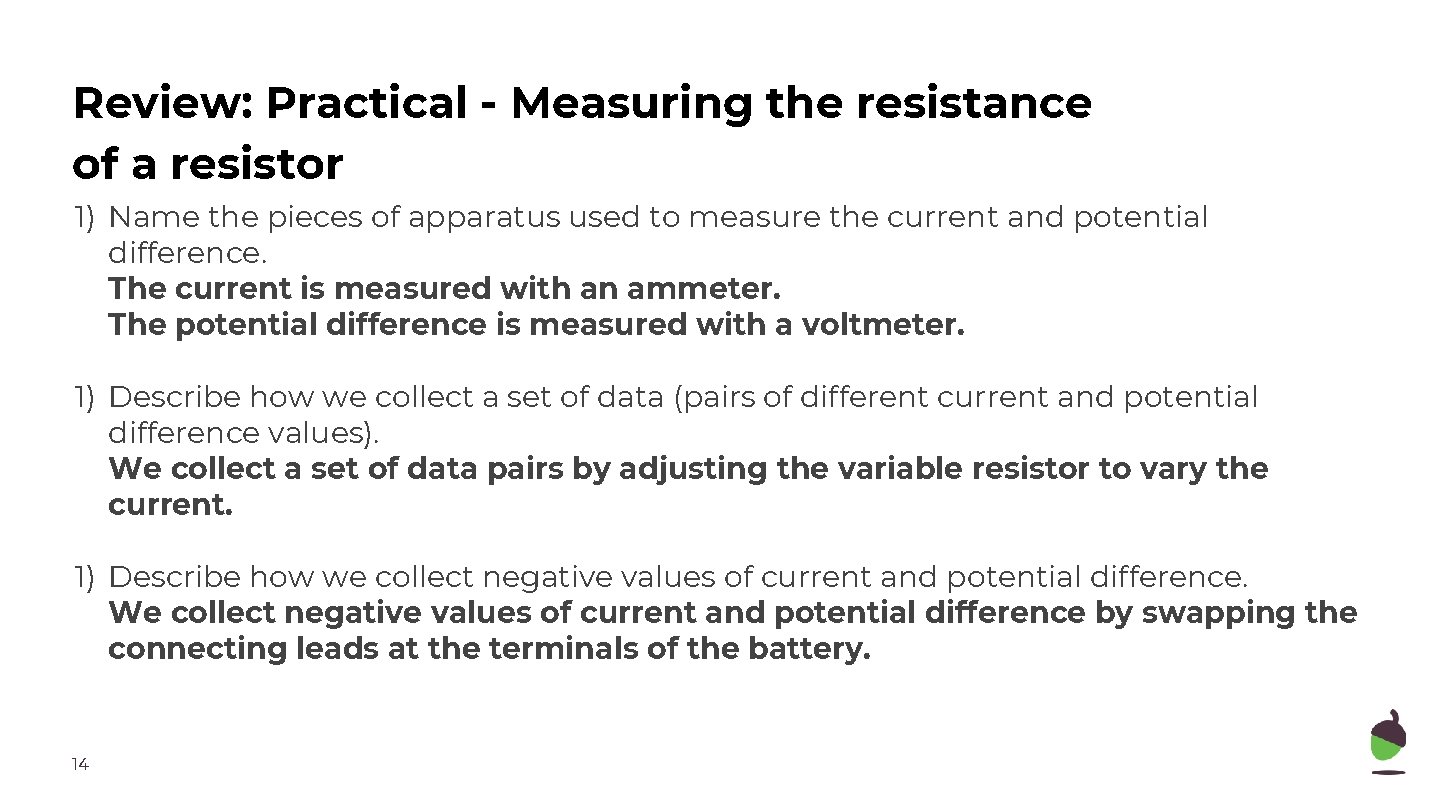
Review: Practical - Measuring the resistance of a resistor 1) Name the pieces of apparatus used to measure the current and potential difference. The current is measured with an ammeter. The potential difference is measured with a voltmeter. 1) Describe how we collect a set of data (pairs of different current and potential difference values). We collect a set of data pairs by adjusting the variable resistor to vary the current. 1) Describe how we collect negative values of current and potential difference. We collect negative values of current and potential difference by swapping the connecting leads at the terminals of the battery. 14
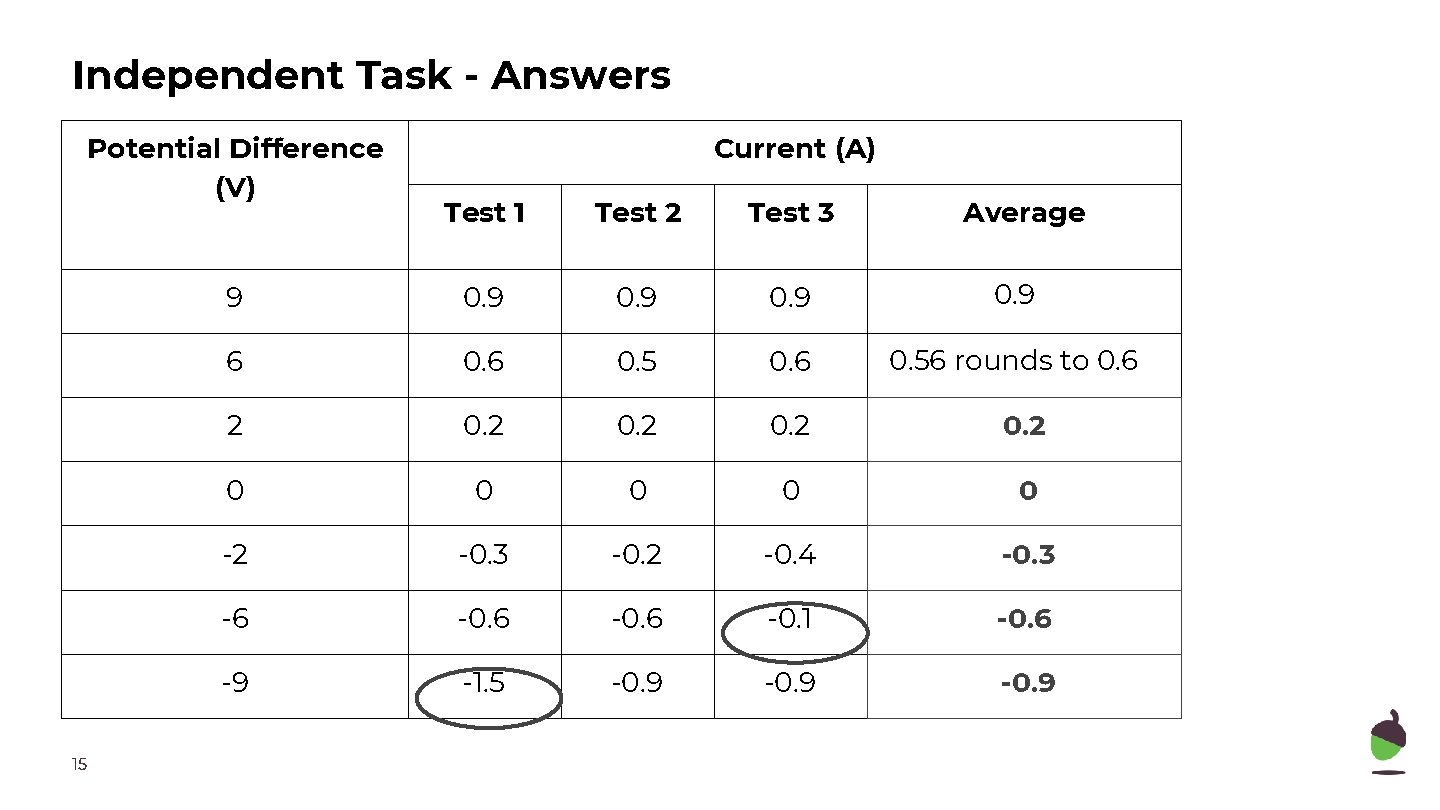
Independent Task - Answers Potential Difference (V) 15 Current (A) Test 1 Test 2 Test 3 Average 9 0. 9 6 0. 5 0. 6 0. 56 rounds to 0. 6 2 0 0 0 -2 -0. 3 -0. 2 -0. 4 -0. 3 -6 -0. 1 -0. 6 -9 -1. 5 -0. 9
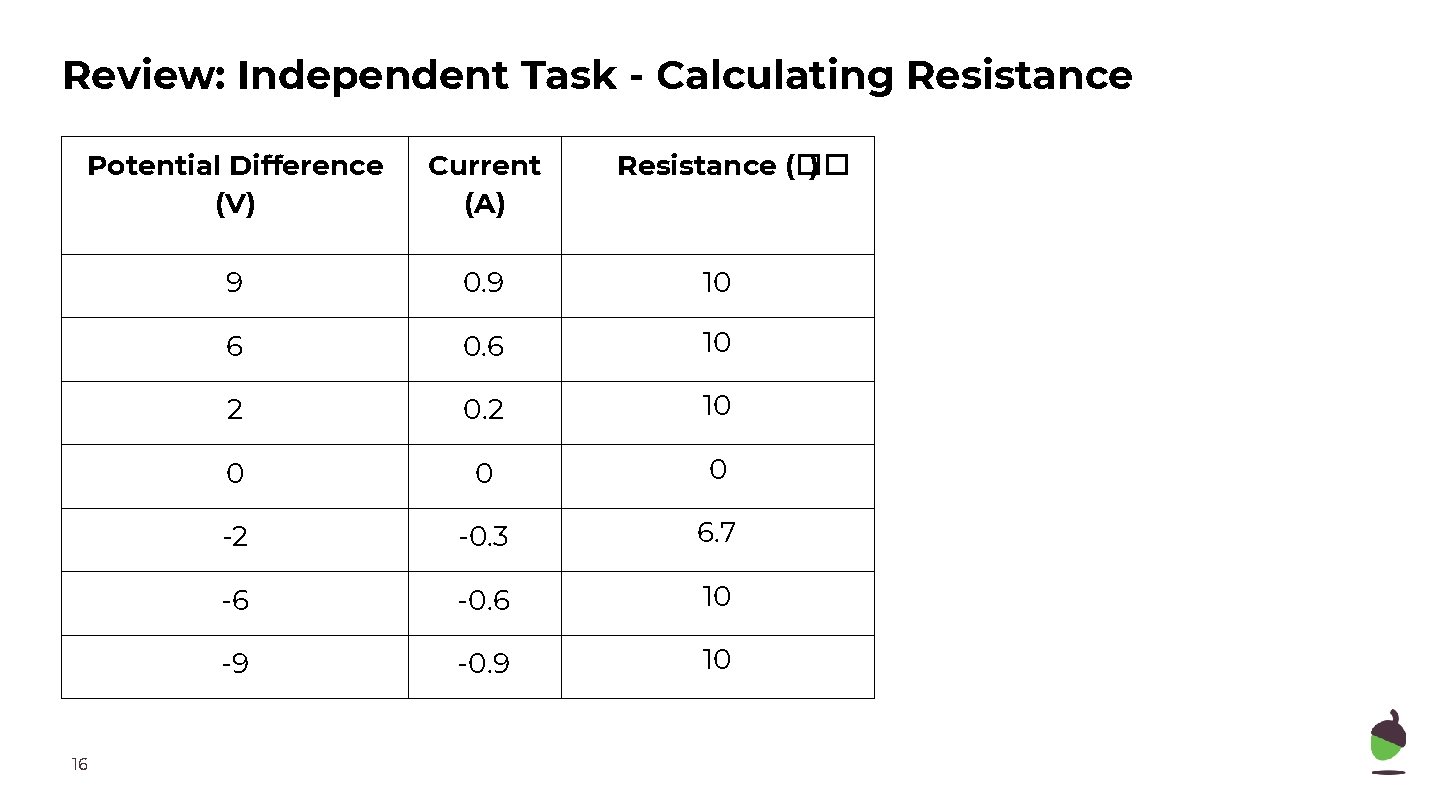
Review: Independent Task - Calculating Resistance Potential Difference (V) Current (A) 9 0. 9 10 6 0. 6 10 2 0. 2 10 0 -2 -0. 3 6. 7 -6 -0. 6 10 -9 -0. 9 10 16 Resistance (�� )
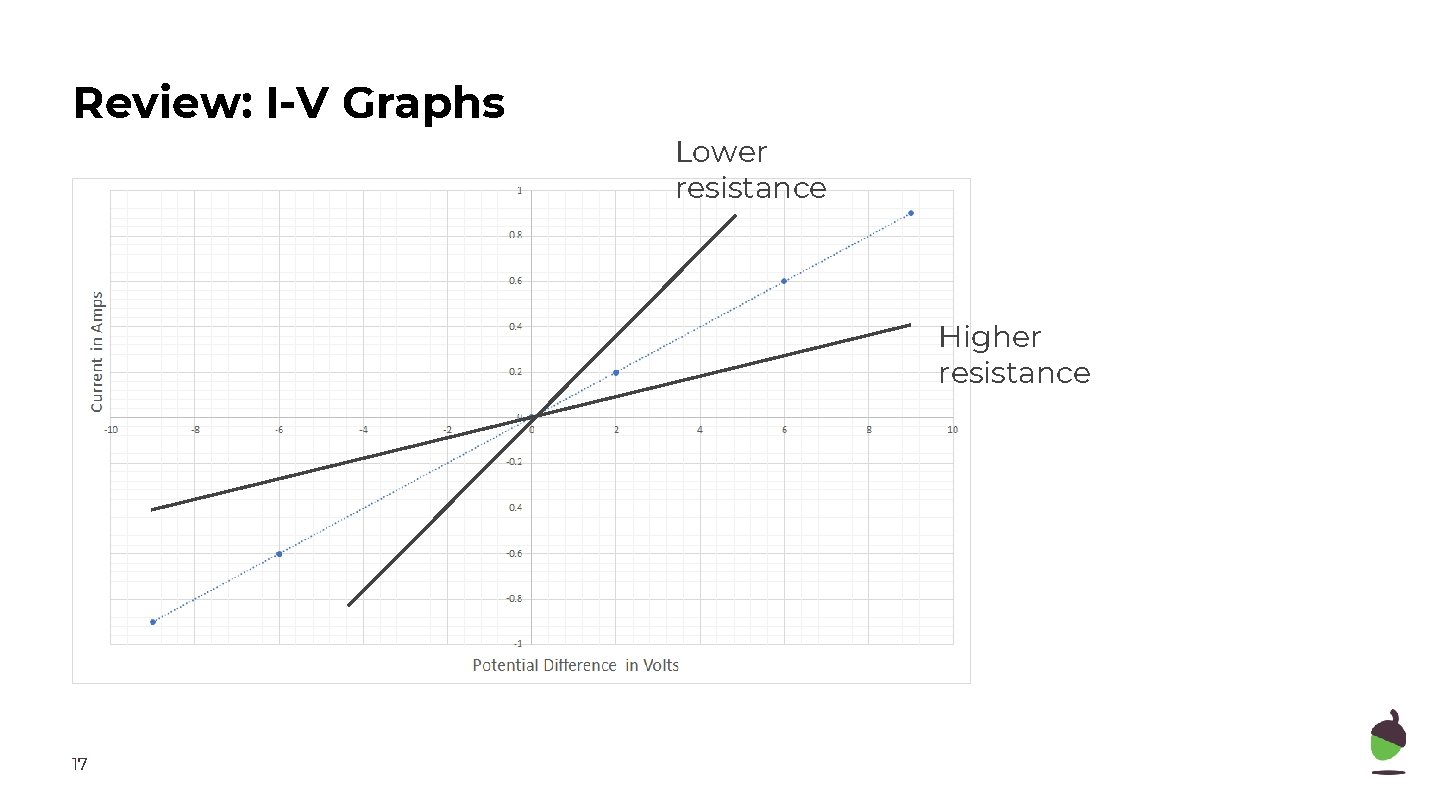
Review: I-V Graphs Lower resistance Higher resistance 17
- Slides: 17