
Combined Science Chemistry Key Stage 4 Quantitative Chemistry
Combined Science - Chemistry - Key Stage 4 Quantitative Chemistry Relative Formula Mass - Higher Mrs. Begum 1
Resume once you’re finished
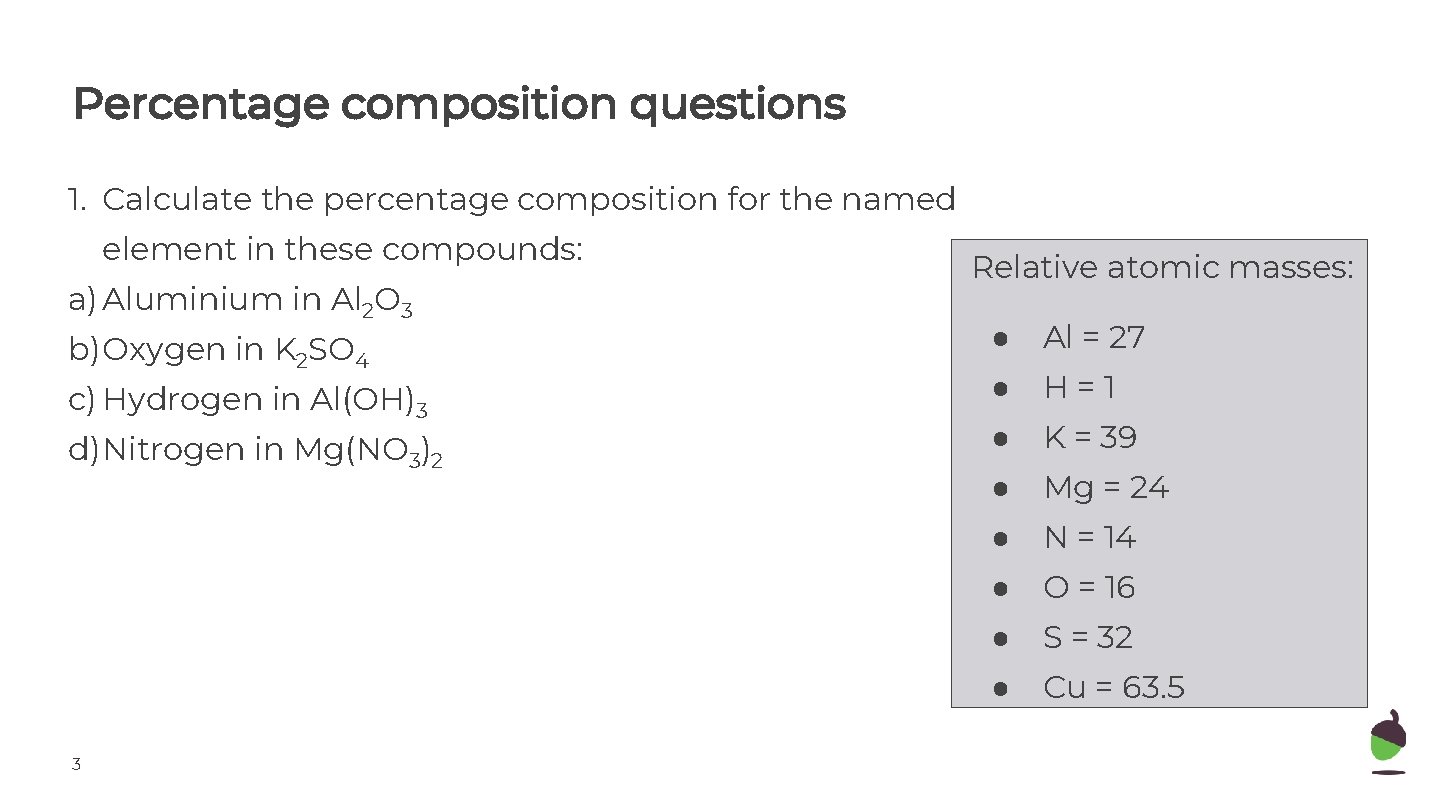
Percentage composition questions 1. Calculate the percentage composition for the named element in these compounds: a) Aluminium in Al 2 O 3 b)Oxygen in K 2 SO 4 c) Hydrogen in Al(OH)3 d)Nitrogen in Mg(NO 3)2 3 Relative atomic masses: ● Al = 27 ● H=1 ● K = 39 ● Mg = 24 ● N = 14 ● O = 16 ● S = 32 ● Cu = 63. 5
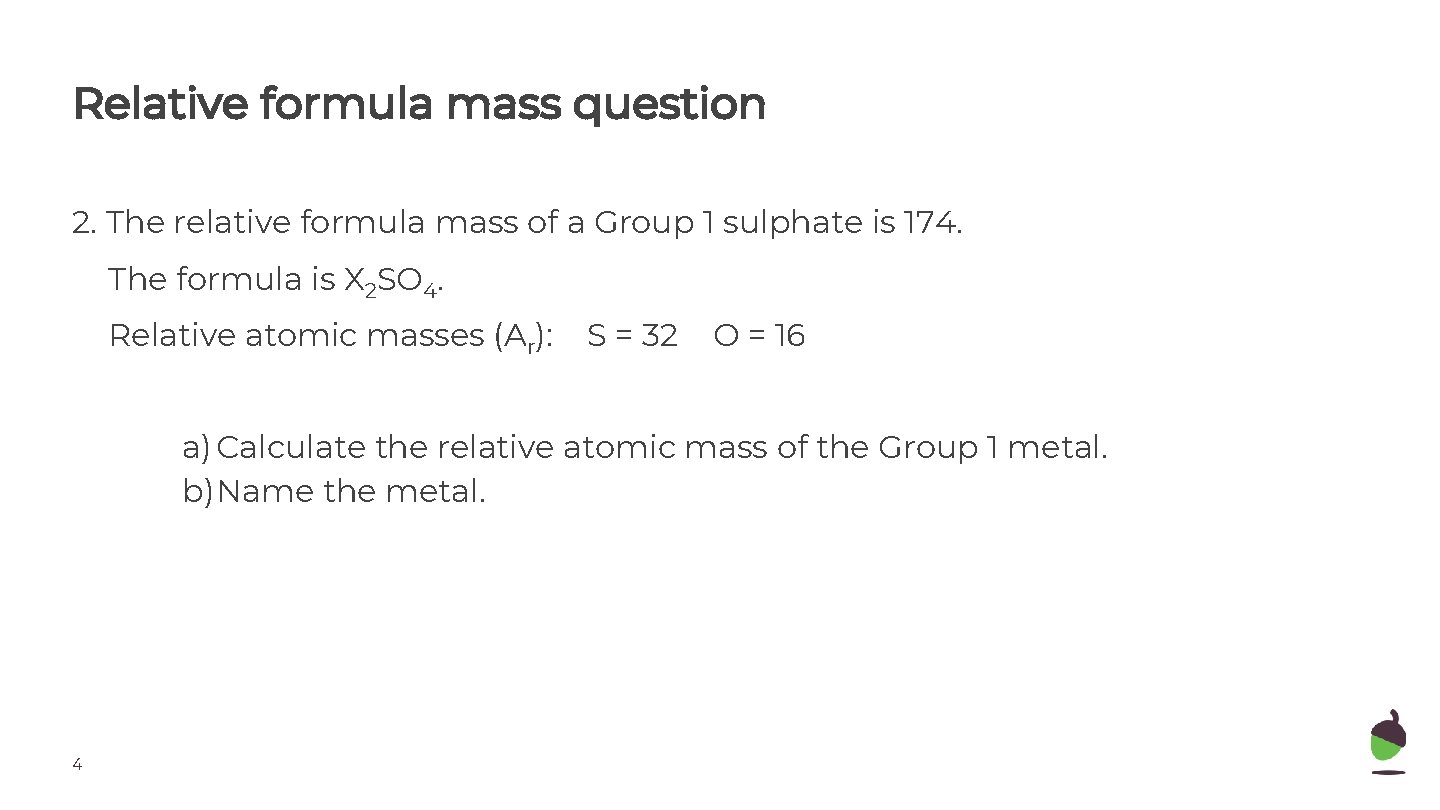
Relative formula mass question 2. The relative formula mass of a Group 1 sulphate is 174. The formula is X 2 SO 4. Relative atomic masses (Ar): S = 32 O = 16 a) Calculate the relative atomic mass of the Group 1 metal. b)Name the metal. 4
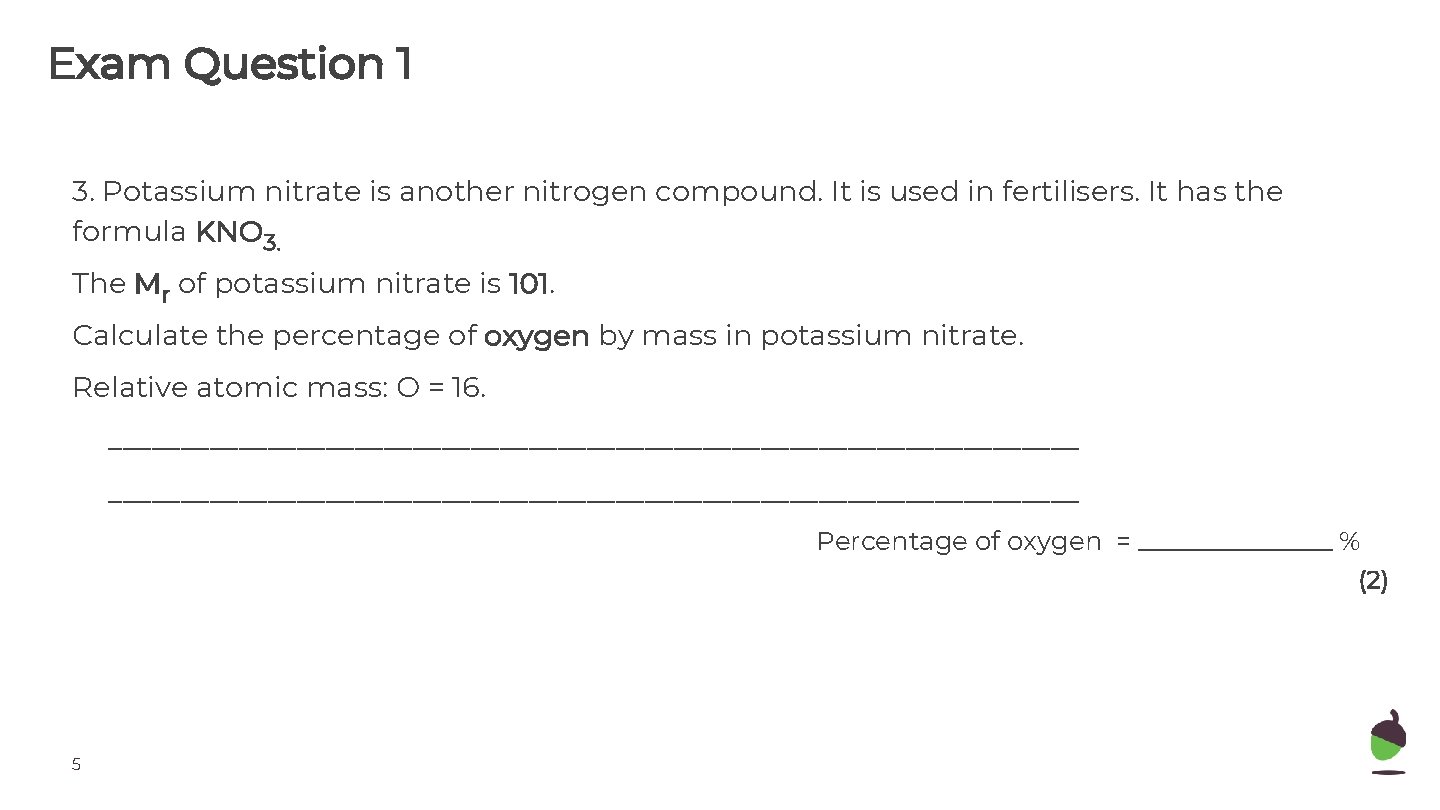
Exam Question 1 3. Potassium nitrate is another nitrogen compound. It is used in fertilisers. It has the formula KNO 3. The Mr of potassium nitrate is 101. Calculate the percentage of oxygen by mass in potassium nitrate. Relative atomic mass: O = 16. ___________________________________________________________________ Percentage of oxygen = ________ % (2) 5
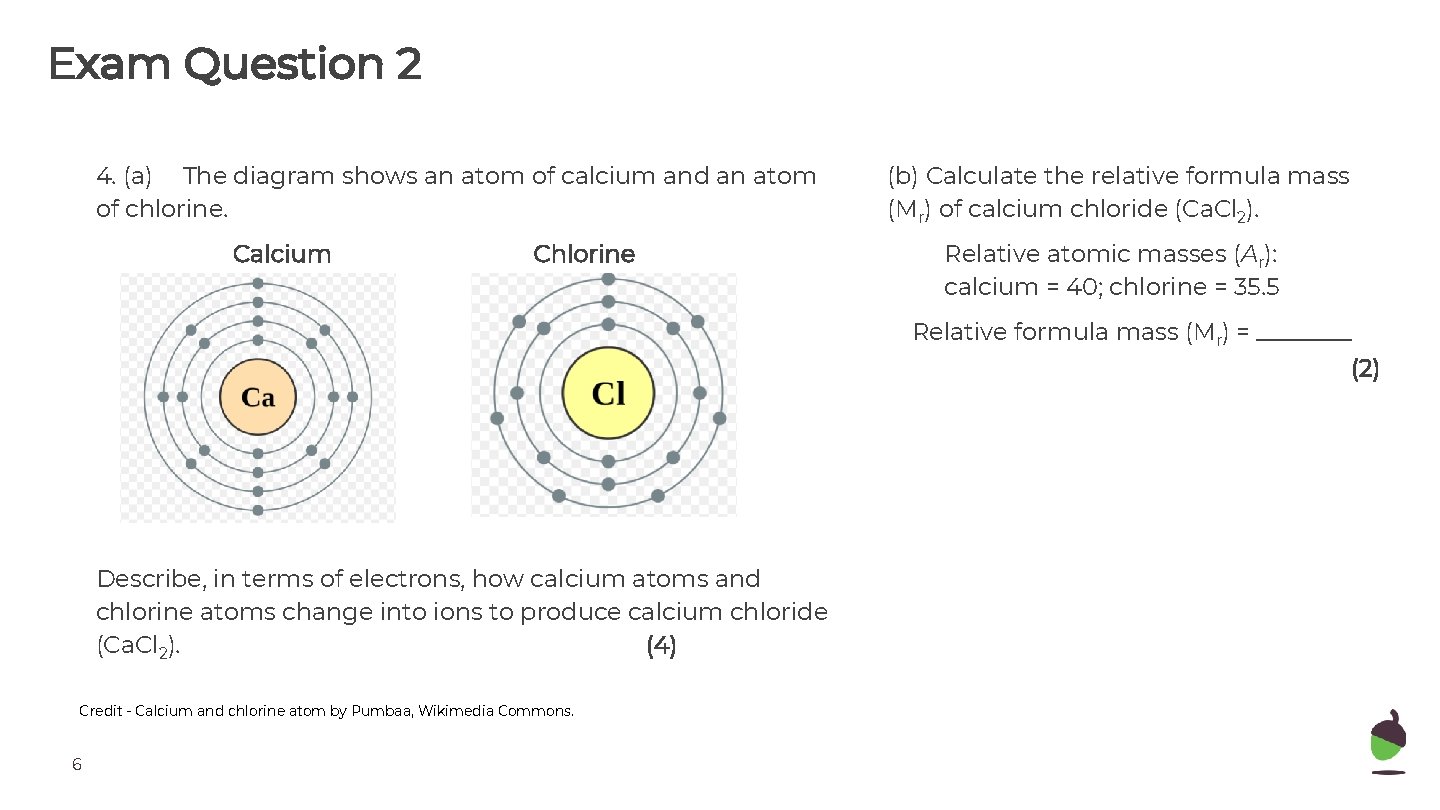
Exam Question 2 4. (a) The diagram shows an atom of calcium and an atom of chlorine. Calcium Chlorine (b) Calculate the relative formula mass (Mr) of calcium chloride (Ca. Cl 2). Relative atomic masses (Ar): calcium = 40; chlorine = 35. 5 Relative formula mass (Mr) = ____ (2) Describe, in terms of electrons, how calcium atoms and chlorine atoms change into ions to produce calcium chloride (Ca. Cl 2). (4) Credit - Calcium and chlorine atom by Pumbaa, Wikimedia Commons. 6
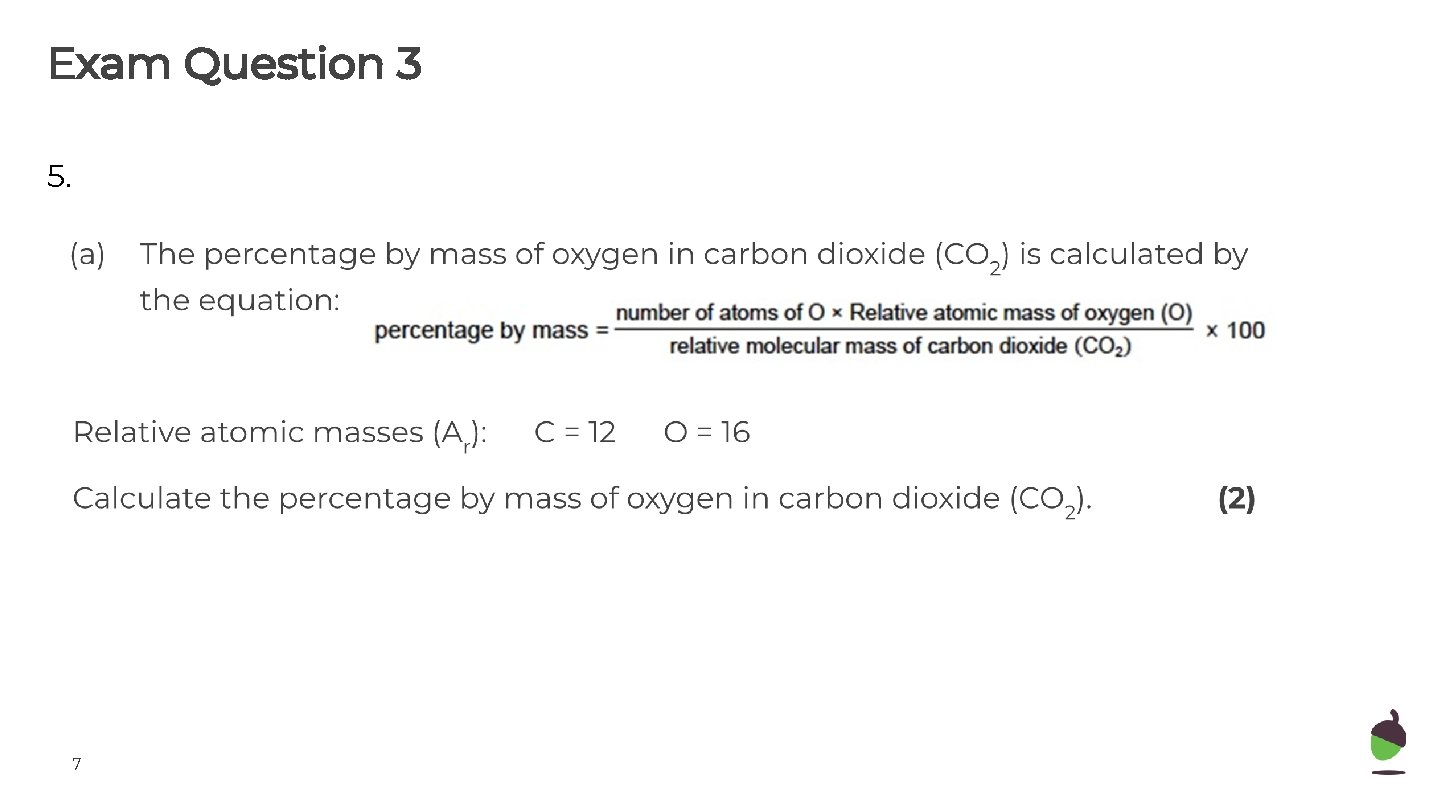
Exam Question 3 5. 7
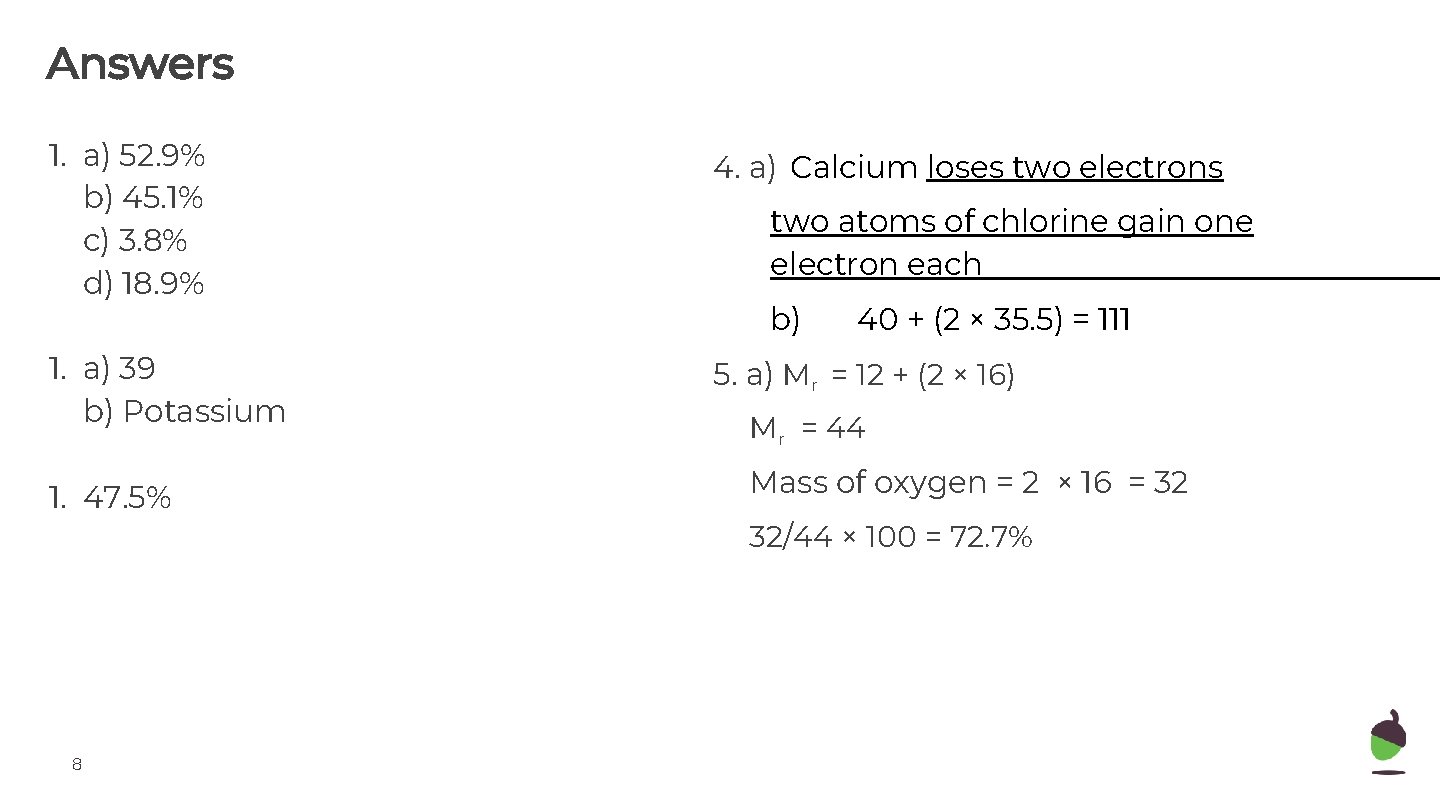
Answers 1. a) 52. 9% b) 45. 1% c) 3. 8% d) 18. 9% 4. a) Calcium loses two electrons 1. a) 39 b) Potassium 5. a) Mr = 12 + (2 × 16) 1. 47. 5% 8 two atoms of chlorine gain one electron each b) 40 + (2 × 35. 5) = 111 Mr = 44 Mass of oxygen = 2 × 16 = 32 32/44 × 100 = 72. 7%
- Slides: 8