
Combined Science Chemistry Key Stage 4 Energy Changes
Combined Science - Chemistry - Key Stage 4 Energy Changes Required Practical Temperature Change Part 1 Mrs. Begum 1
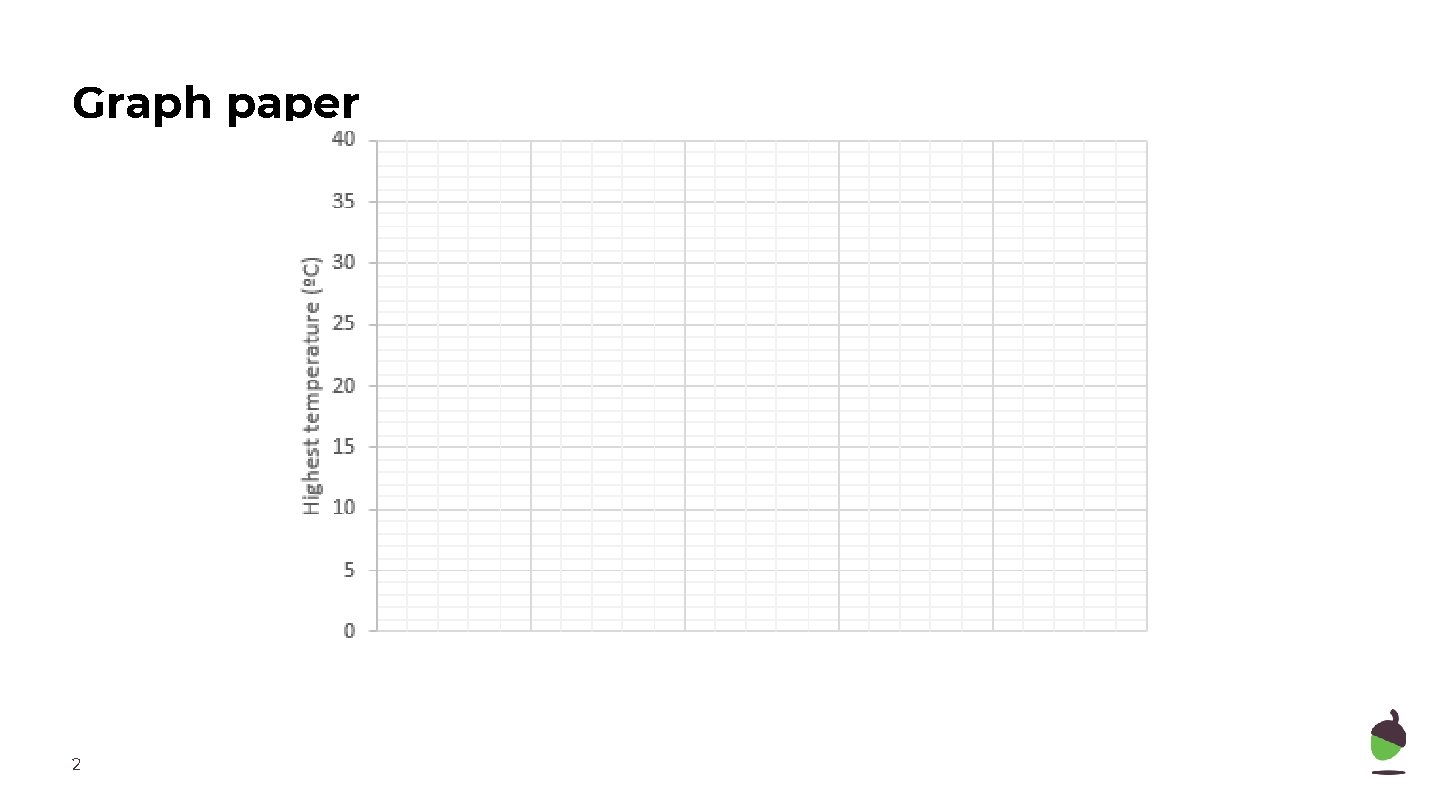
Graph paper 2
Independent task 1 - variables 1. What are we changing? (independent variable) 1. What are we measuring? (dependent variable) 1. What are we keeping the same? (control variables) 3
Independent task 1 - answers 1. What are we changing? (independent variable) The volume of alkali added 2. What are we measuring (dependent variable) The temperature increase 3. What are we keeping the same (control variables) Concentration of alkali, concentration of acid, volume of acid 4
Independent task 2 Explain why these steps were taken: 1. A polystyrene cup was used 2. The polystyrene cup was placed in the beaker 3. The lid was used to cover the cup 4. The experiment was repeated 5
Independent task 2 - answers Explain why these steps were taken: 1. A polystyrene cup was used. To reduce heat loss to the surroundings 2. The polystyrene cup was placed in the beaker. To make it more stable, so it didn’t fall over 3. The lid was used to cover the cup. To reduce heat loss to the surroundings from the surface 4. Repeats were done. To identify anomalies and calculate the mean 6
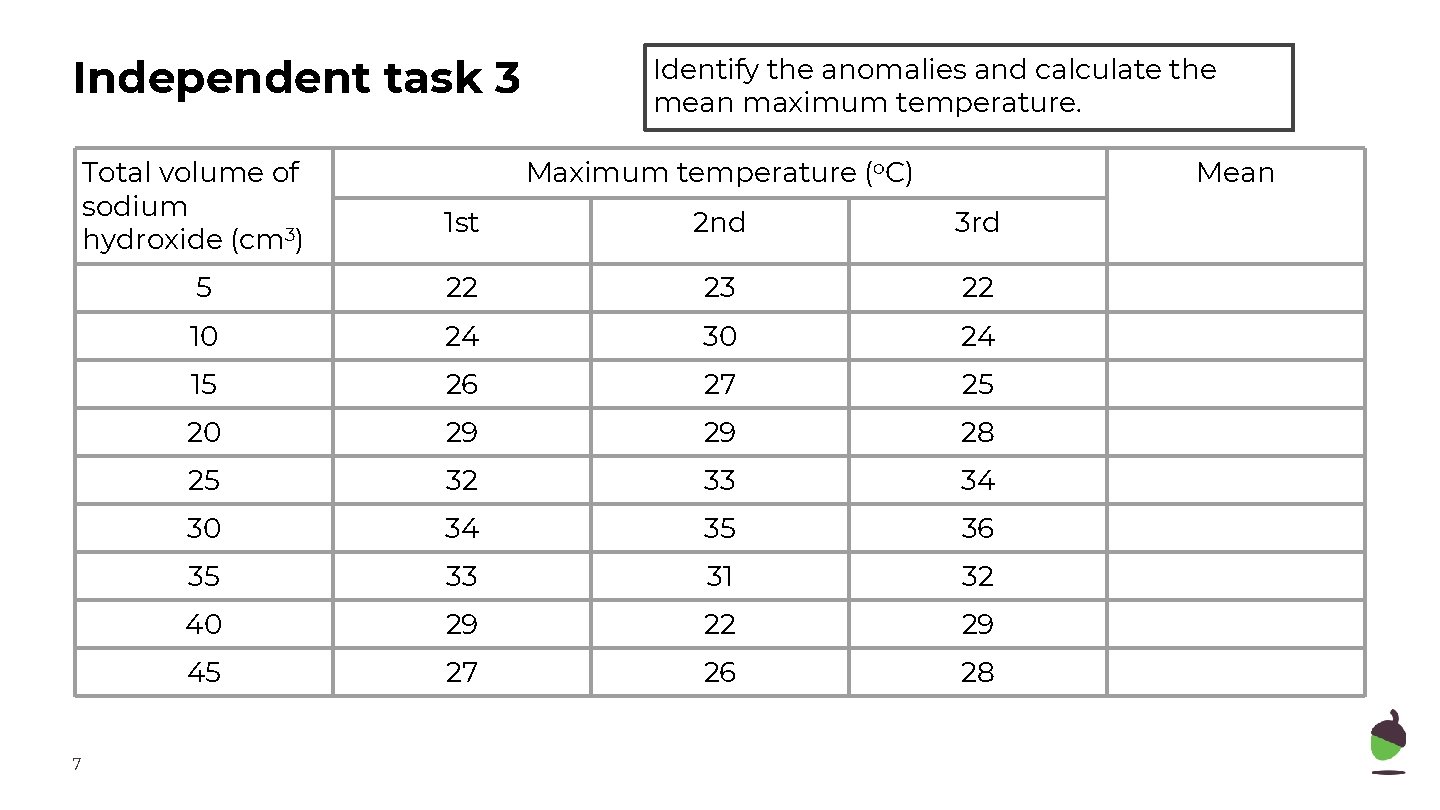
Independent task 3 Total volume of sodium hydroxide (cm 3) 7 Identify the anomalies and calculate the mean maximum temperature. Maximum temperature (o. C) Mean 1 st 2 nd 3 rd 5 22 23 22 10 24 30 24 15 26 27 25 20 29 29 28 25 32 33 34 30 34 35 36 35 33 31 32 40 29 22 29 45 27 26 28
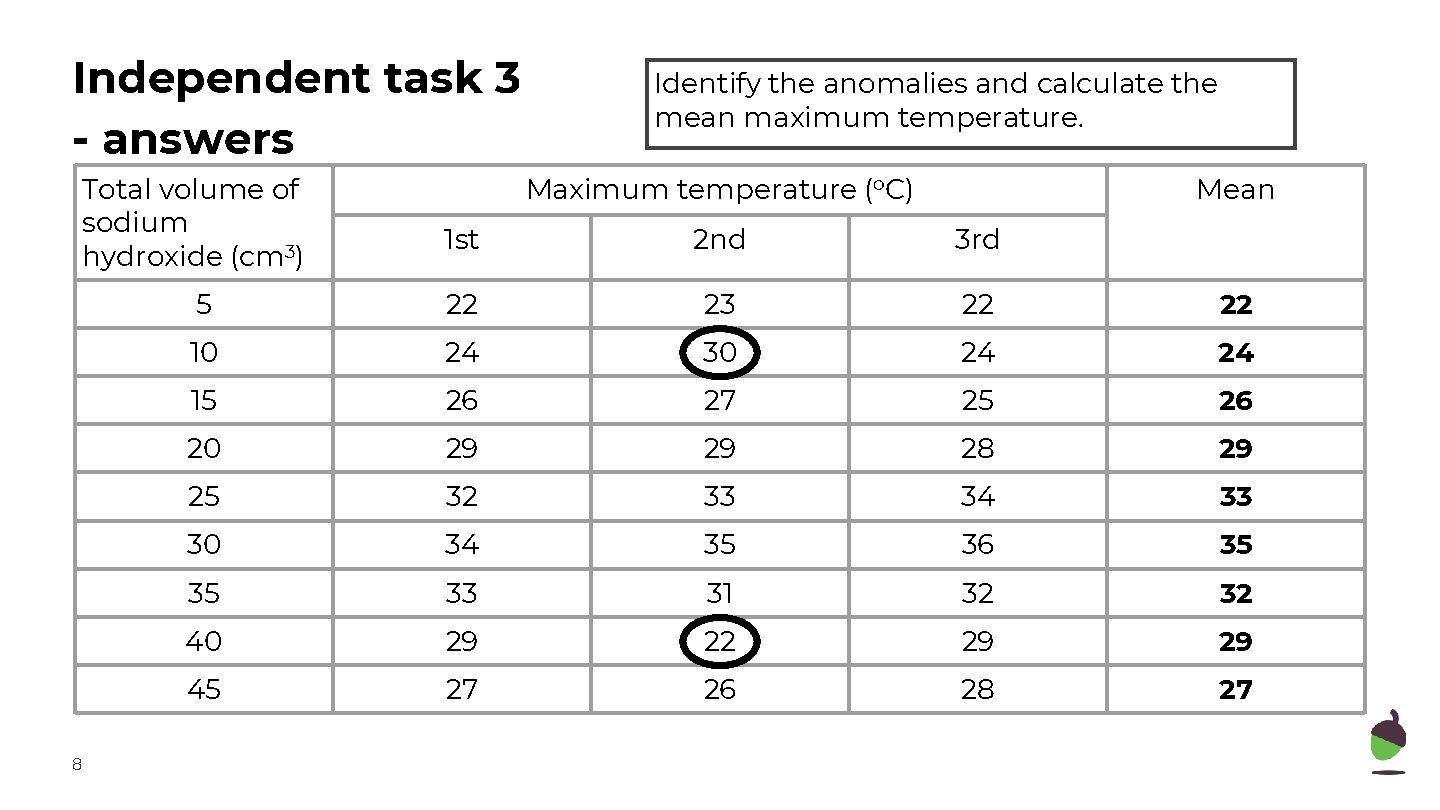
Independent task 3 - answers Total volume of sodium hydroxide (cm 3) 8 Identify the anomalies and calculate the mean maximum temperature. Maximum temperature (o. C) Mean 1 st 2 nd 3 rd 5 22 23 22 22 10 24 30 24 24 15 26 27 25 26 20 29 29 28 29 25 32 33 34 33 30 34 35 36 35 35 33 31 32 32 40 29 22 29 29 45 27 26 28 27
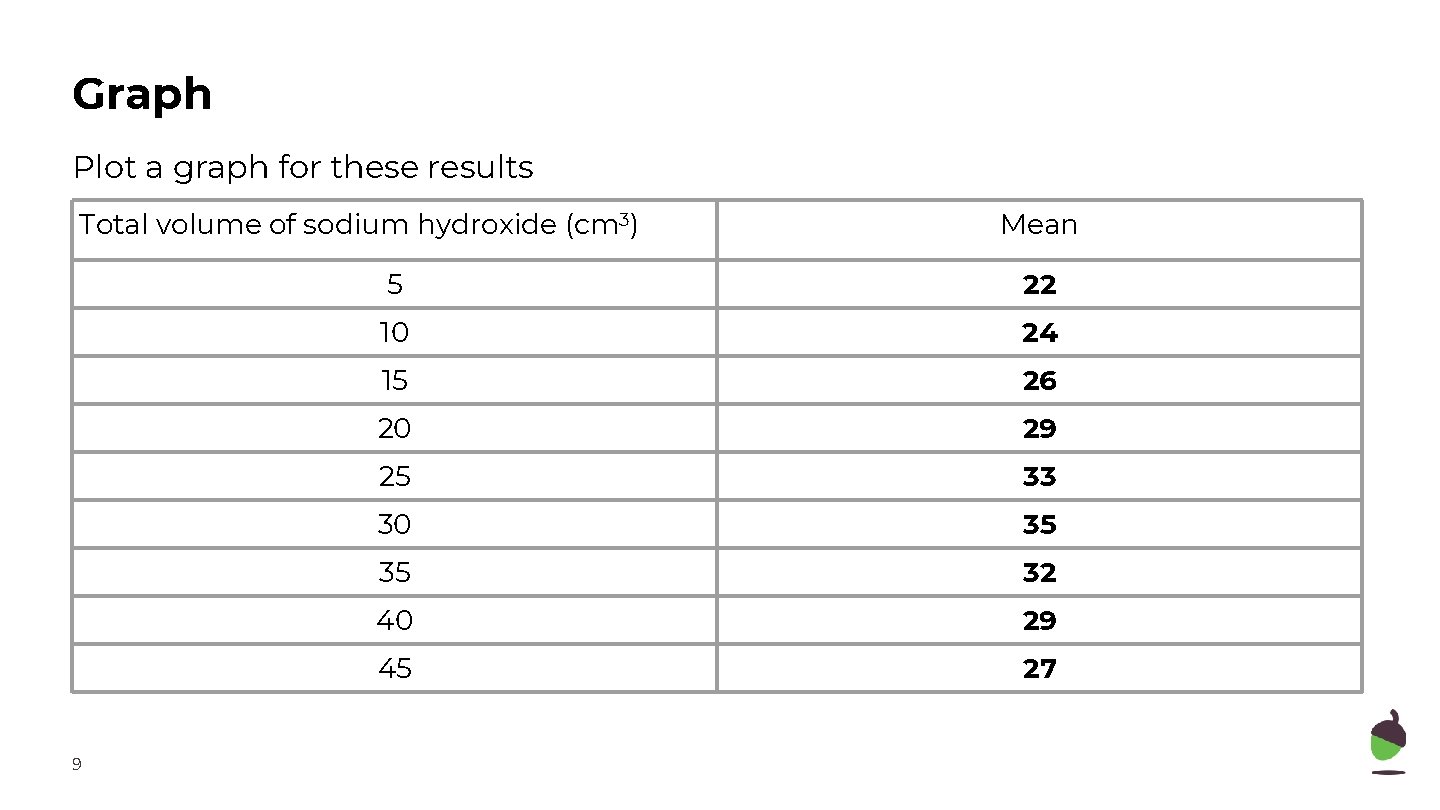
Graph Plot a graph for these results Total volume of sodium hydroxide (cm 3) 9 Mean 5 22 10 24 15 26 20 29 25 33 30 35 35 32 40 29 45 27
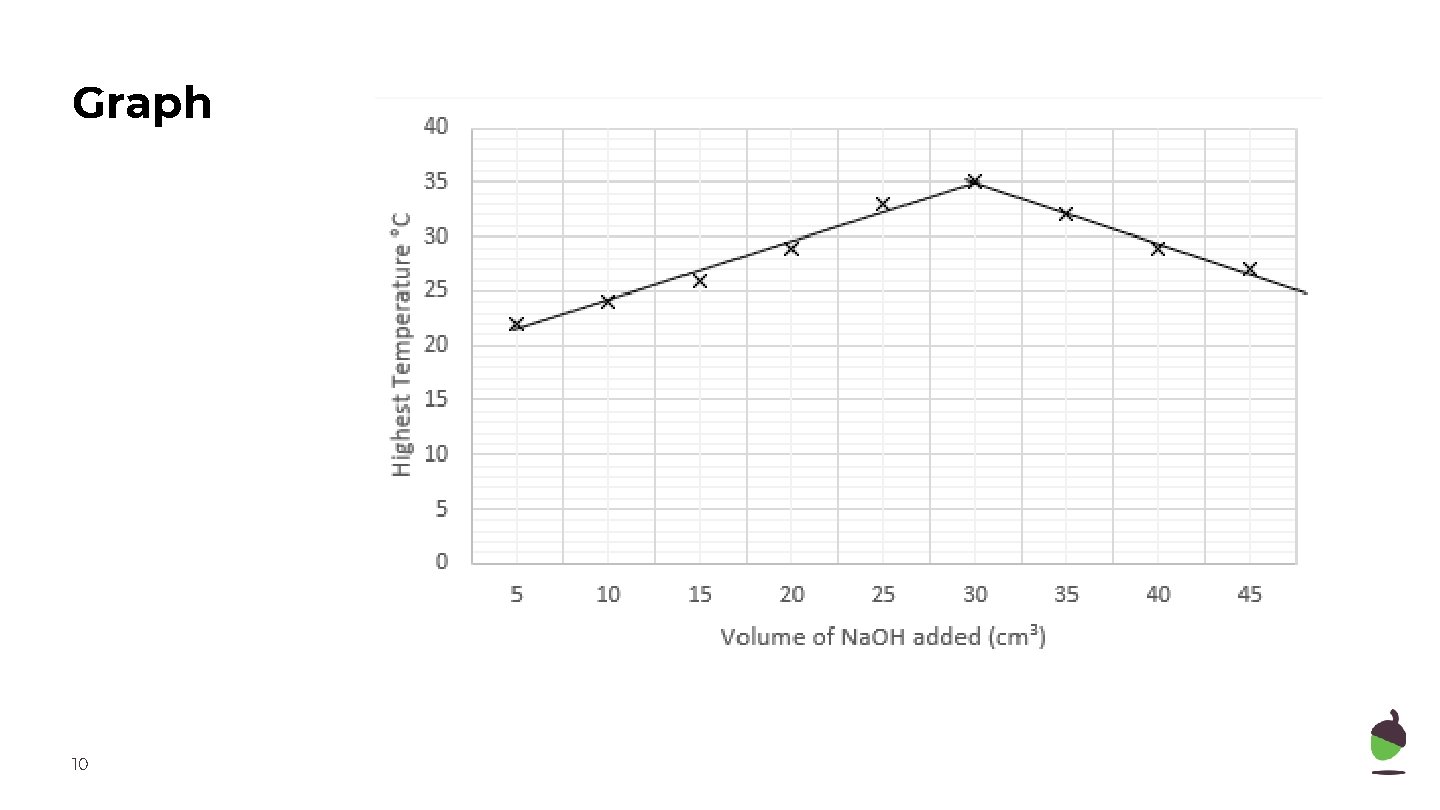
Graph 10
- Slides: 10