
Combined Science Chemistry Key Stage 4 Atomic Structure
Combined Science - Chemistry - Key Stage 4 Atomic Structure & the Periodic Table Atomic structure review lesson Dr Patel 1
2
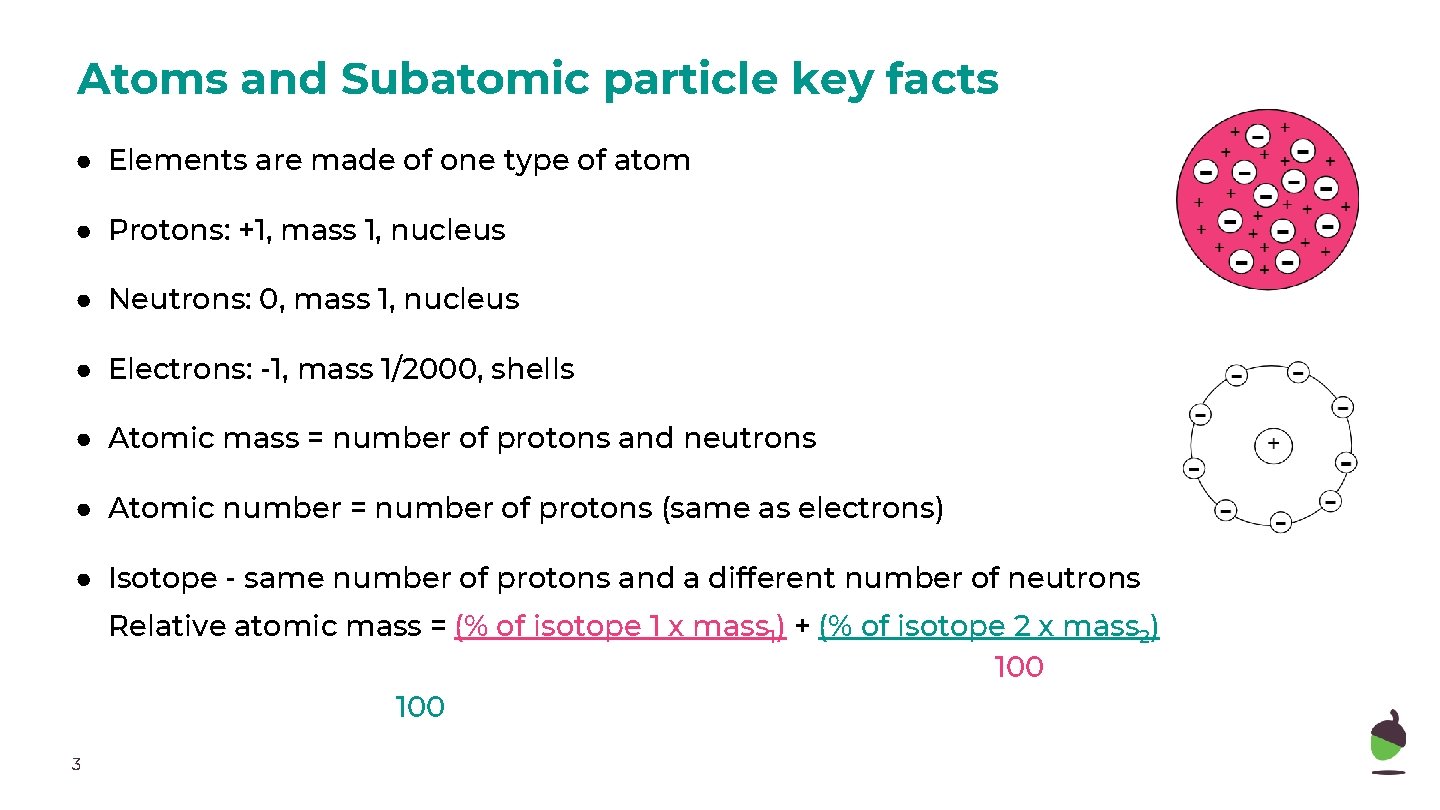
Atoms and Subatomic particle key facts ● Elements are made of one type of atom ● Protons: +1, mass 1, nucleus ● Neutrons: 0, mass 1, nucleus ● Electrons: -1, mass 1/2000, shells ● Atomic mass = number of protons and neutrons ● Atomic number = number of protons (same as electrons) ● Isotope - same number of protons and a different number of neutrons Relative atomic mass = (% of isotope 1 x mass 1) + (% of isotope 2 x mass 2) 100 3
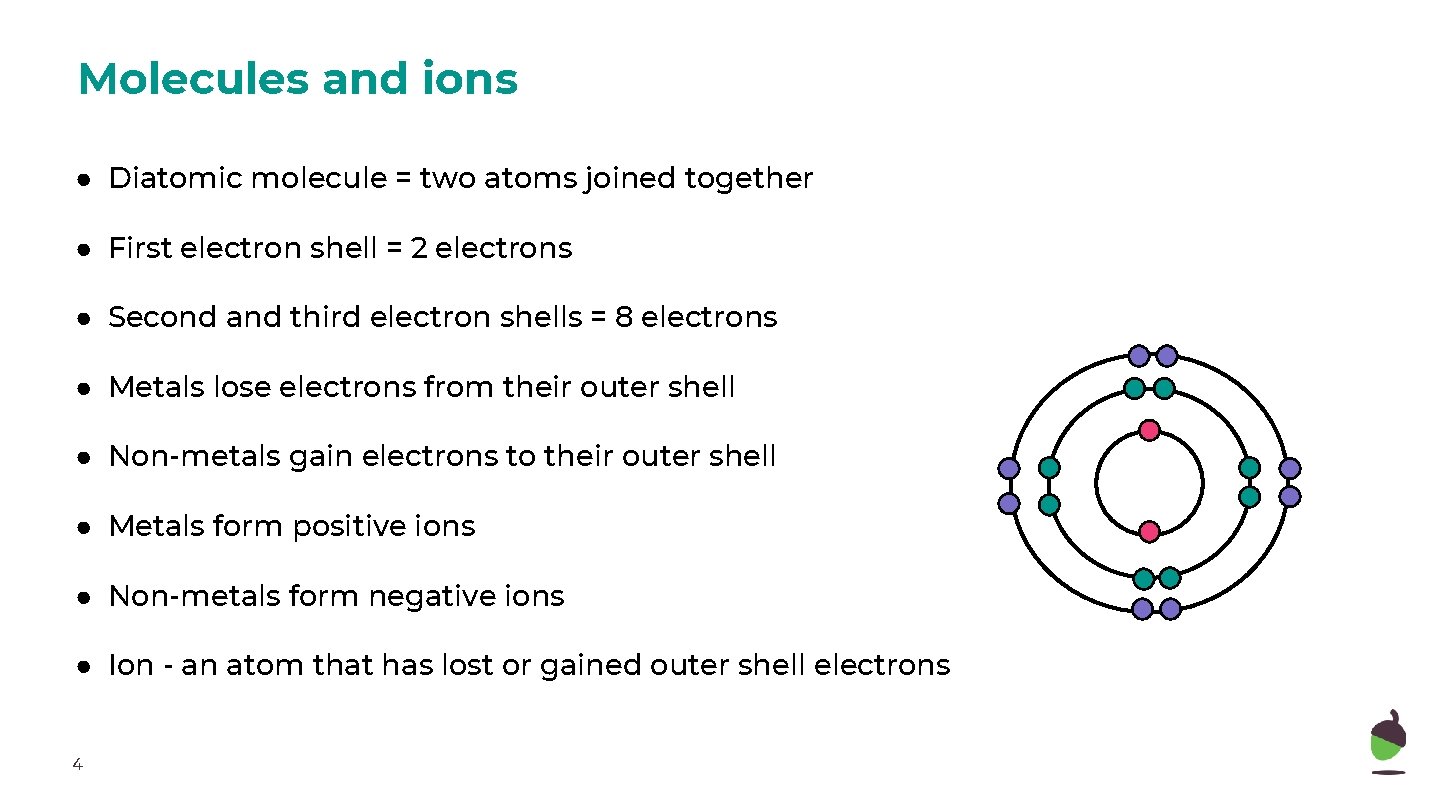
Molecules and ions ● Diatomic molecule = two atoms joined together ● First electron shell = 2 electrons ● Second and third electron shells = 8 electrons ● Metals lose electrons from their outer shell ● Non-metals gain electrons to their outer shell ● Metals form positive ions ● Non-metals form negative ions ● Ion - an atom that has lost or gained outer shell electrons 4
Periodic table key facts ● Metals on the left, non-metals on the right of the staircase ● Groups = columns, elements have similar properties ● Group = number represents the number of electrons on the outer shell ● Periods = rows (represent number of electron shells) ● Group 1 - reactivity increases as you go down the group ● Group 7 - reactivity decreases as you go down the group ● Noble gases - unreactive, full outer shell ● Group 7 melting and boiling points - increase ● Group 1 - low density 5
Independent task Create at least 5 flashcards using the key facts shown at the start of today’s lesson. You must choose 5 facts you’d forgotten or find it difficult to remember. Do: ● Start with the key facts you don’t know! ● Use images ● Use colour ● Use keywords ● Keep it concise ● Be precise ● Make them neat ● Use them! Don’t ● Use full sentences ● Rush 6
Independent practice 1. Sulphur has 2 naturally occurring isotopes: 94. 99% of mass number 32. 5. 01% of mass number 34. Calculate the relative atomic mass of Sulphur. Give your answer to 1 decimal place. 2. Copper has two naturally occurring isotopes. 69% of all Copper has a mass number of 63. 31% of all Copper has a mass number of 65 Calculate RAM to 3 significant figures. 7
Independent practice 3. Magnesium has three naturally occurring isotopes. 79% of all Magnesium is Mg 24 11% of all Magnesium is Mg 25 10% of all Magnesium is Mg 26 Calculate the RAM of Mg. Give your answer to 3 significant figures 4. Silicon has 3 naturally occurring isotopes. Calculate the RAM to 3 decimal places. 92% of Silicon is Si 28 5. 5% of all Silicon is Si 29 2. 5% of the sample is Si 30 8
- Slides: 8