
Combined Science Chemistry Key Stage 4 Atomic Structure
Combined Science - Chemistry - Key Stage 4 Atomic Structure & the Periodic Table Group 1 elements Dr Patel 1
2
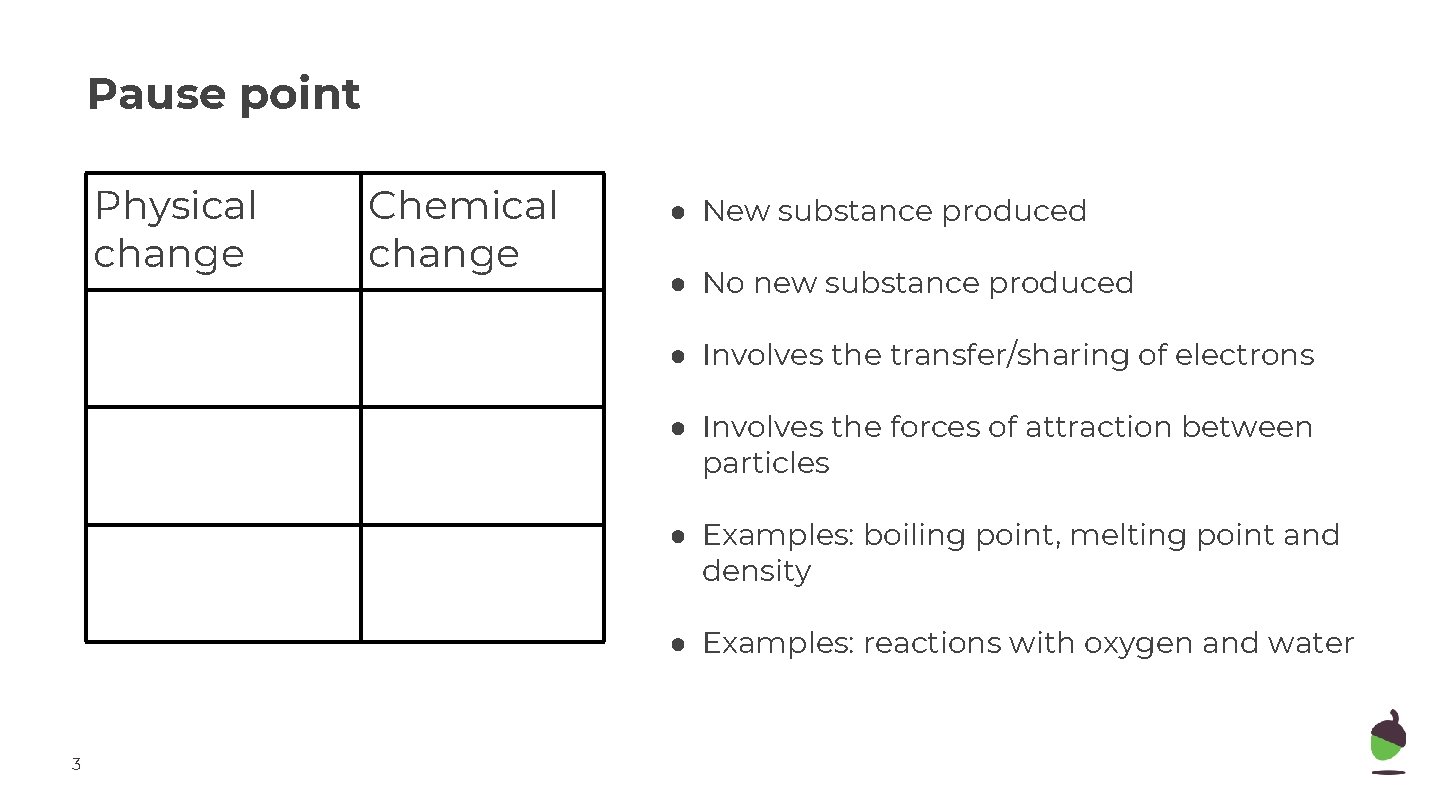
Pause point Physical change Chemical change ● New substance produced ● No new substance produced ● Involves the transfer/sharing of electrons ● Involves the forces of attraction between particles ● Examples: boiling point, melting point and density ● Examples: reactions with oxygen and water 3
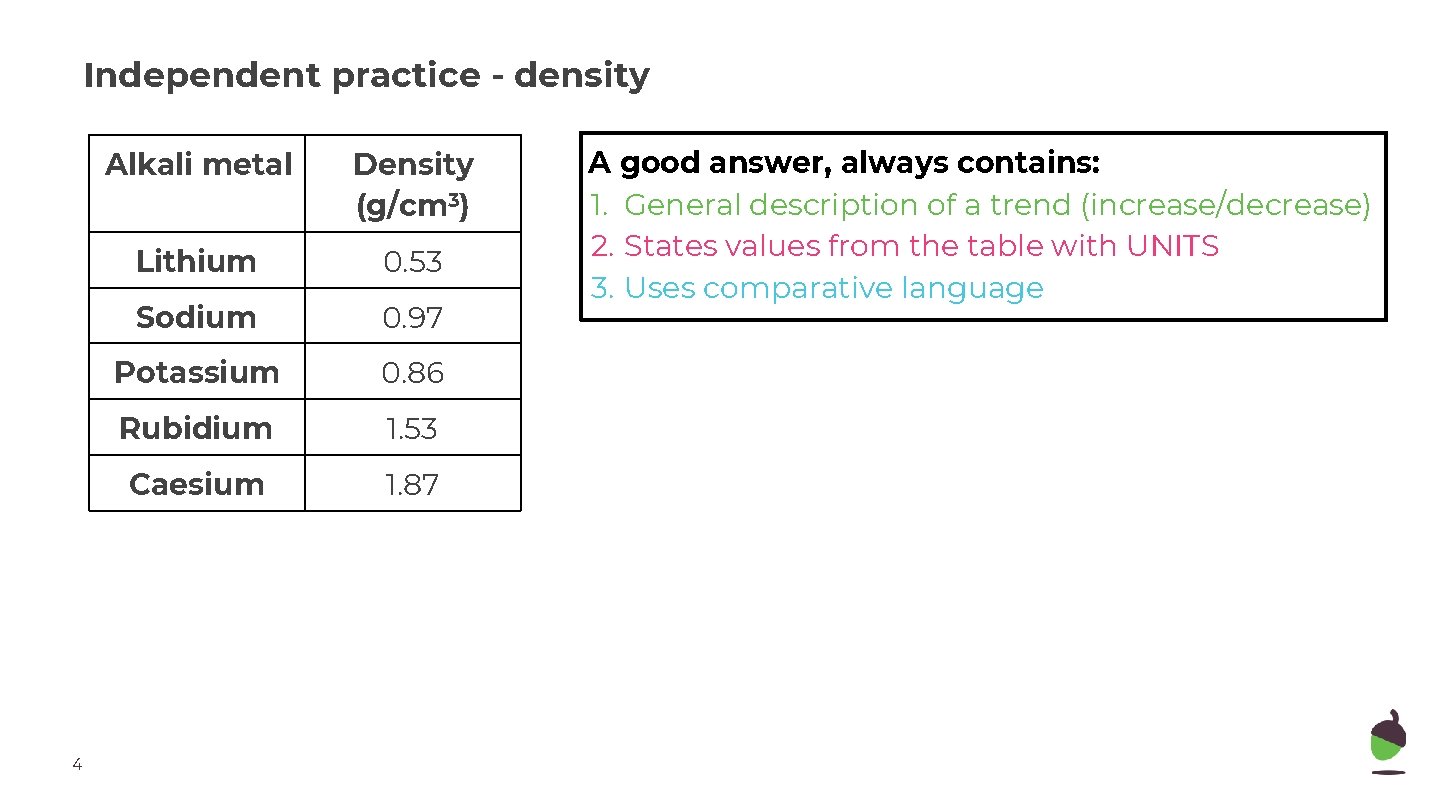
Independent practice - density 4 Alkali metal Density (g/cm 3) Lithium 0. 53 Sodium 0. 97 Potassium 0. 86 Rubidium 1. 53 Caesium 1. 87 A good answer, always contains: 1. General description of a trend (increase/decrease) 2. States values from the table with UNITS 3. Uses comparative language
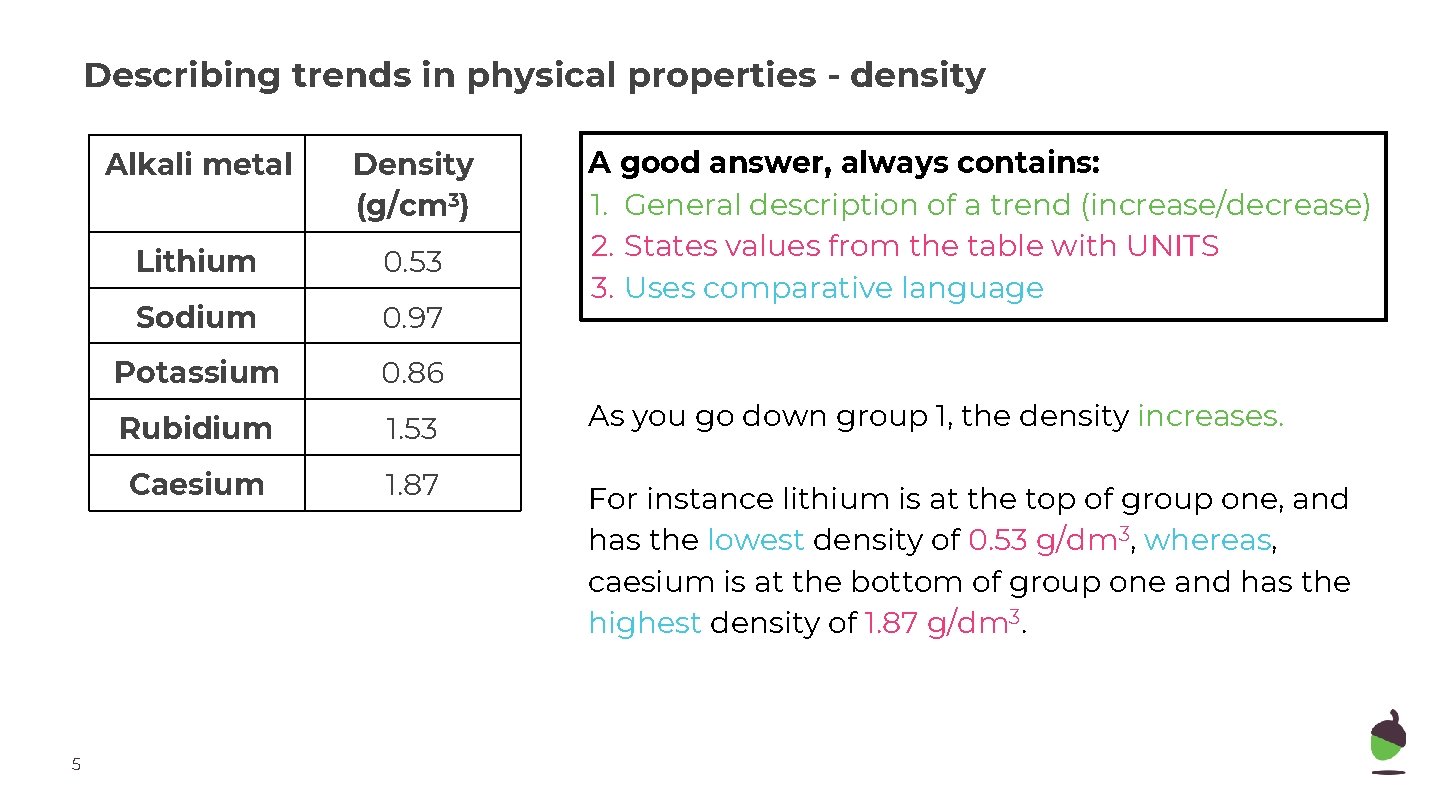
Describing trends in physical properties - density 5 A good answer, always contains: 1. General description of a trend (increase/decrease) 2. States values from the table with UNITS 3. Uses comparative language Alkali metal Density (g/cm 3) Lithium 0. 53 Sodium 0. 97 Potassium 0. 86 Rubidium 1. 53 As you go down group 1, the density increases. Caesium 1. 87 For instance lithium is at the top of group one, and has the lowest density of 0. 53 g/dm 3, whereas, caesium is at the bottom of group one and has the highest density of 1. 87 g/dm 3.
Independent practice 1. Describe how reactivity changes as you go down group 1. 1. What is the general word equation for the reaction between alkali metals and water? 1. What is the general word equation for the reaction between alkali metals and oxygen? 1. Complete the word equations for the reaction between: Potassium + oxygen → Potassium + water → Challenge: Write a balanced symbol equation for the reactions between potassium and water. 6
- Slides: 6