
COMBINATORIAL METHOD FOR CHARACTERIZING SINGULAR CONFIGURATIONS IN PARALLEL
COMBINATORIAL METHOD FOR CHARACTERIZING SINGULAR CONFIGURATIONS IN PARALLEL MECHANISMS
The outline of the talk 1. Geometric constraint for singularity. 2. Dual Kennedy theorem in statics in 2 D and 3 D (Wrenches of faces. ) 3. Deriving the singular characterization of Stewart platform 3/6 (triad). 4. Deriving singular characterizations of other parallel robots (3 D Assur graphs).
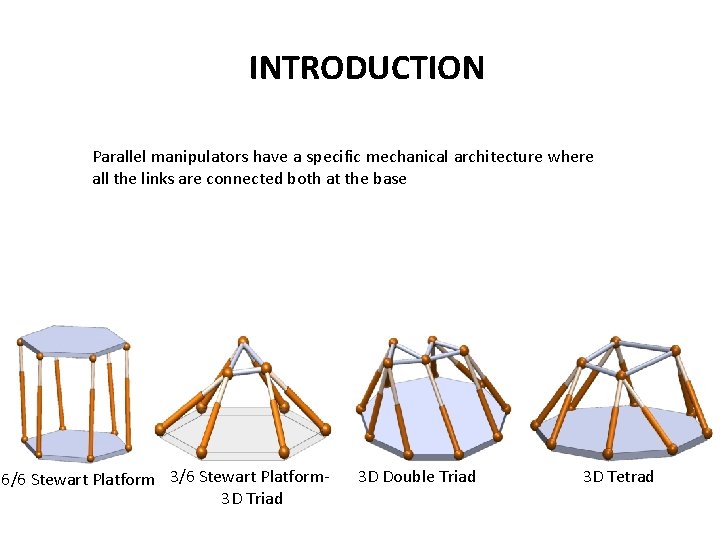
INTRODUCTION Parallel manipulators have a specific mechanical architecture where all the links are connected both at the base 6/6 Stewart Platform 3 D Triad 3 D Double Triad 3 D Tetrad
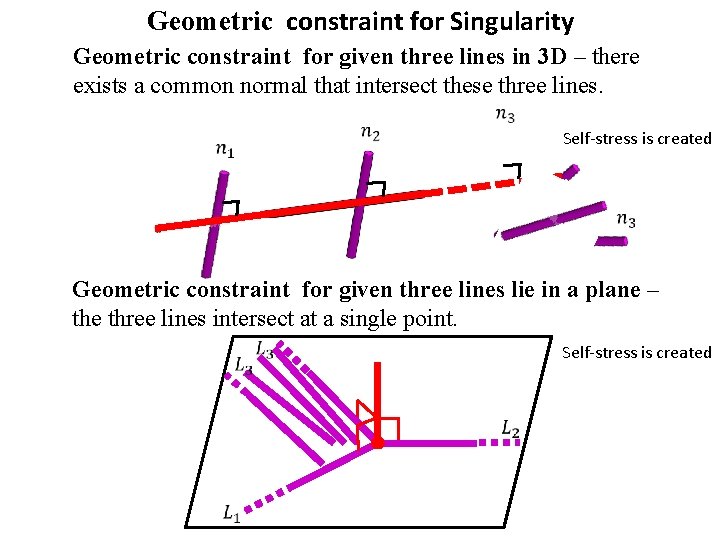
Geometric constraint for Singularity Geometric constraint for given three lines in 3 D – there exists a common normal that intersect these three lines. Self-stress is created Geometric constraint for given three lines lie in a plane – the three lines intersect at a single point. Self-stress is created
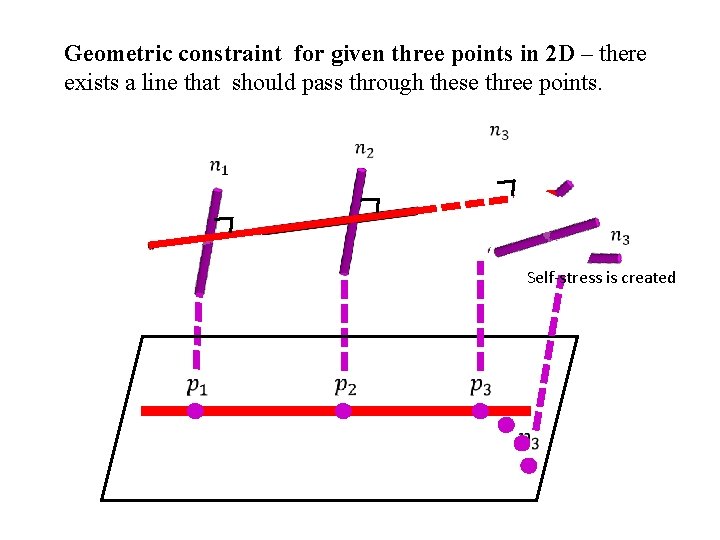
Geometric constraint for given three points in 2 D – there exists a line that should pass through these three points. Self-stress is created
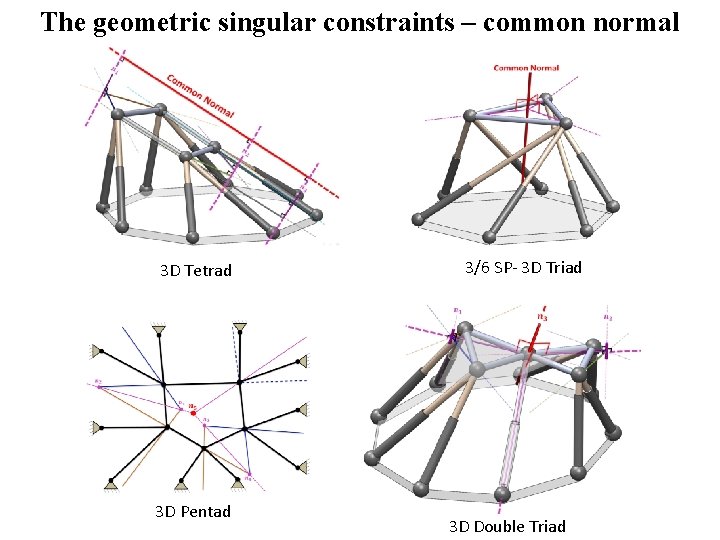
The geometric singular constraints – common normal 3 D Tetrad 3 D Pentad 3/6 SP- 3 D Triad 3 D Double Triad
So, we know that we look for a common normal (line) for three lines (points) in 3 D (2 D). Who are those lines/ points?
In 2 D the lines are the equimomental lines (eqml) in statics, dual to instant centers in kinematics (Shai and Pennock, 2005). In 3 D the lines are the equimomental screws (eqmls) in statics, dual to ISA in kinematics. Introduced for the first time in this conference. In statics the eqml (2 D) and eqmls (3 D) are associated to faces (circuits with no inner links) and not to bodies, as it is in kinematics. Shai O. and Pennock G. R, "The Duality Between Planar Kinematics and Statics", ASME Design ngineering Technical Conferences, September, 24 -28, 2005, in Long Beach, California, USA. Awarded the A. T. Yang Memorial Award in Theoretical Kinematics.
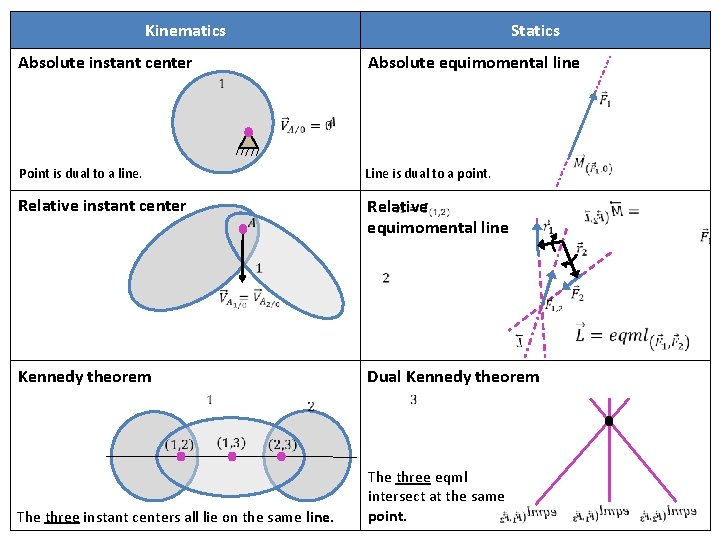
Kinematics Statics Absolute instant center Absolute equimomental line Point is dual to a line. Line is dual to a point. Relative instant center Relative equimomental line Kennedy theorem Dual Kennedy theorem The three instant centers all lie on the same line. The three eqml intersect at the same point.
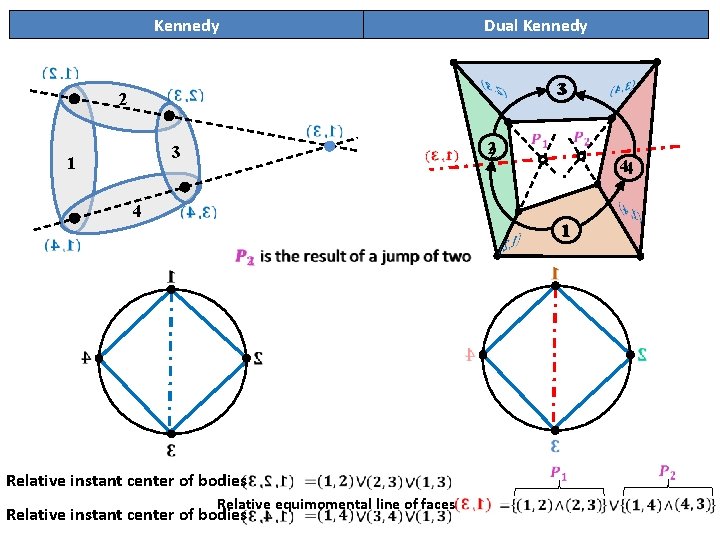
Dual Kennedy 33 2 3 1 44 1 22 4 Kennedy Relative instant center of bodies Relative equimomental line of faces Relative instant center of bodies
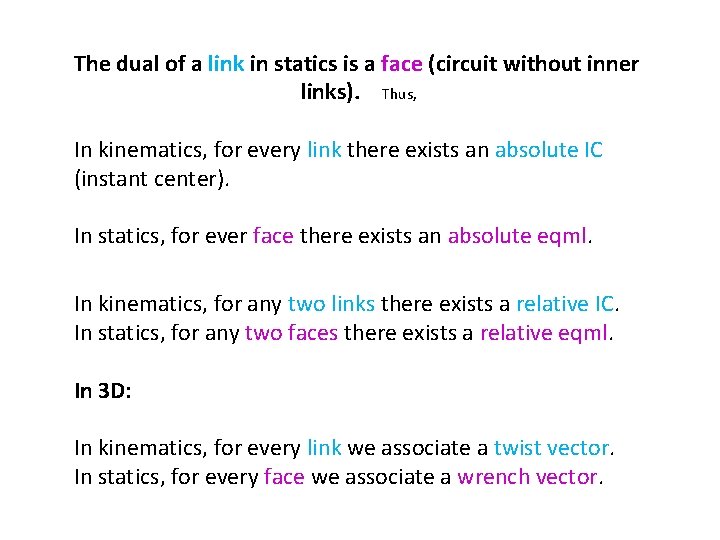
The dual of a link in statics is a face (circuit without inner links). Thus, In kinematics, for every link there exists an absolute IC (instant center). In statics, for ever face there exists an absolute eqml. In kinematics, for any two links there exists a relative IC. In statics, for any two faces there exists a relative eqml. In 3 D: In kinematics, for every link we associate a twist vector. In statics, for every face we associate a wrench vector.
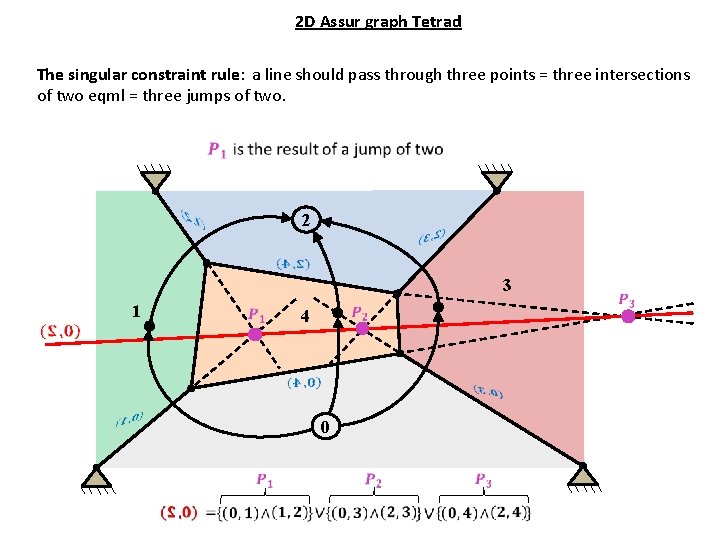
2 D Assur graph Tetrad The singular constraint rule: a line should pass through three points = three intersections of two eqml = three jumps of two. 2 1 3 4 0
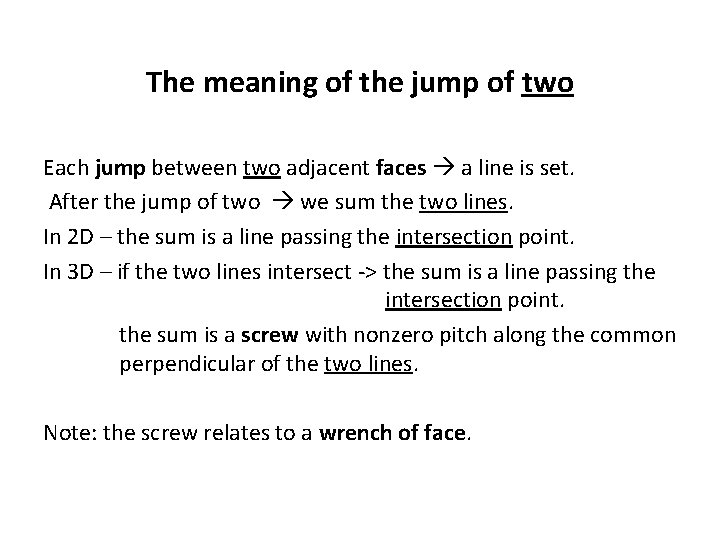
The meaning of the jump of two Each jump between two adjacent faces a line is set. After the jump of two we sum the two lines. In 2 D – the sum is a line passing the intersection point. In 3 D – if the two lines intersect -> the sum is a line passing the intersection point. the sum is a screw with nonzero pitch along the common perpendicular of the two lines. Note: the screw relates to a wrench of face.
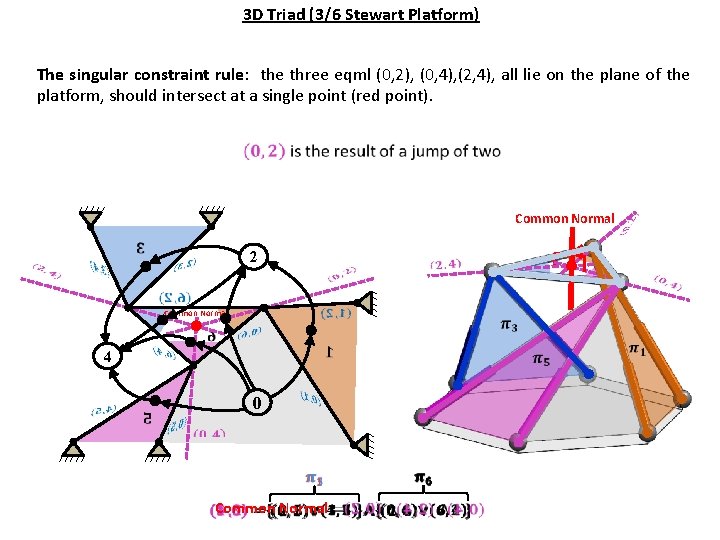
3 D Triad (3/6 Stewart Platform) The singular constraint rule: the three eqml (0, 2), (0, 4), (2, 4), all lie on the plane of the platform, should intersect at a single point (red point). Common Normal 2 Common Normal 4 0 Common Normal
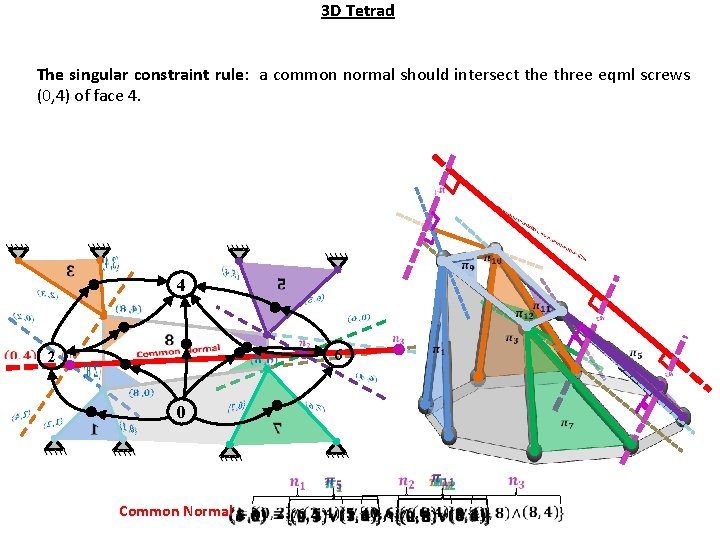
3 D Tetrad The singular constraint rule: a common normal should intersect the three eqml screws (0, 4) of face 4. 6 Common Normal 0 4 2

Thank You For Watching!
- Slides: 16