
Combination Therapy for Type 2 Diabetes September 2019
Combination Therapy for Type 2 Diabetes September 2019, ©AACE, all rights reserved.
Table of Contents • • Approach to Combination Therapy Agents Used in Combination Therapy Injectable Combination Therapies Combination Therapy for Patients With High Cardiovascular Risk
Educational Objectives • Discuss the use of combination therapy using agents with complementary mechanisms of action • Assess patient A 1 C in determining appropriate combination therapy • Review the hierarchy of agents in treatment decision-making • Understand the importance of individualized therapy • Prescribe appropriate combination therapy for patients at high cardiovascular risk • Summarize injectable combination therapies A 1 C, glycated hemoglobin.
Approach to Combination Therapy
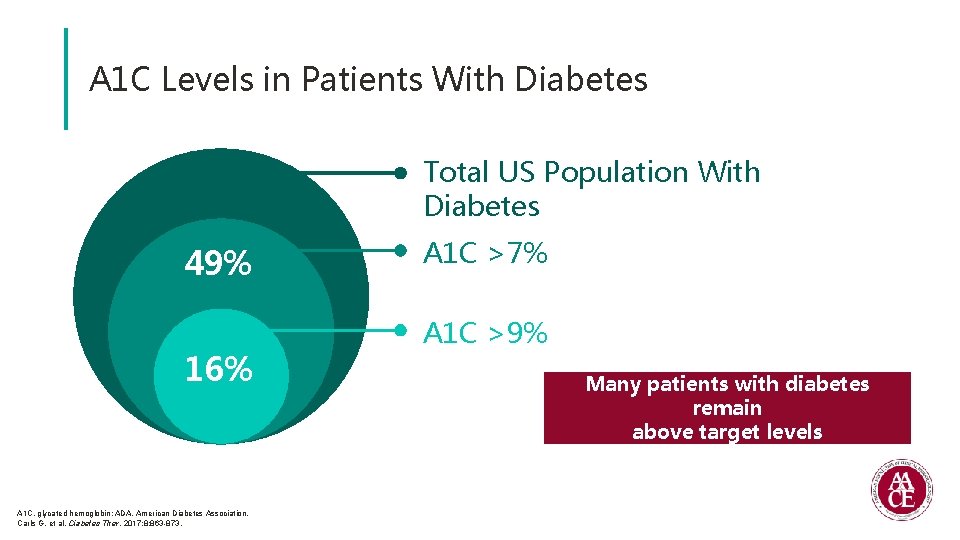
A 1 C Levels in Patients With Diabetes Total US Population With Diabetes 49% 16% A 1 C, glycated hemoglobin; ADA, American Diabetes Association. Carls G, et al. Diabetes Ther. 2017; 8: 863 -873. A 1 C >7% A 1 C >9% Many patients with diabetes remain above target levels
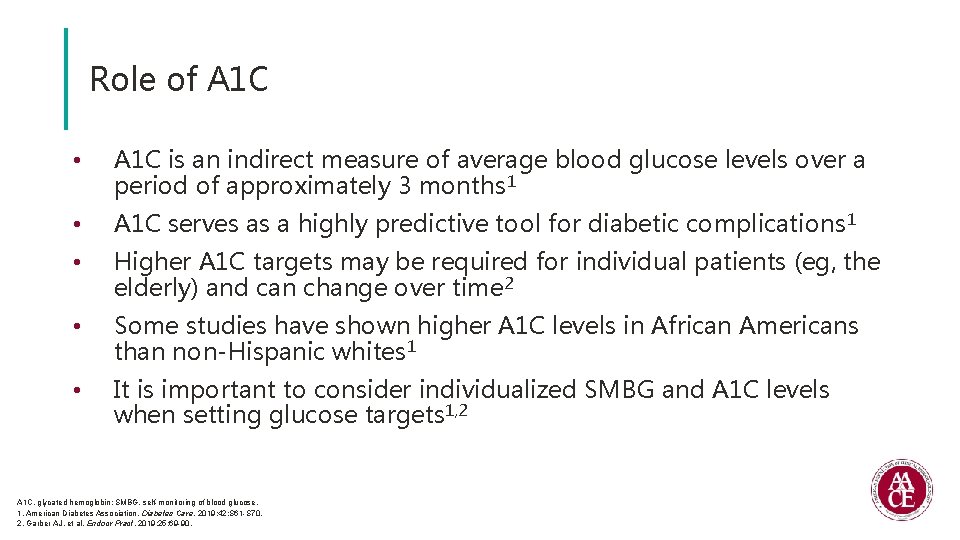
Role of A 1 C • A 1 C is an indirect measure of average blood glucose levels over a period of approximately 3 months 1 • A 1 C serves as a highly predictive tool for diabetic complications 1 • Higher A 1 C targets may be required for individual patients (eg, the elderly) and can change over time 2 • Some studies have shown higher A 1 C levels in African Americans than non-Hispanic whites 1 • It is important to consider individualized SMBG and A 1 C levels when setting glucose targets 1, 2 A 1 C, glycated hemoglobin; SMBG, self-monitoring of blood glucose. 1. American Diabetes Association. Diabetes Care. 2019; 42: S 61 -S 70. 2. Garber AJ, et al. Endocr Pract. 2019; 25: 69 -90.
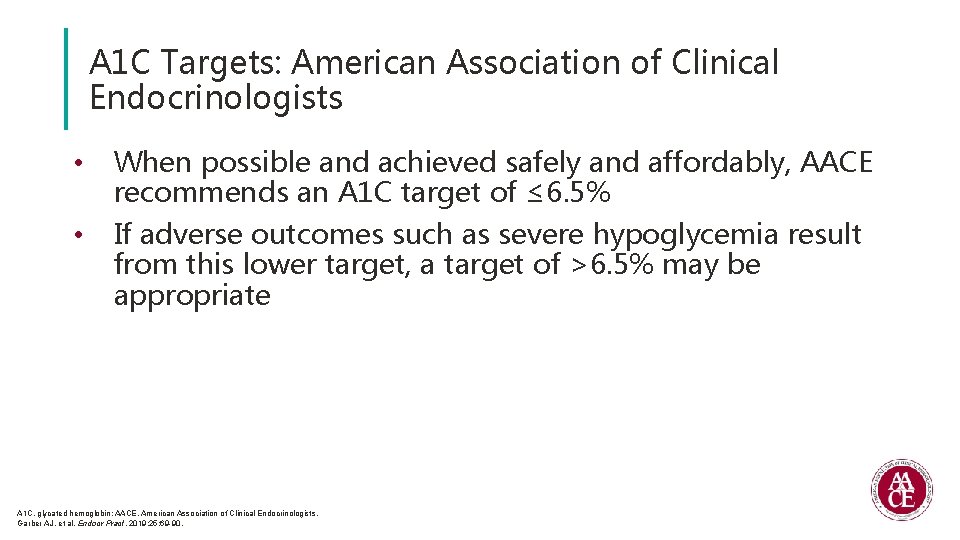
A 1 C Targets: American Association of Clinical Endocrinologists • When possible and achieved safely and affordably, AACE recommends an A 1 C target of ≤ 6. 5% • If adverse outcomes such as severe hypoglycemia result from this lower target, a target of >6. 5% may be appropriate A 1 C, glycated hemoglobin; AACE, American Association of Clinical Endocrinologists. Garber AJ, et al. Endocr Pract. 2019; 25: 69 -90.
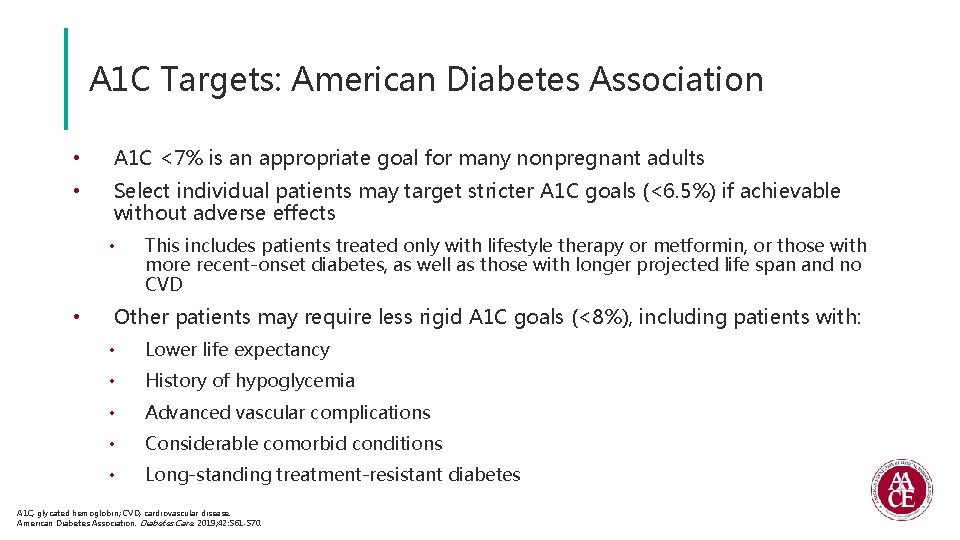
A 1 C Targets: American Diabetes Association • A 1 C <7% is an appropriate goal for many nonpregnant adults • Select individual patients may target stricter A 1 C goals (<6. 5%) if achievable without adverse effects • • This includes patients treated only with lifestyle therapy or metformin, or those with more recent-onset diabetes, as well as those with longer projected life span and no CVD Other patients may require less rigid A 1 C goals (<8%), including patients with: • Lower life expectancy • History of hypoglycemia • Advanced vascular complications • Considerable comorbid conditions • Long-standing treatment-resistant diabetes A 1 C, glycated hemoglobin; CVD, cardiovascular disease. American Diabetes Association. Diabetes Care. 2019; 42: S 61 -S 70.
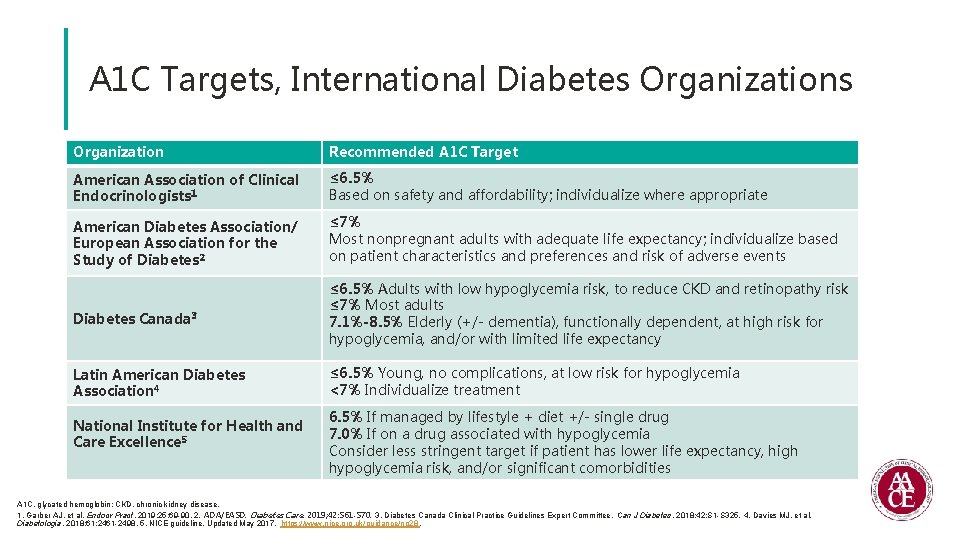
A 1 C Targets, International Diabetes Organization Recommended A 1 C Target American Association of Clinical Endocrinologists 1 ≤ 6. 5% Based on safety and affordability; individualize where appropriate American Diabetes Association/ European Association for the Study of Diabetes 2 ≤ 7% Most nonpregnant adults with adequate life expectancy; individualize based on patient characteristics and preferences and risk of adverse events Diabetes Canada 3 ≤ 6. 5% Adults with low hypoglycemia risk, to reduce CKD and retinopathy risk ≤ 7% Most adults 7. 1%-8. 5% Elderly (+/- dementia), functionally dependent, at high risk for hypoglycemia, and/or with limited life expectancy Latin American Diabetes Association 4 ≤ 6. 5% Young, no complications, at low risk for hypoglycemia <7% Individualize treatment National Institute for Health and Care Excellence 5 6. 5% If managed by lifestyle + diet +/- single drug 7. 0% If on a drug associated with hypoglycemia Consider less stringent target if patient has lower life expectancy, high hypoglycemia risk, and/or significant comorbidities A 1 C, glycated hemoglobin; CKD, chronic kidney disease. 1. Garber AJ, et al. Endocr Pract. 2019; 25: 69 -90. 2. ADA/EASD. Diabetes Care. 2019; 42: S 61 -S 70. 3. Diabetes Canada Clinical Practice Guidelines Expert Committee. Can J Diabetes. 2018; 42: S 1 -S 325. 4. Davies MJ, et al. Diabetologia. 2018; 61: 2461 -2498. 5. NICE guideline. Updated May 2017. https: //www. nice. org. uk/guidance/ng 28.
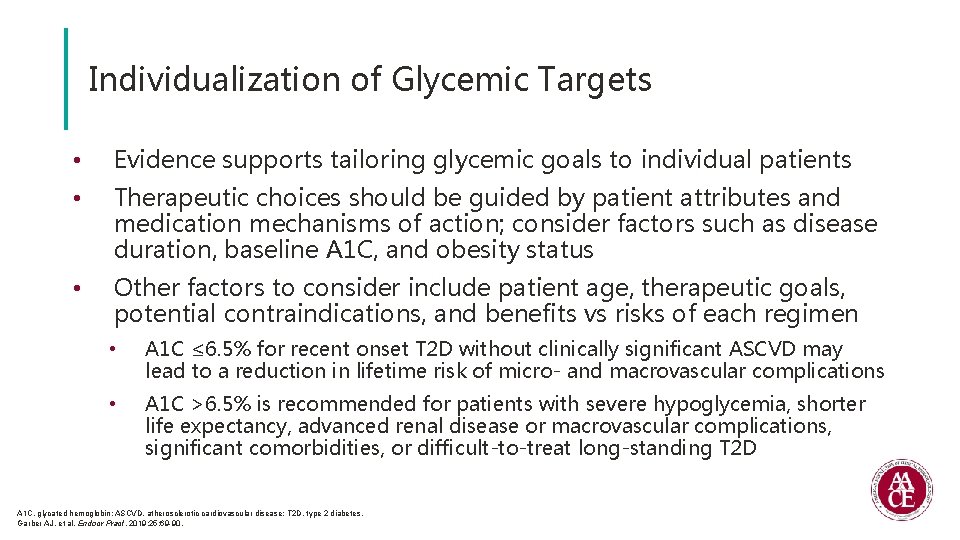
Individualization of Glycemic Targets • Evidence supports tailoring glycemic goals to individual patients • Therapeutic choices should be guided by patient attributes and medication mechanisms of action; consider factors such as disease duration, baseline A 1 C, and obesity status • Other factors to consider include patient age, therapeutic goals, potential contraindications, and benefits vs risks of each regimen • A 1 C ≤ 6. 5% for recent onset T 2 D without clinically significant ASCVD may lead to a reduction in lifetime risk of micro- and macrovascular complications • A 1 C >6. 5% is recommended for patients with severe hypoglycemia, shorter life expectancy, advanced renal disease or macrovascular complications, significant comorbidities, or difficult-to-treat long-standing T 2 D A 1 C, glycated hemoglobin; ASCVD, atherosclerotic cardiovascular disease; T 2 D, type 2 diabetes. Garber AJ, et al. Endocr Pract. 2019; 25: 69 -90.
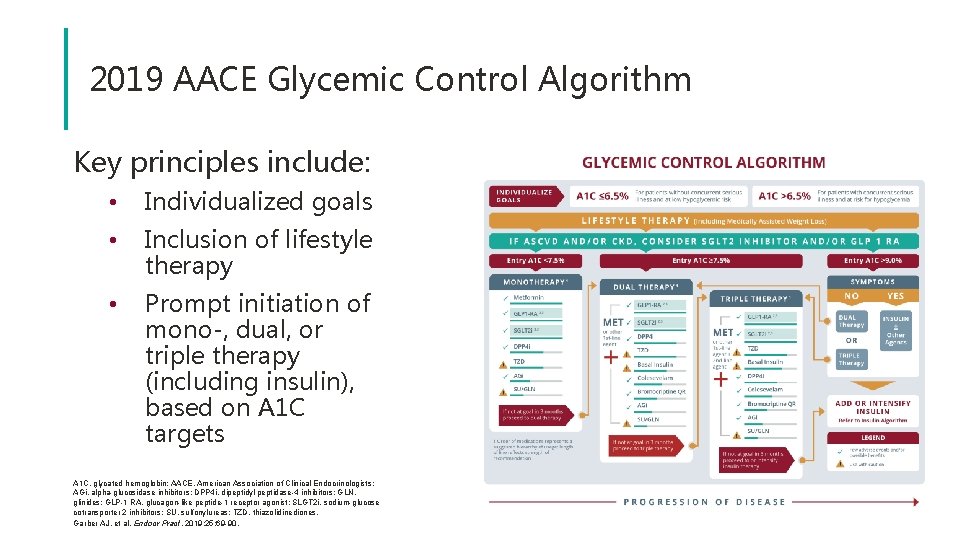
2019 AACE Glycemic Control Algorithm Key principles include: • Individualized goals • Inclusion of lifestyle therapy • Prompt initiation of mono-, dual, or triple therapy (including insulin), based on A 1 C targets A 1 C, glycated hemoglobin; AACE, American Association of Clinical Endocrinologists; AGi, alpha-glucosidase inhibitors; DPP 4 i, dipeptidyl peptidase-4 inhibitors; GLN, glinides; GLP-1 RA, glucagon-like peptide-1 receptor agonist; SLGT 2 i, sodium-glucose cotransporter 2 inhibitors; SU, sulfonylureas; TZD, thiazolidinediones. Garber AJ, et al. Endocr Pract. 2019; 25: 69 -90.
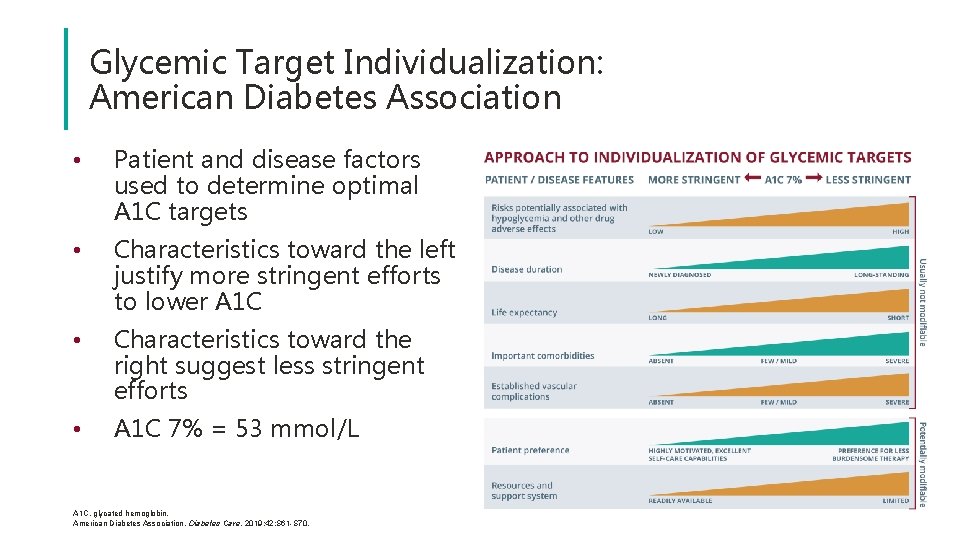
Glycemic Target Individualization: American Diabetes Association • Patient and disease factors used to determine optimal A 1 C targets • Characteristics toward the left justify more stringent efforts to lower A 1 C • Characteristics toward the right suggest less stringent efforts • A 1 C 7% = 53 mmol/L A 1 C, glycated hemoglobin. American Diabetes Association. Diabetes Care. 2019; 42: S 61 -S 70.
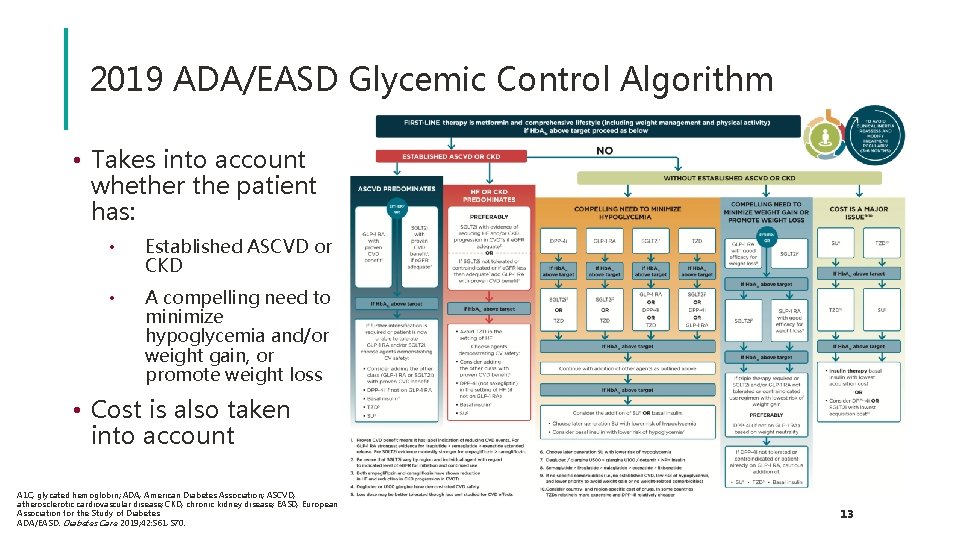
2019 ADA/EASD Glycemic Control Algorithm • Takes into account whether the patient has: • Established ASCVD or CKD • A compelling need to minimize hypoglycemia and/or weight gain, or promote weight loss • Cost is also taken into account A 1 C, glycated hemoglobin; ADA, American Diabetes Association; ASCVD, atherosclerotic cardiovascular disease; CKD, chronic kidney disease; EASD, European Association for the Study of Diabetes. ADA/EASD. Diabetes Care. 2019; 42: S 61 -S 70. 13
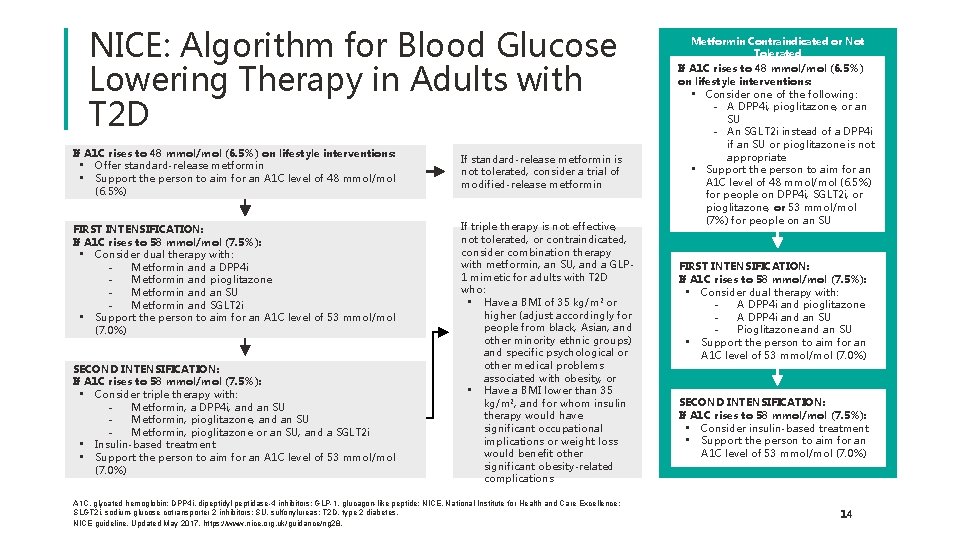
NICE: Algorithm for Blood Glucose Lowering Therapy in Adults with T 2 D If A 1 C rises to 48 mmol/mol (6. 5%) on lifestyle interventions: • Offer standard-release metformin • Support the person to aim for an A 1 C level of 48 mmol/mol (6. 5%) FIRST INTENSIFICATION: If A 1 C rises to 58 mmol/mol (7. 5%): • Consider dual therapy with: Metformin and a DPP 4 i Metformin and pioglitazone Metformin and an SU Metformin and SGLT 2 i • Support the person to aim for an A 1 C level of 53 mmol/mol (7. 0%) SECOND INTENSIFICATION: If A 1 C rises to 58 mmol/mol (7. 5%): • Consider triple therapy with: Metformin, a DPP 4 i, and an SU Metformin, pioglitazone or an SU, and a SGLT 2 i • Insulin-based treatment • Support the person to aim for an A 1 C level of 53 mmol/mol (7. 0%) If standard-release metformin is not tolerated, consider a trial of modified-release metformin If triple therapy is not effective, not tolerated, or contraindicated, consider combination therapy with metformin, an SU, and a GLP 1 mimetic for adults with T 2 D who: • Have a BMI of 35 kg/m 2 or higher (adjust accordingly for people from black, Asian, and other minority ethnic groups) and specific psychological or other medical problems associated with obesity, or • Have a BMI lower than 35 kg/m 2, and for whom insulin therapy would have significant occupational implications or weight loss would benefit other significant obesity-related complications A 1 C, glycated hemoglobin; DPP 4 i, dipeptidyl peptidase-4 inhibitors; GLP-1, glucagon-like peptide; NICE, National Institute for Health and Care Excellence; SLGT 2 i, sodium-glucose cotransporter 2 inhibitors; SU, sulfonylureas; T 2 D, type 2 diabetes. NICE guideline. Updated May 2017. https: //www. nice. org. uk/guidance/ng 28. Metformin Contraindicated or Not Tolerated If A 1 C rises to 48 mmol/mol (6. 5%) on lifestyle interventions: • Consider one of the following: - A DPP 4 i, pioglitazone, or an SU - An SGLT 2 i instead of a DPP 4 i if an SU or pioglitazone is not appropriate • Support the person to aim for an A 1 C level of 48 mmol/mol (6. 5%) for people on DPP 4 i, SGLT 2 i, or pioglitazone, or 53 mmol/mol (7%) for people on an SU FIRST INTENSIFICATION: If A 1 C rises to 58 mmol/mol (7. 5%): • Consider dual therapy with: A DPP 4 i and pioglitazone A DPP 4 i and an SU Pioglitazone and an SU • Support the person to aim for an A 1 C level of 53 mmol/mol (7. 0%) SECOND INTENSIFICATION: If A 1 C rises to 58 mmol/mol (7. 5%): • Consider insulin-based treatment • Support the person to aim for an A 1 C level of 53 mmol/mol (7. 0%) 14
Agents Used in Combination Therapy
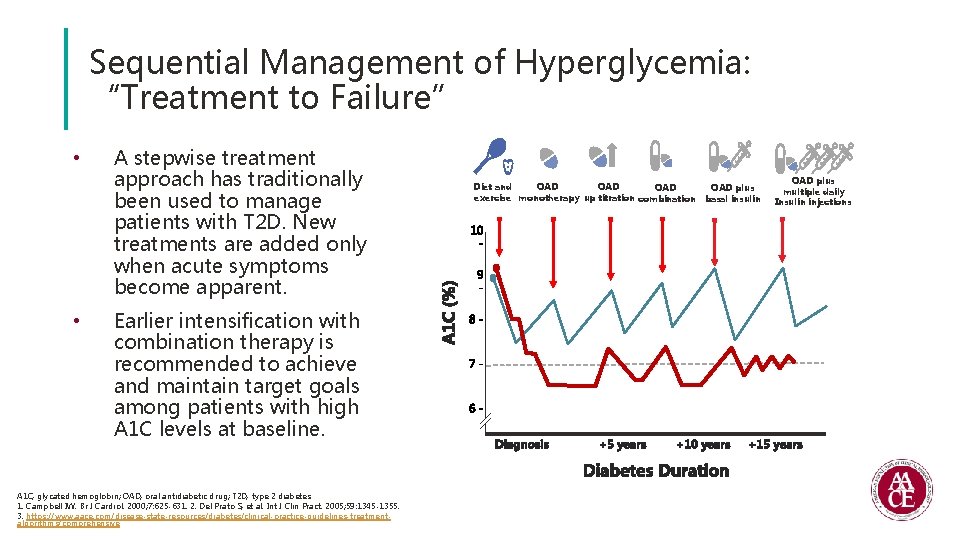
Sequential Management of Hyperglycemia: “Treatment to Failure” • • A stepwise treatment approach has traditionally been used to manage patients with T 2 D. New treatments are added only when acute symptoms become apparent. Earlier intensification with combination therapy is recommended to achieve and maintain target goals among patients with high A 1 C levels at baseline. A 1 C, glycated hemoglobin; OAD, oral antidiabetic drug; T 2 D, type 2 diabetes. 1. Campbell IW. Br J Cardiol. 2000; 7: 625 -631. 2. Del Prato S, et al. Int J Clin Pract. 2005; 59: 1345 -1355. 3. https: //www. aace. com/disease-state-resources/diabetes/clinical-practice-guidelines-treatmentalgorithms/comprehensive OAD Diet and OAD plus OAD exercise monotherapy up titration combination basal insulin OAD plus multiple daily Insulin injections
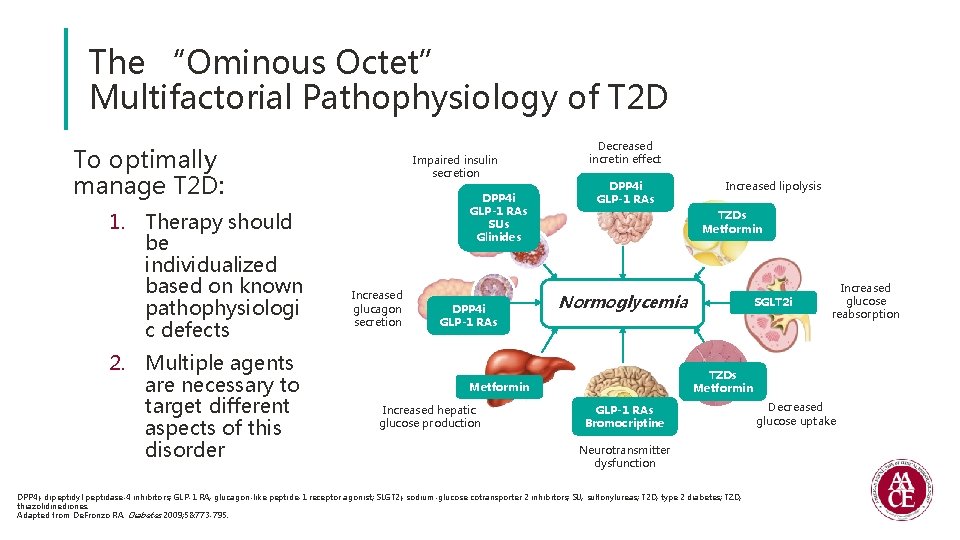
The “Ominous Octet” Multifactorial Pathophysiology of T 2 D To optimally manage T 2 D: 1. Therapy should be individualized based on known pathophysiologi c defects 2. Multiple agents are necessary to target different aspects of this disorder Impaired insulin secretion DPP 4 i GLP-1 RAs SUs Glinides Increased glucagon secretion DPP 4 i GLP-1 RAs Decreased incretin effect DPP 4 i GLP-1 RAs TZDs Metformin Hyperglycemia Normoglycemia SGLT 2 i Increased glucose reabsorption TZDs Metformin Increased hepatic glucose production Increased lipolysis GLP-1 RAs Bromocriptine Neurotransmitter dysfunction DPP 4 i, dipeptidyl peptidase-4 inhibitors; GLP-1 RA, glucagon-like peptide-1 receptor agonist; SLGT 2 i, sodium-glucose cotransporter 2 inhibitors; SU, sulfonylureas; T 2 D, type 2 diabetes; TZD, thiazolidinediones. Adapted from De. Fronzo RA. Diabetes 2009; 58: 773 -795. Decreased glucose uptake
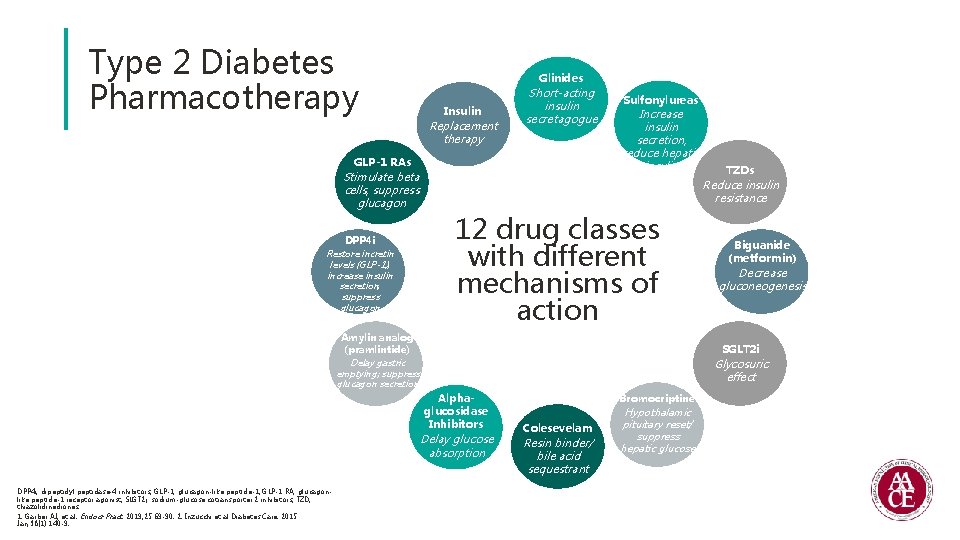
Type 2 Diabetes Pharmacotherapy Glinides Insulin Replacement therapy Short-acting insulin secretagogue GLP-1 RAs Stimulate beta cells, suppress glucagon DPP 4 i Restore incretin levels (GLP-1), increase insulin secretion, suppress glucagon Sulfonylureas Increase insulin secretion, reduce hepatic insulin TZDs clearance Reduce insulin resistance 12 drug classes with different mechanisms of action Amylin analog (pramlintide) Delay gastric emptying; suppress glucagon secretion Decrease gluconeogenesis SGLT 2 i Glycosuric effect Alphaglucosidase Inhibitors Delay glucose absorption DPP 4 i, dipeptidyl peptidase-4 inhibitors; GLP-1, glucagon-like peptide-1; GLP-1 RA, glucagonlike peptide-1 receptor agonist; SLGT 2 i, sodium-glucose cotransporter 2 inhibitors; TZD, thiazolidinediones. 1. Garber AJ, et al. Endocr Pract. 2019; 25: 69 -90. 2. Inzucchi et al Diabetes Care. 2015 Jan, 38(1): 140 -9. Biguanide (metformin) Colesevelam Resin binder/ bile acid sequestrant Bromocriptine Hypothalamic pituitary reset/ suppress hepatic glucose
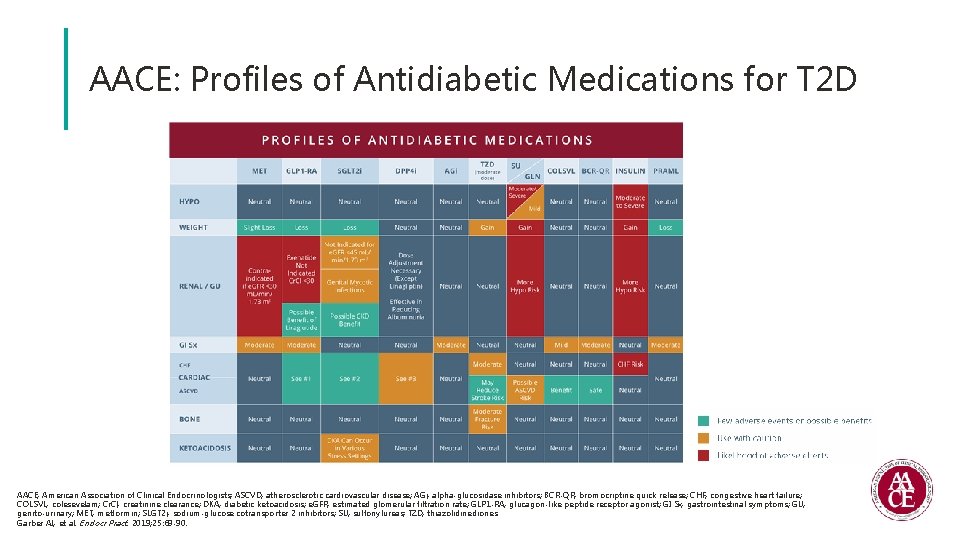
AACE: Profiles of Antidiabetic Medications for T 2 D AACE, American Association of Clinical Endocrinologists; ASCVD, atherosclerotic cardiovascular disease; AGi, alpha-glucosidase inhibitors; BCR-QR, bromocriptine quick release; CHF, congestive heart failure; COLSVL, colesevelam; Cr. Cl, creatinine clearance; DKA, diabetic ketoacidosis; e. GFR, estimated glomerular filtration rate; GLP 1 -RA, glucagon-like peptide receptor agonist; GI Sx, gastrointestinal symptoms; GU, genito-urinary; MET, metformin; SLGT 2 i, sodium-glucose cotransporter 2 inhibitors; SU, sulfonylureas; TZD, thiazolidinediones. Garber AJ, et al. Endocr Pract. 2019; 25: 69 -90.
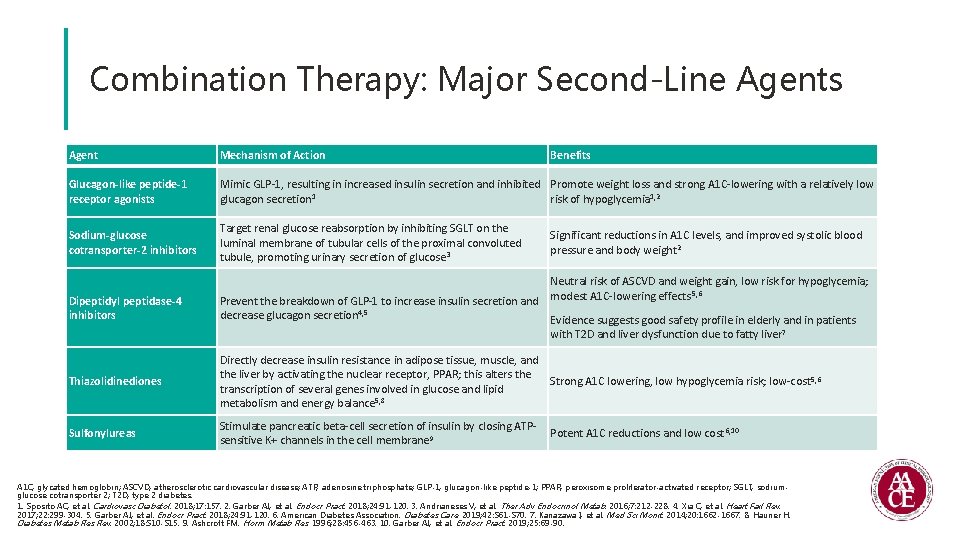
Combination Therapy: Major Second-Line Agents Agent Mechanism of Action Glucagon-like peptide-1 receptor agonists Mimic GLP-1, resulting in increased insulin secretion and inhibited Promote weight loss and strong A 1 C-lowering with a relatively low glucagon secretion 1 risk of hypoglycemia 1, 2 Sodium-glucose cotransporter-2 inhibitors Target renal glucose reabsorption by inhibiting SGLT on the luminal membrane of tubular cells of the proximal convoluted tubule, promoting urinary secretion of glucose 3 Dipeptidyl peptidase-4 inhibitors Benefits Significant reductions in A 1 C levels, and improved systolic blood pressure and body weight 2 Neutral risk of ASCVD and weight gain, low risk for hypoglycemia; 5, 6 Prevent the breakdown of GLP-1 to increase insulin secretion and modest A 1 C-lowering effects decrease glucagon secretion 4, 5 Evidence suggests good safety profile in elderly and in patients with T 2 D and liver dysfunction due to fatty liver 7 Thiazolidinediones Directly decrease insulin resistance in adipose tissue, muscle, and the liver by activating the nuclear receptor, PPAR; this alters the Strong A 1 C lowering, low hypoglycemia risk; low-cost 5, 6 transcription of several genes involved in glucose and lipid metabolism and energy balance 5, 8 Sulfonylureas Stimulate pancreatic beta-cell secretion of insulin by closing ATPsensitive K+ channels in the cell membrane 9 Potent A 1 C reductions and low cost 6, 10 A 1 C, glycated hemoglobin; ASCVD, atherosclerotic cardiovascular disease; ATP, adenosine triphosphate; GLP-1, glucagon-like peptide-1; PPAR, peroxisome proliferator-activated receptor; SGLT, sodiumglucose cotransporter 2; T 2 D, type 2 diabetes. 1. Sposito AC, et al. Cardiovasc Diabetol. 2018; 17: 157. 2. Garber AJ, et al. Endocr Pract. 2018; 24: 91 -120. 3. Andrianeses V, et al. Ther Adv Endocrinol Metab. 2016; 7: 212 -228. 4. Xia C, et al. Heart Fail Rev. 2017; 22: 299 -304. 5. Garber AJ, et al. Endocr Pract. 2018; 24: 91 -120. 6. American Diabetes Association. Diabetes Care. 2019; 42: S 61 -S 70. 7. Kanazawa I, et al. Med Sci Monit. 2014; 20: 1662 -1667. 8. Hauner H. Diabetes Metab Res Rev. 2002; 18: S 10 -S 15. 9. Ashcroft FM. Horm Metab Res. 1996; 28: 456 -463. 10. Garber AJ, et al. Endocr Pract. 2019; 25: 69 -90.
Initiation of Combination Therapy • Metformin is the preferred first-line agent for the treatment of T 2 D 1, 2 • Patients on metformin monotherapy who do not achieve glycemic targets should be started on combination therapy with additional agents, including insulin 2 • Combination therapy is often required and should include therapeutic agents with complementary mechanisms of action 2 • For patients with A 1 C >7. 5% who are not on antihyperglycemic agents, metformin plus another agent in addition to lifestyle therapy should be initiated 2 • Although a medication’s efficacy declines somewhat when added as a third agent, the addition may be required to ensure effective treatment 2 • Symptomatic patients with A 1 C >9% are likely to achieve great benefit from the addition of insulin, although maximum doses with 2 or 3 other agents may be adequate if the patient has no significant symptoms 2 A 1 C, glycated hemoglobin; T 2 D, type 2 diabetes. 1. American Diabetes Association. Diabetes Care. 2019; 42: S 61 -S 70. 2. Garber AJ, et al. Endocr Pract. 2019; 25: 69 -90.
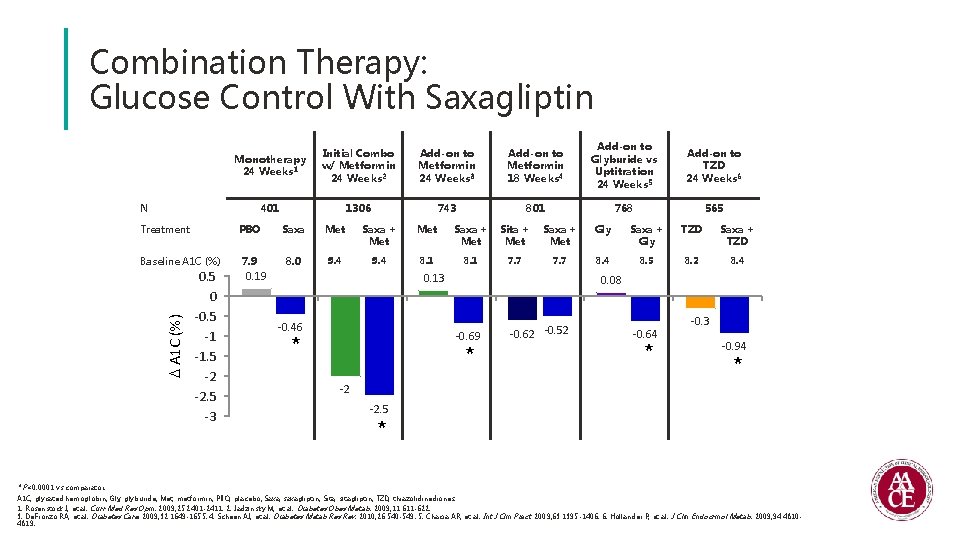
Combination Therapy: Glucose Control With Saxagliptin Monotherapy 24 Weeks 1 Initial Combo w/ Metformin 24 Weeks 2 Add-on to Metformin 24 Weeks 3 Add-on to Metformin 18 Weeks 4 Add-on to Glyburide vs Uptitration 24 Weeks 5 Add-on to TZD 24 Weeks 6 401 1306 743 801 768 565 N Treatment A 1 C (%) Baseline A 1 C (%) 0. 5 0 -0. 5 -1 -1. 5 -2 -2. 5 -3 PBO Saxa Met Saxa + Met Sita + Met Saxa + Met Gly Saxa + Gly TZD Saxa + TZD 7. 9 8. 0 9. 4 8. 1 7. 7 8. 4 8. 5 8. 2 8. 4 0. 19 0. 13 -0. 46 0. 08 -0. 69 * * -0. 62 -0. 52 -0. 64 * -0. 3 -0. 94 * -2 -2. 5 * * P<0. 0001 vs comparator. A 1 C, glycated hemoglobin; Gly, glyburide; Met, metformin; PBO, placebo; Saxa, saxagliptin; Sita, sitagliptin; TZD, thiazolidinediones. 1. Rosenstock J, et al. Curr Med Res Opin. 2009; 25: 2401 -2411. 2. Jadzinsky M, et al. Diabetes Obes Metab. 2009; 11: 611 -622. 3. De. Fronzo RA, et al. Diabetes Care. 2009; 32: 1649 -1655. 4. Scheen AJ, et al. Diabetes Metab Res Rev. 2010; 26: 540 -549. 5. Chacra AR, et al. Int J Clin Pract. 2009; 63: 1395 -1406. 6. Hollander P, et al. J Clin Endocrinol Metab. 2009; 94: 48104819.

Combination Therapy: Glucose Control With Sitagliptin Monotherapy vs Glipizide 52 Weeks 1 Initial Combo w/ Metformin 24 Weeks 2 Add-on to Metformin 24 Weeks 3 Add-on to Insulin 24 Weeks 4 Add-on to Pioglitazone vs Met + Pio 12 Months 5 Add-on to Rosiglitazone + Metformin 54 Weeks 6 N 1172 1091 701 641 151 278 Treatment Glip Sita Met Sita + Met Ins Sita + Ins Baseline A 1 C (%) 7. 5 8. 7 8. 9 8. 8 8. 0 8. 6 8. 7 8. 4 8. 5 -1. 5 -2 Sita + Rosi + Met 8. 7 8. 8 -0. 02 -0. 3 -0. 5 -1 Rosi + Met 0. 0 0 A 1 C (%) Met + Sita + Pio -0. 7 * -1. 13 -0. 6 * -1. 1 -1. 4 -1. 9 * * P<0. 001 vs active comparator monotherapy. † P<0. 001 vs active comparator dual therapy. A 1 C, glycated hemoglobin; Glip, glipizide; Ins, insulin; Met, metformin; Pio, pioglitazone; Rosi, rosiglitazone; Sita, sitagliptin. 1. Nauck MA, et al. Diabetes Obes Metab. 2007; 9: 194 -205. 2. Goldstein BJ, et al. Diabetes Care. 2007; 30: 1979 -1987. 3. Charbonnel B, et al. Diabetes Care. 2006; 29: 2638 -2643. 4. Vilsbøll T, et al. Diabetes Obes Metab. 2010; 12: 167 -177. 5. Derosa G, et al. Metab Clin Exp. 2010; 59: 887 -895. 6. Dobs AS, et al. J Diabetes. 2013; 5: 68 -79. †
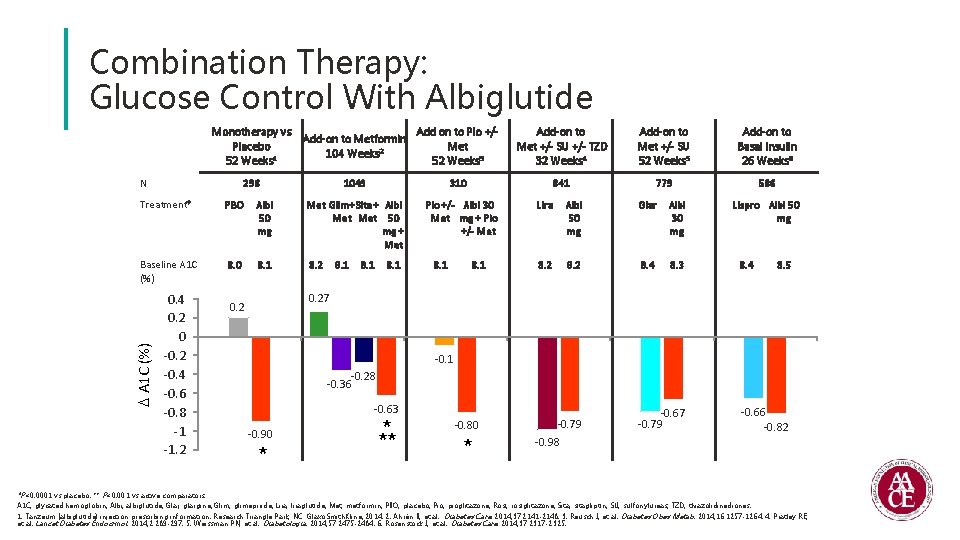
Combination Therapy: Glucose Control With Albiglutide Monotherapy vs Add on to Pio +/Add-on to Metformin Placebo Met 104 Weeks 2 1 52 Weeks 3 N 296 1049 Albi 50 mg Met Glim+ Sita + Albi Met 50 mg + Met Baseline A 1 C (%) 8. 0 8. 1 8. 2 A 1 C (%) PBO 0. 4 0. 2 0 -0. 2 -0. 4 -0. 6 -0. 8 -1 -1. 2 Add-on to Met +/- SU 52 Weeks 5 Add-on to Basal Insulin 26 Weeks 6 841 779 586 310 Treatment† 8. 1 Add-on to Met +/- SU +/- TZD 32 Weeks 4 8. 1 Pio +/- Albi 30 Met mg + Pio +/- Met 8. 1 Lira Albi 50 mg Glar Albi 30 mg 8. 2 8. 4 8. 3 Lispro Albi 50 mg 8. 4 8. 5 0. 27 0. 2 -0. 1 -0. 28 -0. 36 -0. 63 -0. 90 * * ** -0. 80 * -0. 79 -0. 98 -0. 67 -0. 79 -0. 66 -0. 82 *P<0. 0001 vs placebo. ** P<0. 001 vs active comparators. A 1 C, glycated hemoglobin; Albi, albiglutide; Glar, glargine; Glim, glimepiride; Lira, liraglutide; Met, metformin; PBO, placebo; Pio, pioglitazone; Rosi, rosiglitazone; Sita, sitagliptin; SU, sulfonylureas; TZD, thiazolidinediones. 1. Tanzeum (albiglutide) injection prescribing information. Research Triangle Park, NC: Glaxo. Smith. Kline; 2014. 2. Ahrén B, et al. Diabetes Care. 2014; 37: 2141 -2148. 3. Reusch J, et al. Diabetes Obes Metab. 2014; 16: 1257 -1264. 4. Pratley RE, et al. Lancet Diabetes Endocrinol. 2014; 2: 289 -297. 5. Weissman PN, et al. Diabetologia. 2014; 57: 2475 -2484. 6. Rosenstock J, et al. Diabetes Care. 2014; 37: 2317 -2325.
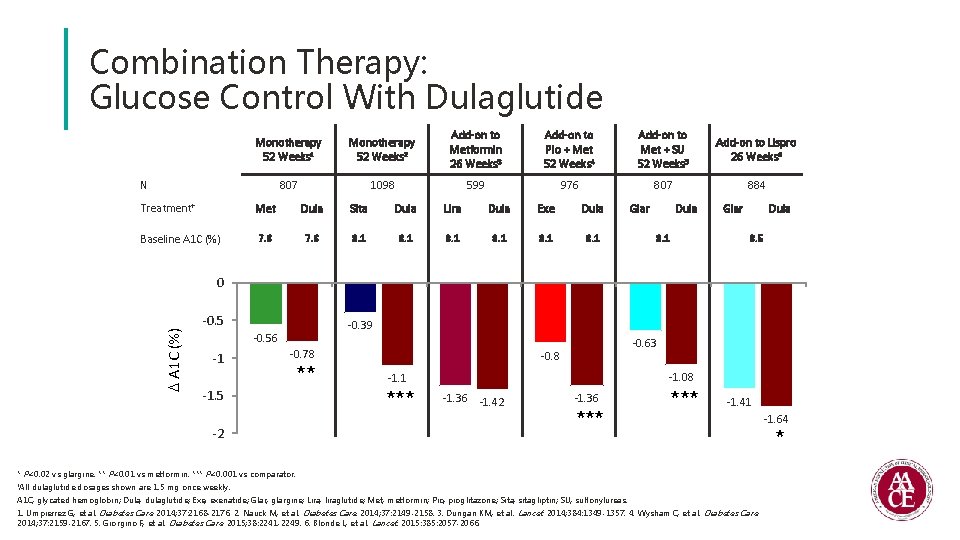
Combination Therapy: Glucose Control With Dulaglutide Monotherapy 52 Weeks 1 Monotherapy 52 Weeks 2 Add-on to Metformin 26 Weeks 3 Add-on to Pio + Met 52 Weeks 4 Add-on to Met + SU 52 Weeks 5 Add-on to Lispro 26 Weeks 6 807 1098 599 976 807 884 N Treatment† Met Dula Sita Dula Lira Dula Exe Dula Baseline A 1 C (%) 7. 6 8. 1 8. 1 Glar Dula 8. 5 A 1 C (%) 0 -0. 5 -0. 39 -0. 56 -1 -0. 78 -1. 5 -2 ** -0. 63 -0. 8 -1. 08 -1. 1 *** -1. 36 -1. 42 -1. 36 *** -1. 41 * P<0. 02 vs glargine. ** P<0. 01 vs metformin. *** P<0. 001 vs comparator. †All dulaglutide dosages shown are 1. 5 mg once weekly. A 1 C, glycated hemoglobin; Dula, dulaglutide; Exe, exenatide; Glar, glargine; Lira, liraglutide; Met, metformin; Pio, pioglitazone; Sita, sitagliptin; SU, sulfonylureas. 1. Umpierrez G, et al. Diabetes Care. 2014; 37: 2168 -2176. 2. Nauck M, et al. Diabetes Care. 2014; 37: 2149 -2158. 3. Dungan KM, et al. Lancet. 2014; 384: 1349 -1357. 4. Wysham C, et al. Diabetes Care. 2014; 37: 2159 -2167. 5. Giorgino F, et al. Diabetes Care. 2015; 38: 2241 -2249. 6. Blonde L, et al. Lancet. 2015: 385: 2057 -2066. -1. 64 *
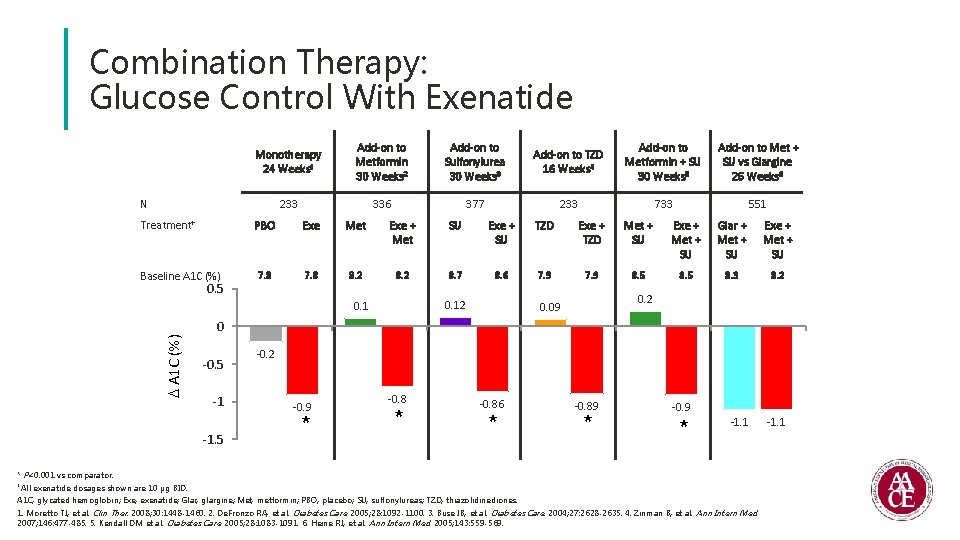
Combination Therapy: Glucose Control With Exenatide Monotherapy 24 Weeks 1 Add-on to Metformin 30 Weeks 2 Add-on to Sulfonylurea 30 Weeks 3 Add-on to TZD 16 Weeks 4 Add-on to Metformin + SU 30 Weeks 5 Add-on to Met + SU vs Glargine 26 Weeks 6 233 336 377 233 733 551 N Treatment† PBO Exe Met Exe + Met SU Exe + SU TZD Exe + TZD Met + SU Exe + Met + SU Glar + Met + SU Exe + Met + SU Baseline A 1 C (%) 7. 8 8. 2 8. 7 8. 6 7. 9 8. 5 8. 3 8. 2 0. 5 0. 12 A 1 C (%) 0. 1 0. 2 0. 09 0 -0. 5 -1 -1. 5 -0. 2 -0. 9 * -0. 86 * -0. 89 * -0. 9 * -1. 1 * P<0. 001 vs comparator. † All exenatide dosages shown are 10 μg BID. A 1 C, glycated hemoglobin; Exe, exenatide; Glar, glargine; Met, metformin; PBO, placebo; SU, sulfonylureas; TZD, thiazolidinediones. 1. Moretto TJ, et al. Clin Ther. 2008; 30: 1448 -1460. 2. De. Fronzo RA, et al. Diabetes Care. 2005; 28: 1092 -1100. 3. Buse JB, et al. Diabetes Care. 2004; 27: 2628 -2635. 4. Zinman B, et al. Ann Intern Med. 2007; 146: 477 -485. 5. Kendall DM et al. Diabetes Care. 2005; 28: 1083 -1091. 6. Heine RJ, et al. Ann Intern Med. 2005; 143: 559 -569. -1. 1
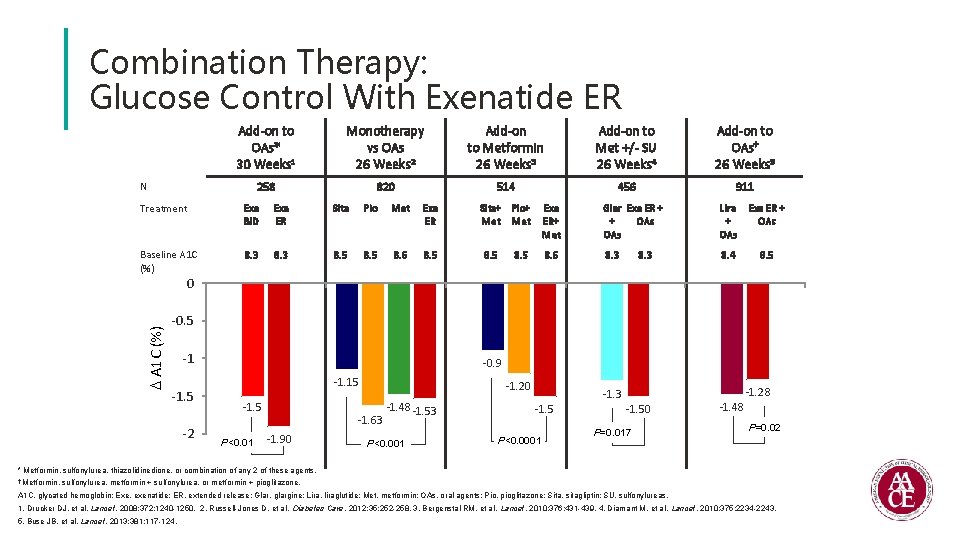
Combination Therapy: Glucose Control With Exenatide ER Add-on to OAs* 30 Weeks 1 Monotherapy vs OAs 26 Weeks 2 Add-on to Metformin 26 Weeks 3 Add-on to Met +/- SU 26 Weeks 4 Add-on to OAs† 26 Weeks 5 258 820 514 456 911 N Treatment Exe BID Exe ER Sita Pio Met Exe ER Baseline A 1 C (%) 8. 3 8. 5 8. 6 8. 5 Sita+ Pio+ Met 8. 5 Exe ER+ Met Glar Exe ER + + OAs Lira + OAs Exe ER + OAs 8. 6 8. 3 8. 4 8. 5 8. 3 A 1 C (%) 0 -0. 5 -1 -1. 5 -2 -0. 9 -1. 15 -1. 5 P<0. 01 -1. 20 -1. 63 -1. 90 -1. 48 -1. 53 P<0. 001 -1. 28 -1. 3 -1. 5 P<0. 0001 -1. 50 P=0. 017 -1. 48 P=0. 02 * Metformin, sulfonylurea, thiazolidinedione, or combination of any 2 of these agents. † Metformin, sulfonylurea, metformin + sulfonylurea, or metformin + pioglitazone. A 1 C, glycated hemoglobin; Exe, exenatide; ER, extended release; Glar, glargine; Lira, liraglutide; Met, metformin; OAs, oral agents; Pio, pioglitazone; Sita, sitagliptin; SU, sulfonylureas. 1. Drucker DJ, et al. Lancet. 2008; 372: 1240 -1250. 2. Russell-Jones D, et al. Diabetes Care. 2012; 35: 252 -258. 3. Bergenstal RM, et al. Lancet. 2010; 376: 431 -439. 4. Diamant M, et al. Lancet. 2010; 375: 2234 -2243. 5. Buse JB, et al. Lancet. 2013; 381: 117 -124.
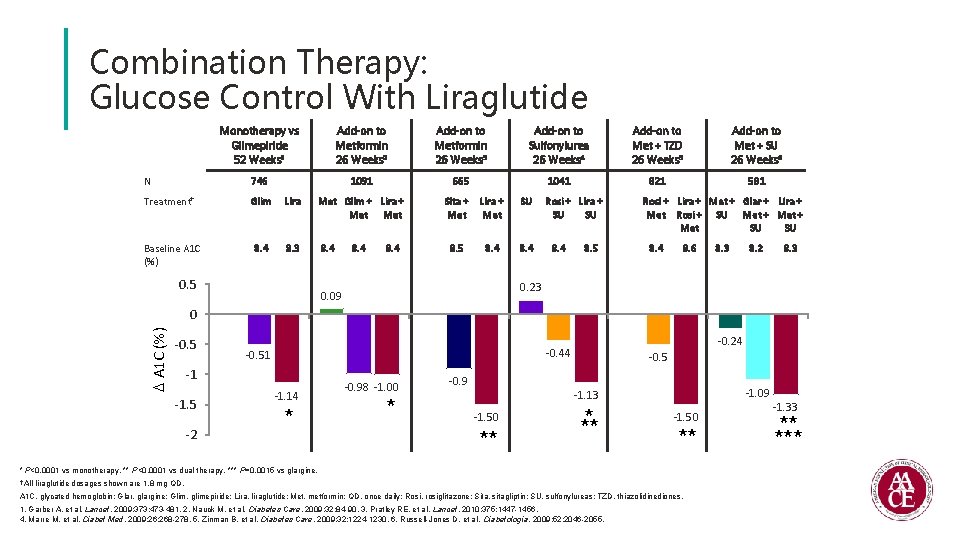
Combination Therapy: Glucose Control With Liraglutide Monotherapy vs Glimepiride 52 Weeks 1 Add-on to Metformin 26 Weeks 2 Add-on to Metformin 26 Weeks 3 Add-on to Sulfonylurea 26 Weeks 4 Add-on to Met + TZD 26 Weeks 5 Add-on to Met + SU 26 Weeks 6 N 746 1091 665 1041 821 581 Treatment† Glim Lira Met Glim + Lira + Met Baseline A 1 C (%) 8. 4 8. 3 8. 4 0. 5 8. 4 Sita + Met Lira + Met SU 8. 5 8. 4 Rosi + Lira + SU SU 8. 4 8. 5 Rosi + Lira + Met + Glar + Lira + Met Rosi + SU Met + Met SU SU 8. 4 8. 6 8. 3 8. 2 8. 3 0. 23 0. 09 A 1 C (%) 0 -0. 5 -1 -1. 5 -2 -0. 24 -0. 44 -0. 51 -1. 14 * -0. 98 -1. 00 * -0. 9 -0. 5 -1. 09 -1. 13 -1. 50 ** * ** -1. 50 ** * P<0. 0001 vs monotherapy. ** P<0. 0001 vs dual therapy. *** P=0. 0015 vs glargine. † All liraglutide dosages shown are 1. 8 mg QD. A 1 C, glycated hemoglobin; Glar, glargine; Glim, glimepiride; Lira, liraglutide; Met, metformin; QD, once daily; Rosi, rosiglitazone; Sita, sitagliptin; SU, sulfonylureas; TZD, thiazolidinediones. 1. Garber A, et al. Lancet. 2009; 373: 473 -481. 2. Nauck M, et al. Diabetes Care. 2009; 32: 84 -90. 3. Pratley RE, et al. Lancet. 2010; 375: 1447 -1456. 4. Marre M, et al. Diabet Med. 2009; 26: 268 -278. 5. Zinman B, et al. Diabetes Care. 2009; 32: 1224 -1230. 6. Russell-Jones D, et al. Diabetologia. 2009; 52: 2046 -2055. -1. 33 ** ***
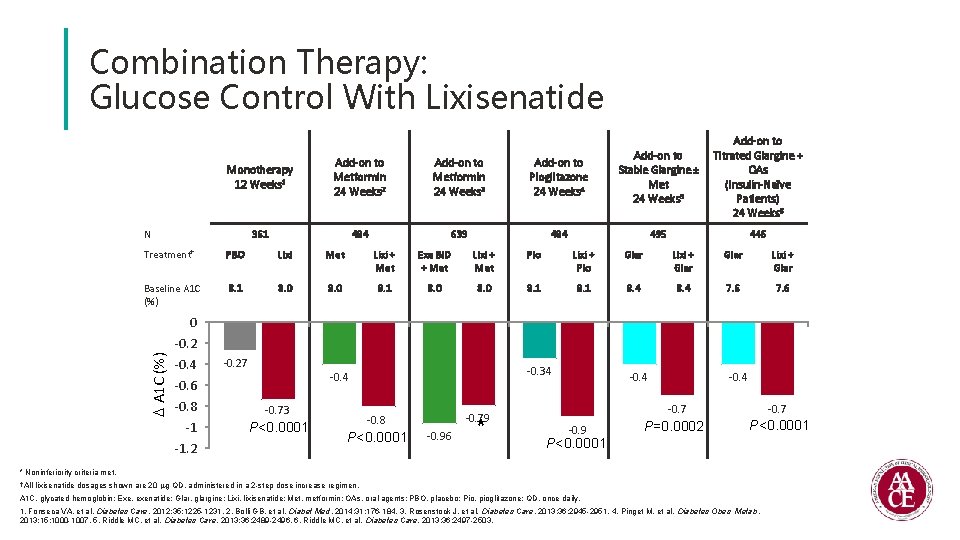
Combination Therapy: Glucose Control With Lixisenatide Monotherapy 12 Weeks 1 Add-on to Metformin 24 Weeks 2 Add-on to Metformin 24 Weeks 3 Add-on to Pioglitazone 24 Weeks 4 Add-on to Stable Glargine ± Met 24 Weeks 5 361 484 639 484 495 N Add-on to Titrated Glargine + OAs (Insulin-Naïve Patients) 24 Weeks 6 446 Treatment† PBO Lixi Met Lixi + Met Exe BID + Met Lixi + Met Pio Lixi + Pio Glar Lixi + Glar Baseline A 1 C (%) 8. 1 8. 0 8. 1 8. 4 7. 6 0 A 1 C (%) -0. 2 -0. 4 -0. 27 -0. 6 -0. 8 -1 -1. 2 -0. 34 -0. 73 P<0. 0001 -0. 79 -0. 8 P<0. 0001 -0. 96 * -0. 4 -0. 7 -0. 9 P=0. 0002 -0. 7 P<0. 0001 * Noninferiority criteria met. † All lixisenatide dosages shown are 20 g QD, administered in a 2 -step dose increase regimen. A 1 C, glycated hemoglobin; Exe, exenatide; Glar, glargine; Lixi, lixisenatide; Met, metformin; OAs, oral agents; PBO, placebo; Pio, pioglitazone; QD, once daily. 1. Fonseca VA, et al. Diabetes Care. 2012; 35: 1225 -1231. 2. Bolli GB, et al. Diabet Med. 2014; 31: 176 -184. 3. Rosenstock J, et al. Diabetes Care. 2013; 36: 2945 -2951. 4. Pinget M, et al. Diabetes Obes Metab. 2013; 15: 1000 -1007. 5. Riddle MC, et al. Diabetes Care. 2013; 36: 2489 -2496. 6. Riddle MC, et al. Diabetes Care. 2013; 36: 2497 -2503.
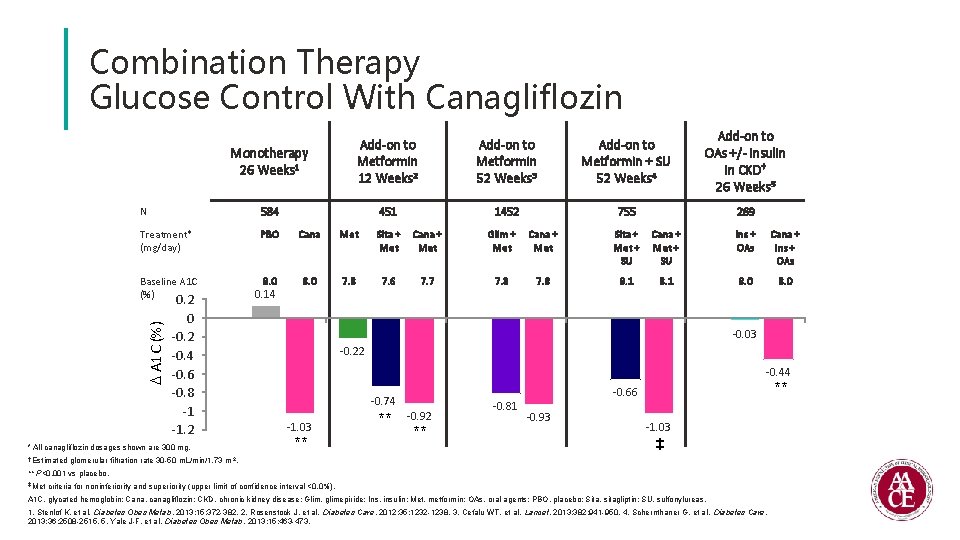
Combination Therapy Glucose Control With Canagliflozin Monotherapy 26 Weeks 1 Add-on to Metformin 12 Weeks 2 Add-on to Metformin 52 Weeks 3 Add-on to Metformin + SU 52 Weeks 4 Add-on to OAs +/- Insulin in CKD† 26 Weeks 5 N 584 451 1452 755 269 Treatment* (mg/day) PBO Cana Met Sita + Met Cana + Met Glim + Met Cana + Met Sita + Met + SU Cana + Met + SU Ins + OAs Cana + Ins + OAs 8. 0 7. 8 7. 6 7. 7 7. 8 8. 1 8. 0 A 1 C (%) Baseline A 1 C (%) 0. 2 0 -0. 2 -0. 4 -0. 6 -0. 8 -1 -1. 2 * All canagliflozin dosages shown are 300 mg. † Estimated 0. 14 -0. 03 -0. 22 -0. 44 -0. 74 -1. 03 ** ** -0. 92 ** -0. 81 ** -0. 66 -0. 93 -1. 03 ‡ glomerular filtration rate 30 -50 m. L/min/1. 73 m 2. ** P<0. 001 vs placebo. ‡ Met criteria for noninferiority and superiority (upper limit of confidence interval <0. 0%). A 1 C, glycated hemoglobin; Cana, canagliflozin; CKD, chronic kidney disease; Glim, glimepiride; Ins, insulin; Met, metformin; OAs, oral agents; PBO, placebo; Sita, sitagliptin; SU, sulfonylureas. 1. Stenlof K, et al. Diabetes Obes Metab. 2013; 15: 372 -382. 2. Rosenstock J, et al. Diabetes Care. 2012; 35: 1232 -1238. 3. Cefalu WT, et al. Lancet. 2013; 382: 941 -950. 4. Schernthaner G, et al. Diabetes Care. 2013; 36: 2508 -2515. 5. Yale J-F, et al. Diabetes Obes Metab. 2013; 15: 463 -473.
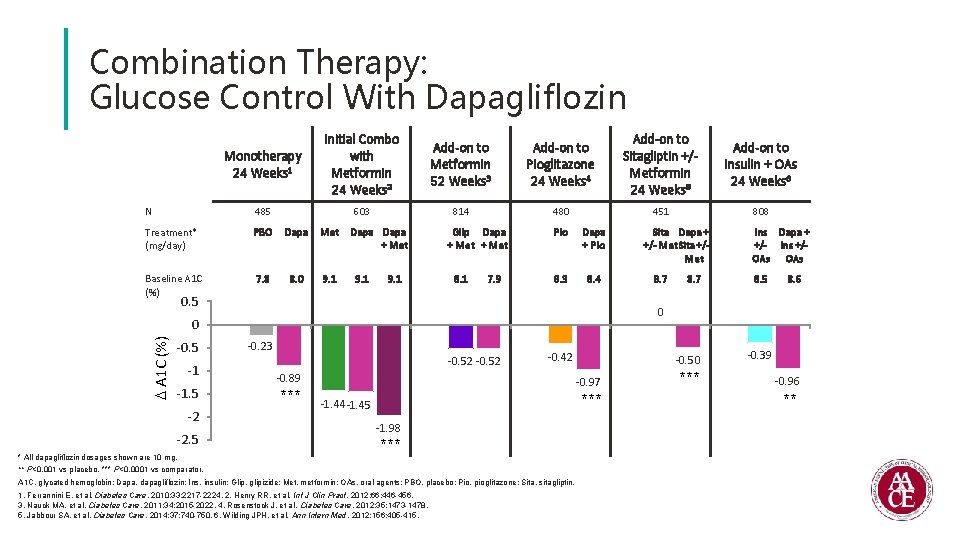
Combination Therapy: Glucose Control With Dapagliflozin Monotherapy 24 Weeks 1 Initial Combo with Metformin 24 Weeks 2 Add-on to Metformin 52 Weeks 3 Add-on to Pioglitazone 24 Weeks 4 Add-on to Sitagliptin +/Metformin 24 Weeks 5 Add-on to insulin + OAs 24 Weeks 6 N 485 603 814 480 451 808 Treatment* (mg/day) PBO Dapa Met Baseline A 1 C (%) 7. 8 8. 0 9. 1 Dapa + Met 9. 1 Glip Dapa + Met 8. 1 7. 9 Pio Dapa + Pio 8. 3 8. 4 0. 5 A 1 C (%) -1 -1. 5 -2 -2. 5 * All dapagliflozin dosages shown are 10 mg. 8. 7 Ins Dapa + +/- Ins +/OAs 8. 5 8. 6 0 0 -0. 5 Sita Dapa + +/- Met Sita +/Met -0. 23 -0. 52 -0. 42 -0. 89 *** -0. 50 -0. 97 *** -1. 44 -1. 45 -1. 98 *** ** P<0. 001 vs placebo. *** P<0. 0001 vs comparator. A 1 C, glycated hemoglobin; Dapa, dapagliflozin; Ins, insulin; Glip, glipizide; Met, metformin; OAs, oral agents; PBO, placebo; Pio, pioglitazone; Sita, sitagliptin. 1. Ferrannini E, et al. Diabetes Care. 2010; 33: 2217 -2224. 2. Henry RR, et al. Int J Clin Pract. 2012; 66: 446 -456. 3. Nauck MA, et al. Diabetes Care. 2011; 34: 2015 -2022. 4. Rosenstock J, et al. Diabetes Care. 2012; 35: 1473 -1478. 5. Jabbour SA, et al. Diabetes Care. 2014; 37: 740 -750. 6. Wilding JPH, et al. Ann Intern Med. 2012; 156: 405 -415. *** -0. 39 -0. 96 **
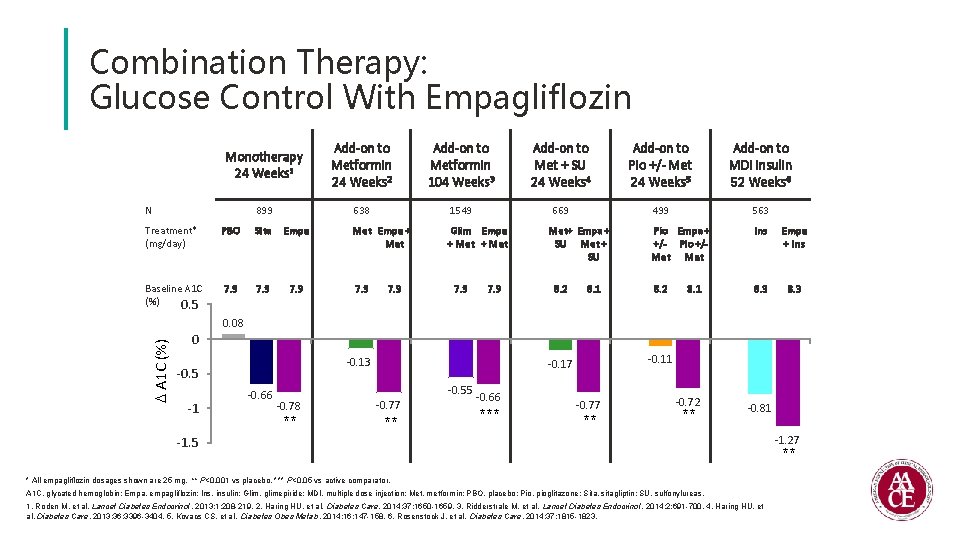
Combination Therapy: Glucose Control With Empagliflozin Monotherapy 24 Weeks 1 Add-on to Metformin 24 Weeks 2 Add-on to Metformin 104 Weeks 3 Add-on to Met + SU 24 Weeks 4 Add-on to Pio +/- Met 24 Weeks 5 Add-on to MDI insulin 52 Weeks 6 899 638 1549 669 499 563 Met Empa + Met Glim Empa + Met Pio Empa + +/- Pio +/Met Ins Empa + Ins 8. 2 8. 3 N Treatment* (mg/day) PBO Sita Empa Baseline A 1 C (%) 0. 5 7. 9 7. 9 Met+ Empa + SU Met + SU 8. 2 8. 1 A 1 C (%) 0. 08 0 -0. 13 -0. 5 -1 -0. 66 -0. 55 -0. 78 ** -0. 11 -0. 17 -0. 77 ** -0. 66 *** -0. 77 ** -0. 72 ** -0. 81 -1. 5 * All empagliflozin dosages shown are 25 mg. ** P<0. 001 vs placebo. *** P<0. 05 vs active comparator. A 1 C, glycated hemoglobin; Empa, empagliflozin; Ins, insulin; Glim, glimepiride; MDI, multiple dose injection; Met, metformin; PBO, placebo; Pio, pioglitazone; Sita, sitagliptin; SU, sulfonylureas. 1. Roden M, et al. Lancet Diabetes Endocrinol. 2013; 1: 208 -219. 2. Haring HU, et al. Diabetes Care. 2014; 37: 1650 -1659. 3. Ridderstrale M, et al. Lancet Diabetes Endocrinol. 2014; 2: 691 -700. 4. Haring HU, et al. Diabetes Care. 2013; 36: 3396 -3404. 5. Kovacs CS, et al. Diabetes Obes Metab. 2014; 16: 147 -158. 6. Rosenstock J, et al. Diabetes Care. 2014; 37: 1815 -1823. -1. 27 **
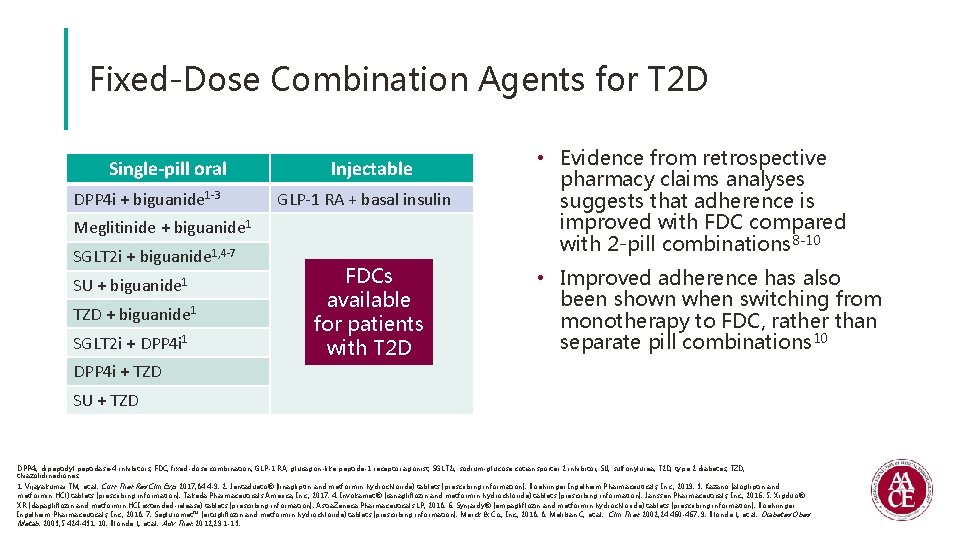
Fixed-Dose Combination Agents for T 2 D Single-pill oral DPP 4 i + biguanide 1 -3 Injectable GLP-1 RA + basal insulin Meglitinide + biguanide 1 SGLT 2 i + biguanide 1, 4 -7 SU + biguanide 1 TZD + biguanide 1 SGLT 2 i + DPP 4 i 1 FDCs available for patients with T 2 D • Evidence from retrospective pharmacy claims analyses suggests that adherence is improved with FDC compared with 2 -pill combinations 8 -10 • Improved adherence has also been shown when switching from monotherapy to FDC, rather than separate pill combinations 10 DPP 4 i + TZD SU + TZD DPP 4 i, dipeptidyl peptidase-4 inhibitors; FDC, fixed-dose combination; GLP-1 RA, glucagon-like peptide-1 receptor agonist; SGLT 2 i, sodium-glucose cotransporter 2 inhibitor; SU, sulfonylurea; T 2 D, type 2 diabetes; TZD, thiazolidinediones. 1. Vijayakumar TM, et al. Curr Ther Res Clin Exp. 2017; 84: 4 -9. 2. Jentadueto® (linagliptin and metformin hydrochloride) tablets [prescribing information]. Boehringer Ingelheim Pharmaceuticals, Inc. ; 2019. 3. Kazano (alogliptin and metformin HCl) tablets [prescribing information]. Takeda Pharmaceuticals America, Inc. ; 2017. 4. Invokamet® (canagliflozin and metformin hydrochloride) tablets [prescribing information]. Janssen Pharmaceuticals, Inc. ; 2016. 5. Xigduo® XR (dapagliflozin and metformin HCI extended-release) tablets [prescribing information]. Astra. Zeneca Pharmaceuticals LP; 2018. 6. Synjardy® (empagliflozin and metformin hydrochloride) tablets [prescribing information]. Boehringer Ingelheim Pharmaceuticals, Inc. ; 2018. 7. Segluromet™ (ertugliflozin and metformin hydrochloride) tablets [prescribing information]. Merck & Co. , Inc. ; 2018. 8. Melikian C, et al. Clin Ther. 2002; 24: 460 -467. 9. Blonde L, et al. Diabetes Obes Metab. 2003; 5: 424 -431. 10. Blonde L, et al. Adv Ther. 2012; 29: 1 -13.
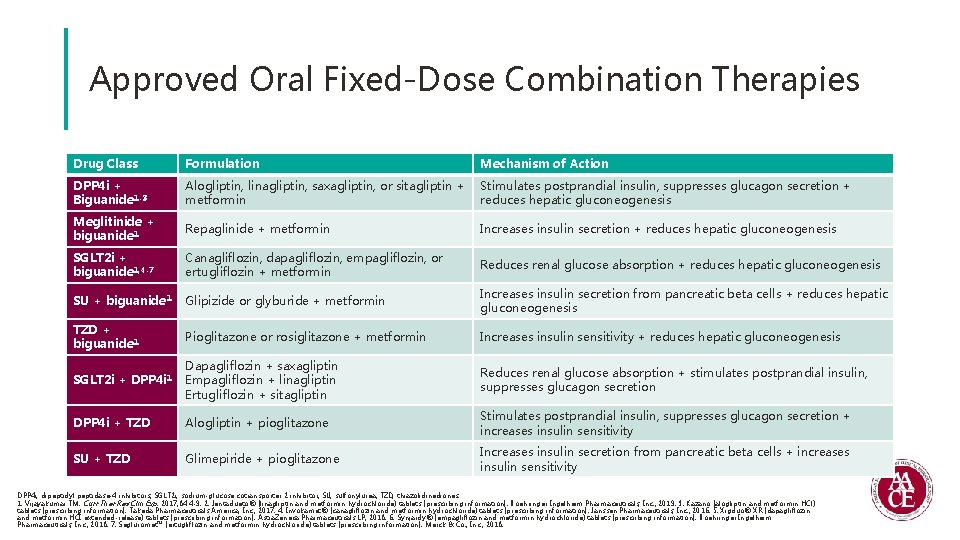
Approved Oral Fixed-Dose Combination Therapies Drug Class Formulation Mechanism of Action DPP 4 i + Biguanide 1 -3 Alogliptin, linagliptin, saxagliptin, or sitagliptin + Stimulates postprandial insulin, suppresses glucagon secretion + metformin reduces hepatic gluconeogenesis Meglitinide + biguanide 1 Repaglinide + metformin Increases insulin secretion + reduces hepatic gluconeogenesis SGLT 2 i + biguanide 1, 4 -7 Canagliflozin, dapagliflozin, empagliflozin, or ertugliflozin + metformin Reduces renal glucose absorption + reduces hepatic gluconeogenesis SU + biguanide 1 Glipizide or glyburide + metformin Increases insulin secretion from pancreatic beta cells + reduces hepatic gluconeogenesis TZD + biguanide 1 Pioglitazone or rosiglitazone + metformin Increases insulin sensitivity + reduces hepatic gluconeogenesis SGLT 2 i + DPP 4 i 1 Dapagliflozin + saxagliptin Empagliflozin + linagliptin Ertugliflozin + sitagliptin Reduces renal glucose absorption + stimulates postprandial insulin, suppresses glucagon secretion DPP 4 i + TZD Alogliptin + pioglitazone Stimulates postprandial insulin, suppresses glucagon secretion + increases insulin sensitivity SU + TZD Glimepiride + pioglitazone Increases insulin secretion from pancreatic beta cells + increases insulin sensitivity DPP 4 i, dipeptidyl peptidase-4 inhibitors; SGLT 2 i, sodium-glucose cotransporter 2 inhibitor; SU, sulfonylurea; TZD, thiazolidinediones. 1. Vijayakumar TM. Curr Ther Res Clin Exp. 2017; 84: 4 -9. 2. Jentadueto® (linagliptin and metformin hydrochloride) tablets [prescribing information]. Boehringer Ingelheim Pharmaceuticals, Inc. ; 2019. 3. Kazano (alogliptin and metformin HCl) tablets [prescribing information]. Takeda Pharmaceuticals America, Inc. ; 2017. 4. Invokamet® (canagliflozin and metformin hydrochloride) tablets [prescribing information]. Janssen Pharmaceuticals, Inc. ; 2016. 5. Xigduo® XR (dapagliflozin and metformin HCI extended-release) tablets [prescribing information]. Astra. Zeneca Pharmaceuticals LP; 2018. 6. Synjardy® (empagliflozin and metformin hydrochloride) tablets [prescribing information]. Boehringer Ingelheim Pharmaceuticals, Inc. ; 2018. 7. Segluromet™ (ertugliflozin and metformin hydrochloride) tablets [prescribing information]. Merck & Co. , Inc. ; 2018.
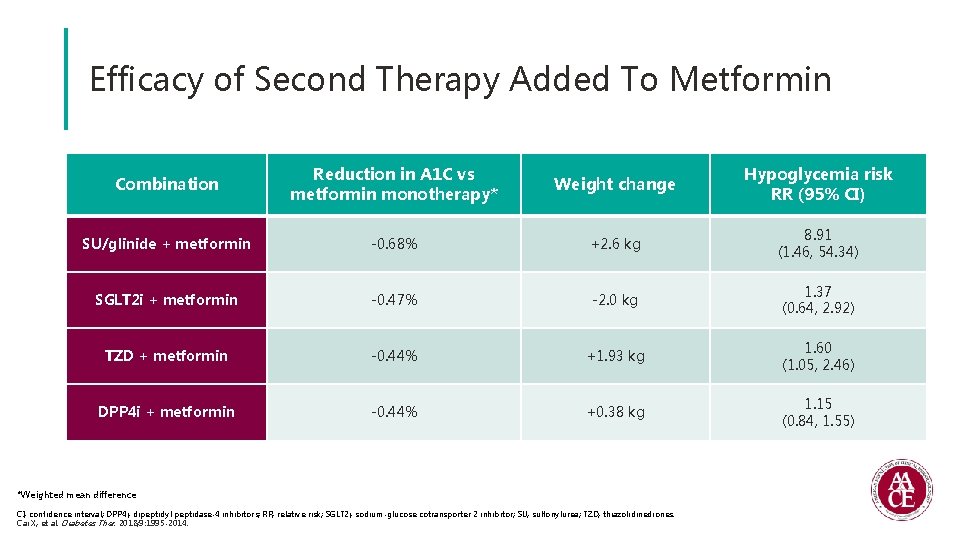
Efficacy of Second Therapy Added To Metformin Combination Reduction in A 1 C vs metformin monotherapy* Weight change Hypoglycemia risk RR (95% CI) SU/glinide + metformin -0. 68% +2. 6 kg 8. 91 (1. 46, 54. 34) SGLT 2 i + metformin -0. 47% -2. 0 kg 1. 37 (0. 64, 2. 92) TZD + metformin -0. 44% +1. 93 kg 1. 60 (1. 05, 2. 46) DPP 4 i + metformin -0. 44% +0. 38 kg 1. 15 (0. 84, 1. 55) *Weighted mean difference CI, confidence interval; DPP 4 i, dipeptidyl peptidase-4 inhibitors; RR, relative risk; SGLT 2 i, sodium-glucose cotransporter 2 inhibitor; SU, sulfonylurea; TZD, thiazolidinediones. Cai X, et al. Diabetes Ther. 2018; 9: 1995 -2014.
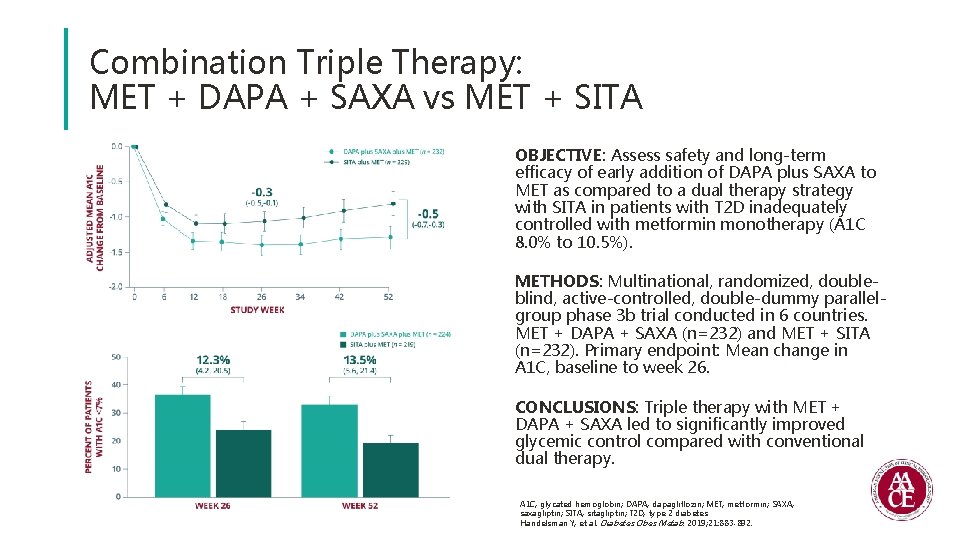
Combination Triple Therapy: MET + DAPA + SAXA vs MET + SITA OBJECTIVE: Assess safety and long-term efficacy of early addition of DAPA plus SAXA to MET as compared to a dual therapy strategy with SITA in patients with T 2 D inadequately controlled with metformin monotherapy (A 1 C 8. 0% to 10. 5%). METHODS: Multinational, randomized, doubleblind, active-controlled, double-dummy parallelgroup phase 3 b trial conducted in 6 countries. MET + DAPA + SAXA (n=232) and MET + SITA (n=232). Primary endpoint: Mean change in A 1 C, baseline to week 26. CONCLUSIONS: Triple therapy with MET + DAPA + SAXA led to significantly improved glycemic control compared with conventional dual therapy. A 1 C, glycated hemoglobin; DAPA, dapagliflozin; MET, metformin; SAXA, saxagliptin; SITA, sitagliptin; T 2 D, type 2 diabetes. Handelsman Y, et al. Diabetes Obes Metab. 2019; 21: 883 -892.
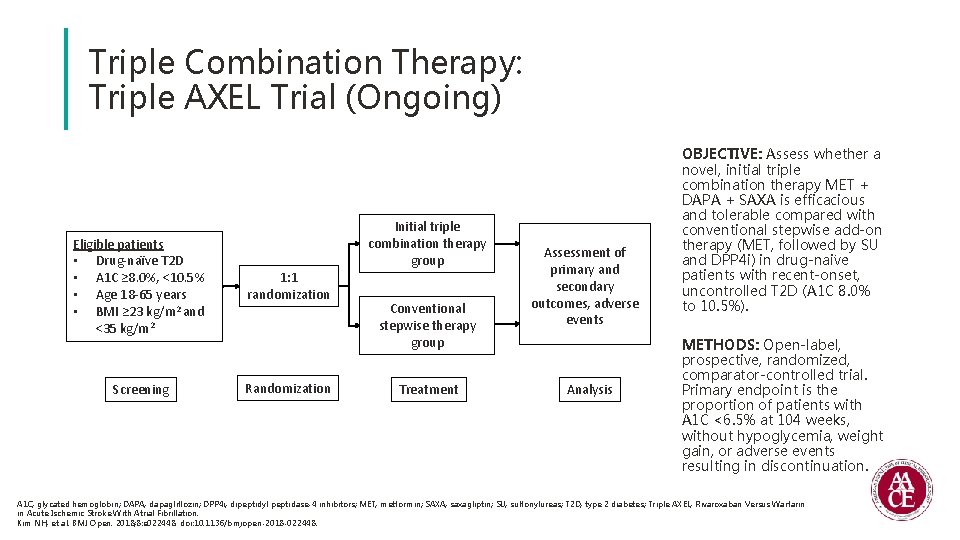
Triple Combination Therapy: Triple AXEL Trial (Ongoing) Initial triple combination therapy group Eligible patients • Drug-naïve T 2 D • A 1 C ≥ 8. 0%, <10. 5% • Age 18 -65 years • BMI ≥ 23 kg/m 2 and <35 kg/m 2 1: 1 randomization Screening Randomization Conventional stepwise therapy group Treatment Assessment of primary and secondary outcomes, adverse events Analysis OBJECTIVE: Assess whether a novel, initial triple combination therapy MET + DAPA + SAXA is efficacious and tolerable compared with conventional stepwise add-on therapy (MET, followed by SU and DPP 4 i) in drug-nai ve patients with recent-onset, uncontrolled T 2 D (A 1 C 8. 0% to 10. 5%). METHODS: Open-label, prospective, randomized, comparator-controlled trial. Primary endpoint is the proportion of patients with A 1 C <6. 5% at 104 weeks, without hypoglycemia, weight gain, or adverse events resulting in discontinuation. A 1 C, glycated hemoglobin; DAPA, dapagliflozin; DPP 4 i, dipeptidyl peptidase-4 inhibitors; MET, metformin; SAXA, saxagliptin; SU, sulfonylureas; T 2 D, type 2 diabetes; Triple AXEL, Rivaroxaban Versus Warfarin in Acute Ischemic Stroke With Atrial Fibrillation. Kim NH, et al. BMJ Open. 2018; 8: e 022448. doi: 10. 1136/bmjopen-2018 -022448.
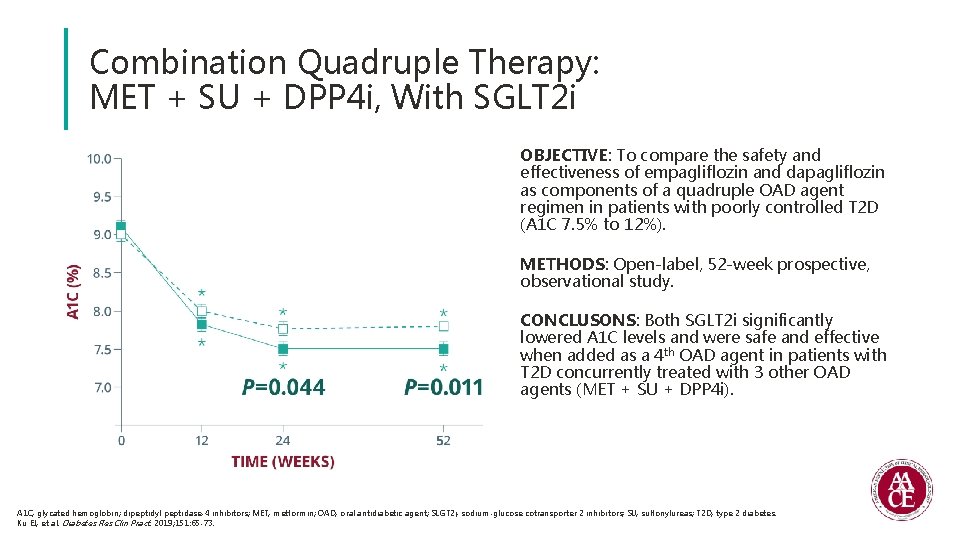
Combination Quadruple Therapy: MET + SU + DPP 4 i, With SGLT 2 i OBJECTIVE: To compare the safety and effectiveness of empagliflozin and dapagliflozin as components of a quadruple OAD agent regimen in patients with poorly controlled T 2 D (A 1 C 7. 5% to 12%). METHODS: Open-label, 52 -week prospective, observational study. CONCLUSONS: Both SGLT 2 i significantly lowered A 1 C levels and were safe and effective when added as a 4 th OAD agent in patients with T 2 D concurrently treated with 3 other OAD agents (MET + SU + DPP 4 i). A 1 C, glycated hemoglobin; dipeptidyl peptidase-4 inhibitors; MET, metformin; OAD, oral antidiabetic agent; SLGT 2 i, sodium-glucose cotransporter 2 inhibitors; SU, sulfonylureas; T 2 D, type 2 diabetes. Ku EJ, et al. Diabetes Res Clin Pract. 2019; 151: 65 -73.
Injectable Combination Therapies
Considerations for Adding Insulin Therapy • Basal insulin, the most convenient first-line insulin regimen, can be used in combination with metformin and other anti-hyperglycemic agents 1, 2 • Basal insulin’s primary action is to prevent the liver from producing glucose, thus ensuring normal glucose levels overnight and between meals 1 • Patients on basal insulin who do not achieve A 1 C target levels should be considered for combination injectable therapy 1, 2 A 1 C, glycated hemoglobin. 1. American Diabetes Association. Diabetes Care. 2019; 42: S 61 -S 70. 2. Garber AJ, et al. Endocr Pract. 2019; 25: 69 -90.
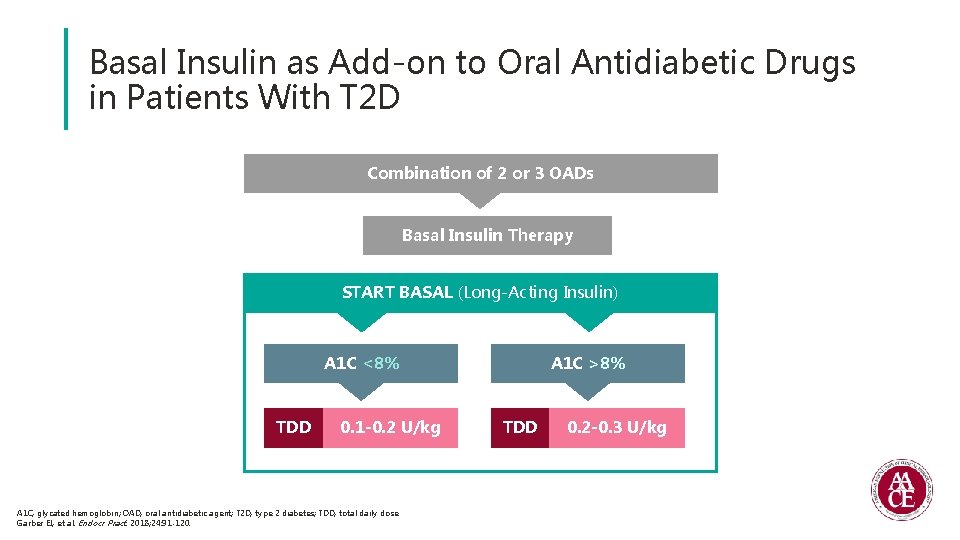
Basal Insulin as Add-on to Oral Antidiabetic Drugs in Patients With T 2 D Combination of 2 or 3 OADs Basal Insulin Therapy START BASAL (Long-Acting Insulin) A 1 C <8% TDD 0. 1 -0. 2 U/kg A 1 C, glycated hemoglobin; OAD, oral antidiabetic agent; T 2 D, type 2 diabetes; TDD, total daily dose. Garber EJ, et al. Endocr Pract. 2018; 24: 91 -120. A 1 C >8% TDD 0. 2 -0. 3 U/kg
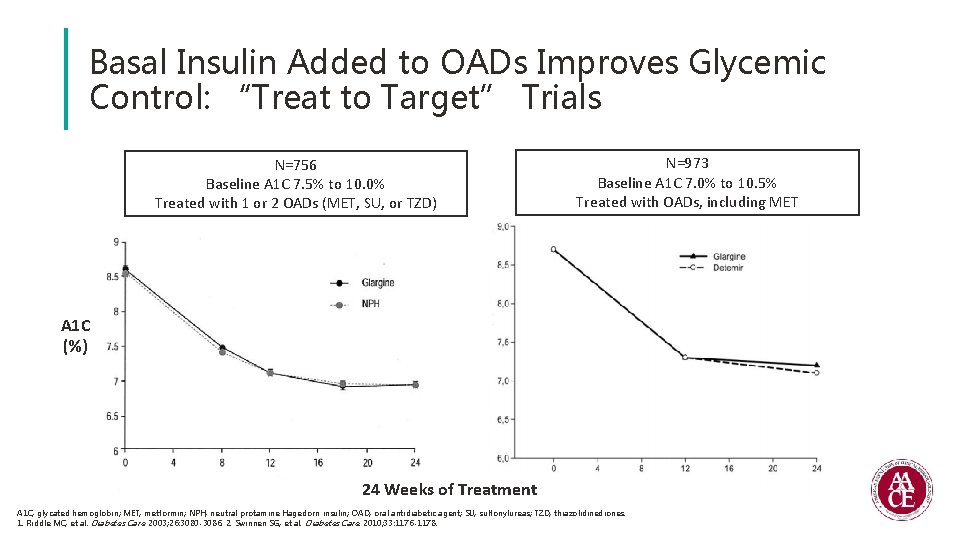
Basal Insulin Added to OADs Improves Glycemic Control: “Treat to Target” Trials N=756 Baseline A 1 C 7. 5% to 10. 0% Treated with 1 or 2 OADs (MET, SU, or TZD) N=973 Baseline A 1 C 7. 0% to 10. 5% Treated with OADs, including MET A 1 C (%) 24 Weeks of Treatment A 1 C, glycated hemoglobin; MET, metformin; NPH, neutral protamine Hagedorn insulin; OAD, oral antidiabetic agent; SU, sulfonylureas; TZD, thiazolidinediones. 1. Riddle MC, et al. Diabetes Care. 2003; 26: 3080 -3086. 2. Swinnen SG, et al. Diabetes Care. 2010; 33: 1176 -1178.
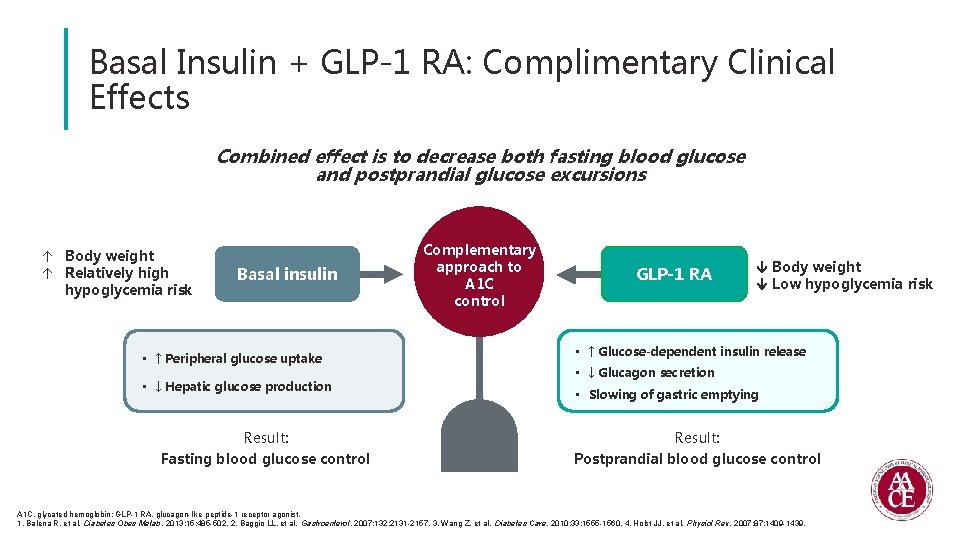
Basal Insulin + GLP-1 RA: Complimentary Clinical Effects Combined effect is to decrease both fasting blood glucose and postprandial glucose excursions á Body weight á Relatively high hypoglycemia risk Basal insulin • ↑ Peripheral glucose uptake • ↓ Hepatic glucose production Complementary approach to A 1 C control GLP-1 RA Body weight Low hypoglycemia risk • ↑ Glucose-dependent insulin release • ↓ Glucagon secretion • Slowing of gastric emptying Result: Fasting blood glucose control Postprandial blood glucose control A 1 C, glycated hemoglobin; GLP-1 RA, glucagon-like peptide-1 receptor agonist. 1. Balena R, et al. Diabetes Obes Metab. 2013; 15: 485 -502. 2. Baggio LL, et al. Gastroenterol. 2007; 132: 2131 -2157. 3. Wang Z, et al. Diabetes Care. 2010; 33: 1555 -1560. 4. Holst JJ, et al. Physiol Rev. 2007; 87: 1409 -1439.
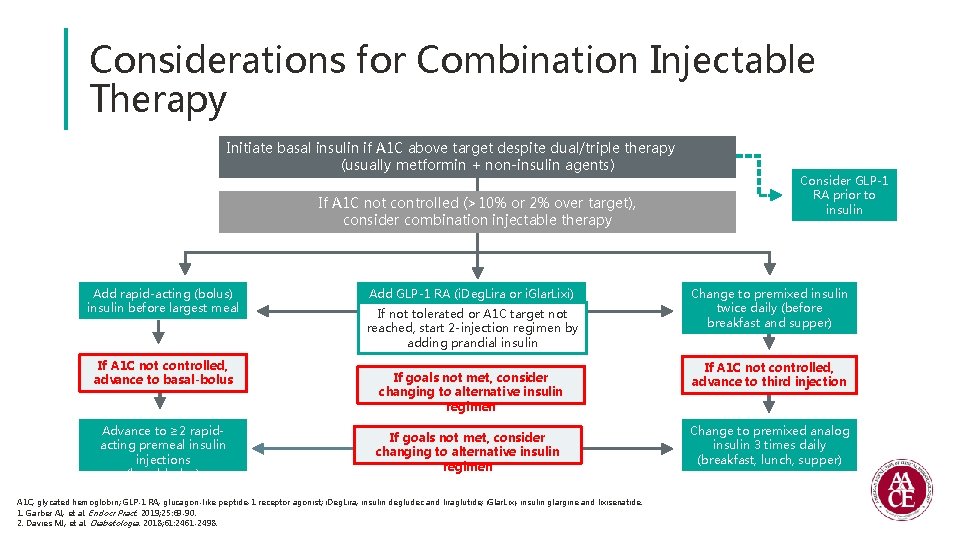
Considerations for Combination Injectable Therapy Initiate basal insulin if A 1 C above target despite dual/triple therapy (usually metformin + non-insulin agents) If A 1 C not controlled (>10% or 2% over target), consider combination injectable therapy Add rapid-acting (bolus) insulin before largest meal If A 1 C not controlled, advance to basal-bolus Advance to ≥ 2 rapidacting premeal insulin injections (basal-bolus) Add GLP-1 RA (i. Deg. Lira or i. Glar. Lixi) If not tolerated or A 1 C target not reached, start 2 -injection regimen by adding prandial insulin If goals not met, consider changing to alternative insulin regimen A 1 C, glycated hemoglobin; GLP-1 RA, glucagon-like peptide-1 receptor agonist; i. Deg. Lira, insulin degludec and liraglutide; i. Glar. Lixi, insulin glargine and lixisenatide. 1. Garber AJ, et al. Endocr Pract. 2019; 25: 69 -90. 2. Davies MJ, et al. Diabetologia. 2018; 61: 2461 -2498. Consider GLP-1 RA prior to insulin Change to premixed insulin twice daily (before breakfast and supper) If A 1 C not controlled, advance to third injection Change to premixed analog insulin 3 times daily (breakfast, lunch, supper)
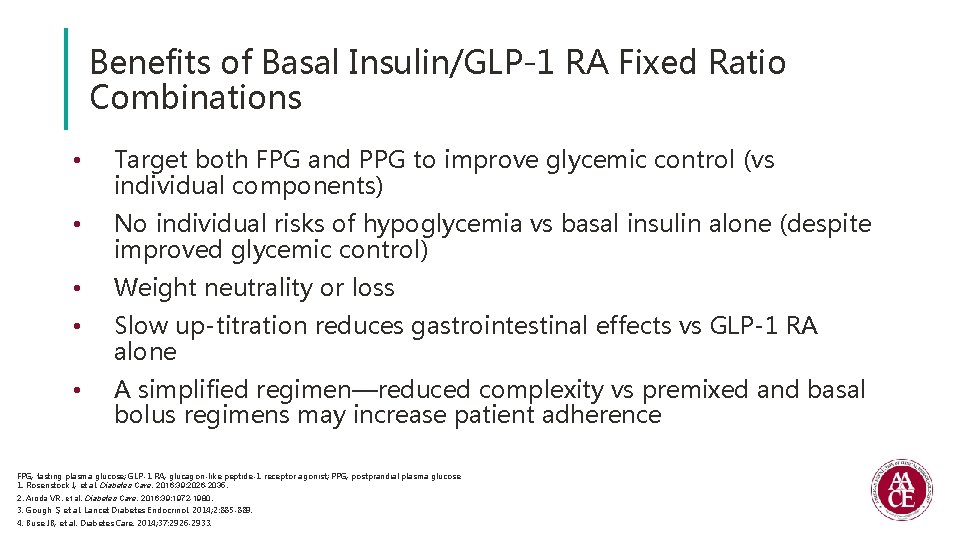
Benefits of Basal Insulin/GLP-1 RA Fixed Ratio Combinations • Target both FPG and PPG to improve glycemic control (vs individual components) • No individual risks of hypoglycemia vs basal insulin alone (despite improved glycemic control) • Weight neutrality or loss • Slow up-titration reduces gastrointestinal effects vs GLP-1 RA alone • A simplified regimen—reduced complexity vs premixed and basal bolus regimens may increase patient adherence FPG, fasting plasma glucose; GLP-1 RA, glucagon-like peptide-1 receptor agonist; PPG, postprandial plasma glucose. 1. Rosenstock J, et al. Diabetes Care. 2016; 39: 2026 -2035. 2. Aroda VR, et al. Diabetes Care. 2016; 39: 1972 -1980. 3. Gough S, et al. Lancet Diabetes Endocrinol. 2014; 2: 885 -889. 4. Buse JB, et al. Diabetes Care. 2014; 37: 2926 -2933.
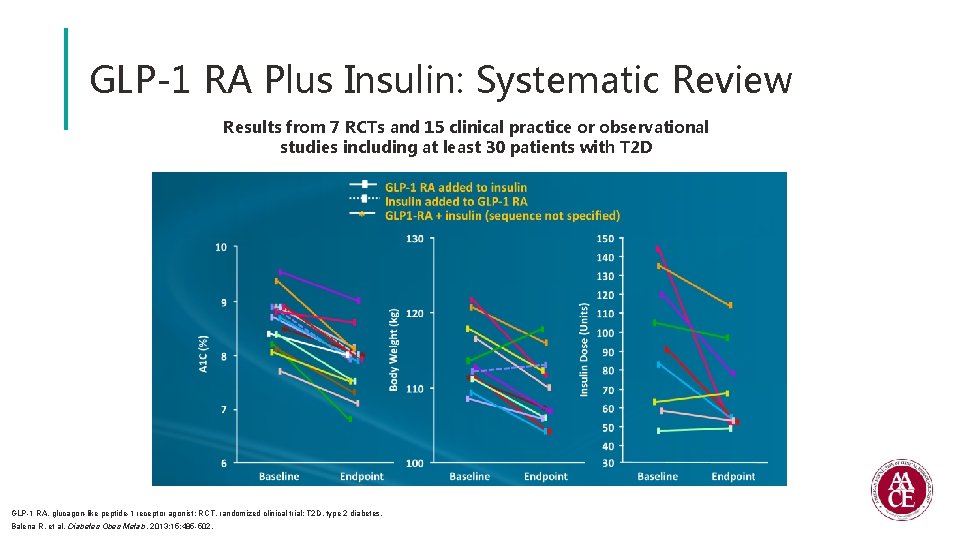
GLP-1 RA Plus Insulin: Systematic Review Results from 7 RCTs and 15 clinical practice or observational studies including at least 30 patients with T 2 D GLP-1 RA, glucagon-like peptide-1 receptor agonist; RCT, randomized clinical trial; T 2 D, type 2 diabetes. Balena R, et al. Diabetes Obes Metab. 2013; 15: 485 -502.
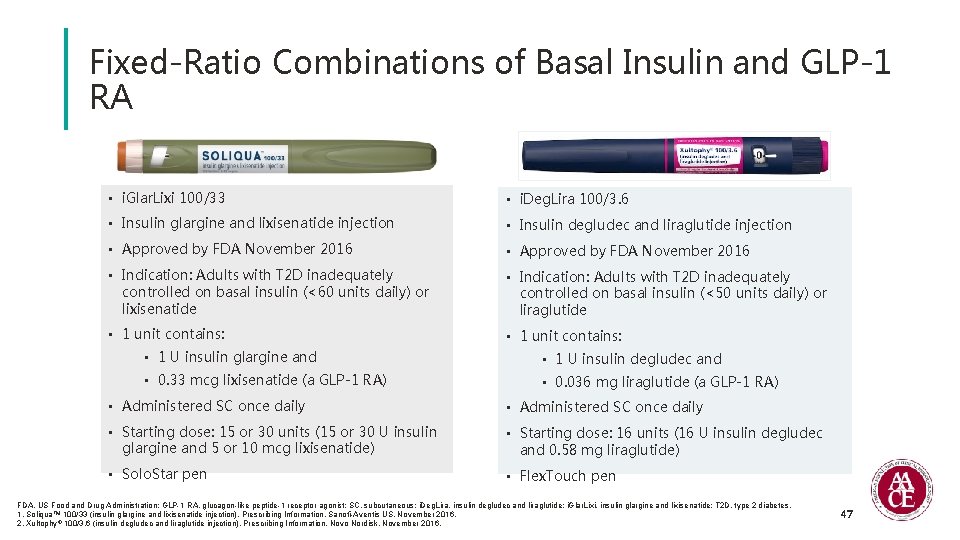
Fixed-Ratio Combinations of Basal Insulin and GLP-1 RA • i. Glar. Lixi 100/33 • i. Deg. Lira 100/3. 6 • Insulin glargine and lixisenatide injection • Insulin degludec and liraglutide injection • Approved by FDA November 2016 • Indication: Adults with T 2 D inadequately controlled on basal insulin (<60 units daily) or lixisenatide • Indication: Adults with T 2 D inadequately controlled on basal insulin (<50 units daily) or liraglutide • 1 unit contains: • 1 U insulin glargine and • 1 U insulin degludec and • 0. 33 mcg lixisenatide (a GLP-1 RA) • 0. 036 mg liraglutide (a GLP-1 RA) • Administered SC once daily • Starting dose: 15 or 30 units (15 or 30 U insulin glargine and 5 or 10 mcg lixisenatide) • Starting dose: 16 units (16 U insulin degludec and 0. 58 mg liraglutide) • Solo. Star pen • Flex. Touch pen FDA, US Food and Drug Administration; GLP-1 RA, glucagon-like peptide-1 receptor agonist; SC, subcutaneous; i. Deg. Lira, insulin degludec and liraglutide; i. Glar. Lixi, insulin glargine and lixisenatide; T 2 D, type 2 diabetes. 1. Soliqua™ 100/33 (insulin glargine and lixisenatide injection). Prescribing Information, Sanofi-Aventis US. November 2016. 2. Xultophy ® 100/3. 6 (insulin degludec and liraglutide injection). Prescribing Information, Novo Nordisk. November 2016. 47
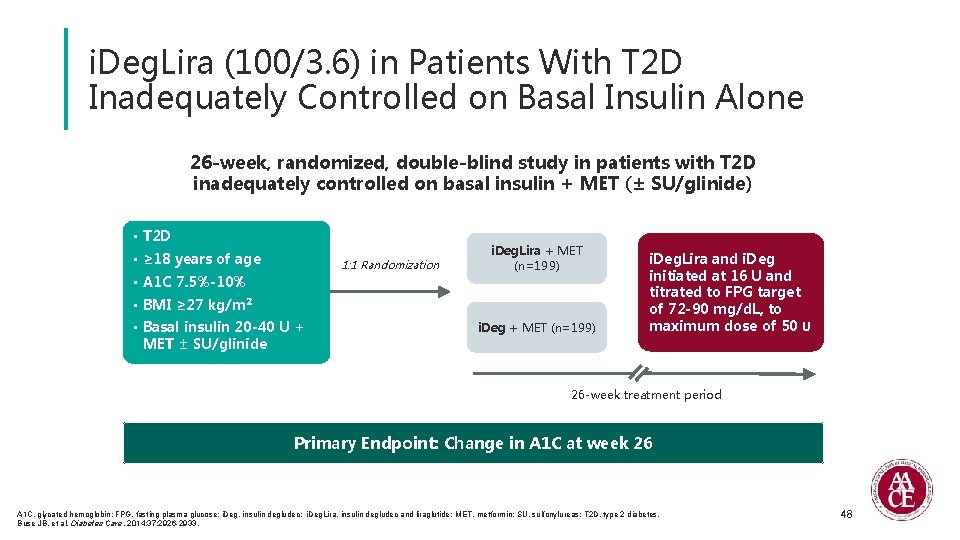
i. Deg. Lira (100/3. 6) in Patients With T 2 D Inadequately Controlled on Basal Insulin Alone 26 -week, randomized, double-blind study in patients with T 2 D inadequately controlled on basal insulin + MET (± SU/glinide) • T 2 D • ≥ 18 years of age 1: 1 Randomization • A 1 C 7. 5%-10% i. Deg. Lira + MET (n=199) • BMI ≥ 27 kg/m 2 • Basal insulin 20 -40 U + MET ± SU/glinide i. Deg + MET (n=199) i. Deg. Lira and i. Deg initiated at 16 U and titrated to FPG target of 72 -90 mg/d. L, to maximum dose of 50 U 26 -week treatment period Primary Endpoint: Change in A 1 C at week 26 A 1 C, glycated hemoglobin; FPG, fasting plasma glucose; i. Deg, insulin degludec; i. Deg. Lira, insulin degludec and liraglutide; MET, metformin; SU, sulfonylureas; T 2 D, type 2 diabetes. Buse JB, et al. Diabetes Care. 2014; 37: 2926 -2933. 48
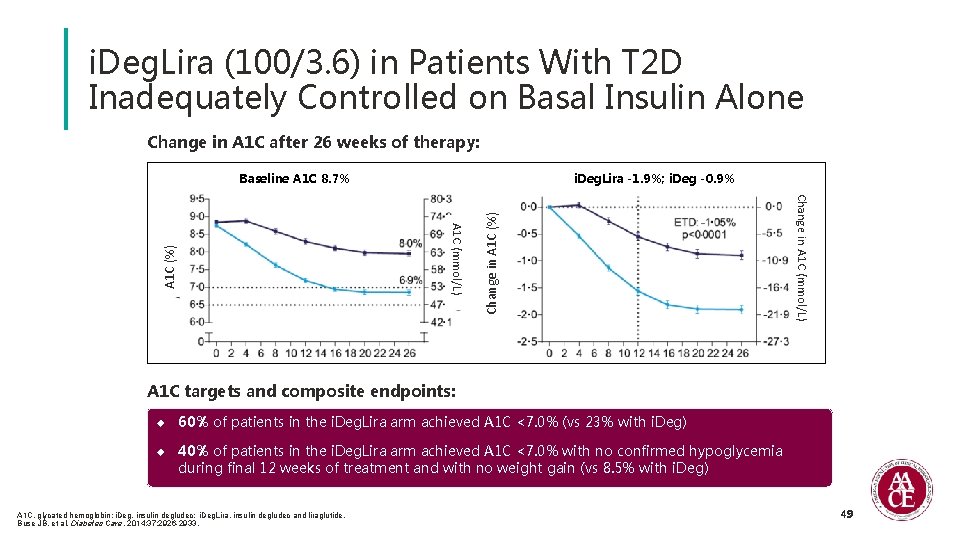
i. Deg. Lira (100/3. 6) in Patients With T 2 D Inadequately Controlled on Basal Insulin Alone Change in A 1 C after 26 weeks of therapy: i. Deg. Lira -1. 9%; i. Deg -0. 9% A 1 C (%) Change in A 1 C (mmol/L) Change in A 1 C (%) Baseline A 1 C 8. 7% A 1 C targets and composite endpoints: u u 60% of patients in the i. Deg. Lira arm achieved A 1 C <7. 0% (vs 23% with i. Deg) 40% of patients in the i. Deg. Lira arm achieved A 1 C <7. 0% with no confirmed hypoglycemia during final 12 weeks of treatment and with no weight gain (vs 8. 5% with i. Deg) A 1 C, glycated hemoglobin; i. Deg, insulin degludec; i. Deg. Lira, insulin degludec and liraglutide. Buse JB, et al. Diabetes Care. 2014; 37: 2926 -2933. 49
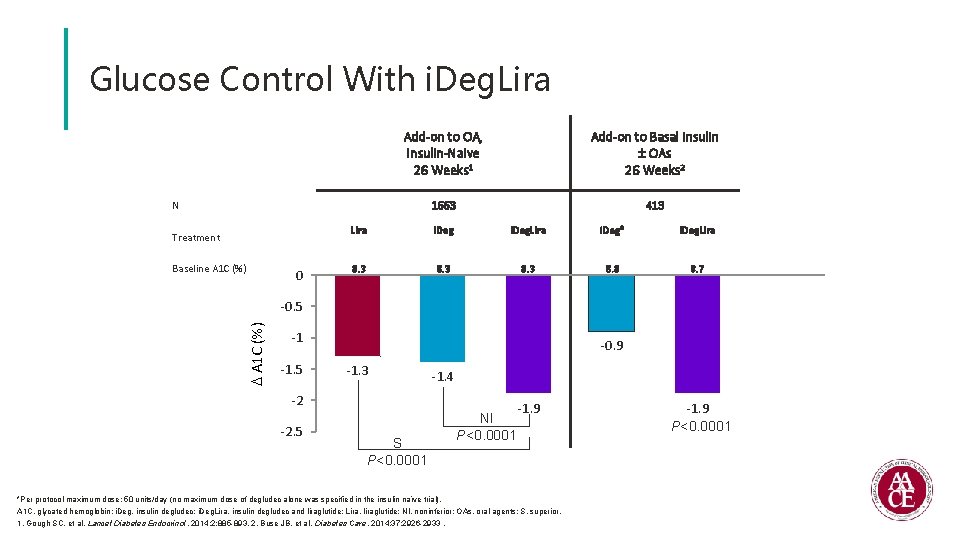
Glucose Control With i. Deg. Lira Add-on to OA, Insulin-Naive 26 Weeks 1 Add-on to Basal Insulin ± OAs 26 Weeks 2 1663 413 N Treatment Baseline A 1 C (%) 0 Lira i. Deg* i. Deg. Lira 8. 3 8. 8 8. 7 A 1 C (%) -0. 5 -1 -1. 5 -0. 9 -1. 3 -1. 4 -2 -2. 5 S P<0. 0001 NI P<0. 0001 -1. 9 *Per protocol maximum dose: 50 units/day (no maximum dose of degludec alone was specified in the insulin naïve trial). A 1 C, glycated hemoglobin; i. Deg, insulin degludec; i. Deg. Lira, insulin degludec and liraglutide; Lira, liraglutide; NI, noninferior; OAs, oral agents; S, superior. 1. Gough SC, et al. Lancet Diabetes Endocrinol. 2014; 2: 885 -893. 2. Buse JB, et al. Diabetes Care. 2014; 37: 2926 -2933. -1. 9 P<0. 0001
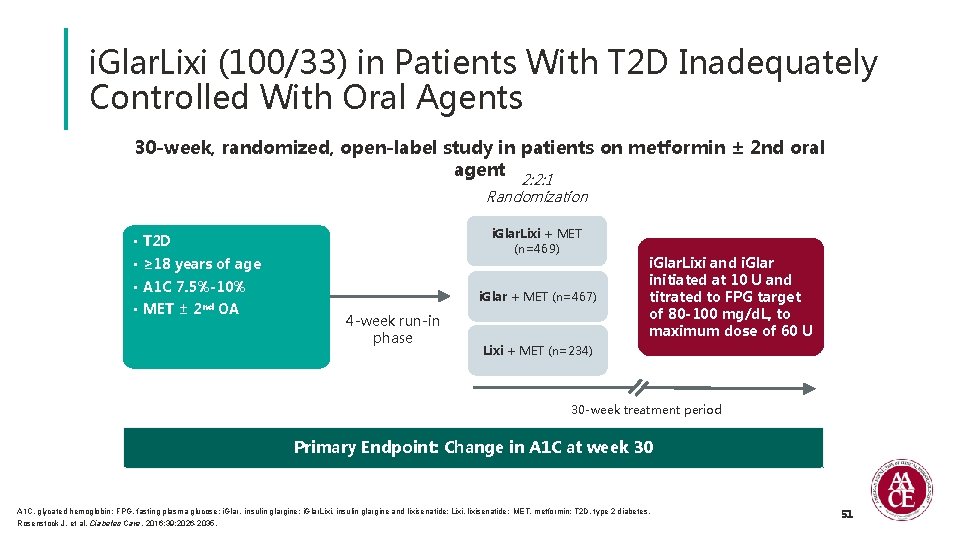
i. Glar. Lixi (100/33) in Patients With T 2 D Inadequately Controlled With Oral Agents 30 -week, randomized, open-label study in patients on metformin ± 2 nd oral agent 2: 2: 1 Randomization i. Glar. Lixi + MET (n=469) • T 2 D • ≥ 18 years of age • A 1 C 7. 5%-10% • MET ± 2 nd OA i. Glar + MET (n=467) 4 -week run-in phase i. Glar. Lixi and i. Glar initiated at 10 U and titrated to FPG target of 80 -100 mg/d. L, to maximum dose of 60 U Lixi + MET (n=234) 30 -week treatment period Primary Endpoint: Change in A 1 C at week 30 A 1 C, glycated hemoglobin; FPG, fasting plasma glucose; i. Glar, insulin glargine; i. Glar. Lixi, insulin glargine and lixisenatide; Lixi, lixisenatide; MET, metformin; T 2 D, type 2 diabetes. Rosenstock J, et al. Diabetes Care. 2016; 39: 2026 -2035. 51
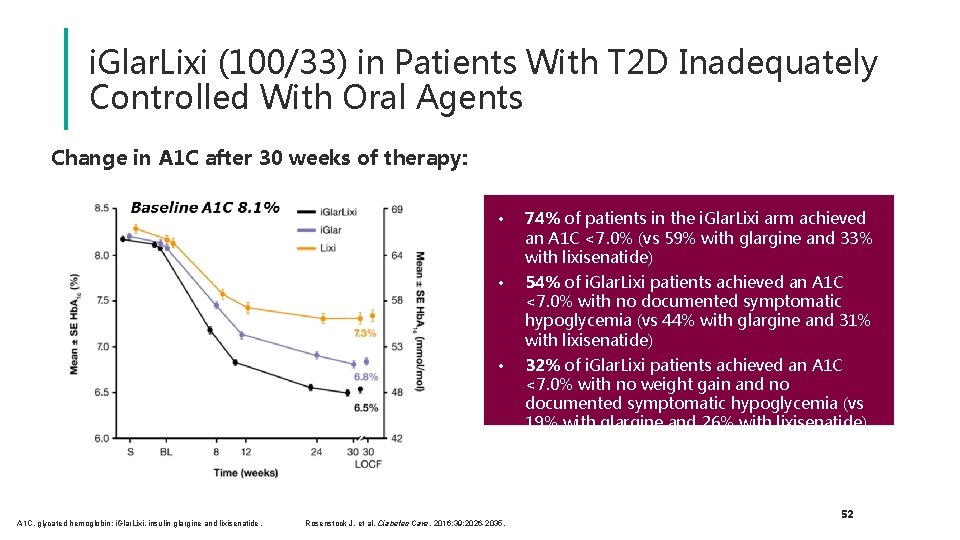
i. Glar. Lixi (100/33) in Patients With T 2 D Inadequately Controlled With Oral Agents Change in A 1 C after 30 weeks of therapy: A 1 C, glycated hemoglobin; i. Glar. Lixi, insulin glargine and lixisenatide. • 74% of patients in the i. Glar. Lixi arm achieved an A 1 C <7. 0% (vs 59% with glargine and 33% with lixisenatide) • 54% of i. Glar. Lixi patients achieved an A 1 C <7. 0% with no documented symptomatic hypoglycemia (vs 44% with glargine and 31% with lixisenatide) • 32% of i. Glar. Lixi patients achieved an A 1 C <7. 0% with no weight gain and no documented symptomatic hypoglycemia (vs 19% with glargine and 26% with lixisenatide) Rosenstock J, et al. Diabetes Care. 2016; 39: 2026 -2035. Rosenstock J, et al. Diabetes Care 2016; 39: 2026 -35 52
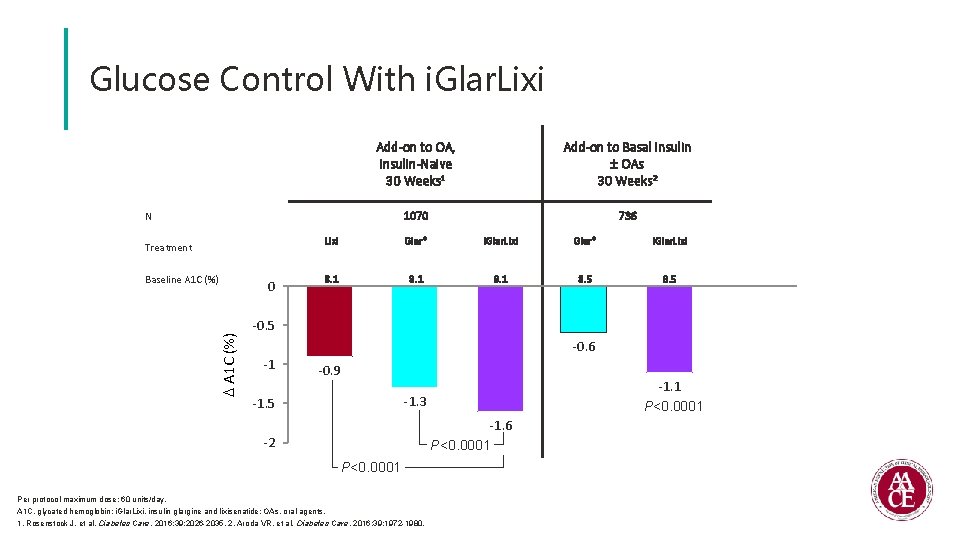
Glucose Control With i. Glar. Lixi Add-on to OA, Insulin-Naive 30 Weeks 1 Add-on to Basal Insulin ± OAs 30 Weeks 2 1070 736 N Treatment A 1 C (%) Baseline A 1 C (%) 0 Lixi Glar* i. Glar. Lixi 8. 1 8. 5 -0. 6 -1 -0. 9 -1. 1 P<0. 0001 -1. 3 -1. 5 -1. 6 P<0. 0001 -2 P<0. 0001 Per protocol maximum dose: 60 units/day. A 1 C, glycated hemoglobin; i. Glar. Lixi, insulin glargine and lixisenatide; OAs, oral agents. 1. Rosenstock J, et al. Diabetes Care. 2016; 39: 2026 -2035. 2. Aroda VR, et al. Diabetes Care. 2016; 39: 1972 -1980.
Combination Therapy for Patients With High Cardiovascular Risk
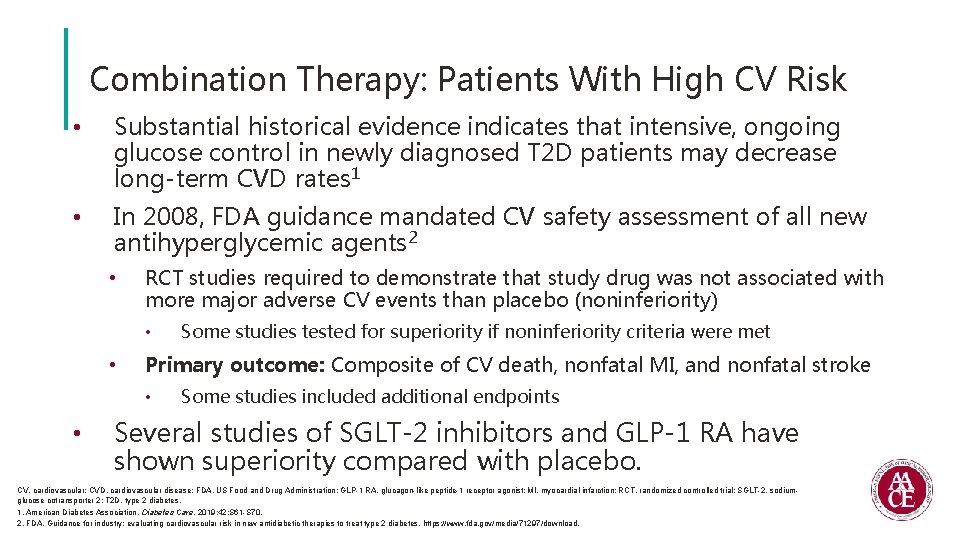
Combination Therapy: Patients With High CV Risk • Substantial historical evidence indicates that intensive, ongoing glucose control in newly diagnosed T 2 D patients may decrease long-term CVD rates 1 • In 2008, FDA guidance mandated CV safety assessment of all new antihyperglycemic agents 2 • RCT studies required to demonstrate that study drug was not associated with more major adverse CV events than placebo (noninferiority) • • Primary outcome: Composite of CV death, nonfatal MI, and nonfatal stroke • • Some studies tested for superiority if noninferiority criteria were met Some studies included additional endpoints Several studies of SGLT-2 inhibitors and GLP-1 RA have shown superiority compared with placebo. CV, cardiovascular; CVD, cardiovascular disease; FDA, US Food and Drug Administration; GLP-1 RA, glucagon-like peptide-1 receptor agonist; MI, myocardial infarction; RCT, randomized controlled trial; SGLT-2, sodiumglucose cotransporter 2; T 2 D, type 2 diabetes. 1. American Diabetes Association. Diabetes Care. 2019; 42: S 61 -S 70. 2. FDA. Guidance for industry: evaluating cardiovascular risk in new antidiabetic therapies to treat type 2 diabetes. https: //www. fda. gov/media/71297/download.
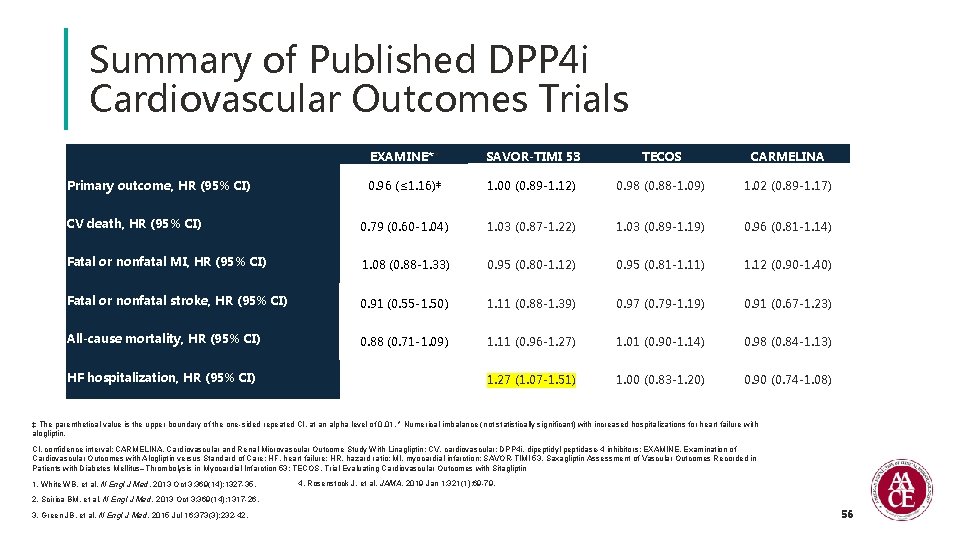
Summary of Published DPP 4 i Cardiovascular Outcomes Trials EXAMINE** SAVOR-TIMI 53 TECOS CARMELINA 0. 96 (≤ 1. 16)‡ 1. 00 (0. 89 -1. 12) 0. 98 (0. 88 -1. 09) 1. 02 (0. 89 -1. 17) CV death, HR (95% CI) 0. 79 (0. 60 -1. 04) 1. 03 (0. 87 -1. 22) 1. 03 (0. 89 -1. 19) 0. 96 (0. 81 -1. 14) Fatal or nonfatal MI, HR (95% CI) 1. 08 (0. 88 -1. 33) 0. 95 (0. 80 -1. 12) 0. 95 (0. 81 -1. 11) 1. 12 (0. 90 -1. 40) Fatal or nonfatal stroke, HR (95% CI) 0. 91 (0. 55 -1. 50) 1. 11 (0. 88 -1. 39) 0. 97 (0. 79 -1. 19) 0. 91 (0. 67 -1. 23) All-cause mortality, HR (95% CI) 0. 88 (0. 71 -1. 09) 1. 11 (0. 96 -1. 27) 1. 01 (0. 90 -1. 14) 0. 98 (0. 84 -1. 13) 1. 27 (1. 07 -1. 51) 1. 00 (0. 83 -1. 20) 0. 90 (0. 74 -1. 08) Primary outcome, HR (95% CI) HF hospitalization, HR (95% CI) ‡ The parenthetical value is the upper boundary of the one-sided repeated CI, at an alpha level of 0. 01. * Numerical imbalance (not statistically significant) with increased hospitalizations for heart failure with alogliptin. CI, confidence interval; CARMELINA, Cardiovascular and Renal Microvascular Outcome Study With Linagliptin; CV, cardiovascular; DPP 4 i, dipeptidyl peptidase-4 inhibitors; EXAMINE, Examination of Cardiovascular Outcomes with Alogliptin versus Standard of Care; HF, heart failure; HR, hazard ratio; MI, myocardial infarction; SAVOR-TIMI 53, Saxagliptin Assessment of Vascular Outcomes Recorded in Patients with Diabetes Mellitus–Thrombolysis in Myocardial Infarction 53; TECOS, Trial Evaluating Cardiovascular Outcomes with Sitagliptin 1. White WB, et al. N Engl J Med. 2013 Oct 3; 369(14): 1327 -35. 4. Rosenstock J, et al. JAMA. 2019 Jan 1; 321(1): 69 -79. 2. Scirica BM, et al. N Engl J Med. 2013 Oct 3; 369(14): 1317 -26. 3. Green JB, et al. N Engl J Med. 2015 Jul 16; 373(3): 232 -42. 56
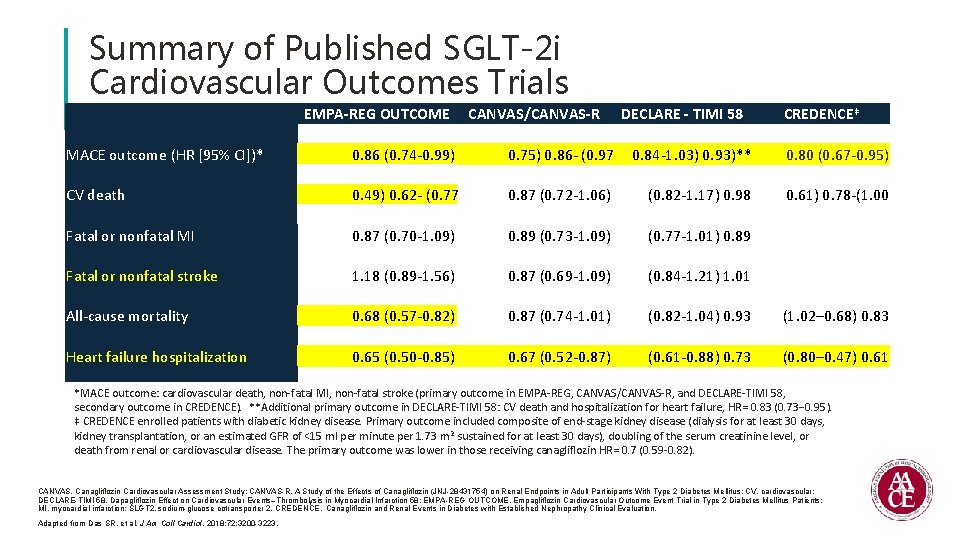
Summary of Published SGLT-2 i Cardiovascular Outcomes Trials EMPA-REG OUTCOME CANVAS/CANVAS-R DECLARE - TIMI 58 CREDENCE‡ MACE outcome (HR [95% CI])* 0. 86 (0. 74 -0. 99) 0. 75) 0. 86 - (0. 97 0. 84 -1. 03) 0. 93)** 0. 80 (0. 67 -0. 95) CV death 0. 49) 0. 62 - (0. 77 0. 87 (0. 72 -1. 06) (0. 82 -1. 17) 0. 98 0. 61) 0. 78 -(1. 00 Fatal or nonfatal MI 0. 87 (0. 70 -1. 09) 0. 89 (0. 73 -1. 09) (0. 77 -1. 01) 0. 89 Fatal or nonfatal stroke 1. 18 (0. 89 -1. 56) 0. 87 (0. 69 -1. 09) (0. 84 -1. 21) 1. 01 All-cause mortality 0. 68 (0. 57 -0. 82) 0. 87 (0. 74 -1. 01) (0. 82 -1. 04) 0. 93 (1. 02– 0. 68) 0. 83 Heart failure hospitalization 0. 65 (0. 50 -0. 85) 0. 67 (0. 52 -0. 87) (0. 61 -0. 88) 0. 73 (0. 80– 0. 47) 0. 61 *MACE outcome: cardiovascular death, non-fatal MI, non-fatal stroke (primary outcome in EMPA-REG, CANVAS/CANVAS-R, and DECLARE-TIMI 58, secondary outcome in CREDENCE). **Additional primary outcome in DECLARE-TIMI 58: CV death and hospitalization for heart failure, HR= 0. 83 (0. 73− 0. 95). ‡ CREDENCE enrolled patients with diabetic kidney disease. Primary outcome included composite of end-stage kidney disease (dialysis for at least 30 days, kidney transplantation, or an estimated GFR of <15 ml per minute per 1. 73 m 2 sustained for at least 30 days), doubling of the serum creatinine level, or death from renal or cardiovascular disease. The primary outcome was lower in those receiving canagliflozin HR= 0. 7 (0. 59 -0. 82). CANVAS, Canagliflozin Cardiovascular Assessment Study; CANVAS-R, A Study of the Effects of Canagliflozin (JNJ-28431754) on Renal Endpoints in Adult Participants With Type 2 Diabetes Mellitus; CV, cardiovascular; DECLARE-TIMI 58, Dapagliflozin Effect on Cardiovascular Events–Thrombolysis in Myocardial Infarction 58; EMPA-REG OUTCOME, Empagliflozin Cardiovascular Outcome Event Trial in Type 2 Diabetes Mellitus Patients; MI, myocardial infarction; SLGT 2, sodium-glucose cotransporter 2. CREDENCE, Canagliflozin and Renal Events in Diabetes with Established Nephropathy Clinical Evaluation. Adapted from Das SR, et al. J Am Coll Cardiol. 2018; 72: 3200 -3223.
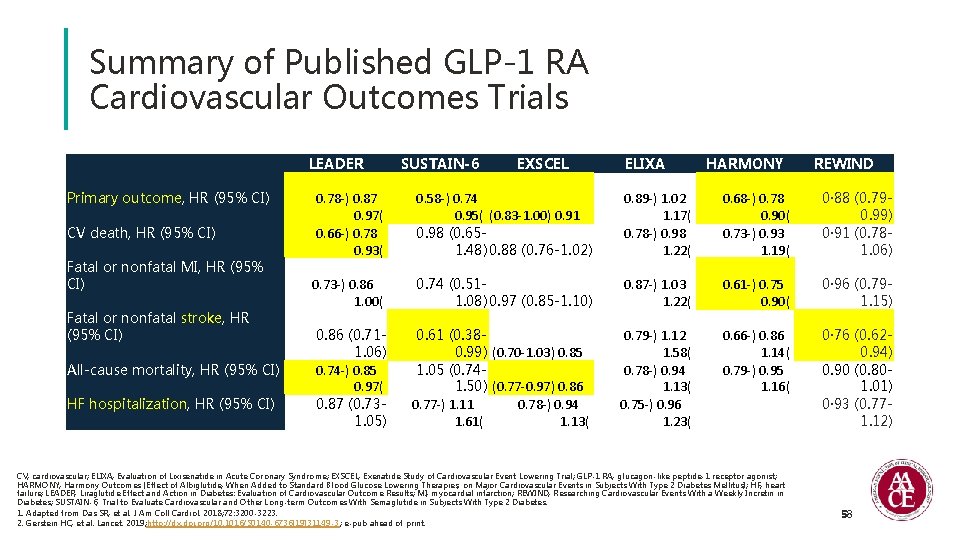
Summary of Published GLP-1 RA Cardiovascular Outcomes Trials LEADER Primary outcome, HR (95% CI) CV death, HR (95% CI) Fatal or nonfatal MI, HR (95% CI) Fatal or nonfatal stroke, HR (95% CI) All-cause mortality, HR (95% CI) HF hospitalization, HR (95% CI) SUSTAIN-6 EXSCEL ELIXA HARMONY REWIND 0. 78 -) 0. 87 0. 97( 0. 66 -) 0. 78 0. 93( 0. 58 -) 0. 74 0. 95( (0. 83 -1. 00) 0. 91 0. 98 (0. 651. 48) 0. 88 (0. 76 -1. 02) 0. 89 -) 1. 02 1. 17( 0. 78 -) 0. 98 1. 22( 0. 68 -) 0. 78 0. 90( 0. 73 -) 0. 93 1. 19( 0· 88 (0. 790. 99) 0· 91 (0. 781. 06) 0. 73 -) 0. 86 1. 00( 0. 74 (0. 511. 08) 0. 97 (0. 85 -1. 10) 0. 87 -) 1. 03 1. 22( 0. 61 -) 0. 75 0. 90( 0· 96 (0. 791. 15) 0. 86 (0. 711. 06) 0. 74 -) 0. 85 0. 97( 0. 87 (0. 731. 05) 0. 61 (0. 380. 99) (0. 70 -1. 03) 0. 85 1. 05 (0. 741. 50) (0. 77 -0. 97) 0. 86 0. 77 -) 1. 11 0. 78 -) 0. 94 1. 61( 1. 13( 0. 79 -) 1. 12 1. 58( 0. 78 -) 0. 94 1. 13( 0. 75 -) 0. 96 1. 23( 0. 66 -) 0. 86 1. 14( 0. 79 -) 0. 95 1. 16( 0· 76 (0. 620. 94) 0. 90 (0. 801. 01) 0· 93 (0. 771. 12) CV, cardiovascular; ELIXA, Evaluation of Lixisenatide in Acute Coronary Syndrome; EXSCEL, Exenatide Study of Cardiovascular Event Lowering Trial; GLP-1 RA, glucagon-like peptide-1 receptor agonist; HARMONY, Harmony Outcomes (Effect of Albiglutide, When Added to Standard Blood Glucose Lowering Therapies, on Major Cardiovascular Events in Subjects With Type 2 Diabetes Mellitus); HF, heart failure; LEADER, Liraglutide Effect and Action in Diabetes: Evaluation of Cardiovascular Outcome Results; MI, myocardial infarction; REWIND, Researching Cardiovascular Events With a Weekly Incretin in Diabetes; SUSTAIN-6, Trial to Evaluate Cardiovascular and Other Long-term Outcomes With Semaglutide in Subjects With Type 2 Diabetes. 1. Adapted from Das SR, et al. J Am Coll Cardiol. 2018; 72: 3200 -3223. 2. Gerstein HC, et al. Lancet. 2019; http: //dx. doi. org/10. 1016/S 0140 -6736(19)31149 -3 ; e-pub ahead of print. 58
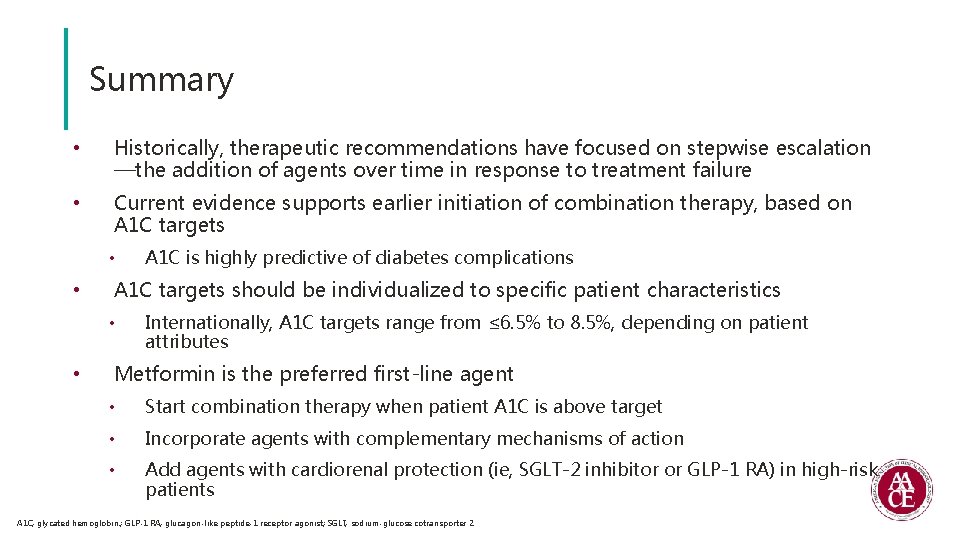
Summary • Historically, therapeutic recommendations have focused on stepwise escalation —the addition of agents over time in response to treatment failure • Current evidence supports earlier initiation of combination therapy, based on A 1 C targets • • A 1 C targets should be individualized to specific patient characteristics • • A 1 C is highly predictive of diabetes complications Internationally, A 1 C targets range from ≤ 6. 5% to 8. 5%, depending on patient attributes Metformin is the preferred first-line agent • Start combination therapy when patient A 1 C is above target • Incorporate agents with complementary mechanisms of action • Add agents with cardiorenal protection (ie, SGLT-2 inhibitor or GLP-1 RA) in high-risk patients A 1 C, glycated hemoglobin. ; GLP-1 RA, glucagon-like peptide-1 receptor agonist; SGLT, sodium-glucose cotransporter 2.
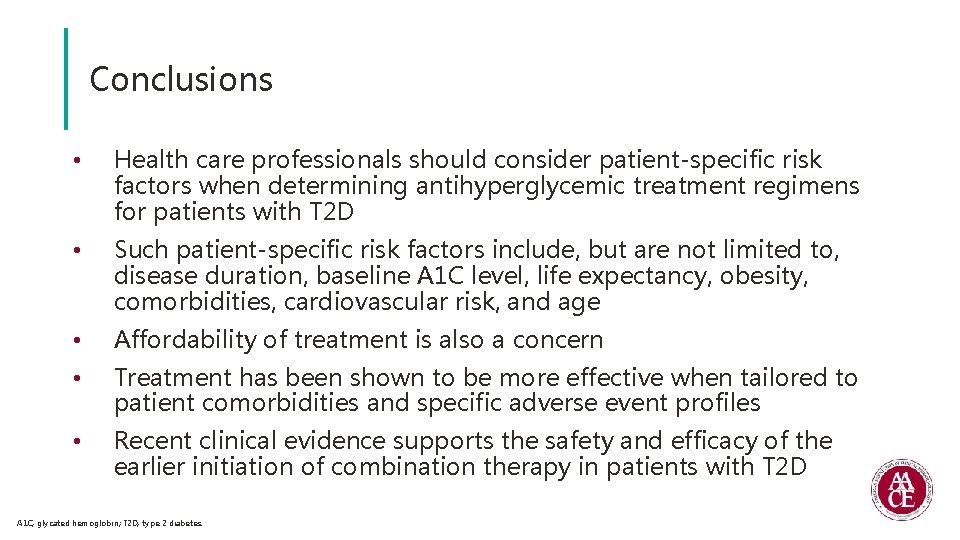
Conclusions • Health care professionals should consider patient-specific risk factors when determining antihyperglycemic treatment regimens for patients with T 2 D • Such patient-specific risk factors include, but are not limited to, disease duration, baseline A 1 C level, life expectancy, obesity, comorbidities, cardiovascular risk, and age • Affordability of treatment is also a concern • Treatment has been shown to be more effective when tailored to patient comorbidities and specific adverse event profiles • Recent clinical evidence supports the safety and efficacy of the earlier initiation of combination therapy in patients with T 2 D A 1 C, glycated hemoglobin; T 2 D, type 2 diabetes.
- Slides: 60