
COMBINATION PREVENTION MODULE 10 Goals of Prevention Define
COMBINATION PREVENTION MODULE 10
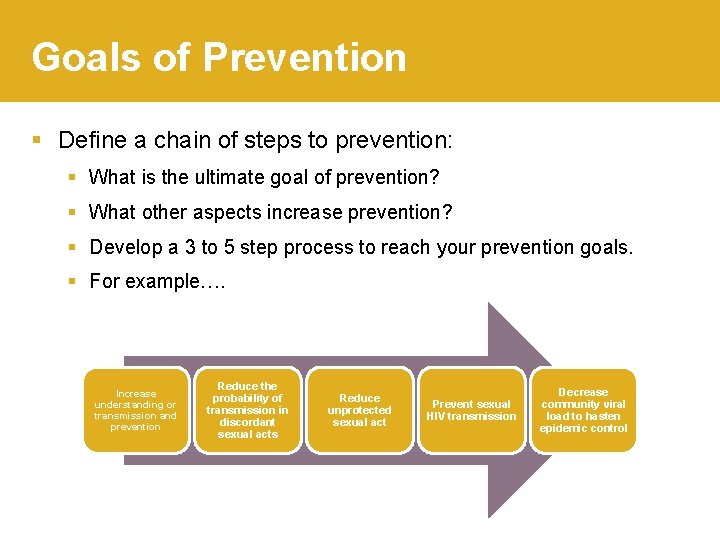
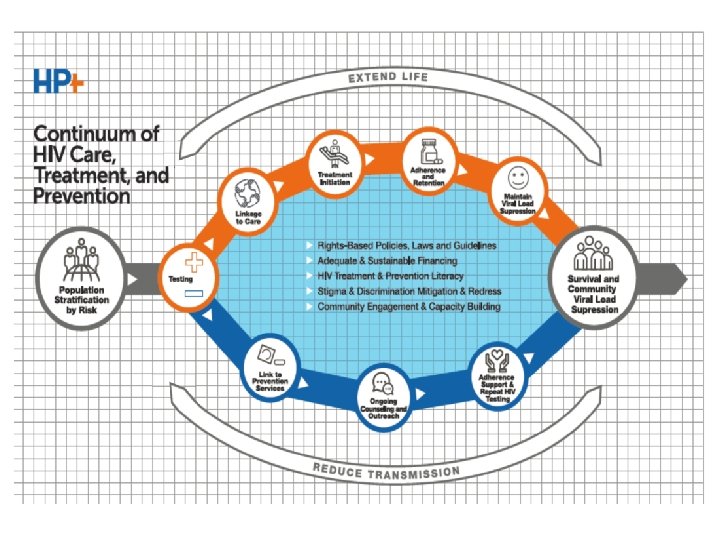
Goals of Prevention § Define a chain of steps to prevention: § What is the ultimate goal of prevention? § What other aspects increase prevention? § Develop a 3 to 5 step process to reach your prevention goals. § For example…. Increase understanding or transmission and prevention Reduce the probability of transmission in discordant sexual acts Reduce unprotected sexual act Prevent sexual HIV transmission Decrease community viral load to hasten epidemic control
THE ECOLOGICAL MODEL
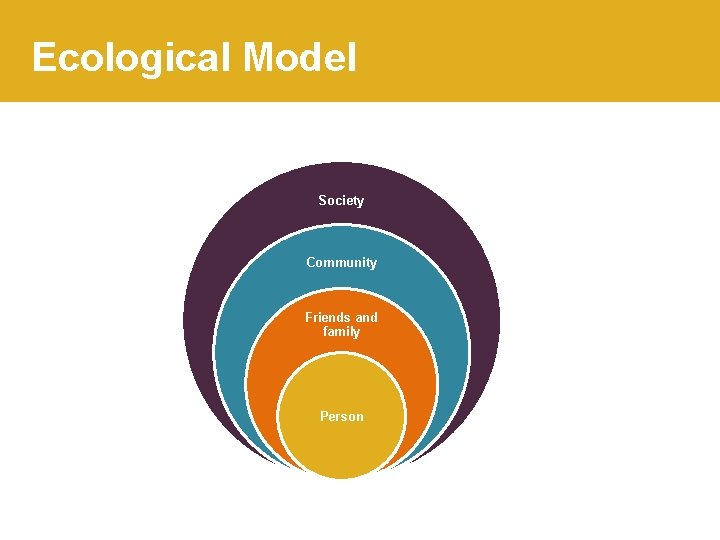
Ecological Model Society Community Friends and family Person
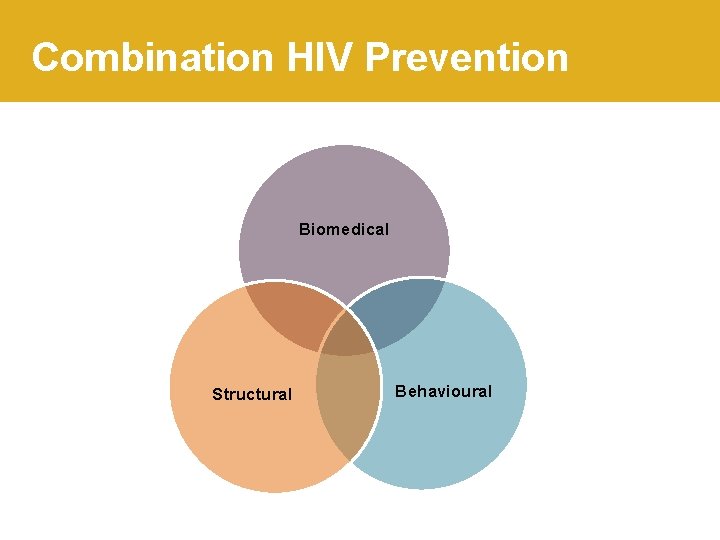
Combination HIV Prevention Biomedical Structural Behavioural

Combination HIV Prevention: Biomedical 1. Barriers to infection Biomedical 2. Less likely to infect another Structural Behavioural 3. Less likely to get infected
Biomedical Interventions Biomedical interventions are those that directly influence the biological system through which the virus infects a new host. Biomedical interventions work by: § Blocking infection (e. g. , male and female condoms) § Decreasing infectiousness (e. g. , ART as prevention) § Reducing acquisition/infection risk (e. g. , voluntary medical male circumcision, pre-exposure prophylaxis)
Biomedical Intervention and The Ecological Model 1. What aspects of prevention of transmission of HIV are related to “the every person” in terms of biomedical? 2. What about preventing the onslaught of disease (e. g. , HIV or opportunistic infections)? 3. Where do we/people living with HIV intervene in biomedical prevention of HIV transmission? 8
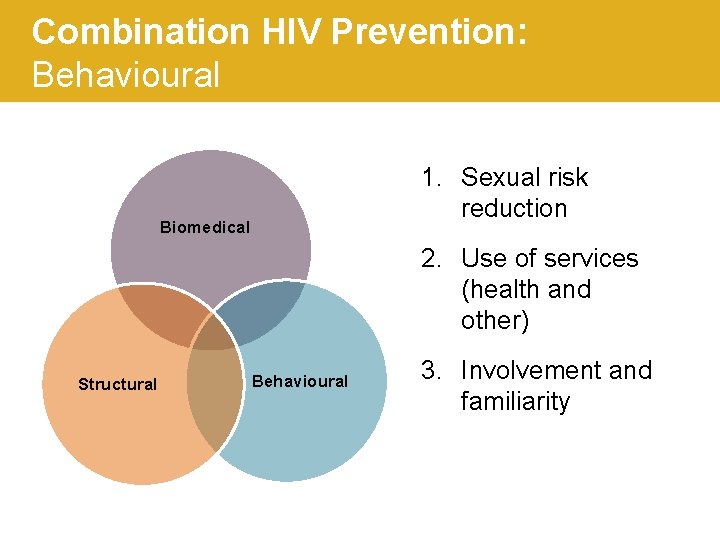
Combination HIV Prevention: Behavioural 1. Sexual risk reduction Biomedical 2. Use of services (health and other) Structural Behavioural 3. Involvement and familiarity
Behavioural Interventions Behavioural interventions include behavior change communication programmes that use various communication channels (e. g. , mass media, community-level, and interpersonal) that are: § Designed to encourage people to reduce behaviours that increase risk of HIV and increase protective behaviours (e. g. , risks of having multiple partners and benefits of using a condom correctly and consistently) § Aimed at increasing the acceptability and demand for biomedical interventions § Building self-acceptance and emotional well-being
Behavioural Interventions and The Ecological Model 1. What aspects of prevention of transmission of HIV are related “the every person” and their interaction with their immediate social circle? 2. When is it related to “the every person” or persons in their family or their friends? 3. Where do we/people living with HIV leaders intervene in the behavioural prevention of HIV transmission?
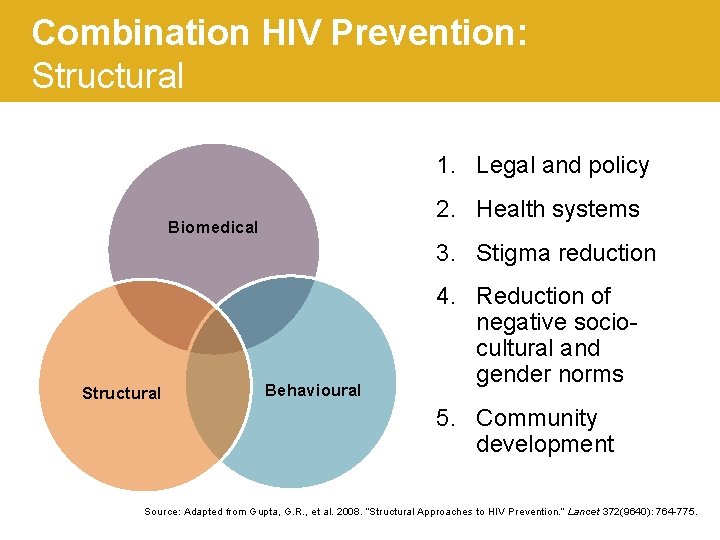
Combination HIV Prevention: Structural 1. Legal and policy 2. Health systems Biomedical 3. Stigma reduction Structural Behavioural 4. Reduction of negative sociocultural and gender norms 5. Community development Source: Adapted from Gupta, G. R. , et al. 2008. “Structural Approaches to HIV Prevention. ” Lancet 372(9640): 764 -775.
Structural Interventions and The Ecological Model § What aspects of prevention of transmission of HIV are related to “the every person” and within certain social and political constraints and opportunities? § What structural aspects can we/people living with HIV have the most influence over? § Where can we/people living with HIV intervene in structural prevention of HIV transmission? § Where do we/people living with HIV more need allies?
Structural Interventions Structural interventions address the critical social, legal, political, and environmental enablers that contribute to the spread of HIV, including: 1. Legal and policy reform 2. Reducing stigma and discrimination against people living with HIV and marginalised groups 3. Addressing gender inequality and gender-based violence 4. Increasing access to health and social services (including mental health) 5. Building social capital, economic empowerment, and other multisectoral approaches among marginalised groups 6. Education Source: Adapted from Gupta, G. R. , et al. 2008. “Structural Approaches to HIV Prevention. ” Lancet 372(9640): 764 -775.
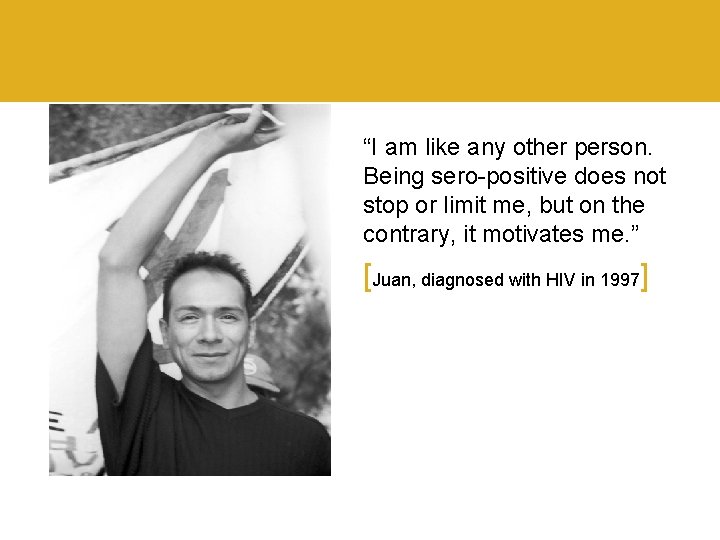
“I am like any other person. Being sero-positive does not stop or limit me, but on the contrary, it motivates me. ” [Juan, diagnosed with HIV in 1997]
- Slides: 16