
CoManaging Sheep and Goats Important Considerations Dr Brian
Co-Managing Sheep and Goats Important Considerations Dr. Brian Faris Extension 4 -H Youth Livestock Specialist Department of Animal Science North Carolina State University
Introduction • Born & Raised in Southwest Texas • Raised Rambouillet Sheep and Angora Goats and Showed Market Lambs • Worked for TAMU Sheep & Goat Center • Angelo State University Ranch • Came to North Carolina from New Mexico • Currently raising fullblood and percentage boers and some Southdown sheep
Topics • Similarities and Differences between Raising Sheep and Goats – Nutrition – Reproduction – Management practices
Nutrition • Similarities – Both are small ruminants • CP and TDN requirements – Stocking rate • 1 cow / 2 acres • 1 cow ≈ 5 sheep • 1 sheep ≈ 1 Boer or Boer cross goat
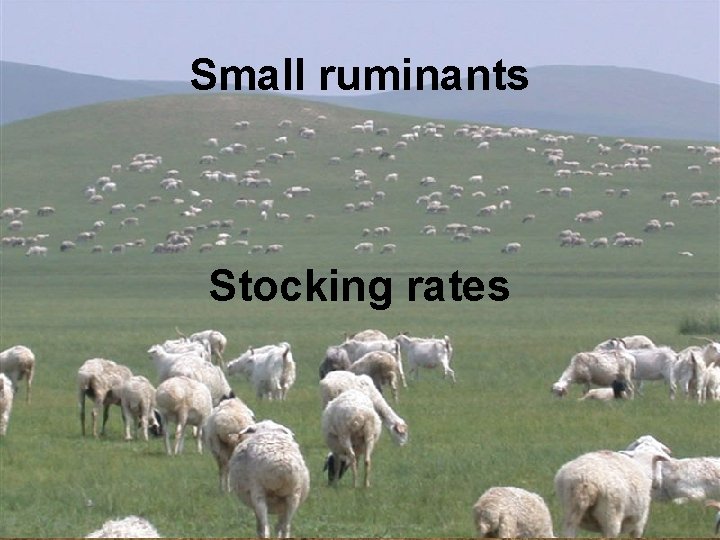
Small ruminants Stocking rates
Nutrition • Similarities – Both are small ruminants – Stocking rate • Differences – Grazing habits • Sheep tend to graze from the bottom upward • Goats tend to graze from the top downward
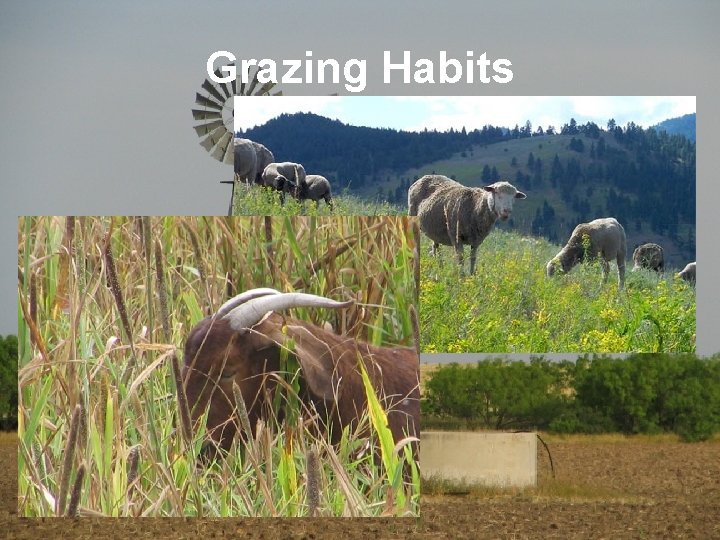
Grazing Habits
Nutrition • Similarities – Both are small ruminants – Stocking rate • Differences – Grazing habits – Grazing preferences
Grazing Preferences • Sheep – Fairly Selective • Forbs • Grass • Browse • Goats – Very Selective • Forbs • Browse • Grass – HAY • • Alfalfa Coastal Bermuda Orchardgrass Peanut Orchardgrass Alfalfa Coastal Bermuda
Nutrition • Similarities – Both are small ruminants – Stocking rate • Differences – Grazing habits – Grazing preferences – Specific nutrient requirements
Nutrient Requirements • Sheep – ~2%BW Dry Matter – Very Sensitive to Cu – P requirements are similar to goats but do not appear to be as sensitive • Goats – ~3%BW Dry Matter – Need 2 -3 x Cu level – Very Sensitive to P (Do not exceed 0. 40% on the feed tag – 0. 35% is ideal)
Nutrition • Similarities – Both are small ruminants – Stocking rate • Differences – Grazing habits – Grazing preferences – Specific nutrient requirements – Fat deposition
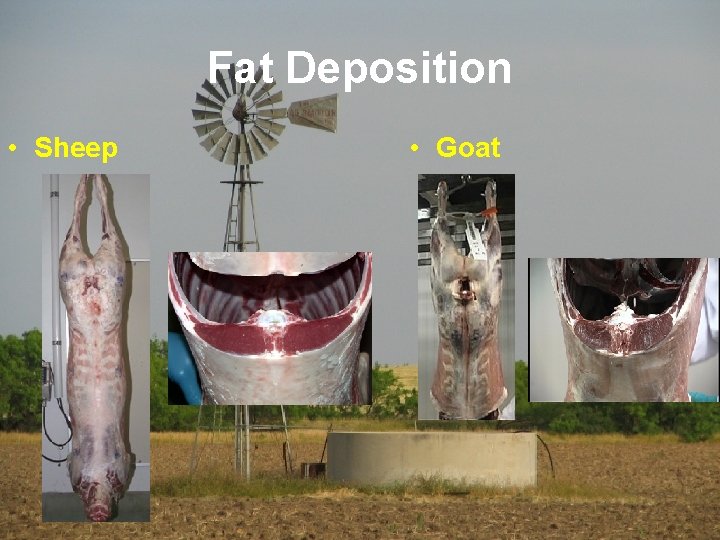
Fat Deposition • Sheep • Goat
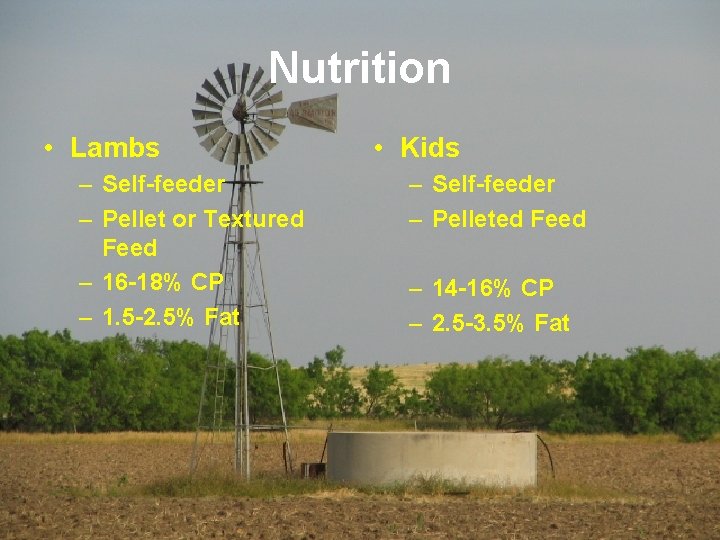
Nutrition • Lambs – Self-feeder – Pellet or Textured Feed – 16 -18% CP – 1. 5 -2. 5% Fat • Kids – Self-feeder – Pelleted Feed – 14 -16% CP – 2. 5 -3. 5% Fat
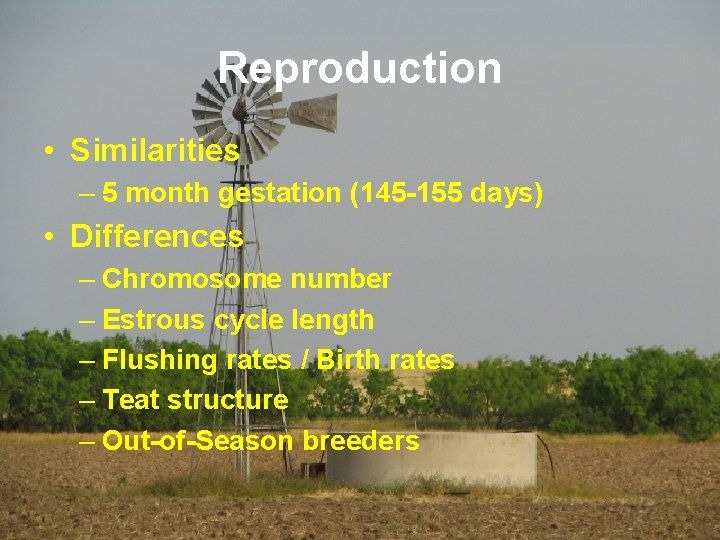
Reproduction • Similarities – 5 month gestation (145 -155 days) • Differences – Chromosome number – Estrous cycle length – Flushing rates / Birth rates – Teat structure – Out-of-Season breeders
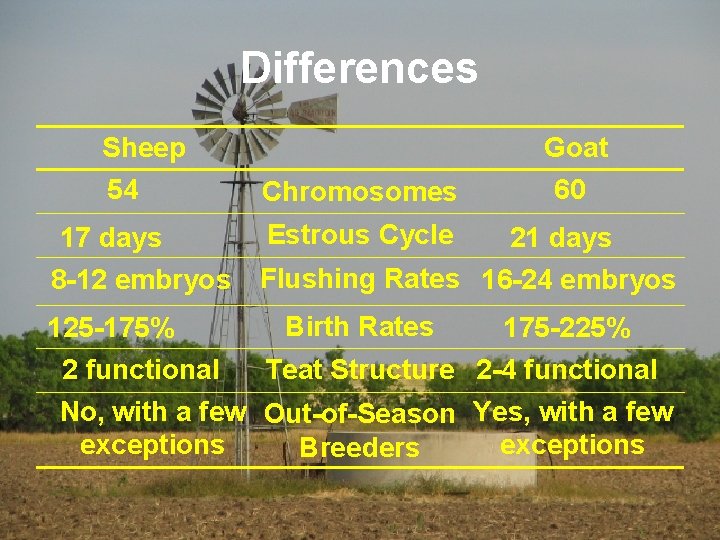
Differences Sheep 54 17 days 8 -12 embryos Chromosomes Goat 60 Estrous Cycle 21 days Flushing Rates 16 -24 embryos Birth Rates 125 -175% 175 -225% 2 functional Teat Structure 2 -4 functional No, with a few Out-of-Season Yes, with a few exceptions Breeders
Management Practices • • Health Facilities Miscellaneous Management Guard animals
Health • Sheep – – – – Deworm Coccidiosis Overeating Tetanus CL Ketosis Orphan Lambs Soremouth • Goats – – – – – Deworm Coccidiosis Overeating Tetanus CL Ketosis Orphan Kids Soremouth Floppy Kid Silent Pneumonia
Facilities • Sheep – Shelters – Fencing • Electric Fence – Feed Troughs – Working Pens • Goats – Shelters – Fencing • Field Fence – Feed Troughs – Working Pens
Miscellaneous Management • Sheep – Less foot care – Some shearing except Hair breeds – Horns/No horns – Does not matter – Castrate lambs 30 days or less • Goats – More foot care – Require no shearing except for Angoras – May disbud kids (wethers) – Castrate kids at 60 -90 days
Guard Animals • Llamas • Dogs – Great Pyrenees – Akbash – Komondor – Anatolian Shepherd – Maremma • Donkeys
QUESTIONS
- Slides: 22