
COM 320History of Film Soviet Montage Movement 1917


- Slides: 19
COM 320—History of Film Soviet Montage Movement 1917 -1933
Defining Characteristics • “Montage. . . as a collision of elements. . . Imitated the Marxist concept of the dialectic. . . ‘intellectual cinema’ attempts not to tell a story but to convey abstract ideas, as a political tract might”
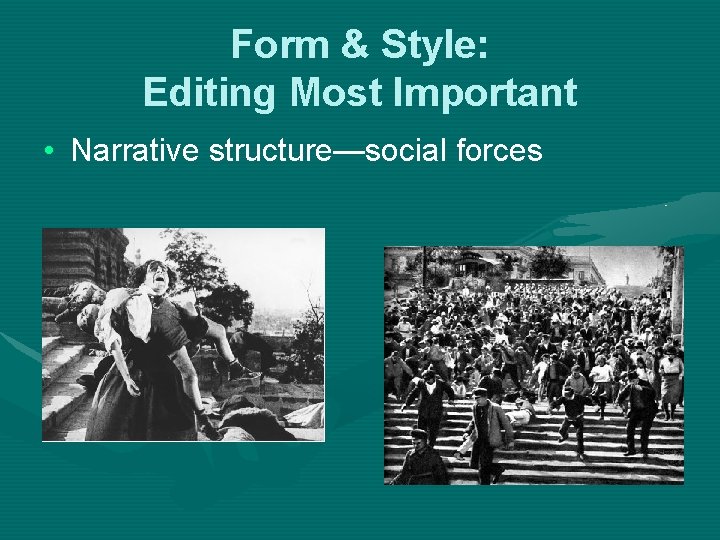
Form & Style: Editing Most Important • Narrative structure—social forces
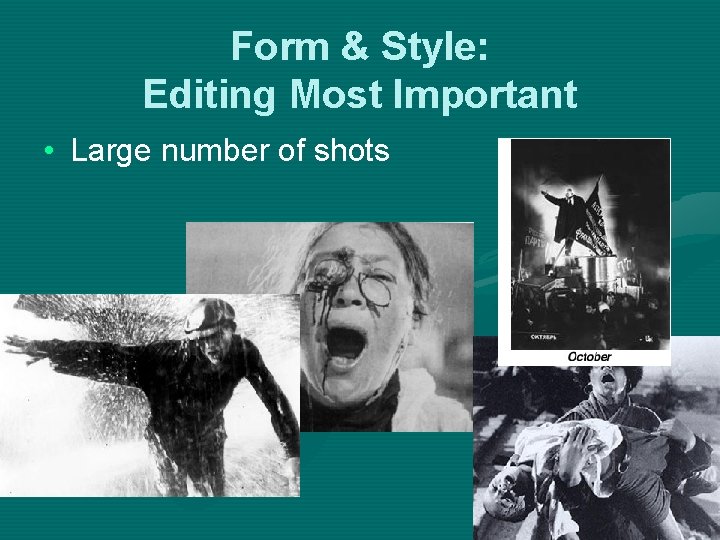
Form & Style: Editing Most Important • Large number of shots
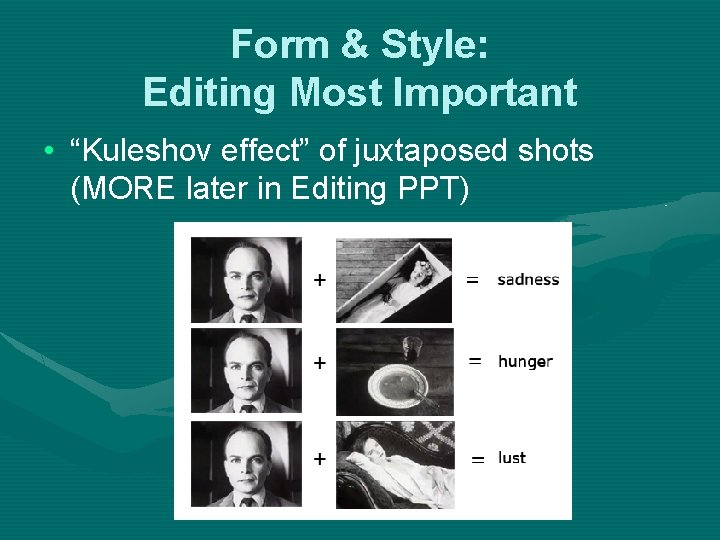
Form & Style: Editing Most Important • “Kuleshov effect” of juxtaposed shots (MORE later in Editing PPT)
Form & Style: Editing Most Important • Maximization of dynamic tension through two opposing editing techniques (MORE later in Editing PPT) – (1) overlapping editing – (2) elliptical (i. e. , jump cut) editing
Form & Style: Editing Most Important • Non-diegetic inserts (MORE later in Editing PPT) – e. g. , Slaughterhouse footage near end of Strike
Background • In a commercial film context • Artistically, derived from Constructivism, viewing artwork as machine; montage; no elite art • However, commercial success was secondary to serving the national interest; a national cinema • The development of a national cinema—the State Film School in 1919, under the control of the Narkompros (People’s Commissariat of Education)
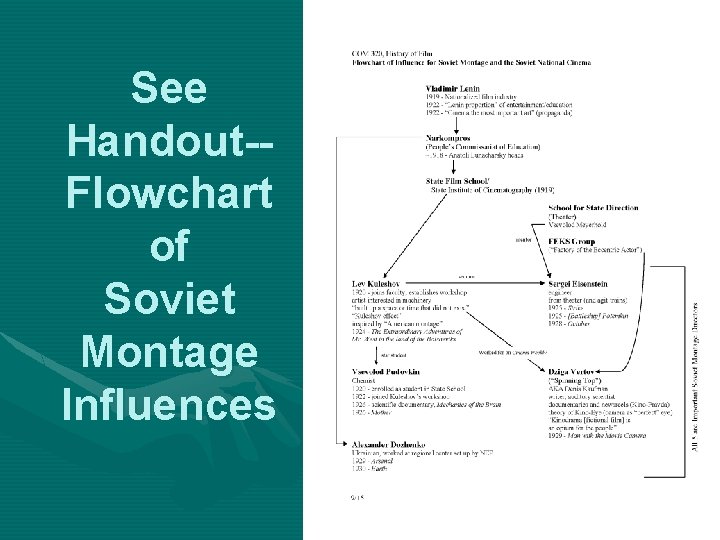
See Handout-Flowchart of Soviet Montage Influences
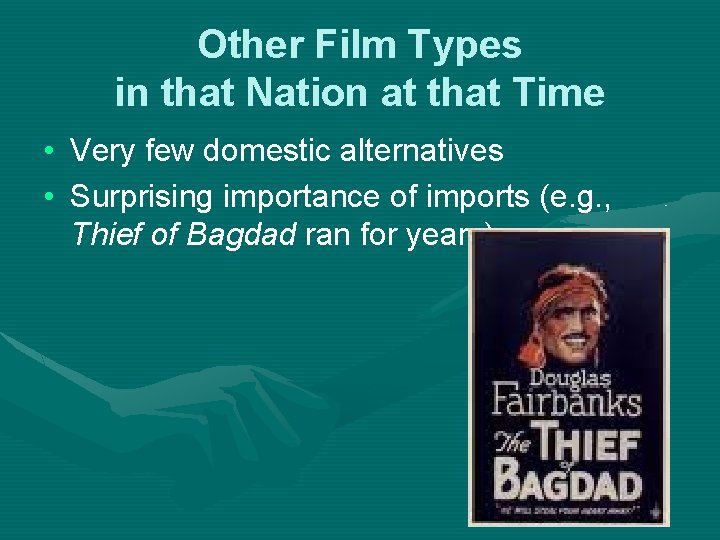
Other Film Types in that Nation at that Time • Very few domestic alternatives • Surprising importance of imports (e. g. , Thief of Bagdad ran for years)
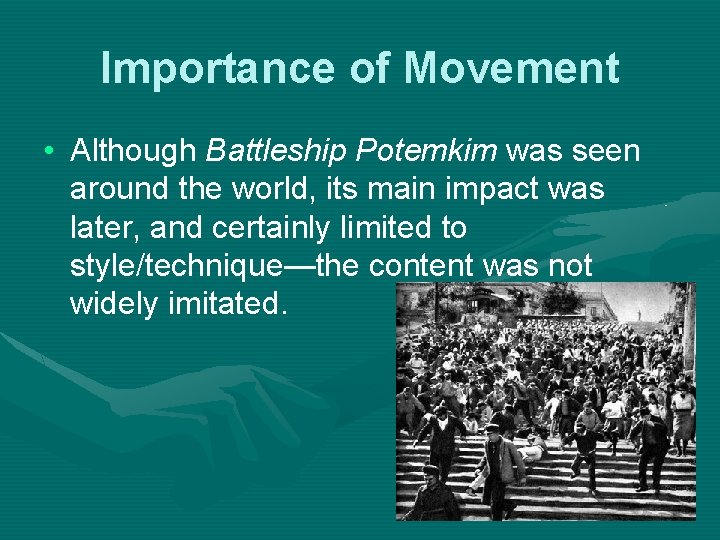
Importance of Movement • Although Battleship Potemkim was seen around the world, its main impact was later, and certainly limited to style/technique—the content was not widely imitated.
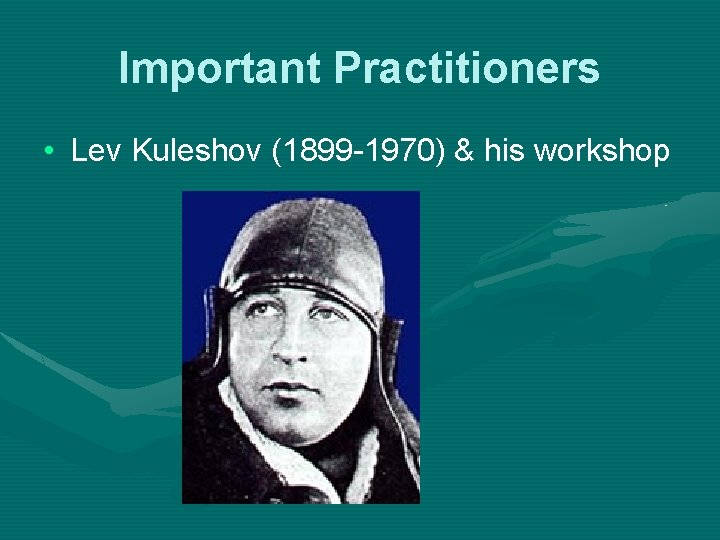
Important Practitioners • Lev Kuleshov (1899 -1970) & his workshop
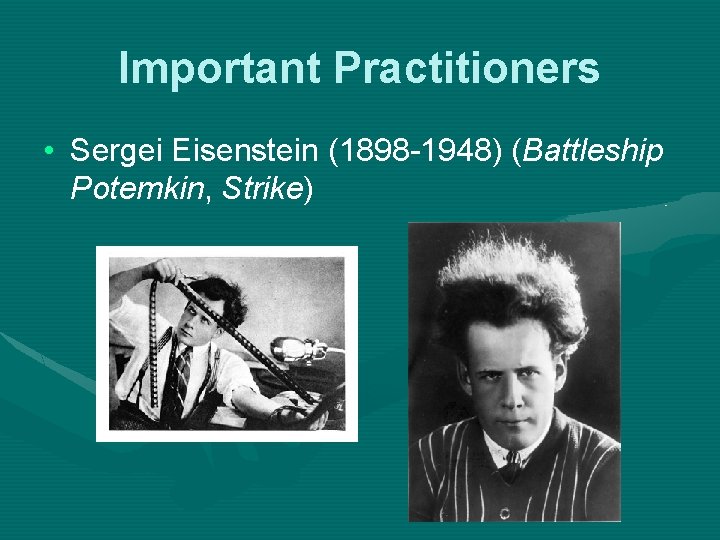
Important Practitioners • Sergei Eisenstein (1898 -1948) (Battleship Potemkin, Strike)
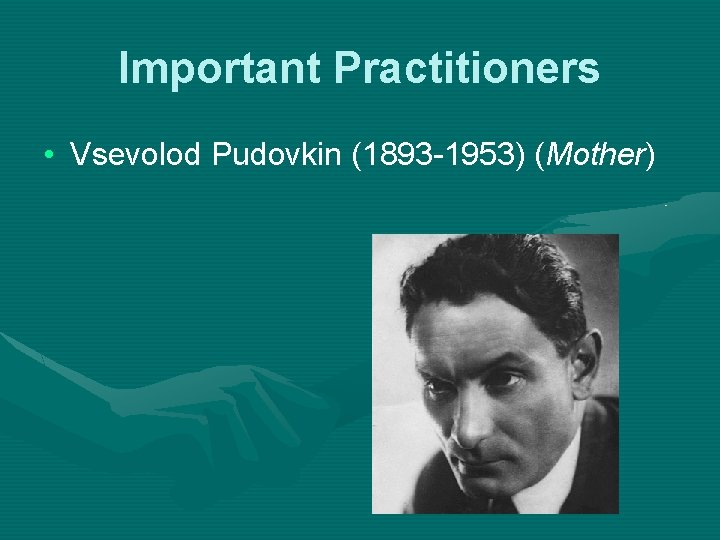
Important Practitioners • Vsevolod Pudovkin (1893 -1953) (Mother)
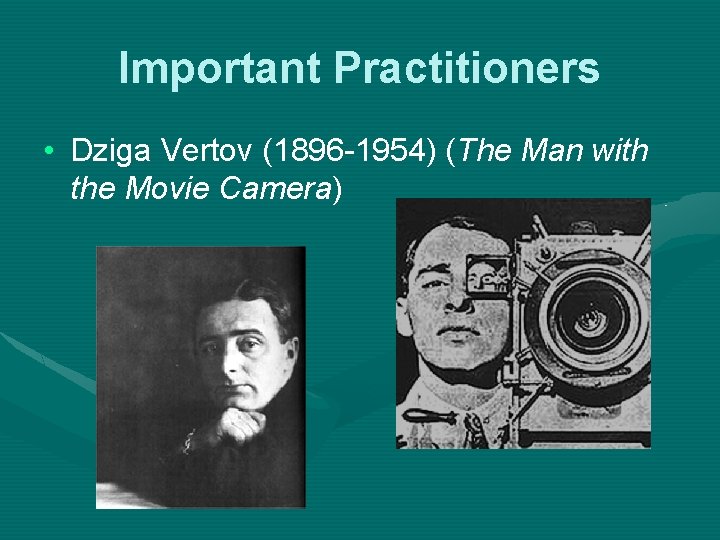
Important Practitioners • Dziga Vertov (1896 -1954) (The Man with the Movie Camera)
Important Practitioners • Lev Kuleshov & his workshop • Sergei Eisenstein (Battleship Potemkin, Strike) • Vsevolod Pudovkin (Mother) • Dziga Vertov (The Man with the Movie Camera) • Note that Kuleshov, Eisenstein, and Vertov were all film writers and teachers (i. e. , scholars) as well as filmmakers.
The Death of the Movement • Soviet Montage called “formalism, ” too complex for the mass (Joseph Stalin said…) • 1929 five-year plan called for centralization of film, control taken away from the Narkompros (Stalin again)
Current Influences and Applications? • Editing!! – See LATER handout and PPT on Origins of Editing Styles and Techniques
• end