
COM 320 History of Film French Impressionism 1918

- Slides: 25
COM 320: History of Film French Impressionism 1918 -1929
Defining Characteristics Goal is to “convey sensations and emotional ‘impressions’. . . conveying the personal vision of the artist. . . cinema shows us the souls of people and the essence of objects (photogenie). . . Cinema is a synthesis of the other arts” (architecture, painting, sculpture, music, poetry, dance)
Form & Style: Camera work most important (vs. Editing or Mise en scene)
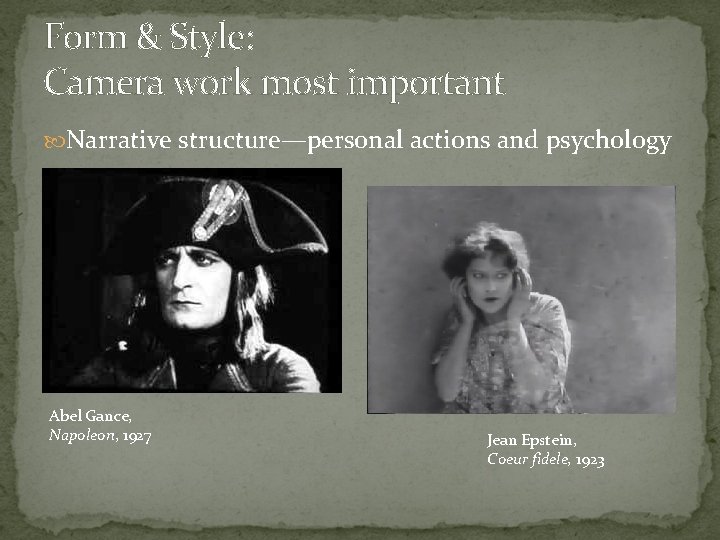
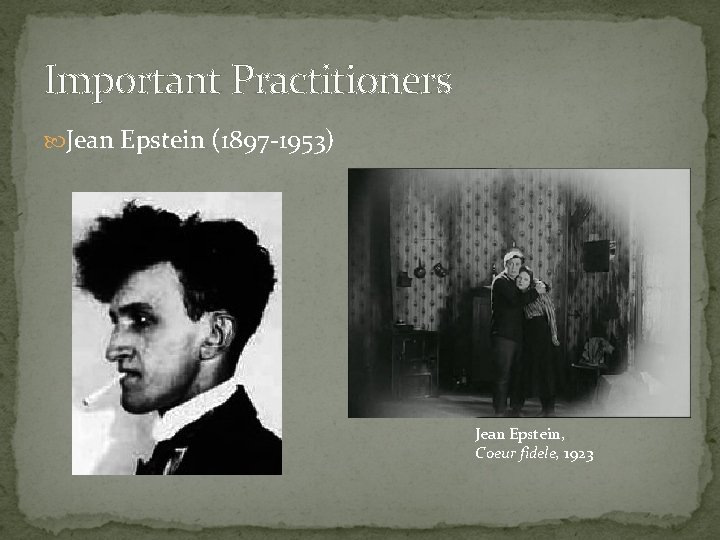
Form & Style: Camera work most important Narrative structure—personal actions and psychology Abel Gance, Napoleon, 1927 Jean Epstein, Coeur fidele, 1923
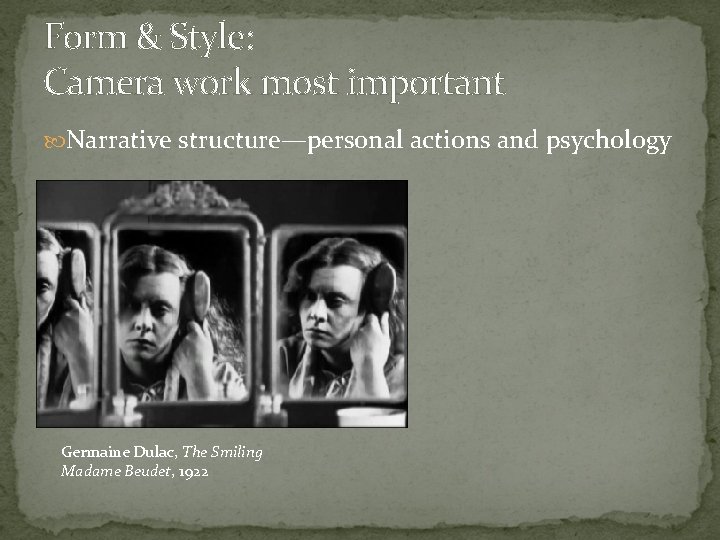
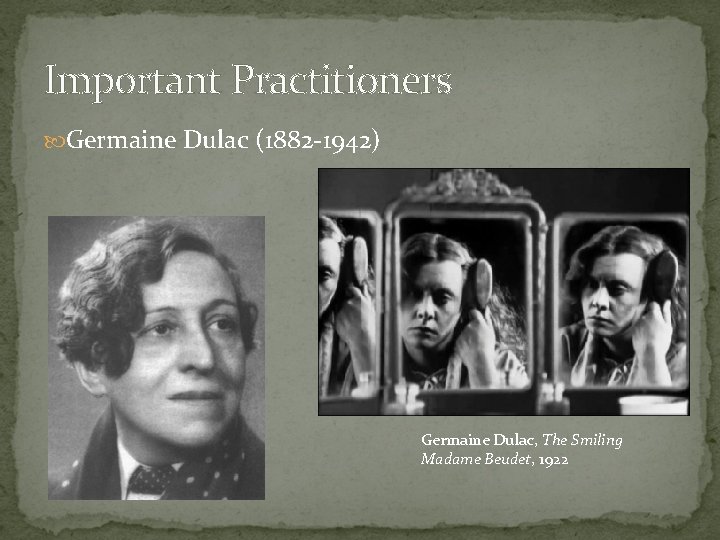
Form & Style: Camera work most important Narrative structure—personal actions and psychology Germaine Dulac, The Smiling Madame Beudet, 1922
Form & Style: Camera work most important Narrative structure—personal actions and psychology Photogenie – “that quality which distinguishes a film shot from the original object photographed”
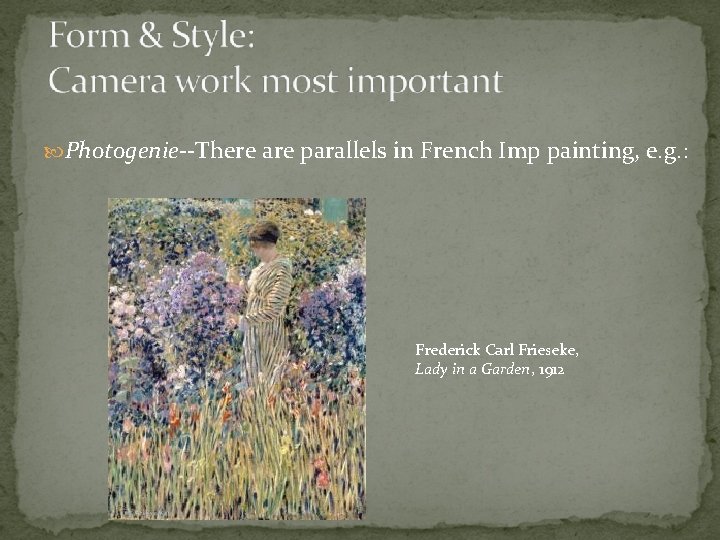
Photogenie--There are parallels in French Imp painting, e. g. : Frederick Carl Frieseke, Lady in a Garden, 1912
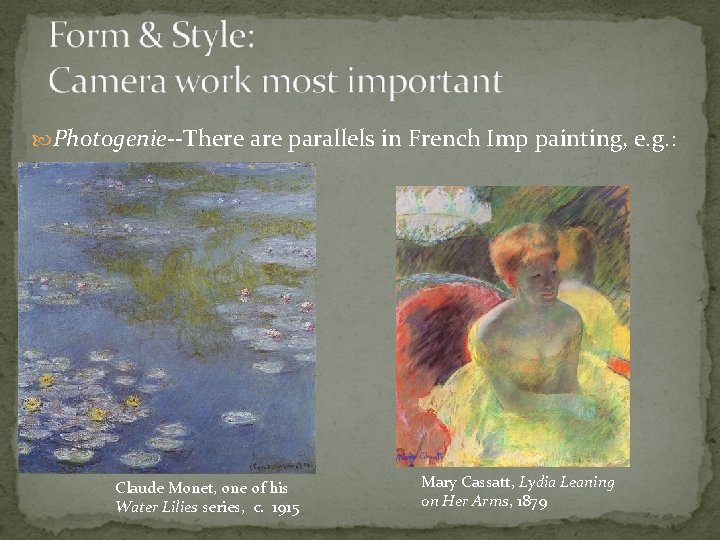
Photogenie--There are parallels in French Imp painting, e. g. : Claude Monet, one of his Water Lilies series, c. 1915 Mary Cassatt, Lydia Leaning on Her Arms, 1879
Form & Style: Camera work most important Narrative structure—personal actions and psychology Photogenie – “that quality which distinguishes a film shot from the original object photographed” Optical devices often used to do this
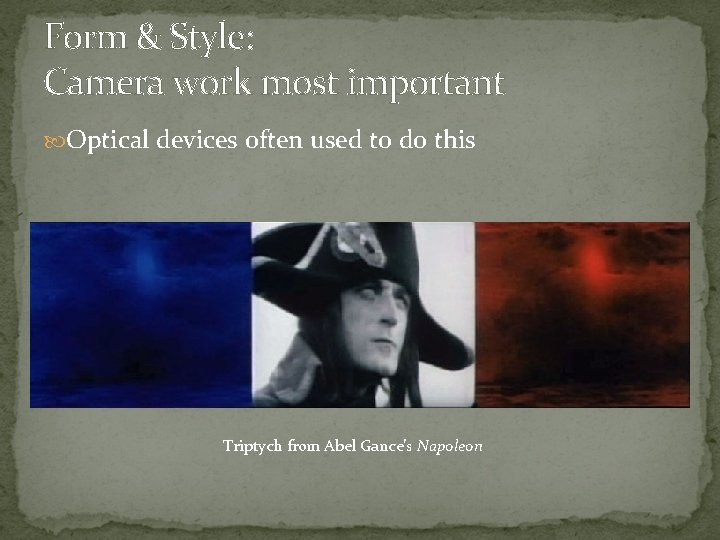
Form & Style: Camera work most important Optical devices often used to do this Triptych from Abel Gance’s Napoleon
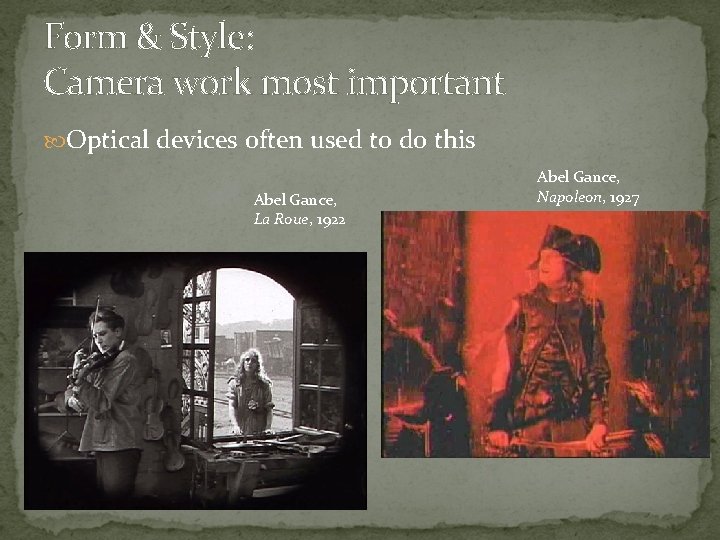
Form & Style: Camera work most important Optical devices often used to do this Abel Gance, La Roue, 1922 Abel Gance, Napoleon, 1927
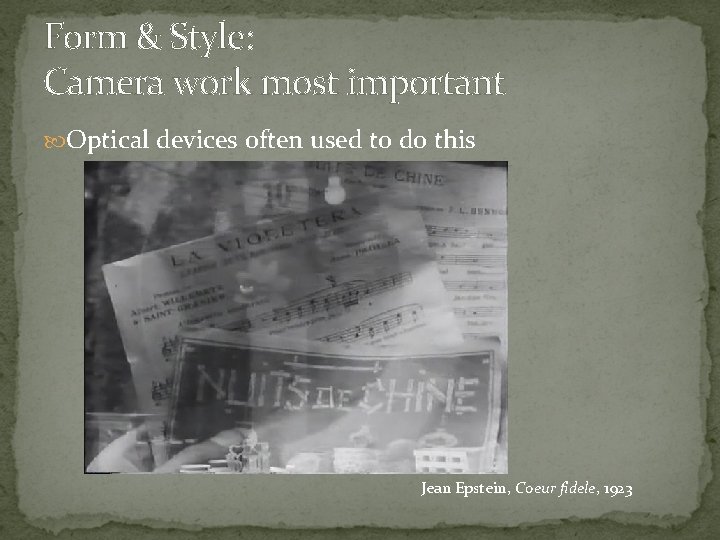
Form & Style: Camera work most important Optical devices often used to do this Jean Epstein, Coeur fidele, 1923
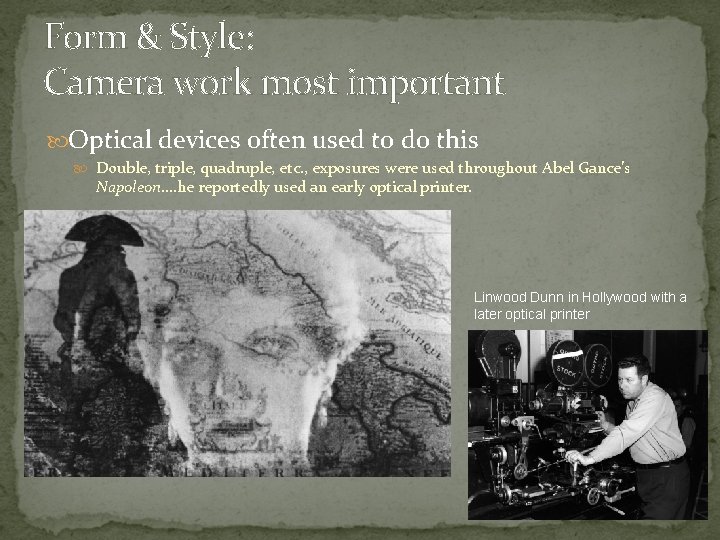
Form & Style: Camera work most important Optical devices often used to do this Double, triple, quadruple, etc. , exposures were used throughout Abel Gance’s Napoleon…. he reportedly used an early optical printer. Linwood Dunn in Hollywood with a later optical printer
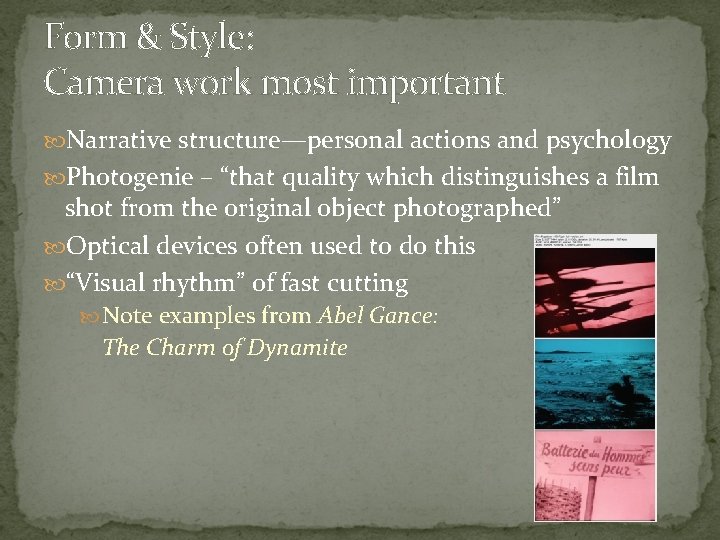
Form & Style: Camera work most important Narrative structure—personal actions and psychology Photogenie – “that quality which distinguishes a film shot from the original object photographed” Optical devices often used to do this “Visual rhythm” of fast cutting Note examples from Abel Gance: The Charm of Dynamite
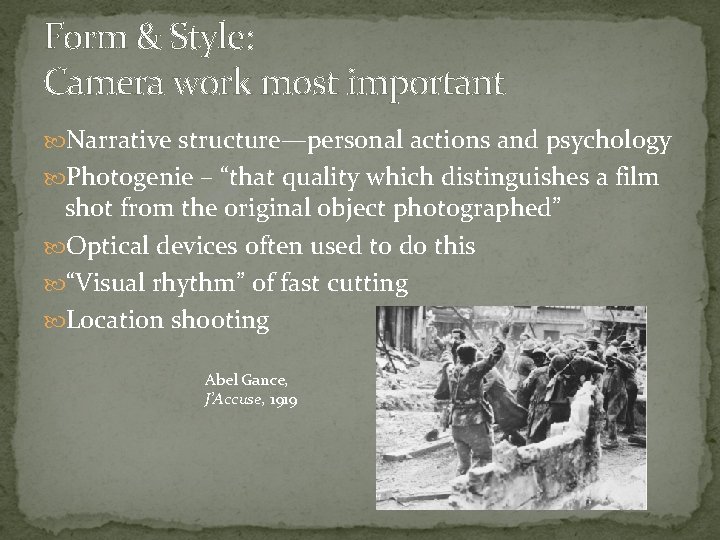
Form & Style: Camera work most important Narrative structure—personal actions and psychology Photogenie – “that quality which distinguishes a film shot from the original object photographed” Optical devices often used to do this “Visual rhythm” of fast cutting Location shooting Abel Gance, J’Accuse, 1919
Background In a commercial film context French film in crisis after WWI France swamped with German and U. S. films Small French companies willing to experiment
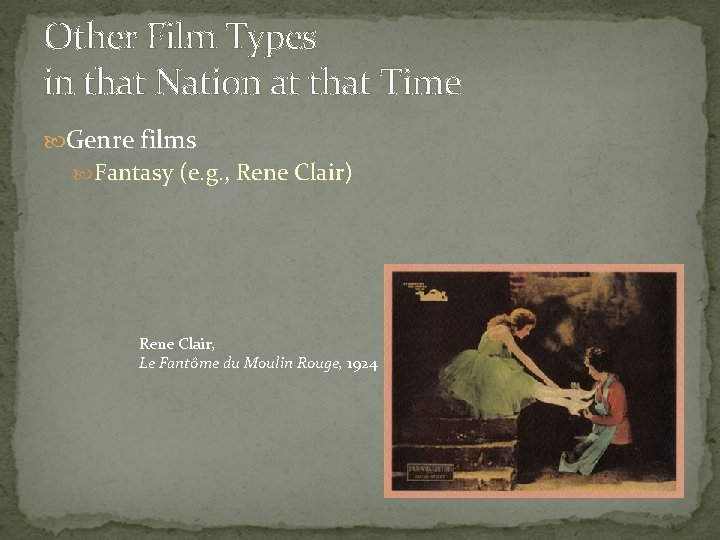
Other Film Types in that Nation at that Time Genre films Fantasy (e. g. , Rene Clair) Rene Clair, Le Fantôme du Moulin Rouge, 1924
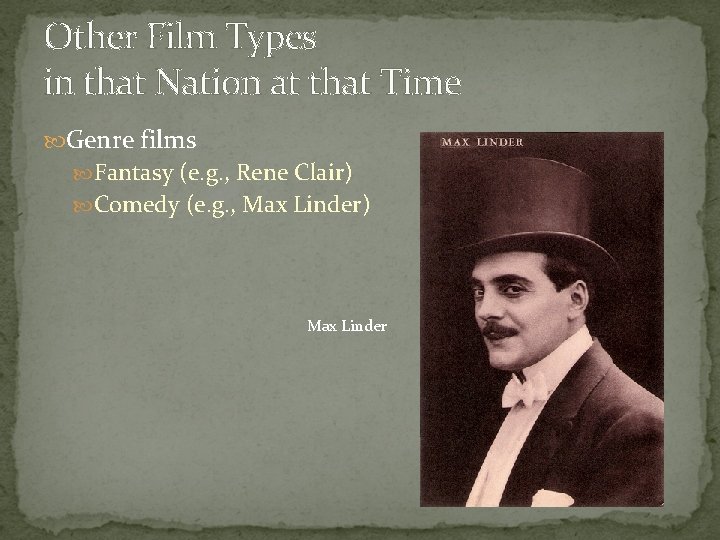
Other Film Types in that Nation at that Time Genre films Fantasy (e. g. , Rene Clair) Comedy (e. g. , Max Linder) Max Linder
Importance of the Movement Influential in style Not very important in terms of $$ (box office)
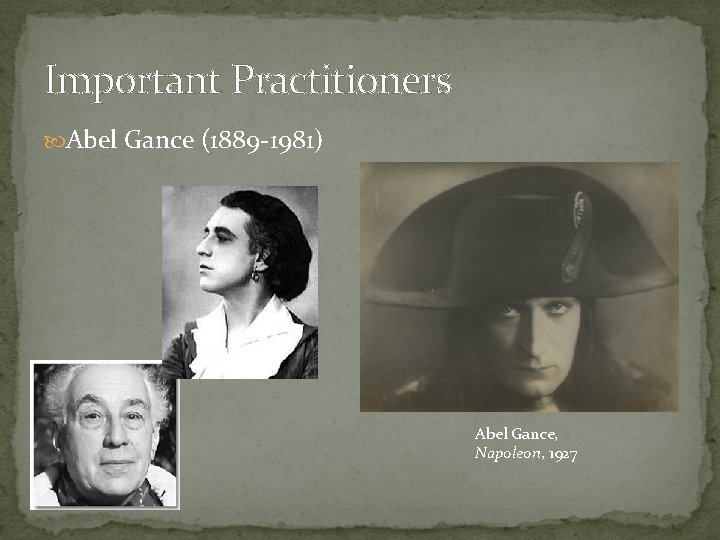
Important Practitioners Abel Gance (1889 -1981) Abel Gance, Napoleon, 1927
Important Practitioners Jean Epstein (1897 -1953) Jean Epstein, Coeur fidele, 1923
Important Practitioners Germaine Dulac (1882 -1942) Germaine Dulac, The Smiling Madame Beudet, 1922
The Death of the Movement The movement’s own success led to a diffusion of its techniques, and a lessening of its impact French Impressionist filmmakers lost their independence with the introduction of sound ($$)
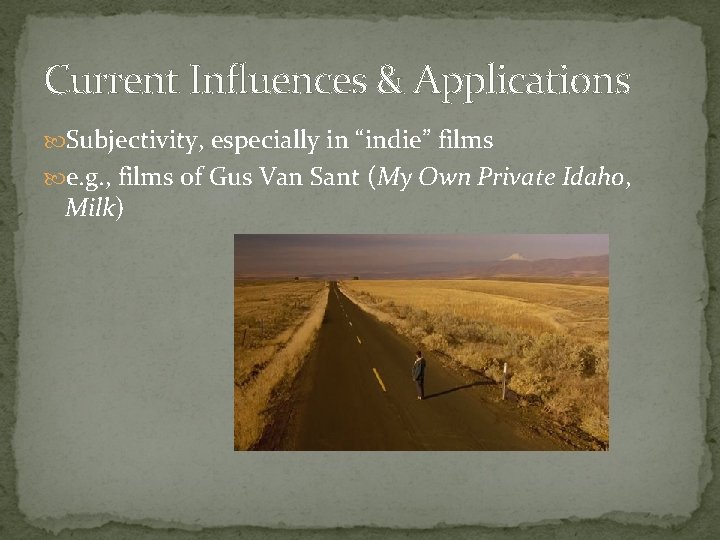
Current Influences & Applications Subjectivity, especially in “indie” films e. g. , films of Gus Van Sant (My Own Private Idaho, Milk)
end