
Column packing Two types of packing for sizeexclusion
- Slides: 12
Column packing Two types of packing for size-exclusion chromatography: polymer beads and silica particles, diameters for both 5 to 10 μm. Advantages of silica particles: Grater rigidity, which leads to easier packing and permits the use of higher pressure. Greater stability, which permits the use of a wider range of solvents, more rapid equilibration with new solvents; and stability at higher temperature. Disadvantages of silica particles : Adsorption and potential for catalyzing the degradation of solute molecules.
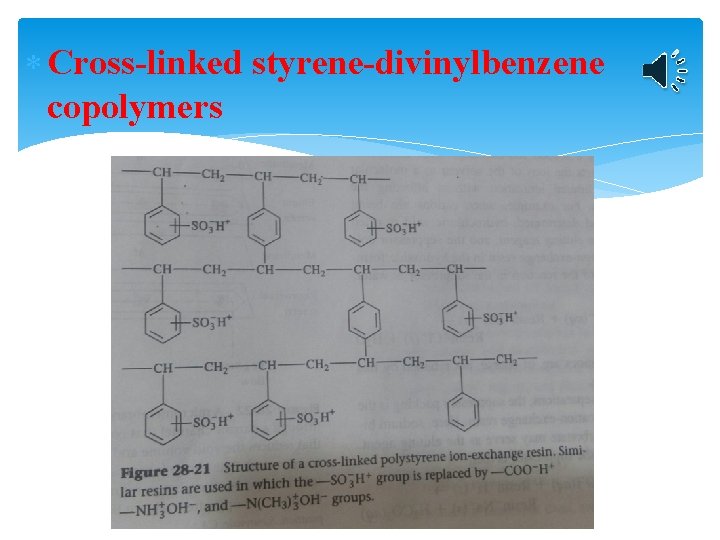
Cross-linked styrene-divinylbenzene copolymers
Pore size is controlled by the extent of cross-linking and hence the relative amount of divinylbenzene. Styrene-divinylbenzene gels were hydrophobic and used with nonaqueous mobile phase.
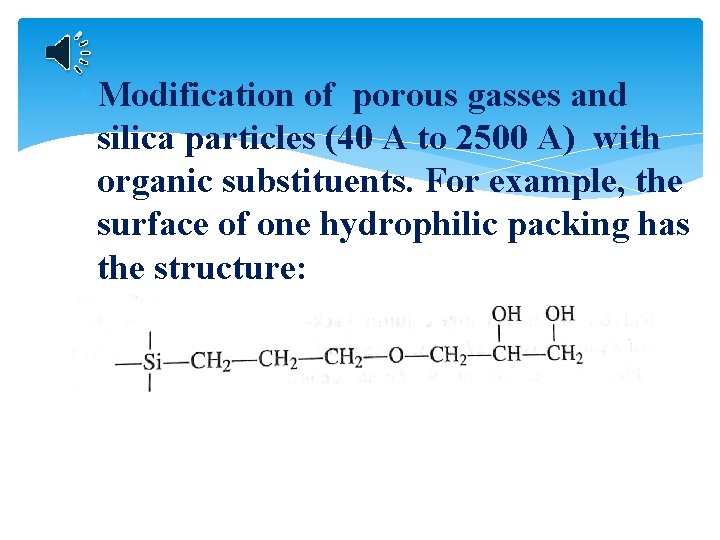
Modification of porous gasses and silica particles (40 A to 2500 A) with organic substituents. For example, the surface of one hydrophilic packing has the structure:
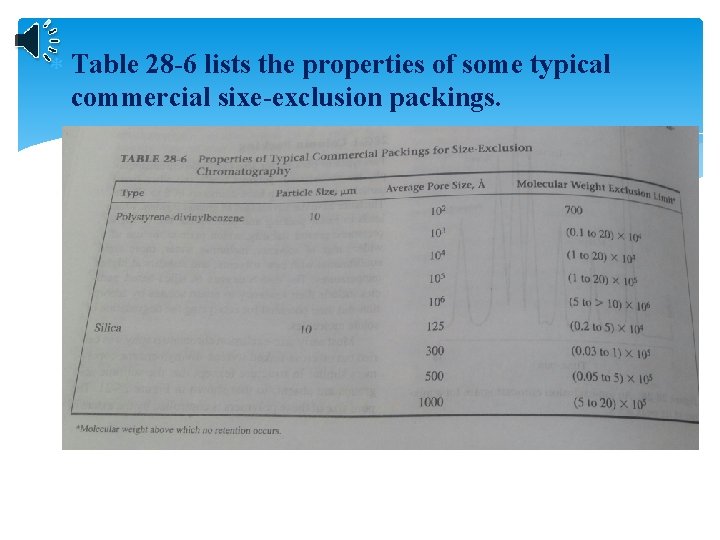
Table 28 -6 lists the properties of some typical commercial sixe-exclusion packings.
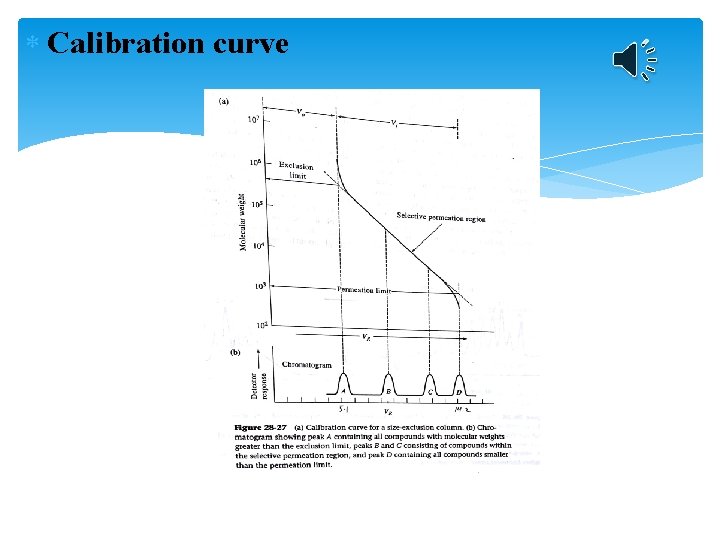
Calibration curve
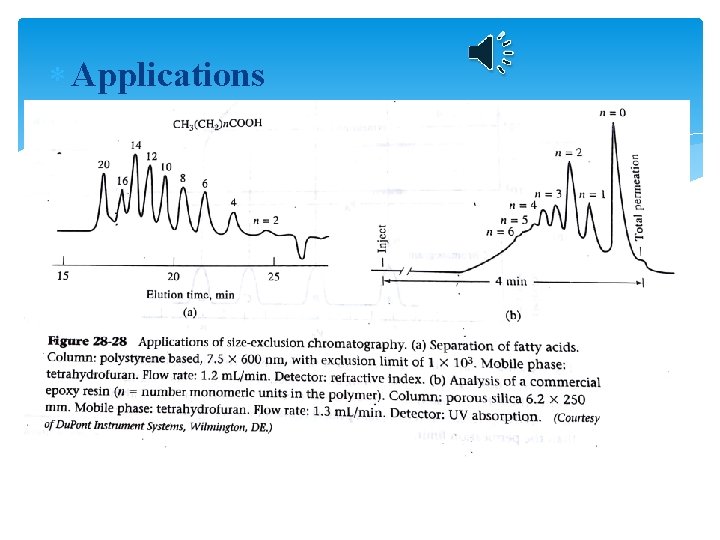
Applications
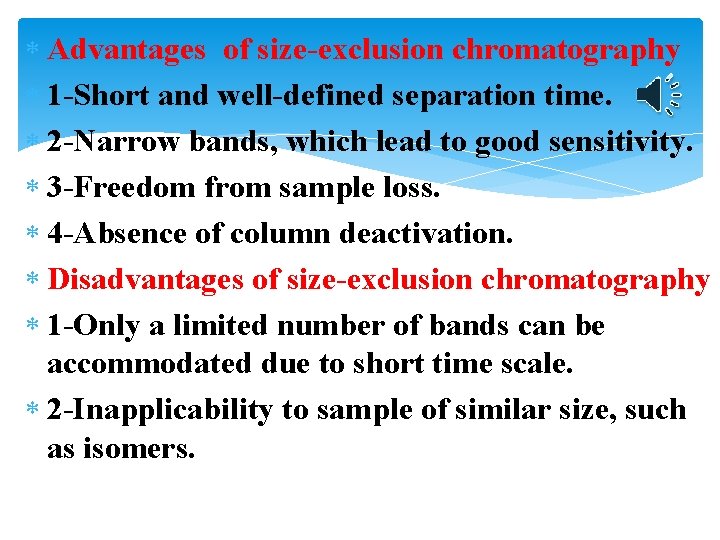
Advantages of size-exclusion chromatography 1 -Short and well-defined separation time. 2 -Narrow bands, which lead to good sensitivity. 3 -Freedom from sample loss. 4 -Absence of column deactivation. Disadvantages of size-exclusion chromatography 1 -Only a limited number of bands can be accommodated due to short time scale. 2 -Inapplicability to sample of similar size, such as isomers.